Mark scheme
Notes from the mark scheme and report
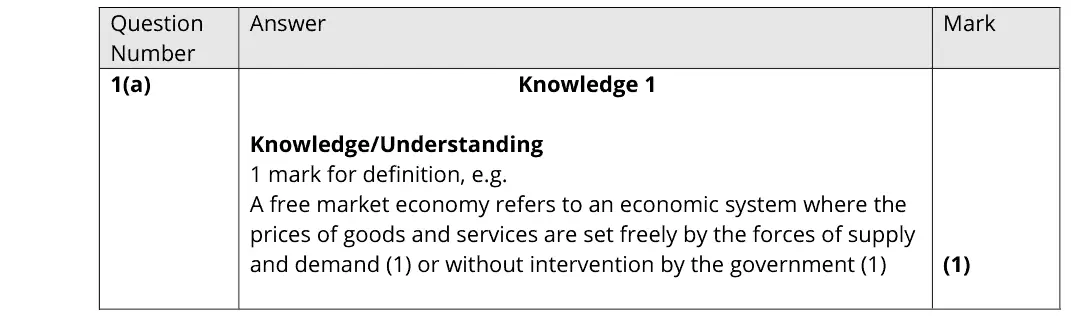
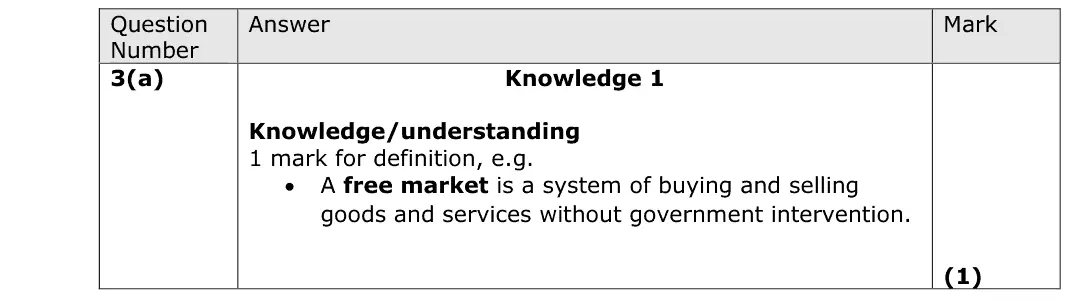
- an economy where resources are allocated by buying and selling through the price mechanism without government intervention
The "define" and "what is meant by" questions, usually 2 marks: a precise definition scores, a description does not. 44 questions.
Other types: Multiple-choice questions · Calculation questions · Diagram questions · Short explain questions (2–6 marks) · 8- to 15-mark responses · 20- and 25-mark essays · Data-response questions

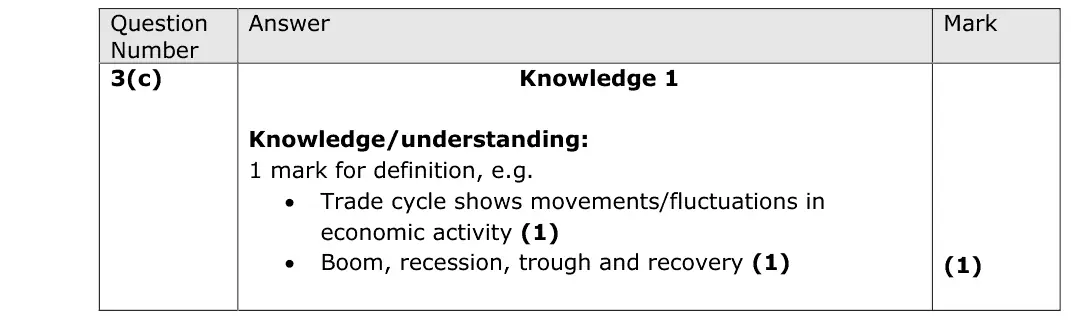
This question required a precise definition of trade cycle. It is important that candidates are clear in their answers. Candidates could access marks through a range of approaches. Most of them were able to get the mark.

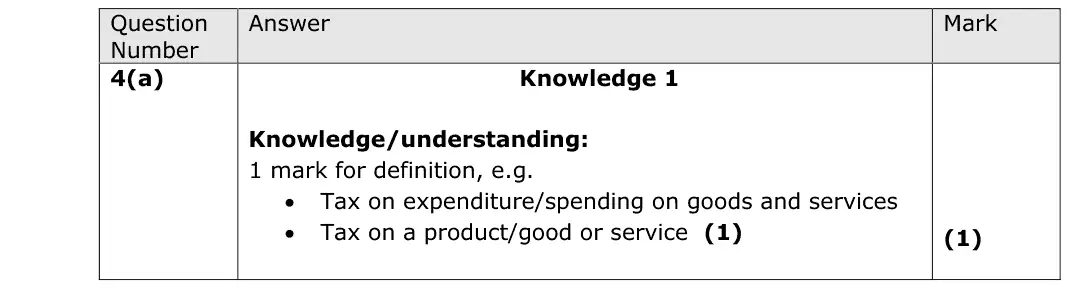
This question required a clear definition of the term indirect tax. Many candidates provided accurate definitions and hence attained the one mark available for this question.


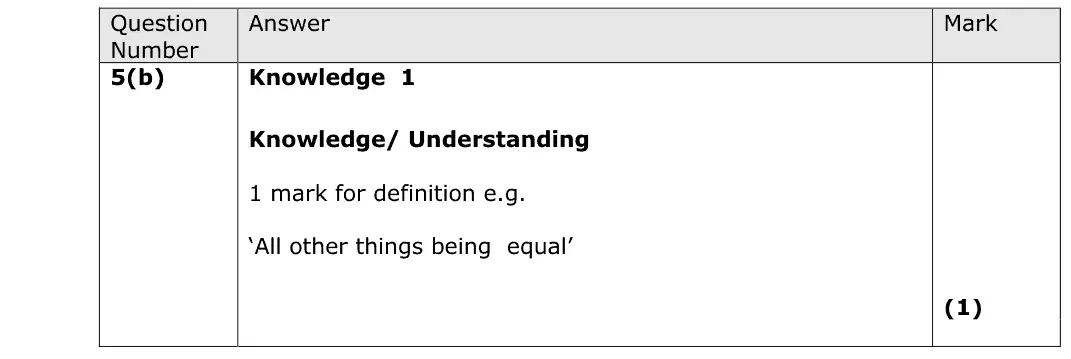
Question 5 (b) Ceteris paribus as a term was very well recalled and understood, however those where the marks were not awarded, did not use the correct language to explain the concept clearly enough.

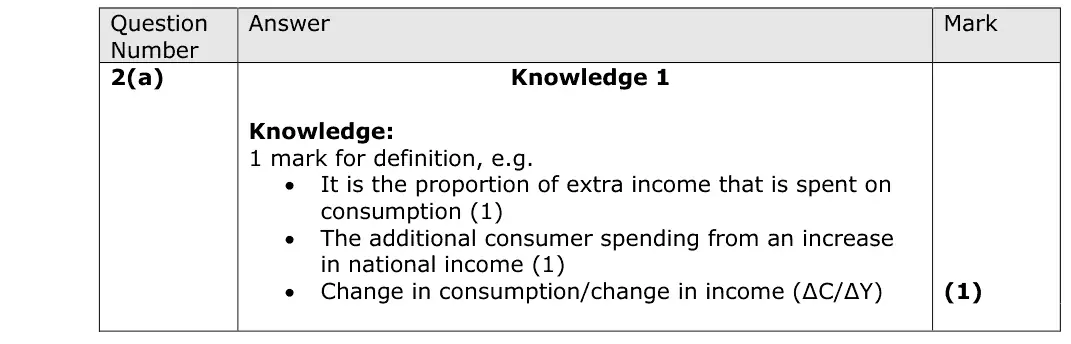
This question requires a precise definition of marginal propensity to consume. It is important that candidates are clear in their answers. Candidates could access marks through a range of approaches. Not many students accessed the knowledge mark for the definition.

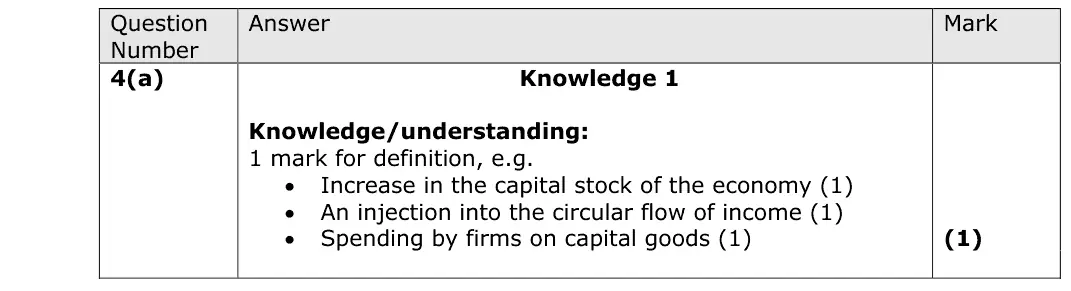
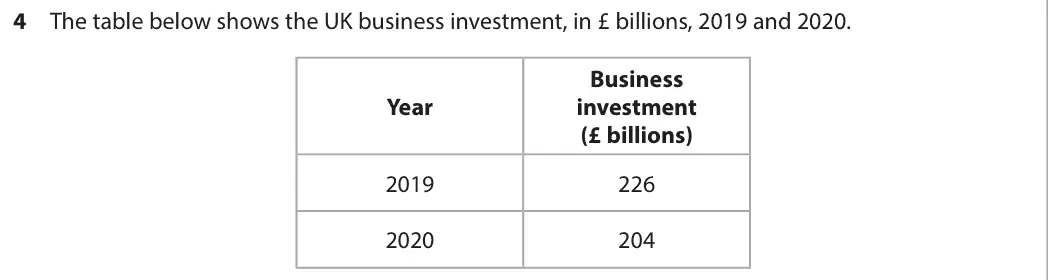
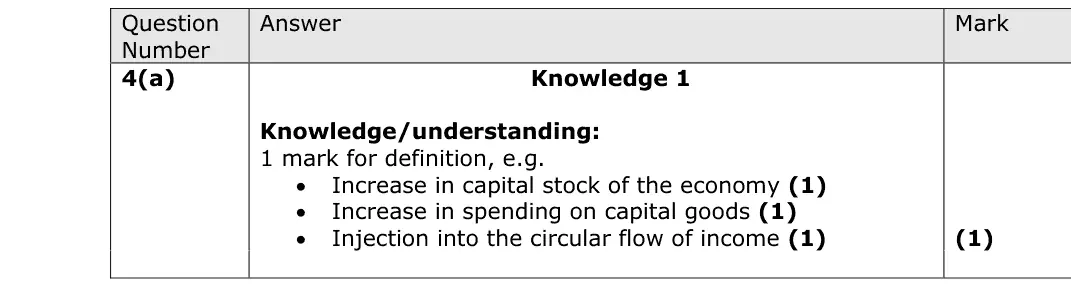
This question requires a clear definition of the term investment. Many provided accurate definitions and hence attained the one mark available for this question.

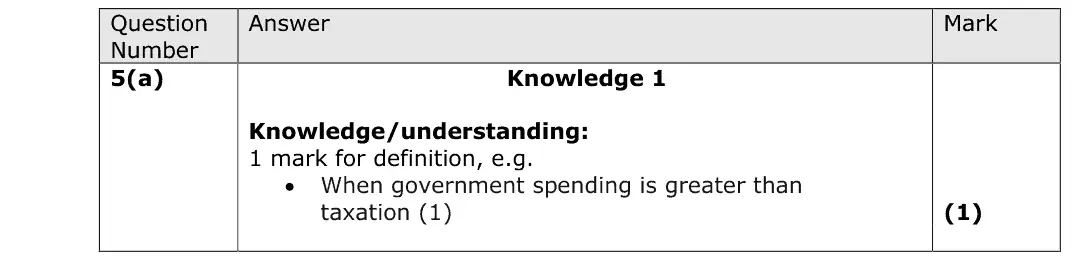
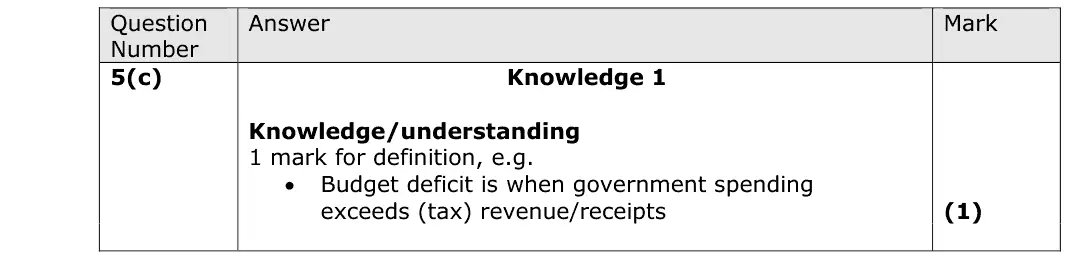
This question requires a clear definition of the term budget deficit. Many provided an accurate definition and hence attained the one mark available for this question.

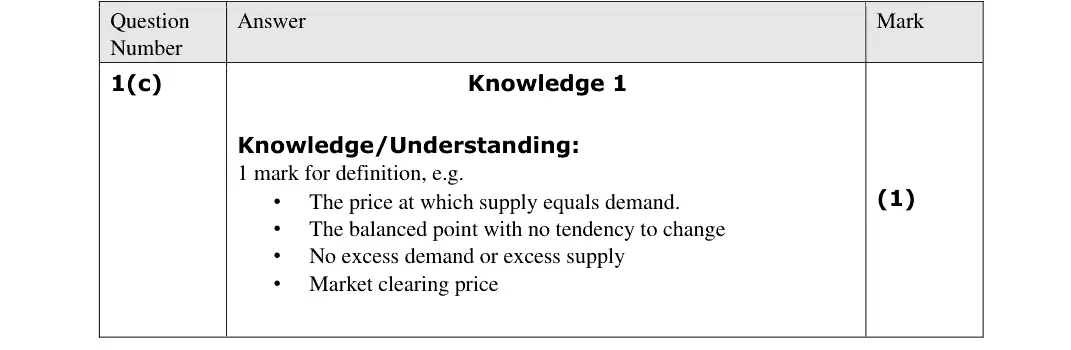
Virtually all candidates were able to accurately define equilibrium price, linking this to demand and supply meeting

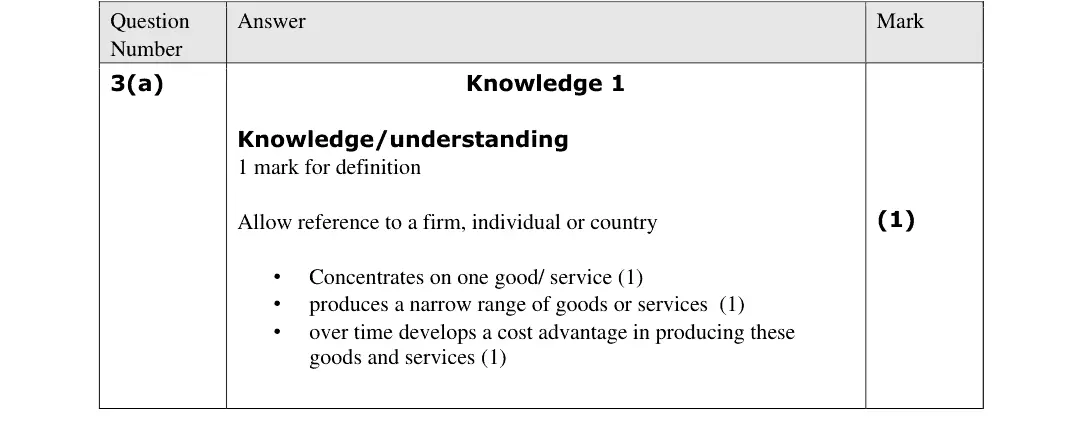
Specialisation and the ‘focus’ upon a particular task was clearly well understood by the majority of candidates A more complicated question in terms of advantages to trade of specialisation was answered less well, with many students not fully targeting their answer to trade and limiting the mark award.

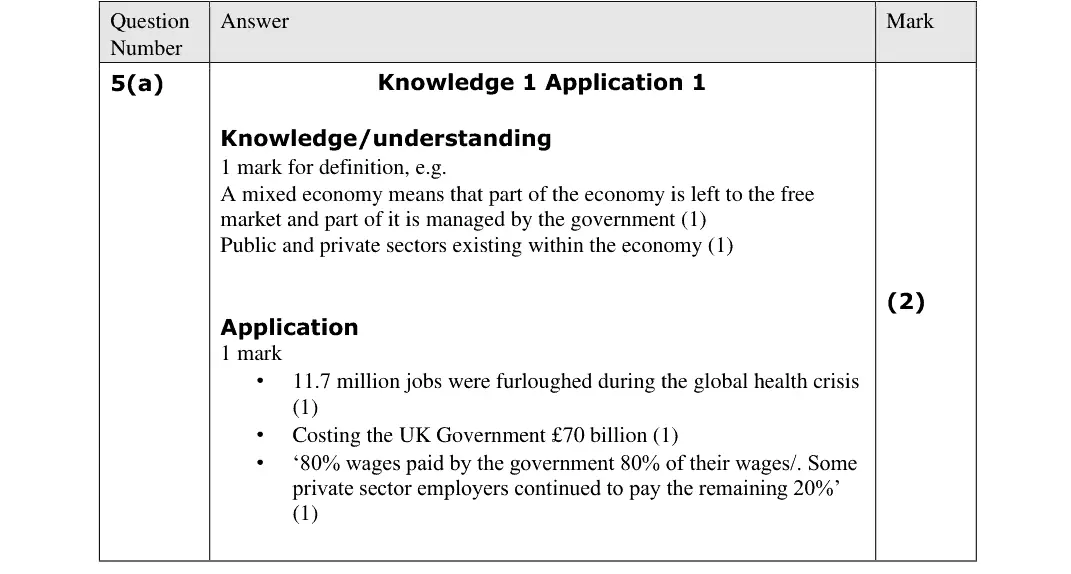
Many candidates were again able to identify that the mixed economy includes both private and public sectors, and the highest awarded answers used some of the information in the question stem to link this to furlough payments and how wages during the health crisis were paid between private firms and the government.

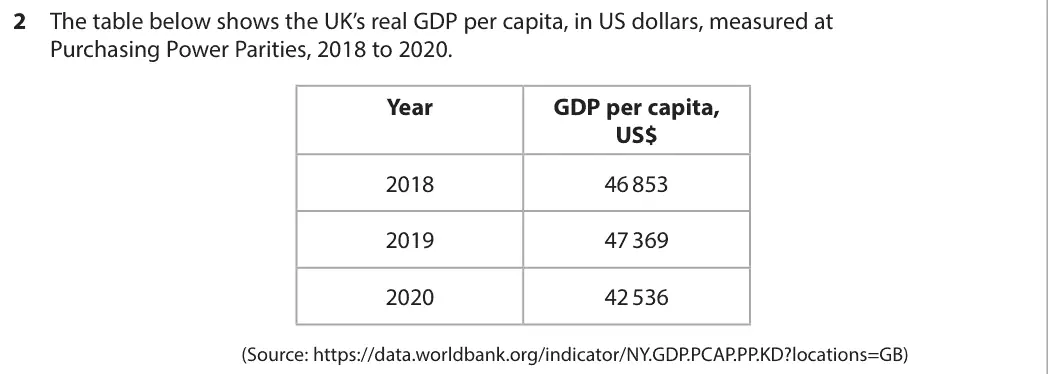
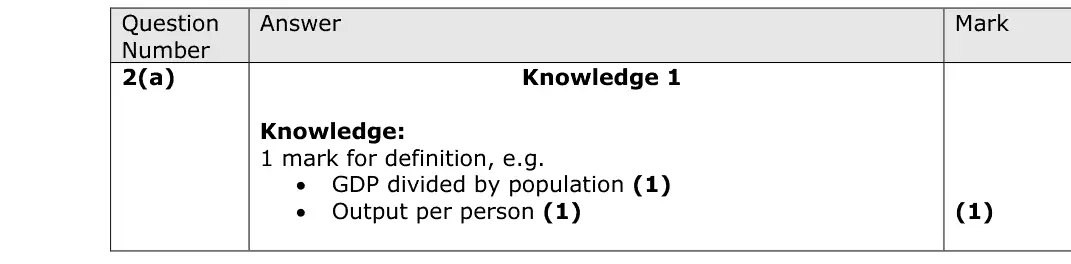
This question requires a precise definition of GDP per capita. It is important that candidates are clear in their answers. Candidates could access marks through a range of approaches.

This question requires a clear definition of the term investment. Many provided accurate definitions and hence attained the one mark available for this question.

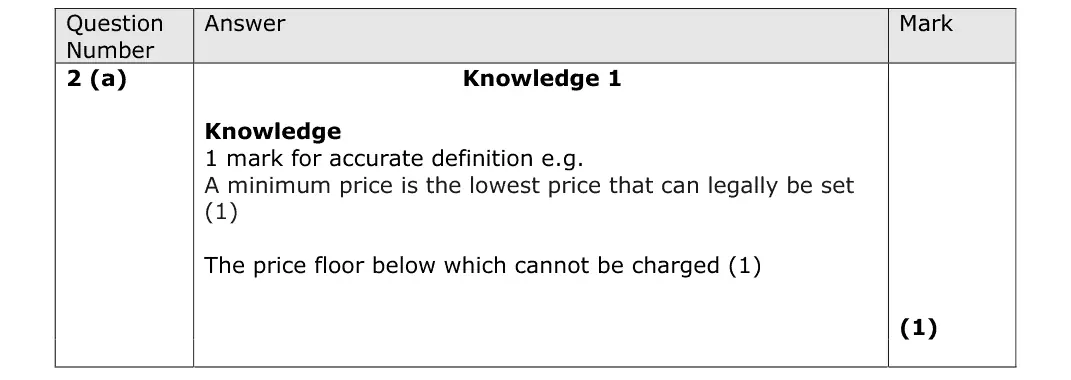
The majority of candidates were able to accurately define a minimum price, though some did inevitably confuse it with a maximum price.

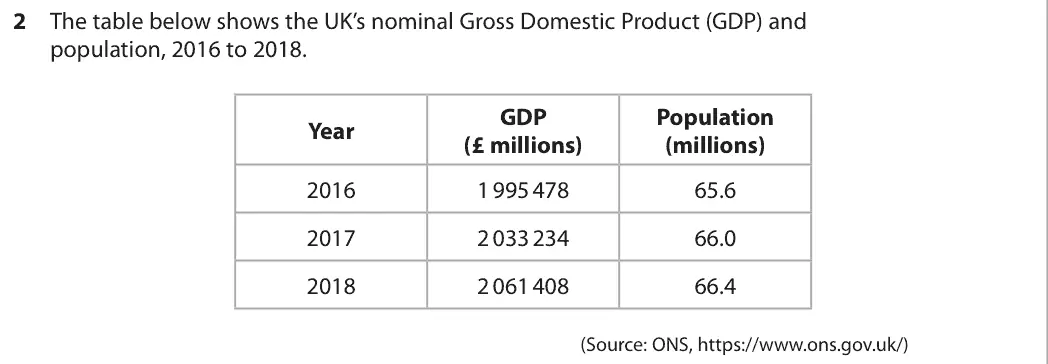
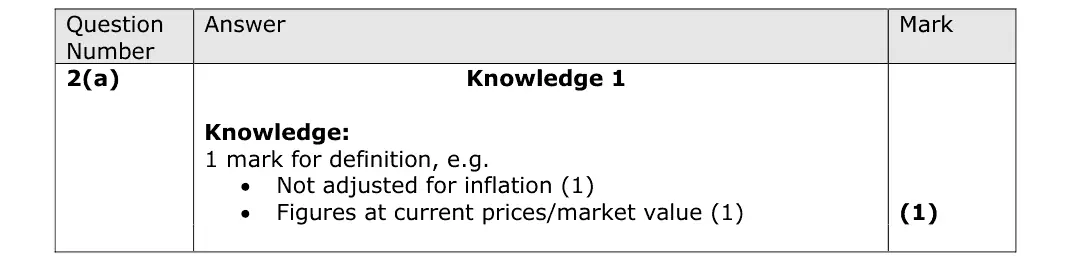
This question requires a short but precise definition of nominal. It is important that candidates are clear in their answers. Candidates could access marks through a range of approaches.

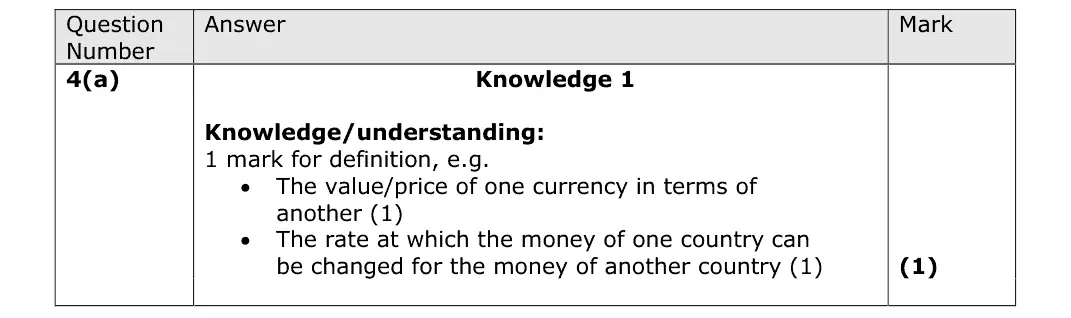
This question requires a clear definition of the term exchange rate. Many were not able to provide an accurate definition and hence did not get the mark for this question.

Candidates typically performed well on this question, with most able to identify what the key features of a free market economy are. Typically a recognition of the interaction of supply and demand or minimal government intervention were typical responses.

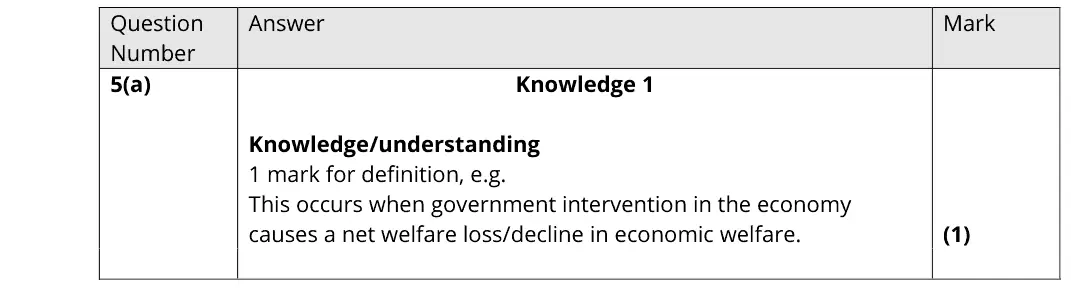
Strong candidates were able to express clearly what government failure is, in terms of a net welfare loss caused by the said intervention. It is important not to confuse this with a market failure.


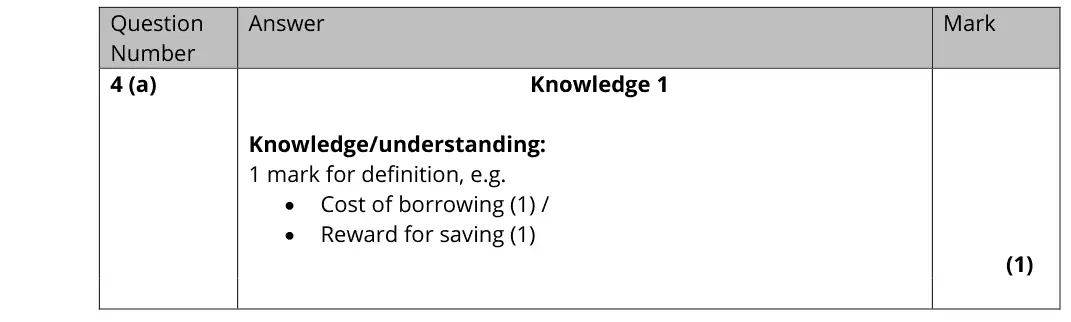
This question requires a clear definition of interest rate. Many were not able to provide an accurate definition and hence did not get the mark for this question.

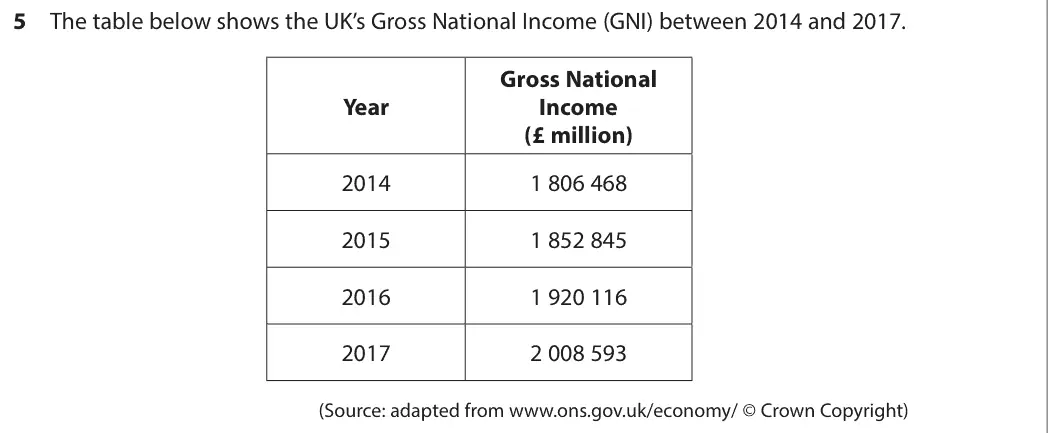
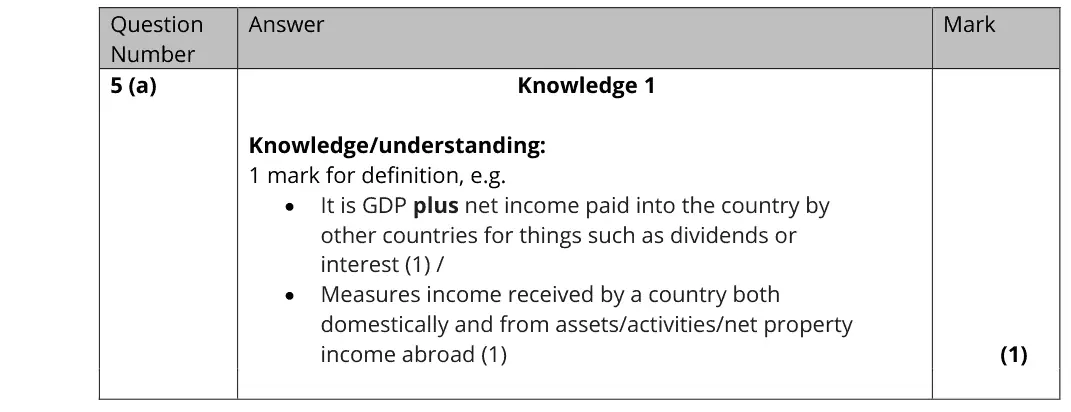
This question requires a definition of GNI. Many candidates were not able to provide an accurate definition, as they confused GNI with GDP, and hence did not get the mark for this question.

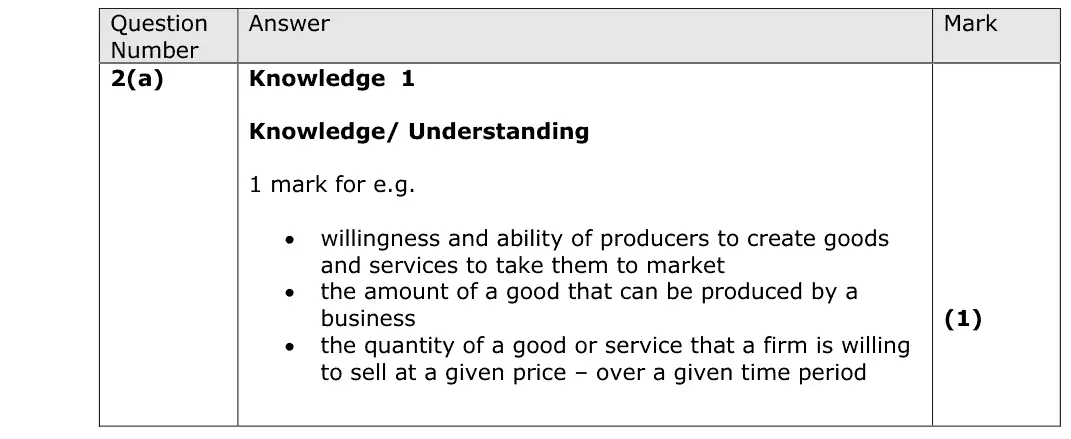
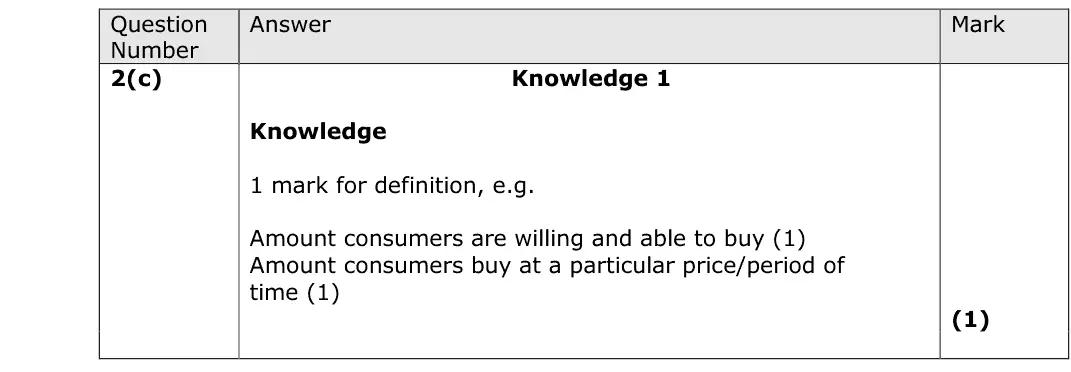
Though many candidates were able to achieve the mark available here, lack of precision in defining demand was an obvious issue for many. Typically, we were looking for some notion of effective demand and definitions discussing needs or simply wants without any sense of ability to buy were too vague to be rewarded.

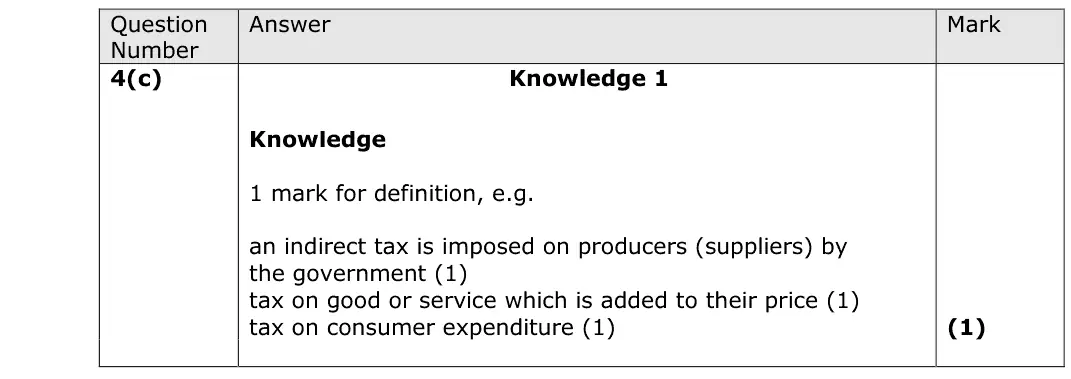
This question required a definition of an indirect tax and the vast majority of candidates were able to perform this correctly, though over ten percent of the responses were either incorrect or too vague.

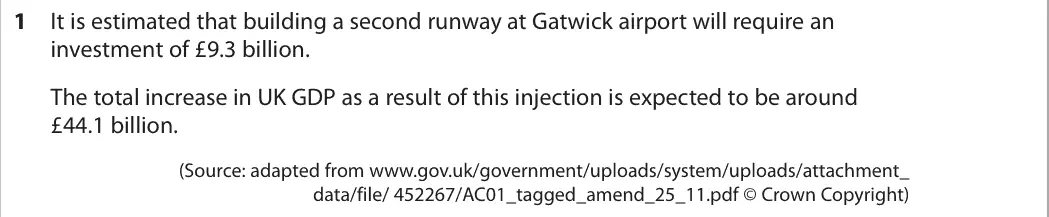
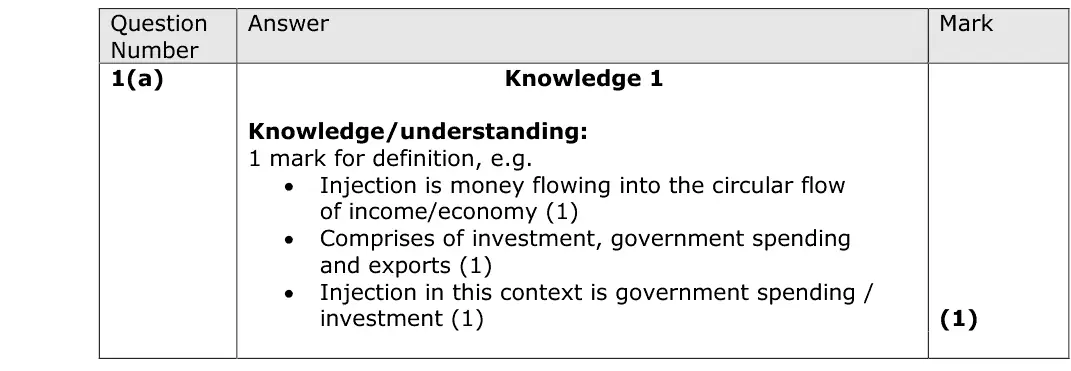
This question requires a short but precise definition of injection. It is important that candidates are clear in their answers. Candidates could access marks through a range of approaches.

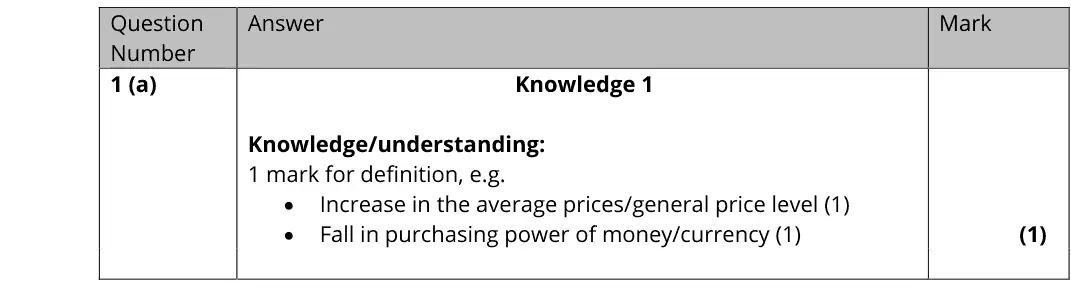
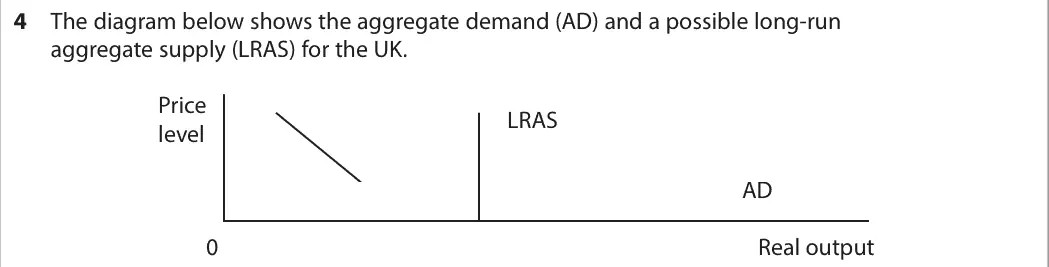
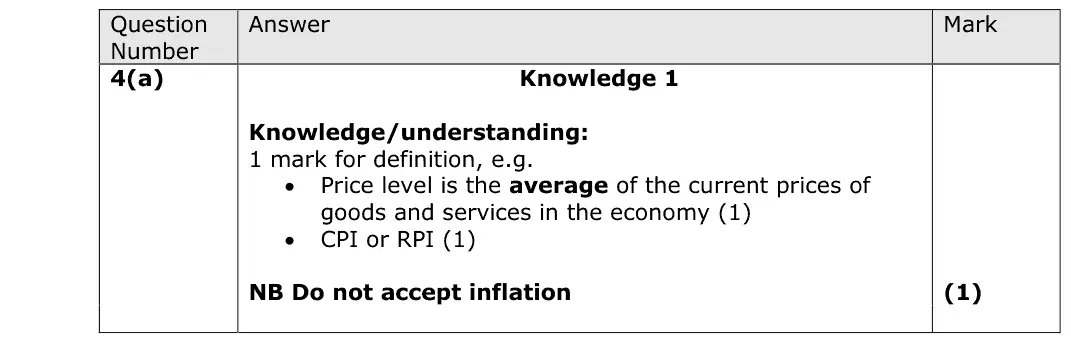
This question requires a clear definition of price level. Many were not able to provide an accurate definition and hence did not get the mark for this question.

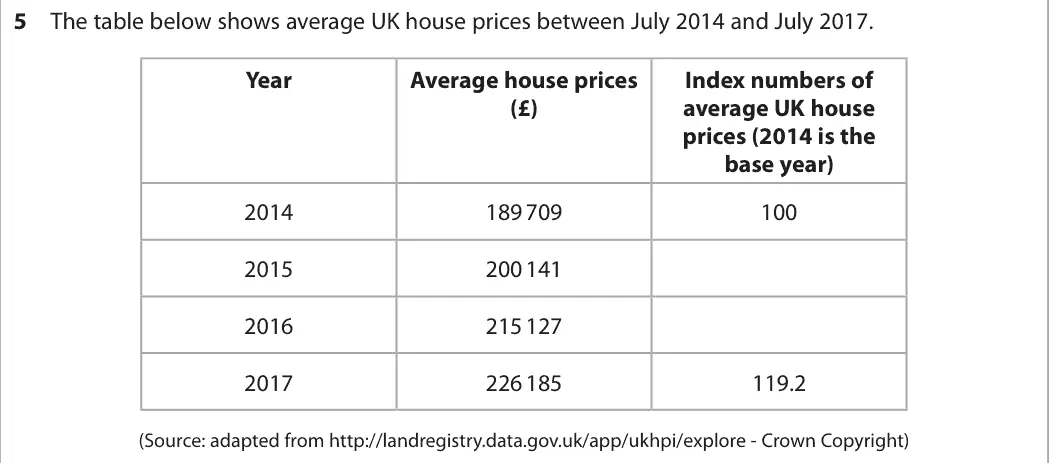
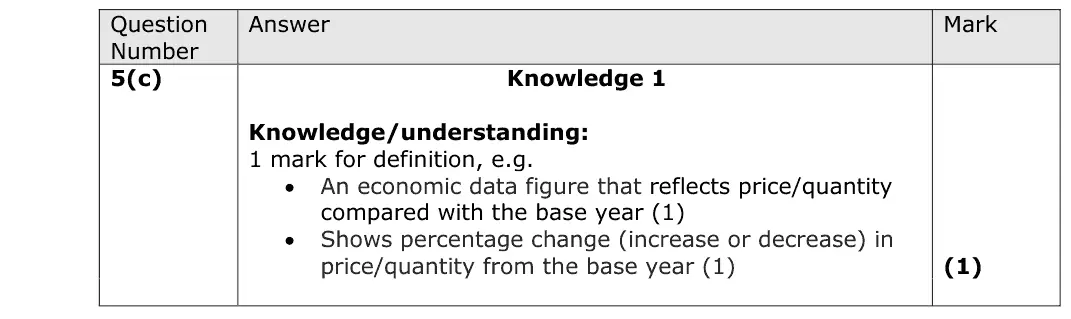
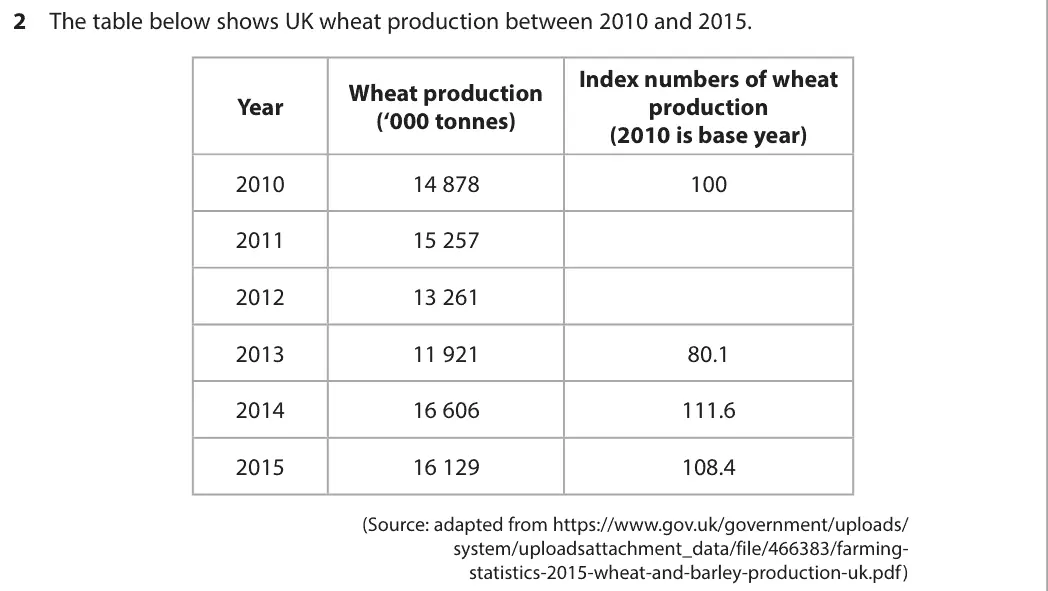
This question requires a definition of an index number. Few candidates were not able to provide an accurate definition, as they confused index number with the base year, and hence did not get the mark for this question.
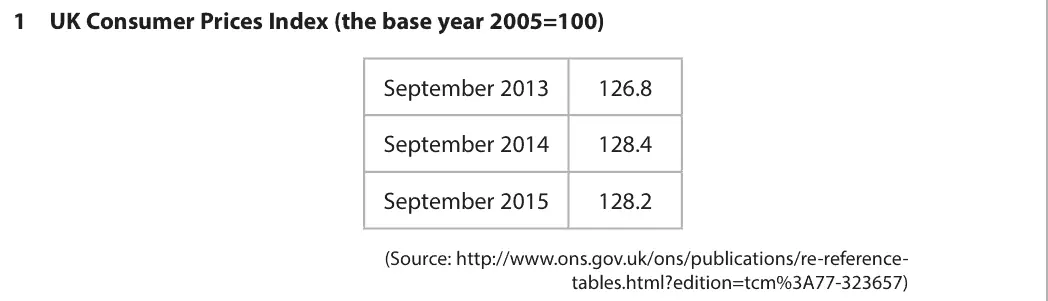
Quantitative skills: QS 5 (calculate and interpret index numbers)

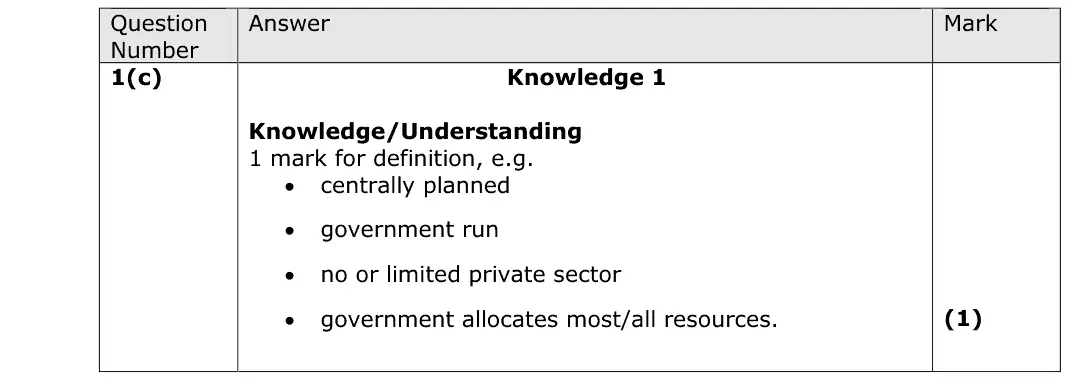
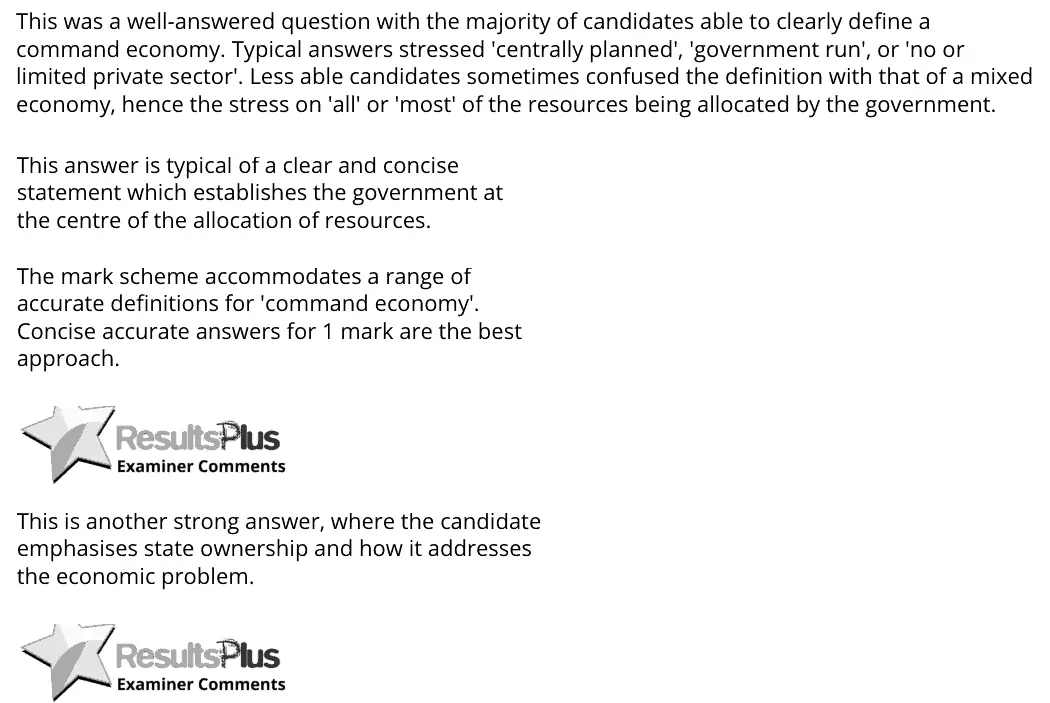
This was a well-answered question with the majority of candidates able to clearly define a command economy. Typical answers stressed 'centrally planned', 'government run', or 'no or limited private sector'. Less able candidates sometimes confused the definition with that of a mixed economy, hence the stress on 'all' or 'most' of the resources being allocated by the government. This answer is typical of a clear and concise statement which establishes the government at the centre of the allocation of resources. The mark scheme accommodates a range of accurate definitions for 'command economy'. Concise accurate answers for 1 mark are the best approach. This is another strong answer, where the candidate emphasises state ownership and how it addresses the economic problem.

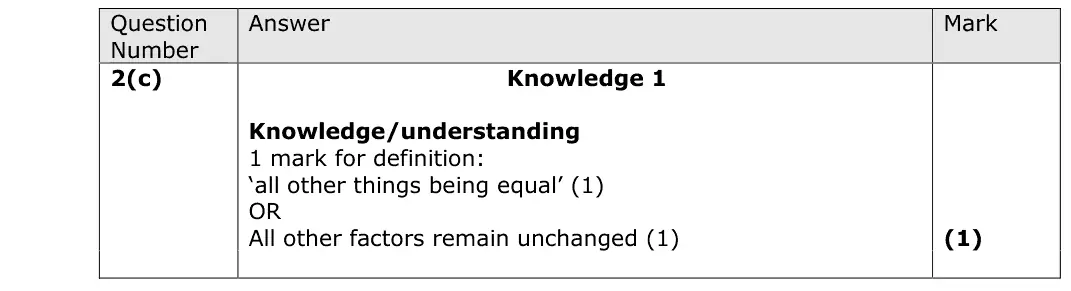
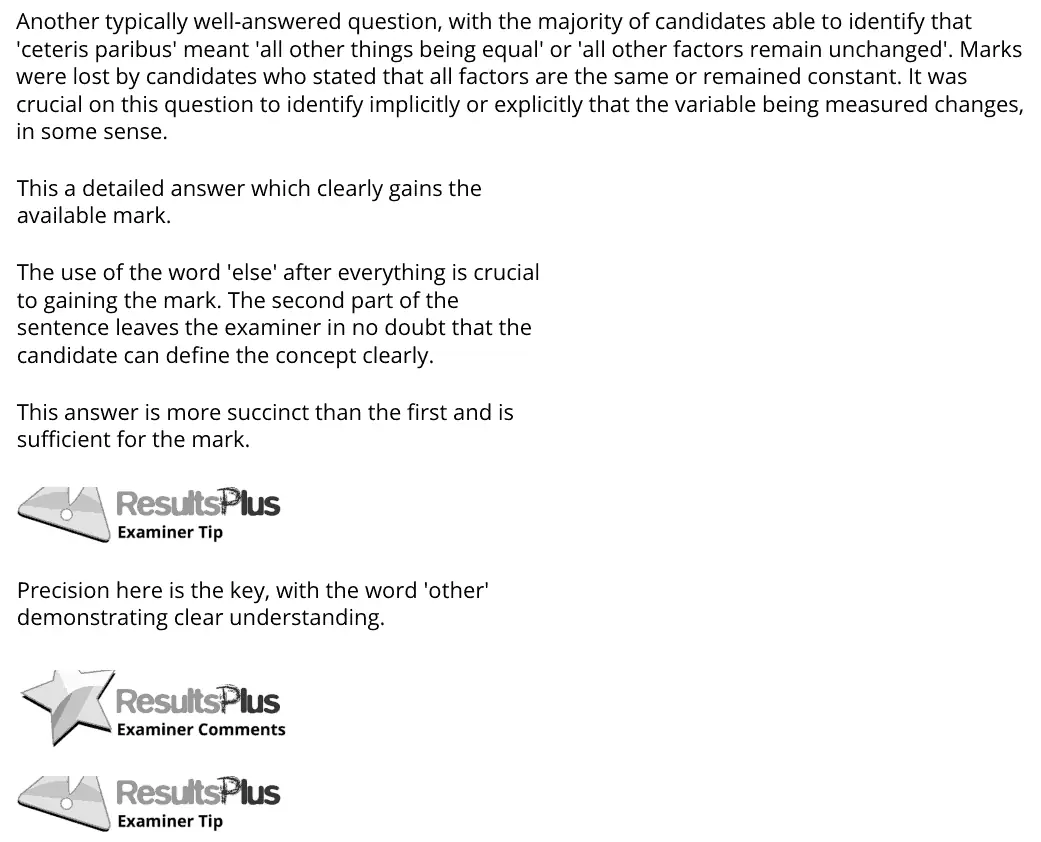
Another typically well-answered question, with the majority of candidates able to identify that 'ceteris paribus' meant 'all other things being equal' or 'all other factors remain unchanged'. Marks were lost by candidates who stated that all factors are the same or remained constant. It was crucial on this question to identify implicitly or explicitly that the variable being measured changes, in some sense. This a detailed answer which clearly gains the available mark. The use of the word 'else' after everything is crucial to gaining the mark. The second part of the sentence leaves the examiner in no doubt that the candidate can define the concept clearly. This answer is more succinct than the first and is sufficient for the mark. Precision here is the key, with the word 'other' demonstrating clear understanding.

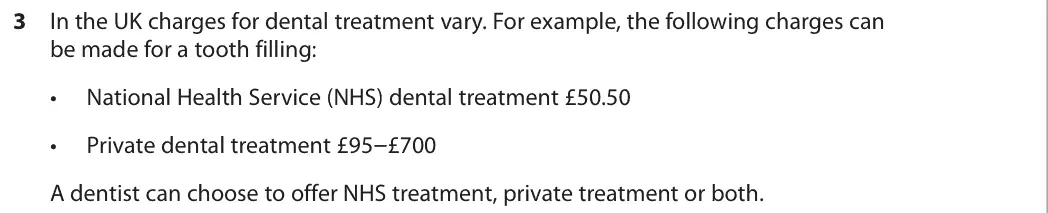
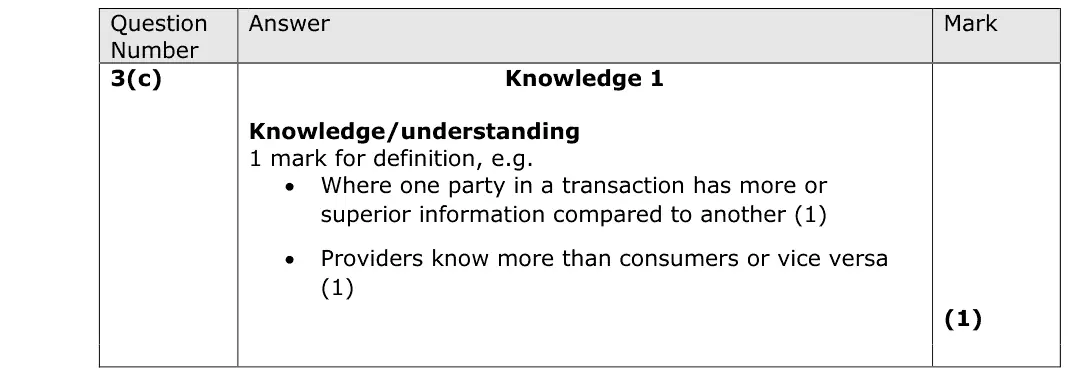
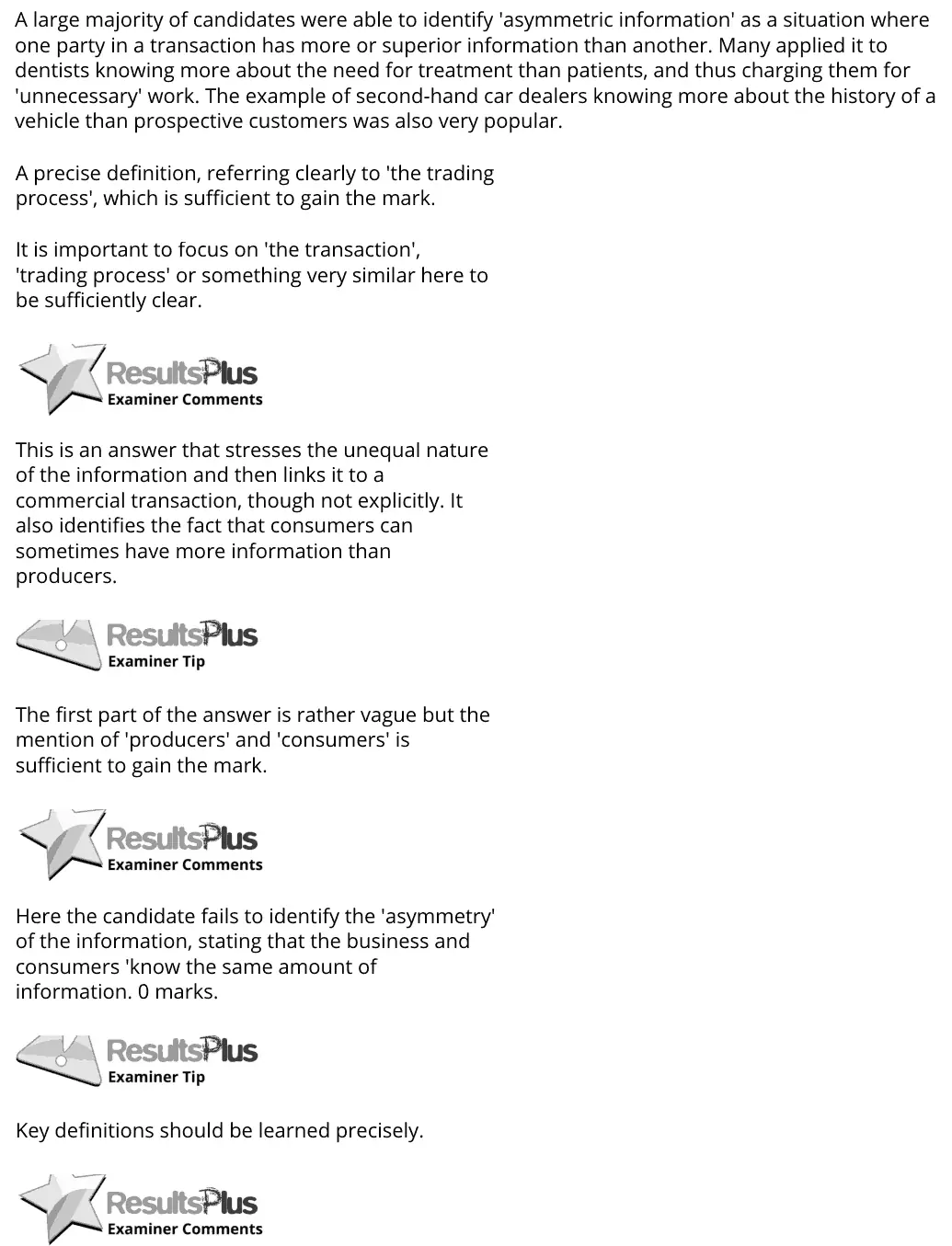
A large majority of candidates were able to identify 'asymmetric information' as a situation where one party in a transaction has more or superior information than another. Many applied it to dentists knowing more about the need for treatment than patients, and thus charging them for 'unnecessary' work. The example of second-hand car dealers knowing more about the history of a vehicle than prospective customers was also very popular. A precise definition, referring clearly to 'the trading process', which is sufficient to gain the mark. It is important to focus on 'the transaction', 'trading process' or something very similar here to be sufficiently clear. This is an answer that stresses the unequal nature of the information and then links it to a commercial transaction, though not explicitly. It also identifies the fact that consumers can sometimes have more information than producers. The first part of the answer is rather vague but the mention of 'producers' and 'consumers' is sufficient to gain the mark. Here the candidate fails to identify the 'asymmetry' of the information, stating that the business and consumers 'know the same amount of information. 0 marks. Key definitions should be learned precisely.

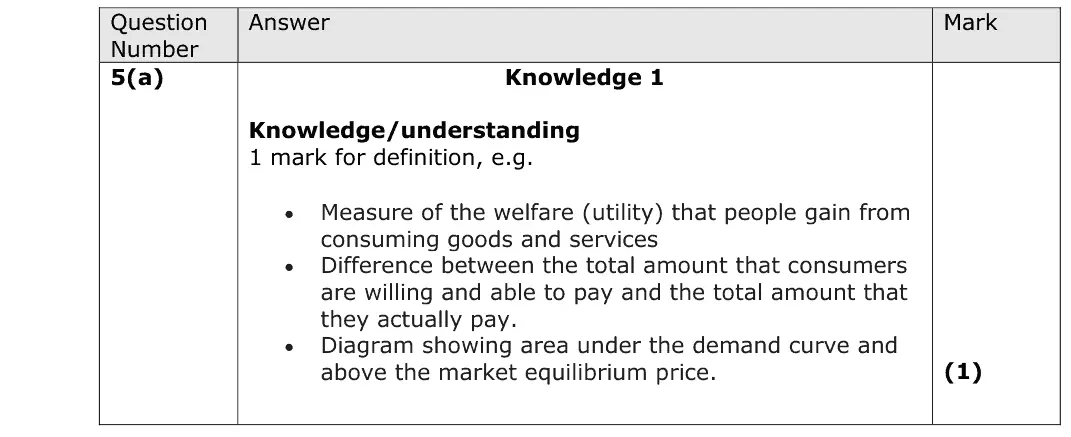
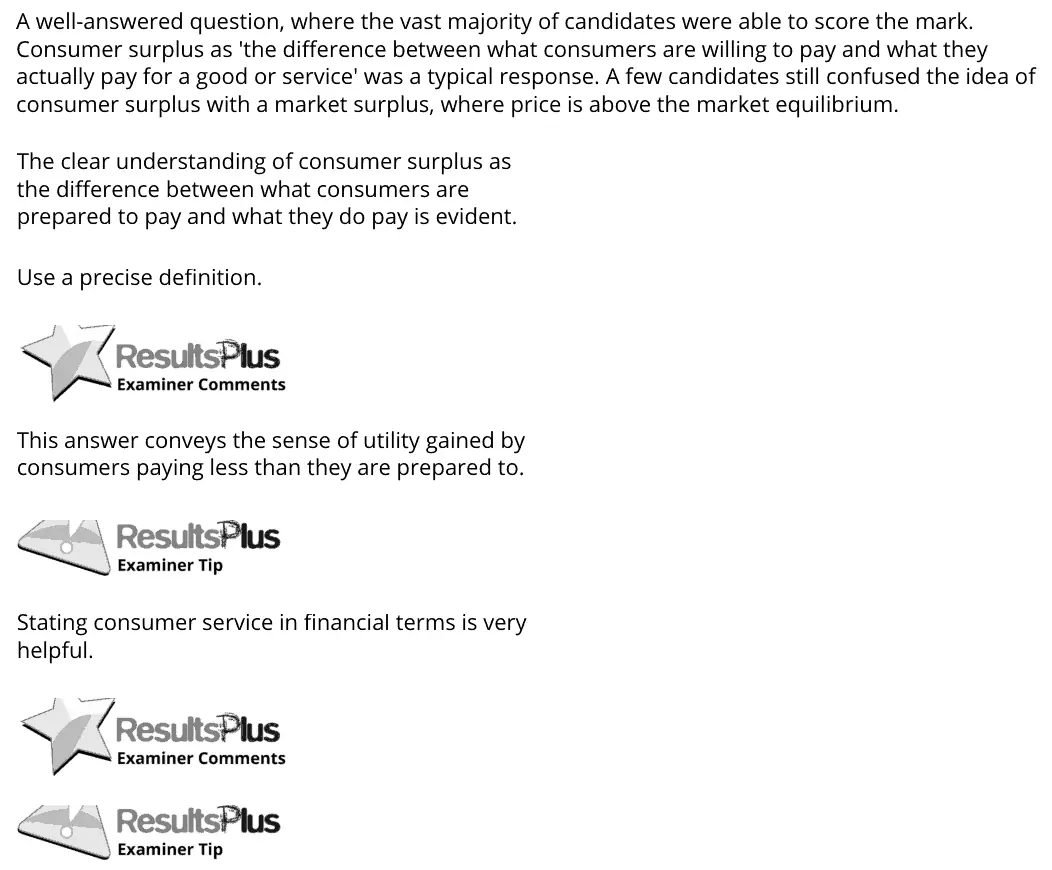
A well-answered question, where the vast majority of candidates were able to score the mark. Consumer surplus as 'the difference between what consumers are willing to pay and what they actually pay for a good or service' was a typical response. A few candidates still confused the idea of consumer surplus with a market surplus, where price is above the market equilibrium. The clear understanding of consumer surplus as the difference between what consumers are prepared to pay and what they do pay is evident. Use a precise definition. This answer conveys the sense of utility gained by consumers paying less than they are prepared to. Stating consumer service in financial terms is very helpful.

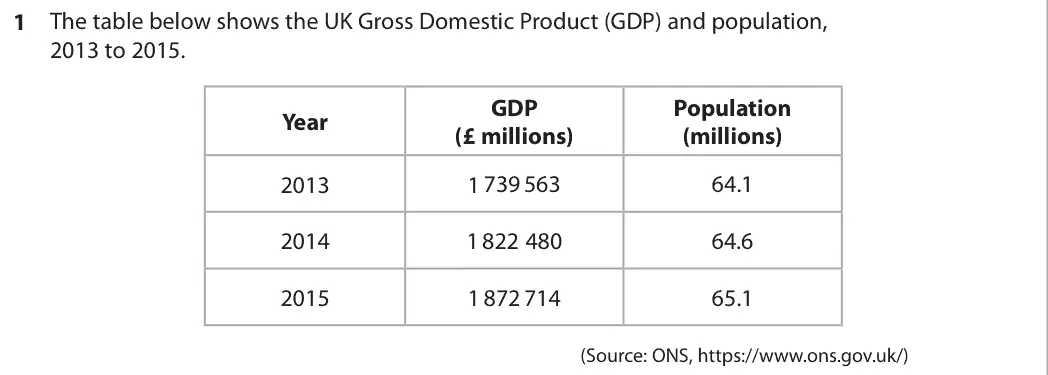
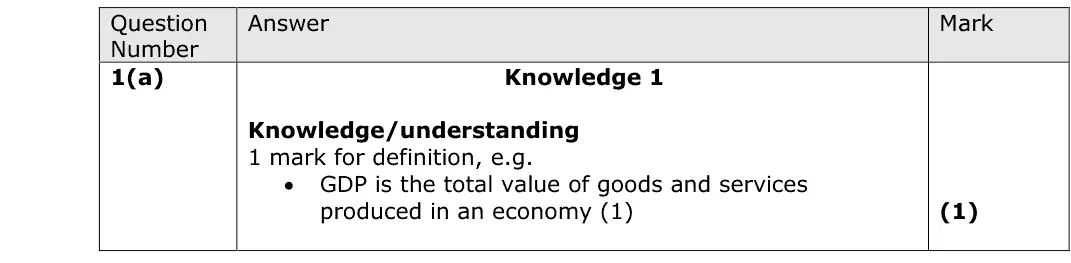
This question requires a short but precise definition of gross domestic product (GDP). It is important that candidates are clear in their answers. This candidate gives an accurate definition of Gross Domestic Product and as such achieves the 1 mark available. This candidate does not define Gross Domestic Product accurately and hence does not attain the 1 mark available.

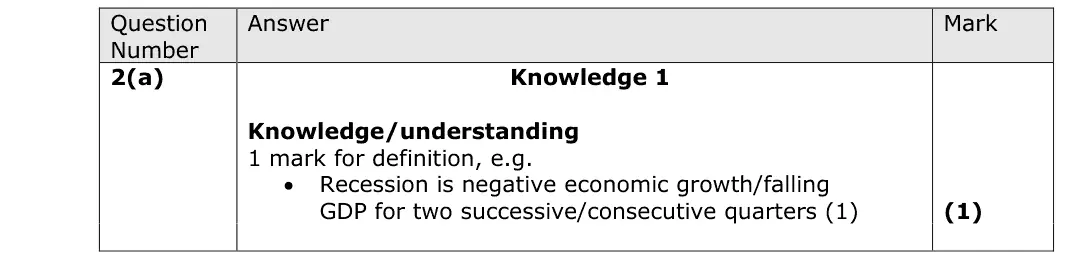
This question requires an accurate definition of a recession. Candidates were not asked to state the characteristics of a recession in this question. This candidate has an accurate definition of recession and as such achieves the 1 mark available. This candidate does not define recession accurately and hence does not attain the 1 mark available.

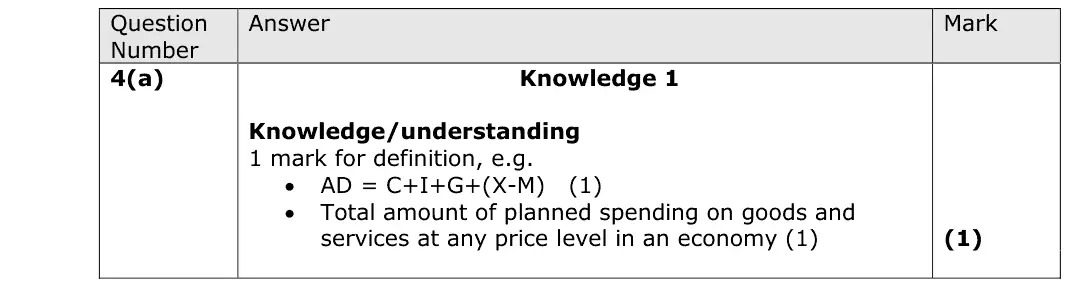
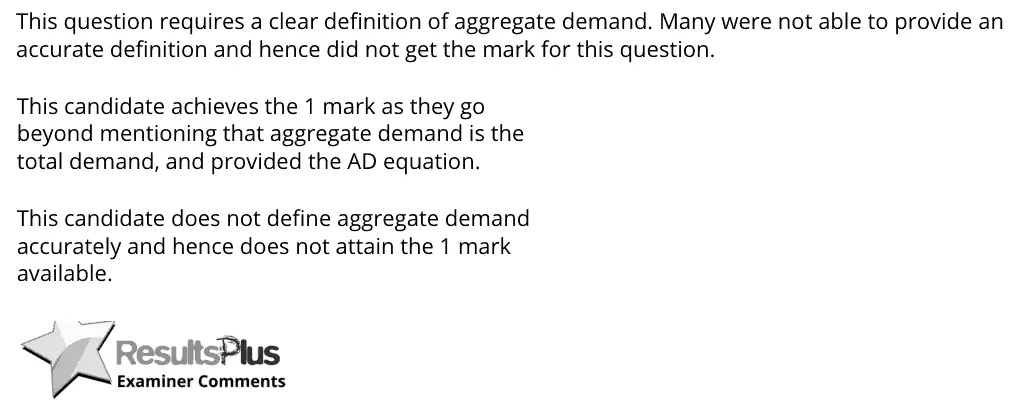
This question requires a clear definition of aggregate demand. Many were not able to provide an accurate definition and hence did not get the mark for this question. This candidate achieves the 1 mark as they go beyond mentioning that aggregate demand is the total demand, and provided the AD equation. This candidate does not define aggregate demand accurately and hence does not attain the 1 mark available.

This question requires a definition of budget deficit. A few candidates were not able to provide an accurate definition, as they confused budget deficit with current account deficit; hence did not get the mark for this question. This candidate gives an accurate definition of budget deficit and as such achieves the 1 mark available. This candidate does not define budget deficit accurately and hence does not attain the 1 mark available.

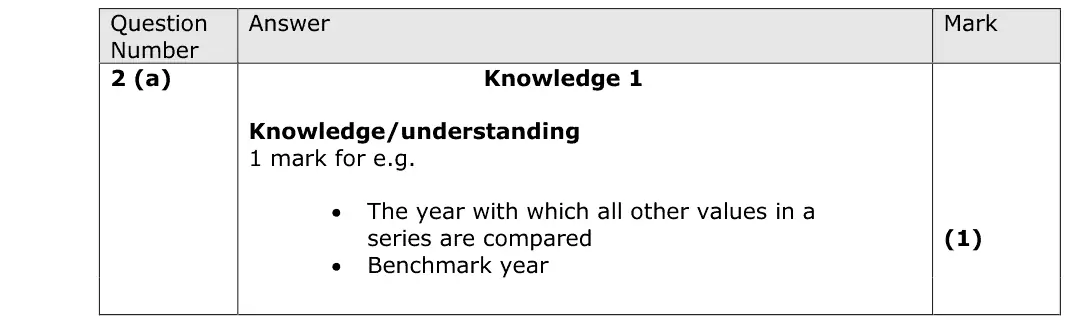
The most common correct definition was for a benchmark year or words to that effect. Sixty-four percent of candidates answered this correctly. This answer achieved 1 out of 1 mark. A definition of ‘base year’ was accurately provided (1). The mark scheme accommodates a range of accurate economic definitions for ‘base year’. Concise accurate answers for 1 mark are the best approach. This answer achieved 1 out of 1 mark. A definition of ‘base year’ as ‘benchmark year’ was accurately provided (1). The mark scheme accommodates a range of accurate economic definitions for ‘base year’. Concise accurate answers for 1 mark are the best approach.
Quantitative skills: QS 5 (calculate and interpret index numbers)

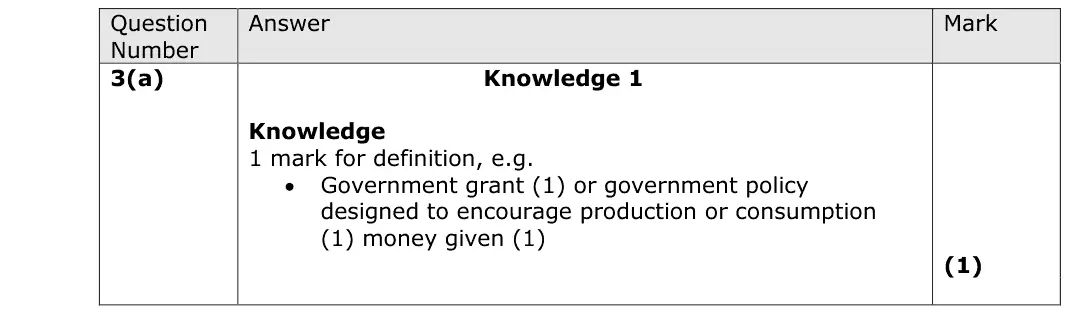
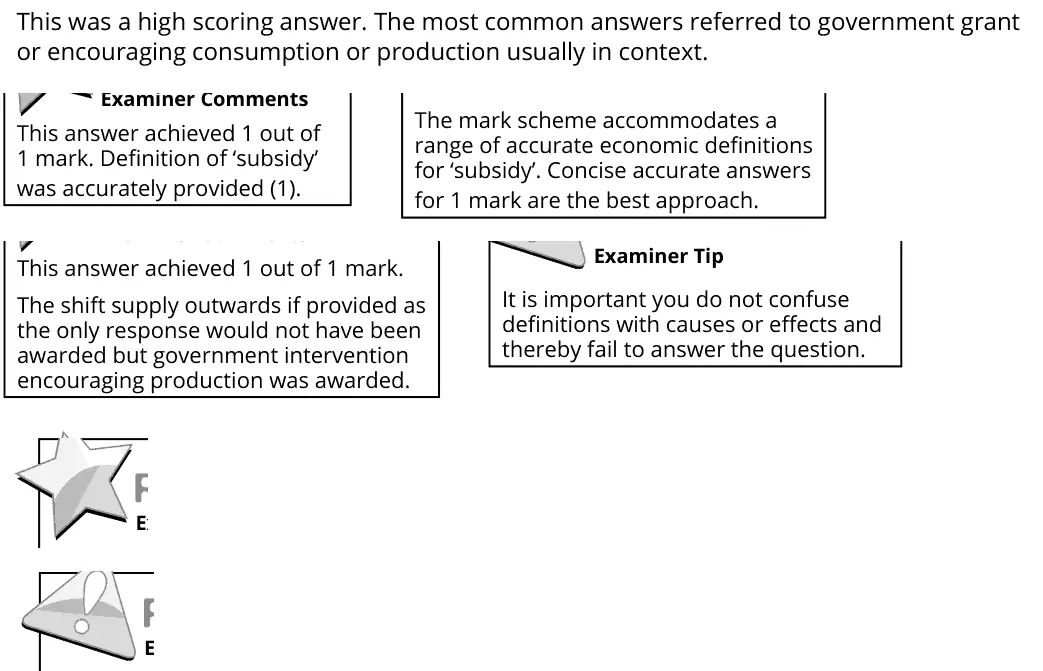
This was a high scoring answer. The most common answers referred to government grant or encouraging consumption or production usually in context. This answer achieved 1 out of 1 mark. Definition of ‘subsidy’ was accurately provided (1). The mark scheme accommodates a range of accurate economic definitions for ‘subsidy’. Concise accurate answers for 1 mark are the best approach. It is important you do not confuse definitions with causes or effects and thereby fail to answer the question. This answer achieved 1 out of 1 mark. The shift supply outwards if provided as the only response would not have been awarded but government intervention encouraging production was awarded.

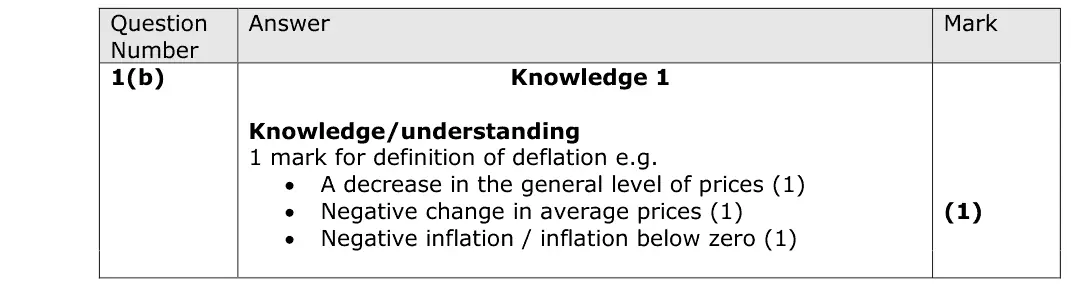
This question requires a short but precise definition of deflation. It is important that candidates are clear in their answers. This candidate has an accurate definition of deflation and as such achieves the 1 mark available. This answer also includes a correct definition of deflation and as such scores full marks.

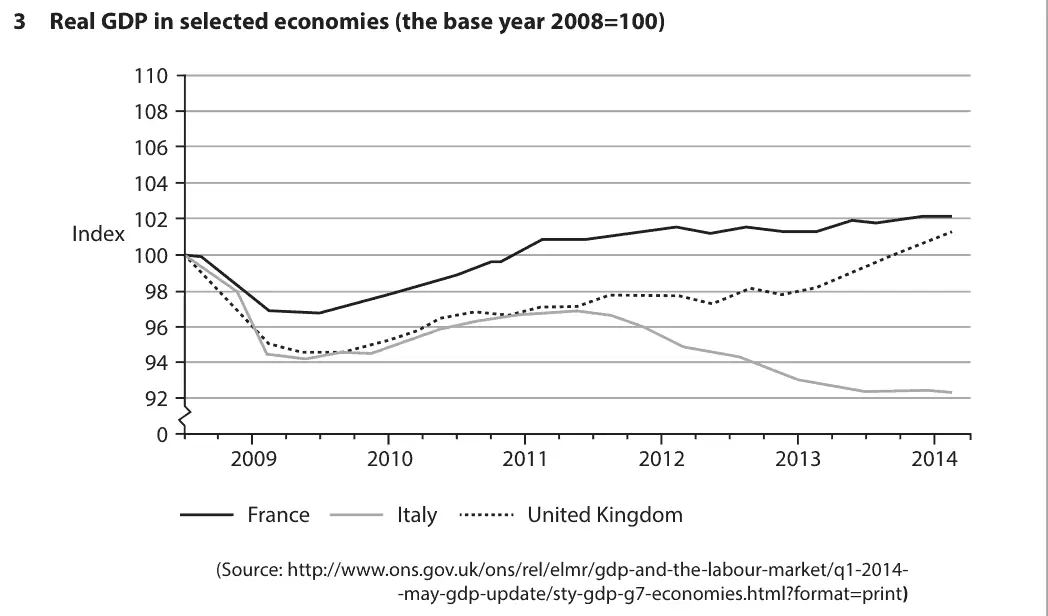
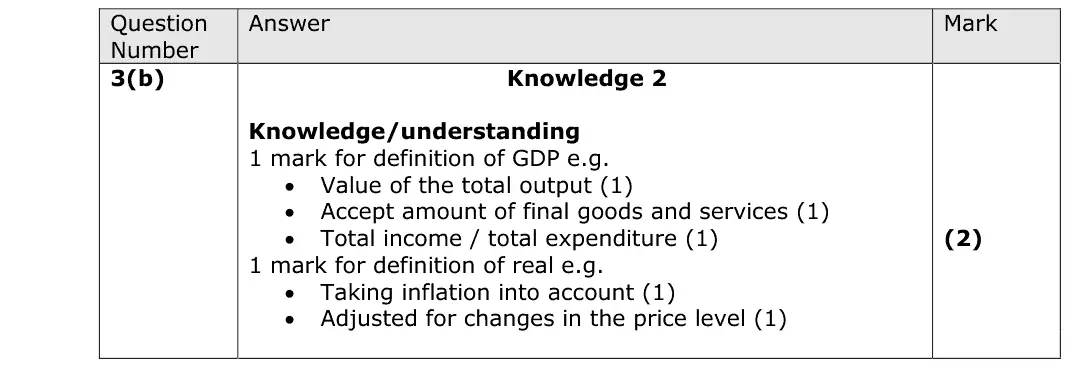
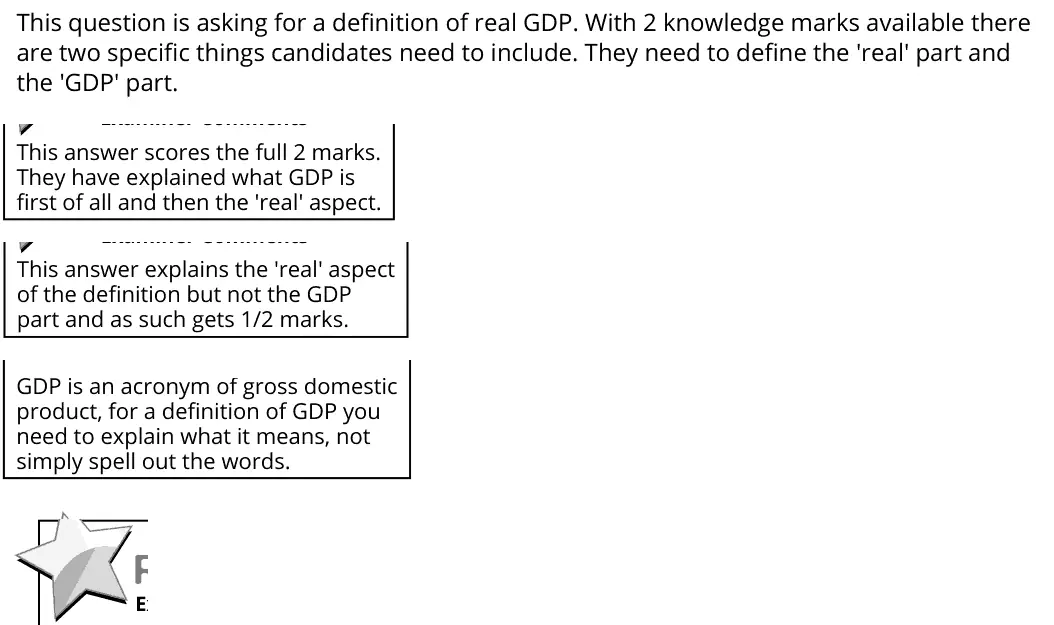
This question is asking for a definition of real GDP. With 2 knowledge marks available there are two specific things candidates need to include. They need to define the 'real' part and the 'GDP' part. This answer scores the full 2 marks. They have explained what GDP is first of all and then the 'real' aspect. This answer explains the 'real' aspect of the definition but not the GDP part and as such gets 1/2 marks. GDP is an acronym of gross domestic product, for a definition of GDP you need to explain what it means, not simply spell out the words.
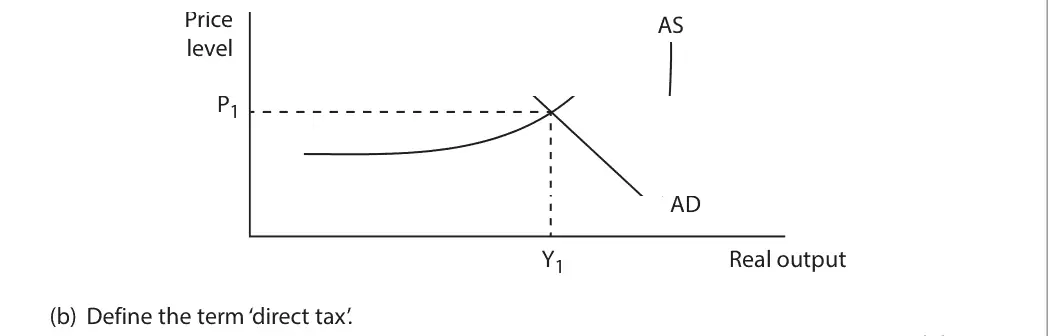
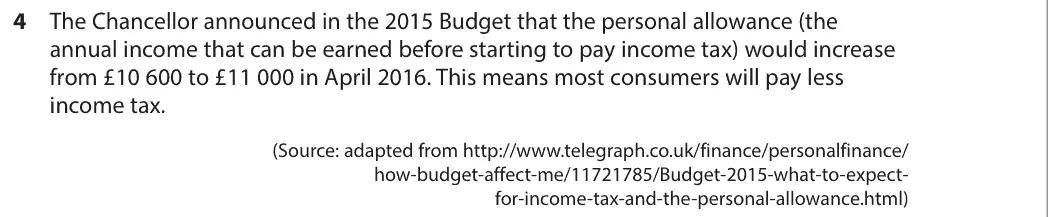
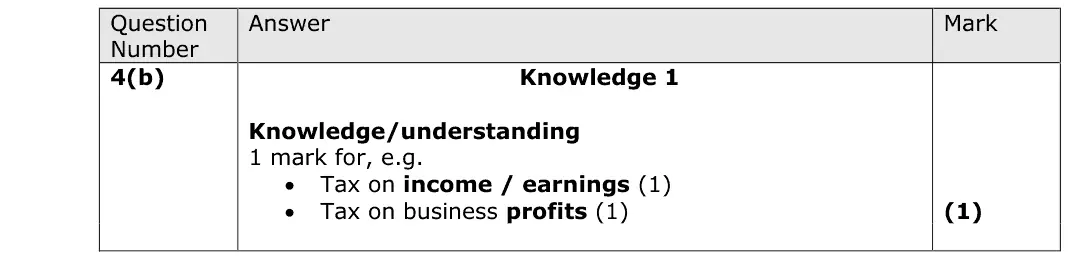
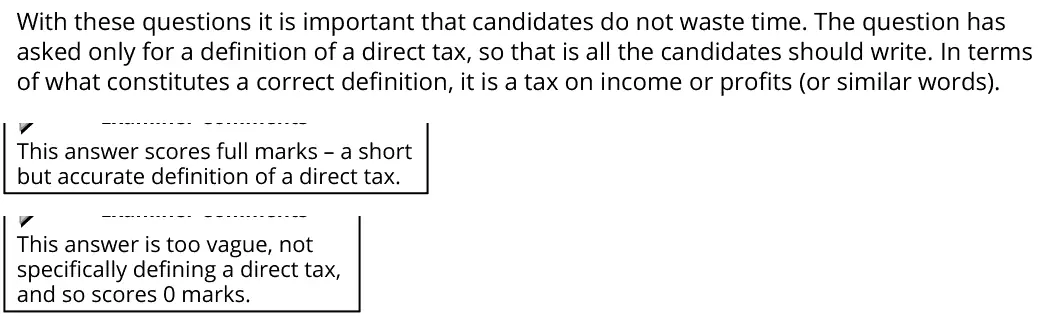
With these questions it is important that candidates do not waste time. The question has asked only for a definition of a direct tax, so that is all the candidates should write. In terms of what constitutes a correct definition, it is a tax on income or profits (or similar words). This answer scores full marks – a short but accurate definition of a direct tax. This answer is too vague, not specifically defining a direct tax, and so scores 0 marks.

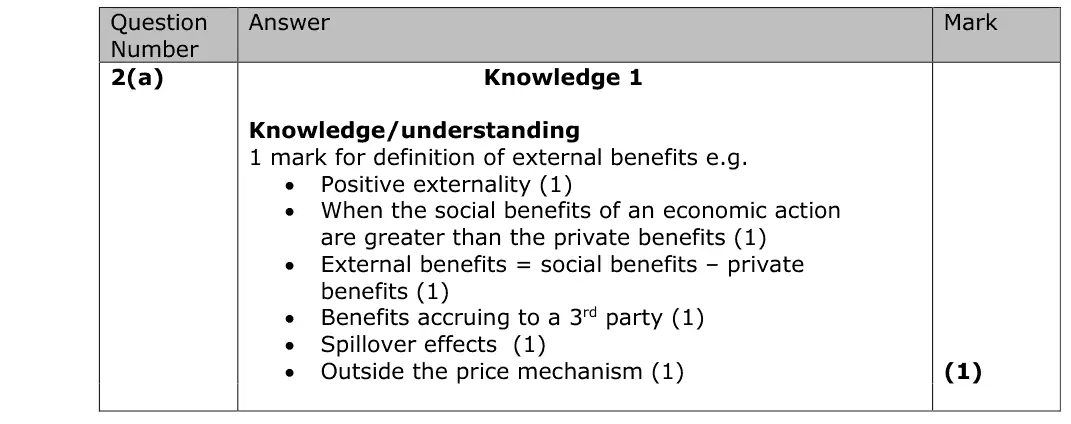
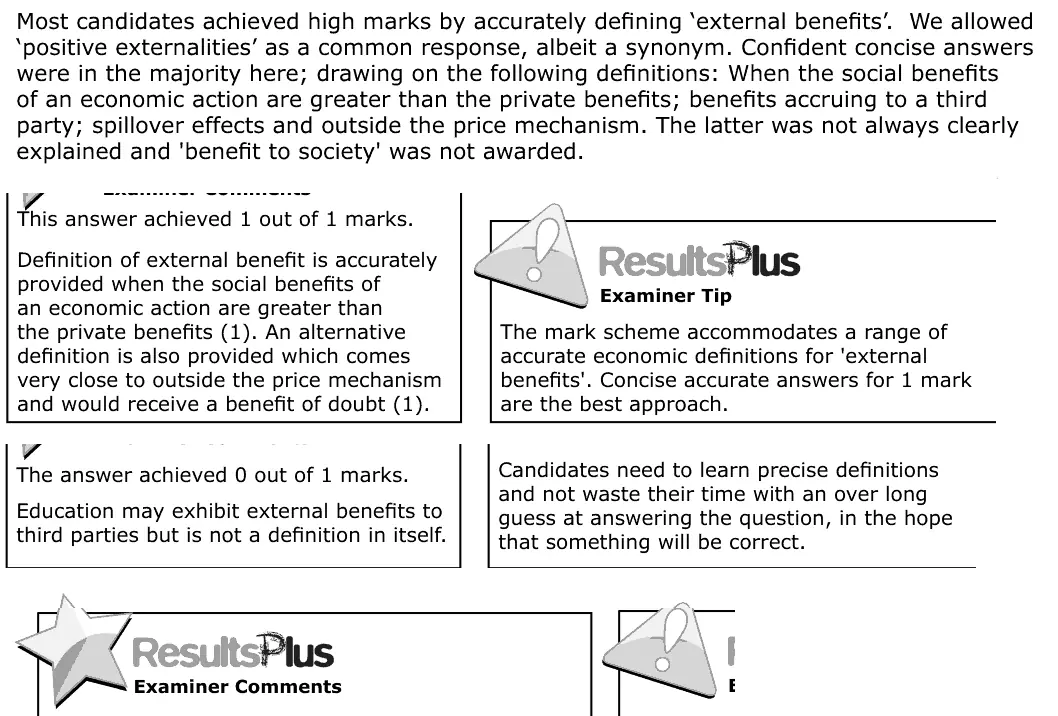
Most candidates achieved high marks by accurately defining ‘external benefits’. We allowed ‘positive externalities’ as a common response, albeit a synonym. Confident concise answers were in the majority here; drawing on the following definitions: When the social benefits of an economic action are greater than the private benefits; benefits accruing to a third party; spillover effects and outside the price mechanism. The latter was not always clearly explained and 'benefit to society' was not awarded. This answer achieved 1 out of 1 marks. Definition of external benefit is accurately provided when the social benefits of an economic action are greater than the private benefits (1). An alternative definition is also provided which comes very close to outside the price mechanism and would receive a benefit of doubt (1). The mark scheme accommodates a range of accurate economic definitions for 'external benefits'. Concise accurate answers for 1 mark are the best approach. The answer achieved 0 out of 1 marks. Education may exhibit external benefits to third parties but is not a definition in itself. Candidates need to learn precise definitions and not waste their time with an over long guess at answering the question, in the hope that something will be correct.

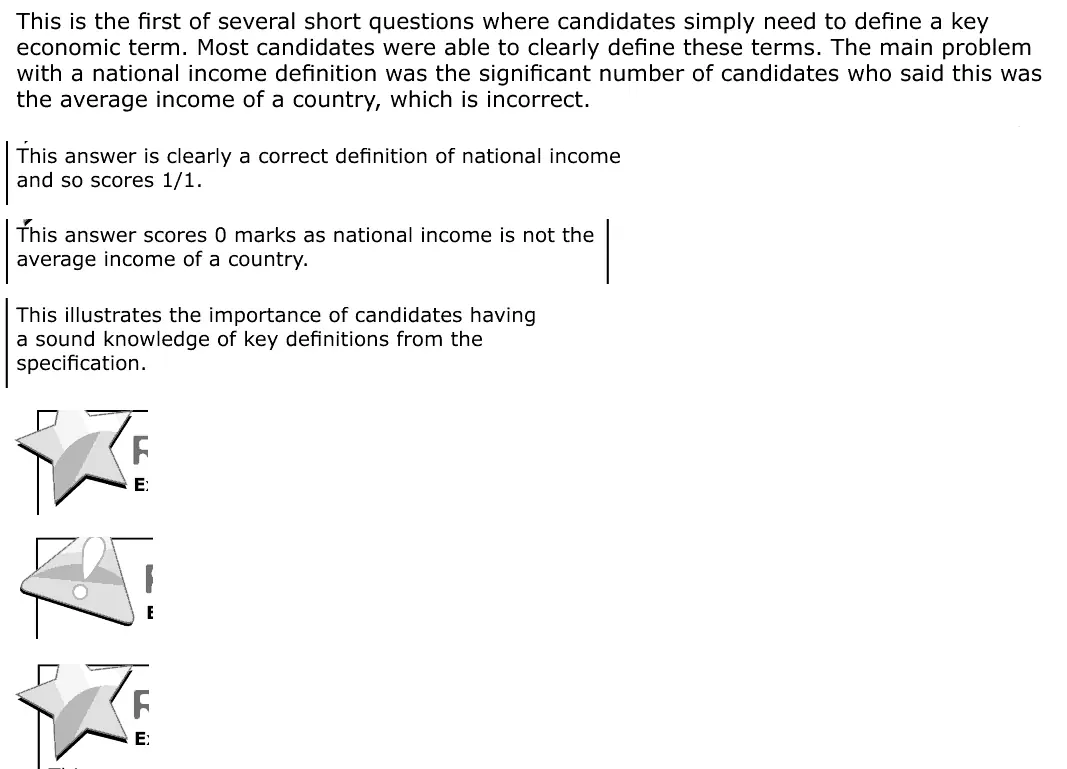
This is the first of several short questions where candidates simply need to define a key economic term. Most candidates were able to clearly define these terms. The main problem with a national income definition was the significant number of candidates who said this was the average income of a country, which is incorrect. This answer is clearly a correct definition of national income and so scores 1/1. This answer scores 0 marks as national income is not the average income of a country. This illustrates the importance of candidates having a sound knowledge of key definitions from the specification.

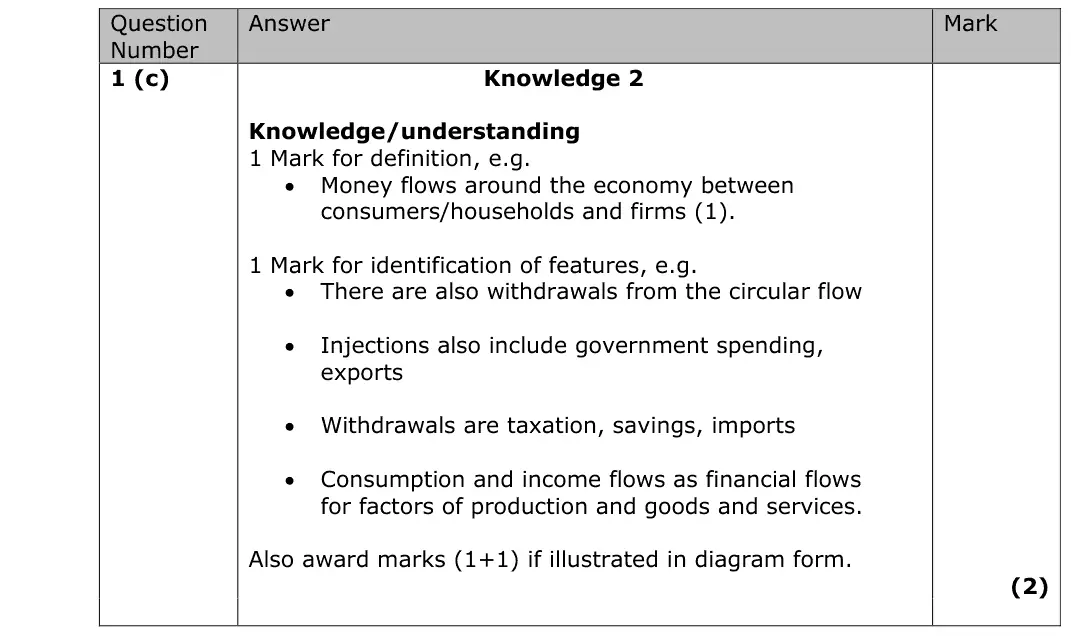
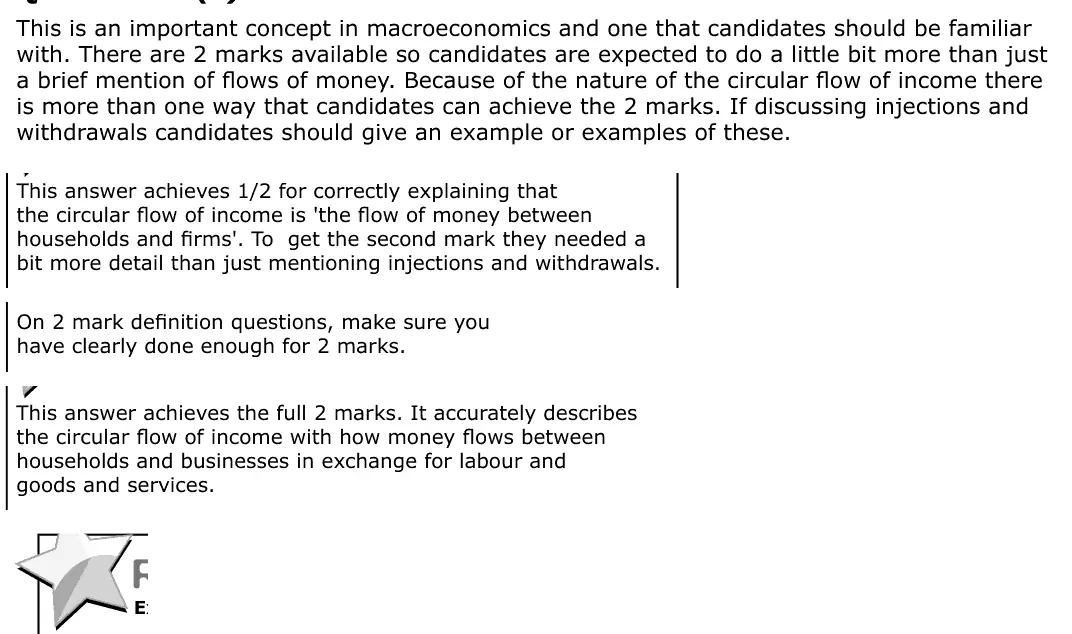
This is an important concept in macroeconomics and one that candidates should be familiar with. There are 2 marks available so candidates are expected to do a little bit more than just a brief mention of flows of money. Because of the nature of the circular flow of income there is more than one way that candidates can achieve the 2 marks. If discussing injections and withdrawals candidates should give an example or examples of these. This answer achieves 1/2 for correctly explaining that the circular flow of income is 'the flow of money between households and firms'. To get the second mark they needed a bit more detail than just mentioning injections and withdrawals. On 2 mark definition questions, make sure you have clearly done enough for 2 marks. This answer achieves the full 2 marks. It accurately describes the circular flow of income with how money flows between households and businesses in exchange for labour and goods and services.

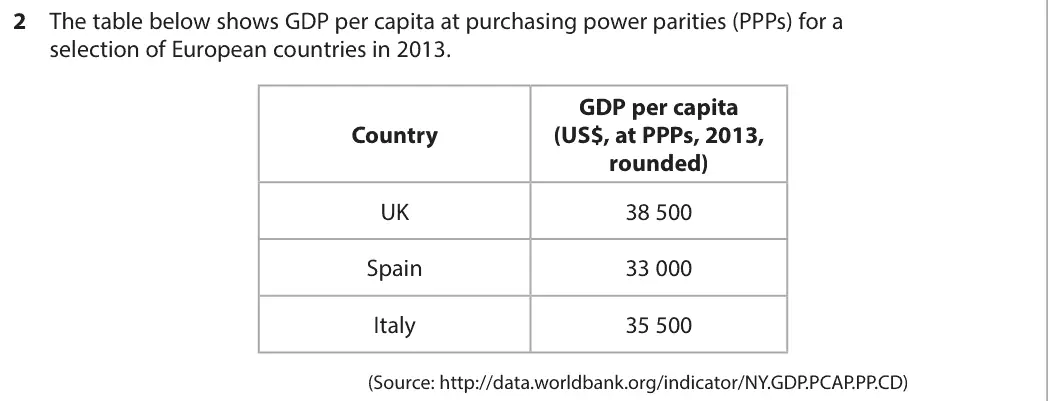
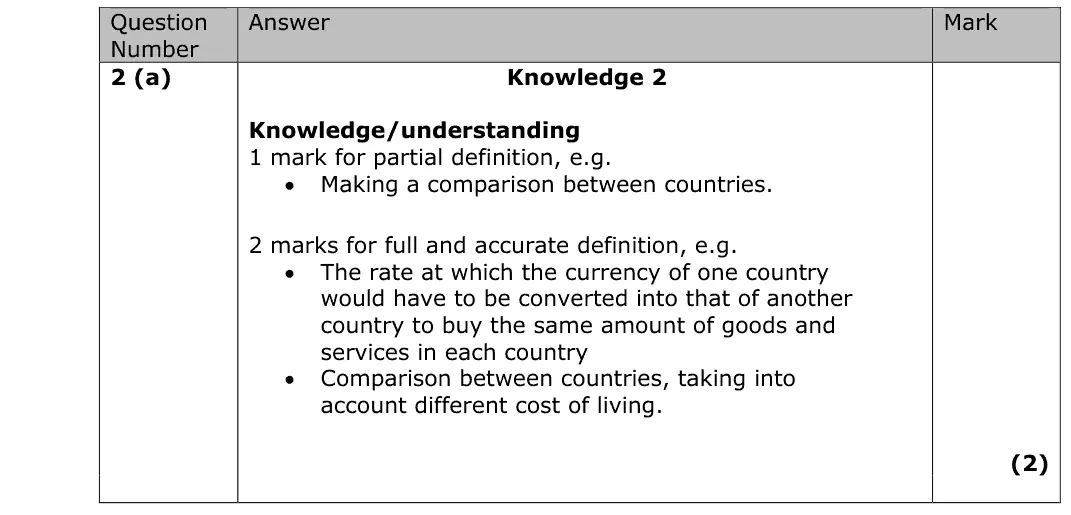
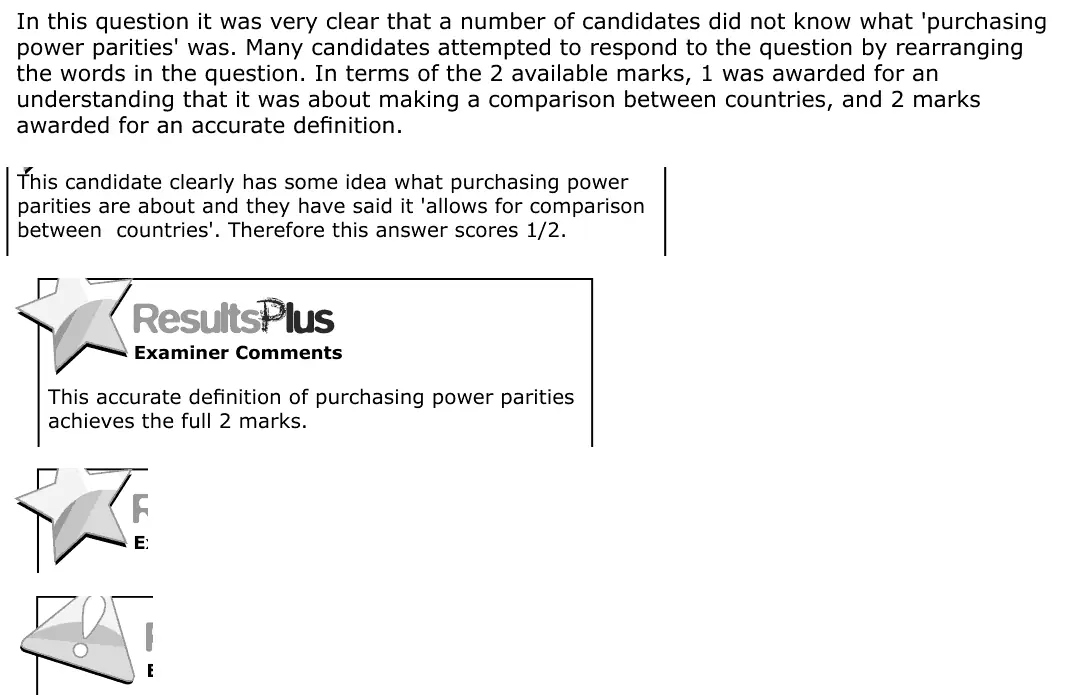
In this question it was very clear that a number of candidates did not know what 'purchasing power parities' was. Many candidates attempted to respond to the question by rearranging the words in the question. In terms of the 2 available marks, 1 was awarded for an understanding that it was about making a comparison between countries, and 2 marks awarded for an accurate definition. This candidate clearly has some idea what purchasing power parities are about and they have said it 'allows for comparison between countries'. Therefore this answer scores 1/2. This accurate definition of purchasing power parities achieves the full 2 marks.

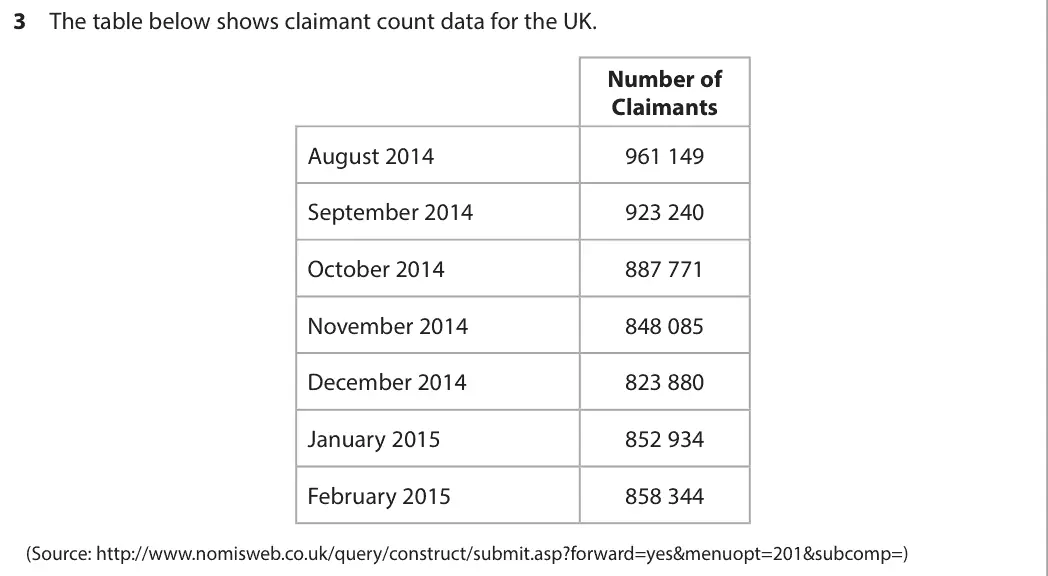
This is another key definition question and the majority of candidates could accurately and concisely define the claimant count, either with reference to 'unemployment benefits' or 'jobseekers allowance'. Unfortunately a number of candidates referred to 'benefits' in general, which is incorrect. This correctly refers to 'job seekers allowance' and so achieves 1/1. This answer is incorrect because it refers simply to 'benefits'.
Essays stuck in Level 2, or losing the easy marks in Section A? Book a trial session with Lianne, a former Edexcel examiner.