October 2020: Paper 2

100 marks · 19 question parts · Paper, mark scheme and report on Pearson's site · The October 2020 papers are the papers printed for the cancelled summer 2020 exams

Question by question

QTopicMarksAOType
1(a) Measuring economic growth: GDP, GNI and living standards 2AO2=2Calculation

1(b) Measuring economic growth: GDP, GNI and living standards 2AO1=2Short answer
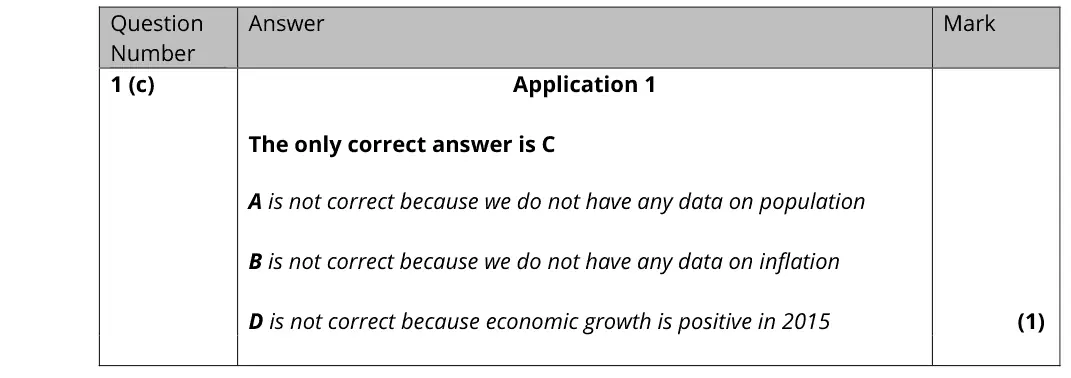
1(c) Measuring economic growth: GDP, GNI and living standards 1AO2=1Multiple choice
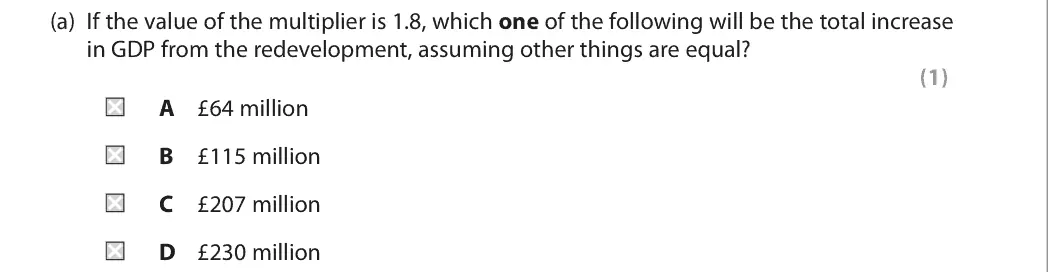
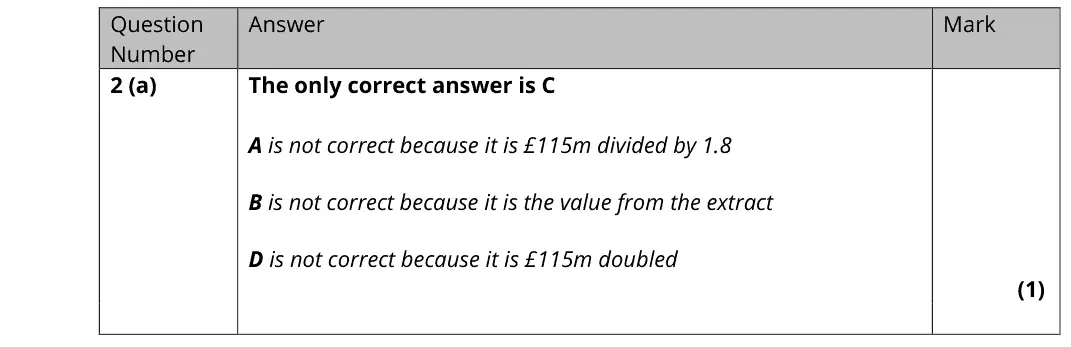
2(a) The circular flow, national income and the multiplier 1Multiple choice
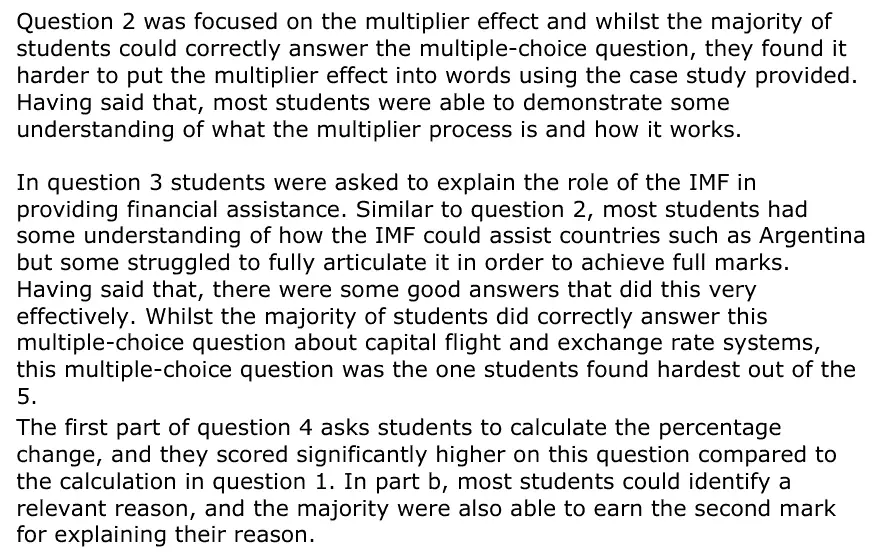
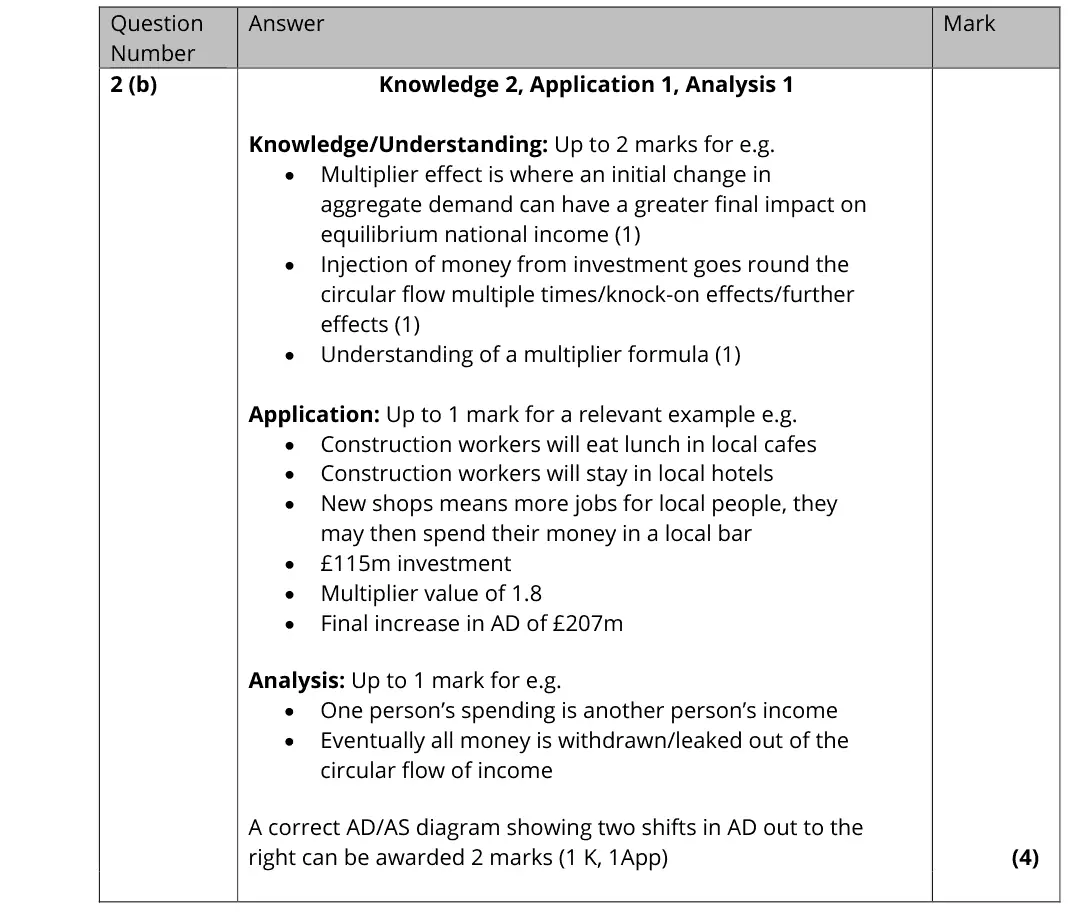
2(b) The circular flow, national income and the multiplier 4AO1=2,AO2=1,AO3=1Short answer
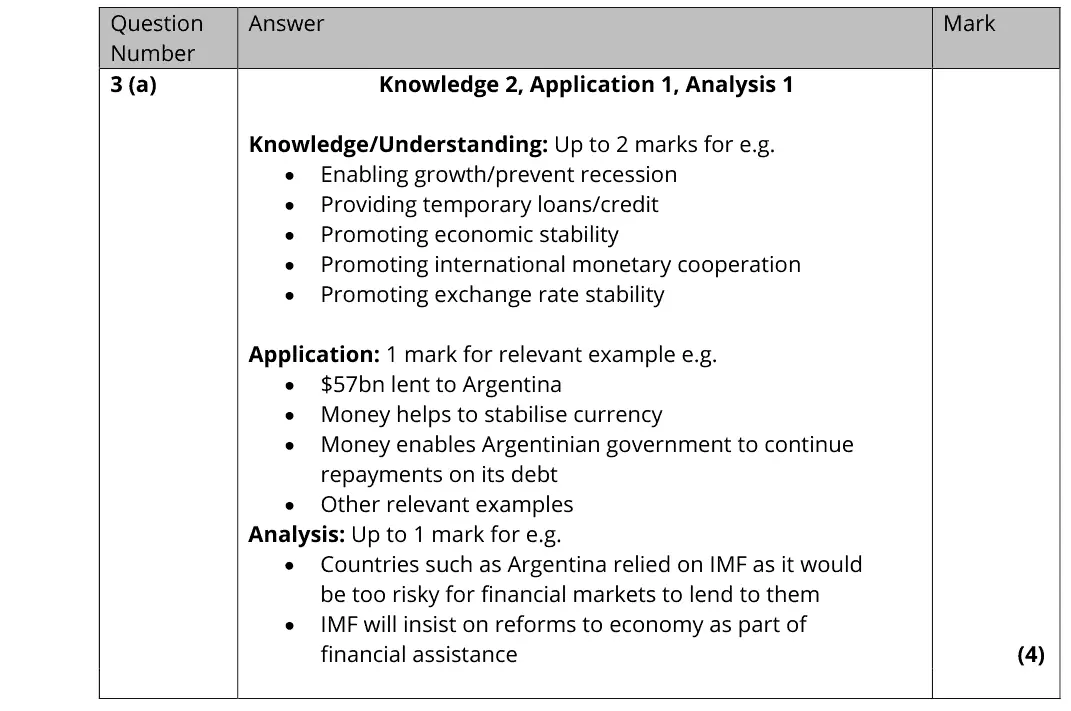
3(a) Emerging and developing economies 4AO1=2,AO2=1,AO3=1Short answer
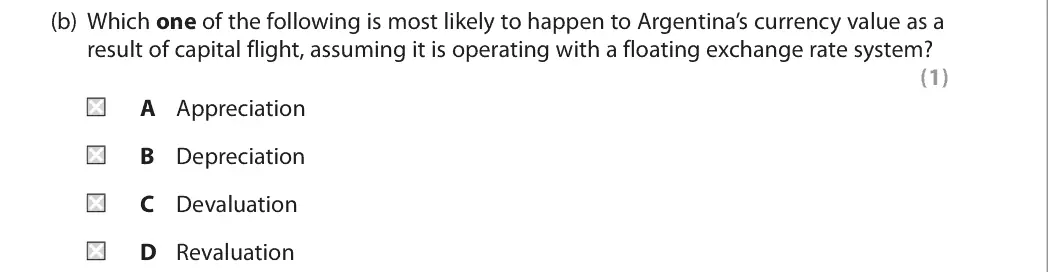
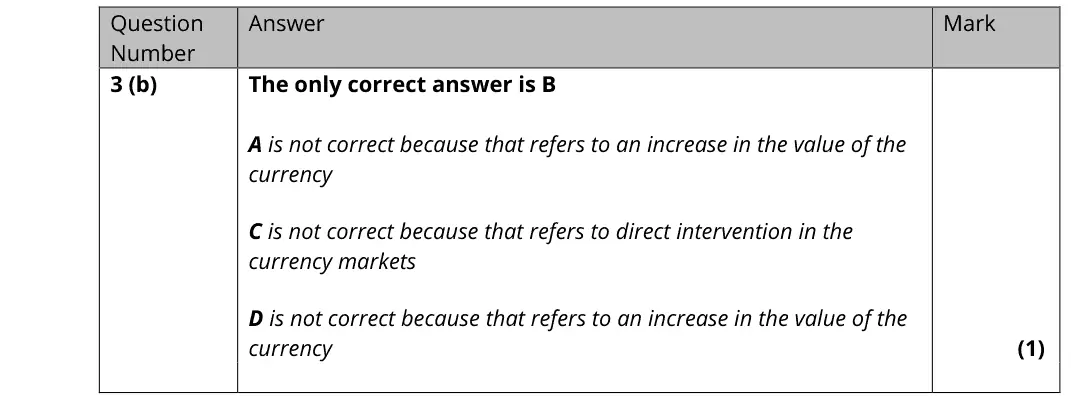
3(b) Exchange rates 1Multiple choice
4(a) Employment and unemployment 2AO2=2Calculation
4(b) Employment and unemployment 2AO1=1,AO3=1Short answer
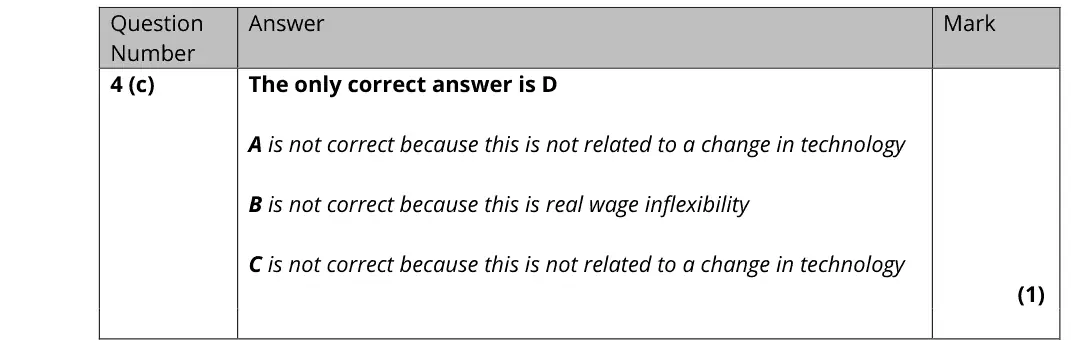
4(c) Employment and unemployment 1Multiple choice
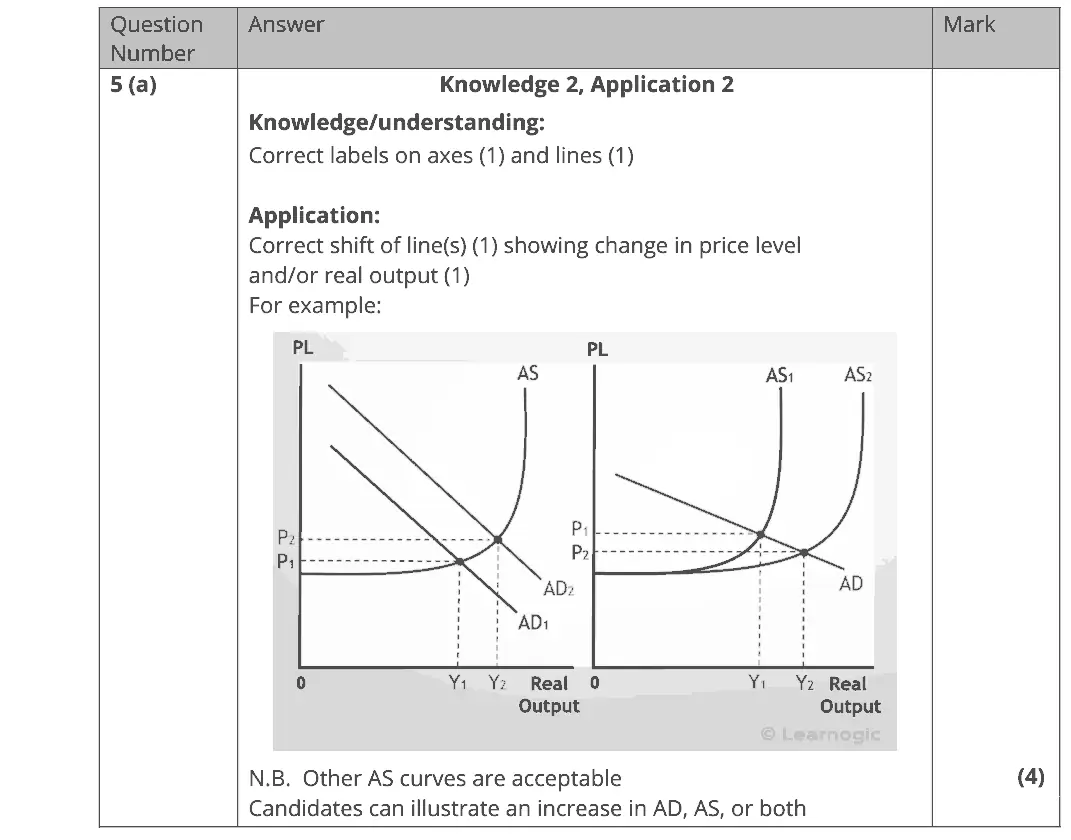
5(a) The circular flow, national income and the multiplier, Aggregate supply 4AO1=2,AO2=2Diagram
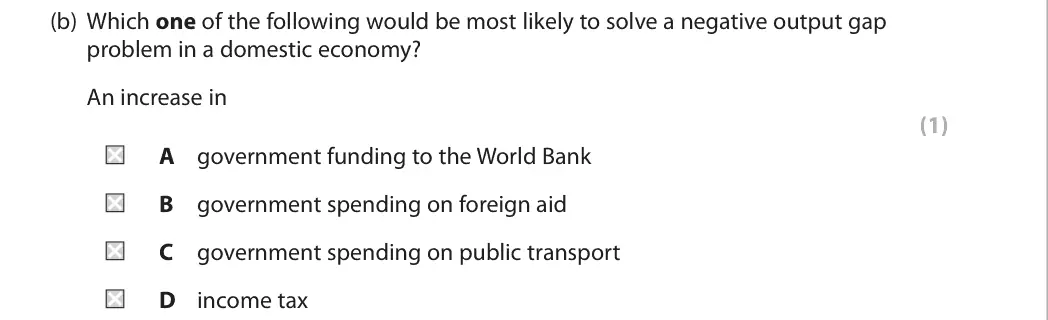
5(b) Economic growth, output gaps and the trade cycle 1Multiple choice
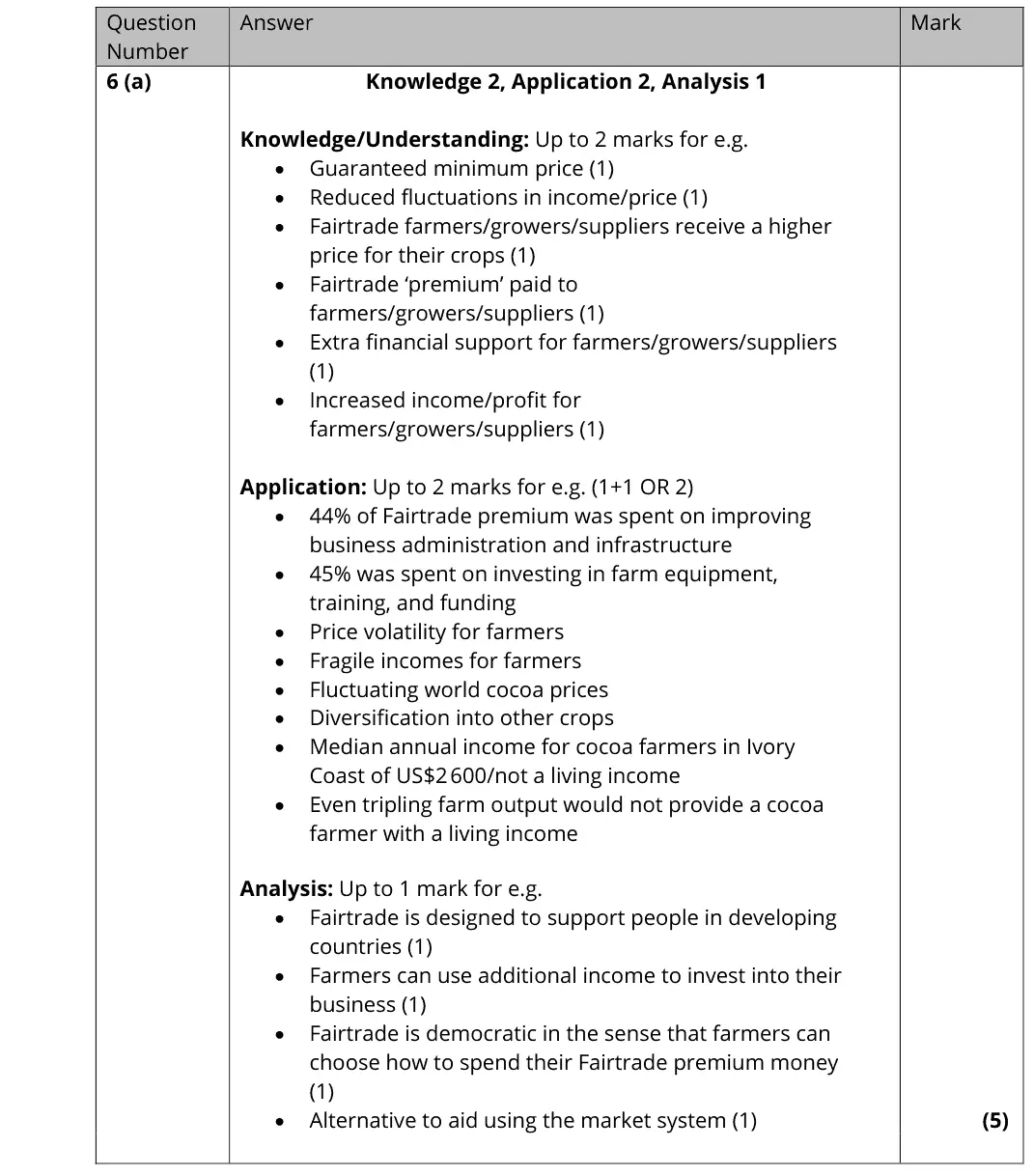
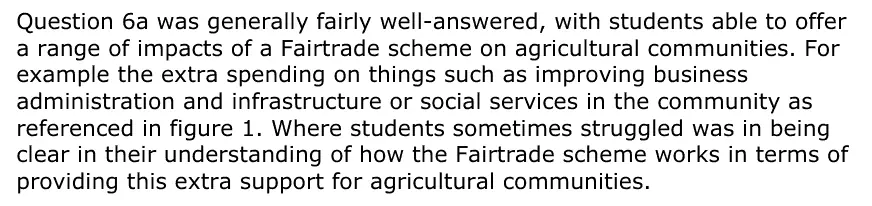
6(a) Emerging and developing economies 5AO1=2,AO2=2,AO3=1Short answer
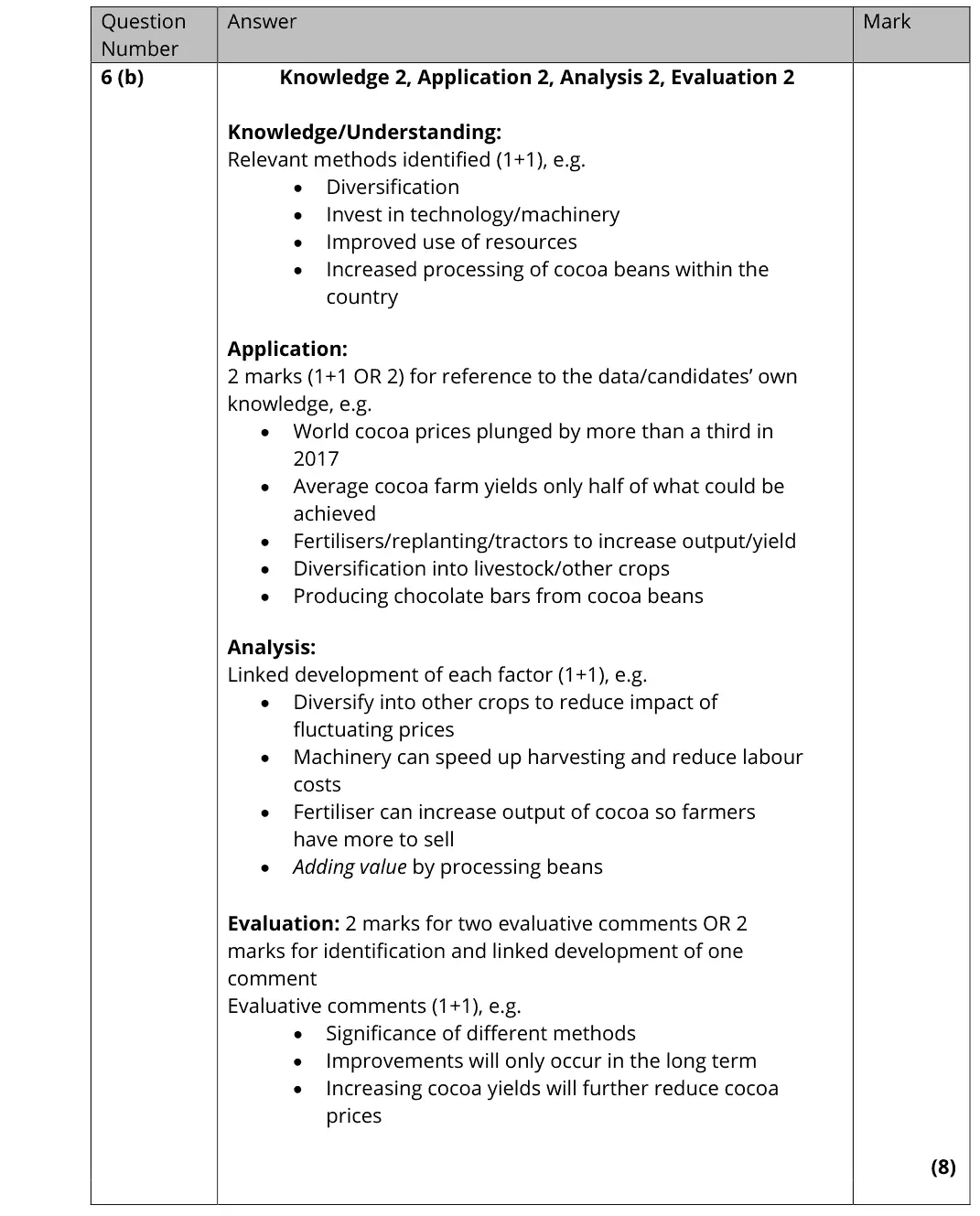
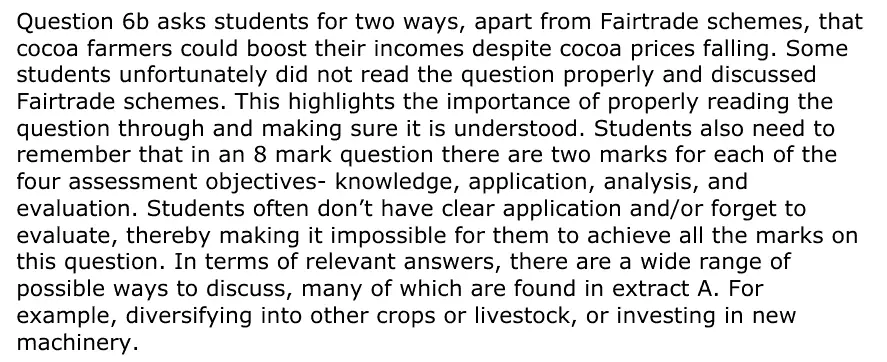
6(b) Emerging and developing economies 8AO1=2,AO2=2,AO3=2,AO4=2Extended response
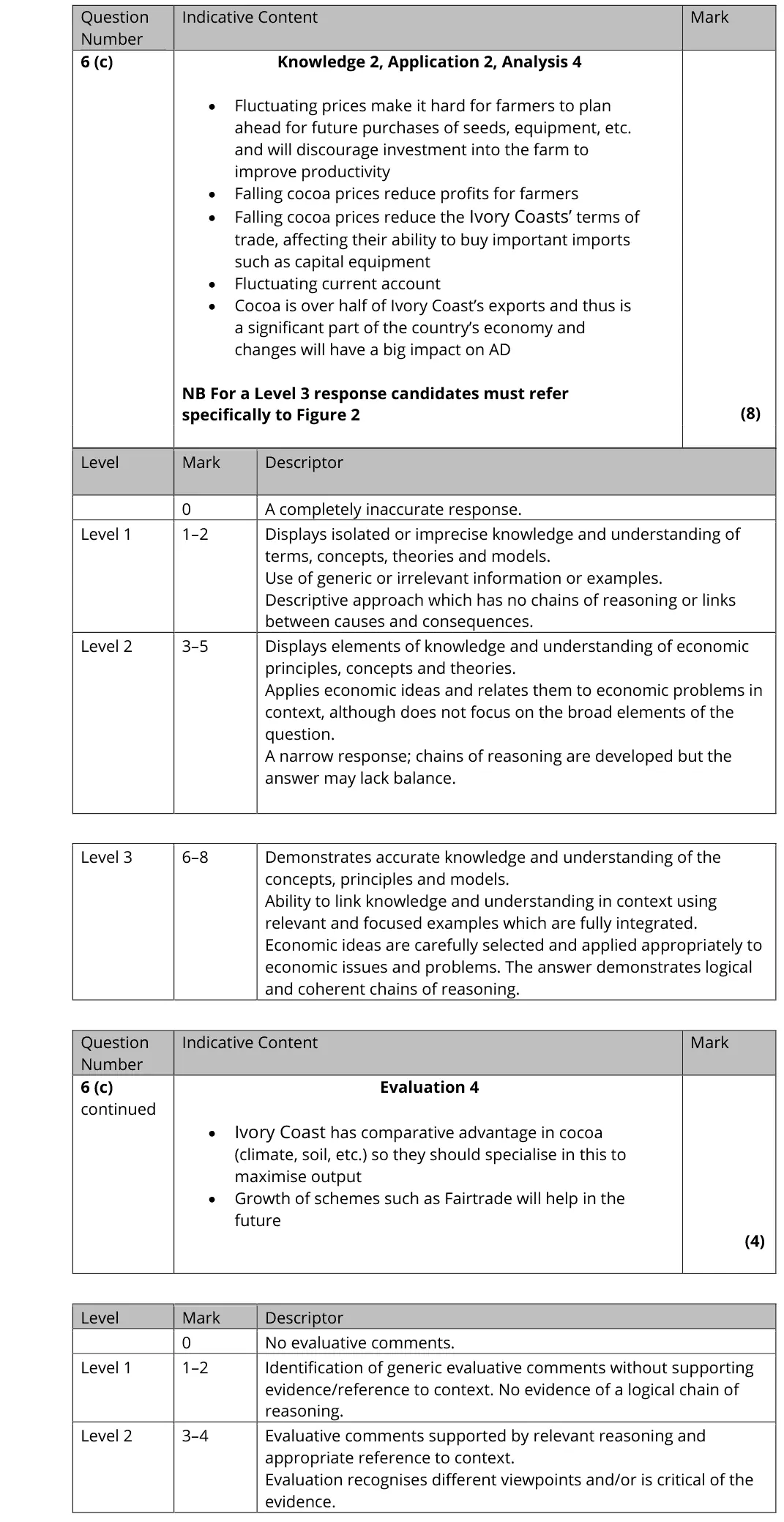
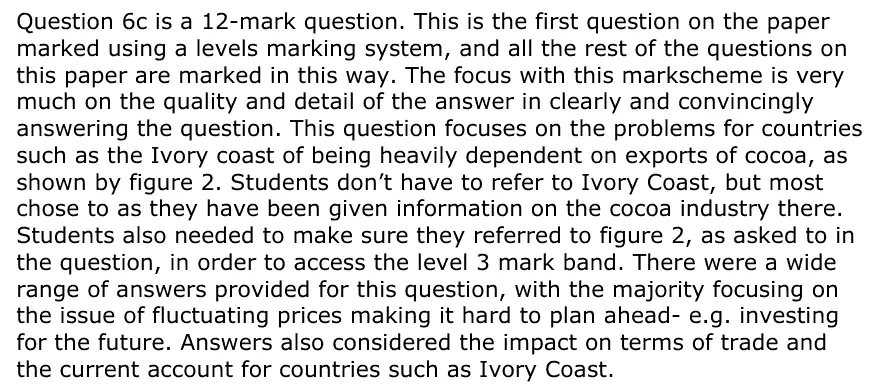
6(c) Emerging and developing economies, Globalisation, specialisation and trade 12AO1=2,AO2=2,AO3=4,AO4=4Extended response
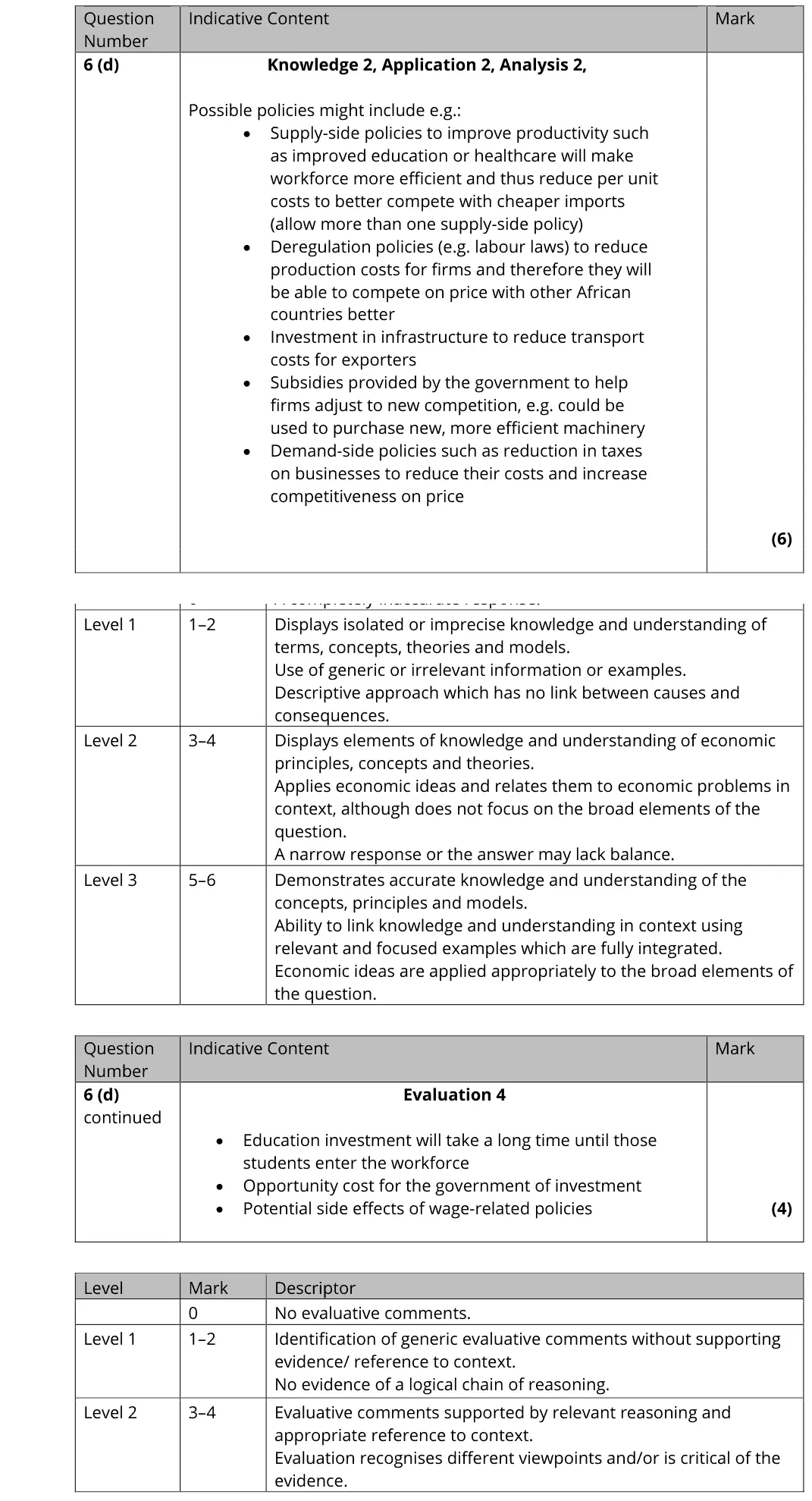
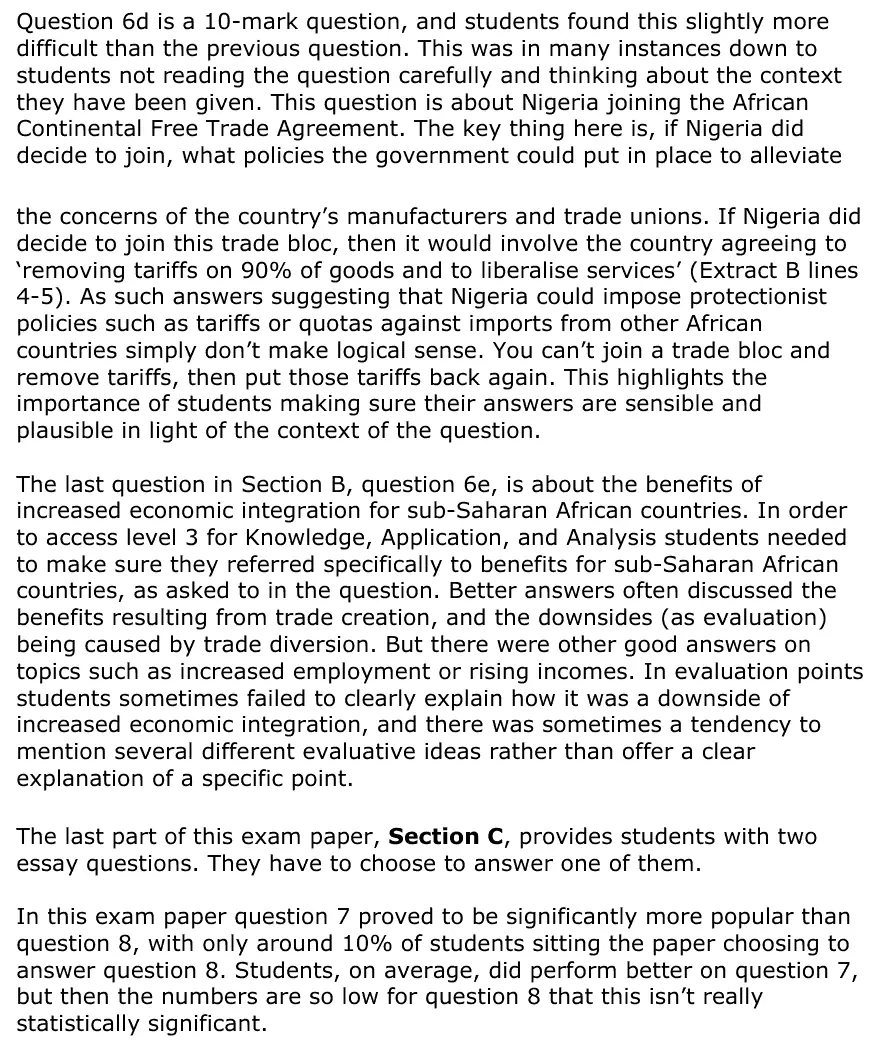
6(d) Macroeconomic policies in a global context, International competitiveness 10AO1=2,AO2=2,AO3=2,AO4=4Extended response
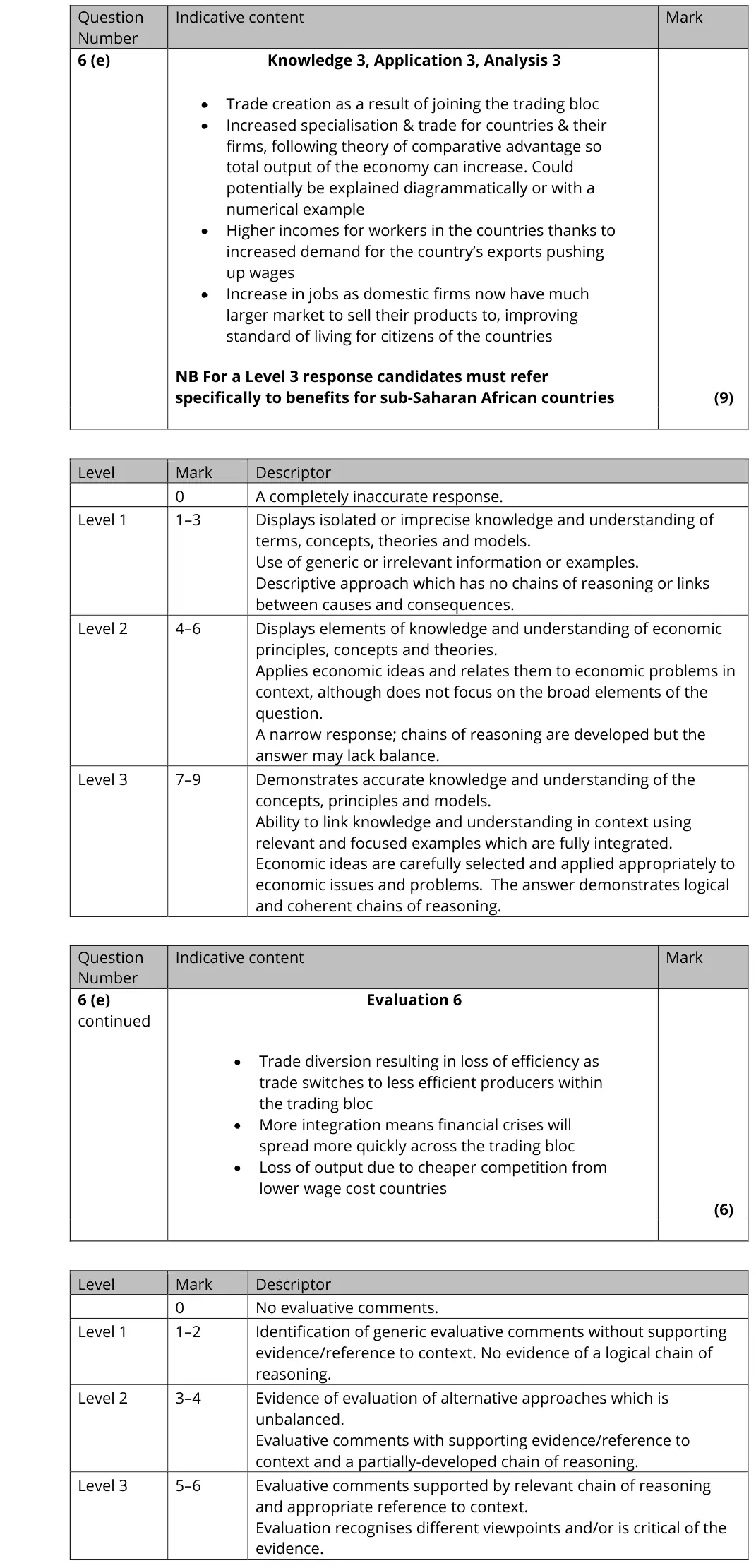
6(e) Trading blocs, the WTO and protectionism, Globalisation, specialisation and trade 15AO1=3,AO2=3,AO3=3,AO4=6Extended response
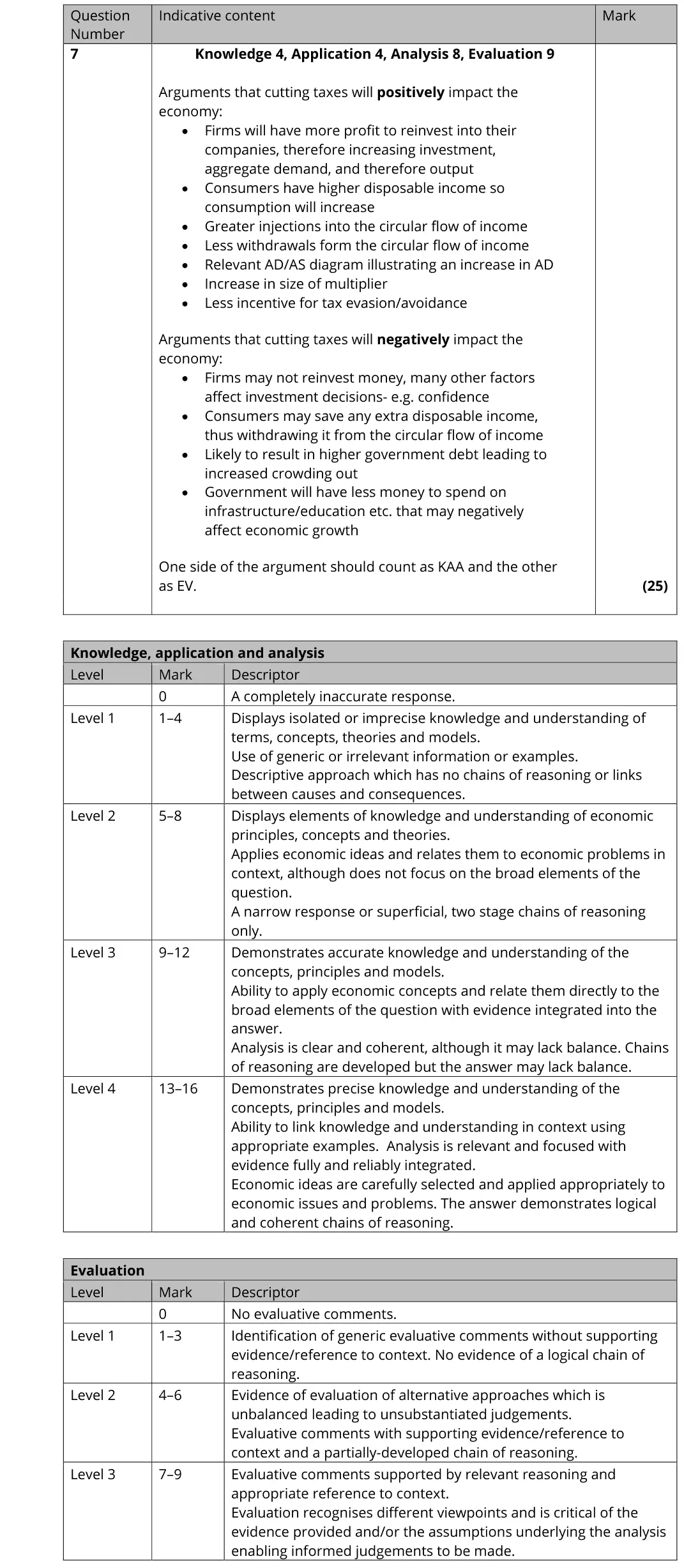
7 Public expenditure, taxation and public sector finances, Demand-side policies: fiscal and monetary policy 25AO1=4,AO2=4,AO3=8,AO4=9Essay
8 Poverty and inequality 25AO1=4,AO2=4,AO3=8,AO4=9Essay

The questions

1(a)1(b)1(c)2(a)2(b)3(a)3(b)4(a)4(b)4(c)5(a)5(b)6(a)6(b)6(c)6(d)6(e)78
October 2020 · Paper 2 · Q1(a) 2 marks AO2=2 Calculation Hard measuring economic growth
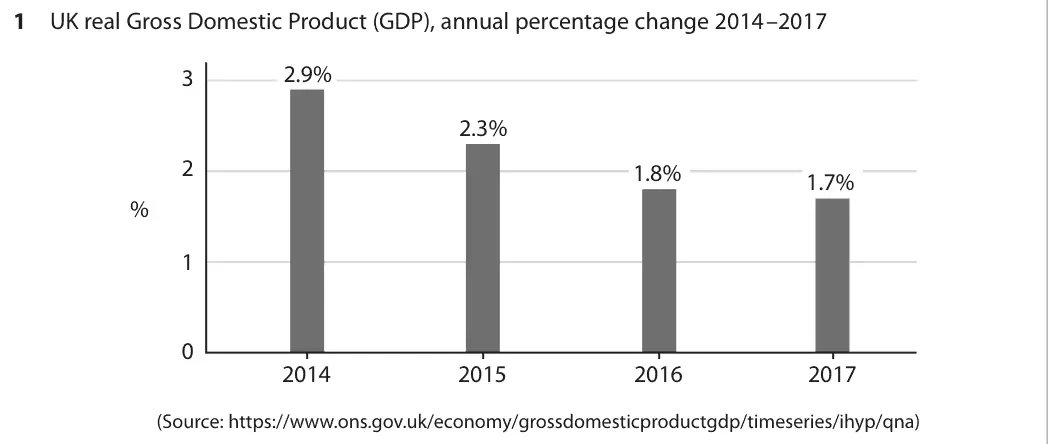
Data and extracts for question 11 UK real Gross Domestic Product (GDP), annual percentage change 2014–2017 2.9% 3 2.3% 2 1.8% 1.7% % 1 0 2014 2015 2016 2017 (Source: https://www.ons.gov.uk/economy/grossdomesticproductgdp/timeseries/ihyp/qna)
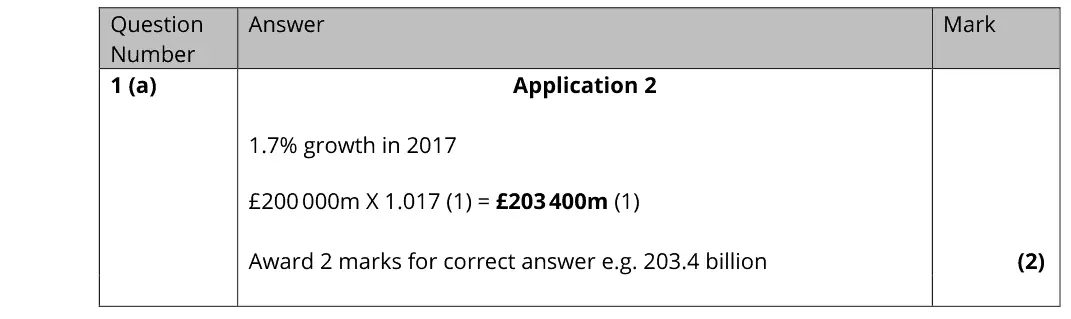
(a) Total real UK GDP in 2016 was £200 000 million. With reference to the chart above, calculate the total real UK GDP for 2017. You are advised to show your working. (2)
October 2020 · Paper 2 · Q1(b) 2 marks AO1=2 Short answer measuring economic growth
Data and extracts for question 11 UK real Gross Domestic Product (GDP), annual percentage change 2014–2017 2.9% 3 2.3% 2 1.8% 1.7% % 1 0 2014 2015 2016 2017 (Source: https://www.ons.gov.uk/economy/grossdomesticproductgdp/timeseries/ihyp/qna)
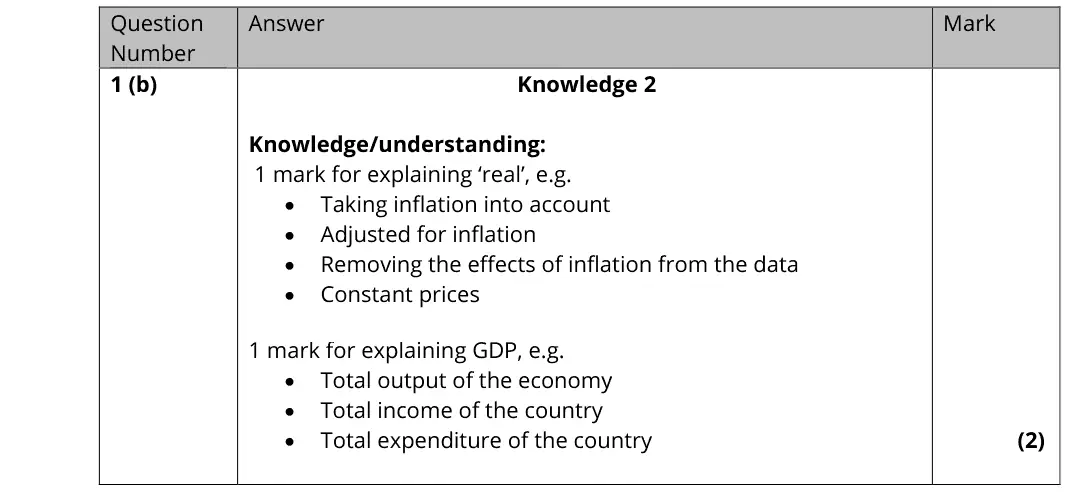
(b) Explain the term ‘real gross domestic product’. (2)
October 2020 · Paper 2 · Q1(c) 1 mark AO2=1 Multiple choice measuring economic growth
Data and extracts for question 11 UK real Gross Domestic Product (GDP), annual percentage change 2014–2017 2.9% 3 2.3% 2 1.8% 1.7% % 1 0 2014 2015 2016 2017 (Source: https://www.ons.gov.uk/economy/grossdomesticproductgdp/timeseries/ihyp/qna)
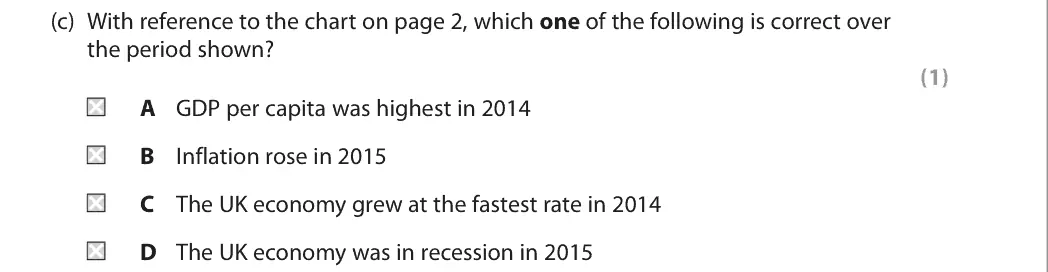
(c) With reference to the chart on page 2, which one of the following is correct over the period shown? (1) A GDP per capita was highest in 2014 B Inflation rose in 2015 C The UK economy grew at the fastest rate in 2014 D The UK economy was in recession in 2015
October 2020 · Paper 2 · Q2(a) 1 mark Multiple choice national income and the multiplier
Data and extracts for question 22 The planned investment in the redevelopment of Dover Port will cost £115 million. The Chief Executive said it will lead to many ‘new job opportunities for local people and a transformed waterfront experience’ with new cafés, bars, and shops. (Source adapted from: https://www.kentonline.co.uk/dover/news/docklands‑ redevelopment‑work‑to‑start‑118581/)
(a) If the value of the multiplier is 1.8, which one of the following will be the total increase in GDP from the redevelopment, assuming other things are equal? (1) A £64 million B £115 million C £207 million D £230 million
October 2020 · Paper 2 · Q2(b) 4 marks AO1=2, AO2=1, AO3=1 Short answer national income and the multiplier
Data and extracts for question 22 The planned investment in the redevelopment of Dover Port will cost £115 million. The Chief Executive said it will lead to many ‘new job opportunities for local people and a transformed waterfront experience’ with new cafés, bars, and shops. (Source adapted from: https://www.kentonline.co.uk/dover/news/docklands‑ redevelopment‑work‑to‑start‑118581/)
(b) Using the example above, explain how the multiplier process leads to an increase in aggregate demand. (4)
October 2020 · Paper 2 · Q3(a) 4 marks AO1=2, AO2=1, AO3=1 Short answer emerging and developing economies
Data and extracts for question 33 In 2018, the International Monetary Fund (IMF) lent Argentina $57 billion as part of a bailout package to help prevent the country’s government defaulting on its debts. This financial crisis also caused significant capital flight out of Argentina’s economy. (Source adapted from: https://www.ft.com/content/737b48bc‑c1c9‑11e8‑95b1‑d36dfef1b89a)
(a) Explain the role of the IMF in providing financial assistance to countries such as Argentina. (4)
October 2020 · Paper 2 · Q3(b) 1 mark Multiple choice exchange rates
Data and extracts for question 33 In 2018, the International Monetary Fund (IMF) lent Argentina $57 billion as part of a bailout package to help prevent the country’s government defaulting on its debts. This financial crisis also caused significant capital flight out of Argentina’s economy. (Source adapted from: https://www.ft.com/content/737b48bc‑c1c9‑11e8‑95b1‑d36dfef1b89a)
(b) Which one of the following is most likely to happen to Argentina’s currency value as a result of capital flight, assuming it is operating with a floating exchange rate system? (1) A Appreciation B Depreciation C Devaluation D Revaluation
October 2020 · Paper 2 · Q4(a) 2 marks AO2=2 Calculation unemployment
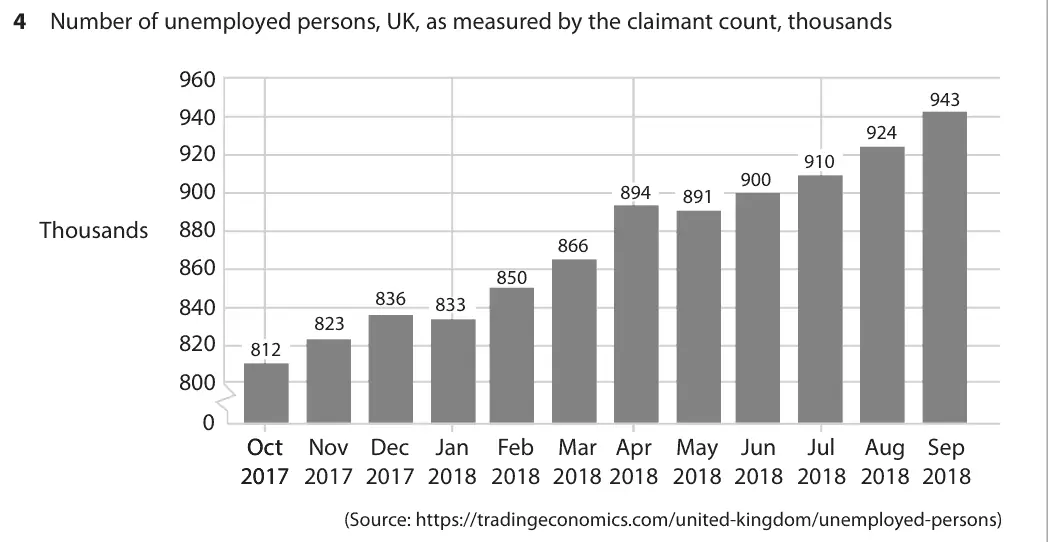
Data and extracts for question 44 Number of unemployed persons, UK, as measured by the claimant count, thousands 960 943 940 924 920 910 900 900 894 891 880 Thousands 866 860 850 836 840 833 823 820 812 800 0 O Oc tc Nov Dec Jan Feb Mar Apr May Jun Jul Aug Sep 2 2 0 0 1 1 7 7 2017 2017 2018 2018 2018 2018 2018 2018 2018 2018 2018 (Source: https://tradingeconomics.com/united‑kingdom/unemployed‑persons)
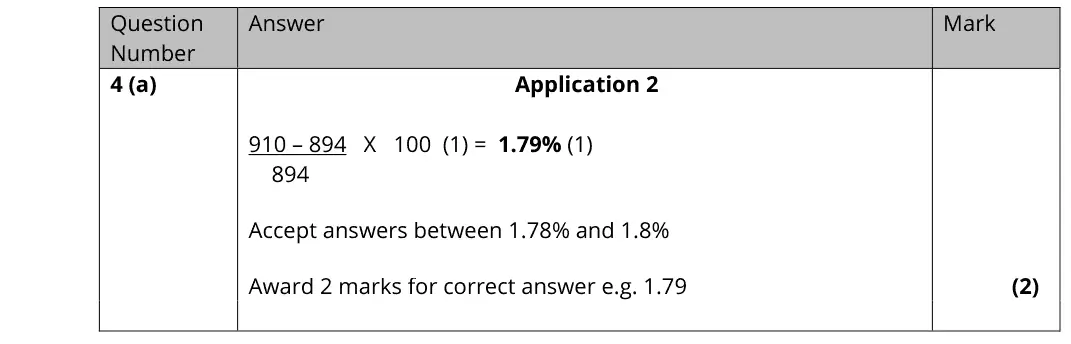
(a) Calculate the percentage change in the number of UK unemployed persons between April and July 2018. You are advised to show your working. (2)
October 2020 · Paper 2 · Q4(b) 2 marks AO1=1, AO3=1 Short answer unemployment
Data and extracts for question 44 Number of unemployed persons, UK, as measured by the claimant count, thousands 960 943 940 924 920 910 900 900 894 891 880 Thousands 866 860 850 836 840 833 823 820 812 800 0 O Oc tc Nov Dec Jan Feb Mar Apr May Jun Jul Aug Sep 2 2 0 0 1 1 7 7 2017 2017 2018 2018 2018 2018 2018 2018 2018 2018 2018 (Source: https://tradingeconomics.com/united‑kingdom/unemployed‑persons)
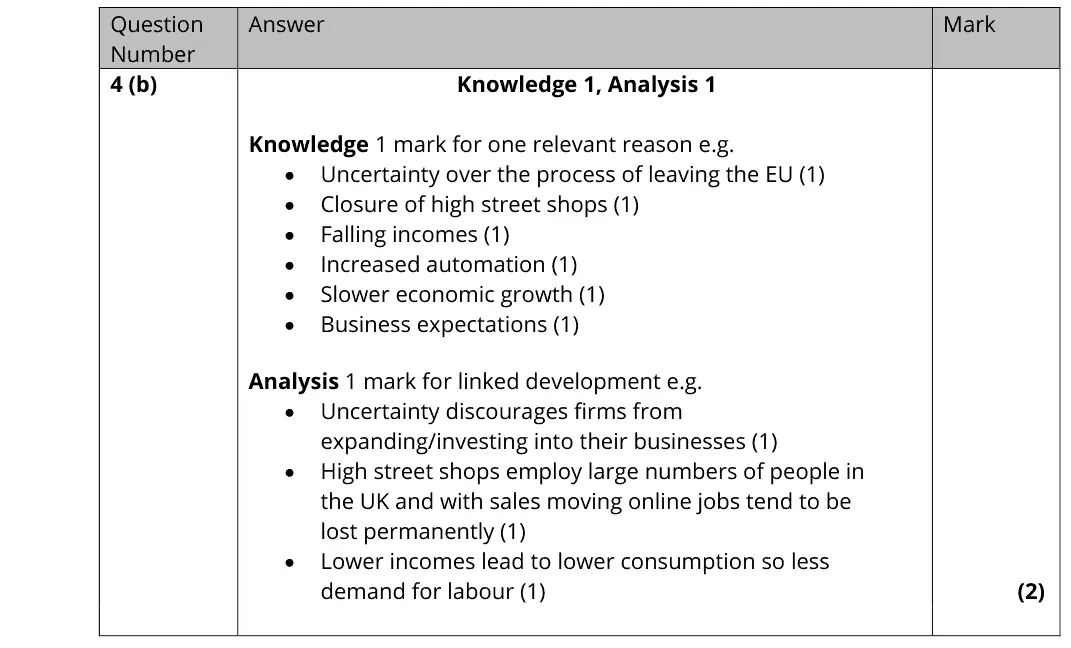
(b) Explain one likely reason for the increase in the number of people unemployed in the UK over the time period shown. (2)
October 2020 · Paper 2 · Q4(c) 1 mark Multiple choice unemployment
Data and extracts for question 44 Number of unemployed persons, UK, as measured by the claimant count, thousands 960 943 940 924 920 910 900 900 894 891 880 Thousands 866 860 850 836 840 833 823 820 812 800 0 O Oc tc Nov Dec Jan Feb Mar Apr May Jun Jul Aug Sep 2 2 0 0 1 1 7 7 2017 2017 2018 2018 2018 2018 2018 2018 2018 2018 2018 (Source: https://tradingeconomics.com/united‑kingdom/unemployed‑persons)
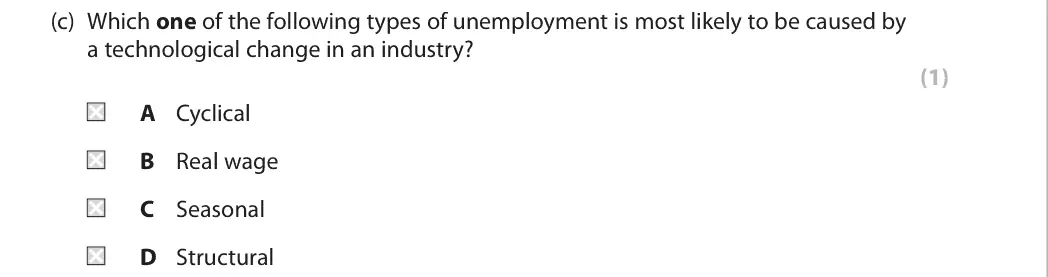
(c) Which one of the following types of unemployment is most likely to be caused by a technological change in an industry? (1) A Cyclical B Real wage C Seasonal D Structural
October 2020 · Paper 2 · Q5(a) 4 marks AO1=2, AO2=2 Diagram national income and the multiplieraggregate supply
Data and extracts for question 55 The Hong Kong‑Zhuhai‑Macau Bridge is the world’s longest sea bridge. It reduces the journey time from Hong Kong to Zhuhai from 4 hours to just 30 minutes. It cost the equivalent of $18.8 billion and was government funded. (Source adapted from: www.theguardian.com)
(a) Draw an aggregate demand and aggregate supply diagram to show the likely impact of this new bridge on the price level and real output in the region. (4)
October 2020 · Paper 2 · Q5(b) 1 mark Multiple choice economic growth and the trade cycle
Data and extracts for question 55 The Hong Kong‑Zhuhai‑Macau Bridge is the world’s longest sea bridge. It reduces the journey time from Hong Kong to Zhuhai from 4 hours to just 30 minutes. It cost the equivalent of $18.8 billion and was government funded. (Source adapted from: www.theguardian.com)
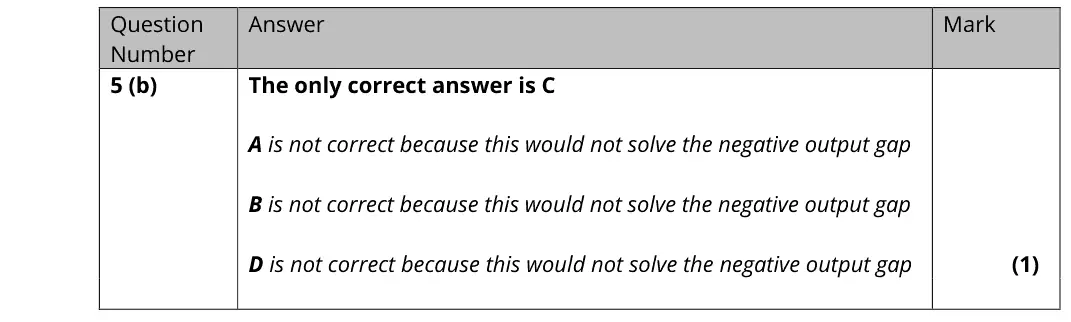
(b) Which one of the following would be most likely to solve a negative output gap problem in a domestic economy? An increase in (1) A government funding to the World Bank B government spending on foreign aid C government spending on public transport D income tax
October 2020 · Paper 2 · Q6(a) 5 marks AO1=2, AO2=2, AO3=1 Short answer emerging and developing economies
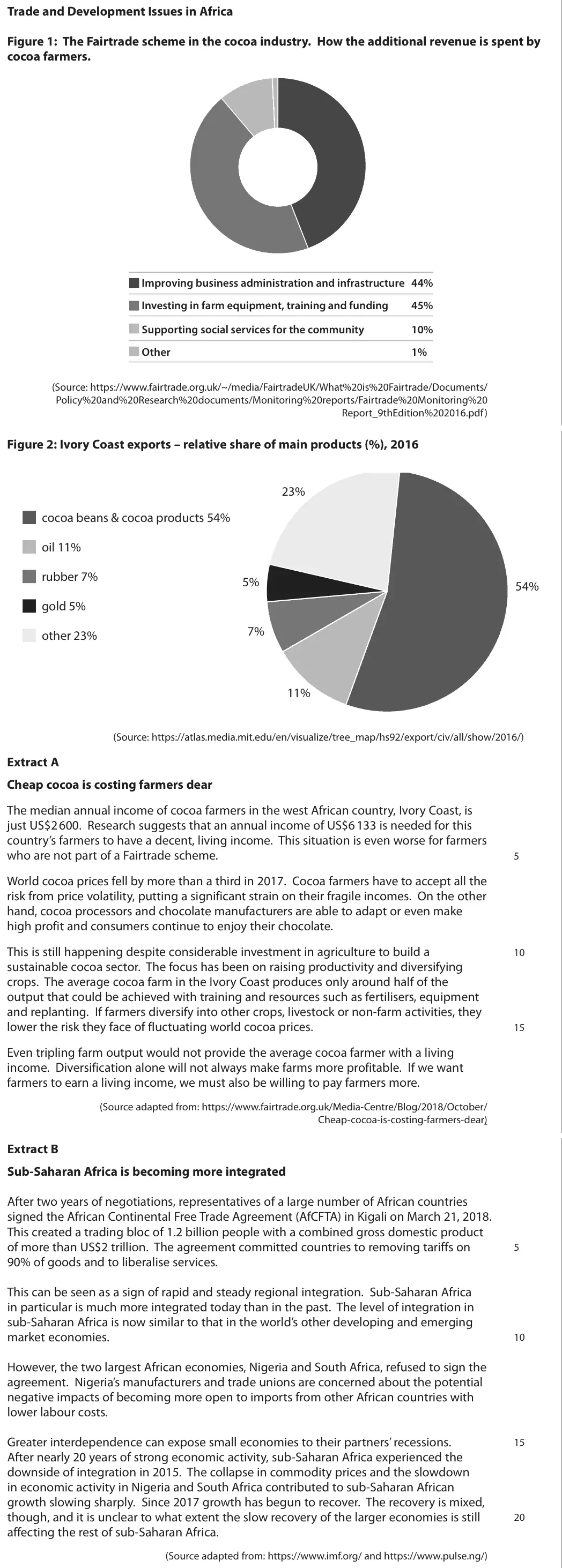
Data and extracts for question 6Trade and Development Issues in Africa Figure 1: The Fairtrade scheme in the cocoa industry. How the additional revenue is spent by cocoa farmers. Improving business administration and infrastructure 44% Investing in farm equipment, training and funding 45% Supporting social services for the community 10% Other 1% (Source: https://www.fairtrade.org.uk/~/media/FairtradeUK/What%20is%20Fairtrade/Documents/ Policy%20and%20Research%20documents/Monitoring%20reports/Fairtrade%20Monitoring%20 Report_9thEdition%202016.pdf) Figure 2: Ivory Coast exports – relative share of main products (%), 2016 23% cocoa beans & cocoa products 54% oil 11% rubber 7% 5% 54% gold 5% 7% other 23% 11% (Source: https://atlas.media.mit.edu/en/visualize/tree_map/hs92/export/civ/all/show/2016/) Extract A Cheap cocoa is costing farmers dear The median annual income of cocoa farmers in the west African country, Ivory Coast, is just US$2 600. Research suggests that an annual income of US$6 133 is needed for this country’s farmers to have a decent, living income. This situation is even worse for farmers who are not part of a Fairtrade scheme. 5 World cocoa prices fell by more than a third in 2017. Cocoa farmers have to accept all the risk from price volatility, putting a significant strain on their fragile incomes. On the other hand, cocoa processors and chocolate manufacturers are able to adapt or even make high profit and consumers continue to enjoy their chocolate. This is still happening despite considerable investment in agriculture to build a 10 sustainable cocoa sector. The focus has been on raising productivity and diversifying crops. The average cocoa farm in the Ivory Coast produces only around half of the output that could be achieved with training and resources such as fertilisers, equipment and replanting. If farmers diversify into other crops, livestock or non‑farm activities, they lower the risk they face of fluctuating world cocoa prices. 15 Even tripling farm output would not provide the average cocoa farmer with a living income. Diversification alone will not always make farms more profitable. If we want farmers to earn a living income, we must also be willing to pay farmers more. (Source adapted from: https://www.fairtrade.org.uk/Media‑Centre/Blog/2018/October/ Cheap‑cocoa‑is‑costing‑farmers‑dear) Extract B Sub‑Saharan Africa is becoming more integrated After two years of negotiations, representatives of a large number of African countries signed the African Continental Free Trade Agreement (AfCFTA) in Kigali on March 21, 2018. This created a trading bloc of 1.2 billion people with a combined gross domestic product of more than US$2 trillion. The agreement committed countries to removing tariffs on 5 90% of goods and to liberalise services. This can be seen as a sign of rapid and steady regional integration. Sub‑Saharan Africa in particular is much more integrated today than in the past. The level of integration in sub‑Saharan Africa is now similar to that in the world’s other developing and emerging market economies. 10 However, the two largest African economies, Nigeria and South Africa, refused to sign the agreement. Nigeria’s manufacturers and trade unions are concerned about the potential negative impacts of becoming more open to imports from other African countries with lower labour costs. Greater interdependence can expose small economies to their partners’ recessions. 15 After nearly 20 years of strong economic activity, sub‑Saharan Africa experienced the downside of integration in 2015. The collapse in commodity prices and the slowdown in economic activity in Nigeria and South Africa contributed to sub‑Saharan African growth slowing sharply. Since 2017 growth has begun to recover. The recovery is mixed, though, and it is unclear to what extent the slow recovery of the larger economies is still 20 affecting the rest of sub‑Saharan Africa. (Source adapted from: https://www.imf.org/ and https://www.pulse.ng/)
(a) With reference to Figure 1 and Extract A, explain the likely impact of a Fairtrade scheme on agricultural communities. (5)
October 2020 · Paper 2 · Q6(b) 8 marks AO1=2, AO2=2, AO3=2, AO4=2 8-mark response emerging and developing economies
Data and extracts for question 6Trade and Development Issues in Africa Figure 1: The Fairtrade scheme in the cocoa industry. How the additional revenue is spent by cocoa farmers. Improving business administration and infrastructure 44% Investing in farm equipment, training and funding 45% Supporting social services for the community 10% Other 1% (Source: https://www.fairtrade.org.uk/~/media/FairtradeUK/What%20is%20Fairtrade/Documents/ Policy%20and%20Research%20documents/Monitoring%20reports/Fairtrade%20Monitoring%20 Report_9thEdition%202016.pdf) Figure 2: Ivory Coast exports – relative share of main products (%), 2016 23% cocoa beans & cocoa products 54% oil 11% rubber 7% 5% 54% gold 5% 7% other 23% 11% (Source: https://atlas.media.mit.edu/en/visualize/tree_map/hs92/export/civ/all/show/2016/) Extract A Cheap cocoa is costing farmers dear The median annual income of cocoa farmers in the west African country, Ivory Coast, is just US$2 600. Research suggests that an annual income of US$6 133 is needed for this country’s farmers to have a decent, living income. This situation is even worse for farmers who are not part of a Fairtrade scheme. 5 World cocoa prices fell by more than a third in 2017. Cocoa farmers have to accept all the risk from price volatility, putting a significant strain on their fragile incomes. On the other hand, cocoa processors and chocolate manufacturers are able to adapt or even make high profit and consumers continue to enjoy their chocolate. This is still happening despite considerable investment in agriculture to build a 10 sustainable cocoa sector. The focus has been on raising productivity and diversifying crops. The average cocoa farm in the Ivory Coast produces only around half of the output that could be achieved with training and resources such as fertilisers, equipment and replanting. If farmers diversify into other crops, livestock or non‑farm activities, they lower the risk they face of fluctuating world cocoa prices. 15 Even tripling farm output would not provide the average cocoa farmer with a living income. Diversification alone will not always make farms more profitable. If we want farmers to earn a living income, we must also be willing to pay farmers more. (Source adapted from: https://www.fairtrade.org.uk/Media‑Centre/Blog/2018/October/ Cheap‑cocoa‑is‑costing‑farmers‑dear) Extract B Sub‑Saharan Africa is becoming more integrated After two years of negotiations, representatives of a large number of African countries signed the African Continental Free Trade Agreement (AfCFTA) in Kigali on March 21, 2018. This created a trading bloc of 1.2 billion people with a combined gross domestic product of more than US$2 trillion. The agreement committed countries to removing tariffs on 5 90% of goods and to liberalise services. This can be seen as a sign of rapid and steady regional integration. Sub‑Saharan Africa in particular is much more integrated today than in the past. The level of integration in sub‑Saharan Africa is now similar to that in the world’s other developing and emerging market economies. 10 However, the two largest African economies, Nigeria and South Africa, refused to sign the agreement. Nigeria’s manufacturers and trade unions are concerned about the potential negative impacts of becoming more open to imports from other African countries with lower labour costs. Greater interdependence can expose small economies to their partners’ recessions. 15 After nearly 20 years of strong economic activity, sub‑Saharan Africa experienced the downside of integration in 2015. The collapse in commodity prices and the slowdown in economic activity in Nigeria and South Africa contributed to sub‑Saharan African growth slowing sharply. Since 2017 growth has begun to recover. The recovery is mixed, though, and it is unclear to what extent the slow recovery of the larger economies is still 20 affecting the rest of sub‑Saharan Africa. (Source adapted from: https://www.imf.org/ and https://www.pulse.ng/)
(b) Examine two ways, apart from Fairtrade schemes, in which cocoa farmers could boost their incomes despite the falling price of cocoa. (8)
October 2020 · Paper 2 · Q6(c) 12 marks AO1=2, AO2=2, AO3=4, AO4=4 12-mark response emerging and developing economiesglobalisation and trade
Data and extracts for question 6Trade and Development Issues in Africa Figure 1: The Fairtrade scheme in the cocoa industry. How the additional revenue is spent by cocoa farmers. Improving business administration and infrastructure 44% Investing in farm equipment, training and funding 45% Supporting social services for the community 10% Other 1% (Source: https://www.fairtrade.org.uk/~/media/FairtradeUK/What%20is%20Fairtrade/Documents/ Policy%20and%20Research%20documents/Monitoring%20reports/Fairtrade%20Monitoring%20 Report_9thEdition%202016.pdf) Figure 2: Ivory Coast exports – relative share of main products (%), 2016 23% cocoa beans & cocoa products 54% oil 11% rubber 7% 5% 54% gold 5% 7% other 23% 11% (Source: https://atlas.media.mit.edu/en/visualize/tree_map/hs92/export/civ/all/show/2016/) Extract A Cheap cocoa is costing farmers dear The median annual income of cocoa farmers in the west African country, Ivory Coast, is just US$2 600. Research suggests that an annual income of US$6 133 is needed for this country’s farmers to have a decent, living income. This situation is even worse for farmers who are not part of a Fairtrade scheme. 5 World cocoa prices fell by more than a third in 2017. Cocoa farmers have to accept all the risk from price volatility, putting a significant strain on their fragile incomes. On the other hand, cocoa processors and chocolate manufacturers are able to adapt or even make high profit and consumers continue to enjoy their chocolate. This is still happening despite considerable investment in agriculture to build a 10 sustainable cocoa sector. The focus has been on raising productivity and diversifying crops. The average cocoa farm in the Ivory Coast produces only around half of the output that could be achieved with training and resources such as fertilisers, equipment and replanting. If farmers diversify into other crops, livestock or non‑farm activities, they lower the risk they face of fluctuating world cocoa prices. 15 Even tripling farm output would not provide the average cocoa farmer with a living income. Diversification alone will not always make farms more profitable. If we want farmers to earn a living income, we must also be willing to pay farmers more. (Source adapted from: https://www.fairtrade.org.uk/Media‑Centre/Blog/2018/October/ Cheap‑cocoa‑is‑costing‑farmers‑dear) Extract B Sub‑Saharan Africa is becoming more integrated After two years of negotiations, representatives of a large number of African countries signed the African Continental Free Trade Agreement (AfCFTA) in Kigali on March 21, 2018. This created a trading bloc of 1.2 billion people with a combined gross domestic product of more than US$2 trillion. The agreement committed countries to removing tariffs on 5 90% of goods and to liberalise services. This can be seen as a sign of rapid and steady regional integration. Sub‑Saharan Africa in particular is much more integrated today than in the past. The level of integration in sub‑Saharan Africa is now similar to that in the world’s other developing and emerging market economies. 10 However, the two largest African economies, Nigeria and South Africa, refused to sign the agreement. Nigeria’s manufacturers and trade unions are concerned about the potential negative impacts of becoming more open to imports from other African countries with lower labour costs. Greater interdependence can expose small economies to their partners’ recessions. 15 After nearly 20 years of strong economic activity, sub‑Saharan Africa experienced the downside of integration in 2015. The collapse in commodity prices and the slowdown in economic activity in Nigeria and South Africa contributed to sub‑Saharan African growth slowing sharply. Since 2017 growth has begun to recover. The recovery is mixed, though, and it is unclear to what extent the slow recovery of the larger economies is still 20 affecting the rest of sub‑Saharan Africa. (Source adapted from: https://www.imf.org/ and https://www.pulse.ng/)
(c) Discuss the problems for the Ivory Coast of dependency on cocoa for a large proportion of their exports. Refer to Figure 2 in your answer. (12)
October 2020 · Paper 2 · Q6(d) 10 marks AO1=2, AO2=2, AO3=2, AO4=4 10-mark response macroeconomic policy in a global contextinternational competitiveness
Data and extracts for question 6Trade and Development Issues in Africa Figure 1: The Fairtrade scheme in the cocoa industry. How the additional revenue is spent by cocoa farmers. Improving business administration and infrastructure 44% Investing in farm equipment, training and funding 45% Supporting social services for the community 10% Other 1% (Source: https://www.fairtrade.org.uk/~/media/FairtradeUK/What%20is%20Fairtrade/Documents/ Policy%20and%20Research%20documents/Monitoring%20reports/Fairtrade%20Monitoring%20 Report_9thEdition%202016.pdf) Figure 2: Ivory Coast exports – relative share of main products (%), 2016 23% cocoa beans & cocoa products 54% oil 11% rubber 7% 5% 54% gold 5% 7% other 23% 11% (Source: https://atlas.media.mit.edu/en/visualize/tree_map/hs92/export/civ/all/show/2016/) Extract A Cheap cocoa is costing farmers dear The median annual income of cocoa farmers in the west African country, Ivory Coast, is just US$2 600. Research suggests that an annual income of US$6 133 is needed for this country’s farmers to have a decent, living income. This situation is even worse for farmers who are not part of a Fairtrade scheme. 5 World cocoa prices fell by more than a third in 2017. Cocoa farmers have to accept all the risk from price volatility, putting a significant strain on their fragile incomes. On the other hand, cocoa processors and chocolate manufacturers are able to adapt or even make high profit and consumers continue to enjoy their chocolate. This is still happening despite considerable investment in agriculture to build a 10 sustainable cocoa sector. The focus has been on raising productivity and diversifying crops. The average cocoa farm in the Ivory Coast produces only around half of the output that could be achieved with training and resources such as fertilisers, equipment and replanting. If farmers diversify into other crops, livestock or non‑farm activities, they lower the risk they face of fluctuating world cocoa prices. 15 Even tripling farm output would not provide the average cocoa farmer with a living income. Diversification alone will not always make farms more profitable. If we want farmers to earn a living income, we must also be willing to pay farmers more. (Source adapted from: https://www.fairtrade.org.uk/Media‑Centre/Blog/2018/October/ Cheap‑cocoa‑is‑costing‑farmers‑dear) Extract B Sub‑Saharan Africa is becoming more integrated After two years of negotiations, representatives of a large number of African countries signed the African Continental Free Trade Agreement (AfCFTA) in Kigali on March 21, 2018. This created a trading bloc of 1.2 billion people with a combined gross domestic product of more than US$2 trillion. The agreement committed countries to removing tariffs on 5 90% of goods and to liberalise services. This can be seen as a sign of rapid and steady regional integration. Sub‑Saharan Africa in particular is much more integrated today than in the past. The level of integration in sub‑Saharan Africa is now similar to that in the world’s other developing and emerging market economies. 10 However, the two largest African economies, Nigeria and South Africa, refused to sign the agreement. Nigeria’s manufacturers and trade unions are concerned about the potential negative impacts of becoming more open to imports from other African countries with lower labour costs. Greater interdependence can expose small economies to their partners’ recessions. 15 After nearly 20 years of strong economic activity, sub‑Saharan Africa experienced the downside of integration in 2015. The collapse in commodity prices and the slowdown in economic activity in Nigeria and South Africa contributed to sub‑Saharan African growth slowing sharply. Since 2017 growth has begun to recover. The recovery is mixed, though, and it is unclear to what extent the slow recovery of the larger economies is still 20 affecting the rest of sub‑Saharan Africa. (Source adapted from: https://www.imf.org/ and https://www.pulse.ng/)
(d) Nigeria is considering joining the African Continental Free Trade Agreement. Assess policies the Nigerian government could use in response to the concerns of the country’s ‘manufacturers and trade unions’ (Extract B paragraph 3) if they join this trading bloc. (10)
October 2020 · Paper 2 · Q6(e) 15 marks AO1=3, AO2=3, AO3=3, AO4=6 15-mark response trading blocs and protectionismglobalisation and trade
Data and extracts for question 6Trade and Development Issues in Africa Figure 1: The Fairtrade scheme in the cocoa industry. How the additional revenue is spent by cocoa farmers. Improving business administration and infrastructure 44% Investing in farm equipment, training and funding 45% Supporting social services for the community 10% Other 1% (Source: https://www.fairtrade.org.uk/~/media/FairtradeUK/What%20is%20Fairtrade/Documents/ Policy%20and%20Research%20documents/Monitoring%20reports/Fairtrade%20Monitoring%20 Report_9thEdition%202016.pdf) Figure 2: Ivory Coast exports – relative share of main products (%), 2016 23% cocoa beans & cocoa products 54% oil 11% rubber 7% 5% 54% gold 5% 7% other 23% 11% (Source: https://atlas.media.mit.edu/en/visualize/tree_map/hs92/export/civ/all/show/2016/) Extract A Cheap cocoa is costing farmers dear The median annual income of cocoa farmers in the west African country, Ivory Coast, is just US$2 600. Research suggests that an annual income of US$6 133 is needed for this country’s farmers to have a decent, living income. This situation is even worse for farmers who are not part of a Fairtrade scheme. 5 World cocoa prices fell by more than a third in 2017. Cocoa farmers have to accept all the risk from price volatility, putting a significant strain on their fragile incomes. On the other hand, cocoa processors and chocolate manufacturers are able to adapt or even make high profit and consumers continue to enjoy their chocolate. This is still happening despite considerable investment in agriculture to build a 10 sustainable cocoa sector. The focus has been on raising productivity and diversifying crops. The average cocoa farm in the Ivory Coast produces only around half of the output that could be achieved with training and resources such as fertilisers, equipment and replanting. If farmers diversify into other crops, livestock or non‑farm activities, they lower the risk they face of fluctuating world cocoa prices. 15 Even tripling farm output would not provide the average cocoa farmer with a living income. Diversification alone will not always make farms more profitable. If we want farmers to earn a living income, we must also be willing to pay farmers more. (Source adapted from: https://www.fairtrade.org.uk/Media‑Centre/Blog/2018/October/ Cheap‑cocoa‑is‑costing‑farmers‑dear) Extract B Sub‑Saharan Africa is becoming more integrated After two years of negotiations, representatives of a large number of African countries signed the African Continental Free Trade Agreement (AfCFTA) in Kigali on March 21, 2018. This created a trading bloc of 1.2 billion people with a combined gross domestic product of more than US$2 trillion. The agreement committed countries to removing tariffs on 5 90% of goods and to liberalise services. This can be seen as a sign of rapid and steady regional integration. Sub‑Saharan Africa in particular is much more integrated today than in the past. The level of integration in sub‑Saharan Africa is now similar to that in the world’s other developing and emerging market economies. 10 However, the two largest African economies, Nigeria and South Africa, refused to sign the agreement. Nigeria’s manufacturers and trade unions are concerned about the potential negative impacts of becoming more open to imports from other African countries with lower labour costs. Greater interdependence can expose small economies to their partners’ recessions. 15 After nearly 20 years of strong economic activity, sub‑Saharan Africa experienced the downside of integration in 2015. The collapse in commodity prices and the slowdown in economic activity in Nigeria and South Africa contributed to sub‑Saharan African growth slowing sharply. Since 2017 growth has begun to recover. The recovery is mixed, though, and it is unclear to what extent the slow recovery of the larger economies is still 20 affecting the rest of sub‑Saharan Africa. (Source adapted from: https://www.imf.org/ and https://www.pulse.ng/)
(e) Discuss the likely benefits of increased economic integration for sub‑Saharan African countries. (15)
October 2020 · Paper 2 · Q7 25 marks AO1=4, AO2=4, AO3=8, AO4=9 25-mark essay Either/or public finances and taxationfiscal and monetary policy
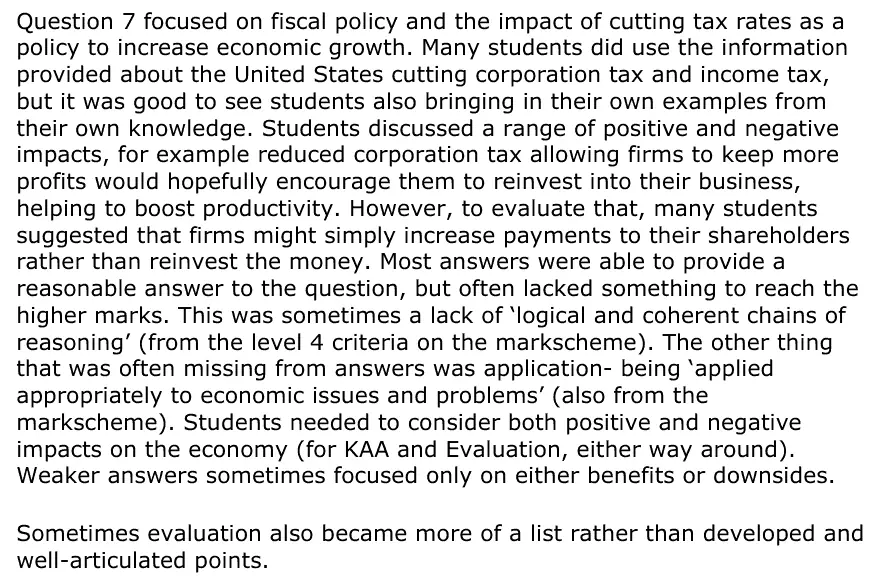
7 In 2018, the United States Government cut the corporation tax rate (tax on company profits) from 35% to 21%. Income tax rates for US citizens were also reduced: for example, the top rate of income tax was cut from 39.6% to 37%. (Source adapted from: https://www.nytimes.com/) Evaluate the likely impact of cutting tax rates as a policy to increase economic growth.
October 2020 · Paper 2 · Q8 25 marks AO1=4, AO2=4, AO3=8, AO4=9 25-mark essay Either/or poverty and inequality
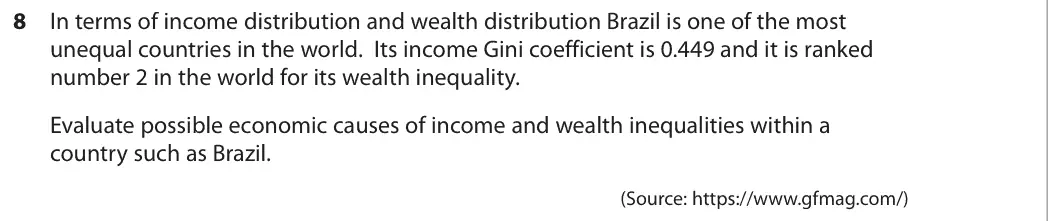
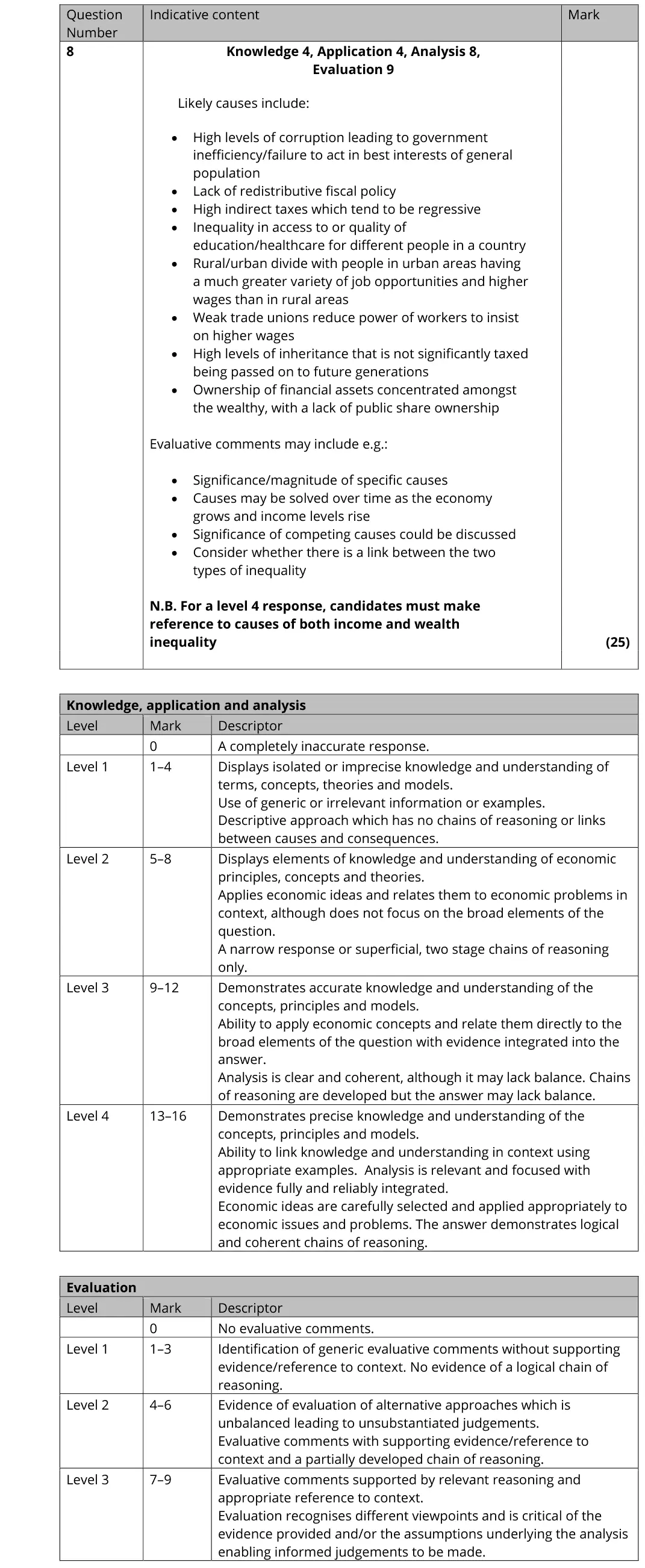
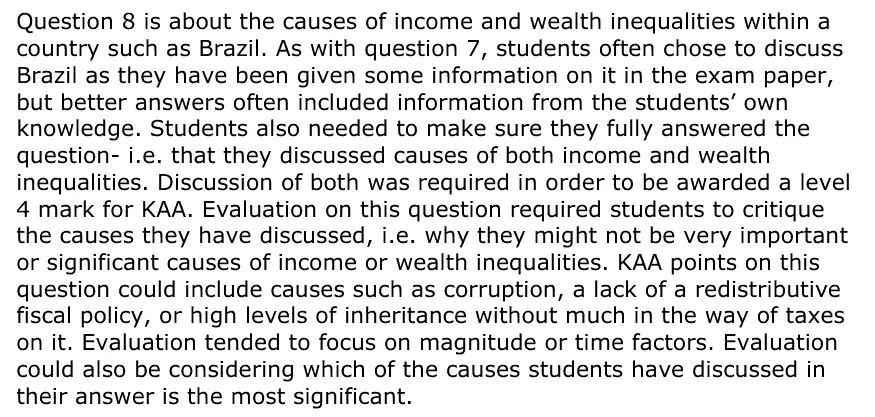
8 In terms of income distribution and wealth distribution Brazil is one of the most unequal countries in the world. Its income Gini coefficient is 0.449 and it is ranked number 2 in the world for its wealth inequality. Evaluate possible economic causes of income and wealth inequalities within a country such as Brazil. (Source: https://www.gfmag.com/)

Work with an Edexcel economics tutor

Want a paper marked and gone through with you? Message us.

Prefer email? Send an enquiry

If you are under 18, please include a parent's contact details. Enquiries go to enquiries@economicsaleveltutor.com and are deleted once handled. All tutoring is online.