Notes and key-term cards for this topic are being written by our tutors. The past-paper questions below are ready now.
Specification statements
4.1.5Trading blocs and the World Trade Organisation (WTO): a) Types of trading blocs (regional trade agreements and bilateral trade agreements): • free trade areas • customs unions • common markets • monetary unions: conditions necessary for their success with particular reference to the Eurozone b) Costs and benefits of regional trade agreements c) Role of the WTO in trade liberalisation d) Possible conflicts between regional trade agreements and the WTO
4.1.6Restrictions on free trade: a) Reasons for restrictions on free trade b) Types of restrictions on trade: • tariffs • quotas • subsidies to domestic producers • non-tariff barriers c) Impact of protectionist policies on consumers, producers, governments, living standards, equality
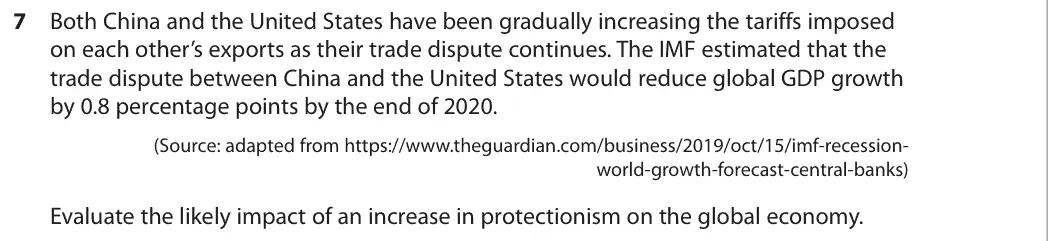
Both China and the United States have been gradually increasing the tariffs imposed on each other’s exports as their trade dispute continues. The IMF estimated that the trade dispute between China and the United States would reduce global GDP growth by 0.8 percentage points by the end of 2020. (Source: adapted from https://www.theguardian.com/business/2019/oct/15/imf-recession- world-growth-forecast-central-banks) Evaluate the likely impact of an increase in protectionism on the global economy.
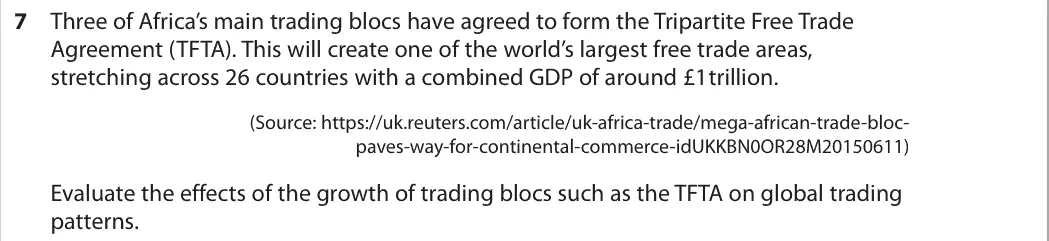
Three of Africa’s main trading blocs have agreed to form the Tripartite Free Trade Agreement (TFTA). This will create one of the world’s largest free trade areas, stretching across 26 countries with a combined GDP of around £1 trillion. (Source: https://uk.reuters.com/article/uk-africa-trade/mega-african-trade-bloc- paves-way-for-continental-commerce-idUKKBN0OR28M20150611) Evaluate the effects of the growth of trading blocs such as the TFTA on global trading patterns.
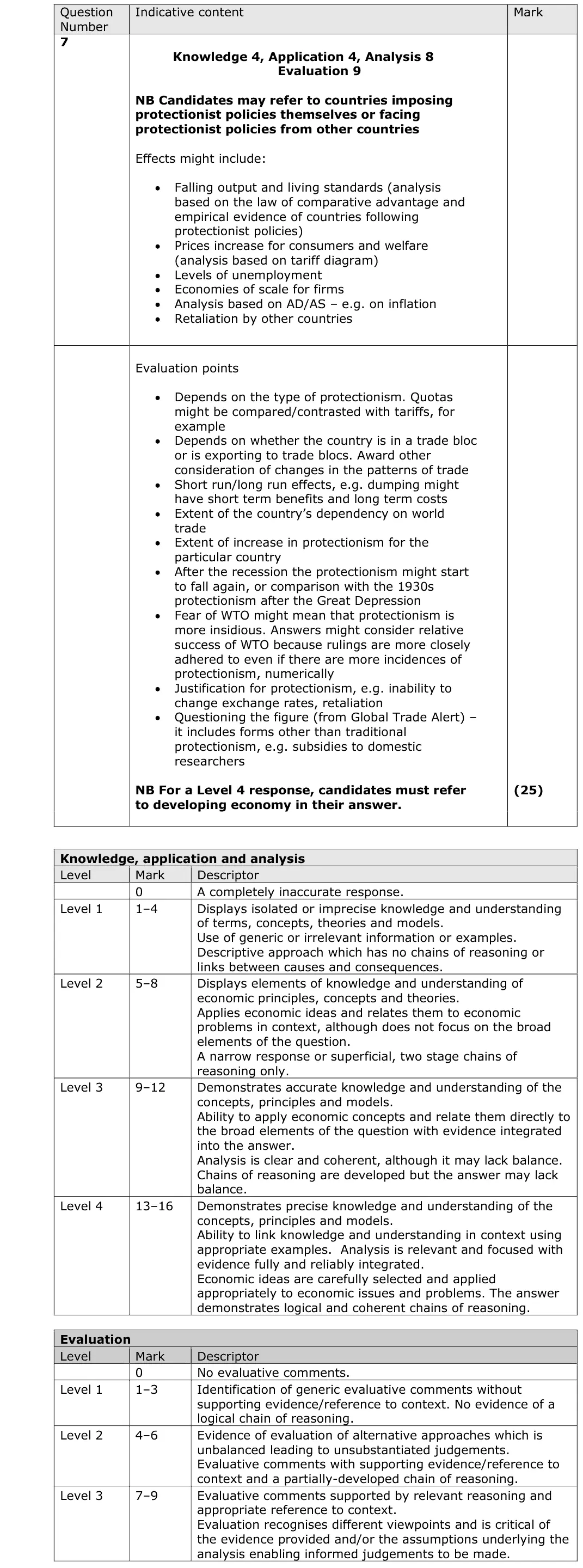
Since the global financial crisis of 2008 there have been over 5 700 increases in tariffs, quotas and administrative controls on international trade. Evaluate the likely effects of an increase in protectionism on the economy of a developing country of your choice.
Tap a question to zoom it. The data and extracts fold out above each question; the mark scheme and examiner's comment open underneath.
June 2025 · Paper 3 · Q1(e)25 marksAO1=4, AO2=4, AO3=8, AO4=925-mark essayEither/or
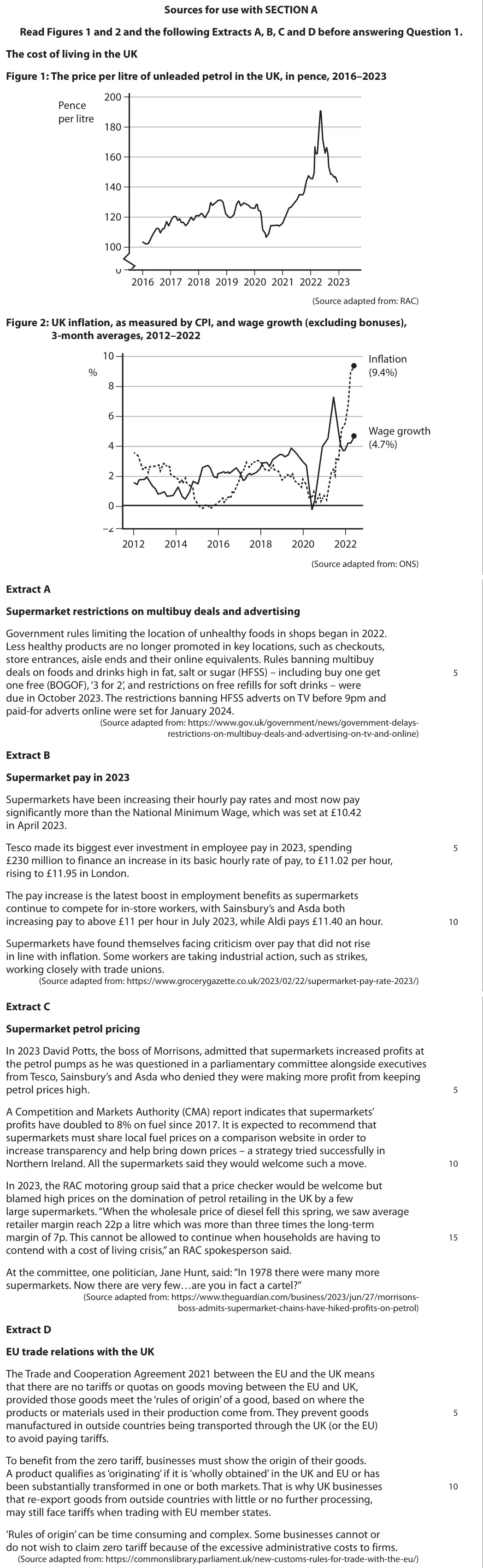
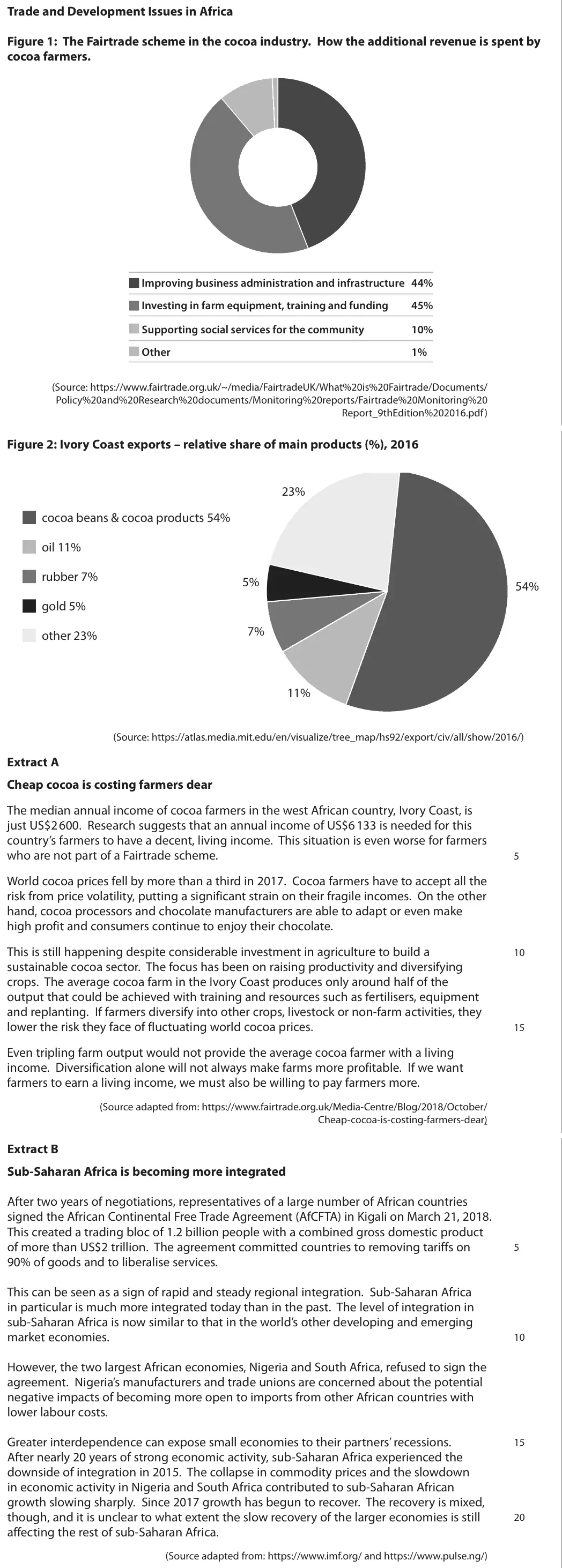
Data and extracts for question 1
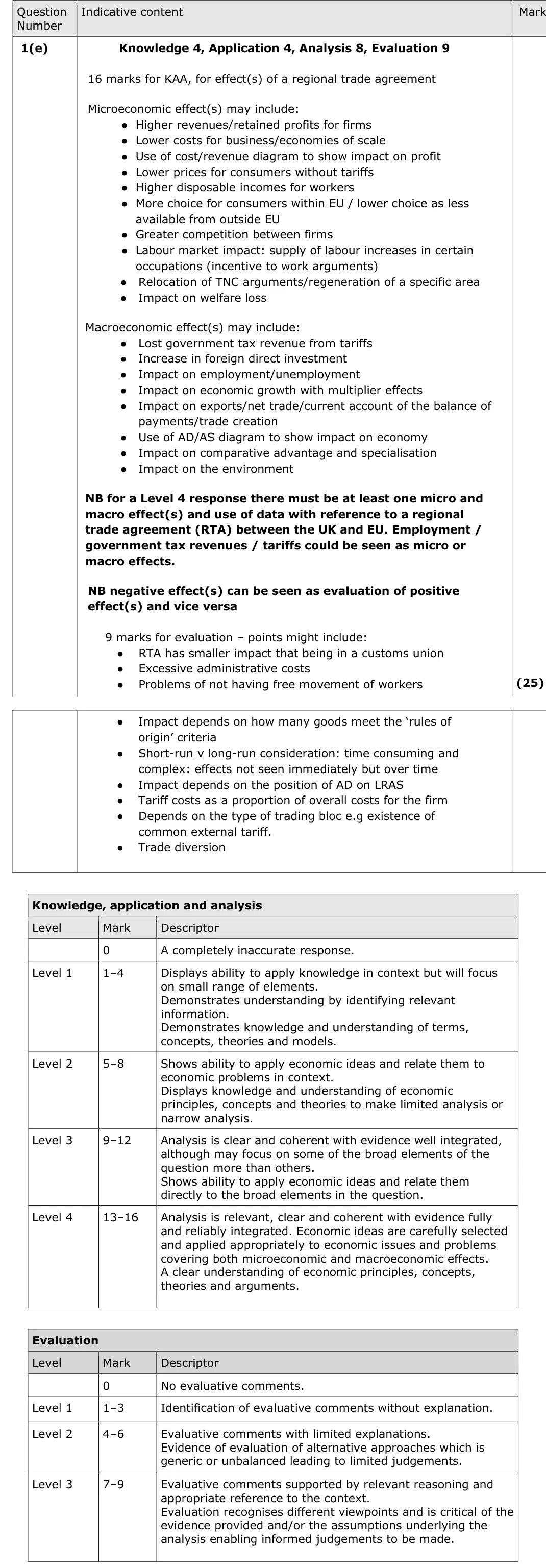
Mark scheme, including the levels grid and indicative content
Examiner's comment
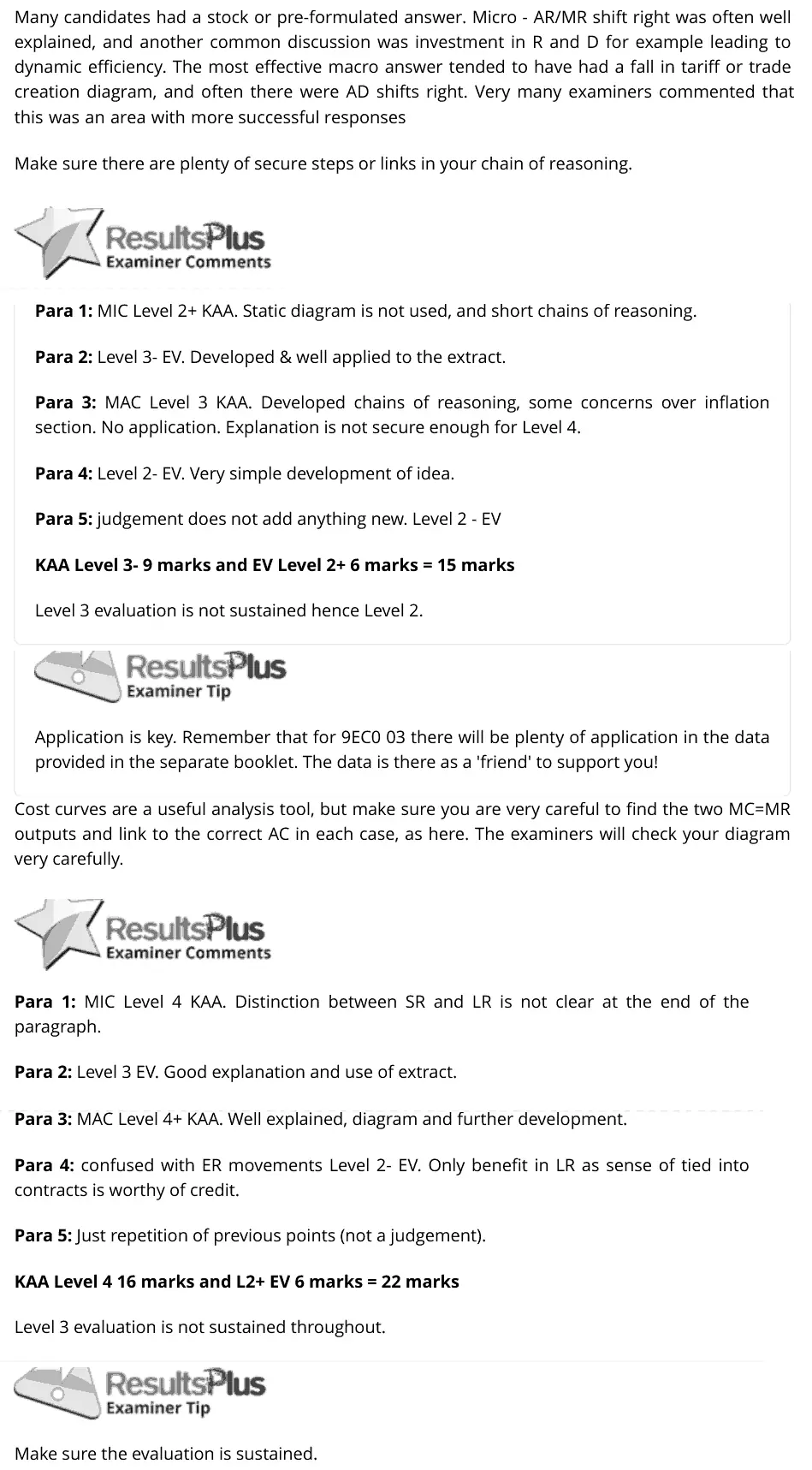
Many candidates had a stock or pre-formulated answer. Micro - AR/MR shift right was often well explained, and another common discussion was investment in R and D for example leading to dynamic efficiency. The most effective macro answer tended to have had a fall in tariff or trade creation diagram, and often there were AD shifts right. Very many examiners commented that this was an area with more successful responses Make sure there are plenty of secure steps or links in your chain of reasoning. Para 1: MIC Level 2+ KAA. Static diagram is not used, and short chains of reasoning. Para 2: Level 3- EV. Developed & well applied to the extract. Para 3: MAC Level 3 KAA. Developed chains of reasoning, some concerns over inflation section. No application. Explanation is not secure enough for Level 4. Para 4: Level 2- EV. Very simple development of idea. Para 5: judgement does not add anything new. Level 2 - EV KAA Level 3- 9 marks and EV Level 2+ 6 marks = 15 marks Level 3 evaluation is not sustained hence Level 2. Application is key. Remember that for 9EC0 03 there will be plenty of application in the data provided in the separate booklet. The data is there as a 'friend' to support you! Cost curves are a useful analysis tool, but make sure you are very careful to find the two MC=MR outputs and link to the correct AC in each case, as here. The examiners will check your diagram very carefully. Para 1: MIC Level 4 KAA. Distinction between SR and LR is not clear at the end of the paragraph. Para 2: Level 3 EV. Good explanation and use of extract. Para 3: MAC Level 4+ KAA. Well explained, diagram and further development. Para 4: confused with ER movements Level 2- EV. Only benefit in LR as sense of tied into contracts is worthy of credit. Para 5: Just repetition of previous points (not a judgement). KAA Level 4 16 marks and L2+ EV 6 marks = 22 marks Level 3 evaluation is not sustained throughout. Make sure the evaluation is sustained.
Notes from the mark scheme and report
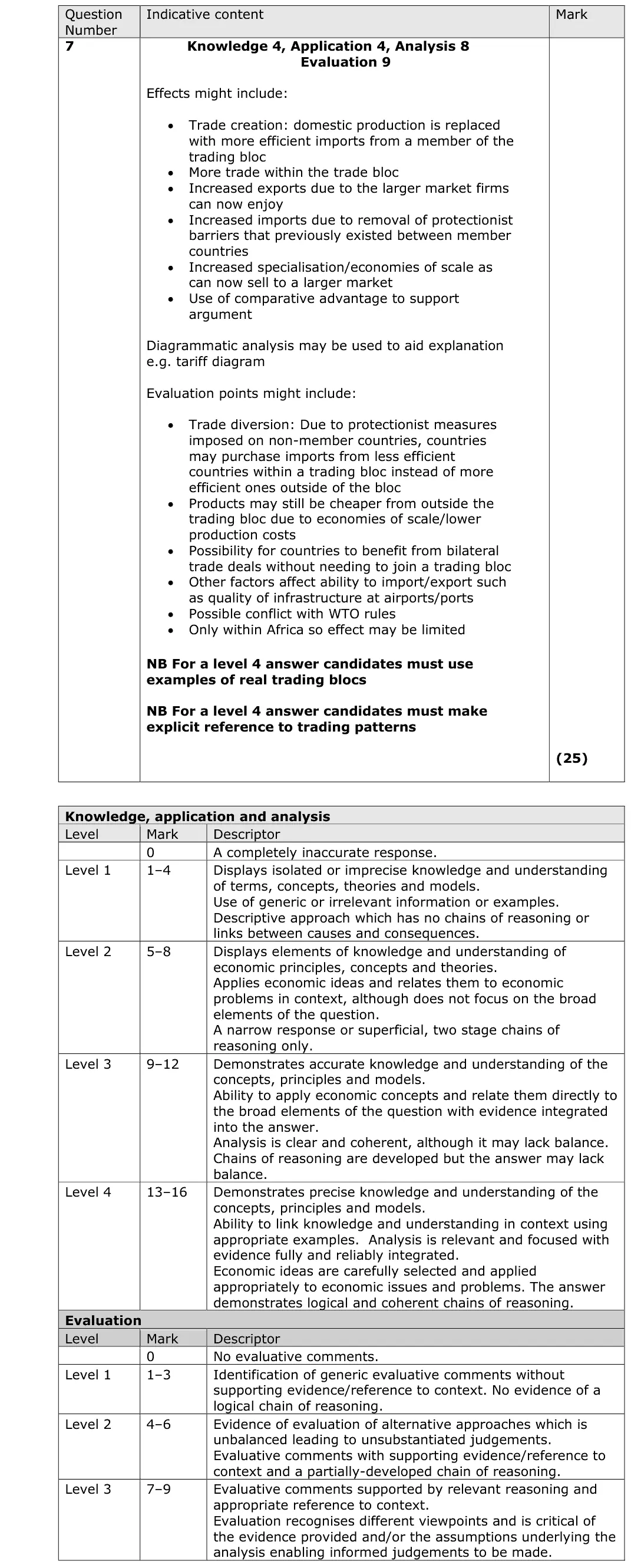
Level 4 needs a micro and a macro effect and use of Extract D (rules of origin, administrative costs)
micro: lower costs, higher revenues and profits, more choice
evaluate with rules of origin and the position of the UK outside a customs union
June 2024 · Paper 2 · Q5(a)4 marksAO1=2, AO2=1, AO3=1Short answer
Data and extracts for question 5
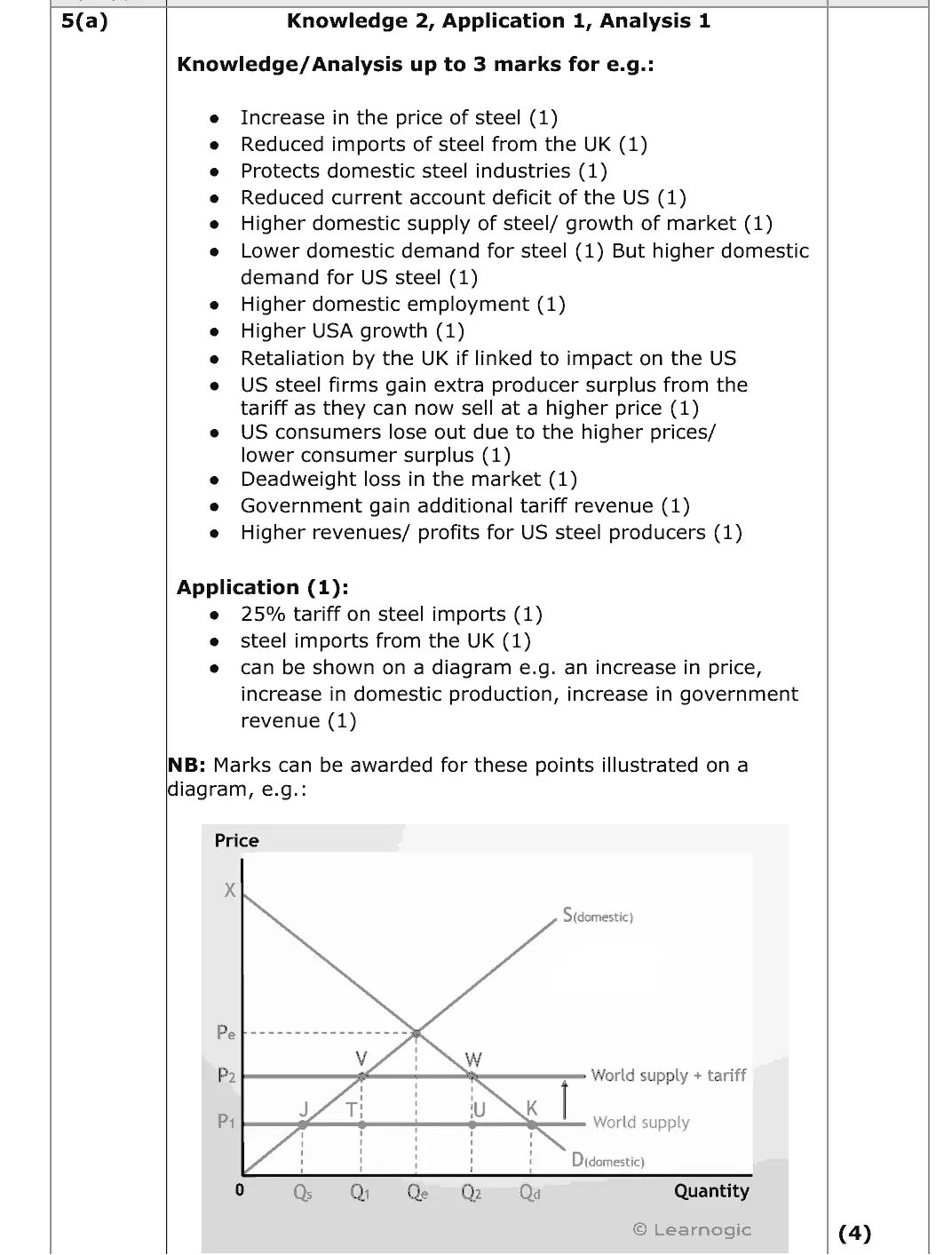
Mark scheme
Examiner's comment
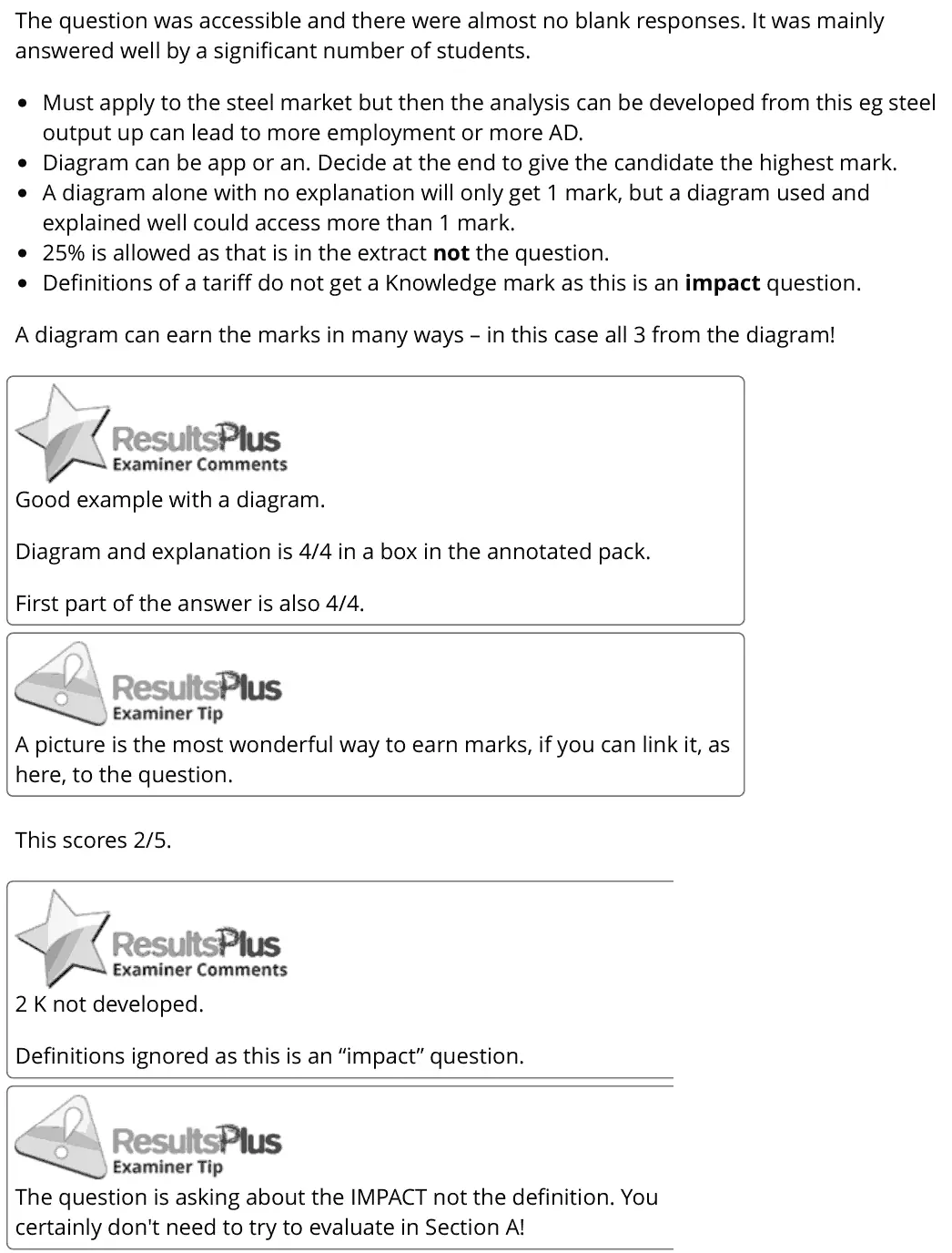
The question was accessible and there were almost no blank responses. It was mainly answered well by a significant number of students. Must apply to the steel market but then the analysis can be developed from this eg steel output up can lead to more employment or more AD. Diagram can be app or an. Decide at the end to give the candidate the highest mark. A diagram alone with no explanation will only get 1 mark, but a diagram used and explained well could access more than 1 mark. 25% is allowed as that is in the extract not the question. Definitions of a tariff do not get a Knowledge mark as this is an impact question. A diagram can earn the marks in many ways – in this case all 3 from the diagram! Good example with a diagram. Diagram and explanation is 4/4 in a box in the annotated pack. First part of the answer is also 4/4. A picture is the most wonderful way to earn marks, if you can link it, as here, to the question. This scores 2/5. 2 K not developed. Definitions ignored as this is an “impact” question. The question is asking about the IMPACT not the definition. You certainly don't need to try to evaluate in Section A!
Notes from the mark scheme and report
tariff raises the US steel price, cuts UK imports, raises domestic output and employment, gives tariff revenue, loses consumer surplus with deadweight loss
apply the 25% tariff
a tariff definition earns nothing
a diagram alone with no explanation earns only 1
Quantitative skills: QS 4 (construct and interpret a range of standard graphical forms)
June 2024 · Paper 3 · Q2(e)25 marksAO1=4, AO2=4, AO3=8, AO4=925-mark essayEither/or
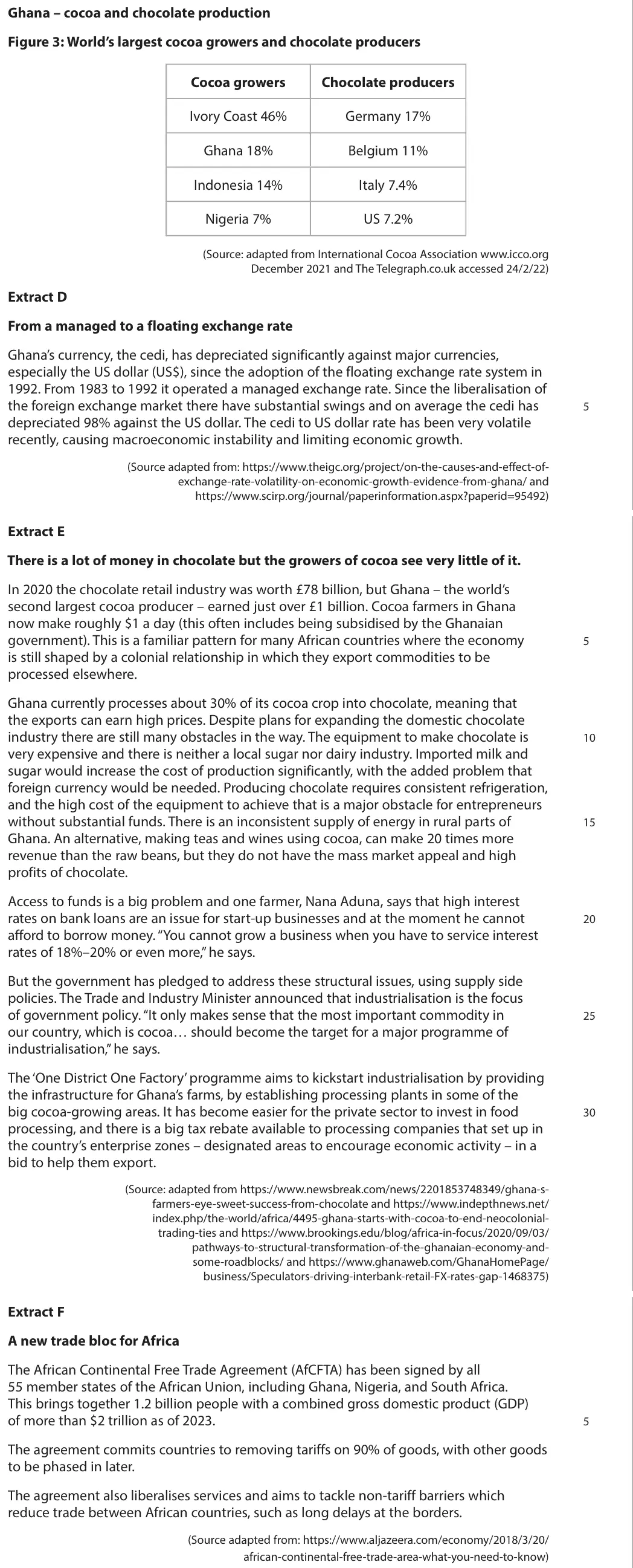
Data and extracts for question 2
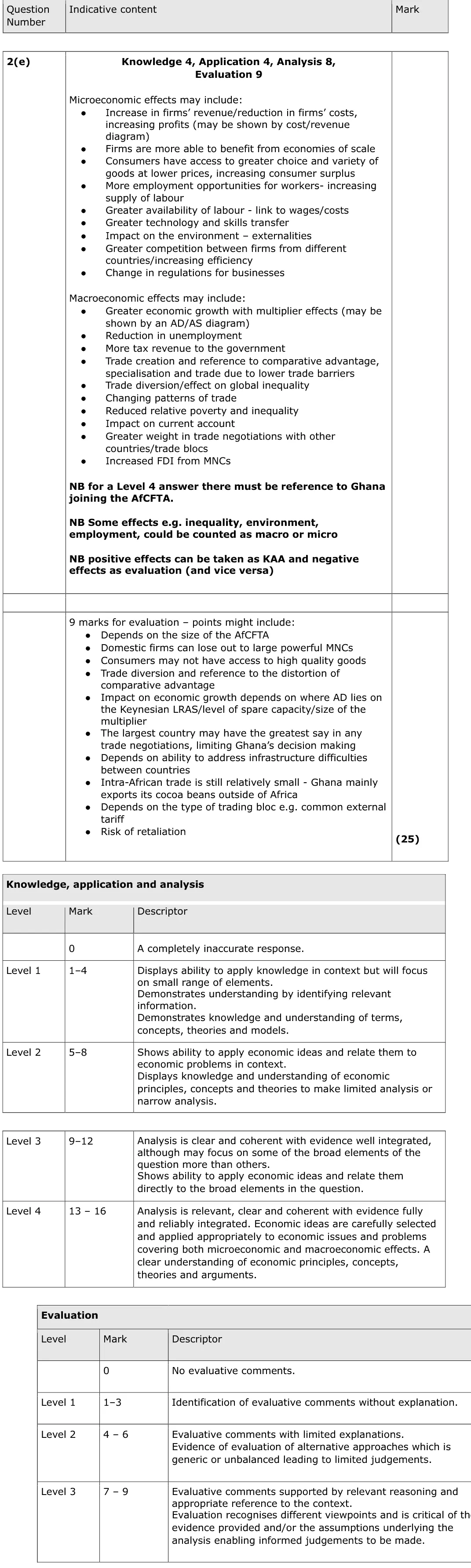
Mark scheme, including the levels grid and indicative content
Examiner's comment
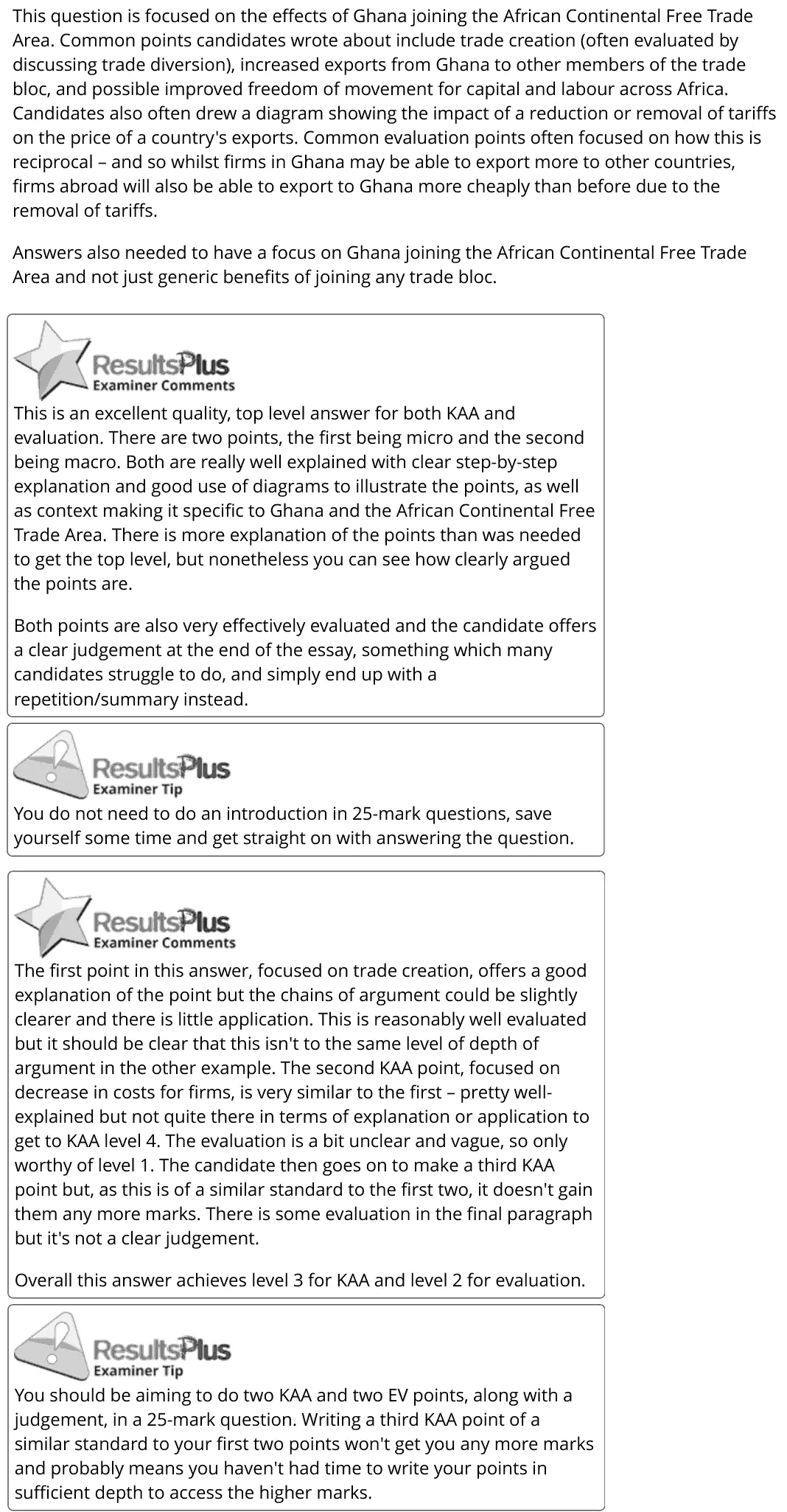
This question is focused on the effects of Ghana joining the African Continental Free Trade Area. Common points candidates wrote about include trade creation (often evaluated by discussing trade diversion), increased exports from Ghana to other members of the trade bloc, and possible improved freedom of movement for capital and labour across Africa. Candidates also often drew a diagram showing the impact ofa reduction or removal of tariffs on the price of a country's exports. Common evaluation points often focused on how this is reciprocal - and so whilst firms in Ghana may be able to export more to other countries, firms abroad will also be able to export to Ghana more cheaply than before due to the removal of tariffs. Answers also needed to have a focus on Ghana joining the African Continental Free Trade Area and not just generic benefits of joining any trade bloc. <6ResultsPlus This is an excellent quality, top level answer for both KAA and evaluation. There are two points, the first being micro and the second being macro. Both are really well explained with clear step-by-step explanation and good use of diagrams to illustrate the points, as well as context making it specific to Ghana and the African Continental Free Trade Area. There is more explanation of the points than was needed to get the top level, but nonetheless you can see how clearly argued the points are. Both points are also very effectively evaluated and the candidate offers a clear judgement at the end of the essay, something which many candidates struggle to do, and simply end up with a repetition/summary instead. A\ cms}ResultsPlus You do not need to do an introduction in 25-mark questions, save yourself some time and get straight on with answering the question. <p BesultsPtus The first point in this answer, focused on trade creation, offers a good explanation of the point but the chains of argument could be slightly clearer and there is little application. This is reasonably well evaluated but it should be clear that this isn't to the same level of depth of argument in the other example. The second KAA point, focused on decrease in costs for firms, is very similar to the first - pretty well- explained but not quite there in terms of explanation or application to get to KAA level 4. The evaluation is a bit unclear and vague, so only worthy of level 1. The candidate then goes on to make a third KAA point but, as this is ofa similar standard to the first two, it doesn't gain them any more marks. There is some evaluation in the final paragraph but it's not a clear judgement. Overall this answer achieves level 3 for KAA and level 2 for evaluation. GP ResultsPius —~_) Examiner Tip You should be aiming to do two KAA and two EV points, along with a judgement, in a 25-mark question. Writing a third KAA point of a similar standard to your first two points won't get you any more marks and probably means you haven't had time to write your points in sufficient depth to access the higher marks.
Notes from the mark scheme and report
micro: lower costs and higher revenue, economies of scale, more choice and consumer surplus
macro: trade creation, export-led growth, FDI
Level 4 must refer to Ghana joining the AfCFTA, not trading blocs in general
evaluate with trade diversion, reciprocal competition from imports, Ghana exporting cocoa outside Africa
June 2023 · Paper 2 · Q6(a)5 marksAO1=2, AO2=2, AO3=1Short answer
Data and extracts for question 6
Mark scheme
Examiner's comment
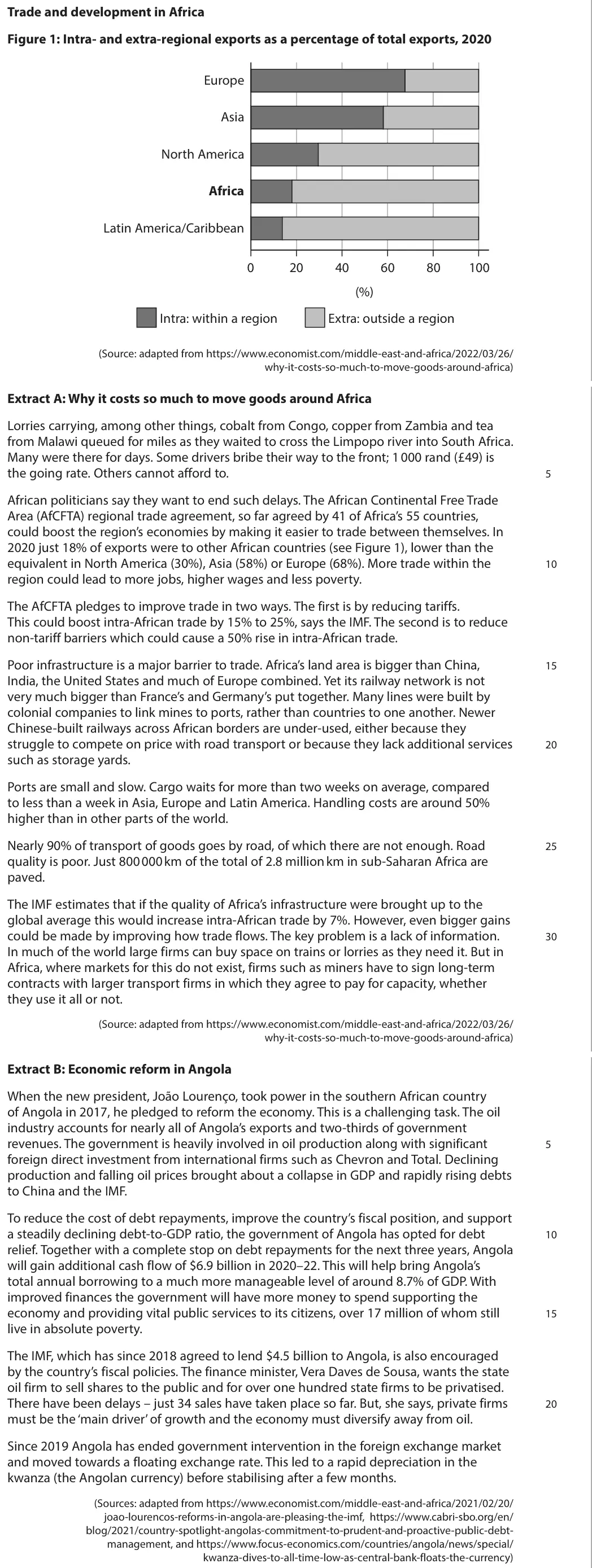
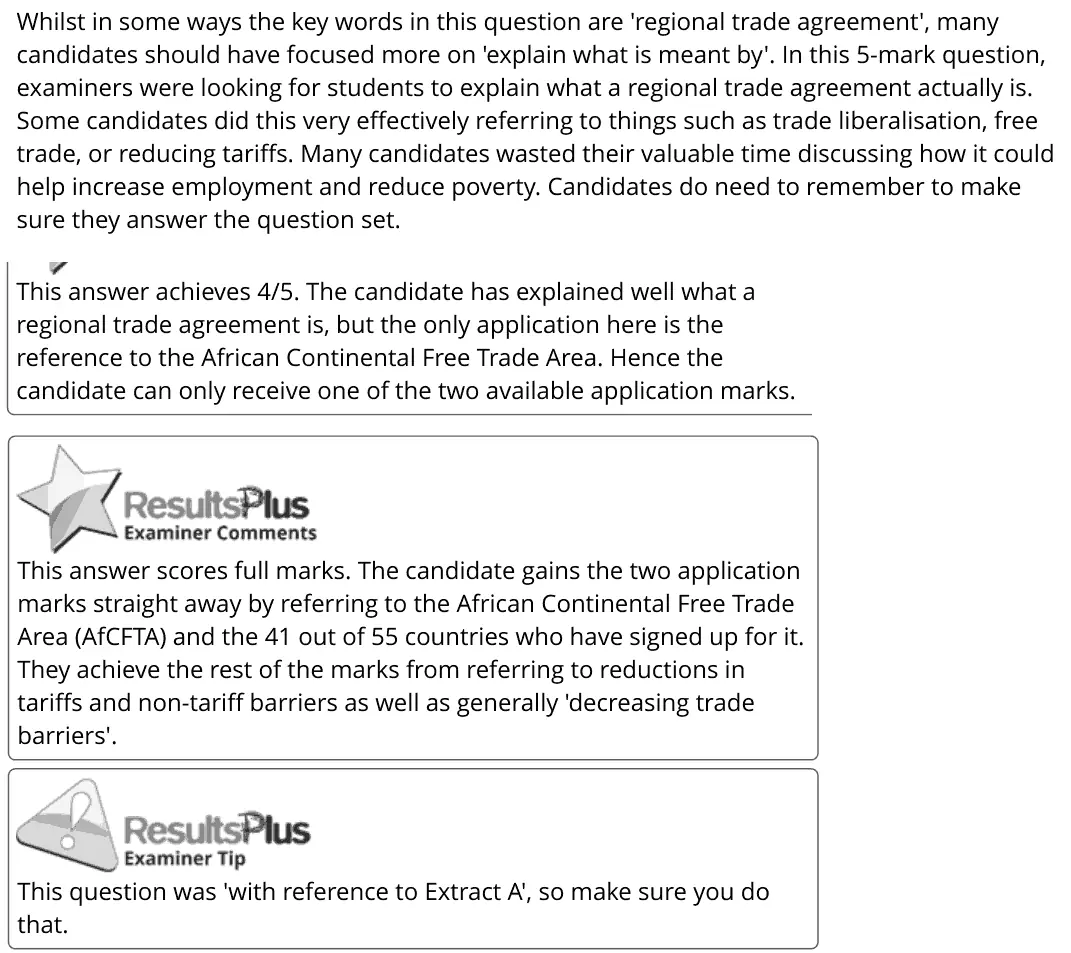
Whilst in some ways the key words in this question are 'regional trade agreement', many candidates should have focused more on 'explain what is meant by'. In this 5-mark question, examiners were looking for students to explain what a regional trade agreement actually is. Some candidates did this very effectively referring to things such as trade liberalisation, free trade, or reducing tariffs. Many candidates wasted their valuable time discussing how it could help increase employment and reduce poverty. Candidates do need to remember to make sure they answer the question set. This answer achieves 4/5. The candidate has explained well what a regional trade agreement is, but the only application here is the reference to the African Continental Free Trade Area. Hence the candidate can only receive one of the two available application marks. This answer scores full marks. The candidate gains the two application marks straight away by referring to the African Continental Free Trade Area (AfCFTA) and the 41 out of 55 countries who have signed up for it. They achieve the rest of the marks from referring to reductions in tariffs and non-tariff barriers as well as generally 'decreasing trade barriers'. This question was 'with reference to Extract A', so make sure you do that.
Notes from the mark scheme and report
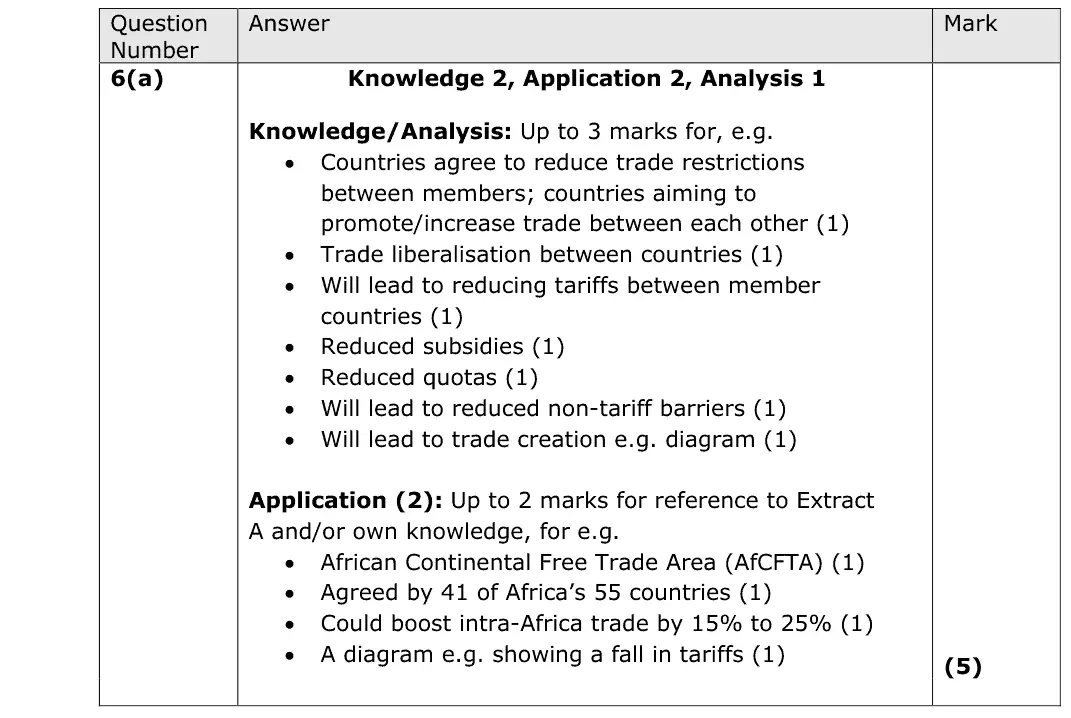
an agreement between countries in a region to reduce tariffs, quotas and non-tariff barriers (trade liberalisation)
two pieces of application (AfCFTA, 41 of 55 countries, 15-25% boost)
many wrote about jobs and poverty instead of explaining the term
June 2022 · Paper 2 · Q725 marksAO1=4, AO2=4, AO3=8, AO4=925-mark essayEither/or
Mark scheme, including the levels grid and indicative content
Examiner's comment
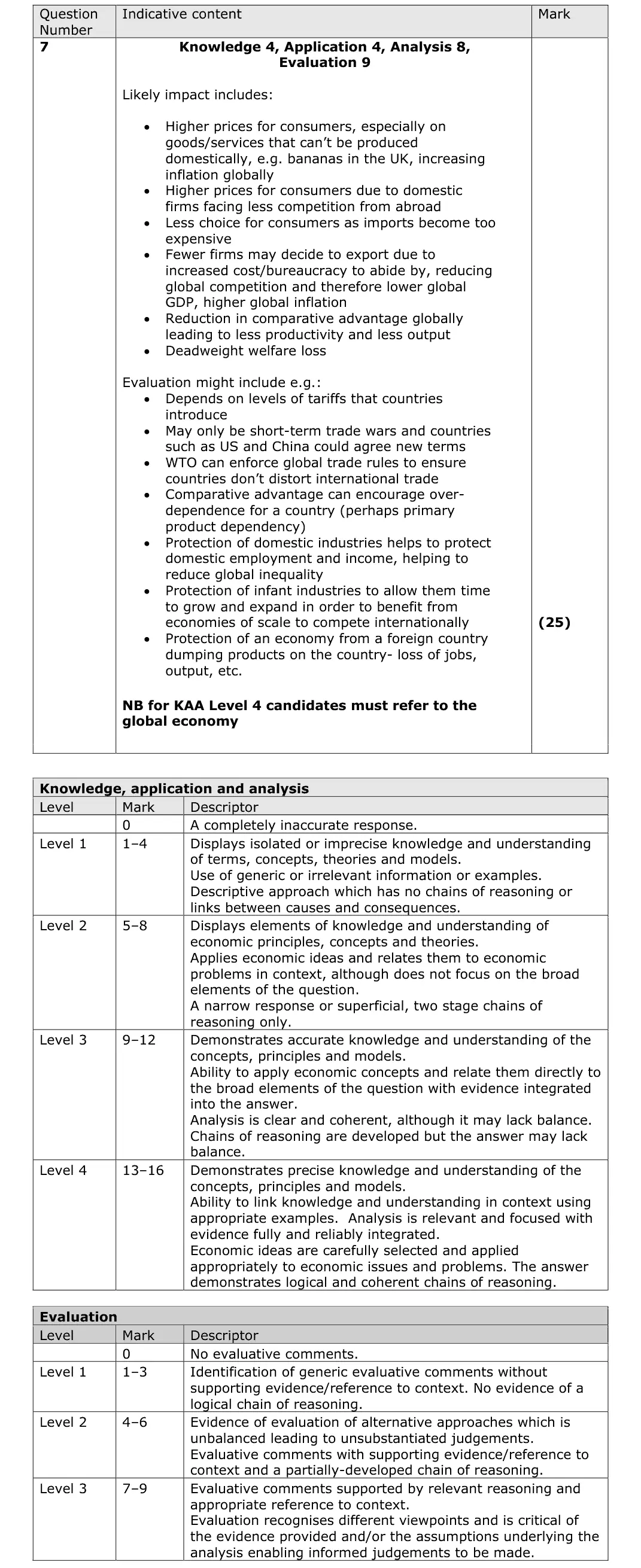
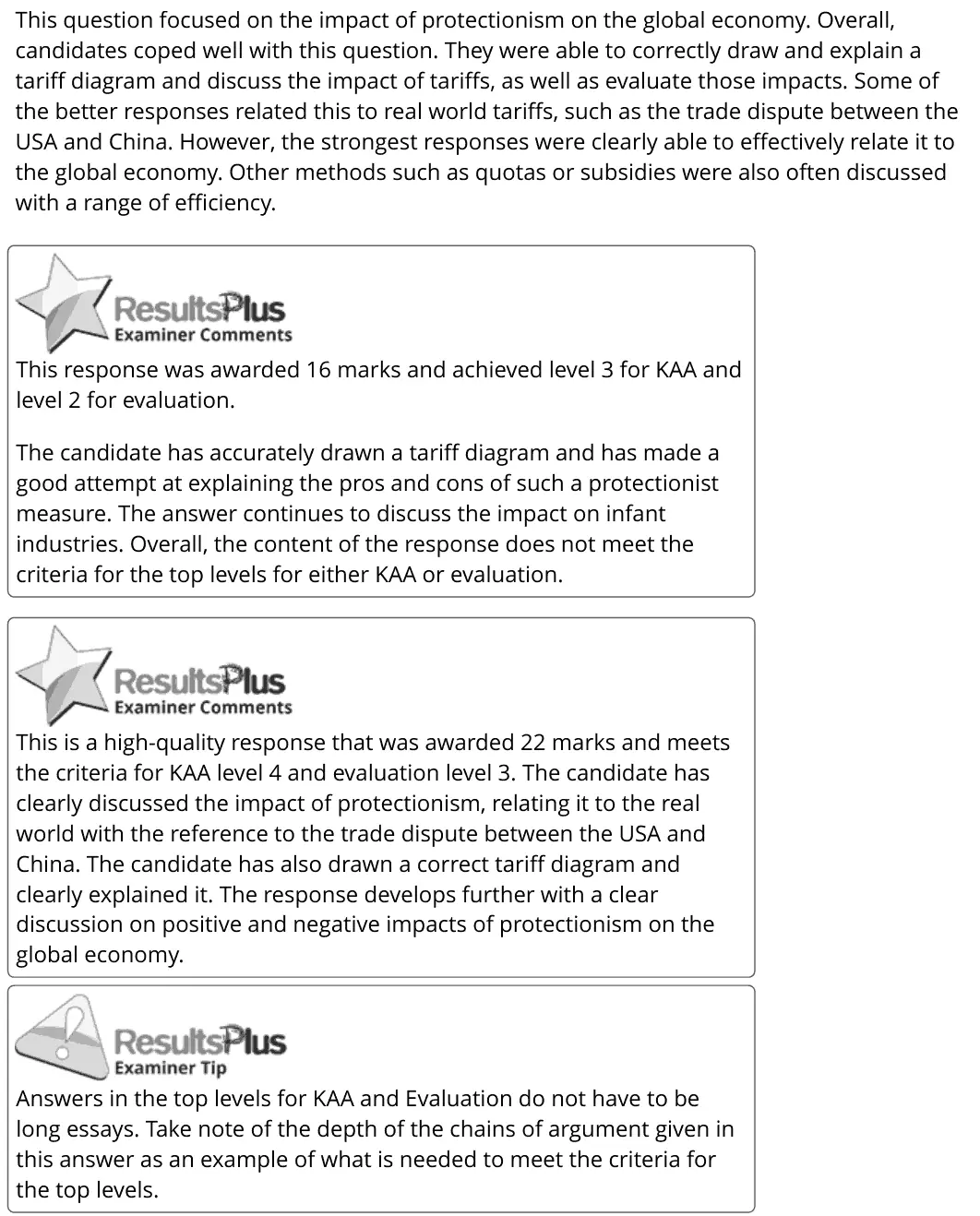
This question focused on the impact of protectionism on the global economy. Overall, candidates coped well with this question. They were able to correctly draw and explain a tariff diagram and discuss the impact of tariffs, as well as evaluate those impacts. Some of the better responses related this to real world tariffs, such as the trade dispute between the USA and China. However, the strongest responses were clearly able to effectively relate it to the global economy. Other methods such as quotas or subsidies were also often discussed with a range of efficiency. This response was awarded 16 marks and achieved level 3 for KAA and level 2 for evaluation. The candidate has accurately drawn a tariff diagram and has made a good attempt at explaining the pros and cons of such a protectionist measure. The answer continues to discuss the impact on infant industries. Overall, the content of the response does not meet the criteria for the top levels for either KAA or evaluation. This is a high-quality response that was awarded 22 marks and meets the criteria for KAA level 4 and evaluation level 3. The candidate has clearly discussed the impact of protectionism, relating it to the real world with the reference to the trade dispute between the USA and China. The candidate has also drawn a correct tariff diagram and clearly explained it. The response develops further with a clear discussion on positive and negative impacts of protectionism on the global economy. Answers in the top levels for KAA and Evaluation do not have to be long essays. Take note of the depth of the chains of argument given in this answer as an example of what is needed to meet the criteria for the top levels.
Notes from the mark scheme and report
tariff diagram
higher prices and less choice, lost comparative advantage, lower global GDP, deadweight loss
KAA Level 4 must refer to the global economy
evaluate with size of tariffs, short-lived trade wars, WTO, infant industries, anti-dumping
November 2021 · Paper 2 · Q6(d)12 marksAO1=2, AO2=2, AO3=4, AO4=412-mark response
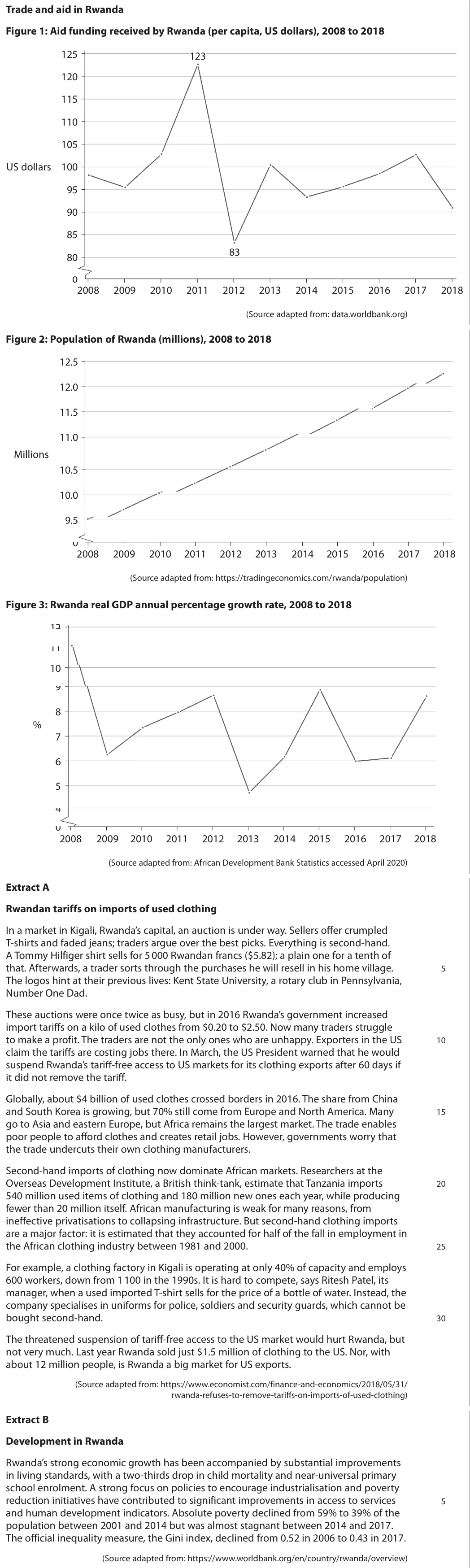
Data and extracts for question 6
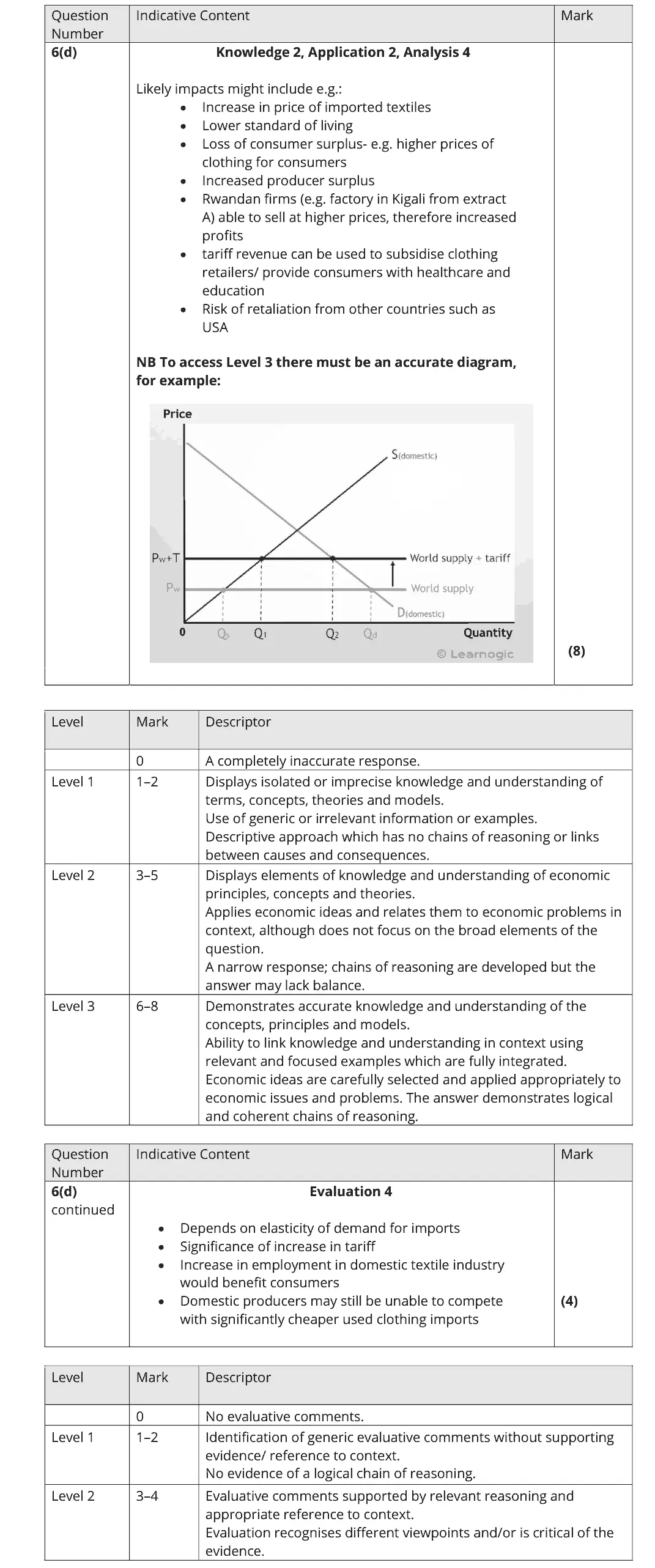
Mark scheme, including the levels grid and indicative content
Examiner's comment
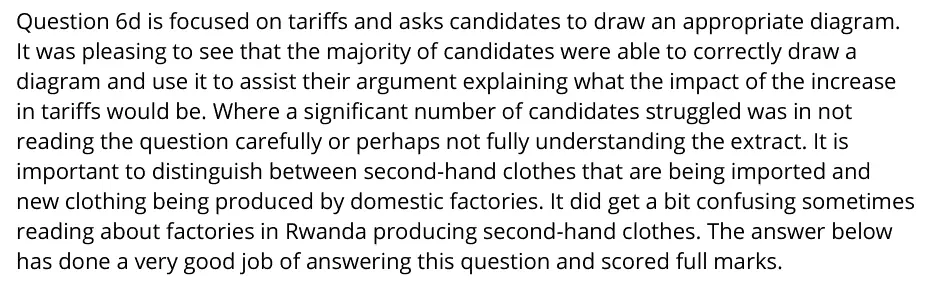
Question 6d is focused on tariffs and asks candidates to draw an appropriate diagram. It was pleasing to see that the majority of candidates were able to correctly draw a diagram and use it to assist their argument explaining what the impact of the increase in tariffs would be. Where a significant number of candidates struggled was in not reading the question carefully or perhaps not fully understanding the extract. It is important to distinguish between second-hand clothes that are being imported and new clothing being produced by domestic factories. It did get a bit confusing sometimes reading about factories in Rwanda producing second-hand clothes. The answer below has done a very good job of answering this question and scored full marks.
Notes from the mark scheme and report
Level 3 needs an accurate tariff diagram (world supply + tariff, domestic output up, imports down)
consumers lose consumer surplus, domestic producers (Kigali factory) gain
distinguish imported second-hand clothes from new domestic clothing
evaluate with PED and retaliation by the US
Quantitative skills: QS 4 (construct and interpret a range of standard graphical forms)
October 2020 · Paper 2 · Q6(e)15 marksAO1=3, AO2=3, AO3=3, AO4=615-mark response
Data and extracts for question 6
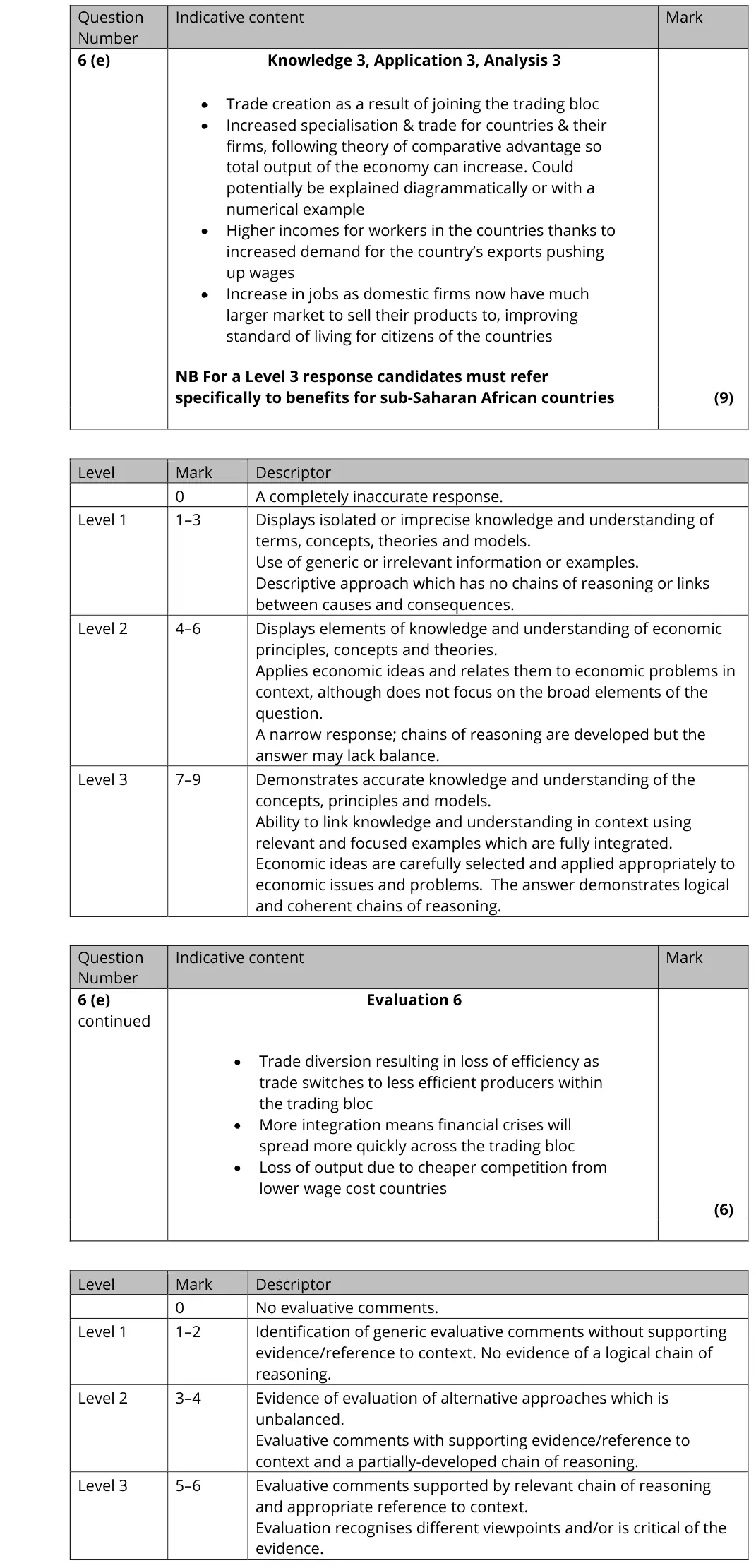
Mark scheme, including the levels grid and indicative content
Notes from the mark scheme and report
trade creation, specialisation by comparative advantage, larger market, more jobs and higher wages
Level 3 needs specific reference to sub-Saharan African countries
evaluate with trade diversion, contagion of recessions and financial crises, competition from lower-wage members
June 2019 · Paper 2 · Q725 marksAO1=4, AO2=4, AO3=8, AO4=925-mark essayEither/or
Mark scheme, including the levels grid and indicative content
Examiner's comment
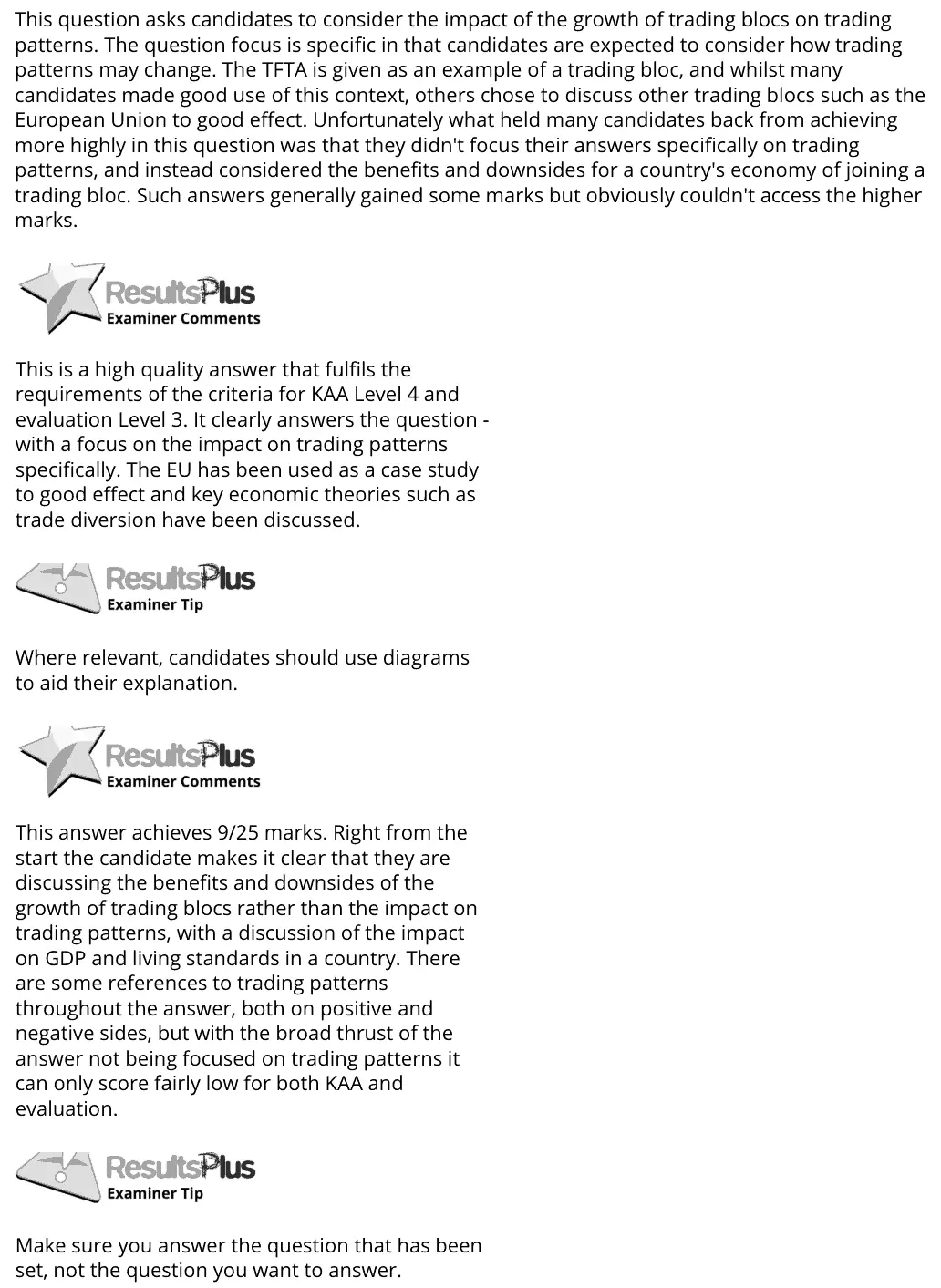
This question asks candidates to consider the impact of the growth of trading blocs on trading patterns. The question focus is specific in that candidates are expected to consider how trading patterns may change. The TFTA is given as an example of a trading bloc, and whilst many candidates made good use of this context, others chose to discuss other trading blocs such as the European Union to good effect. Unfortunately what held many candidates back from achieving more highly in this question was that they didn't focus their answers specifically on trading patterns, and instead considered the benefits and downsides for a country's economy of joining a trading bloc. Such answers generally gained some marks but obviously couldn't access the higher marks. This is a high quality answer that fulfils the requirements of the criteria for KAA Level 4 and evaluation Level 3. It clearly answers the question - with a focus on the impact on trading patterns specifically. The EU has been used as a case study to good effect and key economic theories such as trade diversion have been discussed. Where relevant, candidates should use diagrams to aid their explanation. This answer achieves 9/25 marks. Right from the start the candidate makes it clear that they are discussing the benefits and downsides of the growth of trading blocs rather than the impact on trading patterns, with a discussion of the impact on GDP and living standards in a country. There are some references to trading patterns throughout the answer, both on positive and negative sides, but with the broad thrust of the answer not being focused on trading patterns it can only score fairly low for both KAA and evaluation. Make sure you answer the question that has been set, not the question you want to answer.
Notes from the mark scheme and report
focus on trading patterns: trade creation and trade diversion, more trade within the bloc
many wrote about the costs and benefits of joining a bloc instead and could not reach the top levels
Level 4 needs real trading bloc examples
June 2018 · Paper 2 · Q1(a)1 markMultiple choice
Data and extracts for question 1
Answer
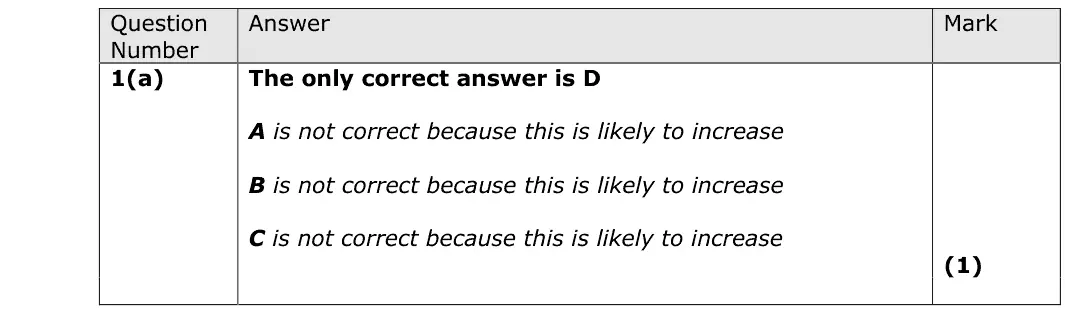
D
Mark scheme
Notes from the mark scheme and report
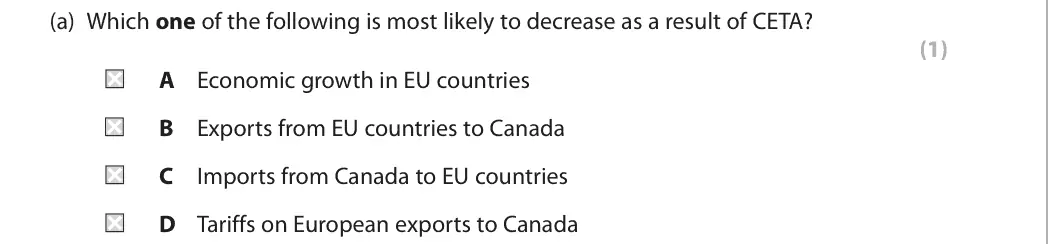
CETA eliminates or reduces trade barriers, so tariffs on European exports to Canada fall (D)
EU growth, EU exports to Canada and imports from Canada are all likely to increase
June 2017 · Paper 2 · Q725 marksAO1=4, AO2=4, AO3=8, AO4=925-mark essayEither/or
Mark scheme, including the levels grid and indicative content
Examiner's comment
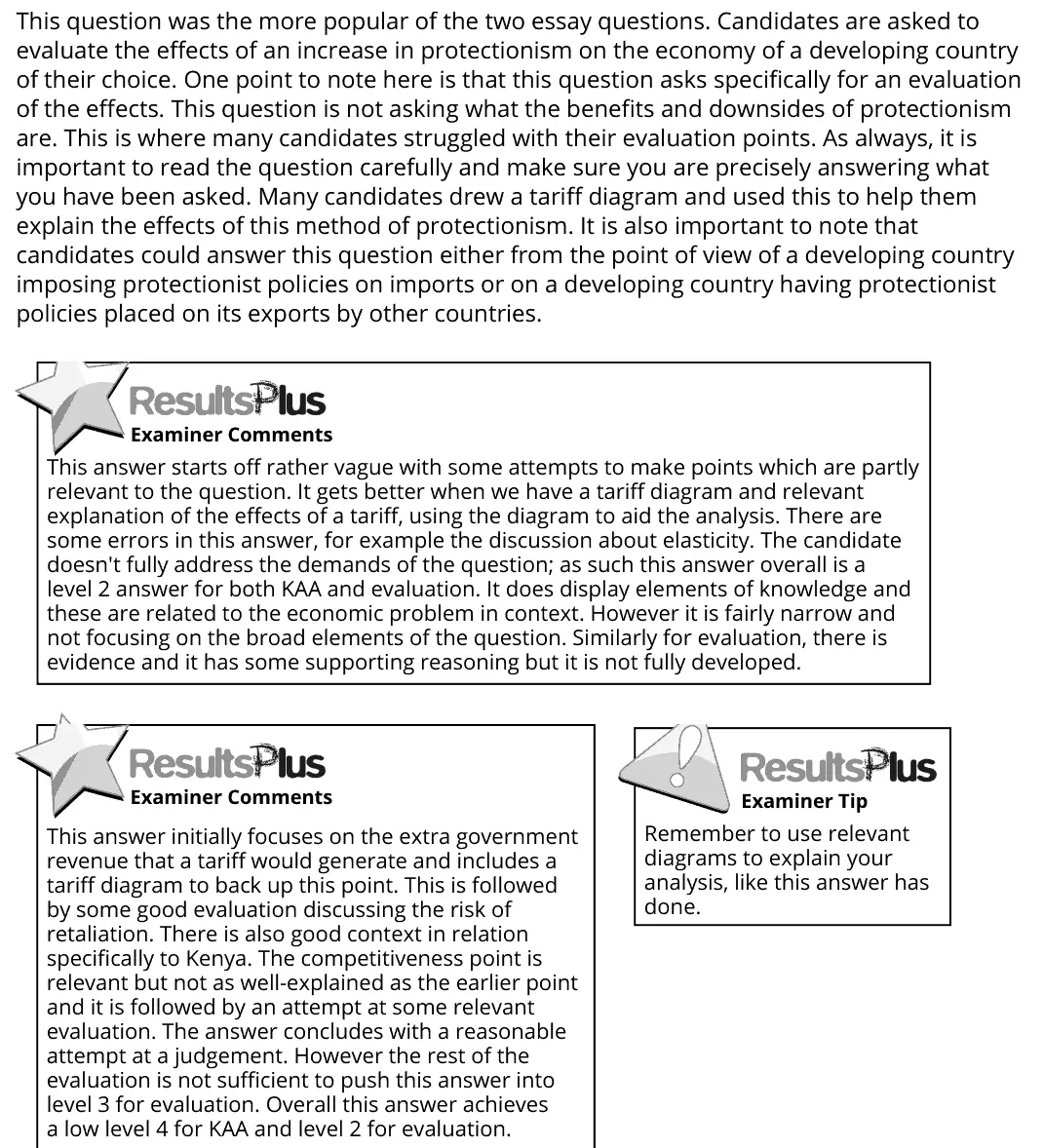
This question was the more popular of the two essay questions. Candidates are asked to evaluate the effects of an increase in protectionism on the economy of a developing country of their choice. One point to note here is that this question asks specifically for an evaluation of the effects. This question is not asking what the benefits and downsides of protectionism are. This is where many candidates struggled with their evaluation points. As always, it is important to read the question carefully and make sure you are precisely answering what you have been asked. Many candidates drew a tariff diagram and used this to help them explain the effects of this method of protectionism. It is also important to note that candidates could answer this question either from the point of view of a developing country imposing protectionist policies on imports or on a developing country having protectionist policies placed on its exports by other countries. 9EC0_02_Q07_1291601_0429_003750899_030.png This answer starts off rather vague with some attempts to make points which are partly relevant to the question. It gets better when we have a tariff diagram and relevant explanation of the effects of a tariff, using the diagram to aid the analysis. There are some errors in this answer, for example the discussion about elasticity. The candidate doesn't fully address the demands of the question; as such this answer overall is a level 2 answer for both KAA and evaluation. It does display elements of knowledge and these are related to the economic problem in context. However it is fairly narrow and not focusing on the broad elements of the question. Similarly for evaluation, there is evidence and it has some supporting reasoning but it is not fully developed. This answer initially focuses on the extra government revenue that a tariff would generate and includes a tariff diagram to back up this point. This is followed by some good evaluation discussing the risk of retaliation. There is also good context in relation specifically to Kenya. The competitiveness point is relevant but not as well-explained as the earlier point and it is followed by an attempt at some relevant evaluation. The answer concludes with a reasonable attempt at a judgement. However the rest of the evaluation is not sufficient to push this answer into level 3 for evaluation. Overall this answer achieves a low level 4 for KAA and level 2 for evaluation. Remember to use relevant diagrams to explain your analysis, like this answer has done.
Notes from the mark scheme and report
can be a developing country imposing protection or facing it from others