June 2025: Paper 2

100 marks · 20 question parts · Paper, mark scheme and report on Pearson's site

Question by question

QTopicMarksAOType
1(a) Emerging and developing economies 1Multiple choice
1(b) Measuring economic growth: GDP, GNI and living standards 4AO1=2,AO2=1,AO3=1Short answer
2(a) The balance of payments 1Multiple choice
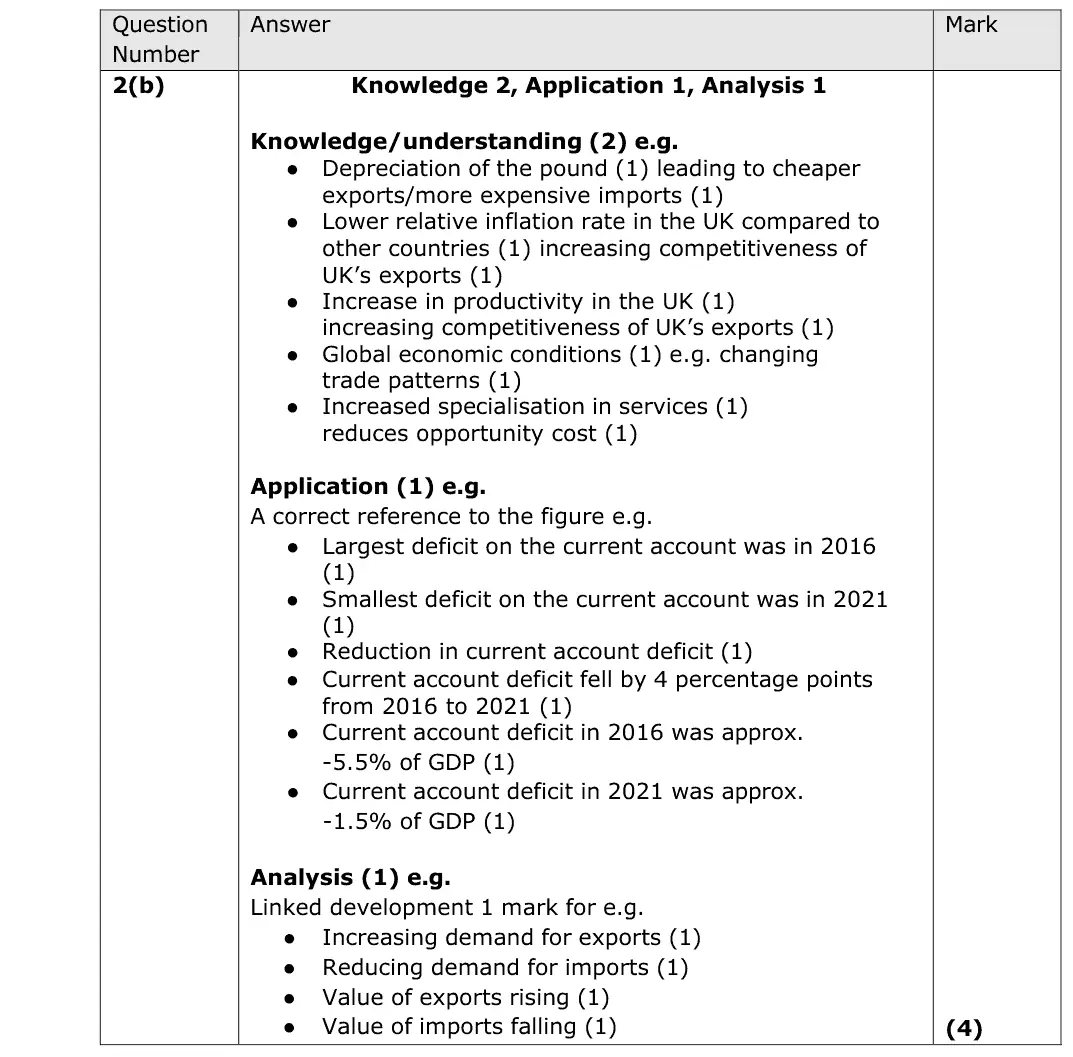
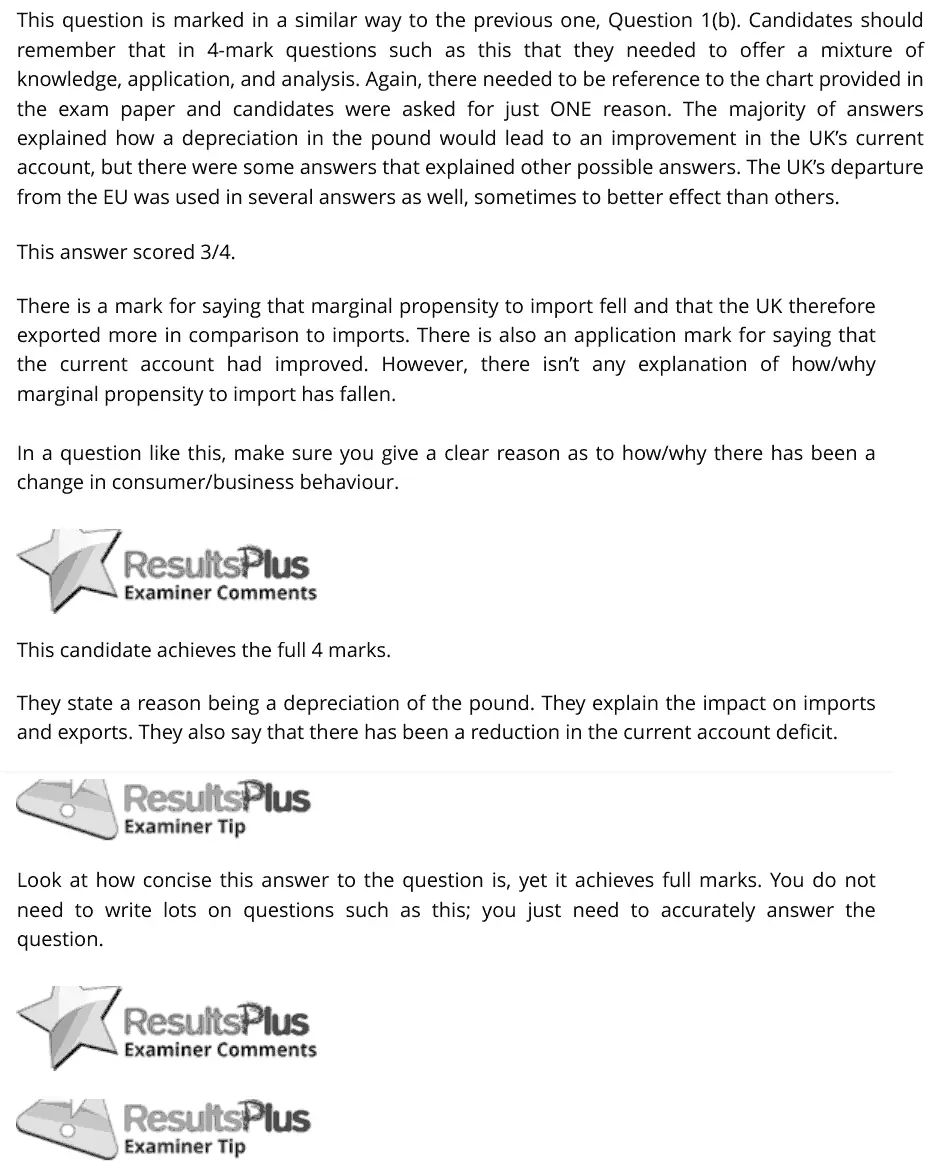
2(b) The balance of payments 4AO1=2,AO2=1,AO3=1Short answer
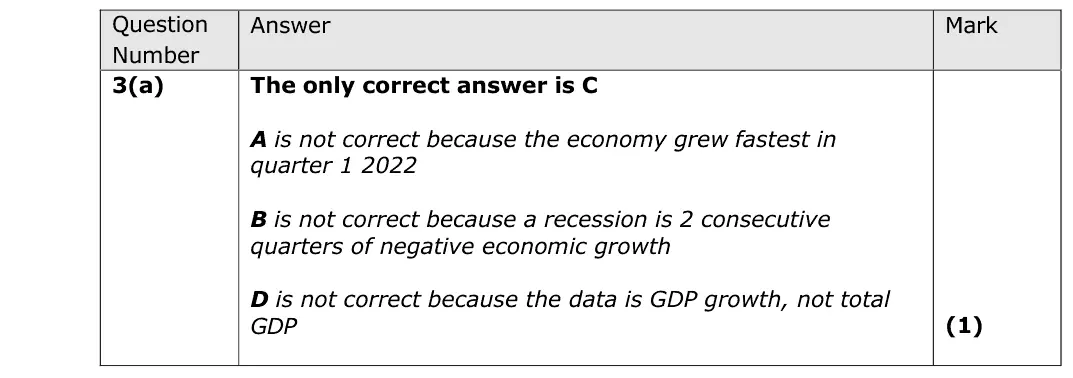
3(a) Measuring economic growth: GDP, GNI and living standards 1Multiple choice
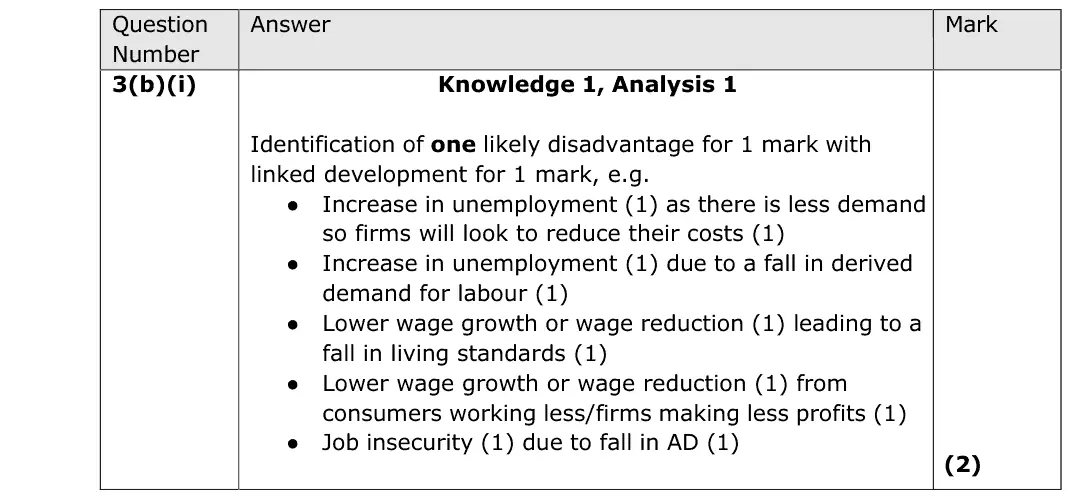
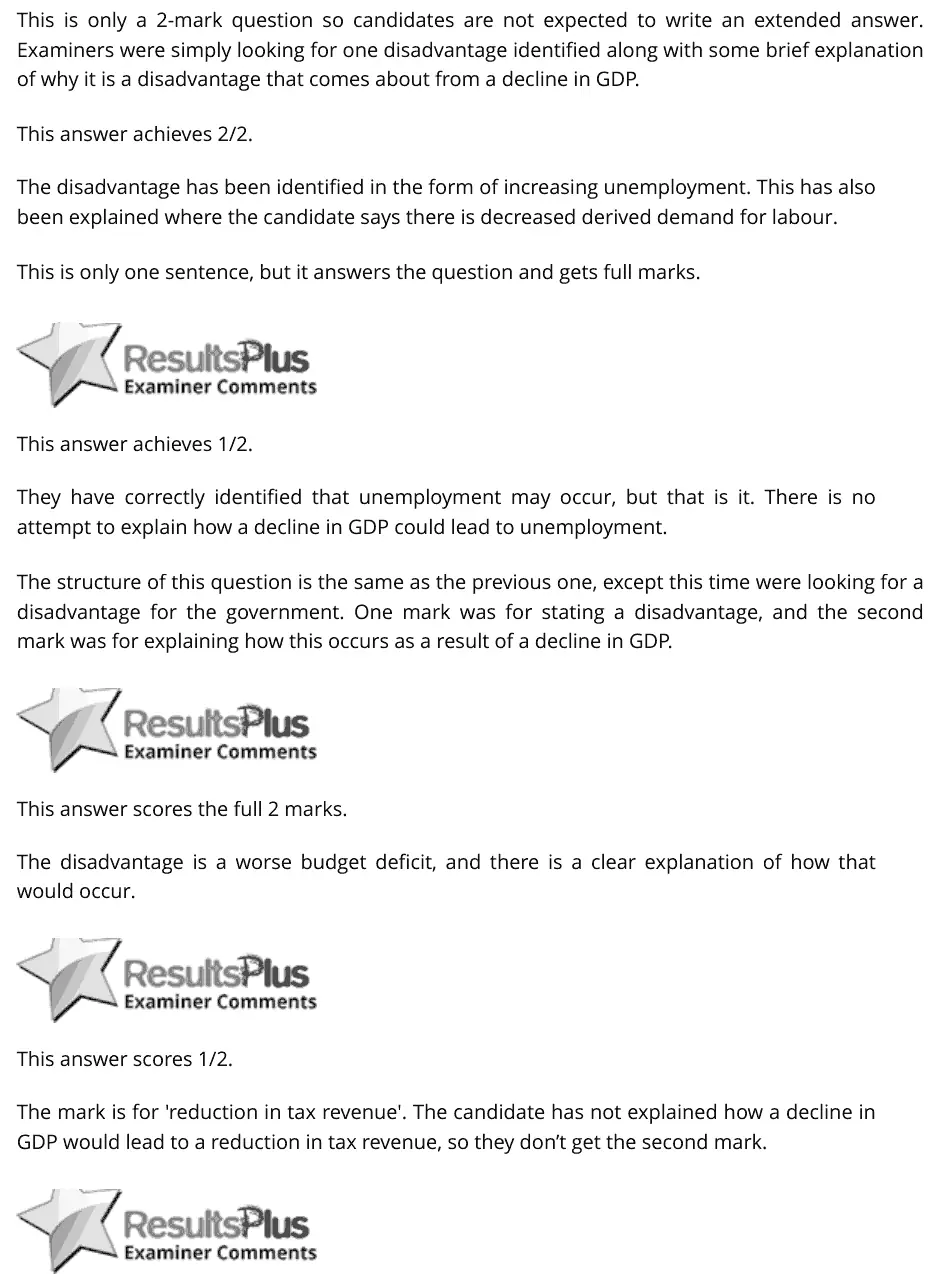
3(b)(i) Economic growth, output gaps and the trade cycle, Employment and unemployment 2AO1=1,AO3=1Short answer
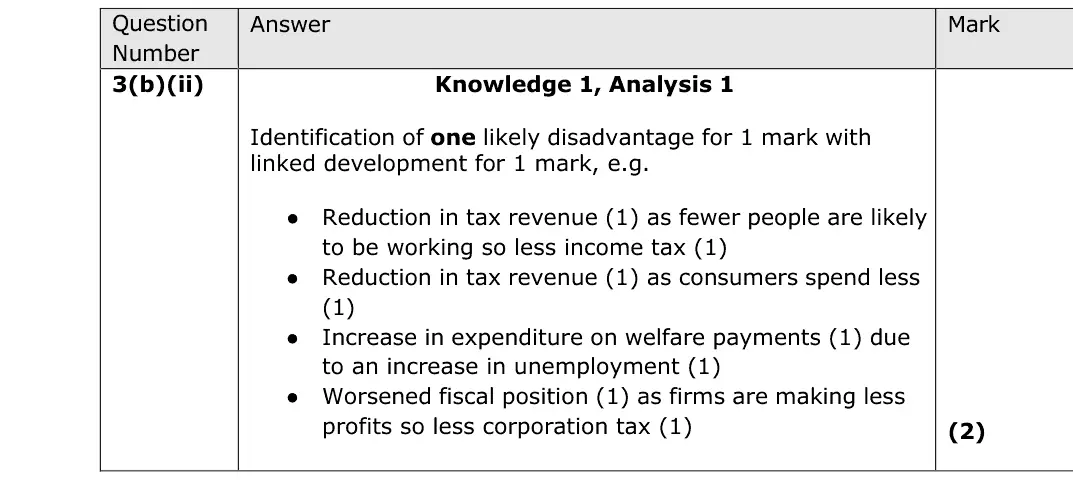
3(b)(ii) Economic growth, output gaps and the trade cycle 2AO1=1,AO3=1Short answer
4(a) Globalisation, specialisation and trade 2AO1=2Short answer
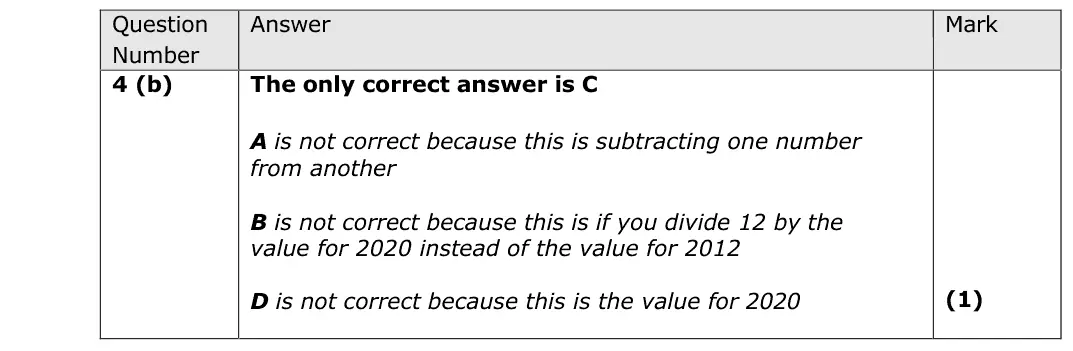
4(b) Globalisation, specialisation and trade 1Multiple choice
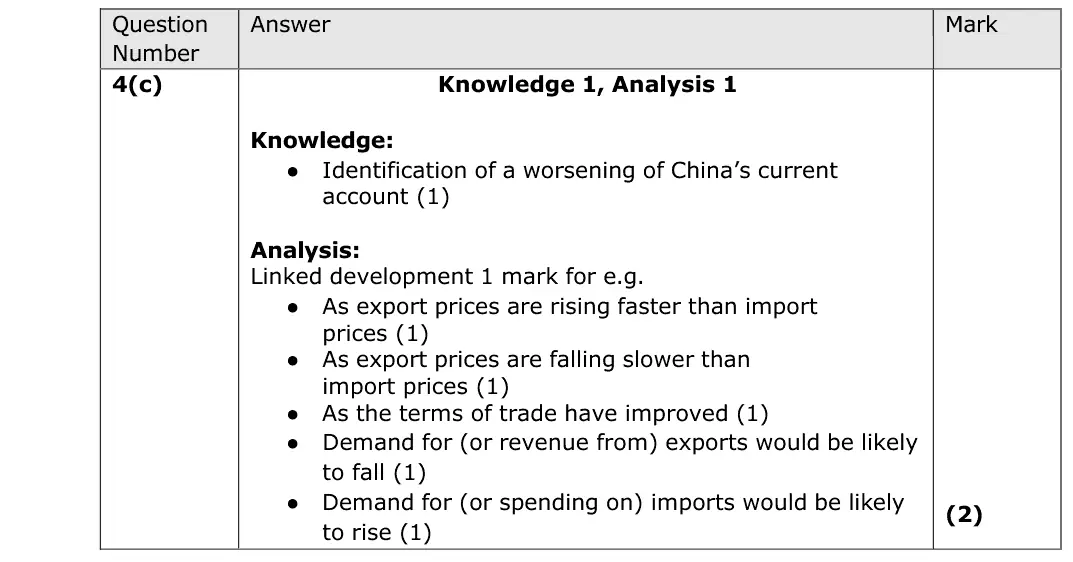
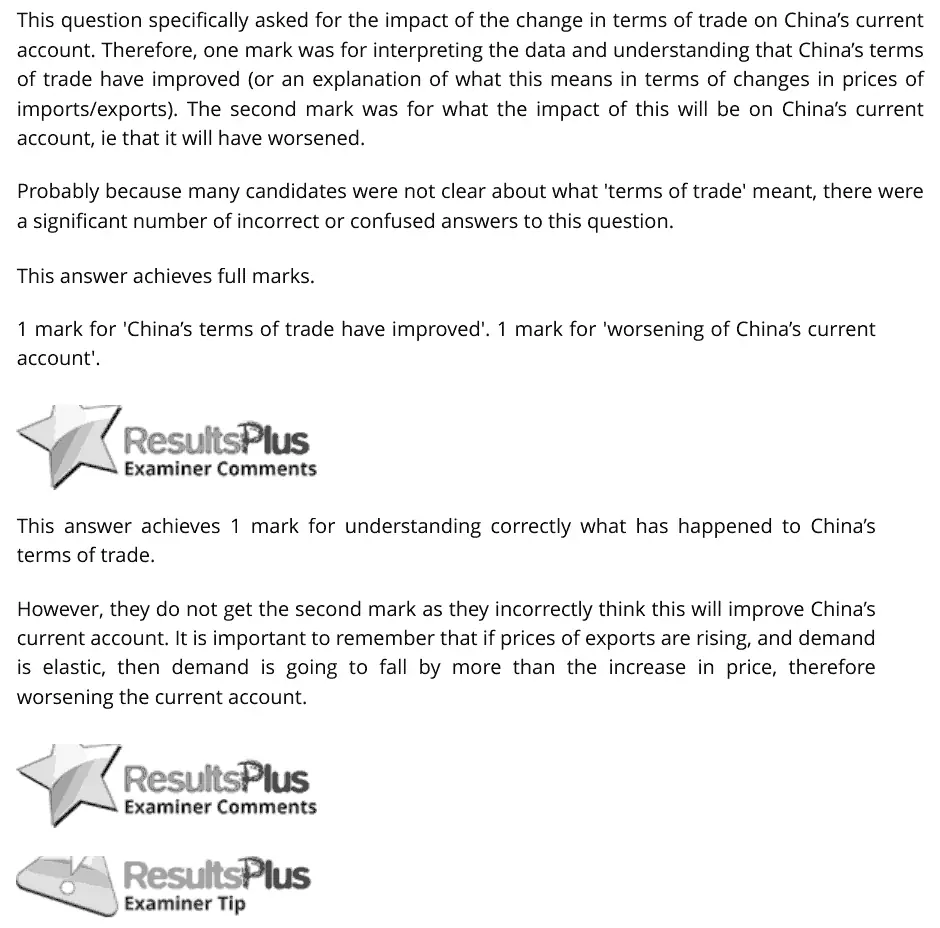
4(c) Globalisation, specialisation and trade, The balance of payments 2AO1=1,AO3=1Short answer
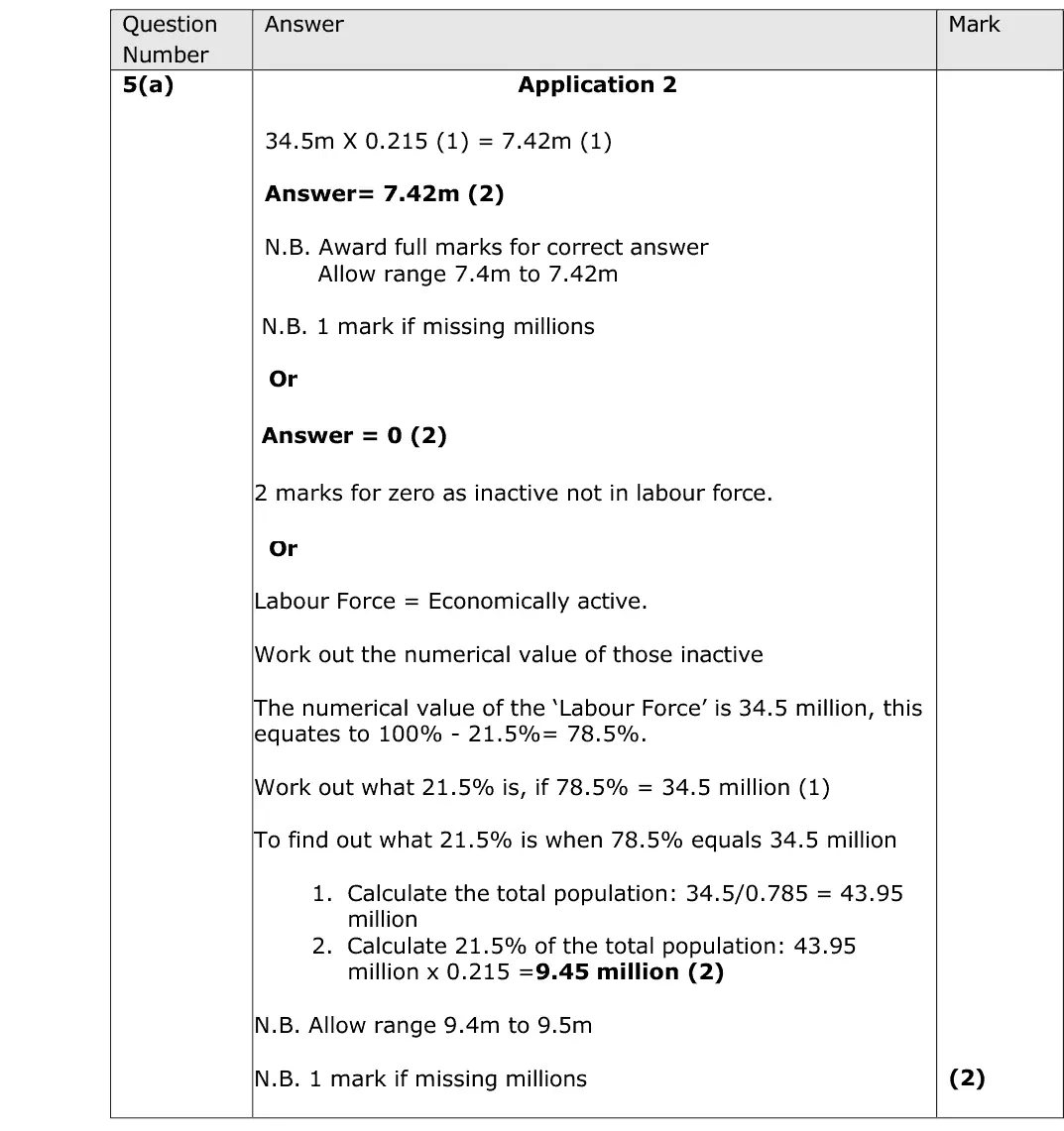
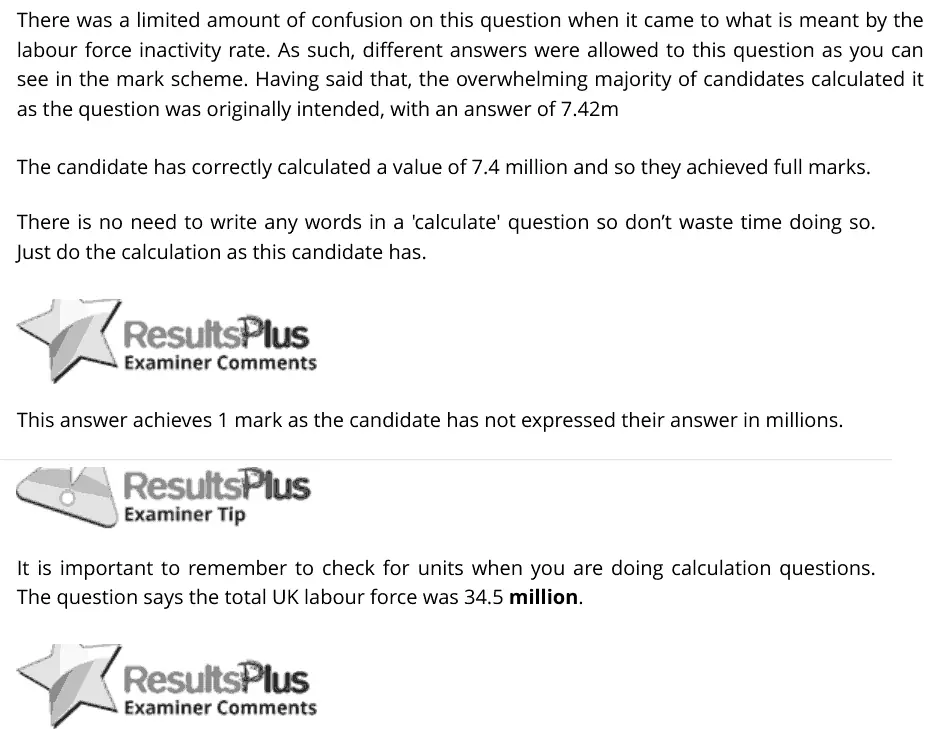
5(a) Employment and unemployment 2AO2=2Calculation
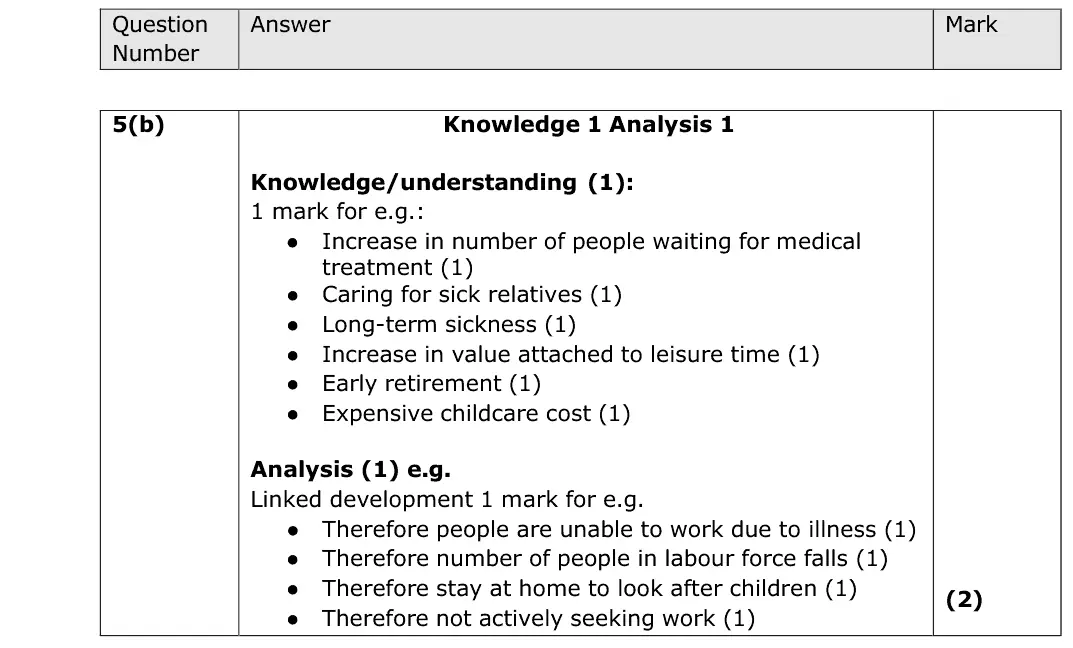
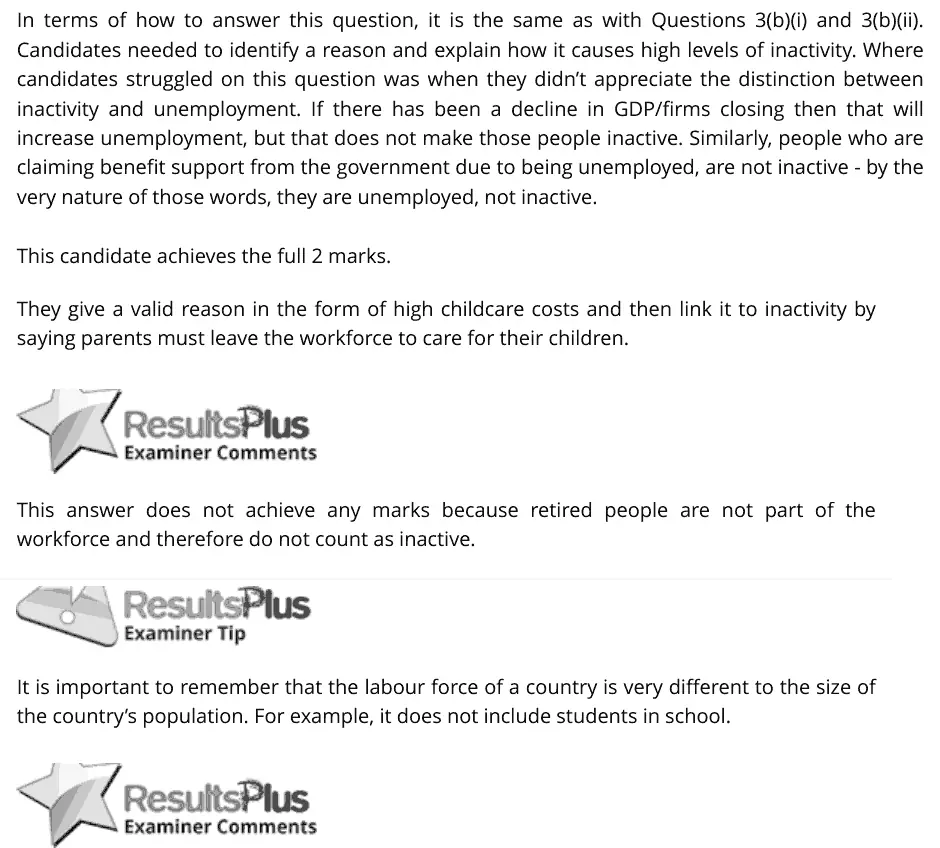
5(b) Employment and unemployment 2AO1=1,AO3=1Short answer
5(c) Employment and unemployment 1Multiple choice
6(a) Demand-side policies: fiscal and monetary policy, Public expenditure, taxation and public sector finances 5AO1=2,AO2=2,AO3=1Short answer
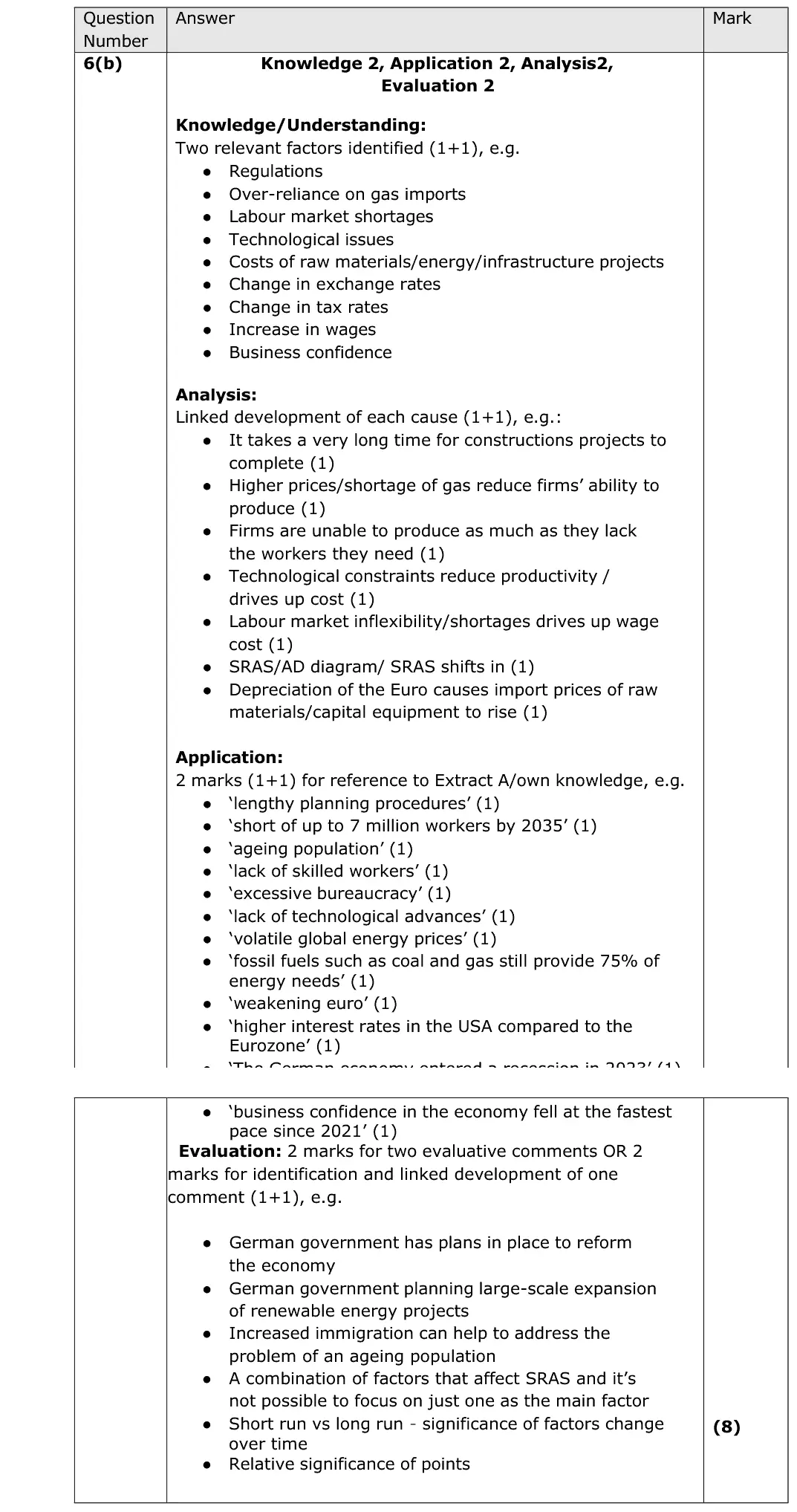
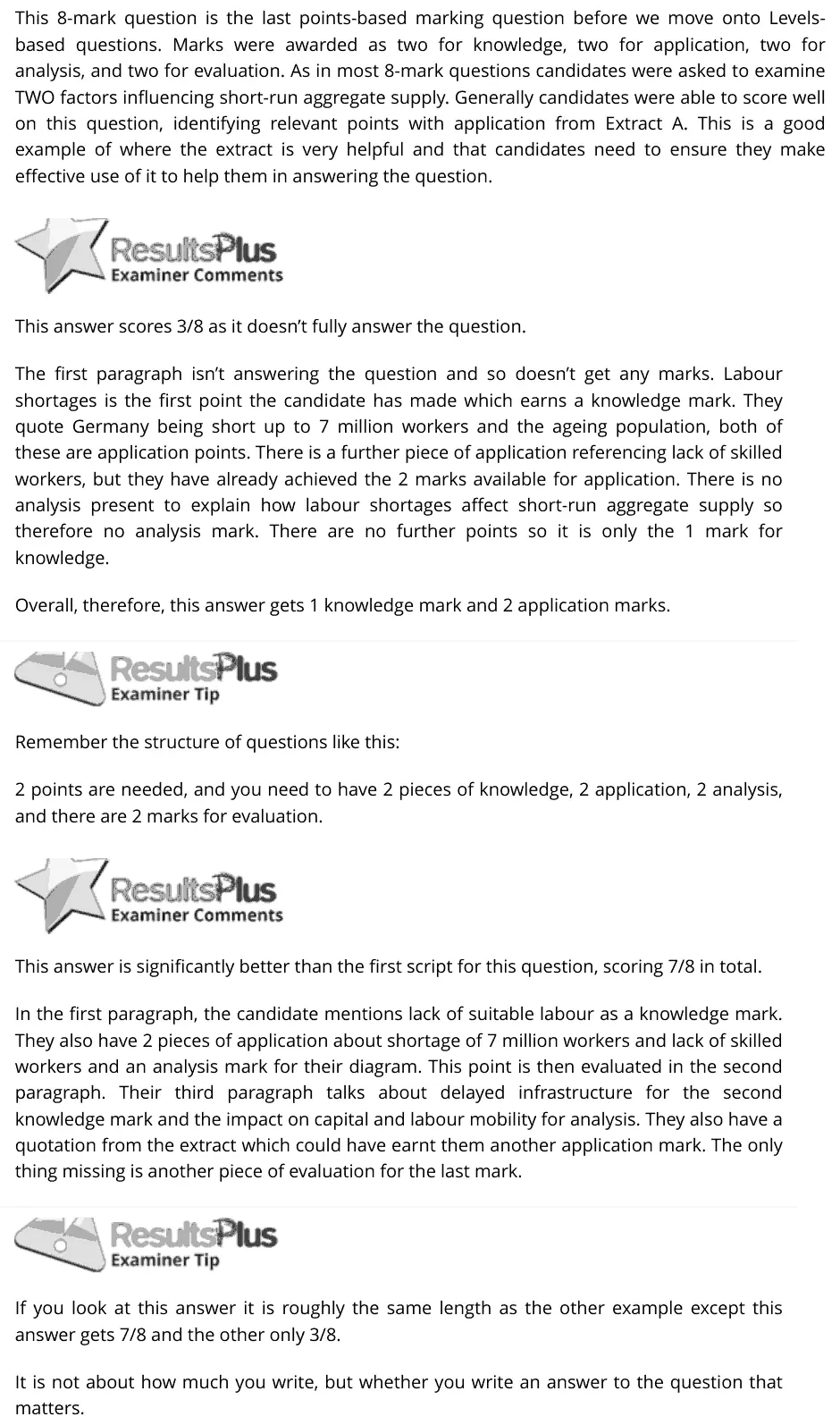
6(b) Aggregate supply 8AO1=2,AO2=2,AO3=2,AO4=2Extended response
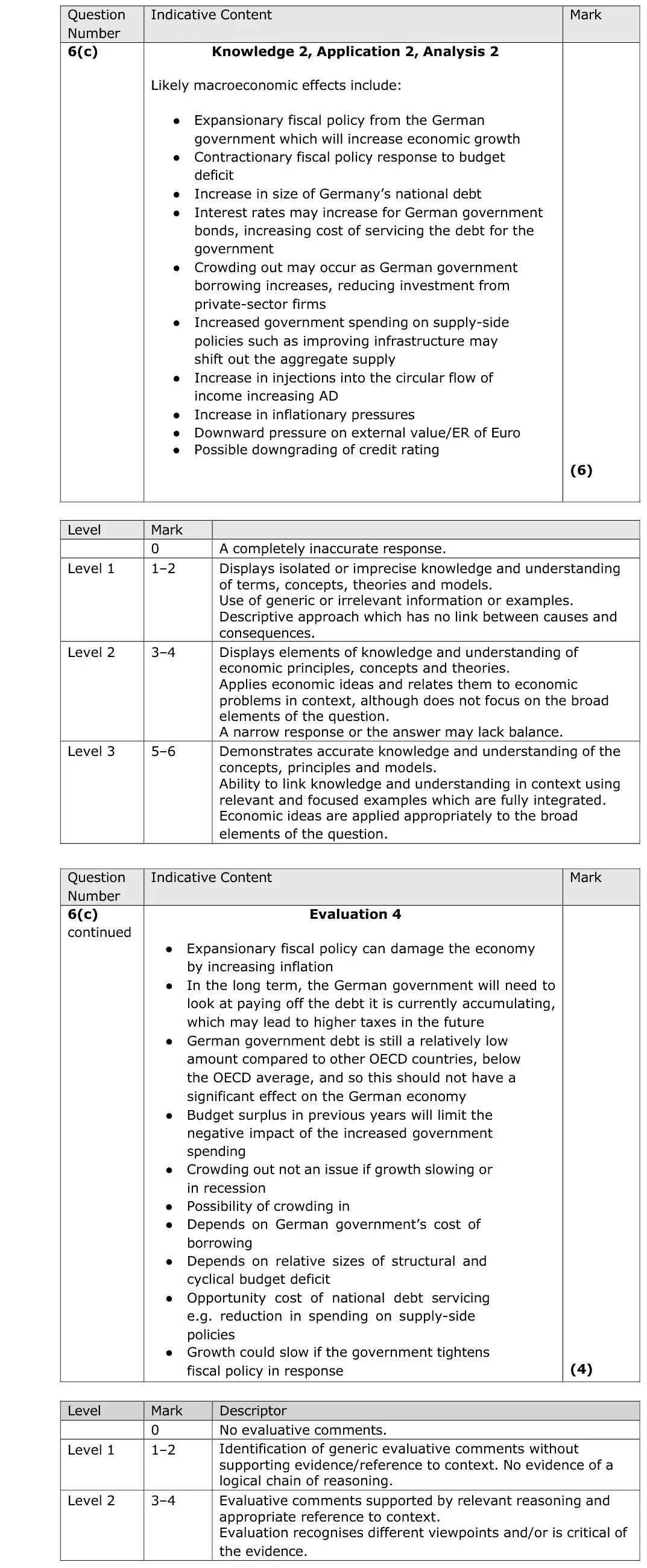
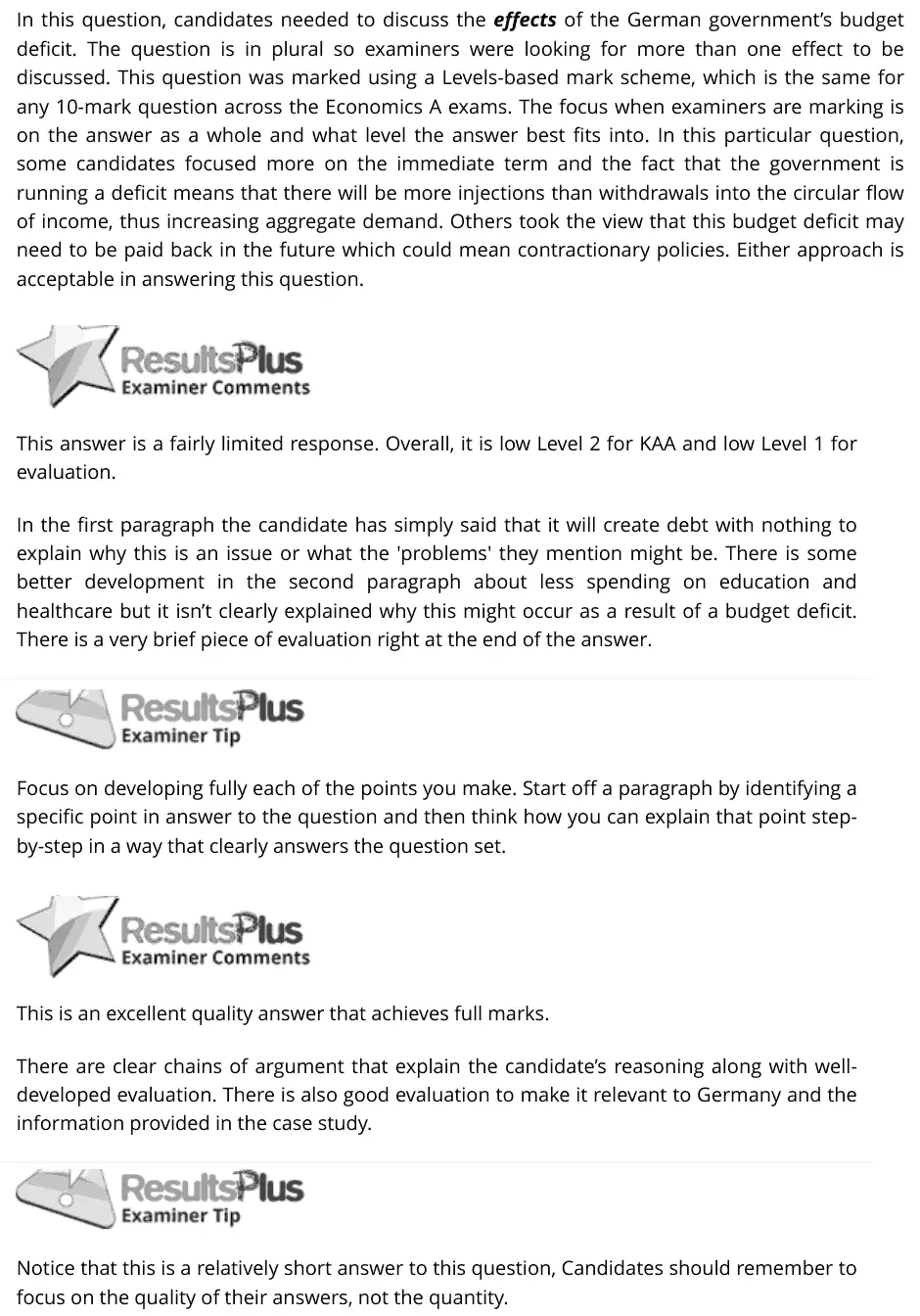
6(c) Public expenditure, taxation and public sector finances, Demand-side policies: fiscal and monetary policy 10AO1=2,AO2=2,AO3=2,AO4=4Extended response
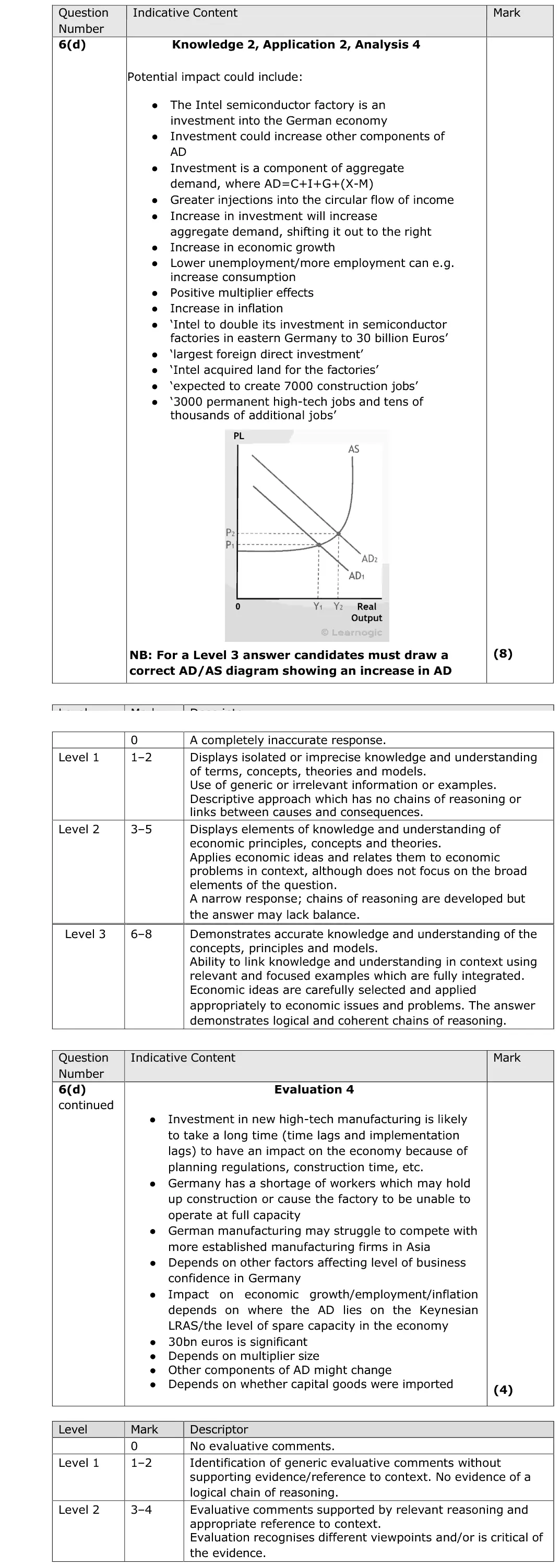
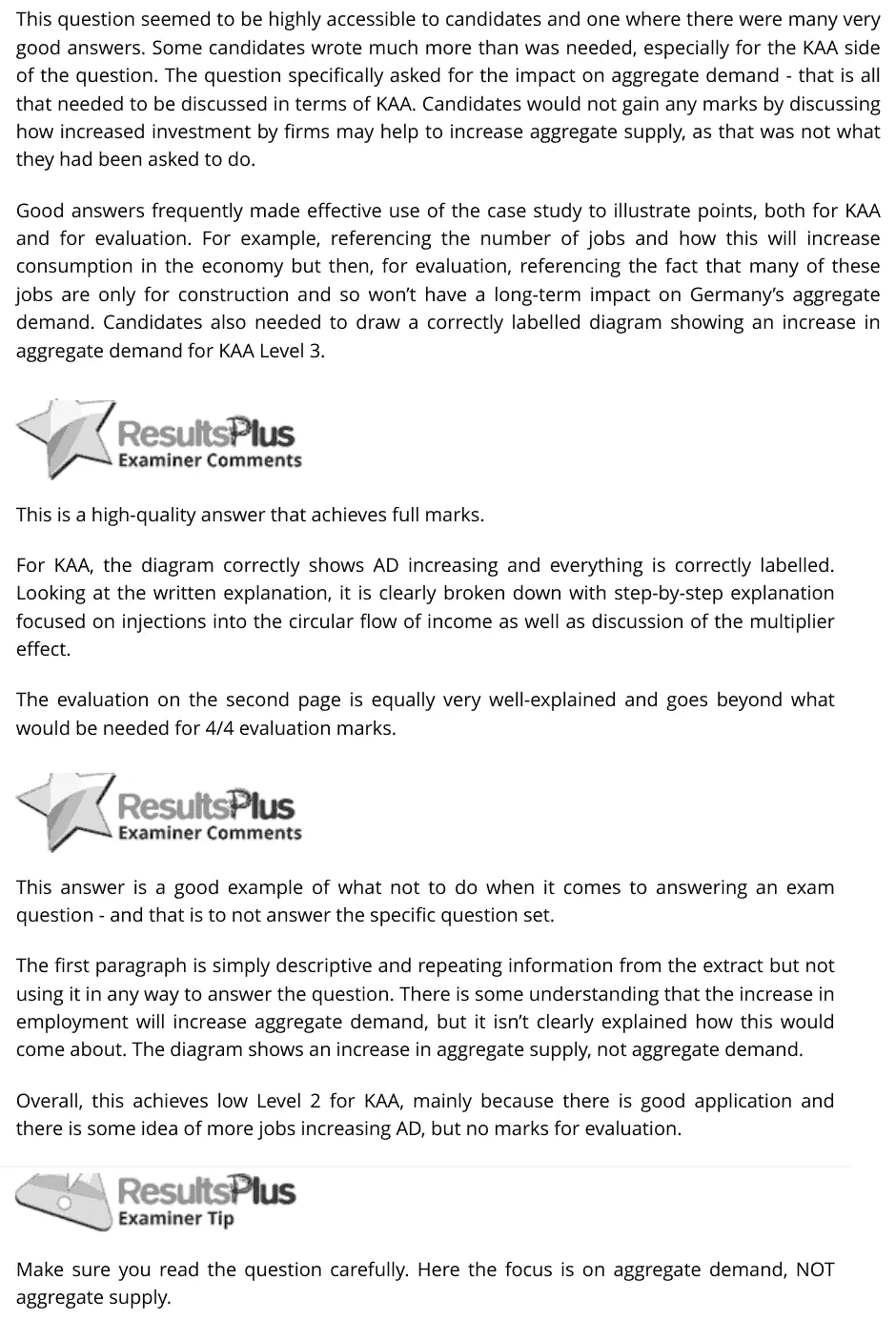
6(d) Aggregate demand, The circular flow, national income and the multiplier 12AO1=2,AO2=2,AO3=4,AO4=4Extended response
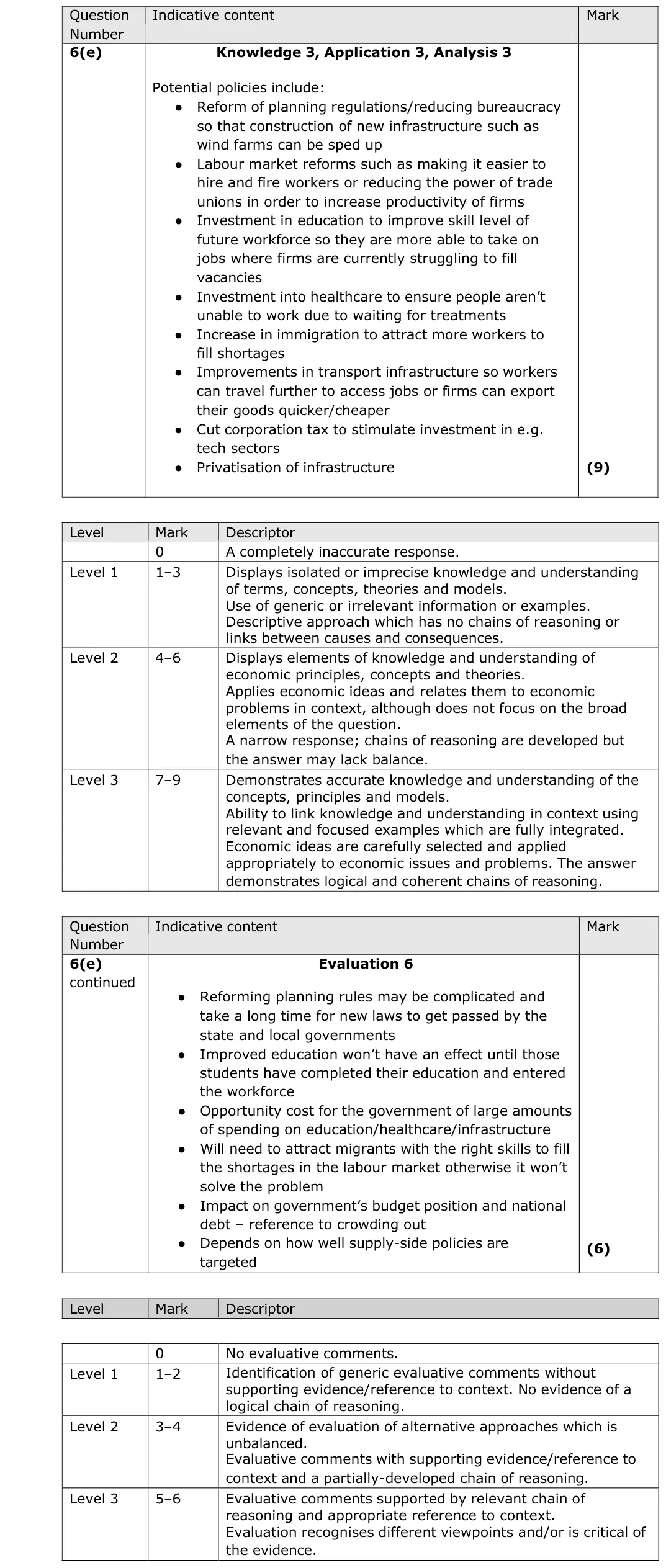
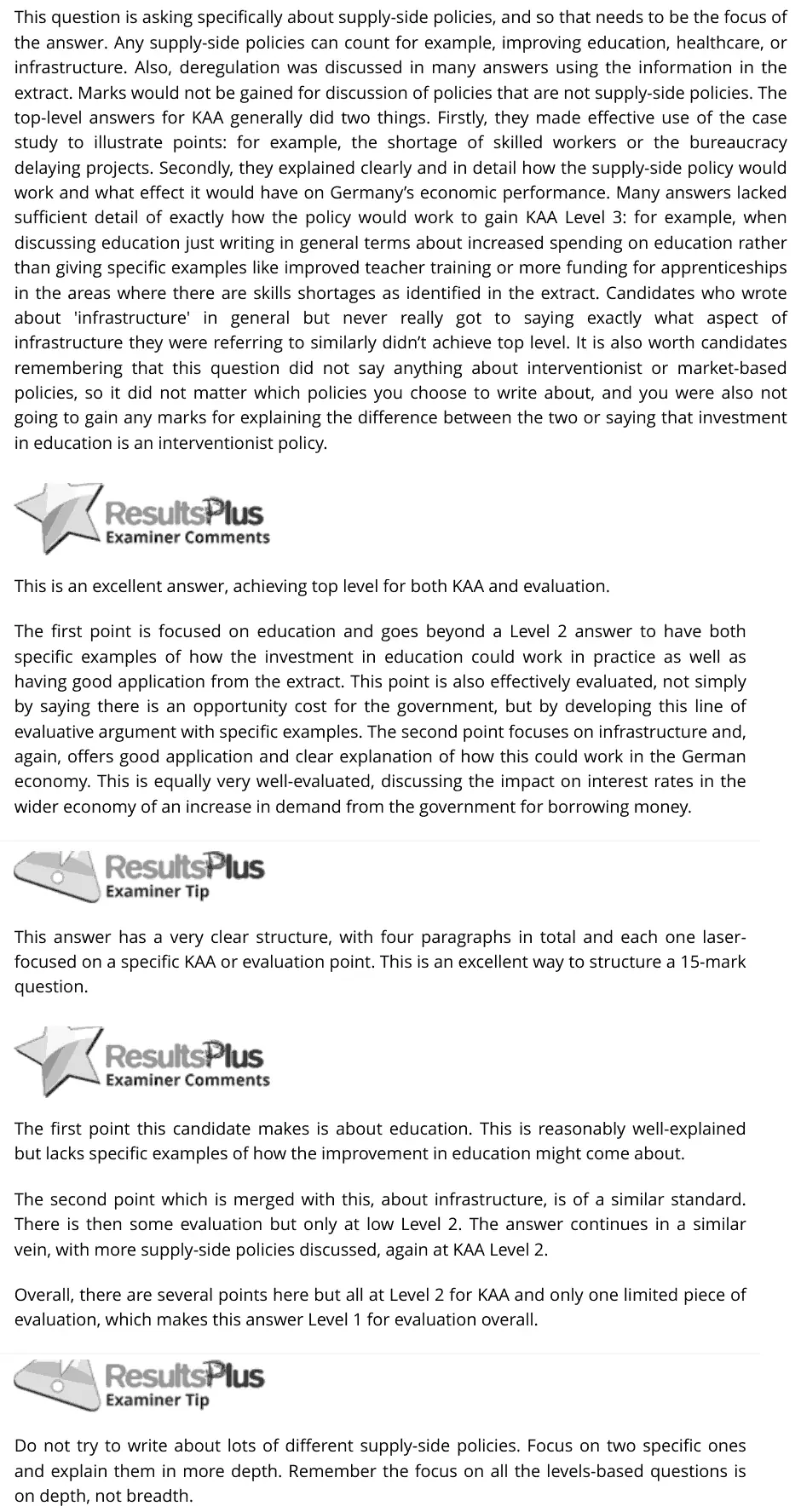
6(e) Supply-side policies 15AO1=3,AO2=3,AO3=3,AO4=6Extended response
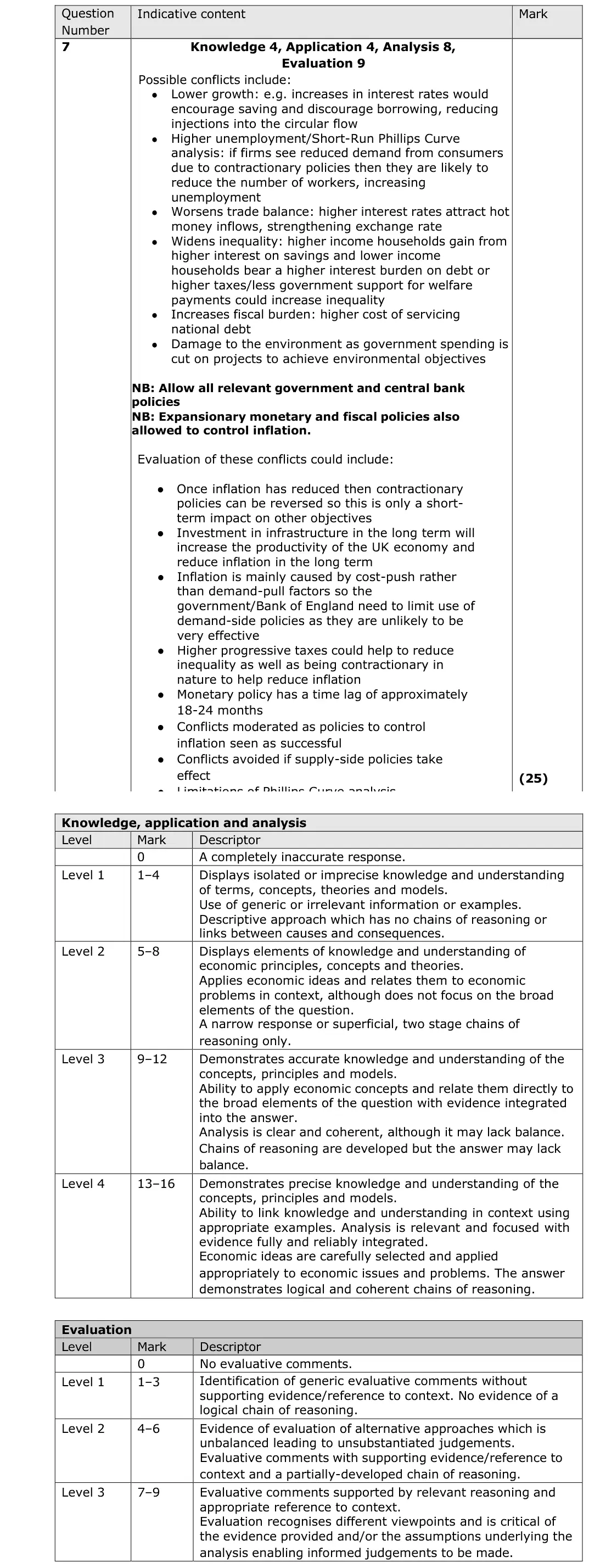
7 Macroeconomic objectives, conflicts and trade-offs 25AO1=4,AO2=4,AO3=8,AO4=9Essay
8 Emerging and developing economies 25AO1=4,AO2=4,AO3=8,AO4=9Essay

The questions

1(a)1(b)2(a)2(b)3(a)3(b)(i)3(b)(ii)4(a)4(b)4(c)5(a)5(b)5(c)6(a)6(b)6(c)6(d)6(e)78
June 2025 · Paper 2 · Q1(a) 1 mark Multiple choice emerging and developing economies
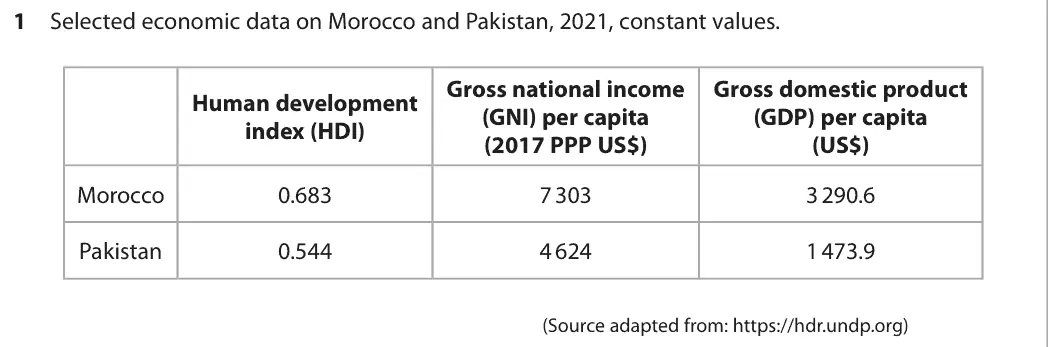
Data and extracts for question 11 Selected economic data on Morocco and Pakistan, 2021, constant values. Gross national income Gross domestic product Human development (GNI) per capita (GDP) per capita index (HDI) (2017 PPP US$) (US$) Morocco 0.683 7 303 3 290.6 Pakistan 0.544 4 624 1 473.9 (Source adapted from: https://hdr.undp.org)
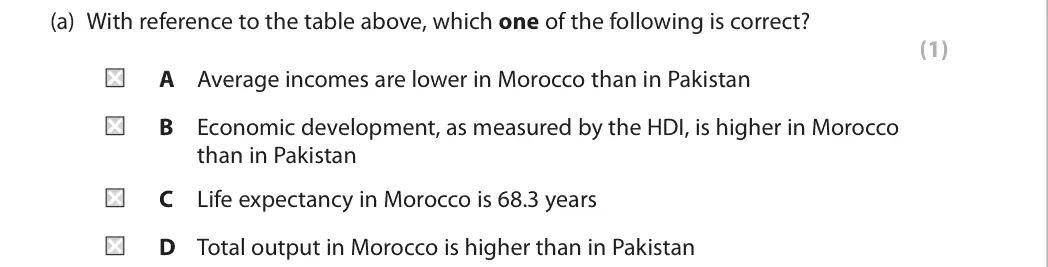
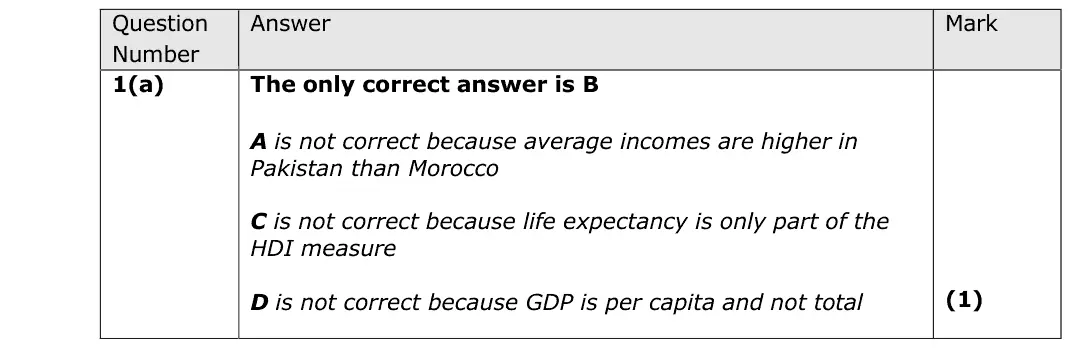
(a) With reference to the table above, which one of the following is correct? (1) A Average incomes are lower in Morocco than in Pakistan B Economic development, as measured by the HDI, is higher in Morocco than in Pakistan C Life expectancy in Morocco is 68.3 years D Total output in Morocco is higher than in Pakistan
June 2025 · Paper 2 · Q1(b) 4 marks AO1=2, AO2=1, AO3=1 Short answer measuring economic growth
Data and extracts for question 11 Selected economic data on Morocco and Pakistan, 2021, constant values. Gross national income Gross domestic product Human development (GNI) per capita (GDP) per capita index (HDI) (2017 PPP US$) (US$) Morocco 0.683 7 303 3 290.6 Pakistan 0.544 4 624 1 473.9 (Source adapted from: https://hdr.undp.org)
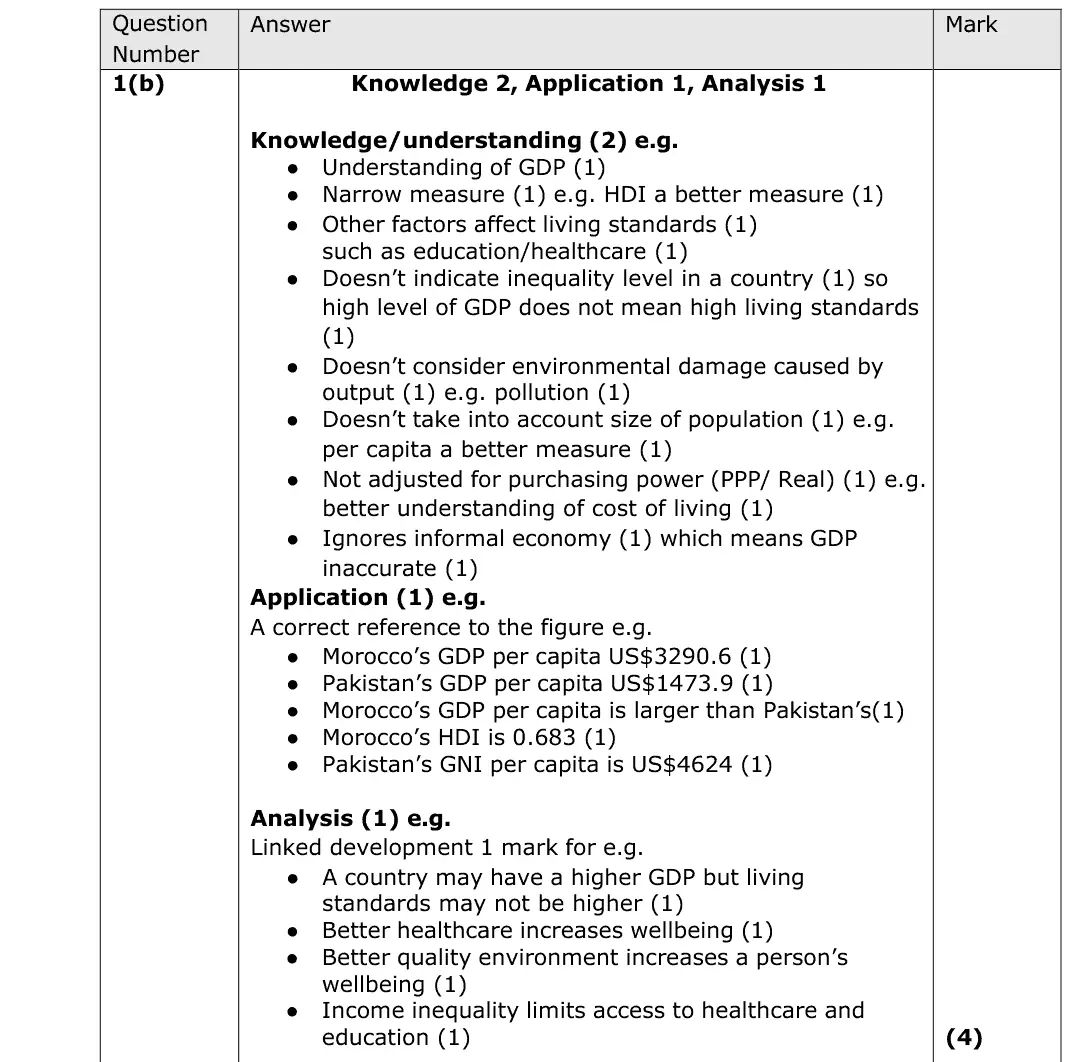
(b) With reference to the data provided, explain one limitation of using GDP to compare living standards between countries. (4)
June 2025 · Paper 2 · Q2(a) 1 mark Multiple choice balance of payments
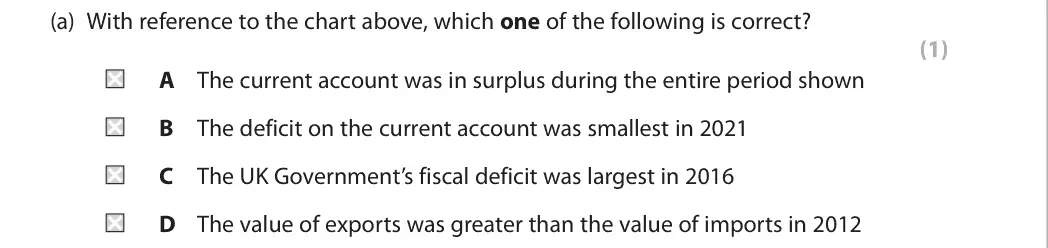
Data and extracts for question 22 UK current account of the balance of payments, percentage of GDP, 2012–2022. 0 % of GDP –1.5 –2.0 –2.5 –3.0 –3.5 –4.0 –4.5 –5.0 –5.5 –6.0 2012 2013 2014 2015 2016 2017 2018 2019 2020 2021 2022 (Source adapted from: https://data.worldbank.org/indicator/BN.CAB.XOKA.GD.ZS?end=2022 &locations=GB&start=2012)
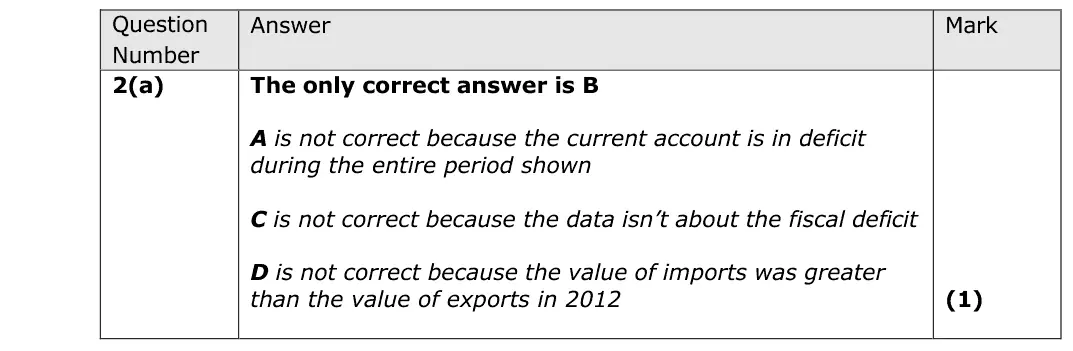
(a) With reference to the chart above, which one of the following is correct? (1) A The current account was in surplus during the entire period shown B The deficit on the current account was smallest in 2021 C The UK Government’s fiscal deficit was largest in 2016 D The value of exports was greater than the value of imports in 2012
June 2025 · Paper 2 · Q2(b) 4 marks AO1=2, AO2=1, AO3=1 Short answer balance of payments
Data and extracts for question 22 UK current account of the balance of payments, percentage of GDP, 2012–2022. 0 % of GDP –1.5 –2.0 –2.5 –3.0 –3.5 –4.0 –4.5 –5.0 –5.5 –6.0 2012 2013 2014 2015 2016 2017 2018 2019 2020 2021 2022 (Source adapted from: https://data.worldbank.org/indicator/BN.CAB.XOKA.GD.ZS?end=2022 &locations=GB&start=2012)
(b) With reference to the chart on the previous page, explain one likely reason for the change in the UK current account deficit from 2016 to 2021. (4)
June 2025 · Paper 2 · Q3(a) 1 mark Multiple choice measuring economic growth
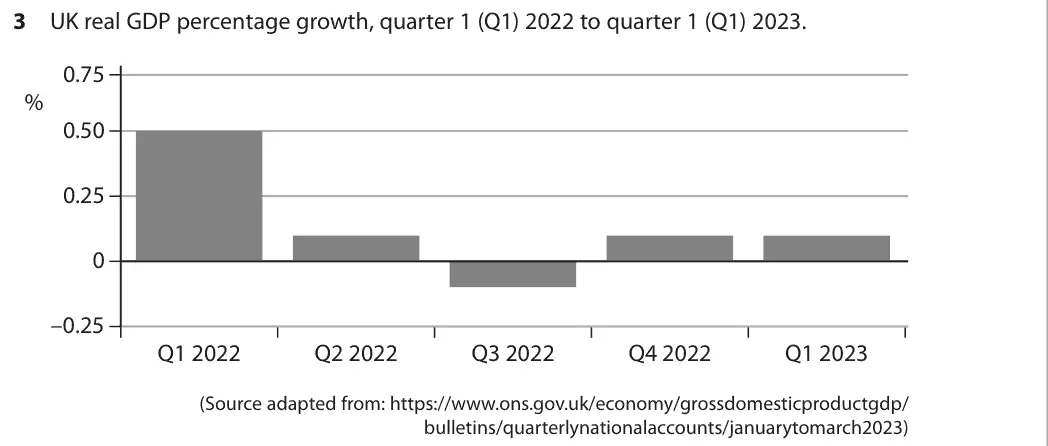
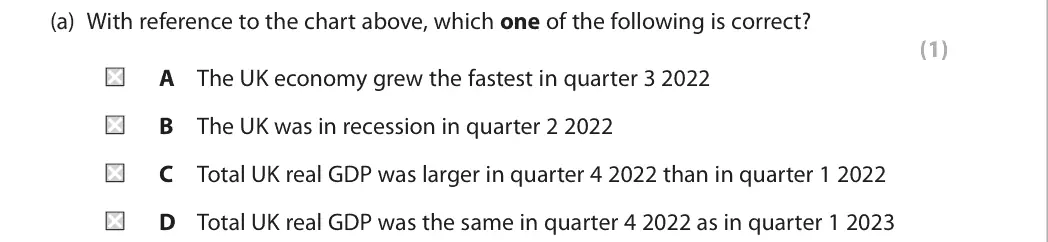
Data and extracts for question 33 UK real GDP percentage growth, quarter 1 (Q1) 2022 to quarter 1 (Q1) 2023. 0.75 % 0.50 0.25 0 –0.25 Q1 2022 Q2 2022 Q3 2022 Q4 2022 Q1 2023 (Source adapted from: https://www.ons.gov.uk/economy/grossdomesticproductgdp/ bulletins/quarterlynationalaccounts/januarytomarch2023)
(a) With reference to the chart above, which one of the following is correct? (1) A The UK economy grew the fastest in quarter 3 2022 B The UK was in recession in quarter 2 2022 C Total UK real GDP was larger in quarter 4 2022 than in quarter 1 2022 D Total UK real GDP was the same in quarter 4 2022 as in quarter 1 2023
June 2025 · Paper 2 · Q3(b)(i) 2 marks AO1=1, AO3=1 Short answer economic growth and the trade cycleunemployment
Data and extracts for question 33 UK real GDP percentage growth, quarter 1 (Q1) 2022 to quarter 1 (Q1) 2023. 0.75 % 0.50 0.25 0 –0.25 Q1 2022 Q2 2022 Q3 2022 Q4 2022 Q1 2023 (Source adapted from: https://www.ons.gov.uk/economy/grossdomesticproductgdp/ bulletins/quarterlynationalaccounts/januarytomarch2023)
(b) Explain one likely disadvantage of a decline in GDP on: (i) workers (2)
June 2025 · Paper 2 · Q3(b)(ii) 2 marks AO1=1, AO3=1 Short answer economic growth and the trade cycle
Data and extracts for question 33 UK real GDP percentage growth, quarter 1 (Q1) 2022 to quarter 1 (Q1) 2023. 0.75 % 0.50 0.25 0 –0.25 Q1 2022 Q2 2022 Q3 2022 Q4 2022 Q1 2023 (Source adapted from: https://www.ons.gov.uk/economy/grossdomesticproductgdp/ bulletins/quarterlynationalaccounts/januarytomarch2023)
(b) Explain one likely disadvantage of a decline in GDP on: (ii) government. (2)
June 2025 · Paper 2 · Q4(a) 2 marks AO1=2 Short answer Hard globalisation and trade
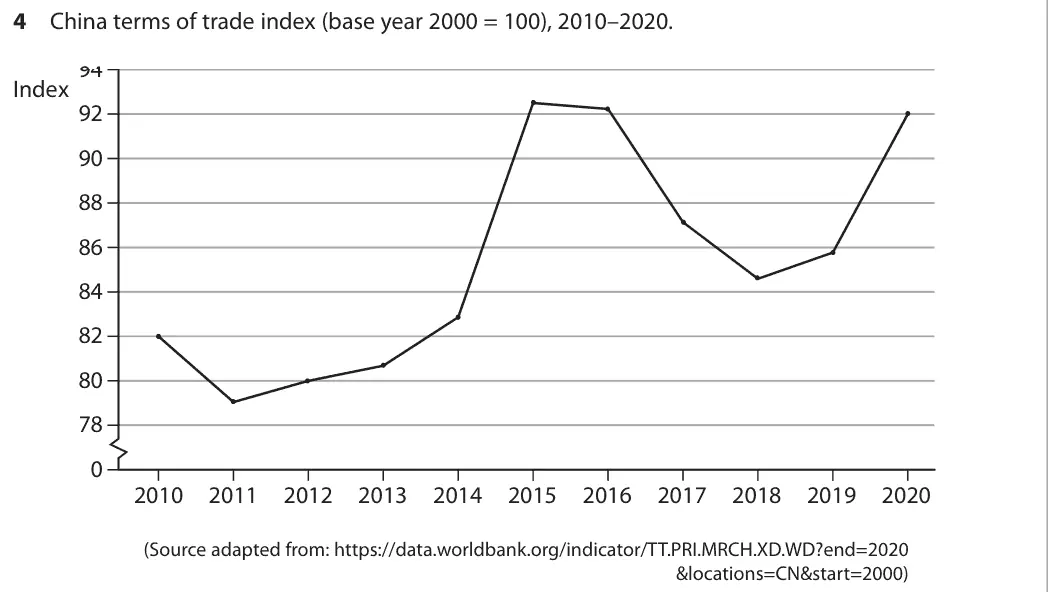
Data and extracts for question 44 China terms of trade index (base year 2000 = 100), 2010–2020. 94 Index 92 90 88 86 84 82 80 78 0 2010 2011 2012 2013 2014 2015 2016 2017 2018 2019 2020 (Source adapted from: https://data.worldbank.org/indicator/TT.PRI.MRCH.XD.WD?end=2020 &locations=CN&start=2000)
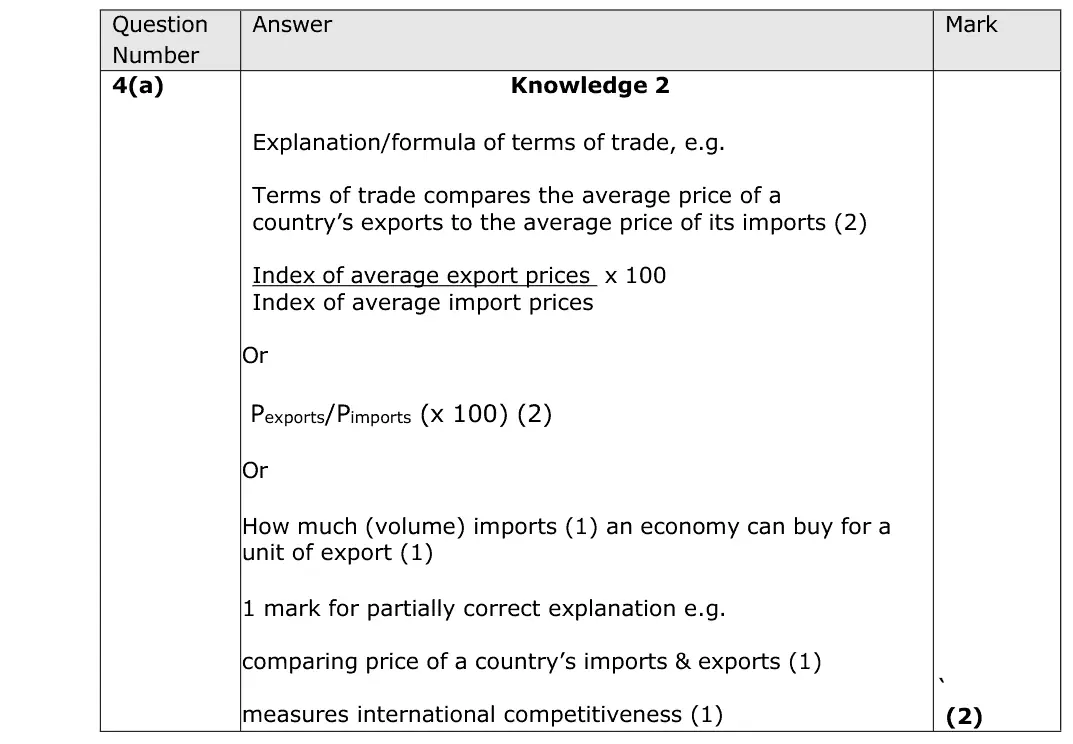
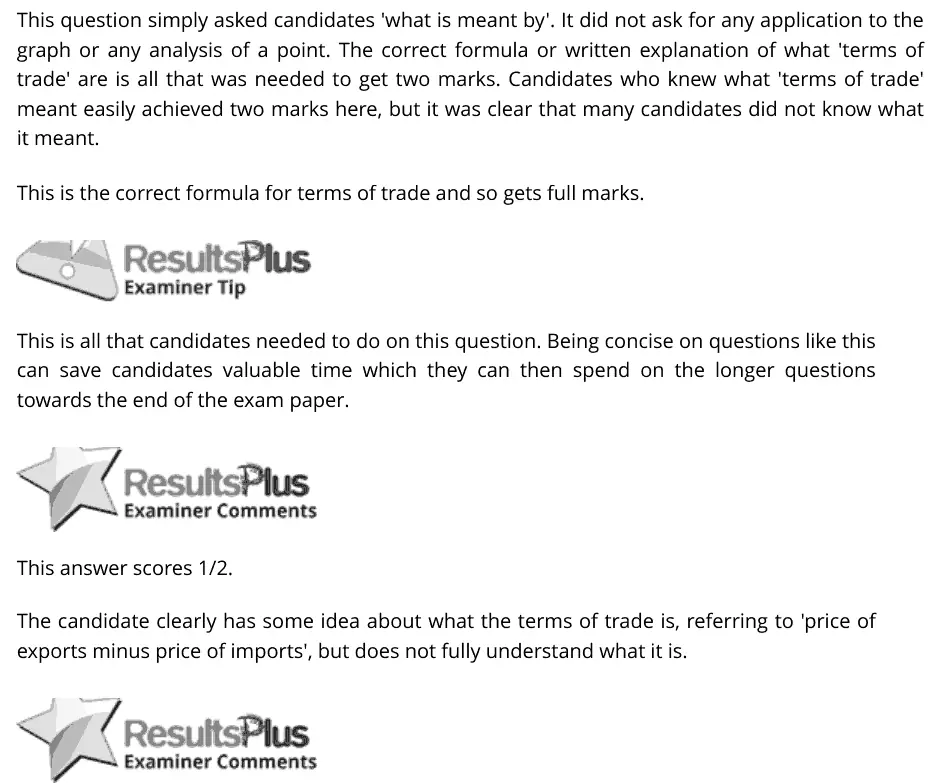
(a) Explain what is meant by ‘terms of trade’. (2)
June 2025 · Paper 2 · Q4(b) 1 mark Multiple choice globalisation and trade
Data and extracts for question 44 China terms of trade index (base year 2000 = 100), 2010–2020. 94 Index 92 90 88 86 84 82 80 78 0 2010 2011 2012 2013 2014 2015 2016 2017 2018 2019 2020 (Source adapted from: https://data.worldbank.org/indicator/TT.PRI.MRCH.XD.WD?end=2020 &locations=CN&start=2000)
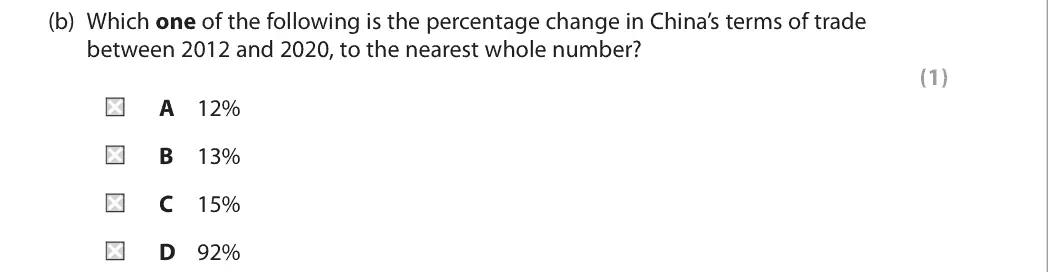
(b) Which one of the following is the percentage change in China’s terms of trade between 2012 and 2020, to the nearest whole number? (1) A 12% B 13% C 15% D 92%
June 2025 · Paper 2 · Q4(c) 2 marks AO1=1, AO3=1 Short answer Hard globalisation and tradebalance of payments
Data and extracts for question 44 China terms of trade index (base year 2000 = 100), 2010–2020. 94 Index 92 90 88 86 84 82 80 78 0 2010 2011 2012 2013 2014 2015 2016 2017 2018 2019 2020 (Source adapted from: https://data.worldbank.org/indicator/TT.PRI.MRCH.XD.WD?end=2020 &locations=CN&start=2000)
(c) Explain the likely impact of the change in China’s terms of trade from 2012 to 2020 on China’s current account. Assume that demand for China’s exports and imports is price elastic. (2)
June 2025 · Paper 2 · Q5(a) 2 marks AO2=2 Calculation unemployment
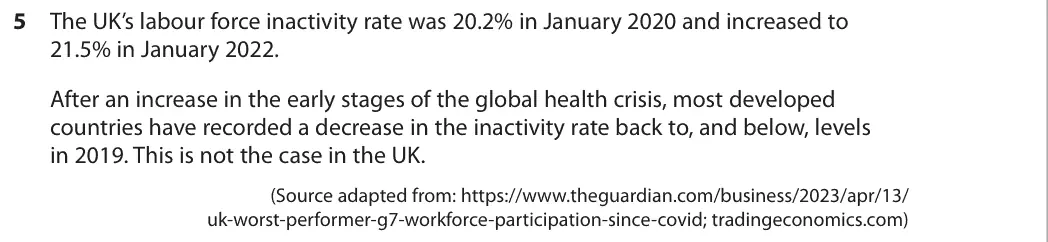
Data and extracts for question 55 The UK’s labour force inactivity rate was 20.2% in January 2020 and increased to 21.5% in January 2022. After an increase in the early stages of the global health crisis, most developed countries have recorded a decrease in the inactivity rate back to, and below, levels in 2019. This is not the case in the UK. (Source adapted from: https://www.theguardian.com/business/2023/apr/13/ uk‑worst‑performer‑g7‑workforce‑participation‑since‑covid; tradingeconomics.com)
(a) The total UK labour force in January 2022 was 34.5 million. With reference to the information above, calculate the total number of inactive people in the UK labour force in January 2022. (2)
June 2025 · Paper 2 · Q5(b) 2 marks AO1=1, AO3=1 Short answer unemployment
Data and extracts for question 55 The UK’s labour force inactivity rate was 20.2% in January 2020 and increased to 21.5% in January 2022. After an increase in the early stages of the global health crisis, most developed countries have recorded a decrease in the inactivity rate back to, and below, levels in 2019. This is not the case in the UK. (Source adapted from: https://www.theguardian.com/business/2023/apr/13/ uk‑worst‑performer‑g7‑workforce‑participation‑since‑covid; tradingeconomics.com)
(b) Explain one likely reason for the high levels of inactivity in the UK labour force. (2)
June 2025 · Paper 2 · Q5(c) 1 mark Multiple choice unemployment
Data and extracts for question 55 The UK’s labour force inactivity rate was 20.2% in January 2020 and increased to 21.5% in January 2022. After an increase in the early stages of the global health crisis, most developed countries have recorded a decrease in the inactivity rate back to, and below, levels in 2019. This is not the case in the UK. (Source adapted from: https://www.theguardian.com/business/2023/apr/13/ uk‑worst‑performer‑g7‑workforce‑participation‑since‑covid; tradingeconomics.com)
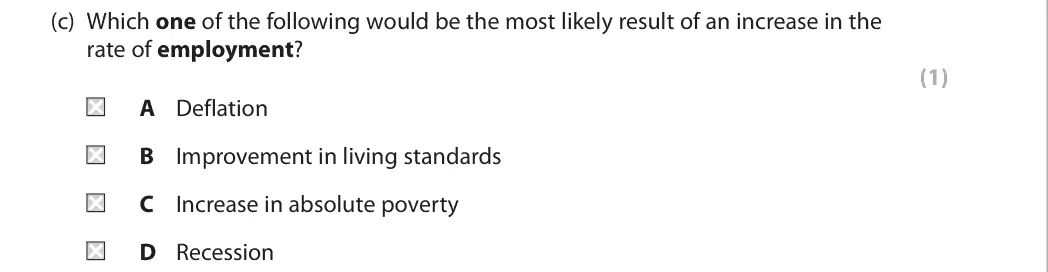
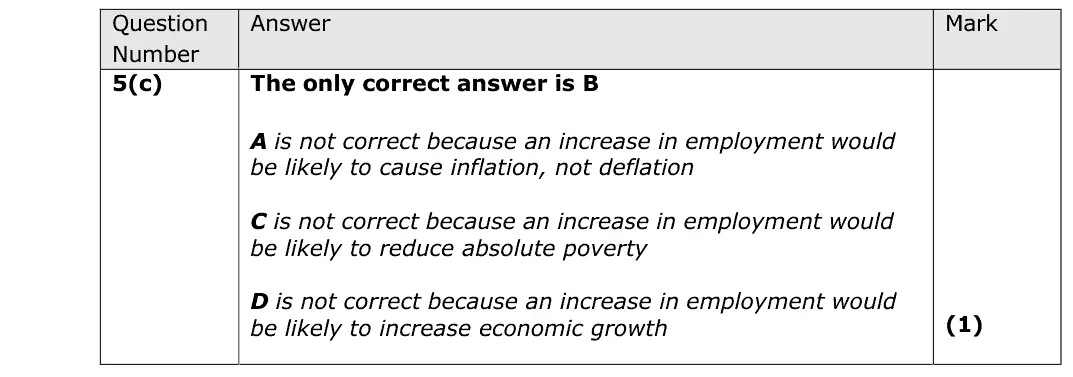
(c) Which one of the following would be the most likely result of an increase in the rate of employment? (1) A Deflation B Improvement in living standards C Increase in absolute poverty D Recession
June 2025 · Paper 2 · Q6(a) 5 marks AO1=2, AO2=2, AO3=1 Short answer fiscal and monetary policypublic finances and taxation
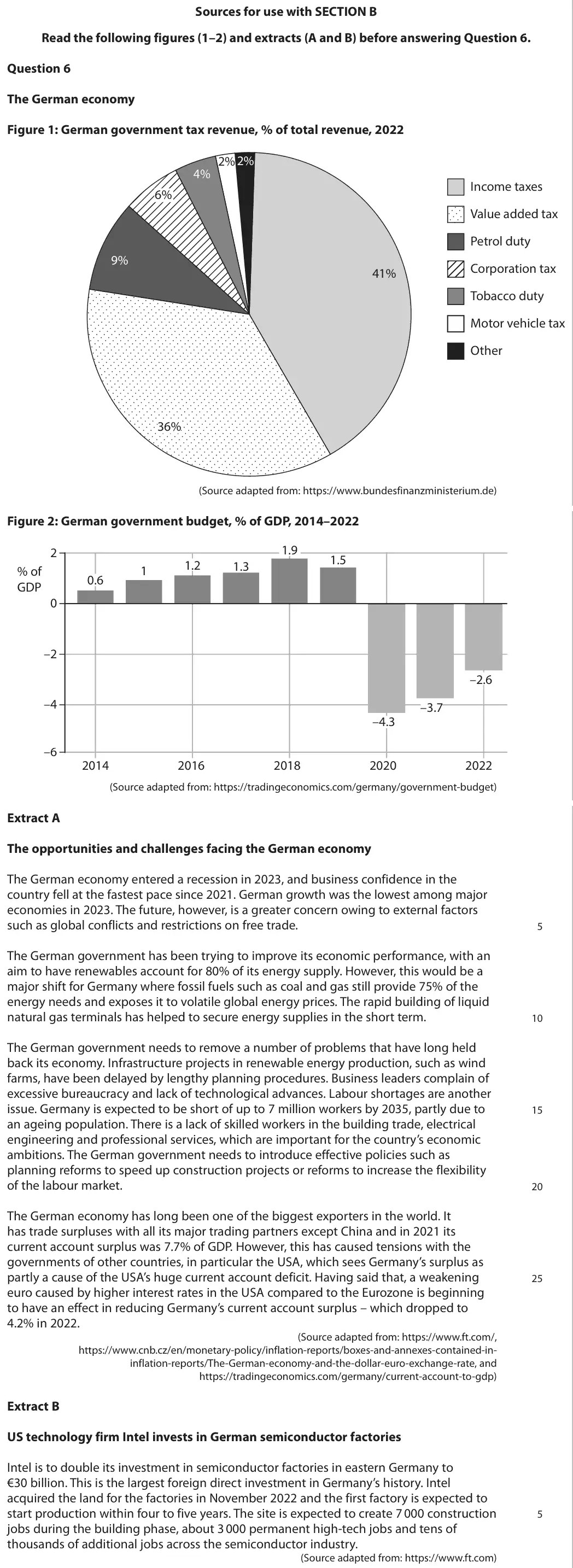
Data and extracts for question 6Sources for use with SECTION B Read the following figures (1–2) and extracts (A and B) before answering Question 6. Question 6 The German economy Figure 1: German government tax revenue, % of total revenue, 2022 2%2% 4% Income taxes 6% Value added tax Petrol duty 9% Corporation tax 41% Tobacco duty Motor vehicle tax Other 36% (Source adapted from: https://www.bundesfinanzministerium.de) Figure 2: German government budget, % of GDP, 2014–2022 1.9 2 1.5 1.2 1.3 % of 1 0.6 GDP 0 –2 –2.6 –4 –3.7 –4.3 –6 2014 2016 2018 2020 2022 (Source adapted from: https://tradingeconomics.com/germany/government‑budget) Extract A The opportunities and challenges facing the German economy The German economy entered a recession in 2023, and business confidence in the country fell at the fastest pace since 2021. German growth was the lowest among major economies in 2023. The future, however, is a greater concern owing to external factors such as global conflicts and restrictions on free trade. 5 The German government has been trying to improve its economic performance, with an aim to have renewables account for 80% of its energy supply. However, this would be a major shift for Germany where fossil fuels such as coal and gas still provide 75% of the energy needs and exposes it to volatile global energy prices. The rapid building of liquid natural gas terminals has helped to secure energy supplies in the short term. 10 The German government needs to remove a number of problems that have long held back its economy. Infrastructure projects in renewable energy production, such as wind farms, have been delayed by lengthy planning procedures. Business leaders complain of excessive bureaucracy and lack of technological advances. Labour shortages are another issue. Germany is expected to be short of up to 7 million workers by 2035, partly due to 15 an ageing population. There is a lack of skilled workers in the building trade, electrical engineering and professional services, which are important for the country’s economic ambitions. The German government needs to introduce effective policies such as planning reforms to speed up construction projects or reforms to increase the flexibility of the labour market. 20 The German economy has long been one of the biggest exporters in the world. It has trade surpluses with all its major trading partners except China and in 2021 its current account surplus was 7.7% of GDP. However, this has caused tensions with the governments of other countries, in particular the USA, which sees Germany’s surplus as partly a cause of the USA’s huge current account deficit. Having said that, a weakening 25 euro caused by higher interest rates in the USA compared to the Eurozone is beginning to have an effect in reducing Germany’s current account surplus – which dropped to 4.2% in 2022. (Source adapted from: https://www.ft.com/, https://www.cnb.cz/en/monetary‑policy/inflation‑reports/boxes-and-annexes-contained-in- inflation-reports/The-German-economy-and-the-dollar-euro-exchange-rate, and https://tradingeconomics.com/germany/current-account-to-gdp) Extract B US technology firm Intel invests in German semiconductor factories Intel is to double its investment in semiconductor factories in eastern Germany to €30 billion. This is the largest foreign direct investment in Germany’s history. Intel acquired the land for the factories in November 2022 and the first factory is expected to start production within four to five years. The site is expected to create 7 000 construction 5 jobs during the building phase, about 3 000 permanent high‑tech jobs and tens of thousands of additional jobs across the semiconductor industry. (Source adapted from: https://www.ft.com)
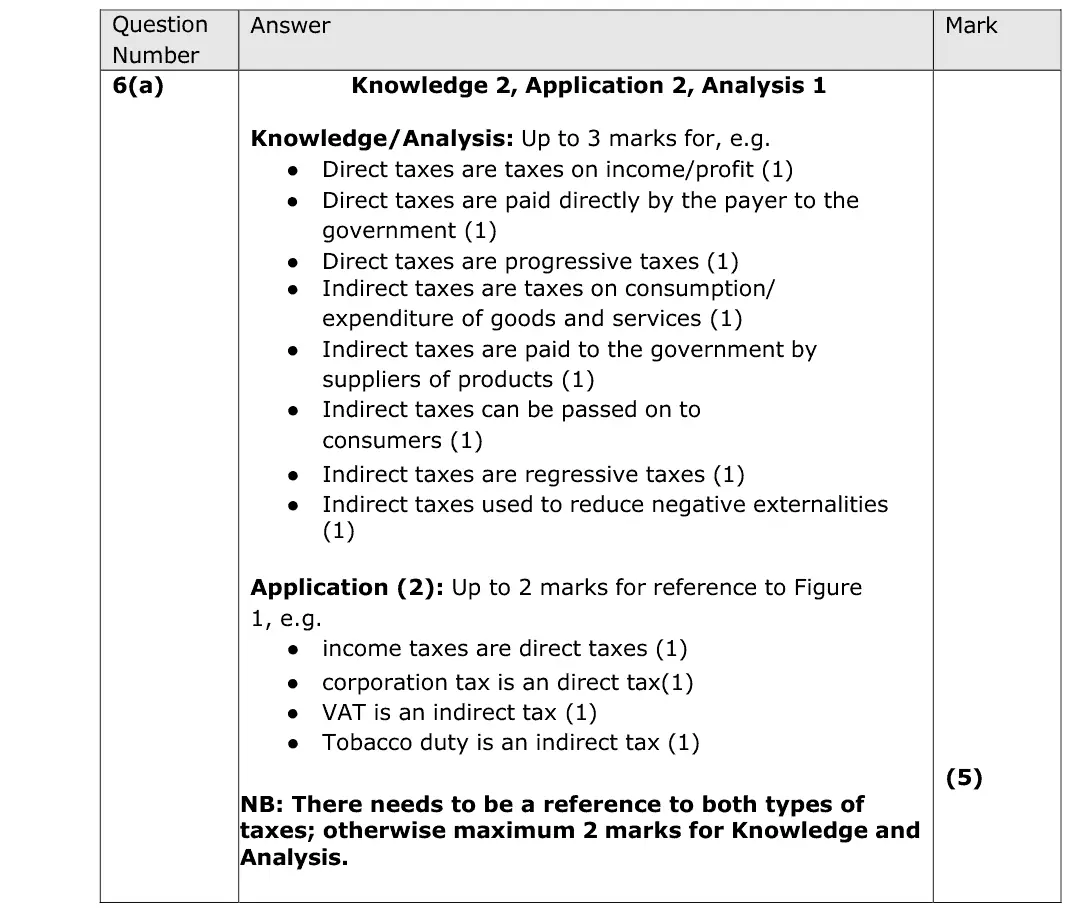
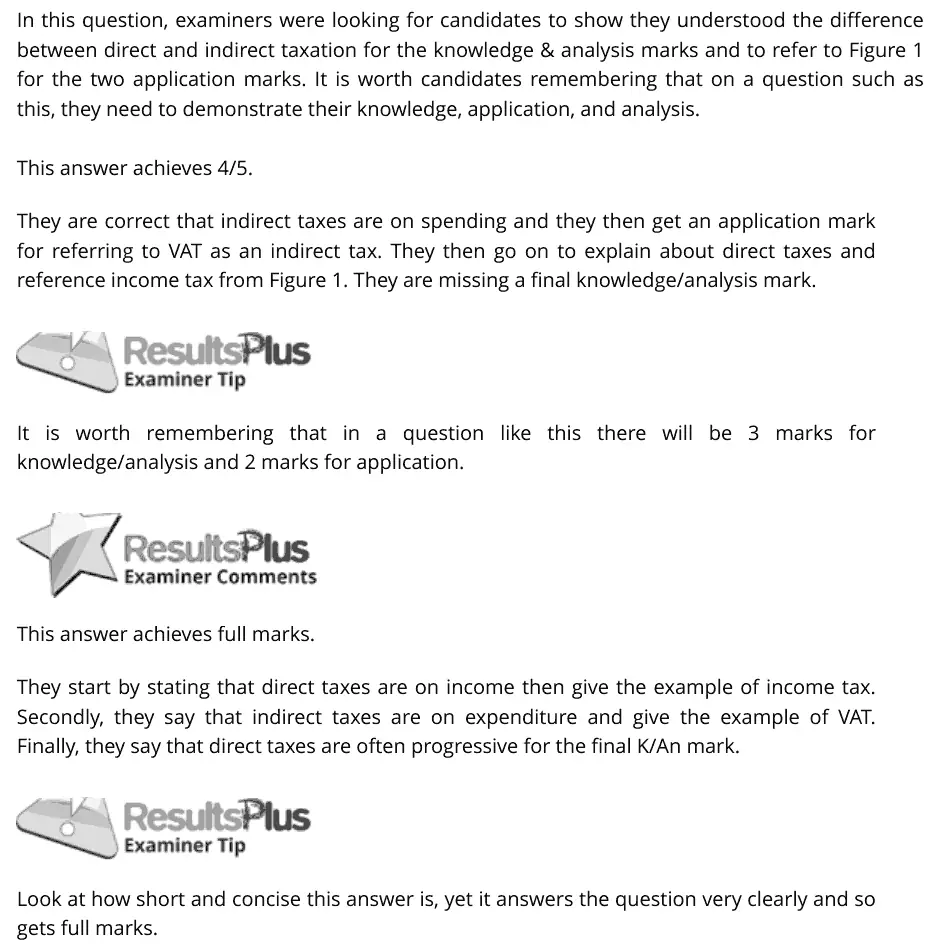
(a) With reference to Figure 1, explain the distinction between direct and indirect taxation. (5)
June 2025 · Paper 2 · Q6(b) 8 marks AO1=2, AO2=2, AO3=2, AO4=2 8-mark response aggregate supply
Data and extracts for question 6Sources for use with SECTION B Read the following figures (1–2) and extracts (A and B) before answering Question 6. Question 6 The German economy Figure 1: German government tax revenue, % of total revenue, 2022 2%2% 4% Income taxes 6% Value added tax Petrol duty 9% Corporation tax 41% Tobacco duty Motor vehicle tax Other 36% (Source adapted from: https://www.bundesfinanzministerium.de) Figure 2: German government budget, % of GDP, 2014–2022 1.9 2 1.5 1.2 1.3 % of 1 0.6 GDP 0 –2 –2.6 –4 –3.7 –4.3 –6 2014 2016 2018 2020 2022 (Source adapted from: https://tradingeconomics.com/germany/government‑budget) Extract A The opportunities and challenges facing the German economy The German economy entered a recession in 2023, and business confidence in the country fell at the fastest pace since 2021. German growth was the lowest among major economies in 2023. The future, however, is a greater concern owing to external factors such as global conflicts and restrictions on free trade. 5 The German government has been trying to improve its economic performance, with an aim to have renewables account for 80% of its energy supply. However, this would be a major shift for Germany where fossil fuels such as coal and gas still provide 75% of the energy needs and exposes it to volatile global energy prices. The rapid building of liquid natural gas terminals has helped to secure energy supplies in the short term. 10 The German government needs to remove a number of problems that have long held back its economy. Infrastructure projects in renewable energy production, such as wind farms, have been delayed by lengthy planning procedures. Business leaders complain of excessive bureaucracy and lack of technological advances. Labour shortages are another issue. Germany is expected to be short of up to 7 million workers by 2035, partly due to 15 an ageing population. There is a lack of skilled workers in the building trade, electrical engineering and professional services, which are important for the country’s economic ambitions. The German government needs to introduce effective policies such as planning reforms to speed up construction projects or reforms to increase the flexibility of the labour market. 20 The German economy has long been one of the biggest exporters in the world. It has trade surpluses with all its major trading partners except China and in 2021 its current account surplus was 7.7% of GDP. However, this has caused tensions with the governments of other countries, in particular the USA, which sees Germany’s surplus as partly a cause of the USA’s huge current account deficit. Having said that, a weakening 25 euro caused by higher interest rates in the USA compared to the Eurozone is beginning to have an effect in reducing Germany’s current account surplus – which dropped to 4.2% in 2022. (Source adapted from: https://www.ft.com/, https://www.cnb.cz/en/monetary‑policy/inflation‑reports/boxes-and-annexes-contained-in- inflation-reports/The-German-economy-and-the-dollar-euro-exchange-rate, and https://tradingeconomics.com/germany/current-account-to-gdp) Extract B US technology firm Intel invests in German semiconductor factories Intel is to double its investment in semiconductor factories in eastern Germany to €30 billion. This is the largest foreign direct investment in Germany’s history. Intel acquired the land for the factories in November 2022 and the first factory is expected to start production within four to five years. The site is expected to create 7 000 construction 5 jobs during the building phase, about 3 000 permanent high‑tech jobs and tens of thousands of additional jobs across the semiconductor industry. (Source adapted from: https://www.ft.com)
(b) With reference to Extract A, examine two factors influencing the short‑run aggregate supply of the German economy. (8)
June 2025 · Paper 2 · Q6(c) 10 marks AO1=2, AO2=2, AO3=2, AO4=4 10-mark response public finances and taxationfiscal and monetary policy
Data and extracts for question 6Sources for use with SECTION B Read the following figures (1–2) and extracts (A and B) before answering Question 6. Question 6 The German economy Figure 1: German government tax revenue, % of total revenue, 2022 2%2% 4% Income taxes 6% Value added tax Petrol duty 9% Corporation tax 41% Tobacco duty Motor vehicle tax Other 36% (Source adapted from: https://www.bundesfinanzministerium.de) Figure 2: German government budget, % of GDP, 2014–2022 1.9 2 1.5 1.2 1.3 % of 1 0.6 GDP 0 –2 –2.6 –4 –3.7 –4.3 –6 2014 2016 2018 2020 2022 (Source adapted from: https://tradingeconomics.com/germany/government‑budget) Extract A The opportunities and challenges facing the German economy The German economy entered a recession in 2023, and business confidence in the country fell at the fastest pace since 2021. German growth was the lowest among major economies in 2023. The future, however, is a greater concern owing to external factors such as global conflicts and restrictions on free trade. 5 The German government has been trying to improve its economic performance, with an aim to have renewables account for 80% of its energy supply. However, this would be a major shift for Germany where fossil fuels such as coal and gas still provide 75% of the energy needs and exposes it to volatile global energy prices. The rapid building of liquid natural gas terminals has helped to secure energy supplies in the short term. 10 The German government needs to remove a number of problems that have long held back its economy. Infrastructure projects in renewable energy production, such as wind farms, have been delayed by lengthy planning procedures. Business leaders complain of excessive bureaucracy and lack of technological advances. Labour shortages are another issue. Germany is expected to be short of up to 7 million workers by 2035, partly due to 15 an ageing population. There is a lack of skilled workers in the building trade, electrical engineering and professional services, which are important for the country’s economic ambitions. The German government needs to introduce effective policies such as planning reforms to speed up construction projects or reforms to increase the flexibility of the labour market. 20 The German economy has long been one of the biggest exporters in the world. It has trade surpluses with all its major trading partners except China and in 2021 its current account surplus was 7.7% of GDP. However, this has caused tensions with the governments of other countries, in particular the USA, which sees Germany’s surplus as partly a cause of the USA’s huge current account deficit. Having said that, a weakening 25 euro caused by higher interest rates in the USA compared to the Eurozone is beginning to have an effect in reducing Germany’s current account surplus – which dropped to 4.2% in 2022. (Source adapted from: https://www.ft.com/, https://www.cnb.cz/en/monetary‑policy/inflation‑reports/boxes-and-annexes-contained-in- inflation-reports/The-German-economy-and-the-dollar-euro-exchange-rate, and https://tradingeconomics.com/germany/current-account-to-gdp) Extract B US technology firm Intel invests in German semiconductor factories Intel is to double its investment in semiconductor factories in eastern Germany to €30 billion. This is the largest foreign direct investment in Germany’s history. Intel acquired the land for the factories in November 2022 and the first factory is expected to start production within four to five years. The site is expected to create 7 000 construction 5 jobs during the building phase, about 3 000 permanent high‑tech jobs and tens of thousands of additional jobs across the semiconductor industry. (Source adapted from: https://www.ft.com)
(c) With reference to the information provided and your own knowledge, assess the likely macroeconomic effects of the German government’s budget deficit. (10)
June 2025 · Paper 2 · Q6(d) 12 marks AO1=2, AO2=2, AO3=4, AO4=4 12-mark response aggregate demandnational income and the multiplier
Data and extracts for question 6Sources for use with SECTION B Read the following figures (1–2) and extracts (A and B) before answering Question 6. Question 6 The German economy Figure 1: German government tax revenue, % of total revenue, 2022 2%2% 4% Income taxes 6% Value added tax Petrol duty 9% Corporation tax 41% Tobacco duty Motor vehicle tax Other 36% (Source adapted from: https://www.bundesfinanzministerium.de) Figure 2: German government budget, % of GDP, 2014–2022 1.9 2 1.5 1.2 1.3 % of 1 0.6 GDP 0 –2 –2.6 –4 –3.7 –4.3 –6 2014 2016 2018 2020 2022 (Source adapted from: https://tradingeconomics.com/germany/government‑budget) Extract A The opportunities and challenges facing the German economy The German economy entered a recession in 2023, and business confidence in the country fell at the fastest pace since 2021. German growth was the lowest among major economies in 2023. The future, however, is a greater concern owing to external factors such as global conflicts and restrictions on free trade. 5 The German government has been trying to improve its economic performance, with an aim to have renewables account for 80% of its energy supply. However, this would be a major shift for Germany where fossil fuels such as coal and gas still provide 75% of the energy needs and exposes it to volatile global energy prices. The rapid building of liquid natural gas terminals has helped to secure energy supplies in the short term. 10 The German government needs to remove a number of problems that have long held back its economy. Infrastructure projects in renewable energy production, such as wind farms, have been delayed by lengthy planning procedures. Business leaders complain of excessive bureaucracy and lack of technological advances. Labour shortages are another issue. Germany is expected to be short of up to 7 million workers by 2035, partly due to 15 an ageing population. There is a lack of skilled workers in the building trade, electrical engineering and professional services, which are important for the country’s economic ambitions. The German government needs to introduce effective policies such as planning reforms to speed up construction projects or reforms to increase the flexibility of the labour market. 20 The German economy has long been one of the biggest exporters in the world. It has trade surpluses with all its major trading partners except China and in 2021 its current account surplus was 7.7% of GDP. However, this has caused tensions with the governments of other countries, in particular the USA, which sees Germany’s surplus as partly a cause of the USA’s huge current account deficit. Having said that, a weakening 25 euro caused by higher interest rates in the USA compared to the Eurozone is beginning to have an effect in reducing Germany’s current account surplus – which dropped to 4.2% in 2022. (Source adapted from: https://www.ft.com/, https://www.cnb.cz/en/monetary‑policy/inflation‑reports/boxes-and-annexes-contained-in- inflation-reports/The-German-economy-and-the-dollar-euro-exchange-rate, and https://tradingeconomics.com/germany/current-account-to-gdp) Extract B US technology firm Intel invests in German semiconductor factories Intel is to double its investment in semiconductor factories in eastern Germany to €30 billion. This is the largest foreign direct investment in Germany’s history. Intel acquired the land for the factories in November 2022 and the first factory is expected to start production within four to five years. The site is expected to create 7 000 construction 5 jobs during the building phase, about 3 000 permanent high‑tech jobs and tens of thousands of additional jobs across the semiconductor industry. (Source adapted from: https://www.ft.com)
(d) With reference to Extract B, discuss the impact of the planned investment by Intel in a new semiconductor factory on Germany’s aggregate demand. Use an aggregate demand and aggregate supply diagram in your answer. (12)
June 2025 · Paper 2 · Q6(e) 15 marks AO1=3, AO2=3, AO3=3, AO4=6 15-mark response supply side policies
Data and extracts for question 6Sources for use with SECTION B Read the following figures (1–2) and extracts (A and B) before answering Question 6. Question 6 The German economy Figure 1: German government tax revenue, % of total revenue, 2022 2%2% 4% Income taxes 6% Value added tax Petrol duty 9% Corporation tax 41% Tobacco duty Motor vehicle tax Other 36% (Source adapted from: https://www.bundesfinanzministerium.de) Figure 2: German government budget, % of GDP, 2014–2022 1.9 2 1.5 1.2 1.3 % of 1 0.6 GDP 0 –2 –2.6 –4 –3.7 –4.3 –6 2014 2016 2018 2020 2022 (Source adapted from: https://tradingeconomics.com/germany/government‑budget) Extract A The opportunities and challenges facing the German economy The German economy entered a recession in 2023, and business confidence in the country fell at the fastest pace since 2021. German growth was the lowest among major economies in 2023. The future, however, is a greater concern owing to external factors such as global conflicts and restrictions on free trade. 5 The German government has been trying to improve its economic performance, with an aim to have renewables account for 80% of its energy supply. However, this would be a major shift for Germany where fossil fuels such as coal and gas still provide 75% of the energy needs and exposes it to volatile global energy prices. The rapid building of liquid natural gas terminals has helped to secure energy supplies in the short term. 10 The German government needs to remove a number of problems that have long held back its economy. Infrastructure projects in renewable energy production, such as wind farms, have been delayed by lengthy planning procedures. Business leaders complain of excessive bureaucracy and lack of technological advances. Labour shortages are another issue. Germany is expected to be short of up to 7 million workers by 2035, partly due to 15 an ageing population. There is a lack of skilled workers in the building trade, electrical engineering and professional services, which are important for the country’s economic ambitions. The German government needs to introduce effective policies such as planning reforms to speed up construction projects or reforms to increase the flexibility of the labour market. 20 The German economy has long been one of the biggest exporters in the world. It has trade surpluses with all its major trading partners except China and in 2021 its current account surplus was 7.7% of GDP. However, this has caused tensions with the governments of other countries, in particular the USA, which sees Germany’s surplus as partly a cause of the USA’s huge current account deficit. Having said that, a weakening 25 euro caused by higher interest rates in the USA compared to the Eurozone is beginning to have an effect in reducing Germany’s current account surplus – which dropped to 4.2% in 2022. (Source adapted from: https://www.ft.com/, https://www.cnb.cz/en/monetary‑policy/inflation‑reports/boxes-and-annexes-contained-in- inflation-reports/The-German-economy-and-the-dollar-euro-exchange-rate, and https://tradingeconomics.com/germany/current-account-to-gdp) Extract B US technology firm Intel invests in German semiconductor factories Intel is to double its investment in semiconductor factories in eastern Germany to €30 billion. This is the largest foreign direct investment in Germany’s history. Intel acquired the land for the factories in November 2022 and the first factory is expected to start production within four to five years. The site is expected to create 7 000 construction 5 jobs during the building phase, about 3 000 permanent high‑tech jobs and tens of thousands of additional jobs across the semiconductor industry. (Source adapted from: https://www.ft.com)
(e) Discuss supply‑side policies the German government could use ‘to improve its economic performance’ (Extract A, line 6). (15)
June 2025 · Paper 2 · Q7 25 marks AO1=4, AO2=4, AO3=8, AO4=9 25-mark essay Either/or macroeconomic objectives
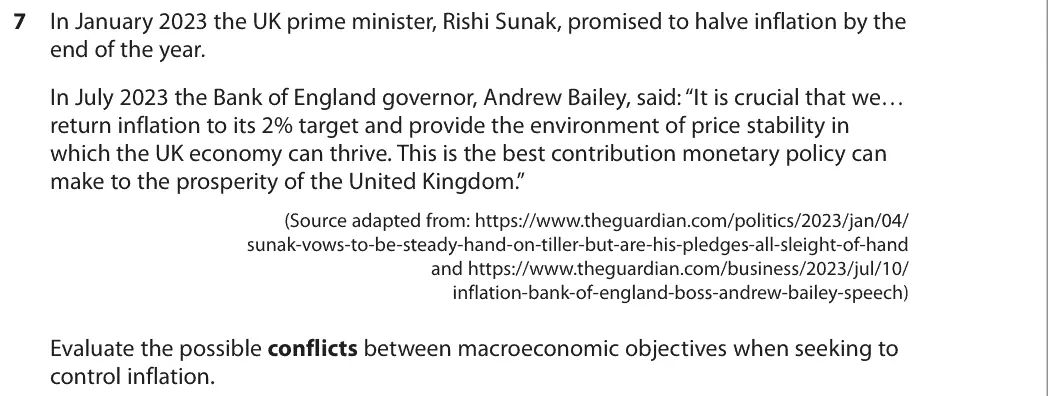
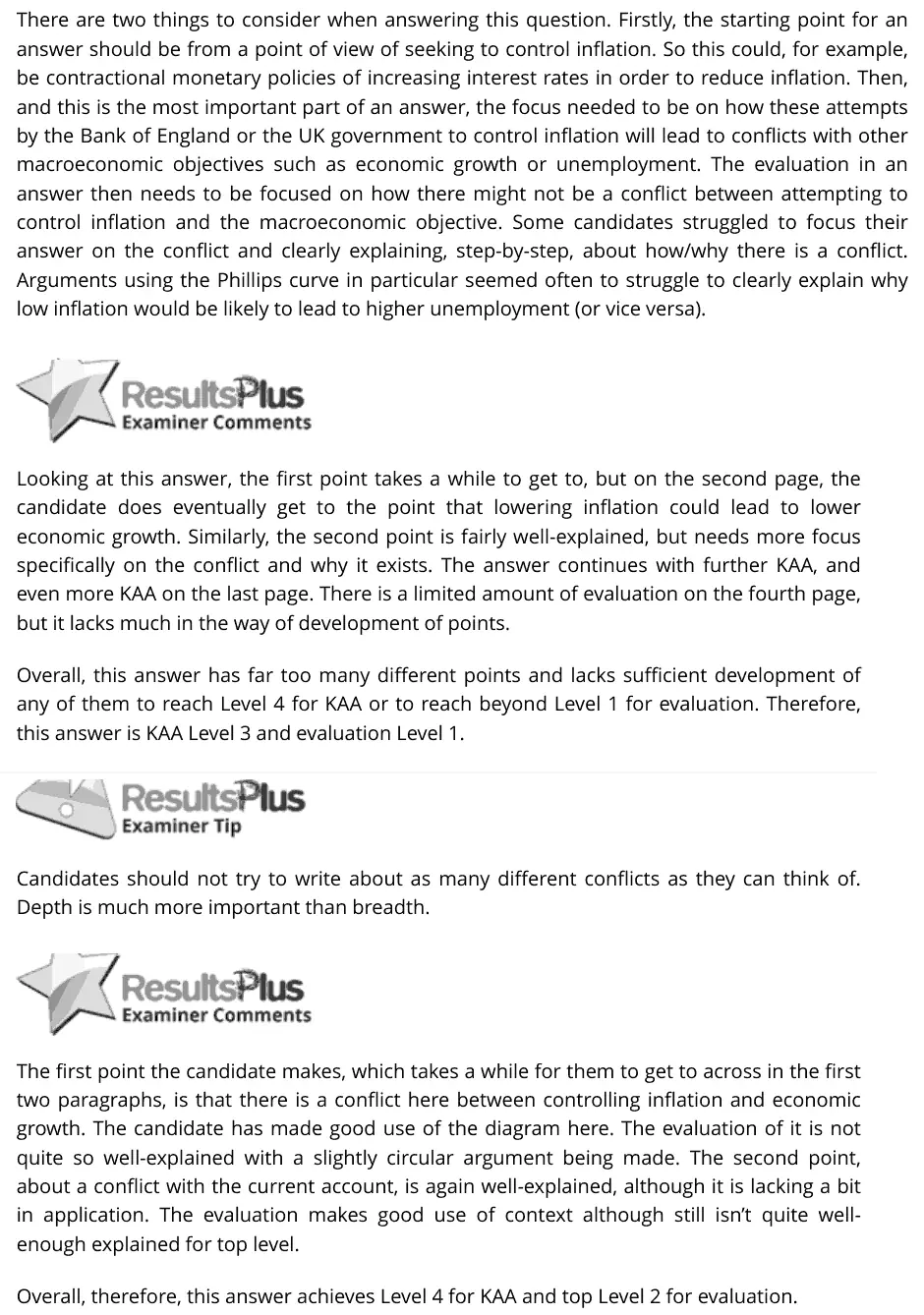
7 In January 2023 the UK prime minister, Rishi Sunak, promised to halve inflation by the end of the year. In July 2023 the Bank of England governor, Andrew Bailey, said: “It is crucial that we… return inflation to its 2% target and provide the environment of price stability in which the UK economy can thrive. This is the best contribution monetary policy can make to the prosperity of the United Kingdom.” (Source adapted from: https://www.theguardian.com/politics/2023/jan/04/ sunak‑vows‑to‑be‑steady‑hand‑on‑tiller‑but‑are‑his‑pledges‑all‑sleight‑of‑hand and https://www.theguardian.com/business/2023/jul/10/ inflation‑bank‑of‑england‑boss‑andrew‑bailey‑speech) Evaluate the possible conflicts between macroeconomic objectives when seeking to control inflation.
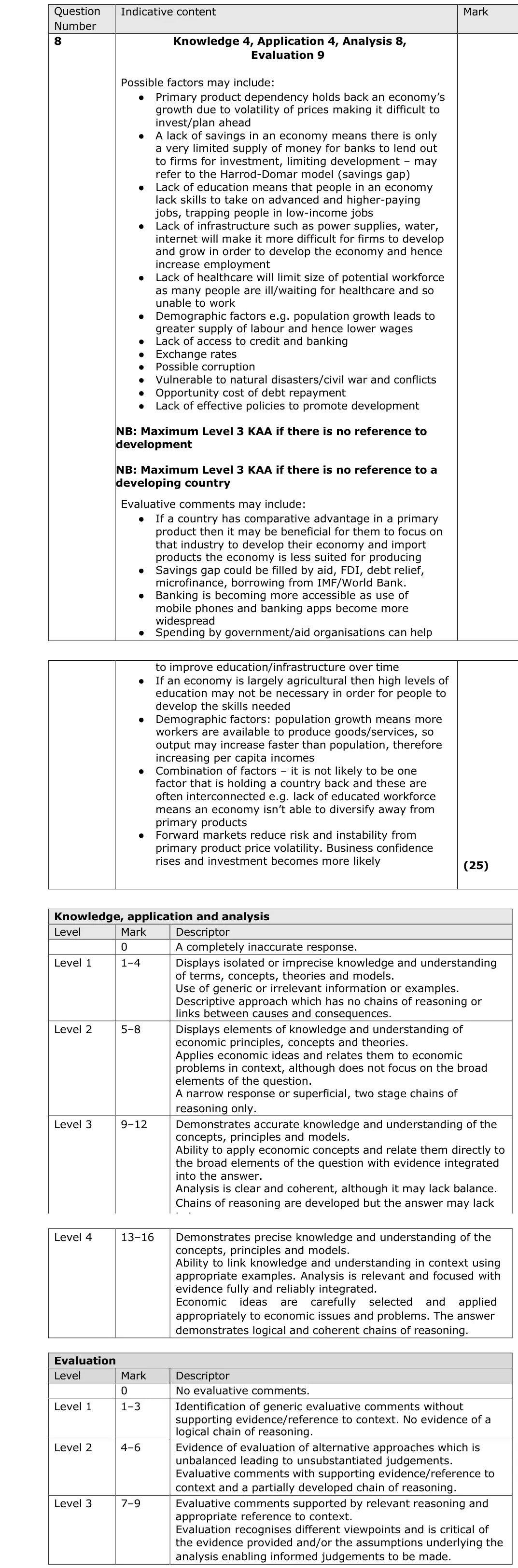
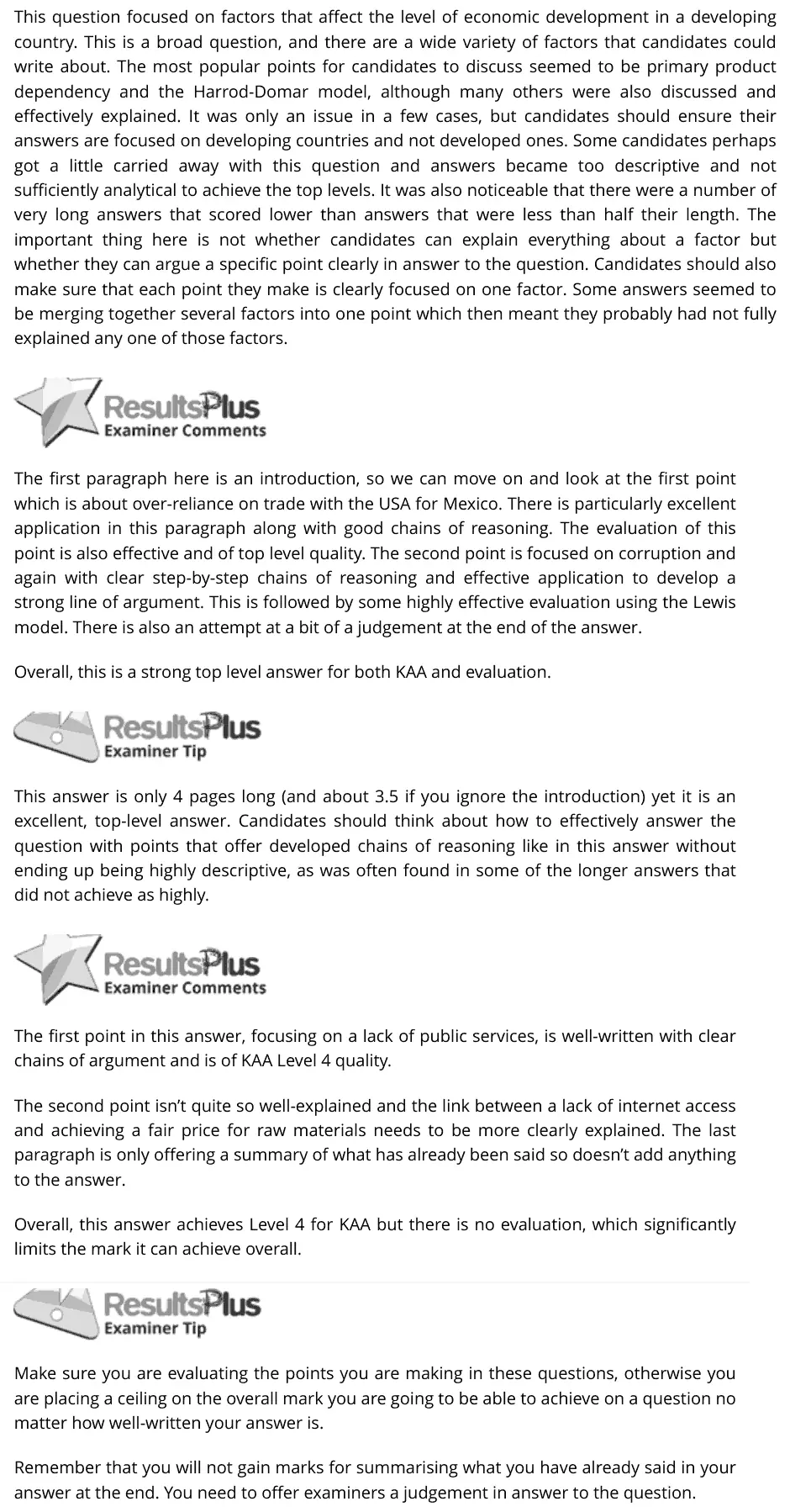
June 2025 · Paper 2 · Q8 25 marks AO1=4, AO2=4, AO3=8, AO4=9 25-mark essay Either/or emerging and developing economies
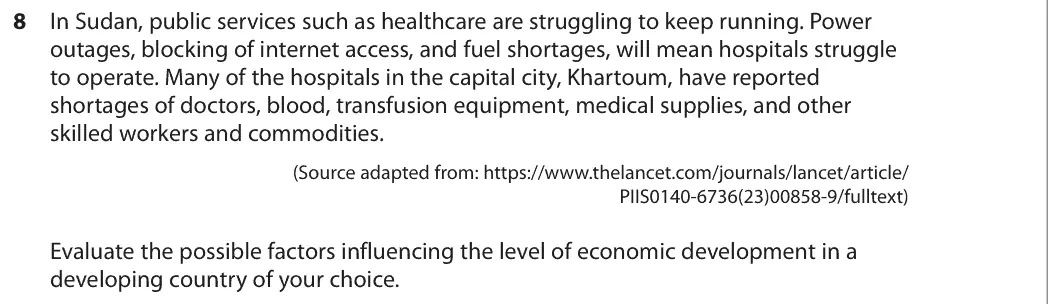
8 In Sudan, public services such as healthcare are struggling to keep running. Power outages, blocking of internet access, and fuel shortages, will mean hospitals struggle to operate. Many of the hospitals in the capital city, Khartoum, have reported shortages of doctors, blood, transfusion equipment, medical supplies, and other skilled workers and commodities. (Source adapted from: https://www.thelancet.com/journals/lancet/article/ PIIS0140‑6736(23)00858‑9/fulltext) Evaluate the possible factors influencing the level of economic development in a developing country of your choice.

Work with an Edexcel economics tutor

Want a paper marked and gone through with you? Message us.

Prefer email? Send an enquiry

If you are under 18, please include a parent's contact details. Enquiries go to enquiries@economicsaleveltutor.com and are deleted once handled. All tutoring is online.