June 2018: Paper 2

100 marks · 20 question parts · Paper, mark scheme and report on Pearson's site

Question by question

QTopicMarksAOType
1(a) Trading blocs, the WTO and protectionism 1Multiple choice
1(b) Globalisation, specialisation and trade 4AO1=2,AO2=1,AO3=1Short answer
2(a) Aggregate demand 1Multiple choice
2(b) Demand-side policies: fiscal and monetary policy, The circular flow, national income and the multiplier 4AO1=2,AO2=2Diagram
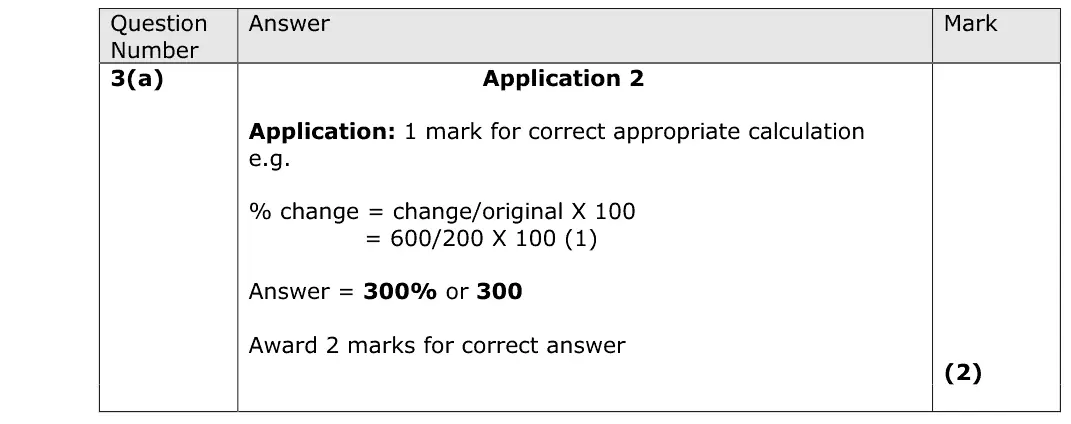
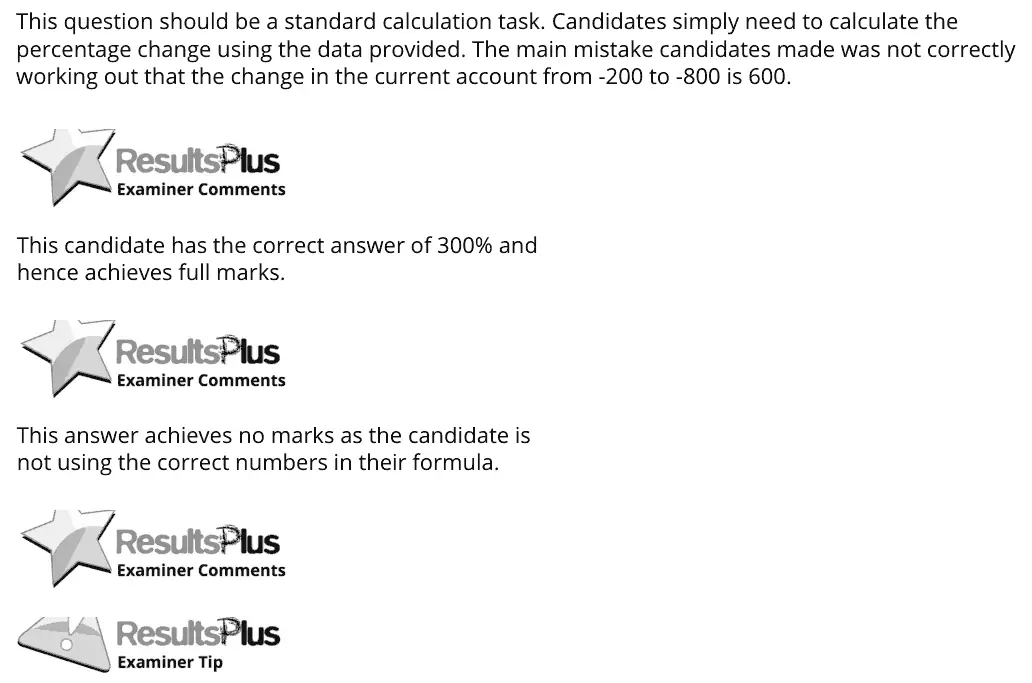
3(a) The balance of payments 2AO2=2Calculation
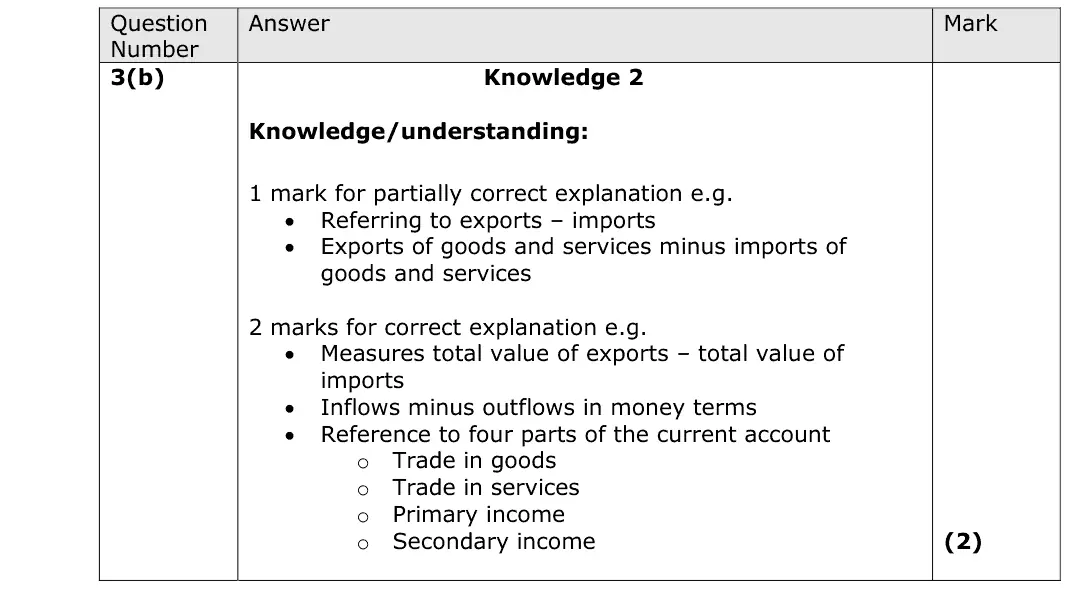
3(b) The balance of payments 2AO1=2Short answer
3(c) The balance of payments 1Multiple choice
4(a) Public expenditure, taxation and public sector finances 2AO1=1,AO3=1Short answer
4(b) Public expenditure, taxation and public sector finances 2AO1=1,AO3=1Short answer
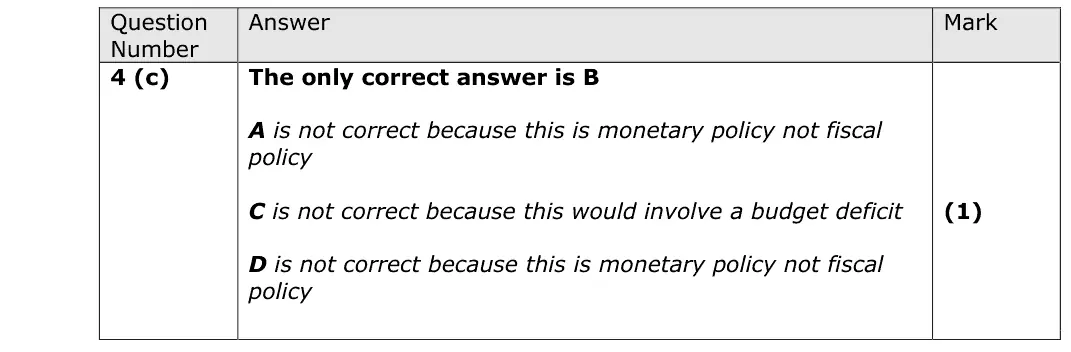
4(c) Public expenditure, taxation and public sector finances, Demand-side policies: fiscal and monetary policy 1Multiple choice
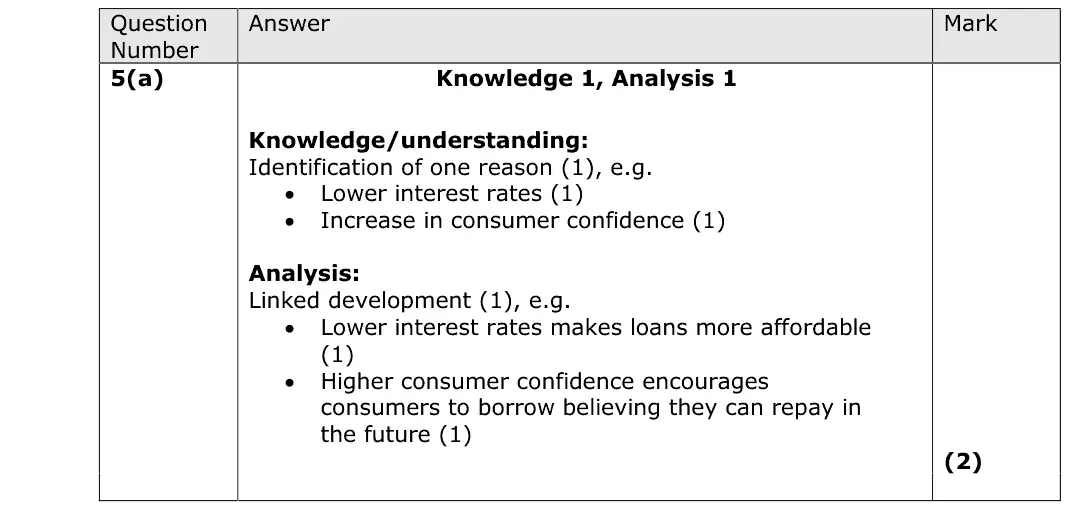
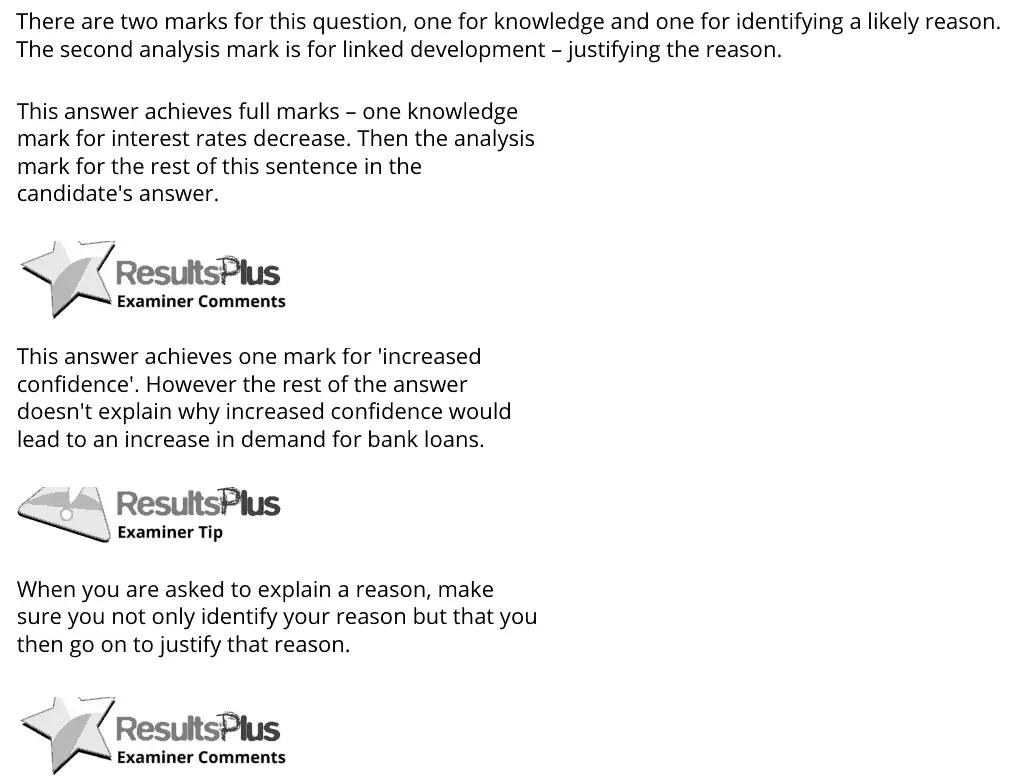
5(a) Aggregate demand 2AO1=1,AO3=1Short answer
5(b) Aggregate demand 1Multiple choice
5(c) The financial sector and central banks 2AO2=2Calculation
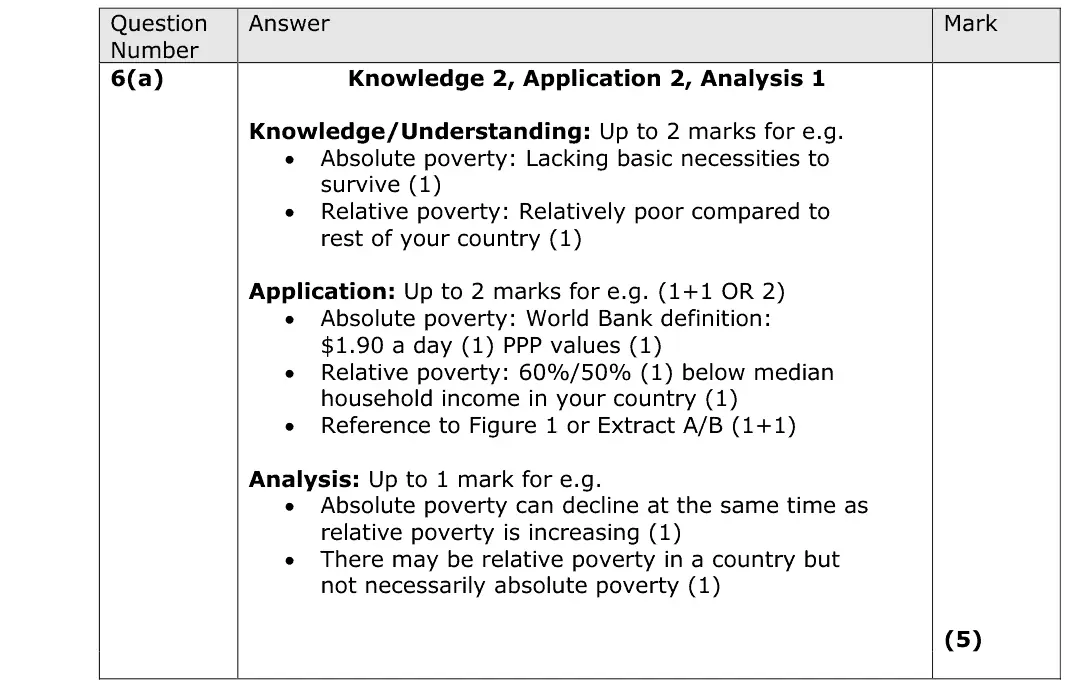
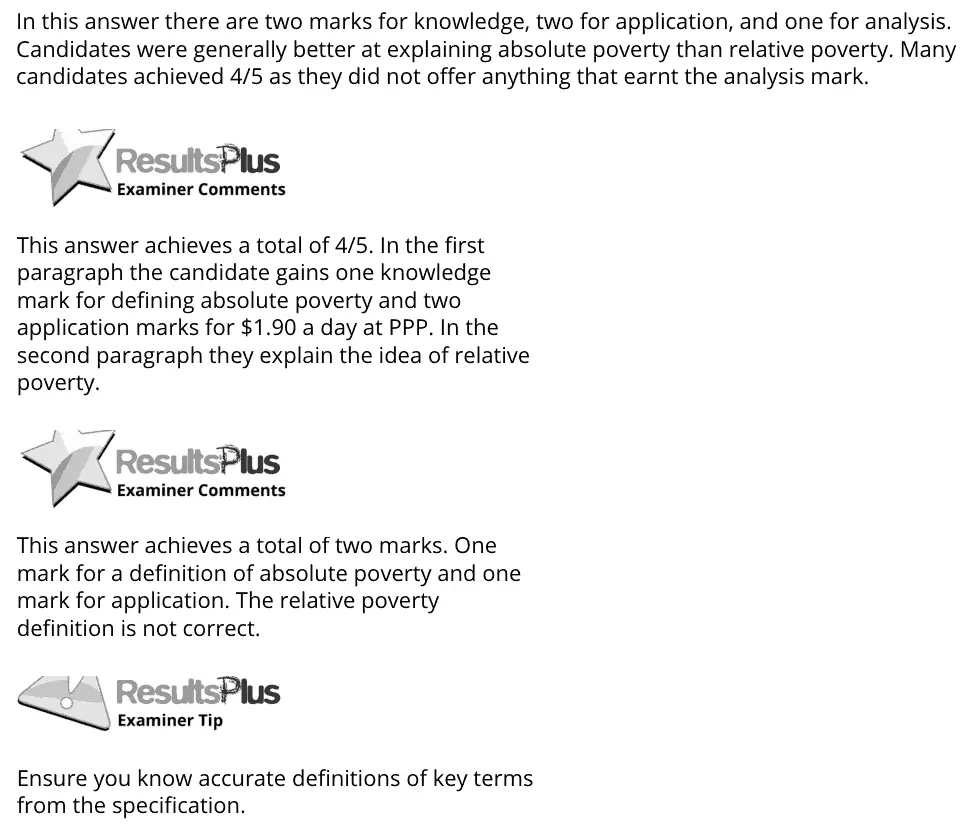
6(a) Poverty and inequality 5AO1=2,AO2=2,AO3=1Short answer
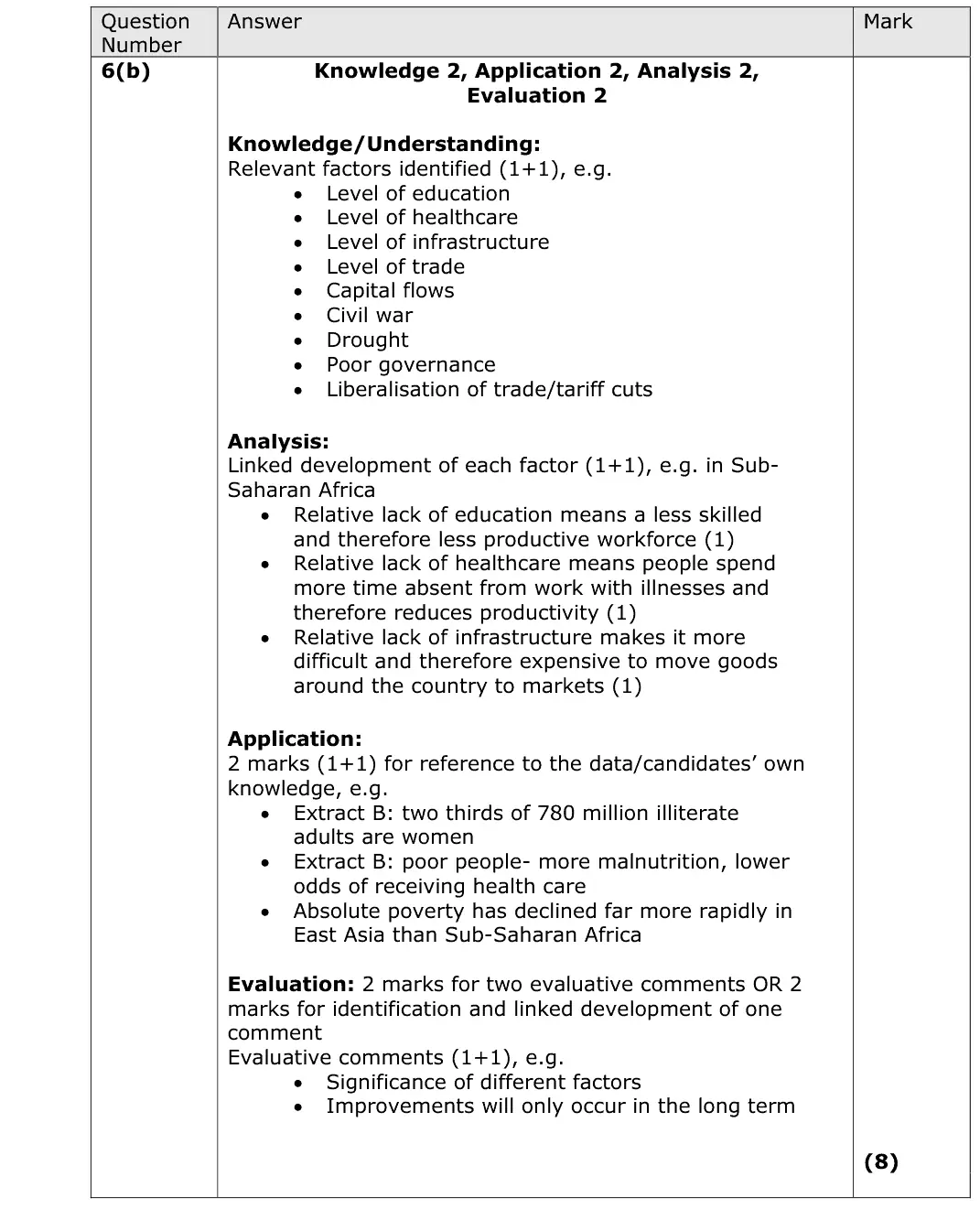
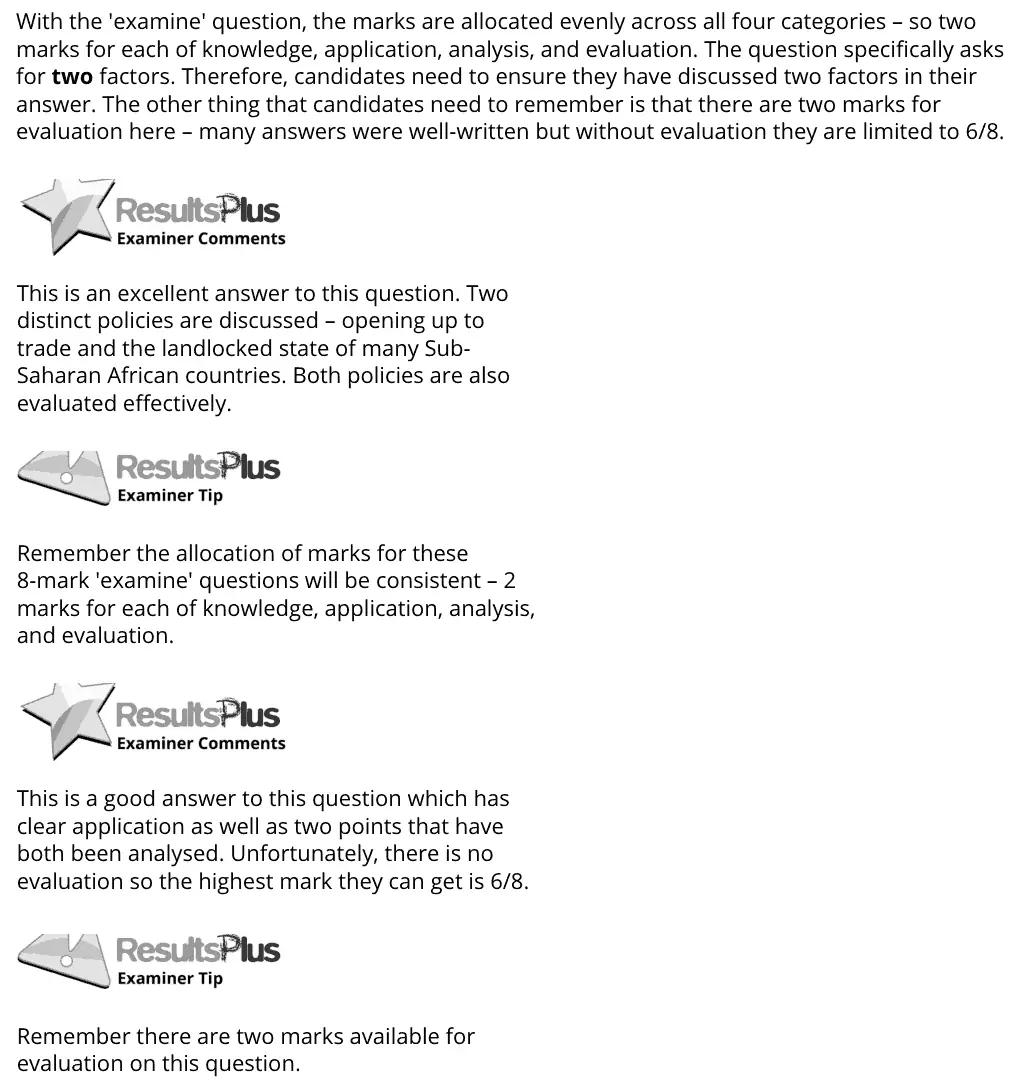
6(b) Emerging and developing economies 8AO1=2,AO2=2,AO3=2,AO4=2Extended response
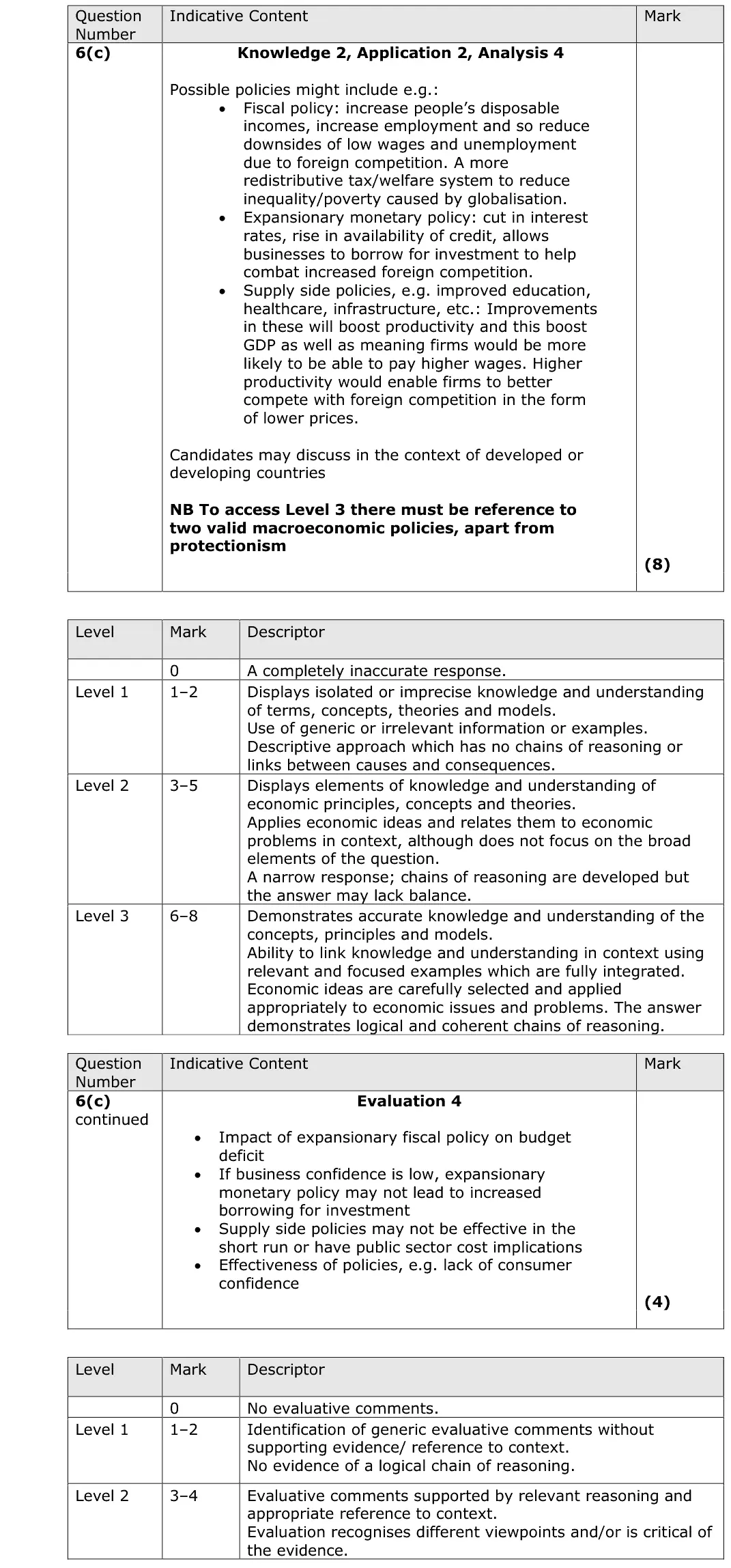
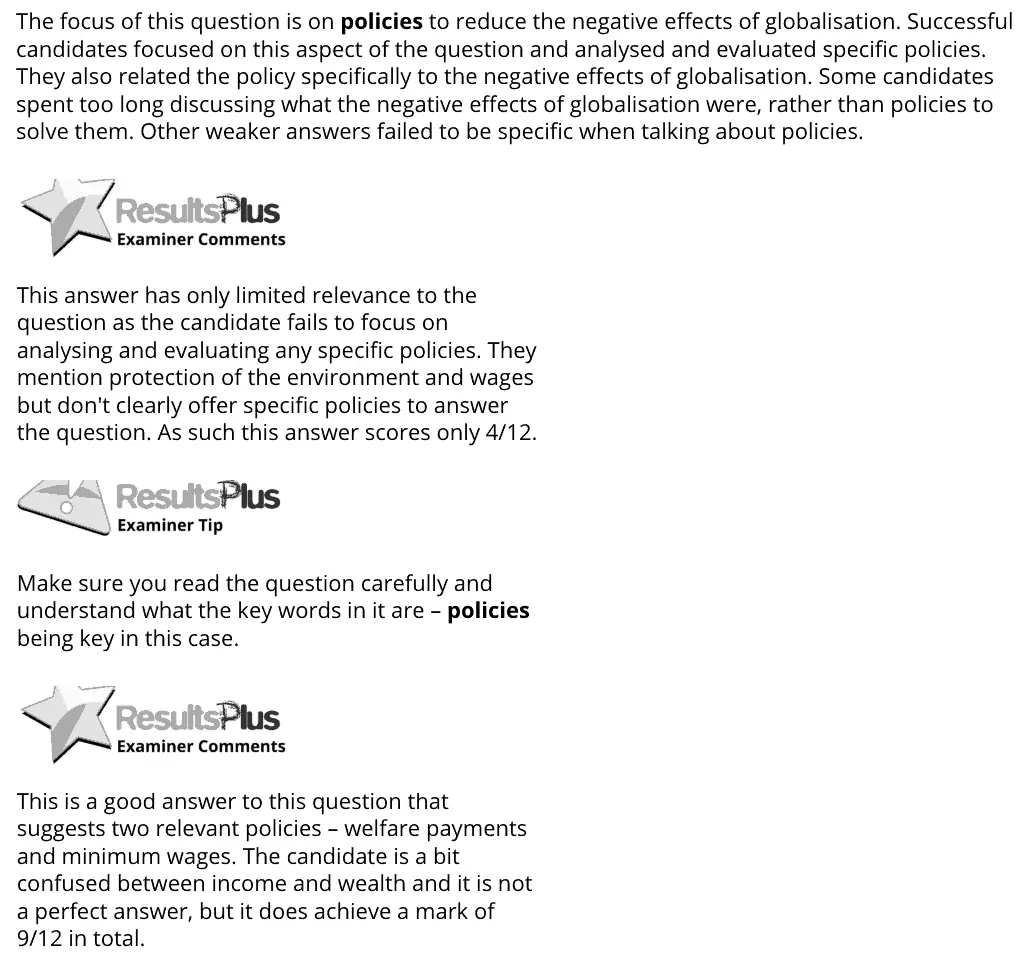
6(c) Macroeconomic policies in a global context, Globalisation, specialisation and trade 12AO1=2,AO2=2,AO3=4,AO4=4Extended response
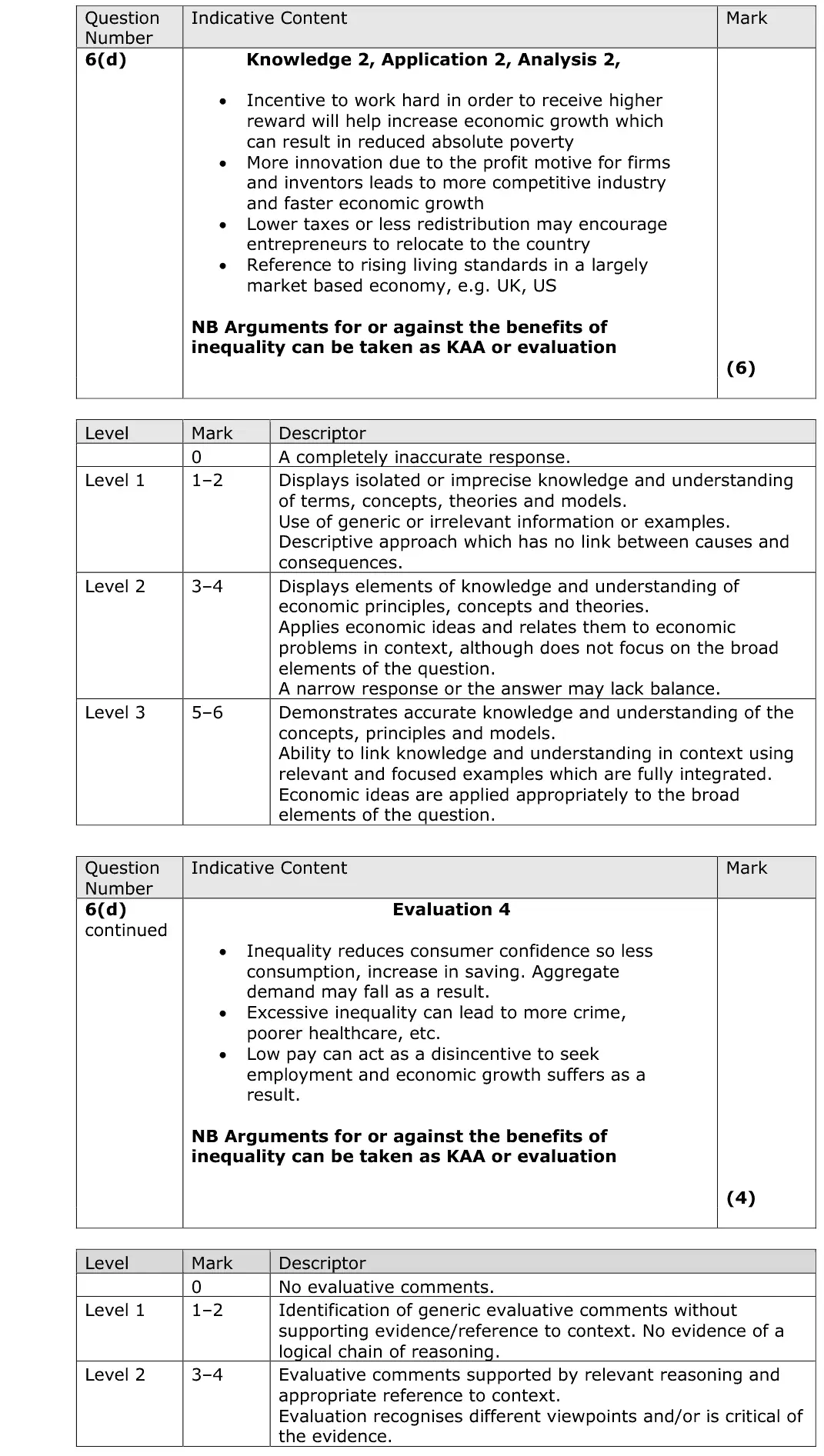
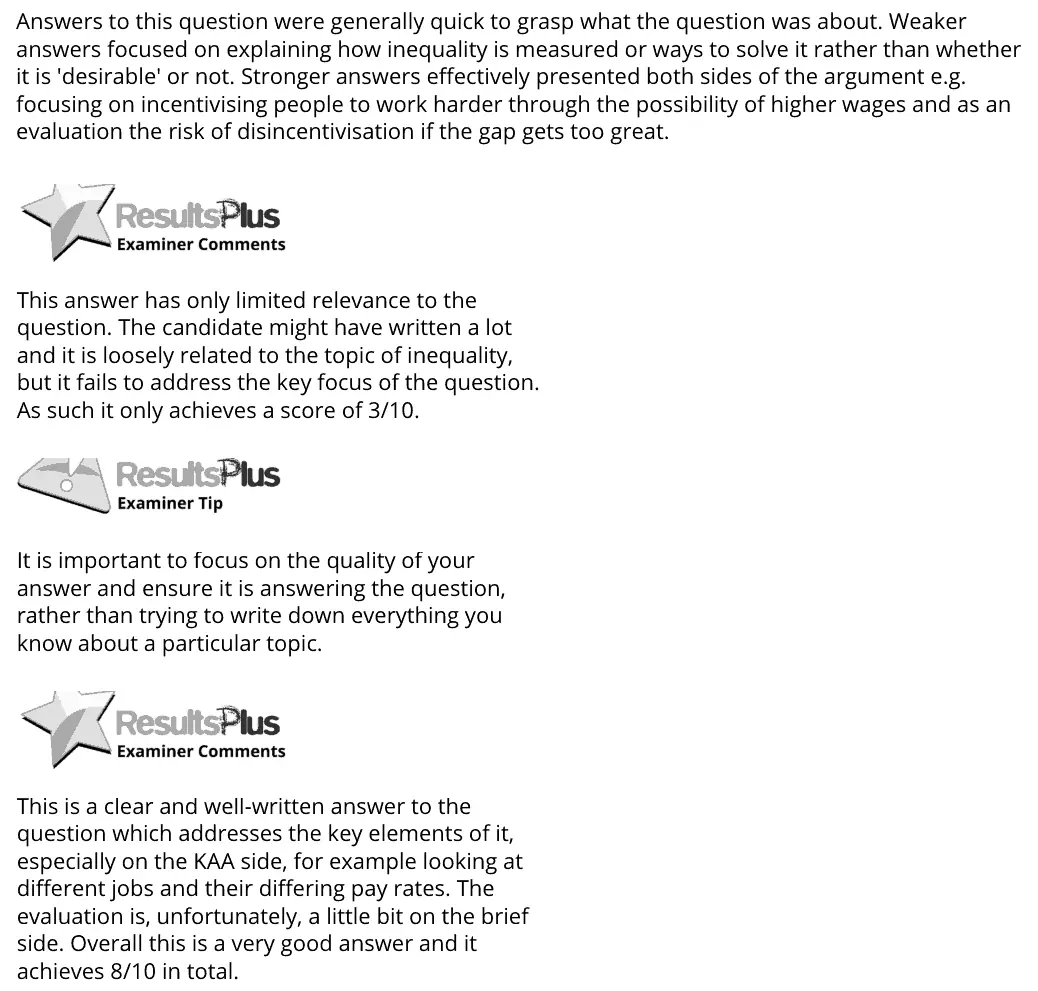
6(d) Poverty and inequality 10AO1=2,AO2=2,AO3=2,AO4=4Extended response
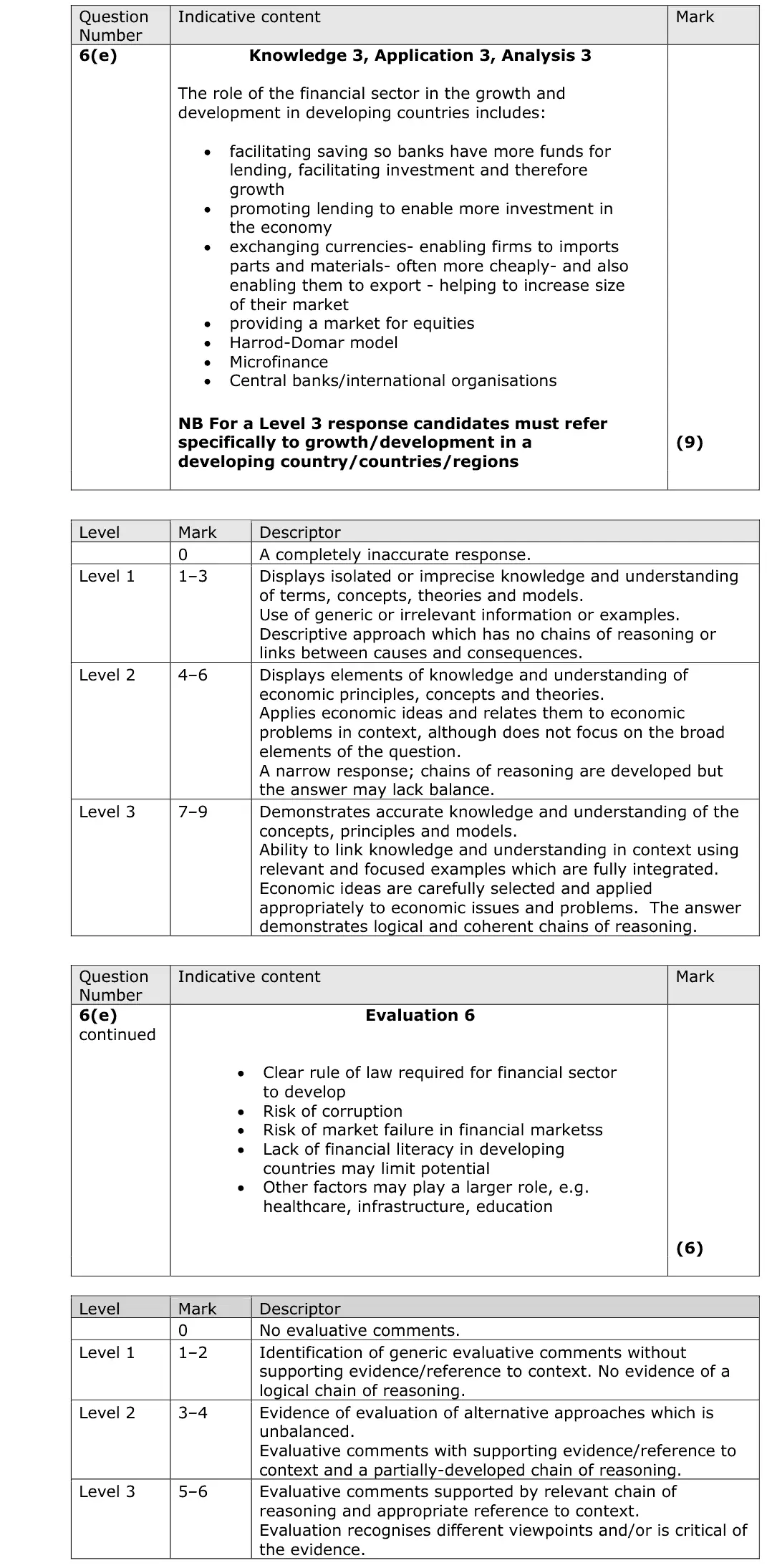
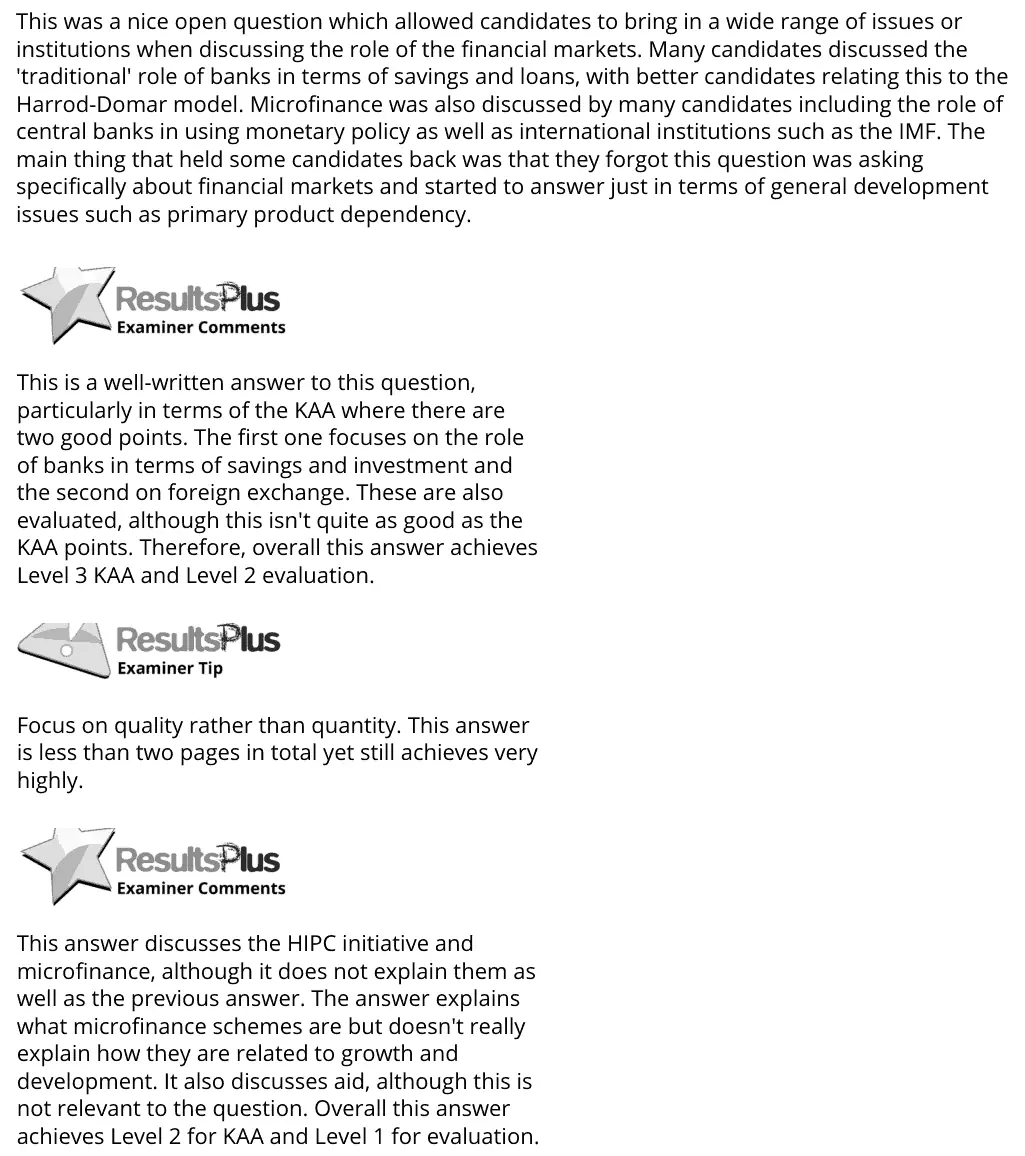
6(e) The financial sector and central banks, Emerging and developing economies 15AO1=3,AO2=3,AO3=3,AO4=6Extended response
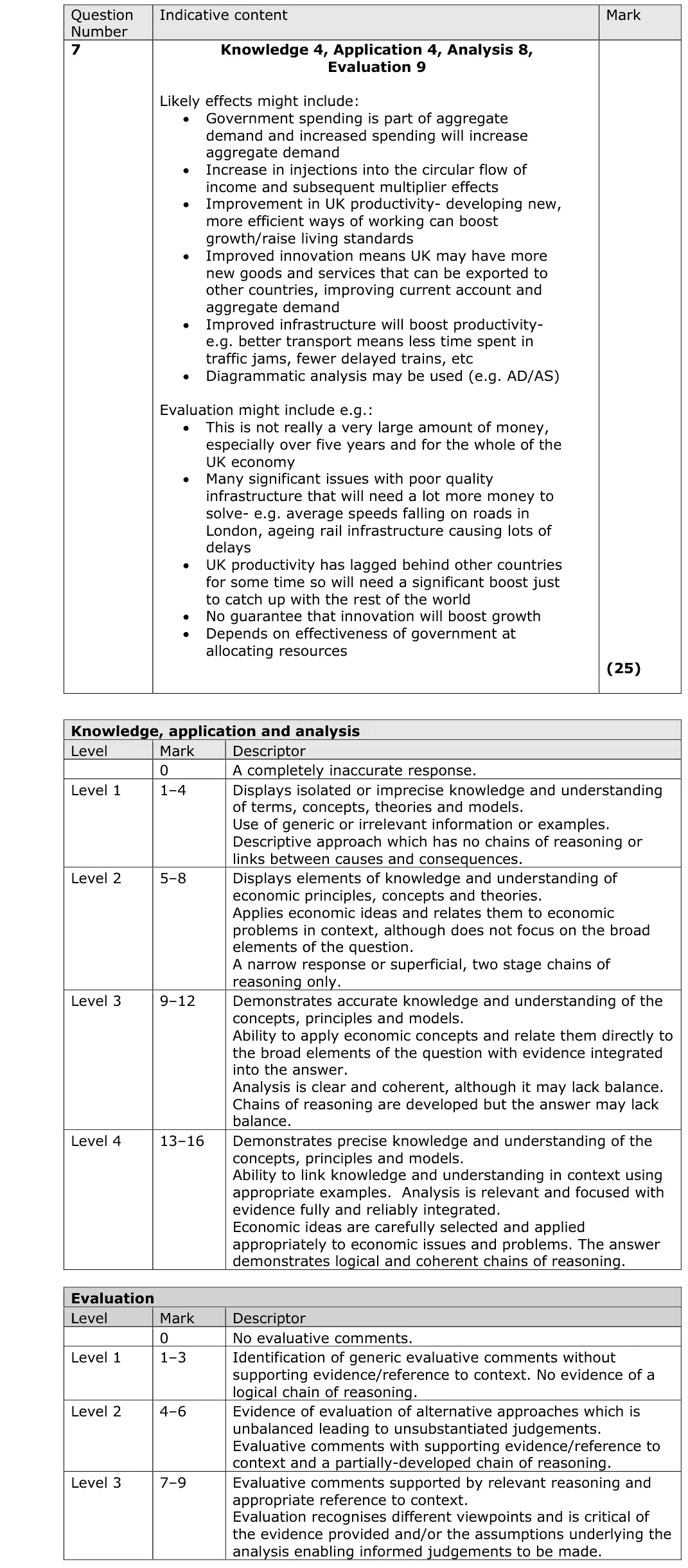
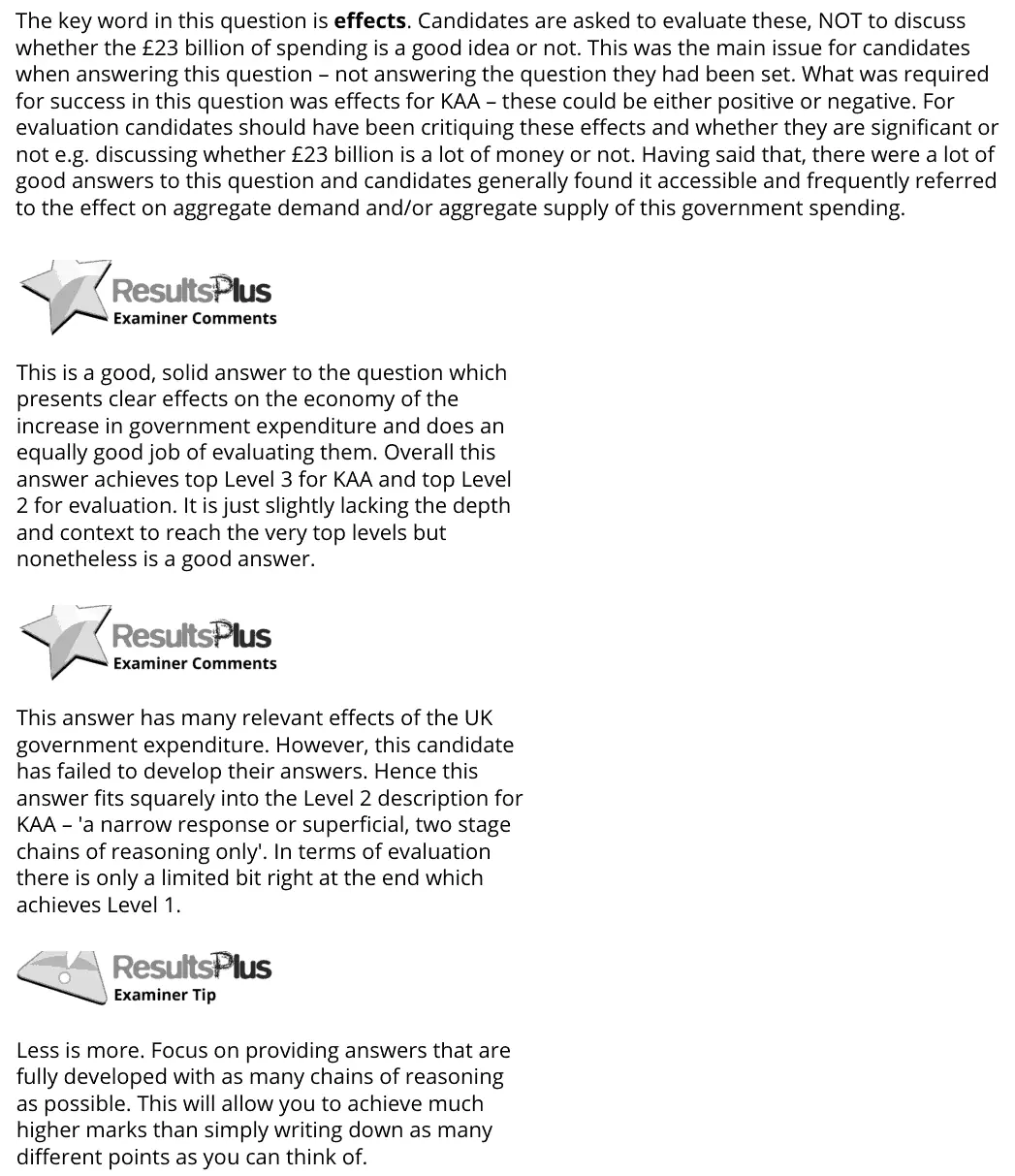
7 The circular flow, national income and the multiplier, Aggregate supply 25AO1=4,AO2=4,AO3=8,AO4=9Essay
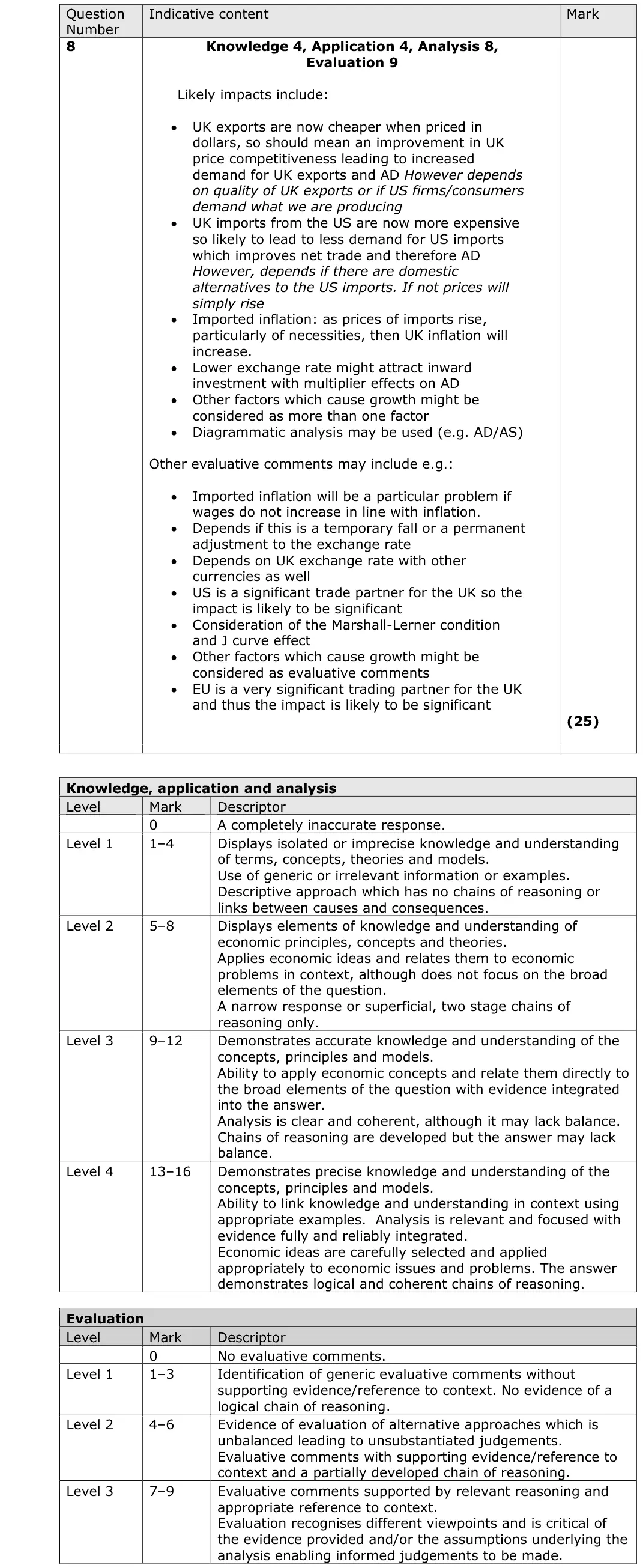
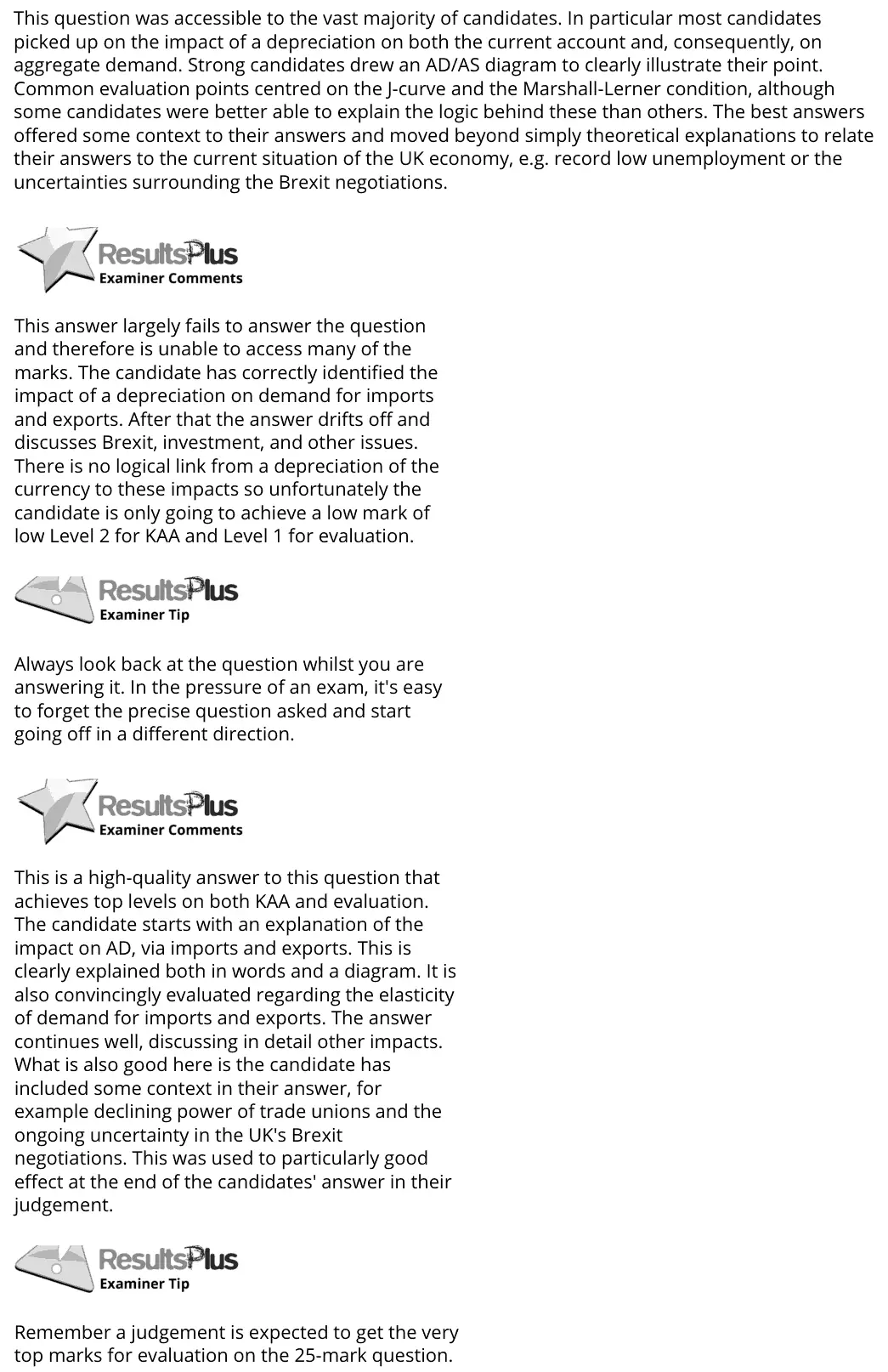
8 Exchange rates 25AO1=4,AO2=4,AO3=8,AO4=9Essay

The questions

1(a)1(b)2(a)2(b)3(a)3(b)3(c)4(a)4(b)4(c)5(a)5(b)5(c)6(a)6(b)6(c)6(d)6(e)78
June 2018 · Paper 2 · Q1(a) 1 mark Multiple choice trading blocs and protectionism
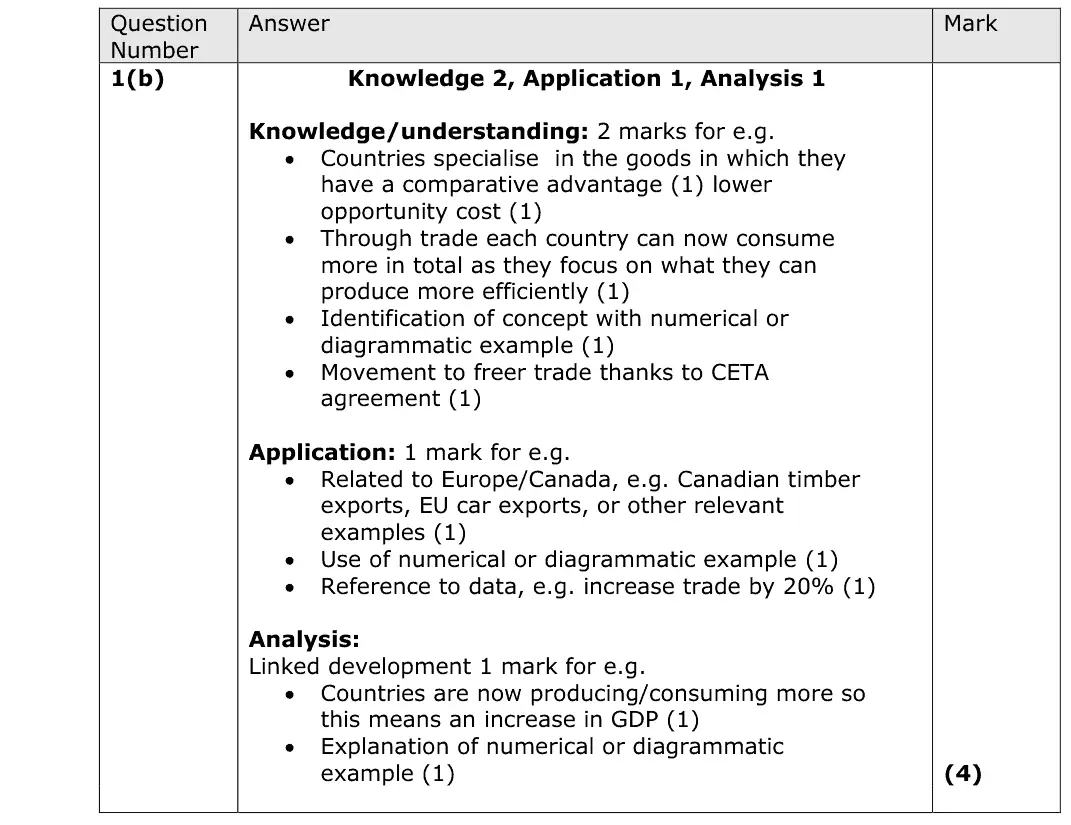
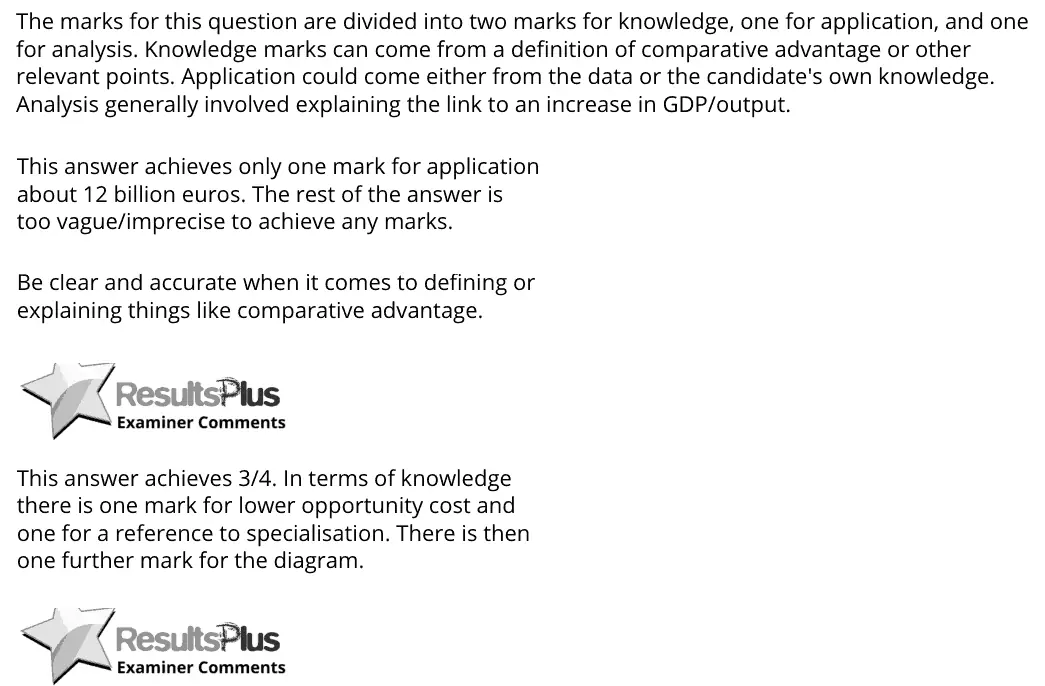
Data and extracts for question 11 The trade deal known as the Comprehensive Economic and Trade Agreement (CETA) is designed to eliminate or reduce trade barriers between the European Union (EU) and Canada. It is estimated that it will increase trade by 20% and boost EU GDP by 12 billion euros. (Source: http://www.theguardian.com/business/2016/oct/30/eu-canada- sign-ceta-free-trade-deal-trudeau-juncker)
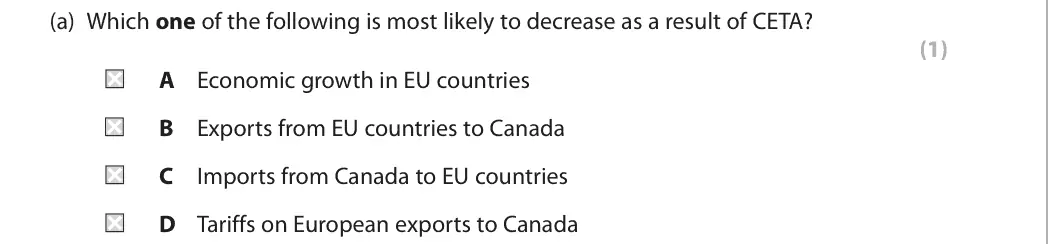
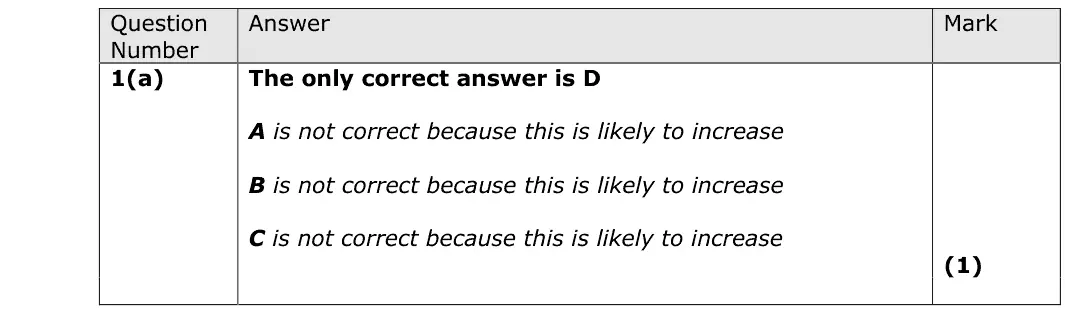
(a) Which one of the following is most likely to decrease as a result of CETA? (1) A Economic growth in EU countries B Exports from EU countries to Canada C Imports from Canada to EU countries D Tariffs on European exports to Canada
June 2018 · Paper 2 · Q1(b) 4 marks AO1=2, AO2=1, AO3=1 Short answer globalisation and trade
Data and extracts for question 11 The trade deal known as the Comprehensive Economic and Trade Agreement (CETA) is designed to eliminate or reduce trade barriers between the European Union (EU) and Canada. It is estimated that it will increase trade by 20% and boost EU GDP by 12 billion euros. (Source: http://www.theguardian.com/business/2016/oct/30/eu-canada- sign-ceta-free-trade-deal-trudeau-juncker)
(b) With reference to the theory of comparative advantage, explain how CETA may increase the GDP of both the EU and Canada. (4)
June 2018 · Paper 2 · Q2(a) 1 mark Multiple choice aggregate demand
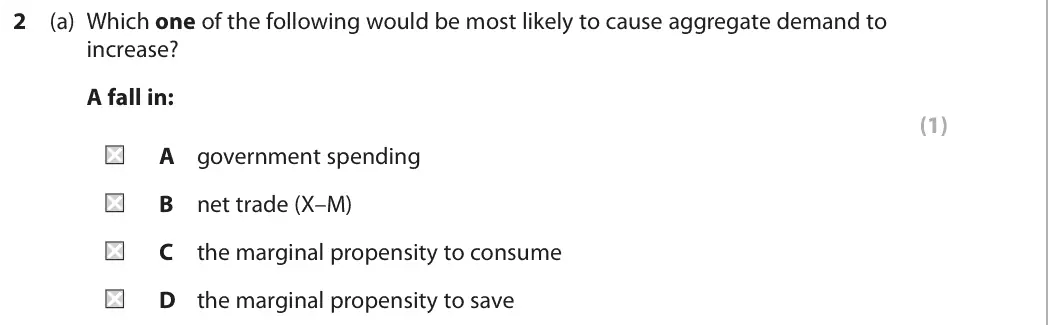
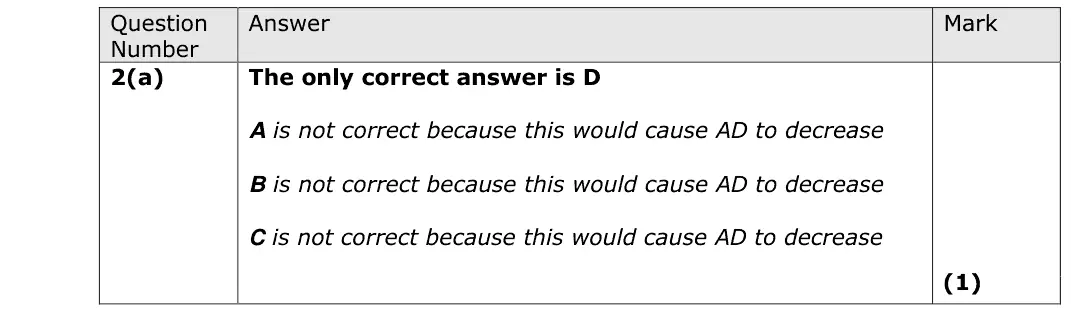
(a) Which one of the following would be most likely to cause aggregate demand to increase? A fall in: (1) A government spending B net trade (X–M) C the marginal propensity to consume D the marginal propensity to save
June 2018 · Paper 2 · Q2(b) 4 marks AO1=2, AO2=2 Diagram fiscal and monetary policynational income and the multiplier
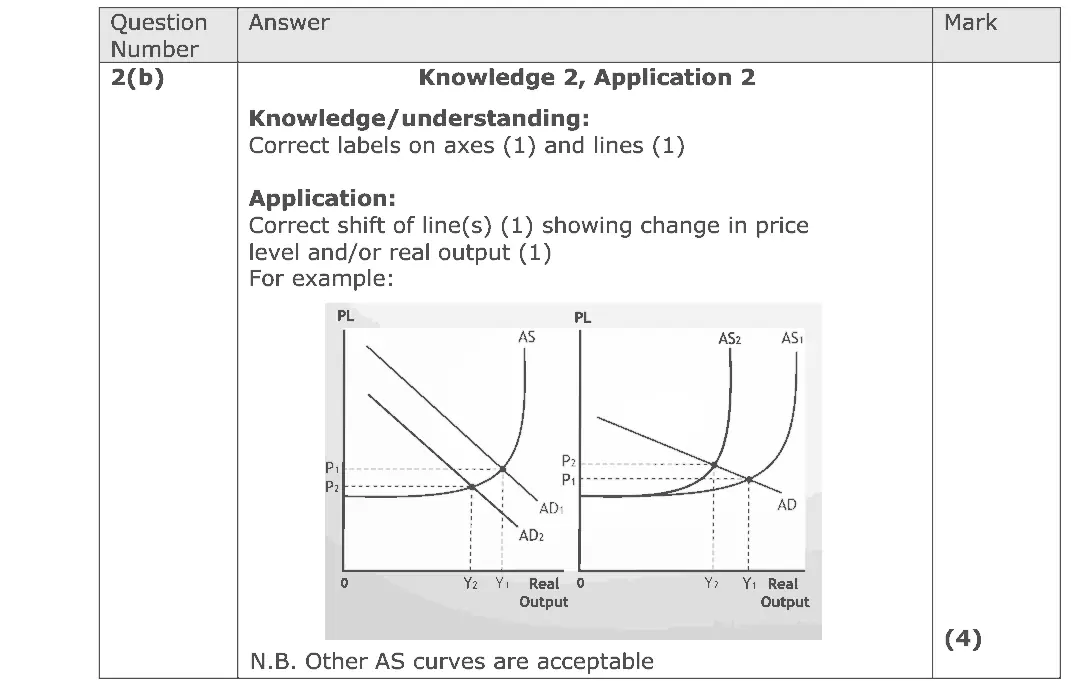
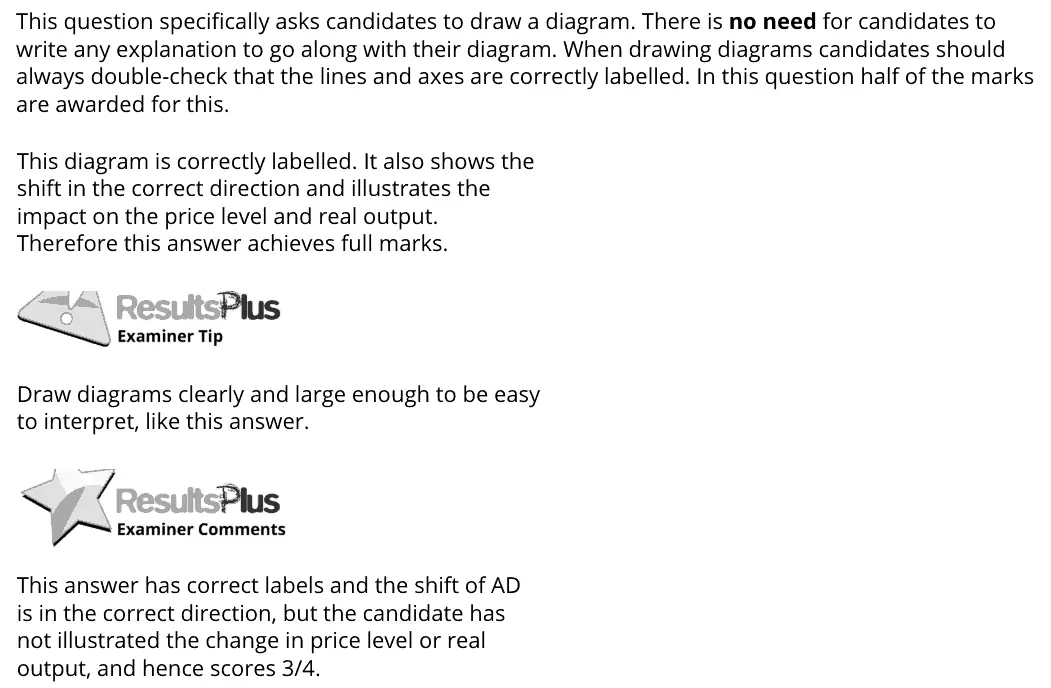
(b) Draw an aggregate demand and aggregate supply diagram illustrating the likely impact of a rise in interest rates on the price level and real output. (4)
June 2018 · Paper 2 · Q3(a) 2 marks AO2=2 Calculation balance of payments
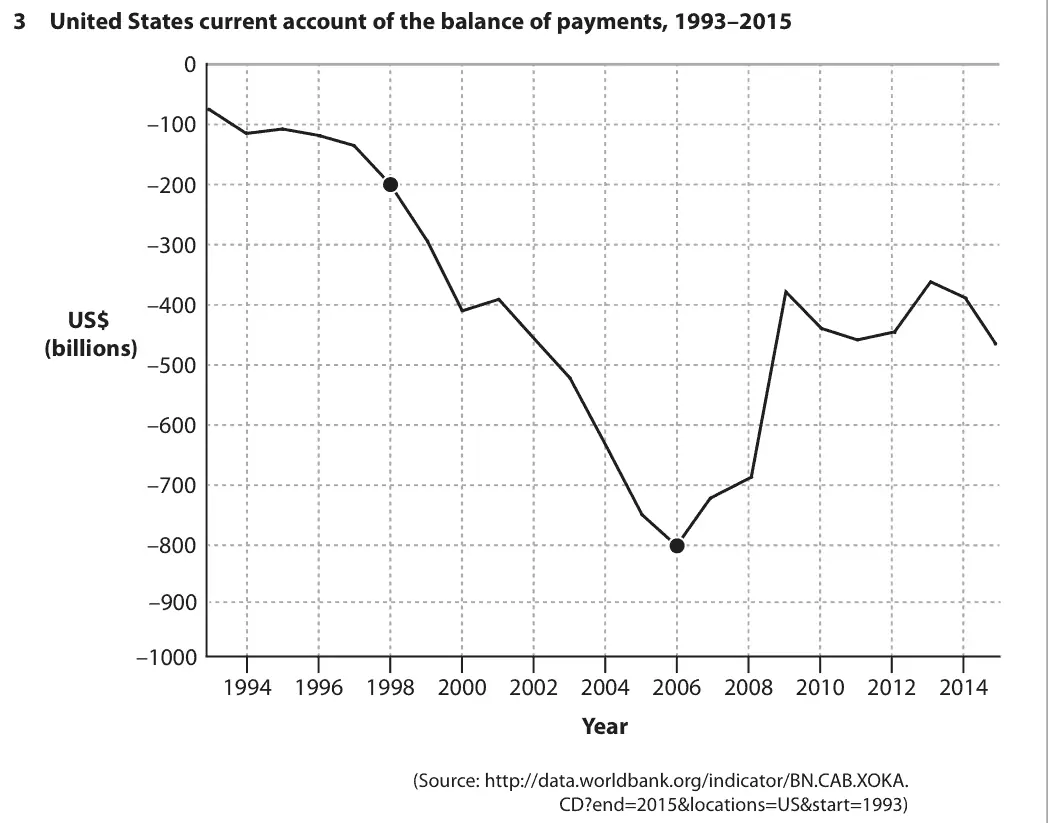
Data and extracts for question 33 United States current account of the balance of payments, 1993–2015 0 –100 –200 –300 –400 US$ (billions) –500 –600 –700 –800 –900 –1000 1994 1996 1998 2000 2002 2004 2006 2008 2010 2012 2014 Year (Source: http://data.worldbank.org/indicator/BN.CAB.XOKA. CD?end=2015&locations=US&start=1993)
(a) Calculate the percentage change in the United States current account deficit on the balance of payments between 1998 and 2006. (2)
June 2018 · Paper 2 · Q3(b) 2 marks AO1=2 Short answer balance of payments
Data and extracts for question 33 United States current account of the balance of payments, 1993–2015 0 –100 –200 –300 –400 US$ (billions) –500 –600 –700 –800 –900 –1000 1994 1996 1998 2000 2002 2004 2006 2008 2010 2012 2014 Year (Source: http://data.worldbank.org/indicator/BN.CAB.XOKA. CD?end=2015&locations=US&start=1993)
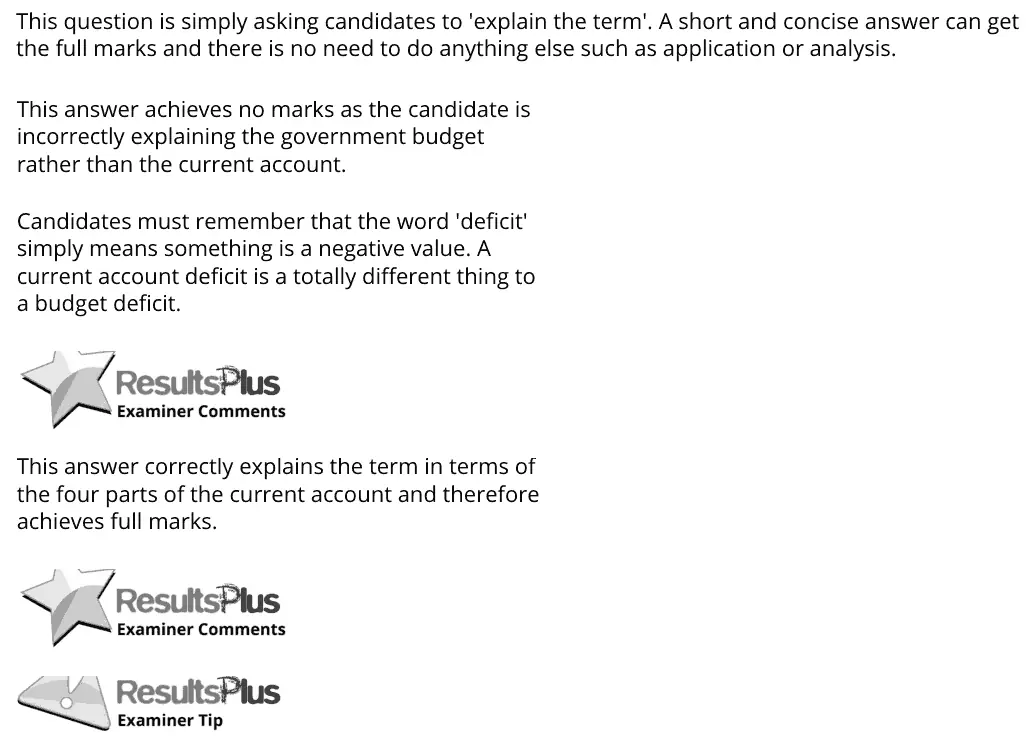
(b) Explain the term ‘current account of the balance of payments’. (2)
June 2018 · Paper 2 · Q3(c) 1 mark Multiple choice balance of payments
Data and extracts for question 33 United States current account of the balance of payments, 1993–2015 0 –100 –200 –300 –400 US$ (billions) –500 –600 –700 –800 –900 –1000 1994 1996 1998 2000 2002 2004 2006 2008 2010 2012 2014 Year (Source: http://data.worldbank.org/indicator/BN.CAB.XOKA. CD?end=2015&locations=US&start=1993)
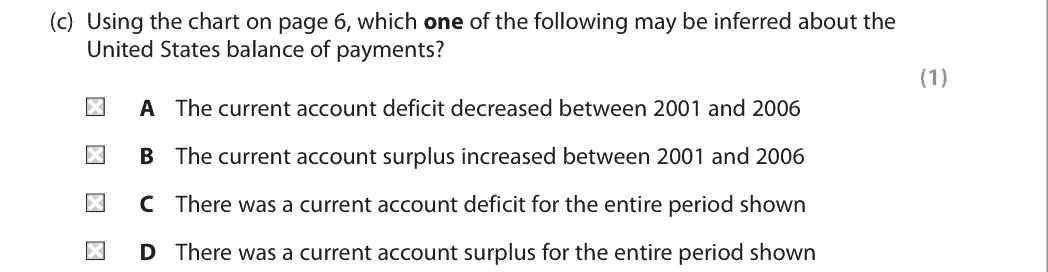
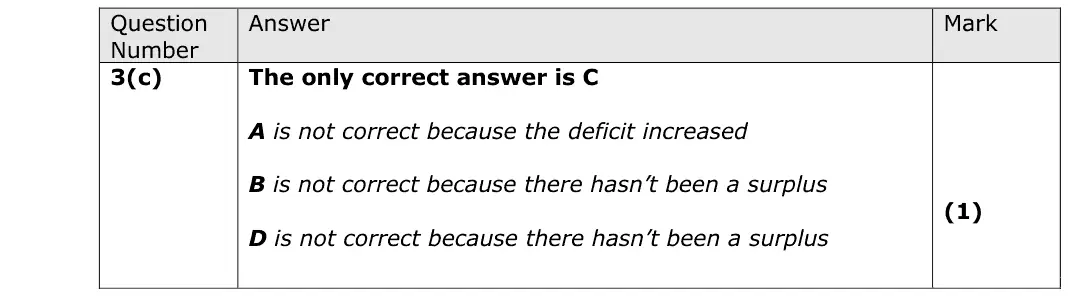
(c) Using the chart on page 6, which one of the following may be inferred about the United States balance of payments? (1) A The current account deficit decreased between 2001 and 2006 B The current account surplus increased between 2001 and 2006 C There was a current account deficit for the entire period shown D There was a current account surplus for the entire period shown
June 2018 · Paper 2 · Q4(a) 2 marks AO1=1, AO3=1 Short answer public finances and taxation
Data and extracts for question 44 The UK has experienced a budget deficit since 2001. The government aimed to reach a budget surplus by 2019, but in 2016 this target was abandoned. (Source: adapted from https://www.gov.uk/government/news/autumn- statement-2016-some-of-the-things-weve-announced)
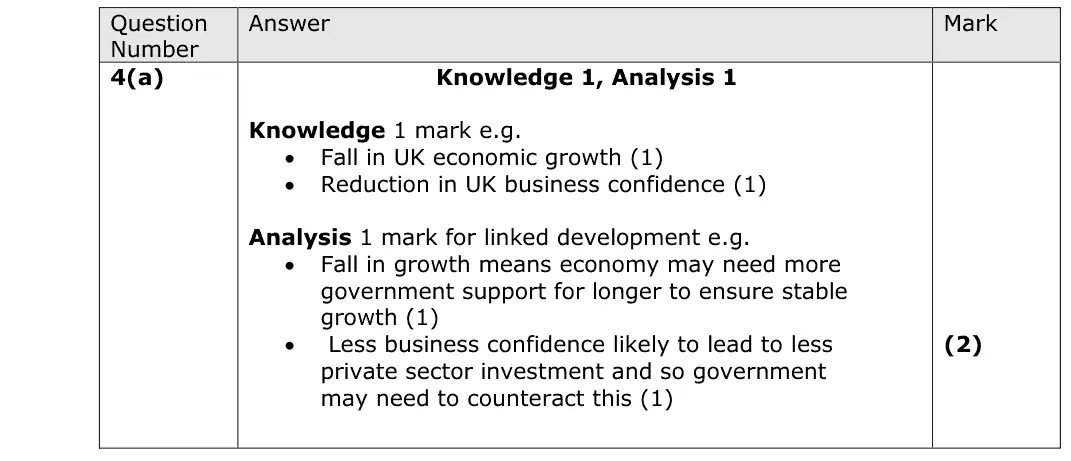
(a) Explain one likely reason why the 2019 budget surplus target was abandoned. (2)
June 2018 · Paper 2 · Q4(b) 2 marks AO1=1, AO3=1 Short answer public finances and taxation
Data and extracts for question 44 The UK has experienced a budget deficit since 2001. The government aimed to reach a budget surplus by 2019, but in 2016 this target was abandoned. (Source: adapted from https://www.gov.uk/government/news/autumn- statement-2016-some-of-the-things-weve-announced)
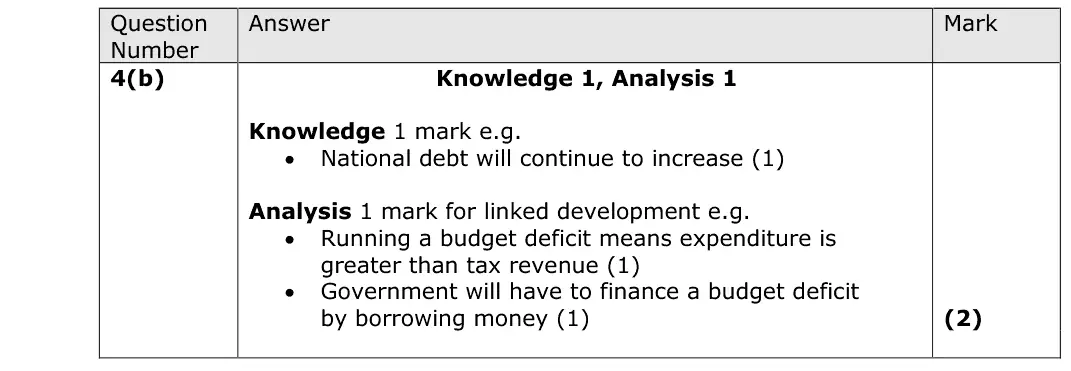
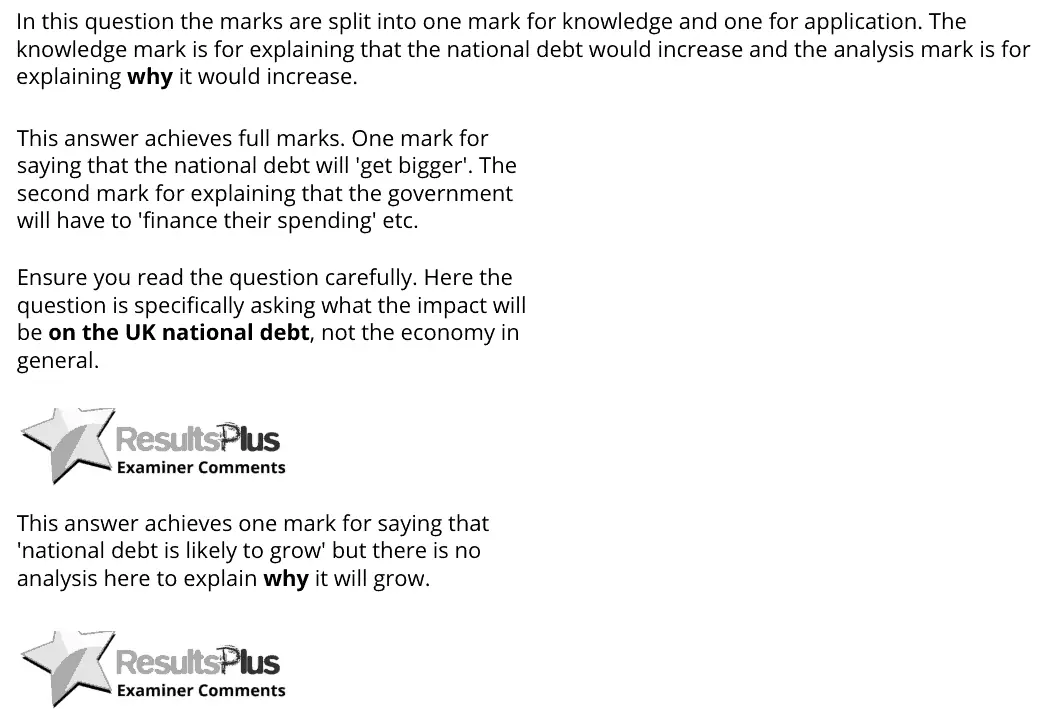
(b) Explain the likely impact of abandoning the budget surplus target on the UK national debt. (2)
June 2018 · Paper 2 · Q4(c) 1 mark Multiple choice public finances and taxationfiscal and monetary policy
Data and extracts for question 44 The UK has experienced a budget deficit since 2001. The government aimed to reach a budget surplus by 2019, but in 2016 this target was abandoned. (Source: adapted from https://www.gov.uk/government/news/autumn- statement-2016-some-of-the-things-weve-announced)
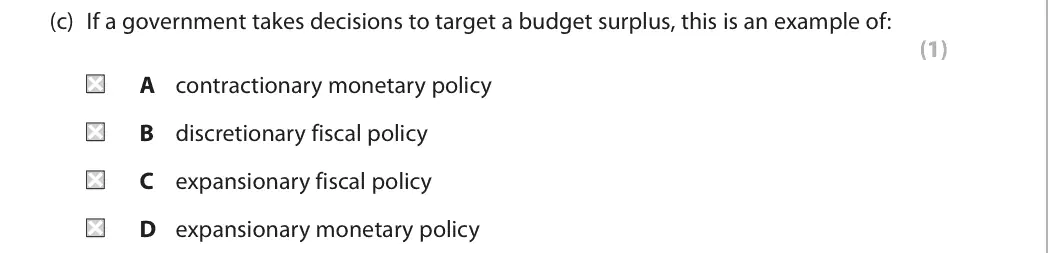
(c) If a government takes decisions to target a budget surplus, this is an example of: (1) A contractionary monetary policy B discretionary fiscal policy C expansionary fiscal policy D expansionary monetary policy
June 2018 · Paper 2 · Q5(a) 2 marks AO1=1, AO3=1 Short answer aggregate demand
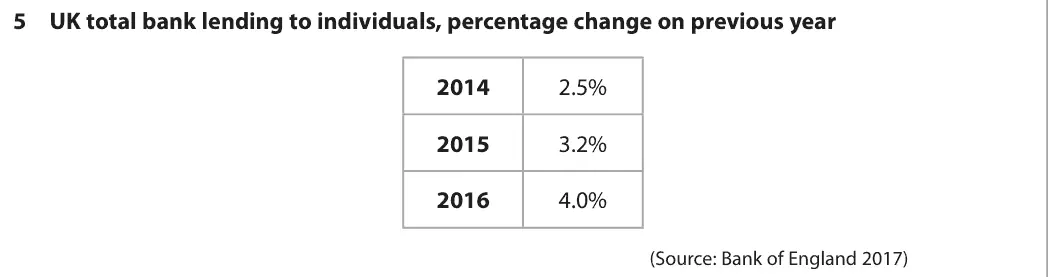
Data and extracts for question 55 UK total bank lending to individuals, percentage change on previous year 2014 2.5% 2015 3.2% 2016 4.0% (Source: Bank of England 2017)
(a) Explain one likely reason why consumer demand for bank loans has increased. (2)
June 2018 · Paper 2 · Q5(b) 1 mark Multiple choice aggregate demand
Data and extracts for question 55 UK total bank lending to individuals, percentage change on previous year 2014 2.5% 2015 3.2% 2016 4.0% (Source: Bank of England 2017)
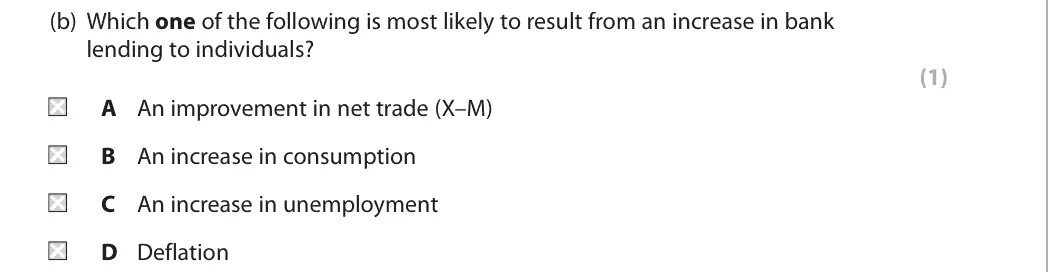
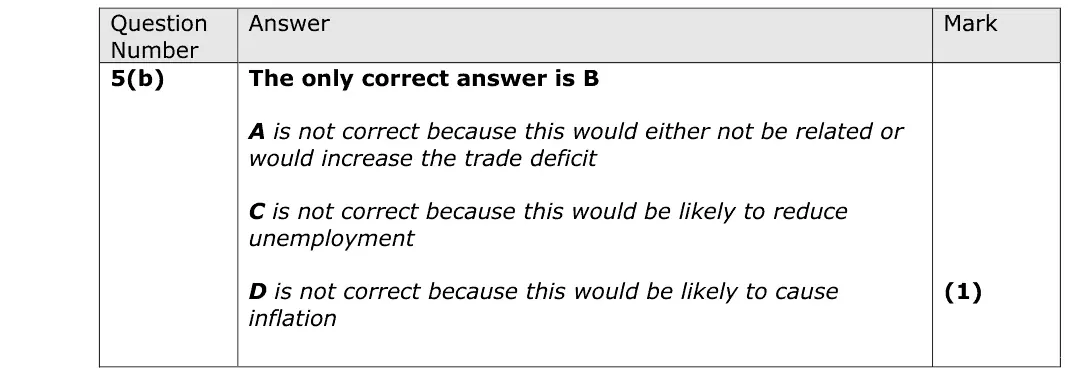
(b) Which one of the following is most likely to result from an increase in bank lending to individuals? (1) A An improvement in net trade (X–M) B An increase in consumption C An increase in unemployment D Deflation
June 2018 · Paper 2 · Q5(c) 2 marks AO2=2 Calculation financial sector
Data and extracts for question 55 UK total bank lending to individuals, percentage change on previous year 2014 2.5% 2015 3.2% 2016 4.0% (Source: Bank of England 2017)
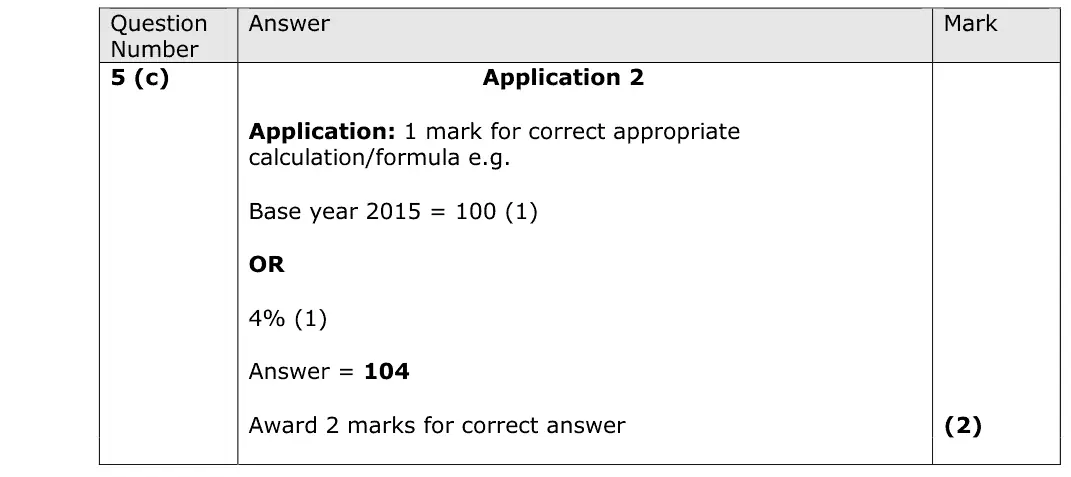
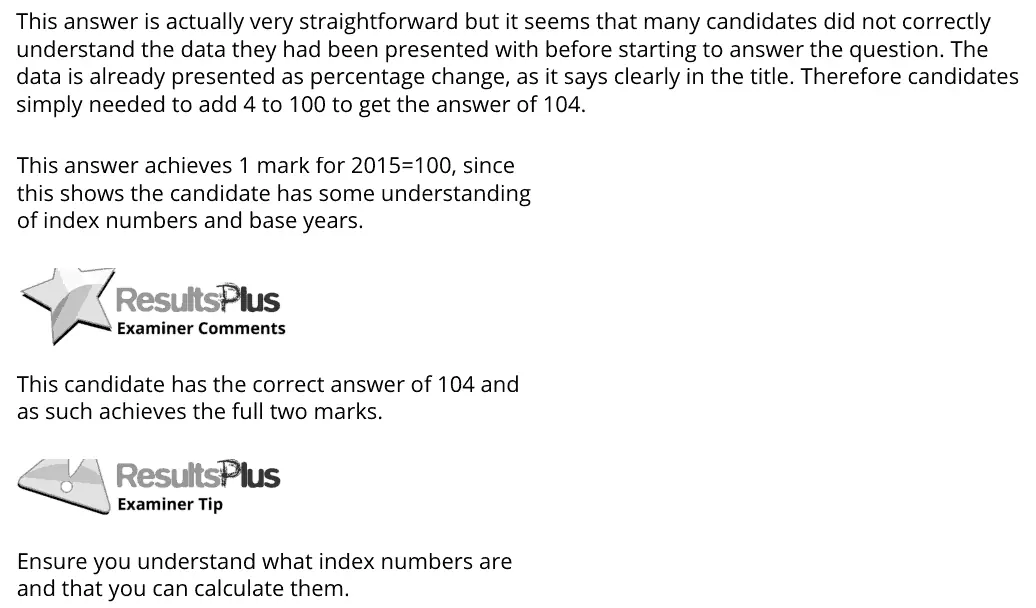
(c) Calculate the index number for the total value of bank lending in 2016 using 2015 as a base year. (2)
June 2018 · Paper 2 · Q6(a) 5 marks AO1=2, AO2=2, AO3=1 Short answer poverty and inequality
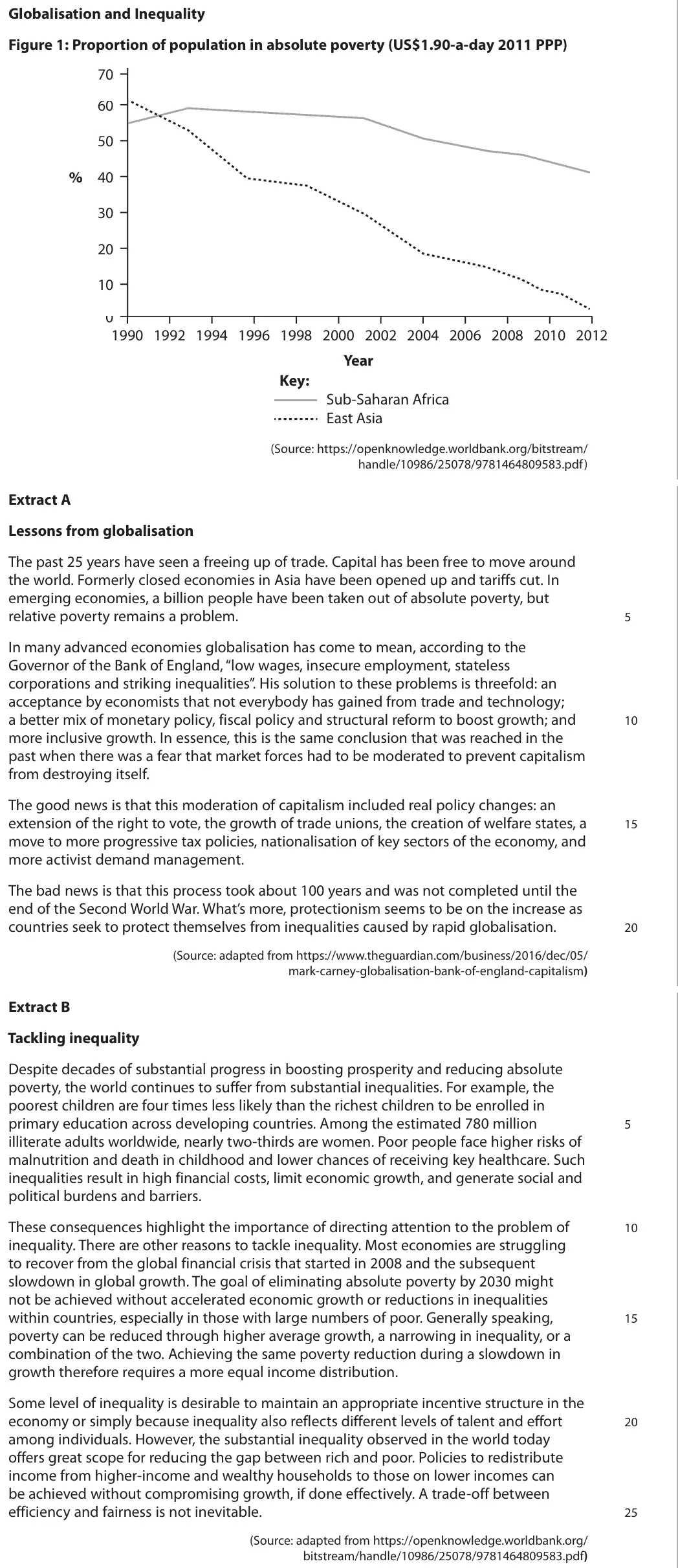
Data and extracts for question 6Globalisation and Inequality Figure 1: Proportion of population in absolute poverty (US$1.90-a-day 2011 PPP) 70 60 50 % 40 30 20 10 0 1990 1992 1994 1996 1998 2000 2002 2004 2006 2008 2010 2012 Year Key: Sub-Saharan Africa East Asia (Source: https://openknowledge.worldbank.org/bitstream/ handle/10986/25078/9781464809583.pdf) Extract A Lessons from globalisation The past 25 years have seen a freeing up of trade. Capital has been free to move around the world. Formerly closed economies in Asia have been opened up and tariffs cut. In emerging economies, a billion people have been taken out of absolute poverty, but relative poverty remains a problem. 5 In many advanced economies globalisation has come to mean, according to the Governor of the Bank of England, “low wages, insecure employment, stateless corporations and striking inequalities”. His solution to these problems is threefold: an acceptance by economists that not everybody has gained from trade and technology; a better mix of monetary policy, fiscal policy and structural reform to boost growth; and 10 more inclusive growth. In essence, this is the same conclusion that was reached in the past when there was a fear that market forces had to be moderated to prevent capitalism from destroying itself. The good news is that this moderation of capitalism included real policy changes: an extension of the right to vote, the growth of trade unions, the creation of welfare states, a 15 move to more progressive tax policies, nationalisation of key sectors of the economy, and more activist demand management. The bad news is that this process took about 100 years and was not completed until the end of the Second World War. What’s more, protectionism seems to be on the increase as countries seek to protect themselves from inequalities caused by rapid globalisation. 20 (Source: adapted from https://www.theguardian.com/business/2016/dec/05/ mark-carney-globalisation-bank-of-england-capitalism) Extract B Tackling inequality Despite decades of substantial progress in boosting prosperity and reducing absolute poverty, the world continues to suffer from substantial inequalities. For example, the poorest children are four times less likely than the richest children to be enrolled in primary education across developing countries. Among the estimated 780 million 5 illiterate adults worldwide, nearly two-thirds are women. Poor people face higher risks of malnutrition and death in childhood and lower chances of receiving key healthcare. Such inequalities result in high financial costs, limit economic growth, and generate social and political burdens and barriers. These consequences highlight the importance of directing attention to the problem of 10 inequality. There are other reasons to tackle inequality. Most economies are struggling to recover from the global financial crisis that started in 2008 and the subsequent slowdown in global growth. The goal of eliminating absolute poverty by 2030 might not be achieved without accelerated economic growth or reductions in inequalities within countries, especially in those with large numbers of poor. Generally speaking, 15 poverty can be reduced through higher average growth, a narrowing in inequality, or a combination of the two. Achieving the same poverty reduction during a slowdown in growth therefore requires a more equal income distribution. Some level of inequality is desirable to maintain an appropriate incentive structure in the economy or simply because inequality also reflects different levels of talent and effort 20 among individuals. However, the substantial inequality observed in the world today offers great scope for reducing the gap between rich and poor. Policies to redistribute income from higher-income and wealthy households to those on lower incomes can be achieved without compromising growth, if done effectively. A trade-off between efficiency and fairness is not inevitable. 25 (Source: adapted from https://openknowledge.worldbank.org/ bitstream/handle/10986/25078/9781464809583.pdf)
(a) With reference to the information provided, explain the distinction between absolute poverty and relative poverty. (5)
June 2018 · Paper 2 · Q6(b) 8 marks AO1=2, AO2=2, AO3=2, AO4=2 8-mark response emerging and developing economies
Data and extracts for question 6Globalisation and Inequality Figure 1: Proportion of population in absolute poverty (US$1.90-a-day 2011 PPP) 70 60 50 % 40 30 20 10 0 1990 1992 1994 1996 1998 2000 2002 2004 2006 2008 2010 2012 Year Key: Sub-Saharan Africa East Asia (Source: https://openknowledge.worldbank.org/bitstream/ handle/10986/25078/9781464809583.pdf) Extract A Lessons from globalisation The past 25 years have seen a freeing up of trade. Capital has been free to move around the world. Formerly closed economies in Asia have been opened up and tariffs cut. In emerging economies, a billion people have been taken out of absolute poverty, but relative poverty remains a problem. 5 In many advanced economies globalisation has come to mean, according to the Governor of the Bank of England, “low wages, insecure employment, stateless corporations and striking inequalities”. His solution to these problems is threefold: an acceptance by economists that not everybody has gained from trade and technology; a better mix of monetary policy, fiscal policy and structural reform to boost growth; and 10 more inclusive growth. In essence, this is the same conclusion that was reached in the past when there was a fear that market forces had to be moderated to prevent capitalism from destroying itself. The good news is that this moderation of capitalism included real policy changes: an extension of the right to vote, the growth of trade unions, the creation of welfare states, a 15 move to more progressive tax policies, nationalisation of key sectors of the economy, and more activist demand management. The bad news is that this process took about 100 years and was not completed until the end of the Second World War. What’s more, protectionism seems to be on the increase as countries seek to protect themselves from inequalities caused by rapid globalisation. 20 (Source: adapted from https://www.theguardian.com/business/2016/dec/05/ mark-carney-globalisation-bank-of-england-capitalism) Extract B Tackling inequality Despite decades of substantial progress in boosting prosperity and reducing absolute poverty, the world continues to suffer from substantial inequalities. For example, the poorest children are four times less likely than the richest children to be enrolled in primary education across developing countries. Among the estimated 780 million 5 illiterate adults worldwide, nearly two-thirds are women. Poor people face higher risks of malnutrition and death in childhood and lower chances of receiving key healthcare. Such inequalities result in high financial costs, limit economic growth, and generate social and political burdens and barriers. These consequences highlight the importance of directing attention to the problem of 10 inequality. There are other reasons to tackle inequality. Most economies are struggling to recover from the global financial crisis that started in 2008 and the subsequent slowdown in global growth. The goal of eliminating absolute poverty by 2030 might not be achieved without accelerated economic growth or reductions in inequalities within countries, especially in those with large numbers of poor. Generally speaking, 15 poverty can be reduced through higher average growth, a narrowing in inequality, or a combination of the two. Achieving the same poverty reduction during a slowdown in growth therefore requires a more equal income distribution. Some level of inequality is desirable to maintain an appropriate incentive structure in the economy or simply because inequality also reflects different levels of talent and effort 20 among individuals. However, the substantial inequality observed in the world today offers great scope for reducing the gap between rich and poor. Policies to redistribute income from higher-income and wealthy households to those on lower incomes can be achieved without compromising growth, if done effectively. A trade-off between efficiency and fairness is not inevitable. 25 (Source: adapted from https://openknowledge.worldbank.org/ bitstream/handle/10986/25078/9781464809583.pdf)
(b) With reference to the information provided and your own knowledge, examine two factors that might explain the differing rates of decline in absolute poverty in East Asia and Sub-Saharan Africa. (8)
June 2018 · Paper 2 · Q6(c) 12 marks AO1=2, AO2=2, AO3=4, AO4=4 12-mark response macroeconomic policy in a global contextglobalisation and trade
Data and extracts for question 6Globalisation and Inequality Figure 1: Proportion of population in absolute poverty (US$1.90-a-day 2011 PPP) 70 60 50 % 40 30 20 10 0 1990 1992 1994 1996 1998 2000 2002 2004 2006 2008 2010 2012 Year Key: Sub-Saharan Africa East Asia (Source: https://openknowledge.worldbank.org/bitstream/ handle/10986/25078/9781464809583.pdf) Extract A Lessons from globalisation The past 25 years have seen a freeing up of trade. Capital has been free to move around the world. Formerly closed economies in Asia have been opened up and tariffs cut. In emerging economies, a billion people have been taken out of absolute poverty, but relative poverty remains a problem. 5 In many advanced economies globalisation has come to mean, according to the Governor of the Bank of England, “low wages, insecure employment, stateless corporations and striking inequalities”. His solution to these problems is threefold: an acceptance by economists that not everybody has gained from trade and technology; a better mix of monetary policy, fiscal policy and structural reform to boost growth; and 10 more inclusive growth. In essence, this is the same conclusion that was reached in the past when there was a fear that market forces had to be moderated to prevent capitalism from destroying itself. The good news is that this moderation of capitalism included real policy changes: an extension of the right to vote, the growth of trade unions, the creation of welfare states, a 15 move to more progressive tax policies, nationalisation of key sectors of the economy, and more activist demand management. The bad news is that this process took about 100 years and was not completed until the end of the Second World War. What’s more, protectionism seems to be on the increase as countries seek to protect themselves from inequalities caused by rapid globalisation. 20 (Source: adapted from https://www.theguardian.com/business/2016/dec/05/ mark-carney-globalisation-bank-of-england-capitalism) Extract B Tackling inequality Despite decades of substantial progress in boosting prosperity and reducing absolute poverty, the world continues to suffer from substantial inequalities. For example, the poorest children are four times less likely than the richest children to be enrolled in primary education across developing countries. Among the estimated 780 million 5 illiterate adults worldwide, nearly two-thirds are women. Poor people face higher risks of malnutrition and death in childhood and lower chances of receiving key healthcare. Such inequalities result in high financial costs, limit economic growth, and generate social and political burdens and barriers. These consequences highlight the importance of directing attention to the problem of 10 inequality. There are other reasons to tackle inequality. Most economies are struggling to recover from the global financial crisis that started in 2008 and the subsequent slowdown in global growth. The goal of eliminating absolute poverty by 2030 might not be achieved without accelerated economic growth or reductions in inequalities within countries, especially in those with large numbers of poor. Generally speaking, 15 poverty can be reduced through higher average growth, a narrowing in inequality, or a combination of the two. Achieving the same poverty reduction during a slowdown in growth therefore requires a more equal income distribution. Some level of inequality is desirable to maintain an appropriate incentive structure in the economy or simply because inequality also reflects different levels of talent and effort 20 among individuals. However, the substantial inequality observed in the world today offers great scope for reducing the gap between rich and poor. Policies to redistribute income from higher-income and wealthy households to those on lower incomes can be achieved without compromising growth, if done effectively. A trade-off between efficiency and fairness is not inevitable. 25 (Source: adapted from https://openknowledge.worldbank.org/ bitstream/handle/10986/25078/9781464809583.pdf)
(c) With reference to Extract A, discuss two macroeconomic policies, apart from protectionism, that a government could use to reduce the negative effects of globalisation. (12)
June 2018 · Paper 2 · Q6(d) 10 marks AO1=2, AO2=2, AO3=2, AO4=4 10-mark response poverty and inequality
Data and extracts for question 6Globalisation and Inequality Figure 1: Proportion of population in absolute poverty (US$1.90-a-day 2011 PPP) 70 60 50 % 40 30 20 10 0 1990 1992 1994 1996 1998 2000 2002 2004 2006 2008 2010 2012 Year Key: Sub-Saharan Africa East Asia (Source: https://openknowledge.worldbank.org/bitstream/ handle/10986/25078/9781464809583.pdf) Extract A Lessons from globalisation The past 25 years have seen a freeing up of trade. Capital has been free to move around the world. Formerly closed economies in Asia have been opened up and tariffs cut. In emerging economies, a billion people have been taken out of absolute poverty, but relative poverty remains a problem. 5 In many advanced economies globalisation has come to mean, according to the Governor of the Bank of England, “low wages, insecure employment, stateless corporations and striking inequalities”. His solution to these problems is threefold: an acceptance by economists that not everybody has gained from trade and technology; a better mix of monetary policy, fiscal policy and structural reform to boost growth; and 10 more inclusive growth. In essence, this is the same conclusion that was reached in the past when there was a fear that market forces had to be moderated to prevent capitalism from destroying itself. The good news is that this moderation of capitalism included real policy changes: an extension of the right to vote, the growth of trade unions, the creation of welfare states, a 15 move to more progressive tax policies, nationalisation of key sectors of the economy, and more activist demand management. The bad news is that this process took about 100 years and was not completed until the end of the Second World War. What’s more, protectionism seems to be on the increase as countries seek to protect themselves from inequalities caused by rapid globalisation. 20 (Source: adapted from https://www.theguardian.com/business/2016/dec/05/ mark-carney-globalisation-bank-of-england-capitalism) Extract B Tackling inequality Despite decades of substantial progress in boosting prosperity and reducing absolute poverty, the world continues to suffer from substantial inequalities. For example, the poorest children are four times less likely than the richest children to be enrolled in primary education across developing countries. Among the estimated 780 million 5 illiterate adults worldwide, nearly two-thirds are women. Poor people face higher risks of malnutrition and death in childhood and lower chances of receiving key healthcare. Such inequalities result in high financial costs, limit economic growth, and generate social and political burdens and barriers. These consequences highlight the importance of directing attention to the problem of 10 inequality. There are other reasons to tackle inequality. Most economies are struggling to recover from the global financial crisis that started in 2008 and the subsequent slowdown in global growth. The goal of eliminating absolute poverty by 2030 might not be achieved without accelerated economic growth or reductions in inequalities within countries, especially in those with large numbers of poor. Generally speaking, 15 poverty can be reduced through higher average growth, a narrowing in inequality, or a combination of the two. Achieving the same poverty reduction during a slowdown in growth therefore requires a more equal income distribution. Some level of inequality is desirable to maintain an appropriate incentive structure in the economy or simply because inequality also reflects different levels of talent and effort 20 among individuals. However, the substantial inequality observed in the world today offers great scope for reducing the gap between rich and poor. Policies to redistribute income from higher-income and wealthy households to those on lower incomes can be achieved without compromising growth, if done effectively. A trade-off between efficiency and fairness is not inevitable. 25 (Source: adapted from https://openknowledge.worldbank.org/ bitstream/handle/10986/25078/9781464809583.pdf)
(d) Assess the view that ‘some level of inequality is desirable to maintain an appropriate incentive structure in the economy’ (Extract B, lines 19 and 20). (10)
June 2018 · Paper 2 · Q6(e) 15 marks AO1=3, AO2=3, AO3=3, AO4=6 15-mark response financial sectoremerging and developing economies
Data and extracts for question 6Globalisation and Inequality Figure 1: Proportion of population in absolute poverty (US$1.90-a-day 2011 PPP) 70 60 50 % 40 30 20 10 0 1990 1992 1994 1996 1998 2000 2002 2004 2006 2008 2010 2012 Year Key: Sub-Saharan Africa East Asia (Source: https://openknowledge.worldbank.org/bitstream/ handle/10986/25078/9781464809583.pdf) Extract A Lessons from globalisation The past 25 years have seen a freeing up of trade. Capital has been free to move around the world. Formerly closed economies in Asia have been opened up and tariffs cut. In emerging economies, a billion people have been taken out of absolute poverty, but relative poverty remains a problem. 5 In many advanced economies globalisation has come to mean, according to the Governor of the Bank of England, “low wages, insecure employment, stateless corporations and striking inequalities”. His solution to these problems is threefold: an acceptance by economists that not everybody has gained from trade and technology; a better mix of monetary policy, fiscal policy and structural reform to boost growth; and 10 more inclusive growth. In essence, this is the same conclusion that was reached in the past when there was a fear that market forces had to be moderated to prevent capitalism from destroying itself. The good news is that this moderation of capitalism included real policy changes: an extension of the right to vote, the growth of trade unions, the creation of welfare states, a 15 move to more progressive tax policies, nationalisation of key sectors of the economy, and more activist demand management. The bad news is that this process took about 100 years and was not completed until the end of the Second World War. What’s more, protectionism seems to be on the increase as countries seek to protect themselves from inequalities caused by rapid globalisation. 20 (Source: adapted from https://www.theguardian.com/business/2016/dec/05/ mark-carney-globalisation-bank-of-england-capitalism) Extract B Tackling inequality Despite decades of substantial progress in boosting prosperity and reducing absolute poverty, the world continues to suffer from substantial inequalities. For example, the poorest children are four times less likely than the richest children to be enrolled in primary education across developing countries. Among the estimated 780 million 5 illiterate adults worldwide, nearly two-thirds are women. Poor people face higher risks of malnutrition and death in childhood and lower chances of receiving key healthcare. Such inequalities result in high financial costs, limit economic growth, and generate social and political burdens and barriers. These consequences highlight the importance of directing attention to the problem of 10 inequality. There are other reasons to tackle inequality. Most economies are struggling to recover from the global financial crisis that started in 2008 and the subsequent slowdown in global growth. The goal of eliminating absolute poverty by 2030 might not be achieved without accelerated economic growth or reductions in inequalities within countries, especially in those with large numbers of poor. Generally speaking, 15 poverty can be reduced through higher average growth, a narrowing in inequality, or a combination of the two. Achieving the same poverty reduction during a slowdown in growth therefore requires a more equal income distribution. Some level of inequality is desirable to maintain an appropriate incentive structure in the economy or simply because inequality also reflects different levels of talent and effort 20 among individuals. However, the substantial inequality observed in the world today offers great scope for reducing the gap between rich and poor. Policies to redistribute income from higher-income and wealthy households to those on lower incomes can be achieved without compromising growth, if done effectively. A trade-off between efficiency and fairness is not inevitable. 25 (Source: adapted from https://openknowledge.worldbank.org/ bitstream/handle/10986/25078/9781464809583.pdf)
(e) Discuss the role of the financial sector in the growth and development of developing countries. (15)
June 2018 · Paper 2 · Q7 25 marks AO1=4, AO2=4, AO3=8, AO4=9 25-mark essay Either/or national income and the multiplieraggregate supply
7 In 2016 the UK Chancellor of the Exchequer announced that the government would spend an extra £23 billion on innovation and infrastructure over the following five years. Evaluate the likely economic effects of this planned increase in government expenditure.
June 2018 · Paper 2 · Q8 25 marks AO1=4, AO2=4, AO3=8, AO4=9 25-mark essay Either/or exchange rates
8 The British pound fell by over 10% to a 30-year low against the US dollar after the UK voted to leave the European Union. To what extent will this depreciation impact on future economic growth in the UK?

Work with an Edexcel economics tutor

Want a paper marked and gone through with you? Message us.

Prefer email? Send an enquiry

If you are under 18, please include a parent's contact details. Enquiries go to enquiries@economicsaleveltutor.com and are deleted once handled. All tutoring is online.