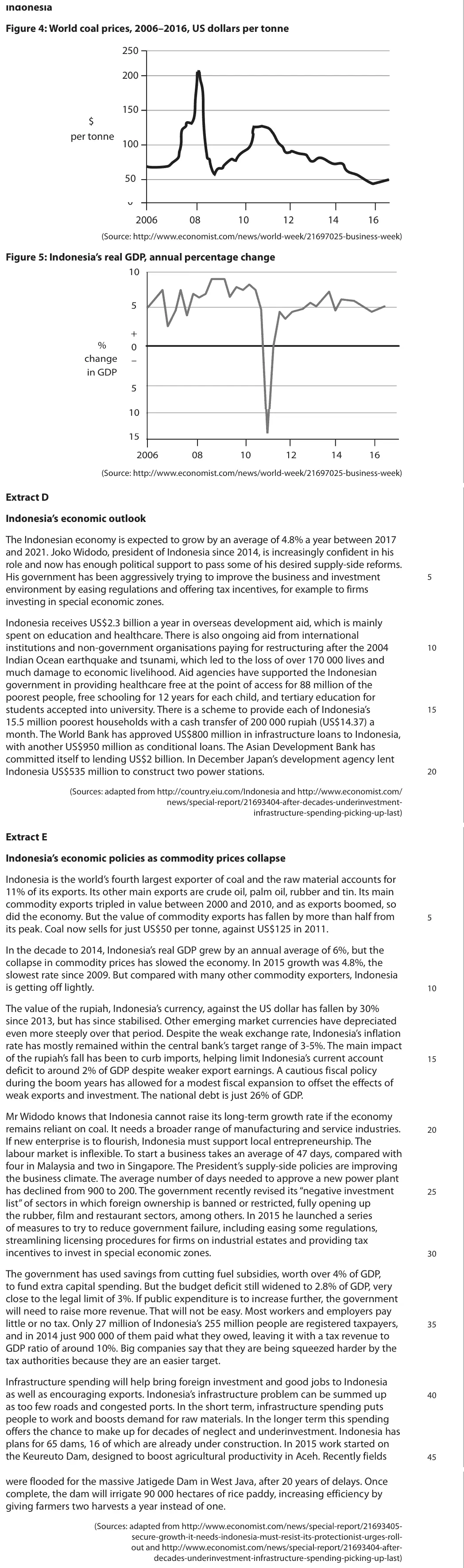
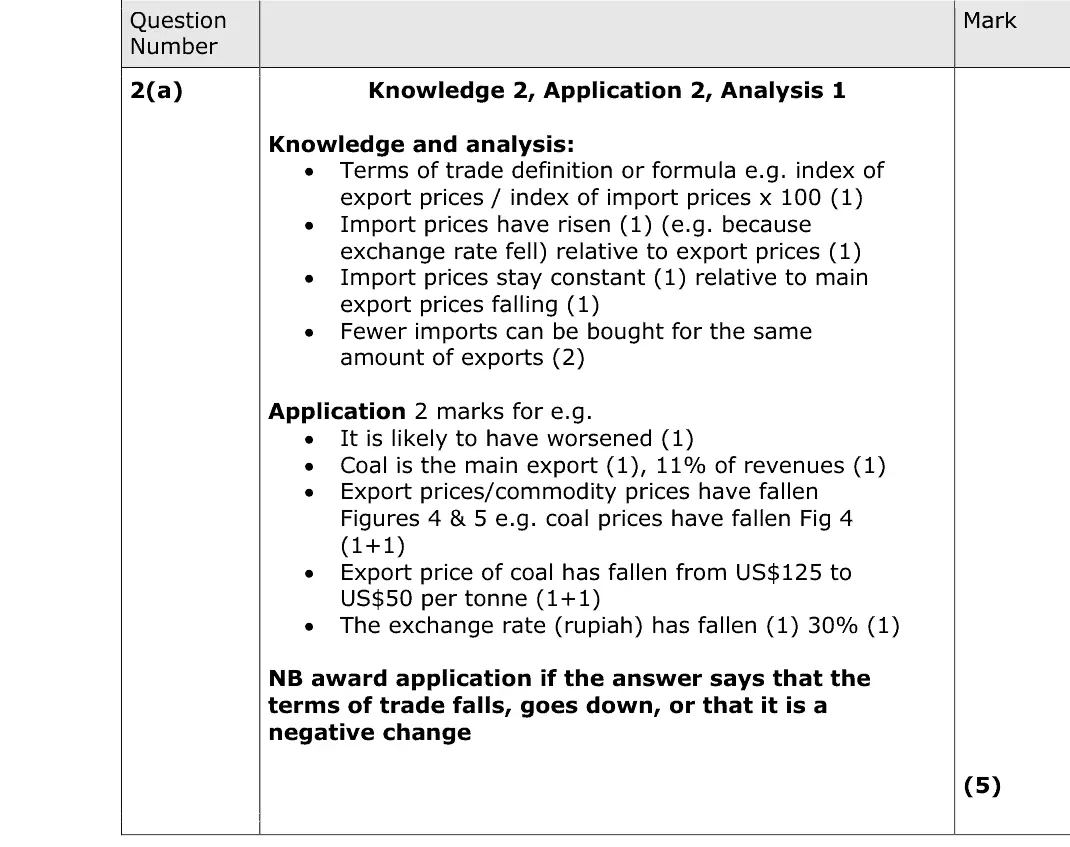
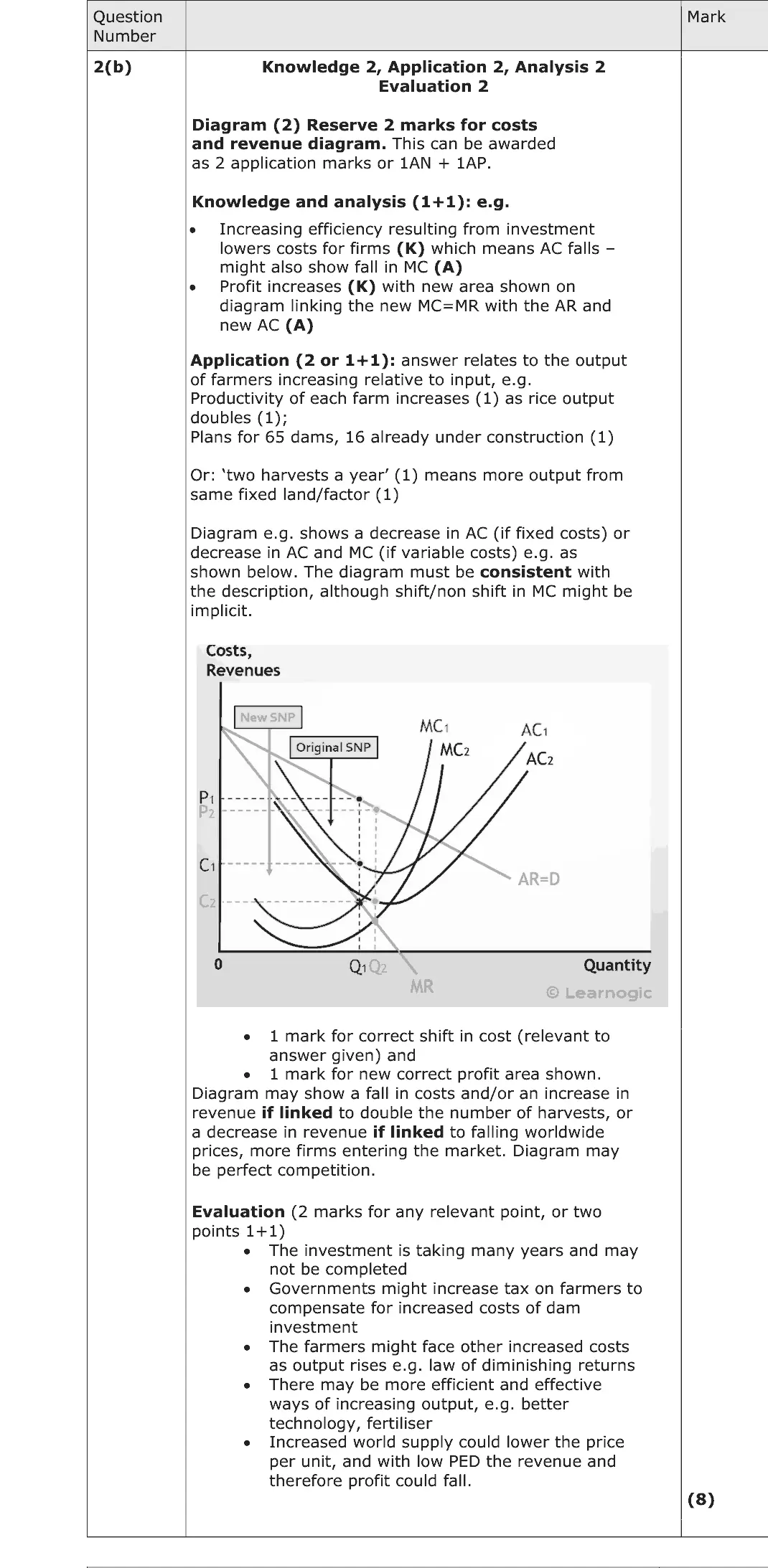
Data and extracts for question 1

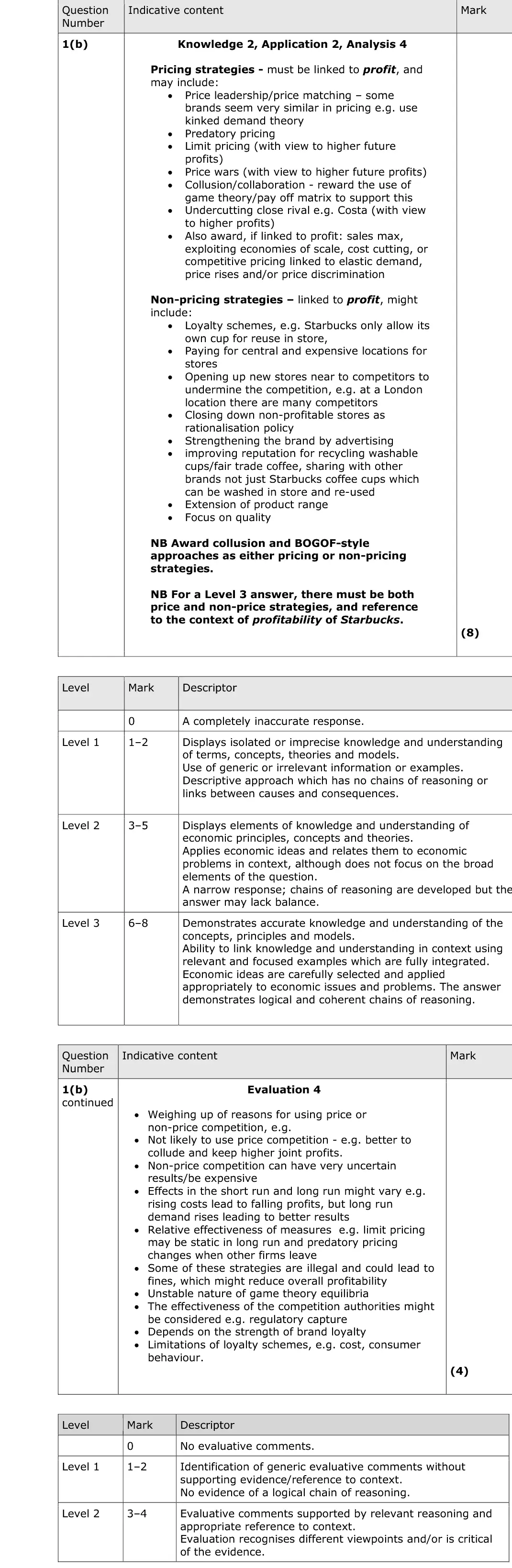
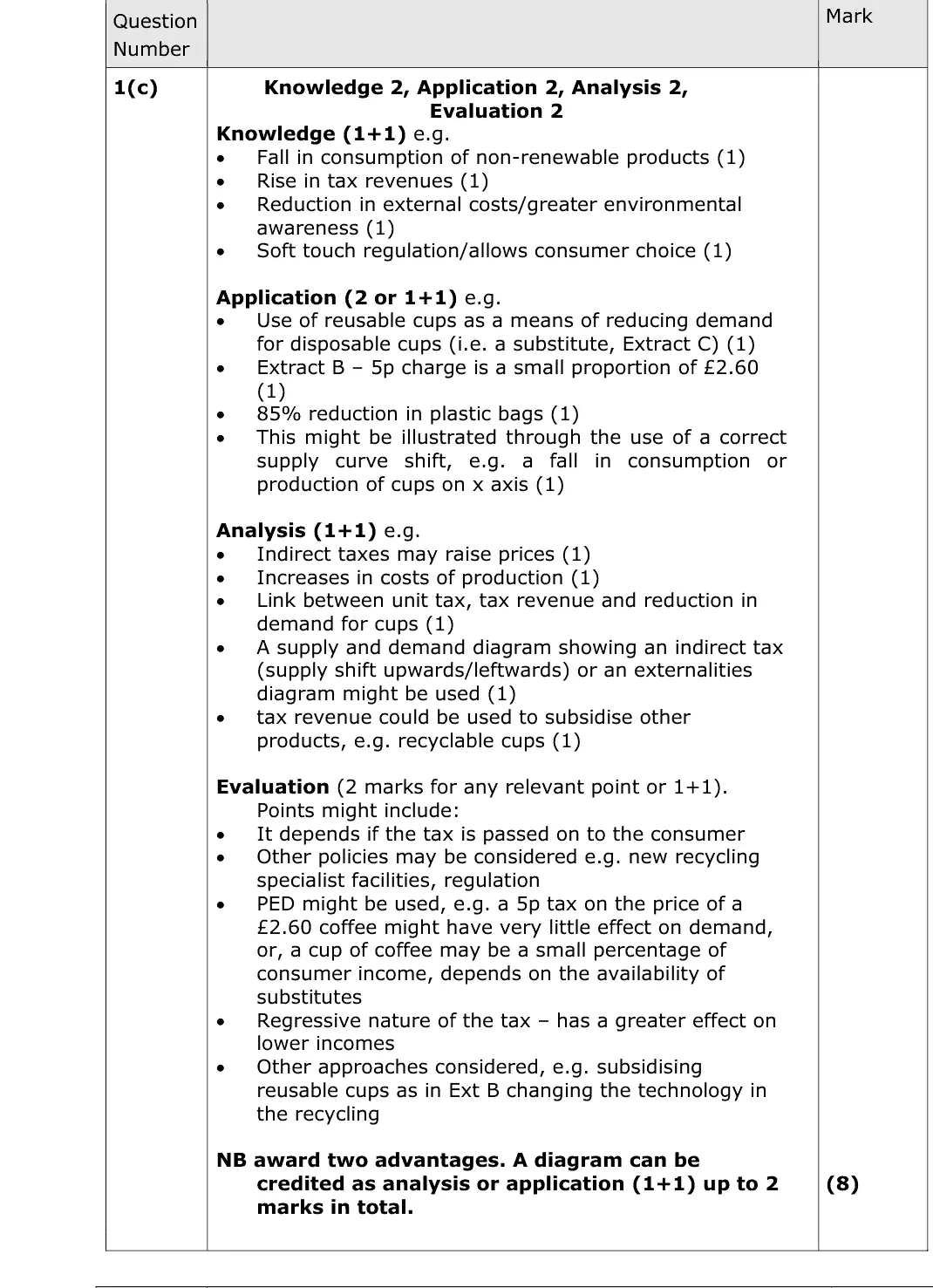
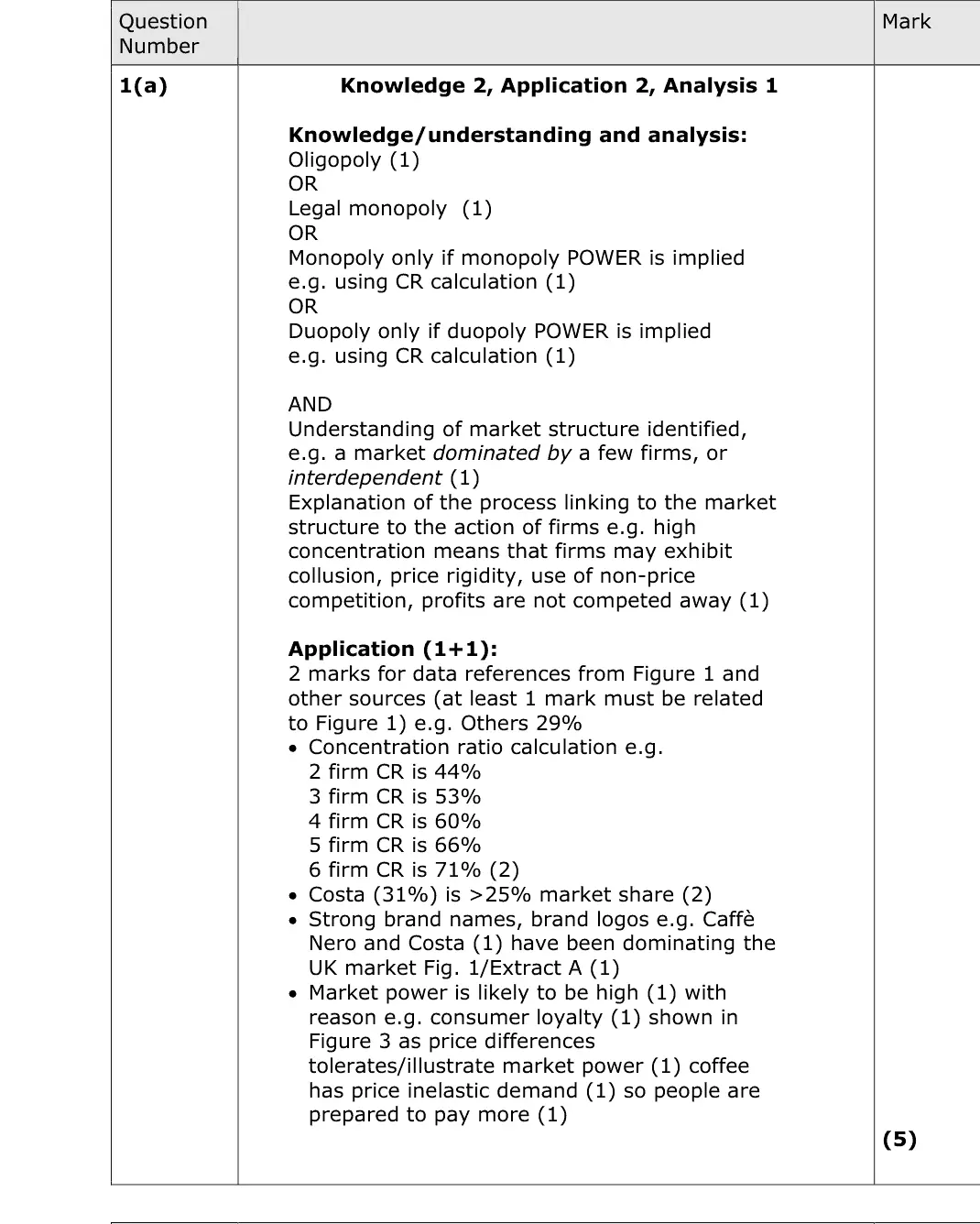
Mark scheme
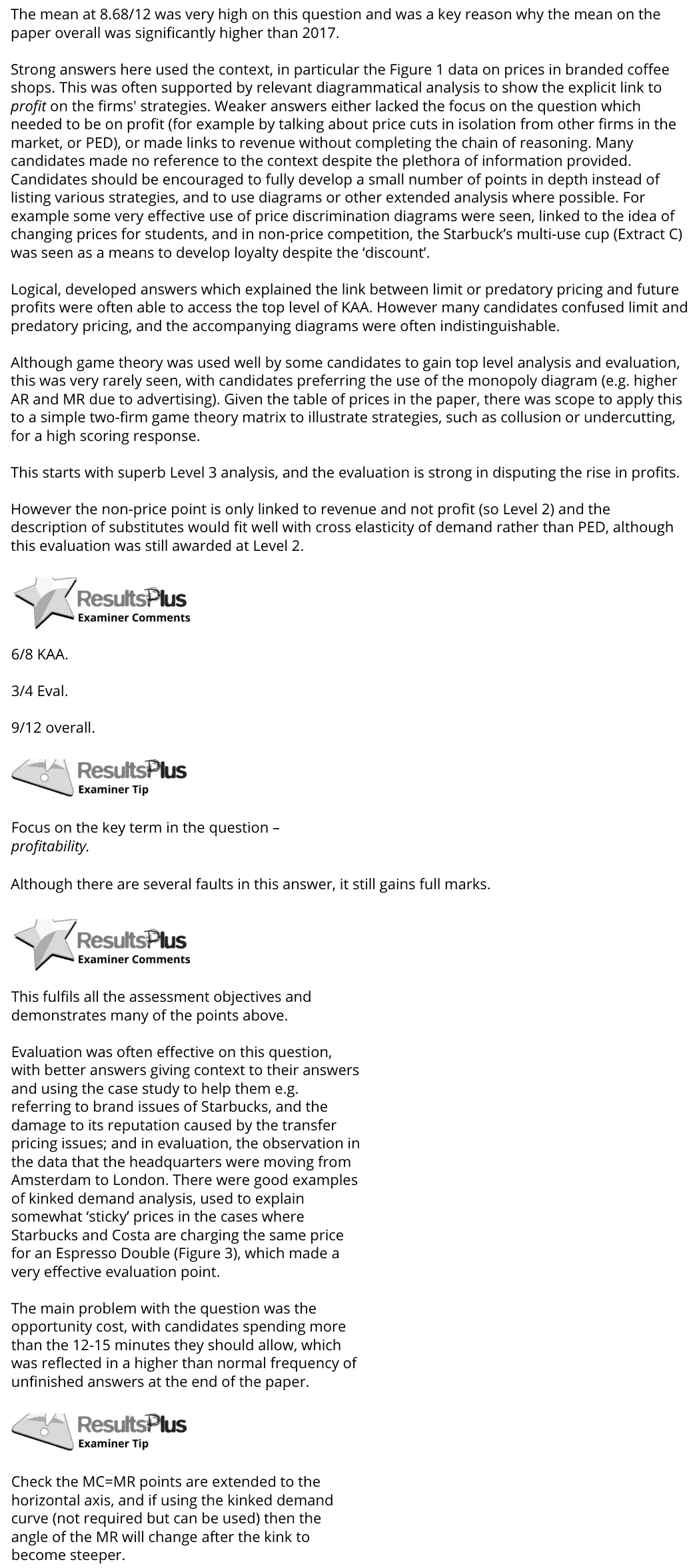
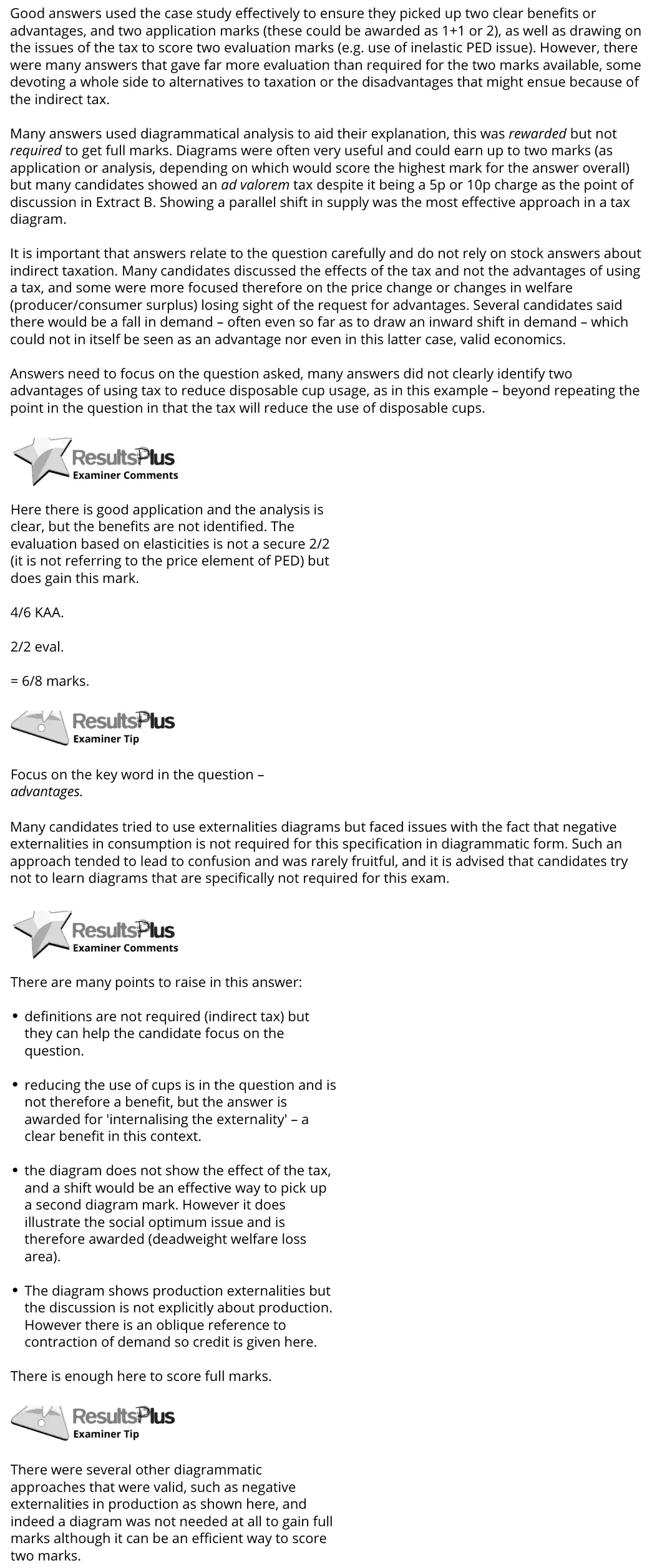
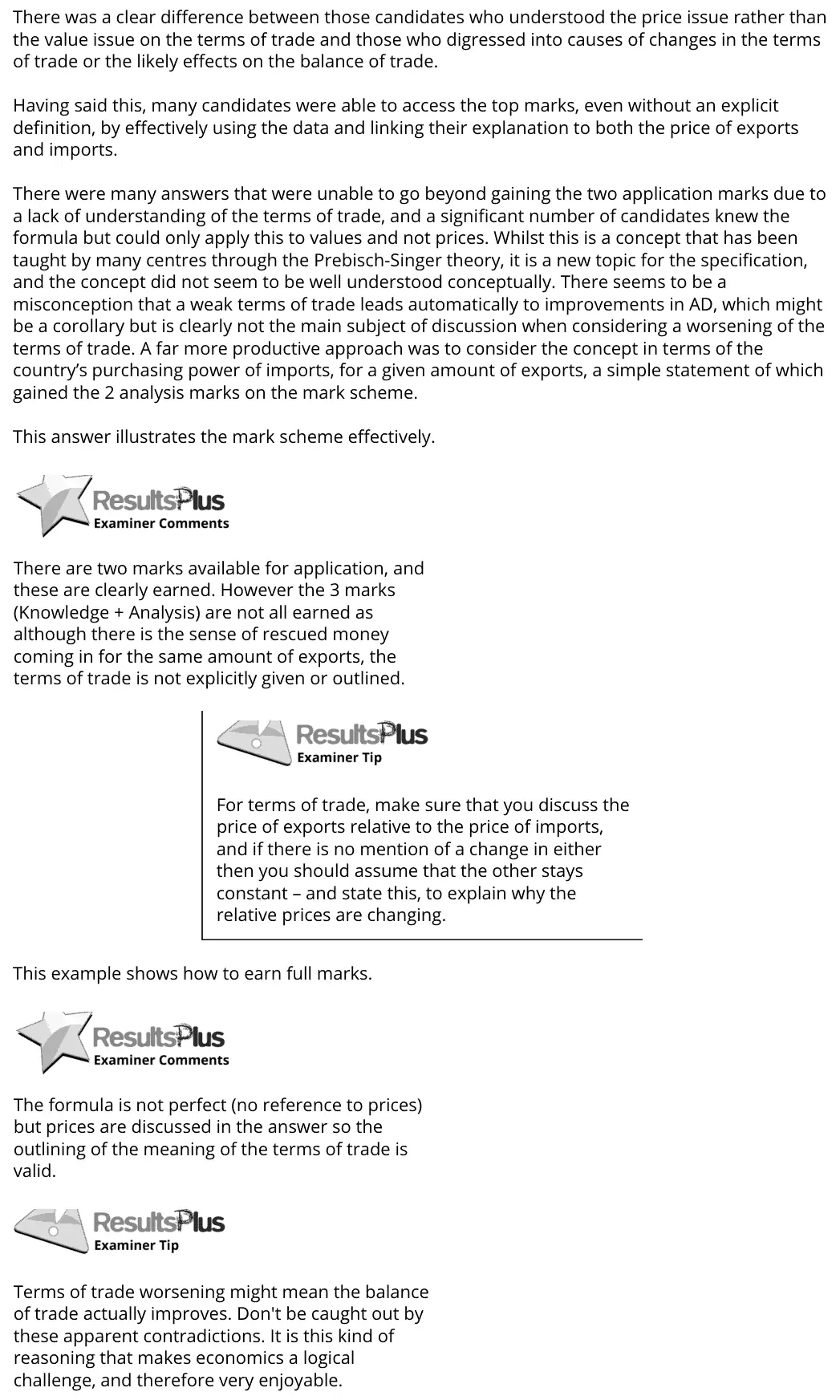
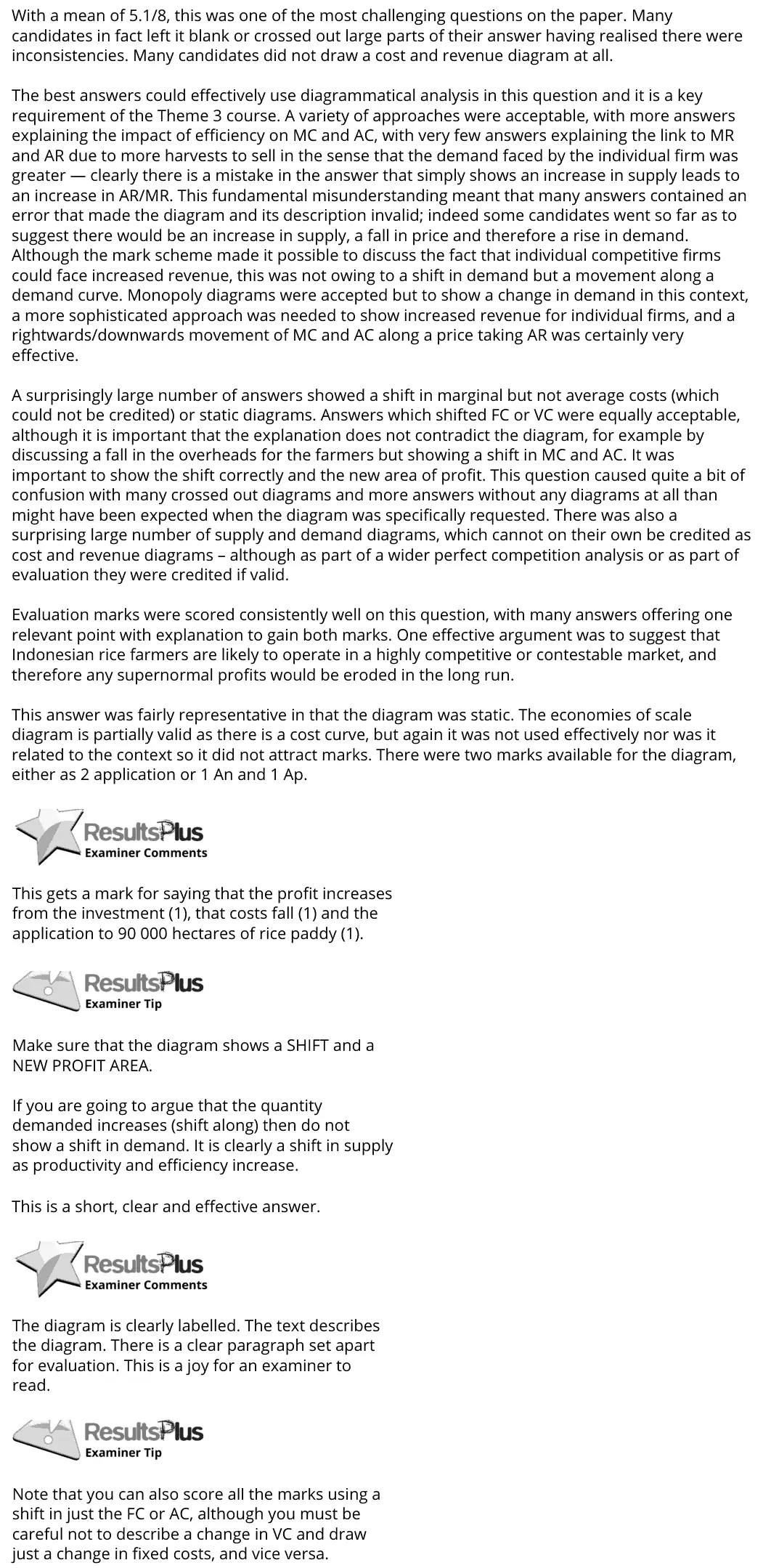
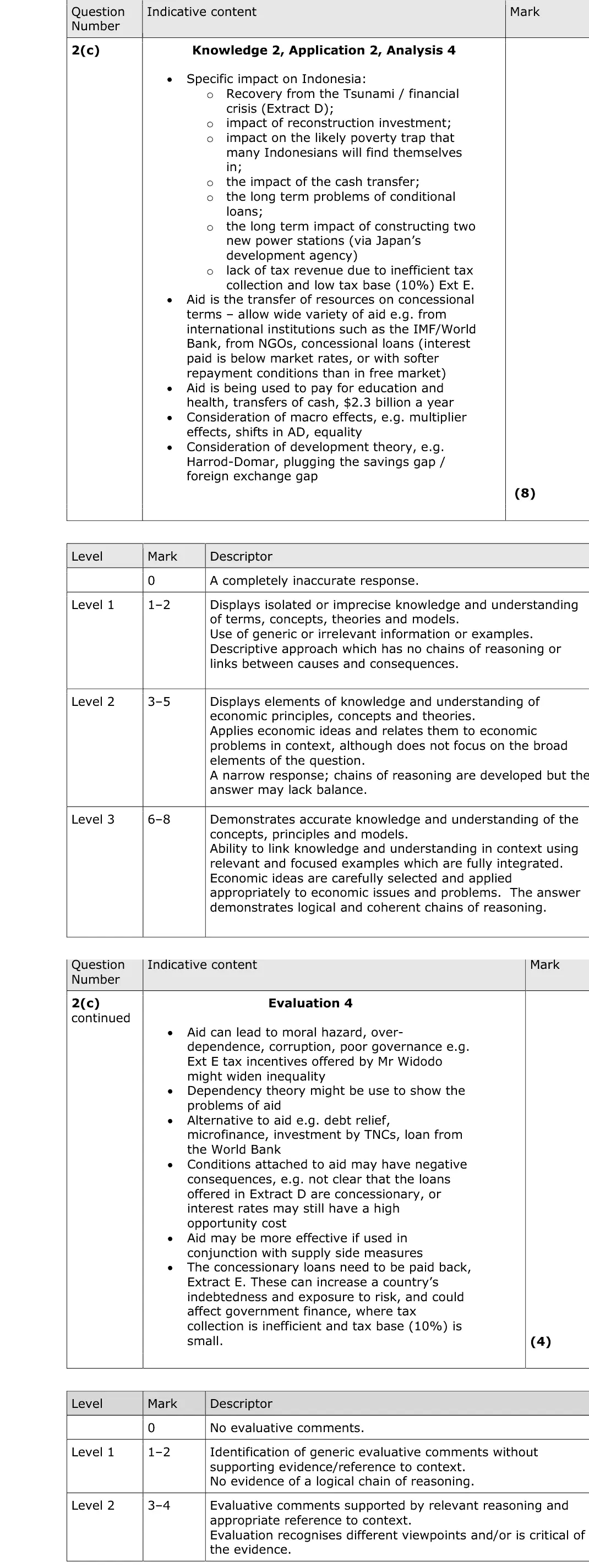
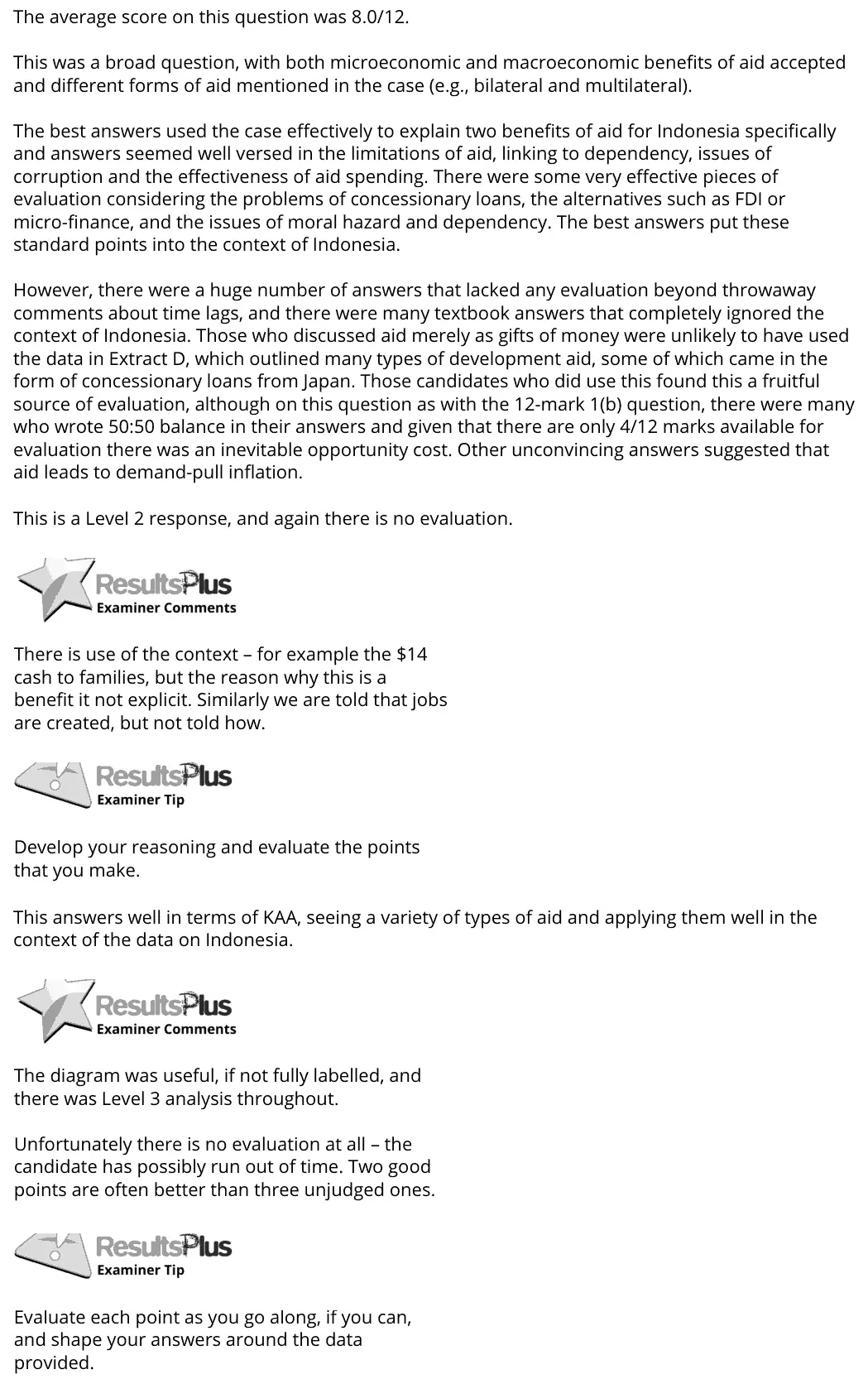
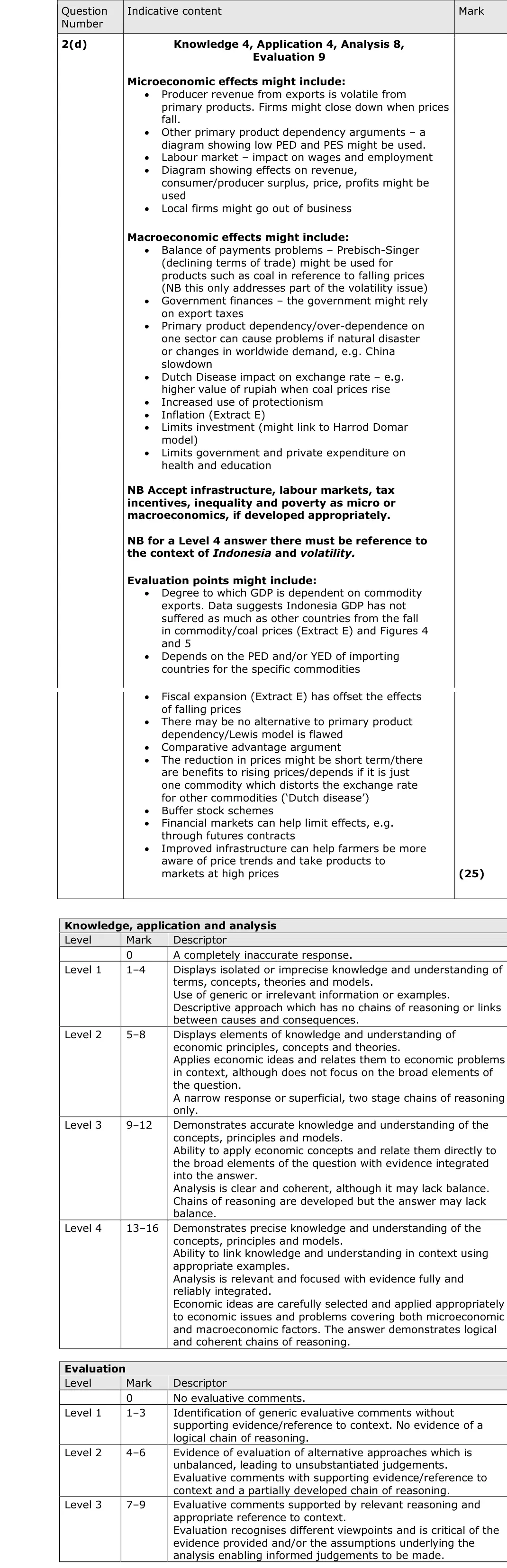
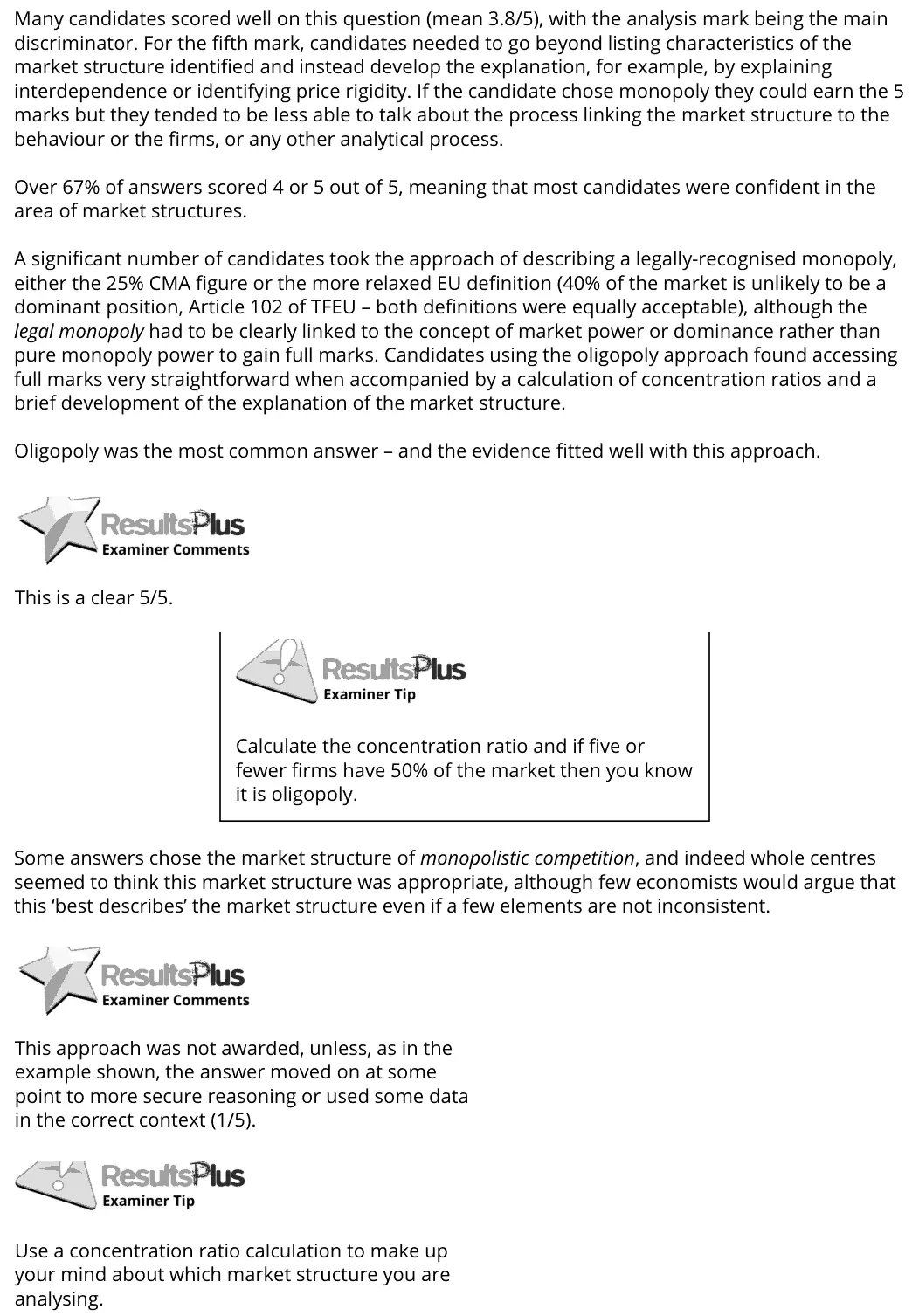
Examiner's comment
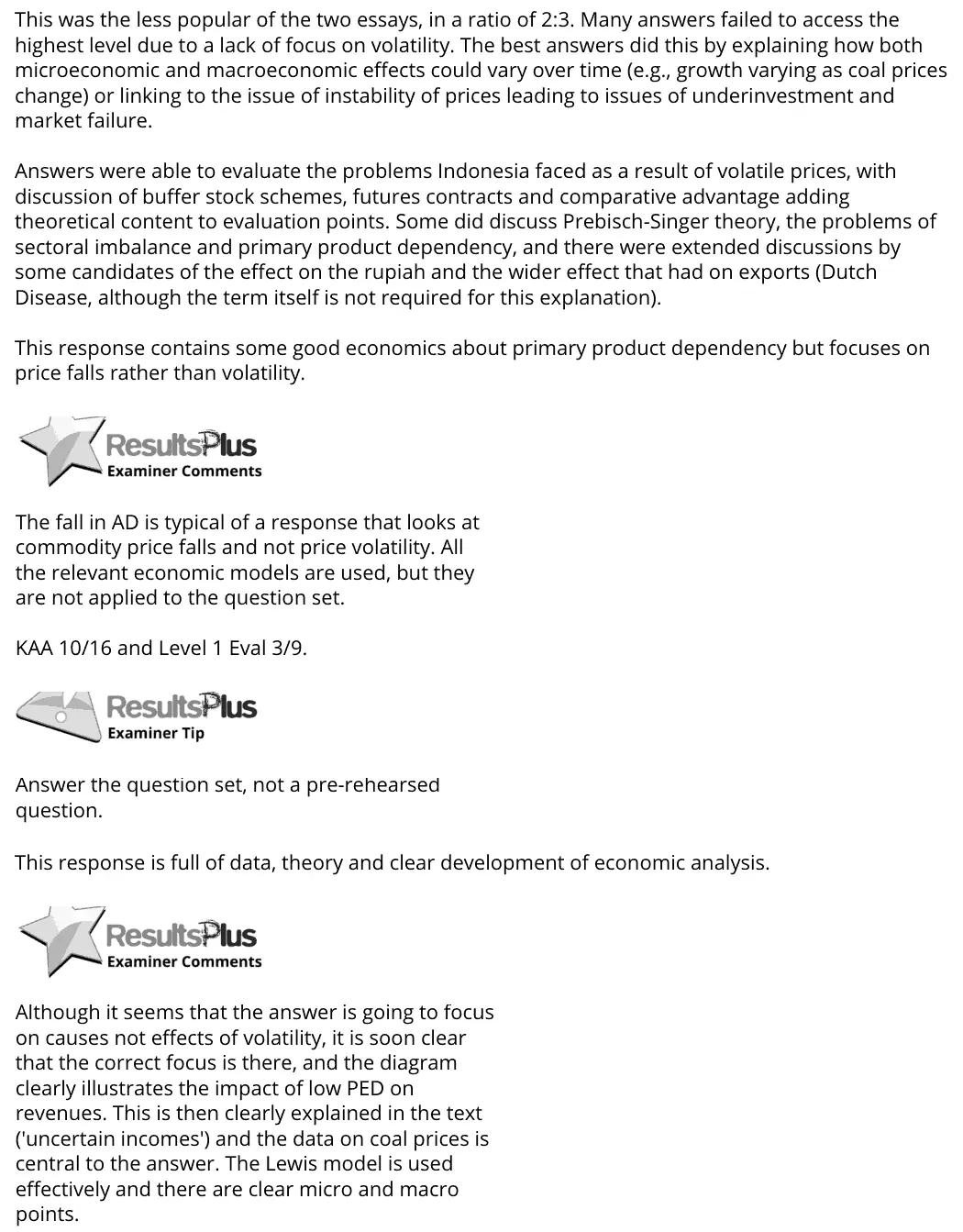
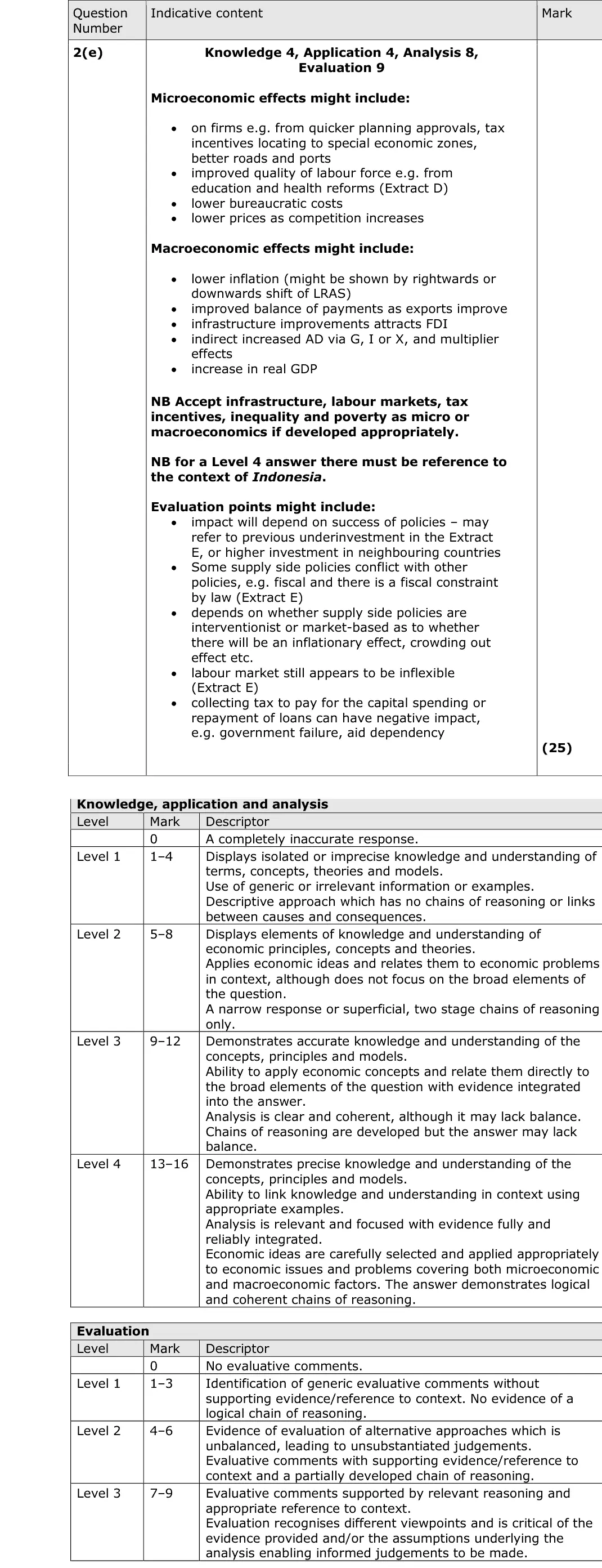
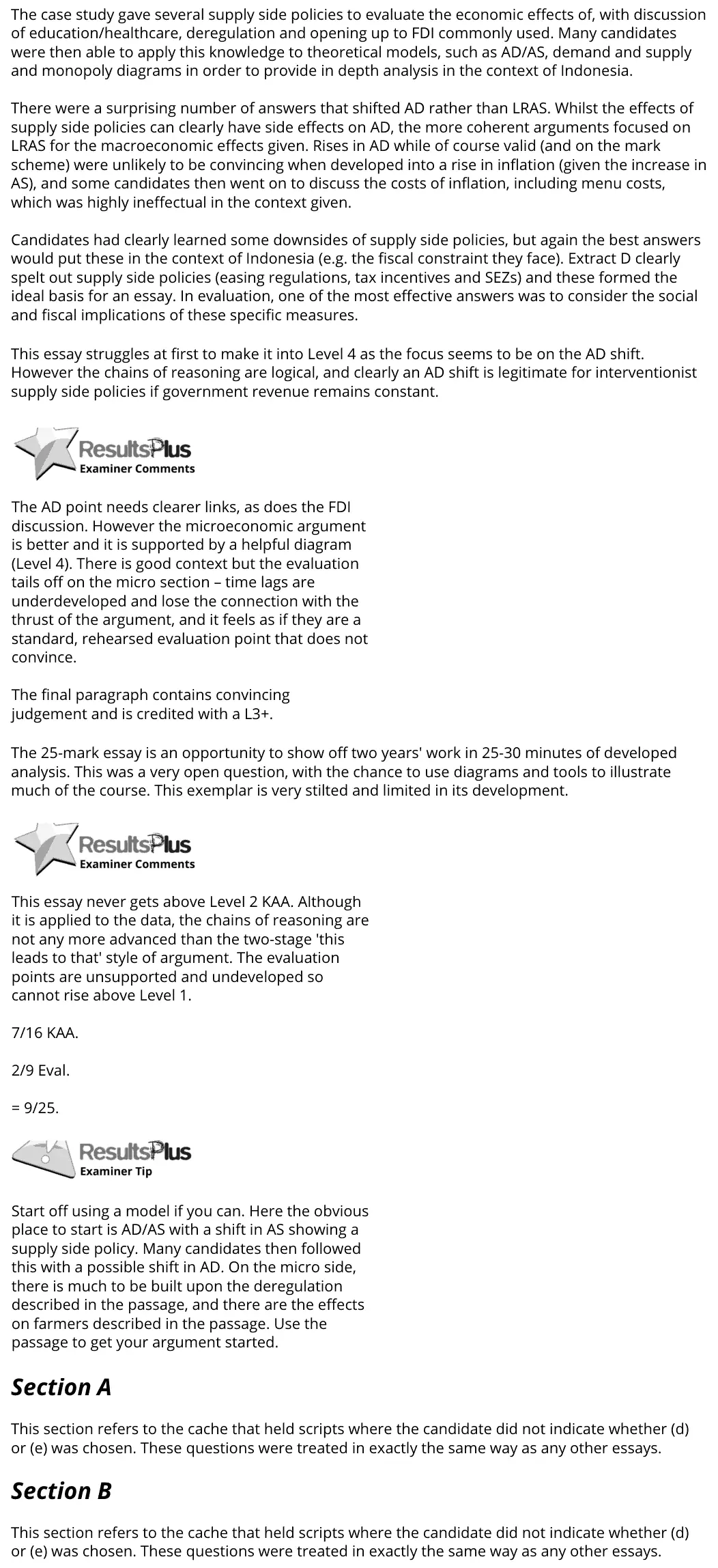
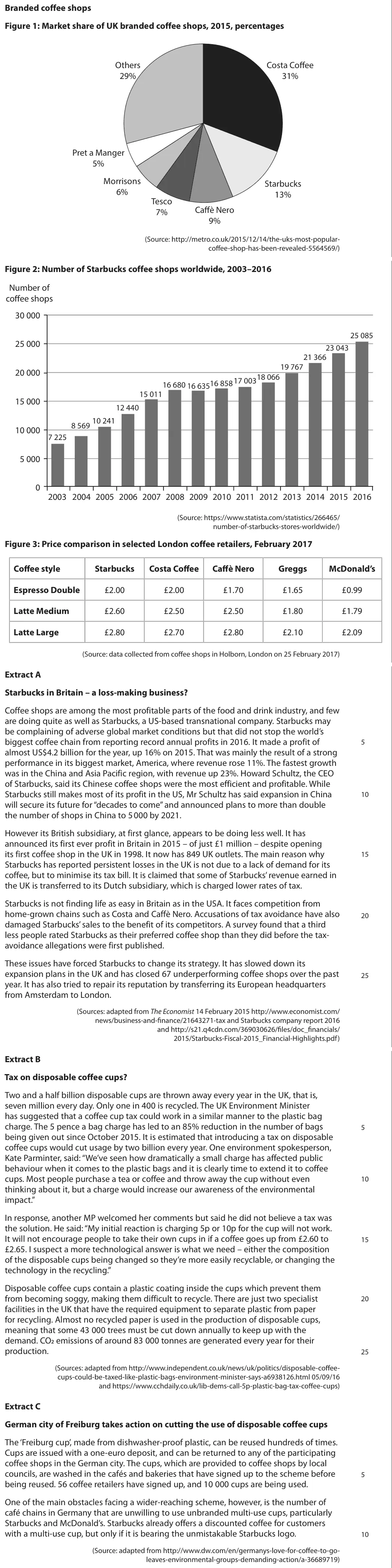
Many candidates scored well on this question (mean 3.8/5), with the analysis mark being the main discriminator. For the fifth mark, candidates needed to go beyond listing characteristics of the market structure identified and instead develop the explanation, for example, by explaining interdependence or identifying price rigidity. If the candidate chose monopoly they could earn the 5 marks but they tended to be less able to talk about the process linking the market structure to the behaviour or the firms, or any other analytical process. Over 67% of answers scored 4 or 5 out of 5, meaning that most candidates were confident in the area of market structures. A significant number of candidates took the approach of describing a legally-recognised monopoly, either the 25% CMA figure or the more relaxed EU definition (40% of the market is unlikely to be a dominant position, Article 102 of TFEU – both definitions were equally acceptable), although the legal monopoly had to be clearly linked to the concept of market power or dominance rather than pure monopoly power to gain full marks. Candidates using the oligopoly approach found accessing full marks very straightforward when accompanied by a calculation of concentration ratios and a brief development of the explanation of the market structure. Oligopoly was the most common answer – and the evidence fitted well with this approach. This is a clear 5/5. Calculate the concentration ratio and if five or fewer firms have 50% of the market then you know it is oligopoly. Some answers chose the market structure of monopolistic competition, and indeed whole centres seemed to think this market structure was appropriate, although few economists would argue that this ‘best describes’ the market structure even if a few elements are not inconsistent. This approach was not awarded, unless, as in the example shown, the answer moved on at some point to more secure reasoning or used some data in the correct context (1/5). Use a concentration ratio calculation to make up your mind about which market structure you are analysing.
Notes from the mark scheme and report
- oligopoly (or legal monopoly/duopoly only if market power is shown)
- a concentration ratio calculation (e.g. 4-firm 60%) gives both application marks
- the 5th mark needs development such as interdependence or price rigidity, not a list of characteristics
- monopolistic competition was not awarded
Quantitative skills: QS 9 (interpret, apply and analyse information in written, graphical tabular and numerical forms)