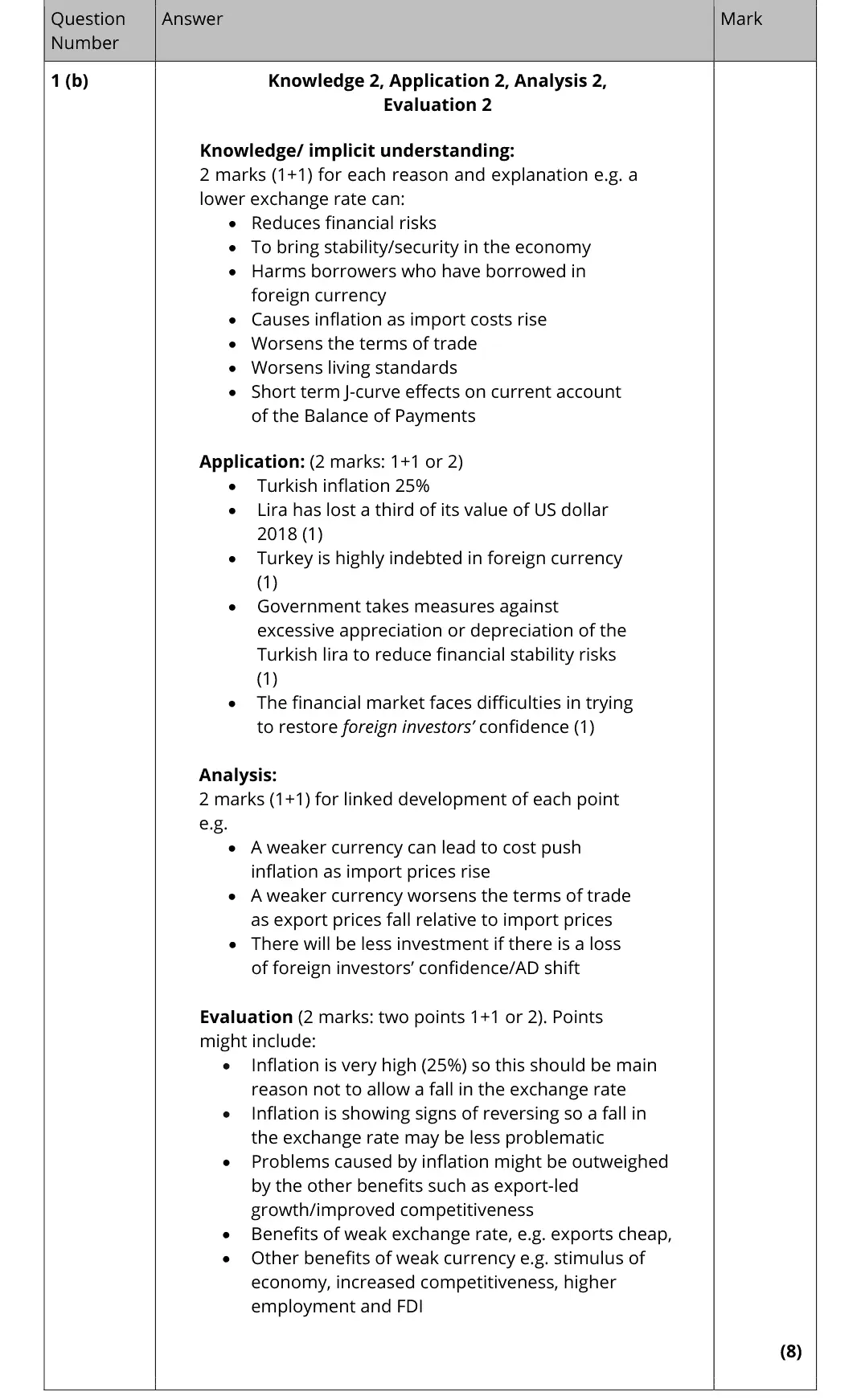
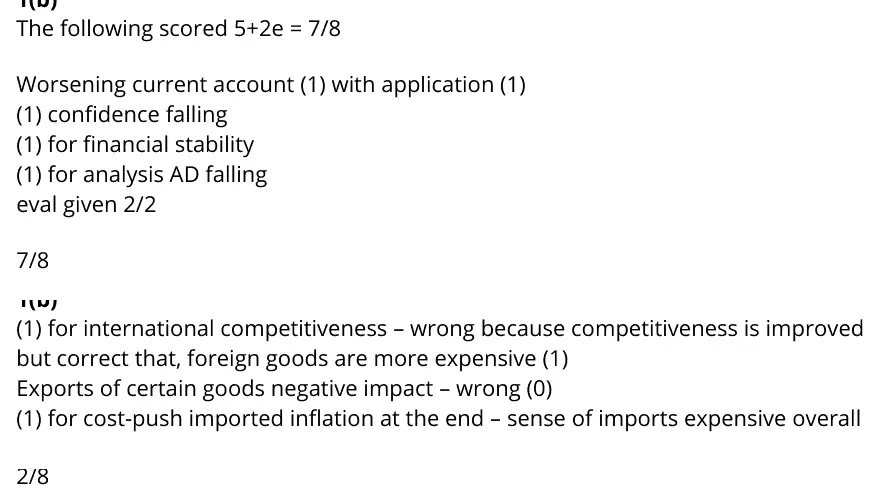
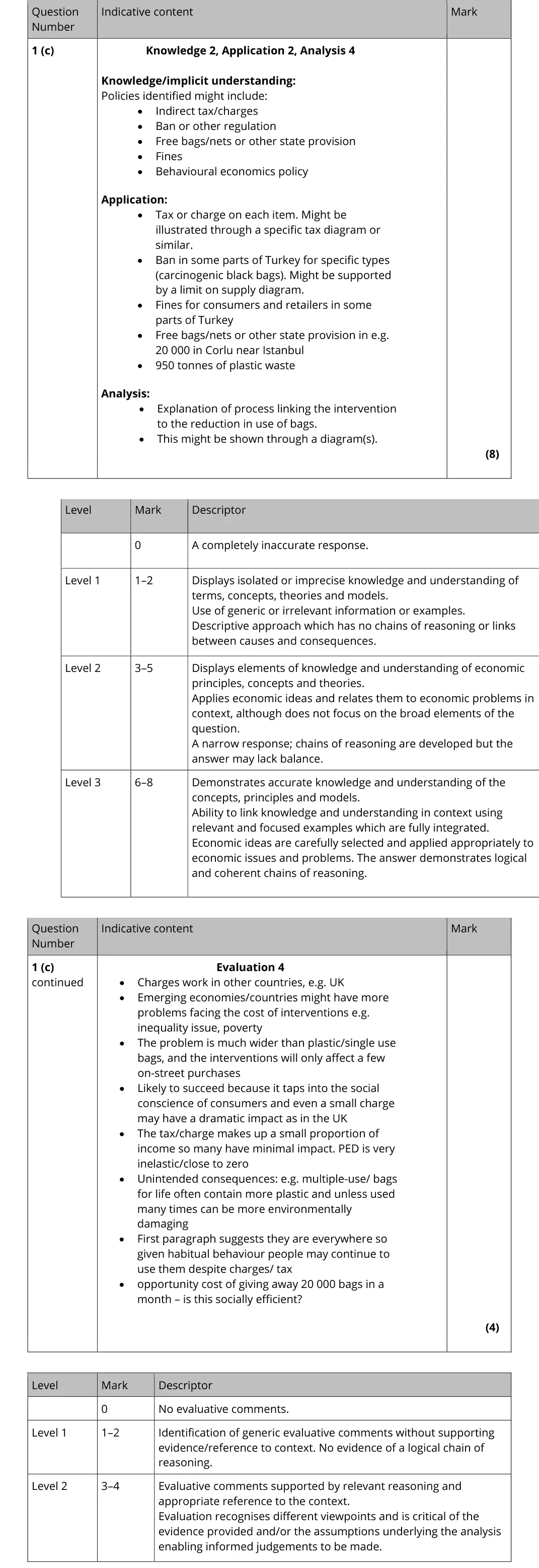
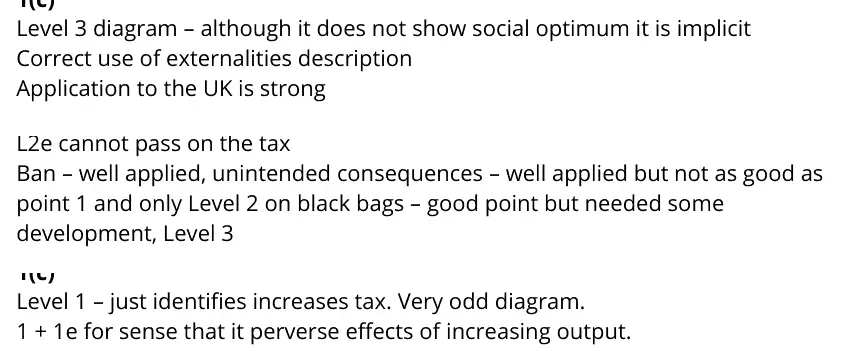
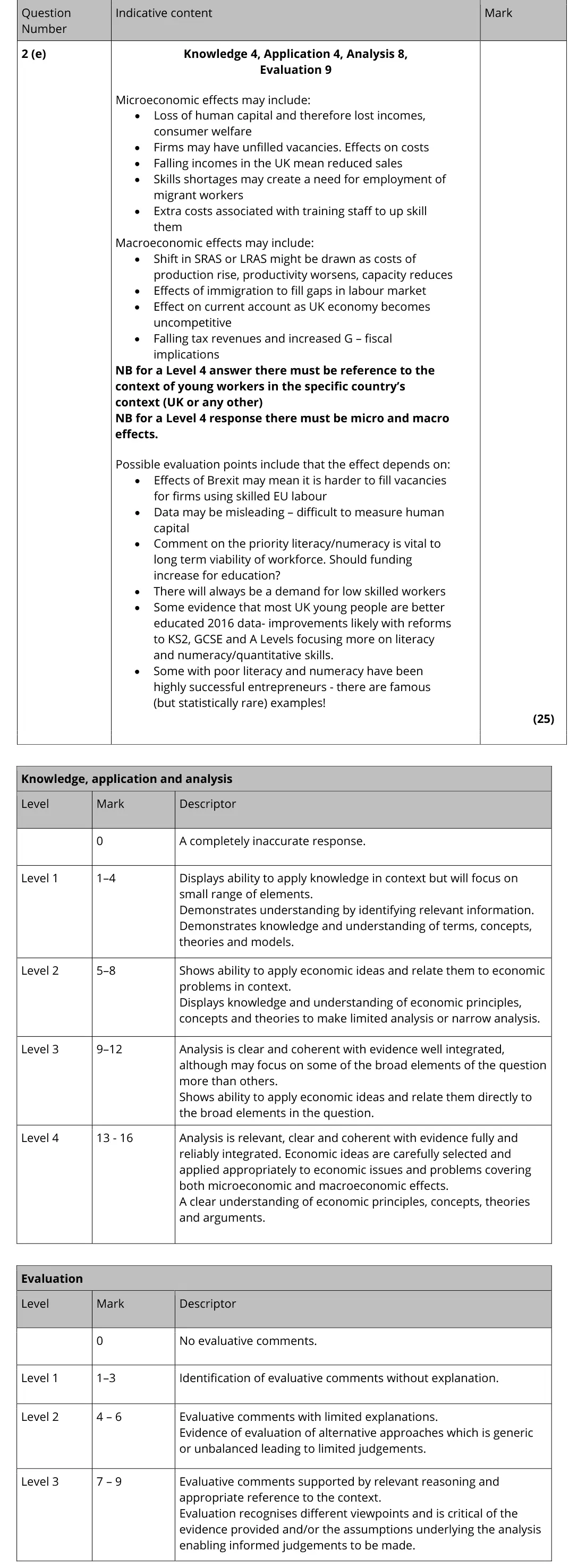
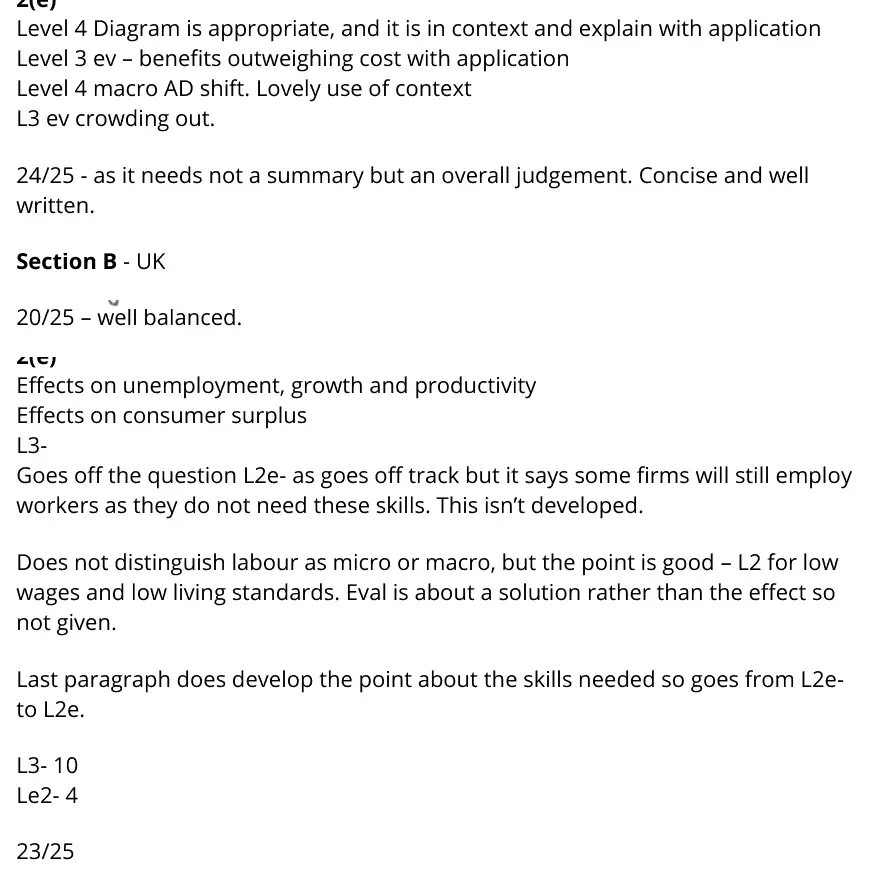
Data and extracts for question 1
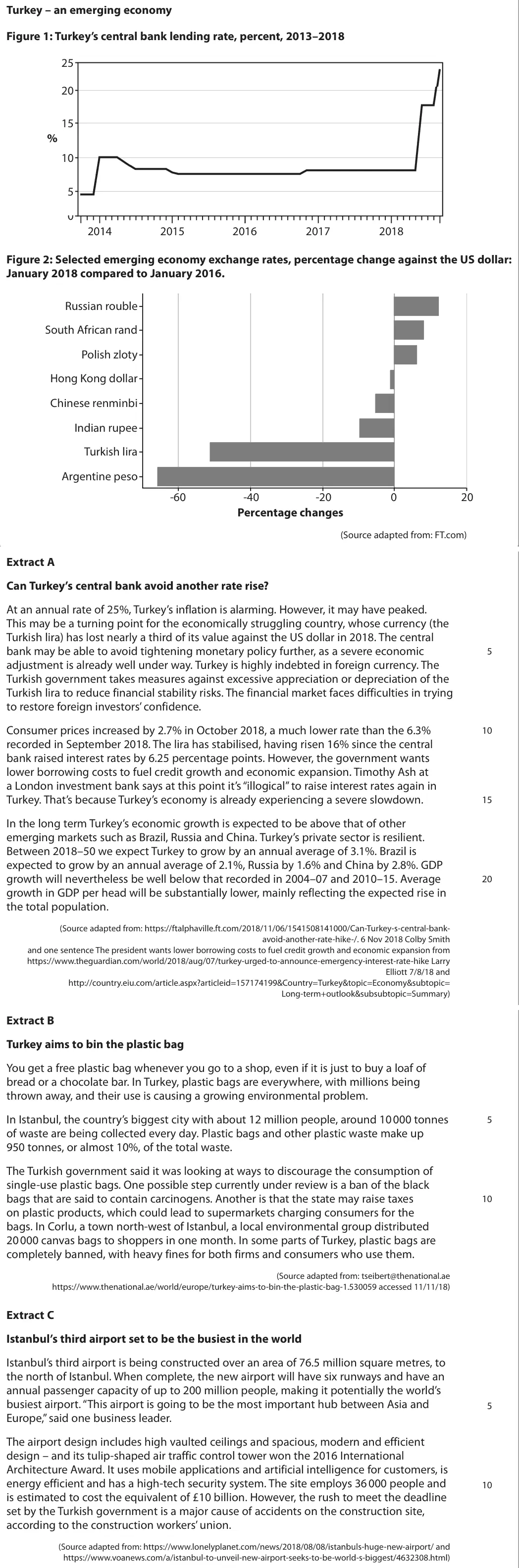

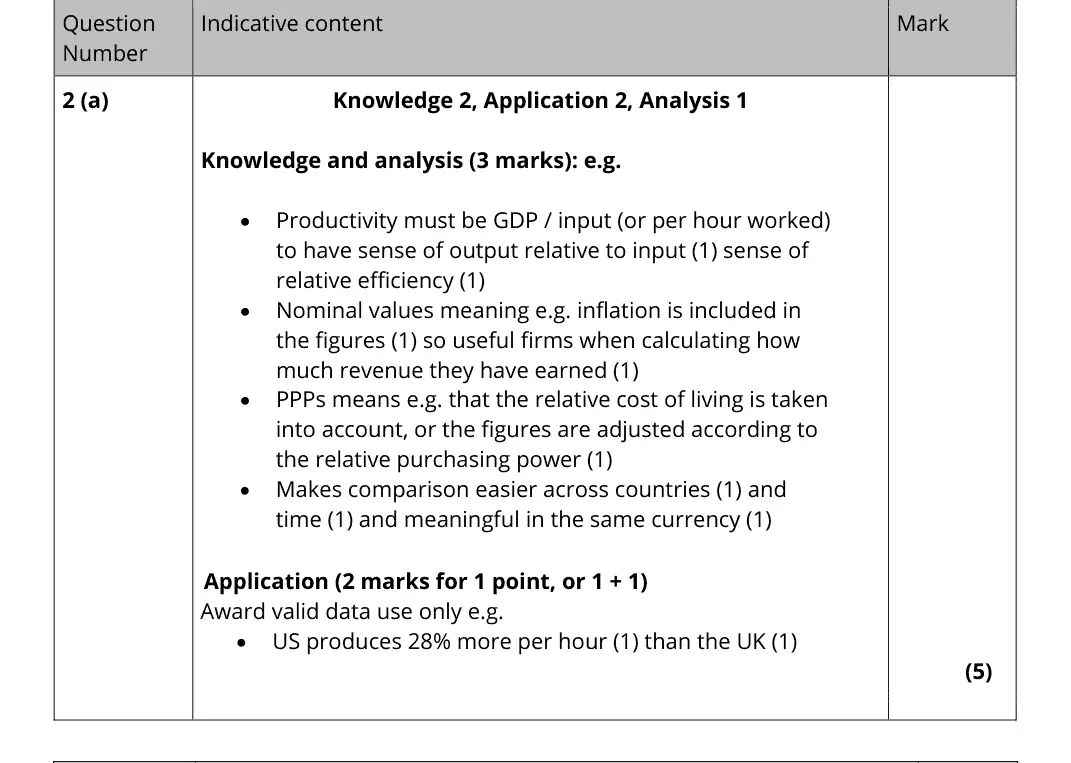
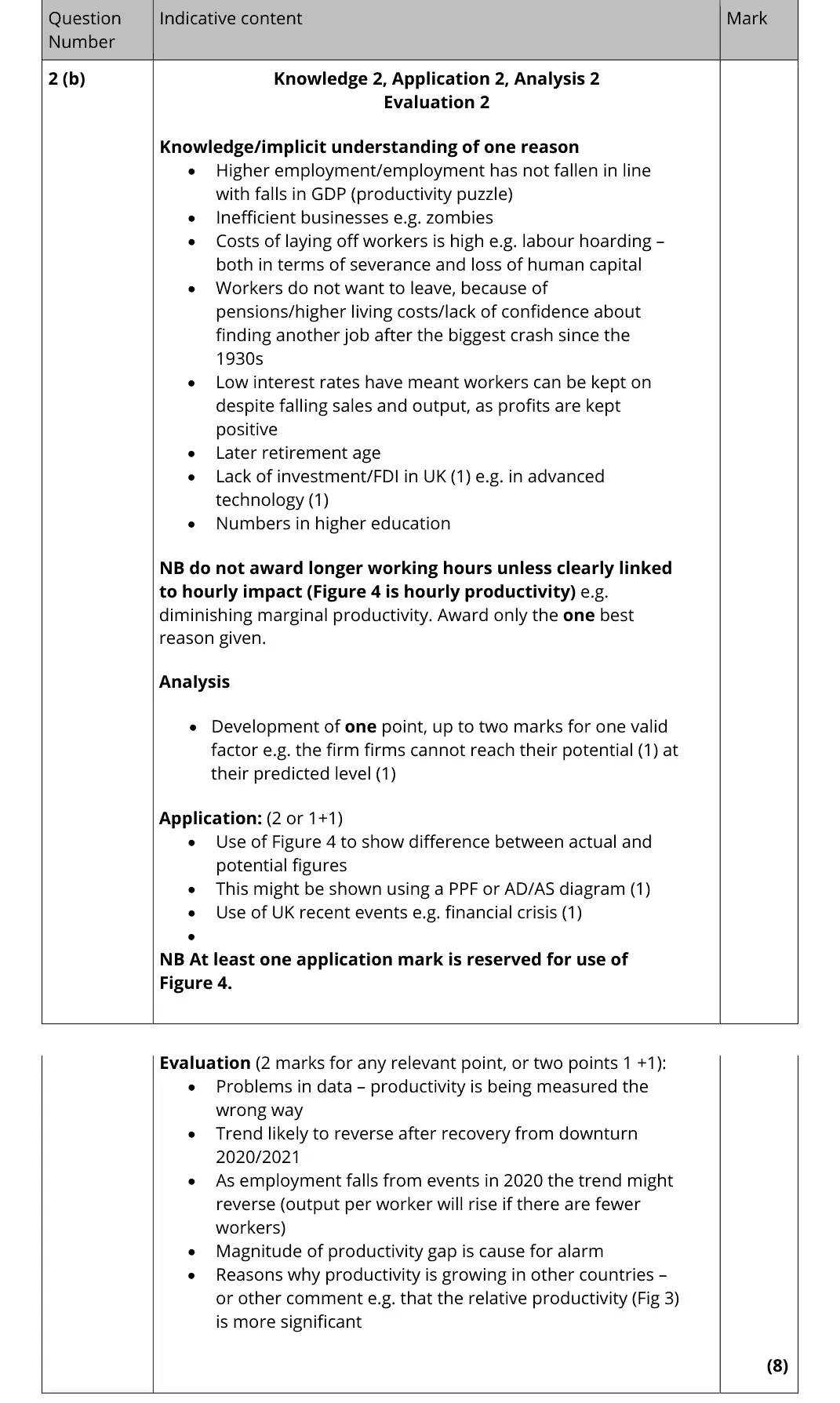
Mark scheme
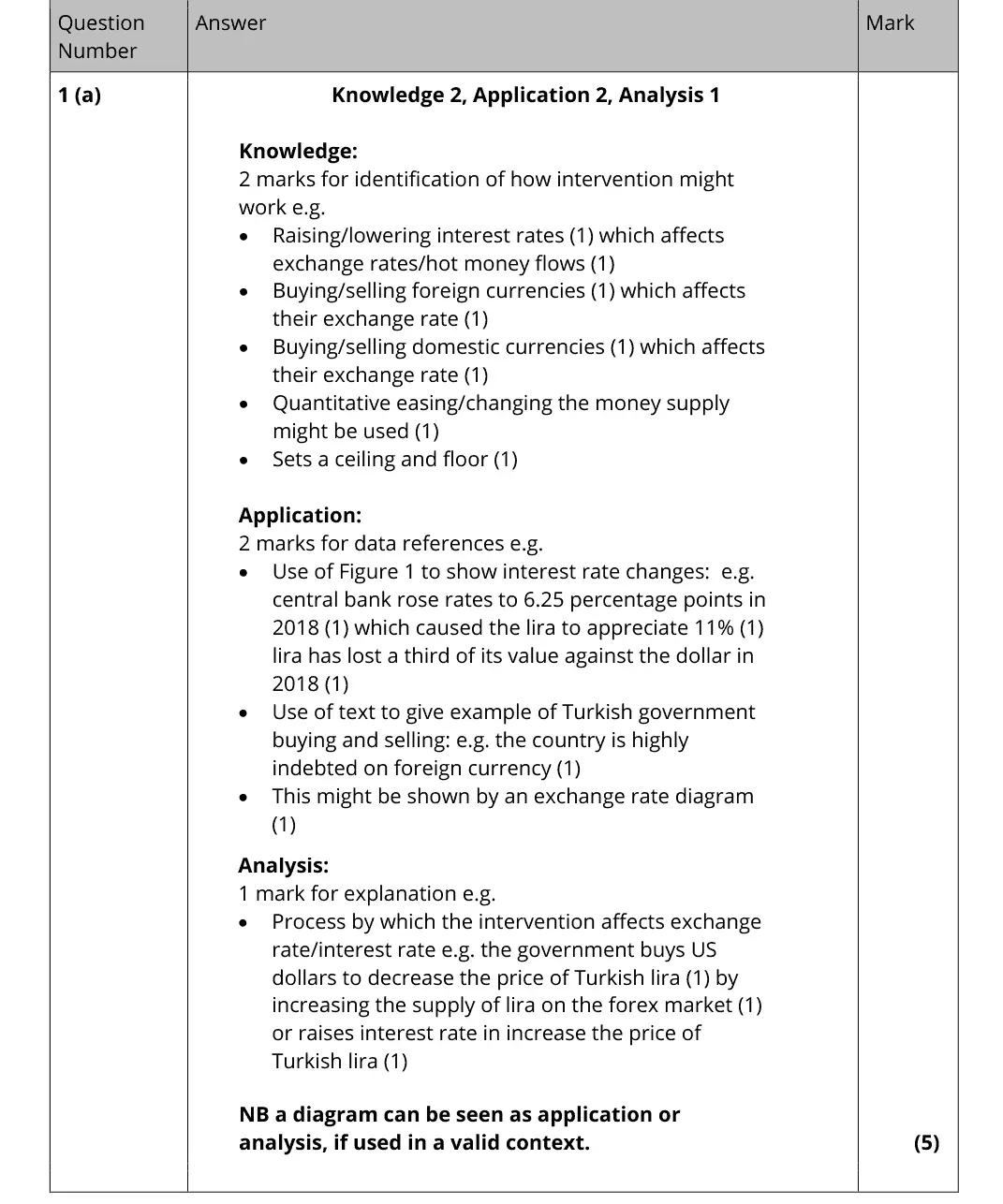
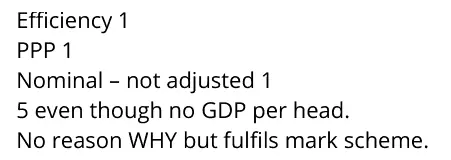
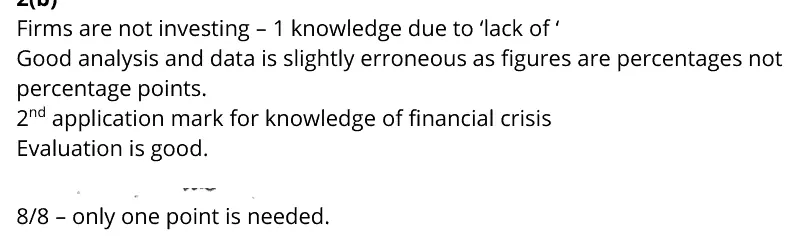
Examiner's comment
With this question there was a major problem with confusing interest rate policy as exchange rate policy. Some gave purely descriptive answers, and some entirely domestic rather than external. There was some confusion about savings and increased saving as an increase in demand for currency. A typical mistake was to say that the central bank buys lira and this reduces the supply: This scores (2) marks for the reference to buying of lira (1) to raise the price (1). The above scores (1) mark for the sense of buying and selling currency. The rest is based on domestic monetary policy.
Notes from the mark scheme and report
- intervention means buying/selling lira or foreign currency on the forex market, or changing interest rates to shift hot money flows
- buying lira raises demand for it (not 'reduces supply')
- many confused domestic interest rate policy with exchange rate policy
- use the 6.25 percentage point rise and the 16% recovery of the lira
Quantitative skills: QS 9 (interpret, apply and analyse information in written, graphical tabular and numerical forms)