June 2025: Paper 3

100 marks · 10 question parts · Paper, mark scheme and report on Pearson's site

Question by question

QTopicMarksAOType
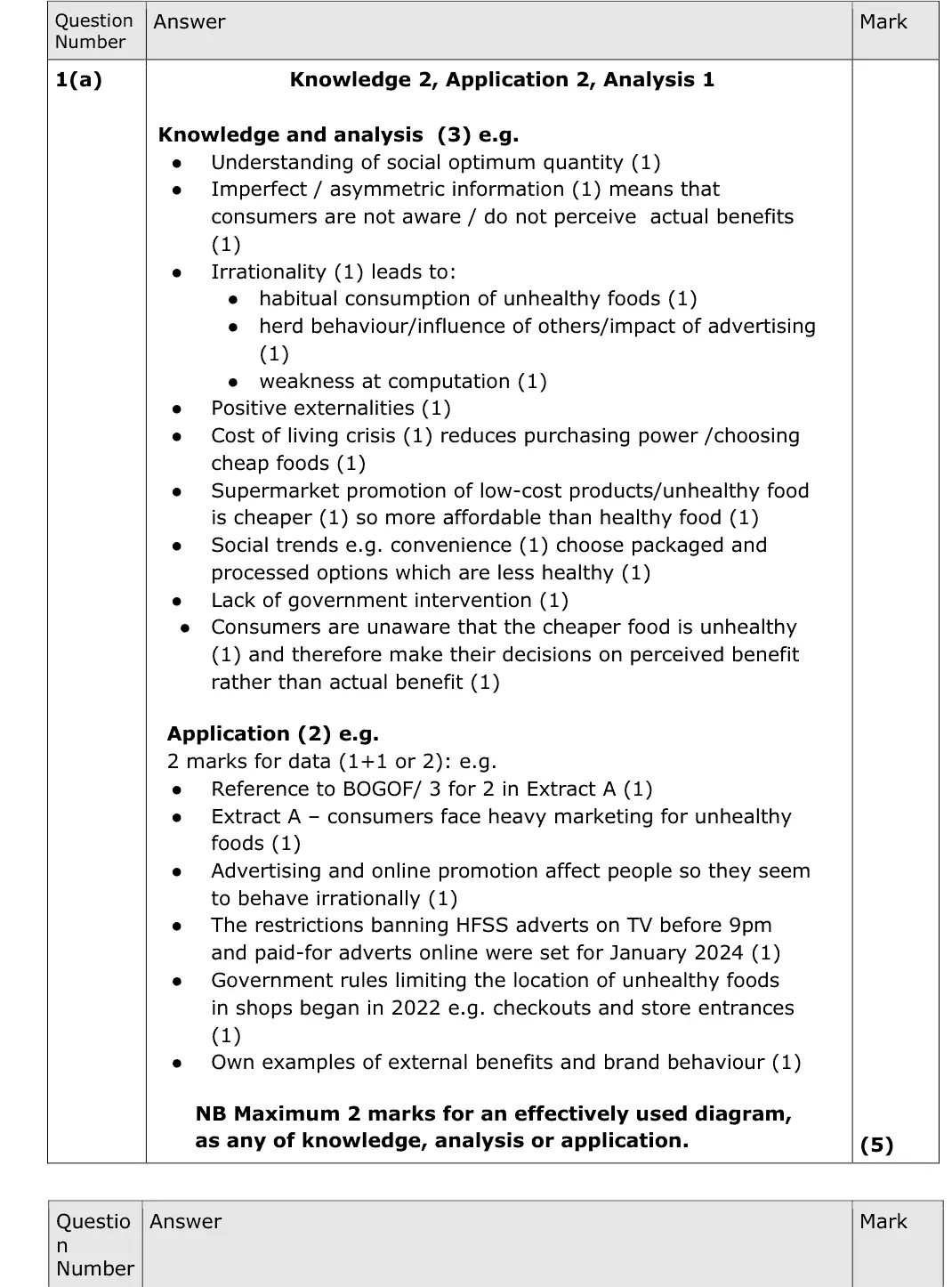
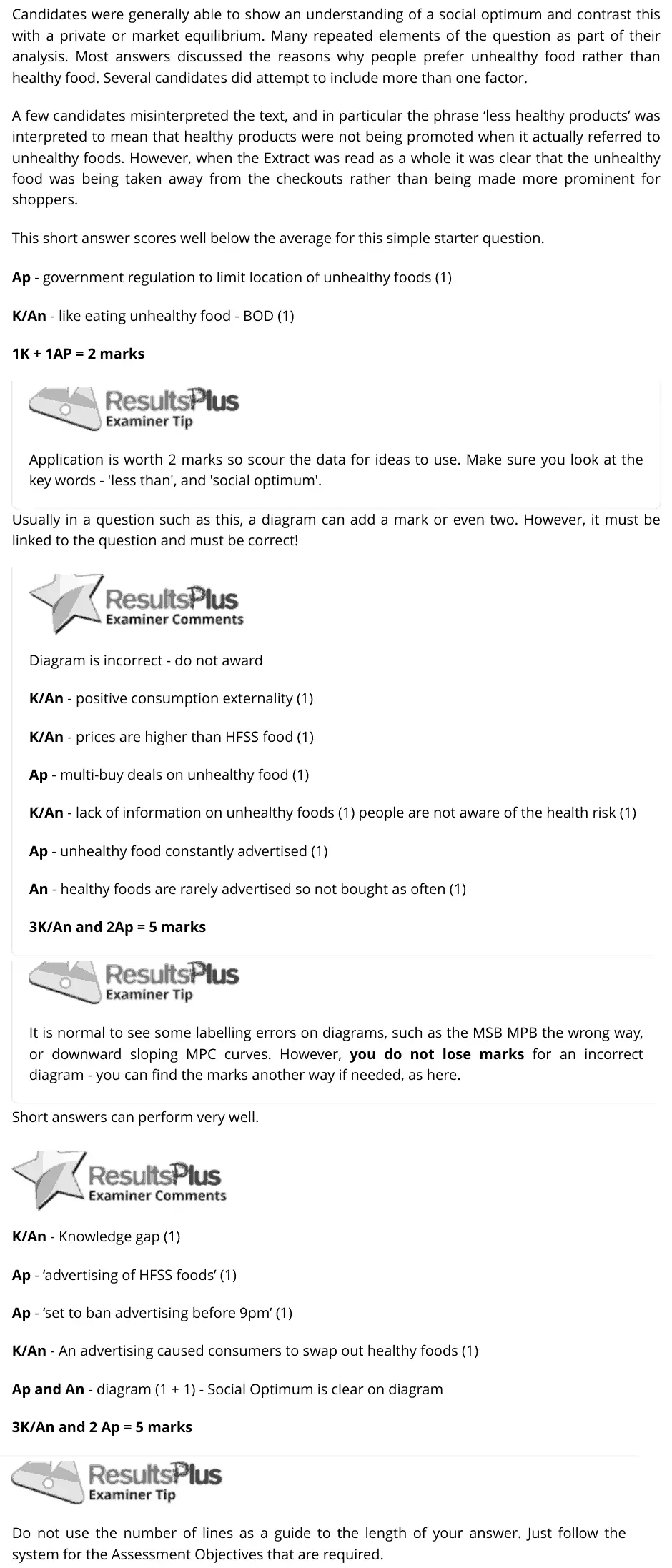
1(a) Market failure and externalities, Public goods and information gaps 5AO1=2,AO2=2,AO3=1Short answer
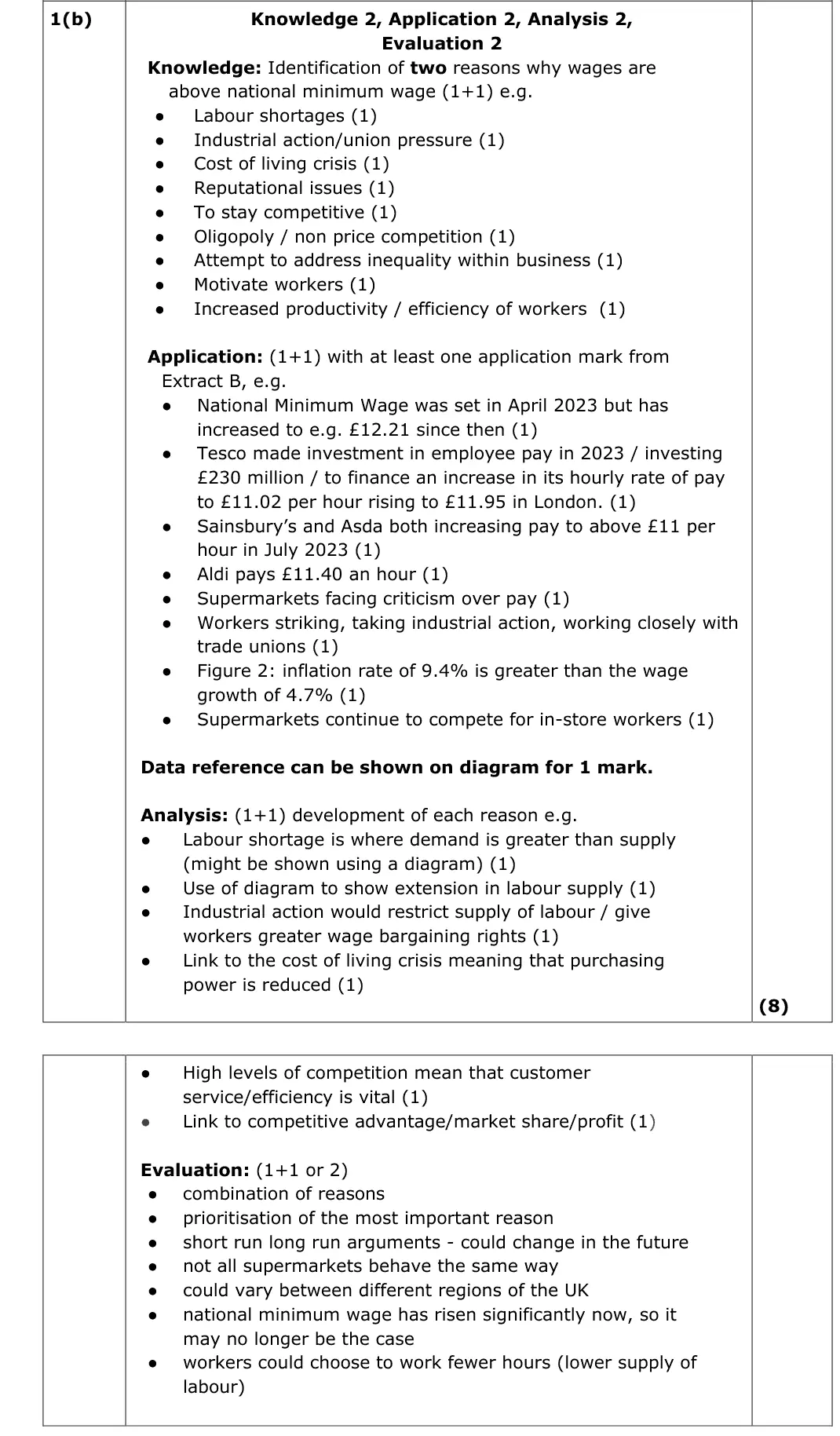
1(b) The labour market 8AO1=2,AO2=2,AO3=2,AO4=2Extended response
1(c) Oligopoly 12AO1=2,AO2=2,AO3=4,AO4=4Extended response
1(d) Inflation, Revenues, costs and profits 25AO1=4,AO2=4,AO3=8,AO4=9Essay
1(e) Trading blocs, the WTO and protectionism, Revenues, costs and profits 25AO1=4,AO2=4,AO3=8,AO4=9Essay
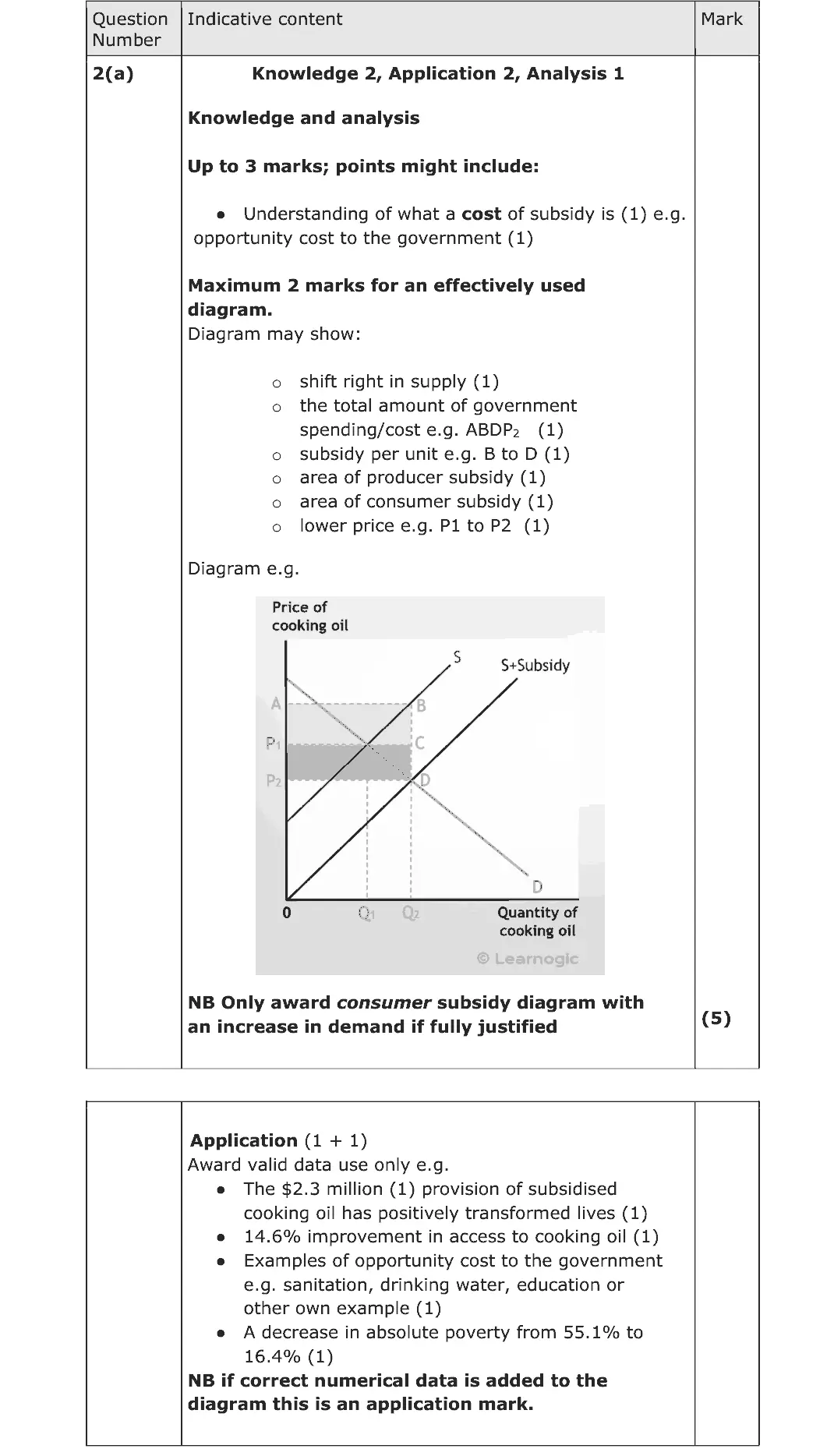
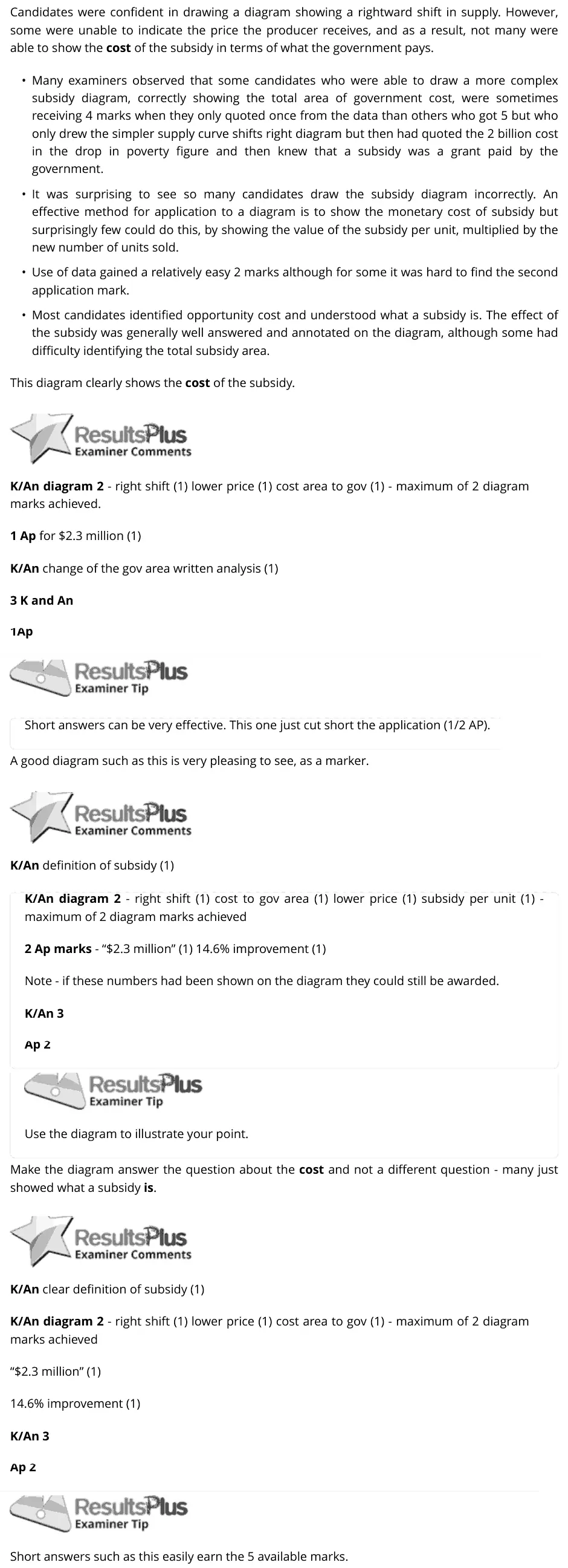
2(a) Indirect taxes and subsidies 5AO1=2,AO2=2,AO3=1Diagram
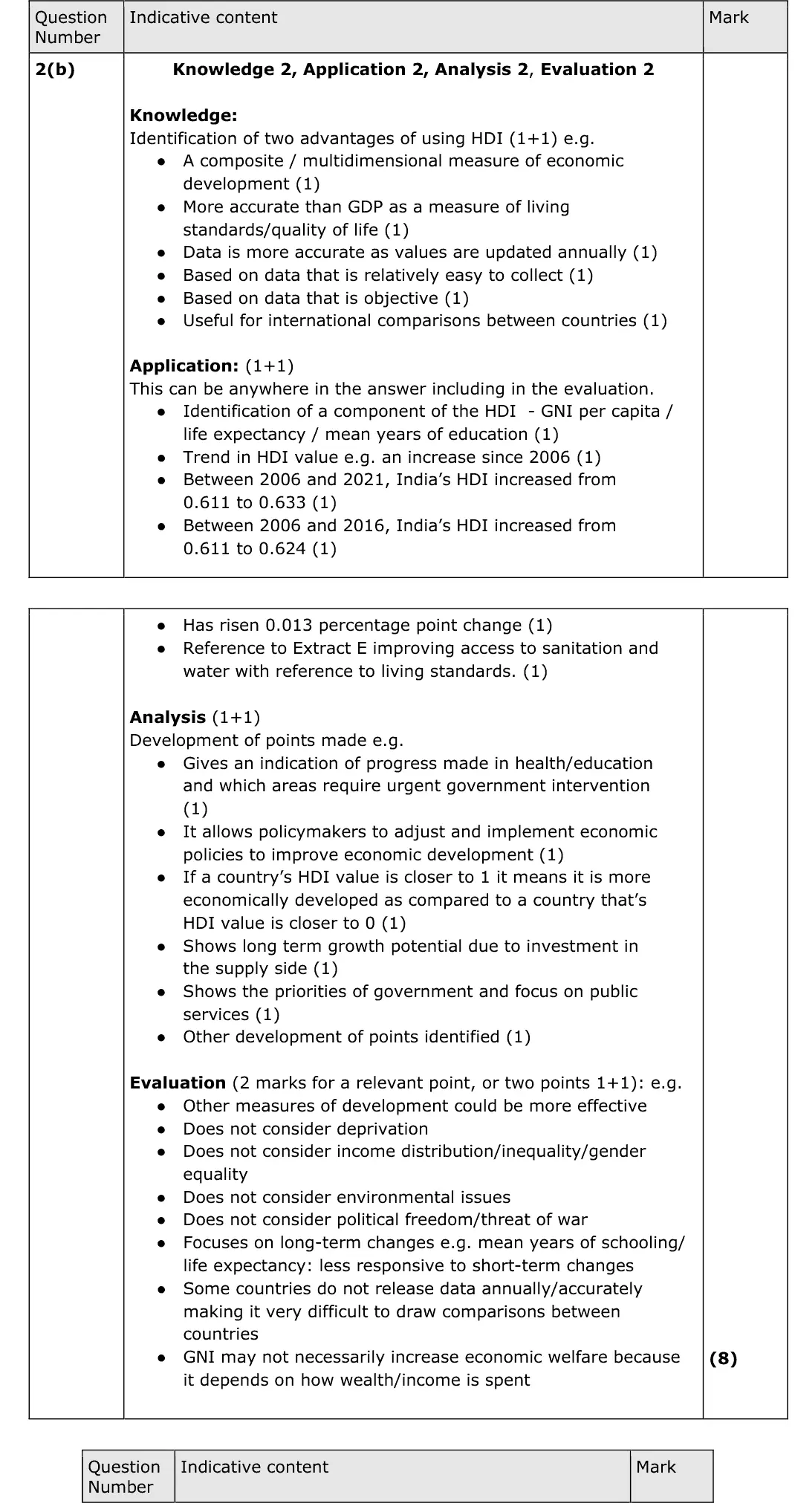
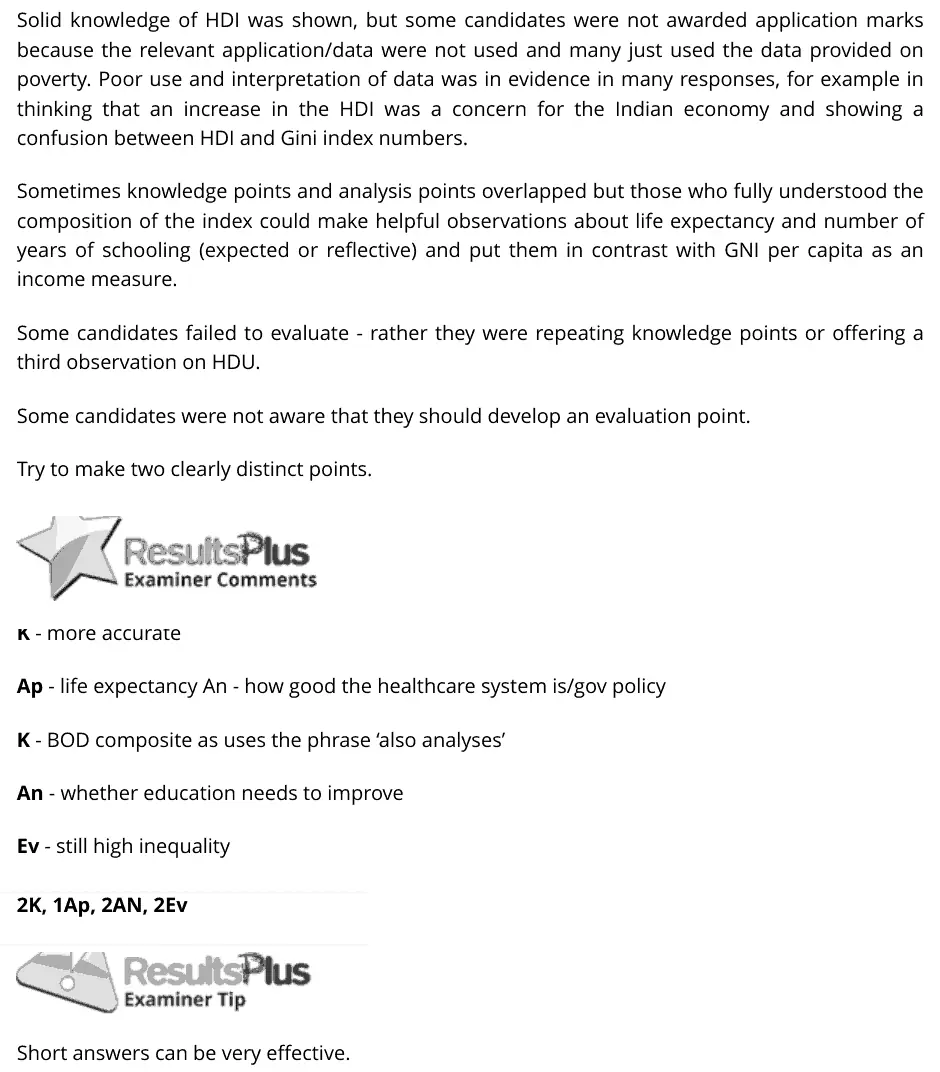
2(b) Emerging and developing economies 8AO1=2,AO2=2,AO3=2,AO4=2Extended response
2(c) Emerging and developing economies 12AO1=2,AO2=2,AO3=4,AO4=4Extended response
2(d) Poverty and inequality, The labour market 25AO1=4,AO2=4,AO3=8,AO4=9Essay
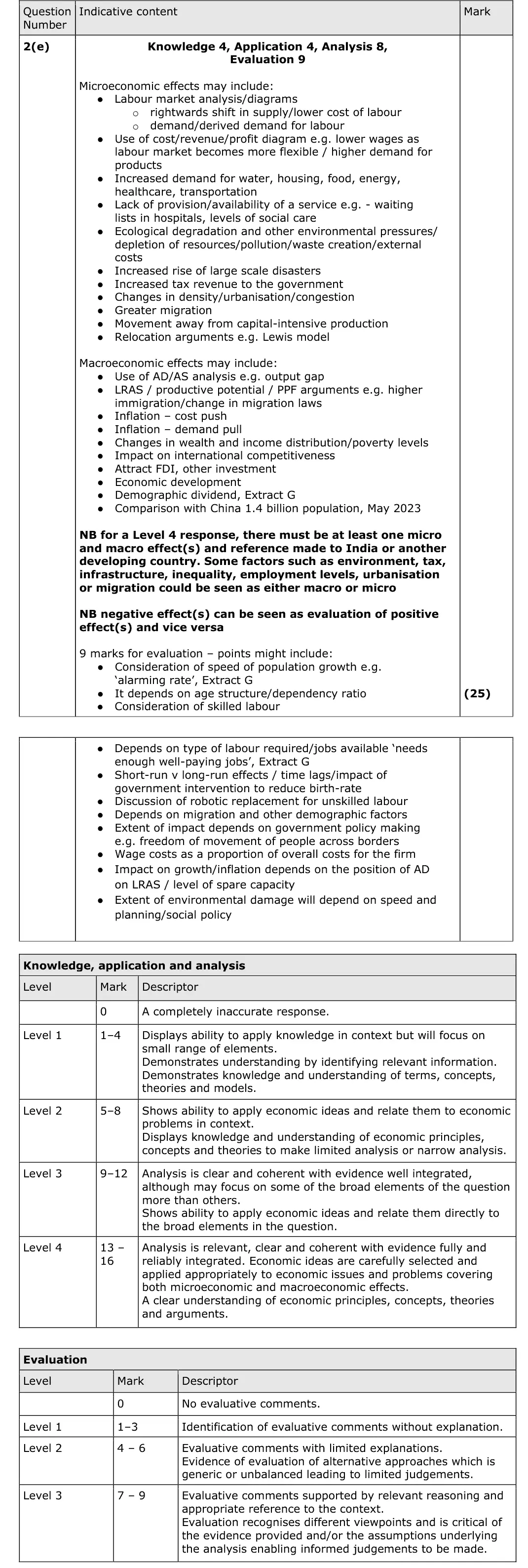
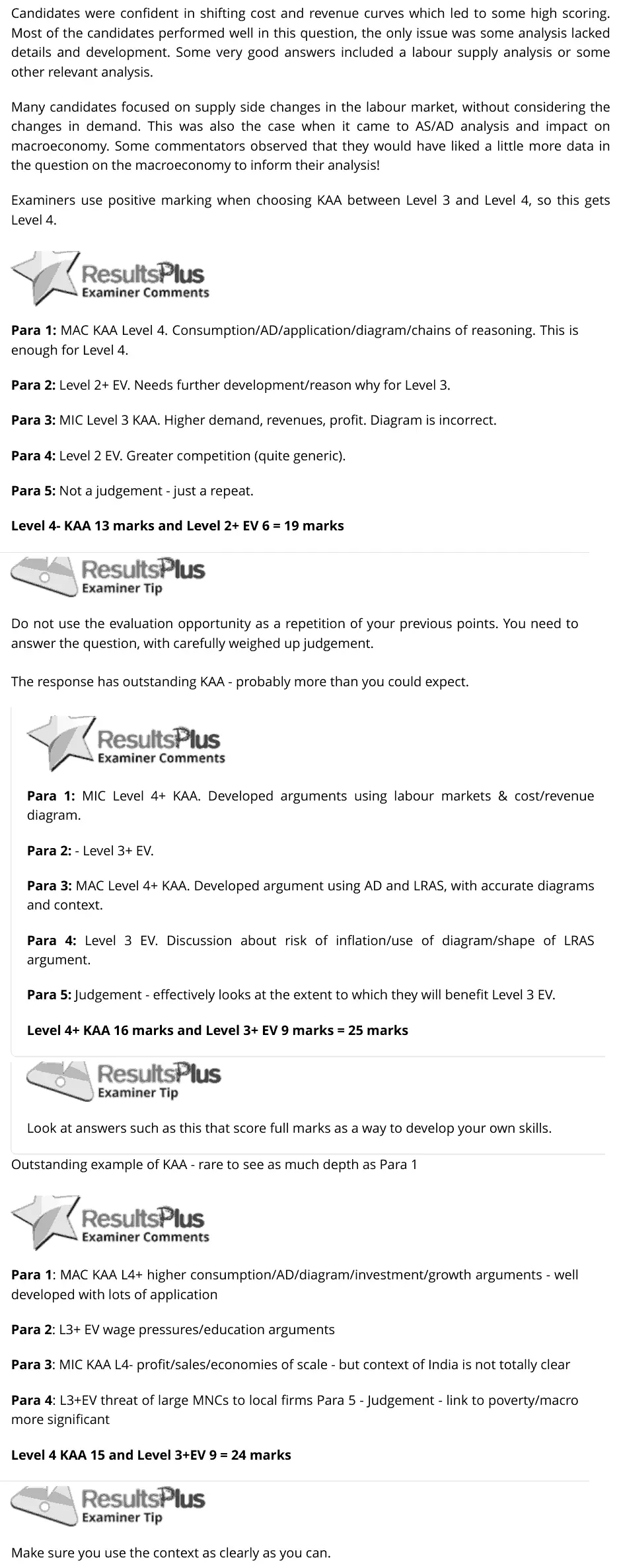
2(e) Emerging and developing economies, The labour market 25AO1=4,AO2=4,AO3=8,AO4=9Essay

The questions

1(a)1(b)1(c)1(d)1(e)2(a)2(b)2(c)2(d)2(e)
June 2025 · Paper 3 · Q1(a) 5 marks AO1=2, AO2=2, AO3=1 Short answer externalitiespublic goods and information gaps
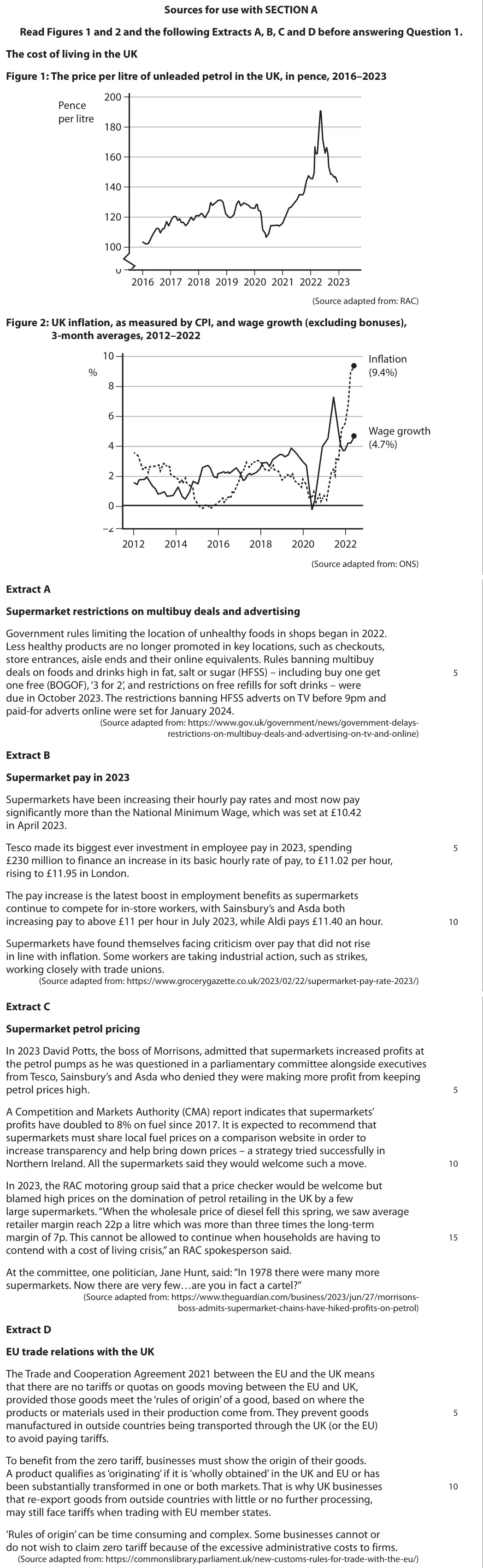
Data and extracts for question 1Sources for use with SECTION A Read Figures 1 and 2 and the following Extracts A, B, C and D before answering Question 1. The cost of living in the UK Figure 1: The price per litre of unleaded petrol in the UK, in pence, 2016–2023 200 Pence per litre 180 160 140 120 100 0 2016 2017 2018 2019 2020 2021 2022 2023 (Source adapted from: RAC) Figure 2: UK inflation, as measured by CPI, and wage growth (excluding bonuses), 3-month averages, 2012–2022 10 Inflation % (9.4%) 8 6 Wage growth (4.7%) 4 2 0 –2 2012 2014 2016 2018 2020 2022 (Source adapted from: ONS) Extract A Supermarket restrictions on multibuy deals and advertising Government rules limiting the location of unhealthy foods in shops began in 2022. Less healthy products are no longer promoted in key locations, such as checkouts, store entrances, aisle ends and their online equivalents. Rules banning multibuy deals on foods and drinks high in fat, salt or sugar (HFSS) – including buy one get 5 one free (BOGOF), ‘3 for 2’, and restrictions on free refills for soft drinks – were due in October 2023. The restrictions banning HFSS adverts on TV before 9pm and paid-for adverts online were set for January 2024. (Source adapted from: https://www.gov.uk/government/news/government-delays- restrictions-on-multibuy-deals-and-advertising-on-tv-and-online) Extract B Supermarket pay in 2023 Supermarkets have been increasing their hourly pay rates and most now pay significantly more than the National Minimum Wage, which was set at £10.42 in April 2023. Tesco made its biggest ever investment in employee pay in 2023, spending 5 £230 million to finance an increase in its basic hourly rate of pay, to £11.02 per hour, rising to £11.95 in London. The pay increase is the latest boost in employment benefits as supermarkets continue to compete for in-store workers, with Sainsbury’s and Asda both increasing pay to above £11 per hour in July 2023, while Aldi pays £11.40 an hour. 10 Supermarkets have found themselves facing criticism over pay that did not rise in line with inflation. Some workers are taking industrial action, such as strikes, working closely with trade unions. (Source adapted from: https://www.grocerygazette.co.uk/2023/02/22/supermarket-pay-rate-2023/) Extract C Supermarket petrol pricing In 2023 David Potts, the boss of Morrisons, admitted that supermarkets increased profits at the petrol pumps as he was questioned in a parliamentary committee alongside executives from Tesco, Sainsbury’s and Asda who denied they were making more profit from keeping petrol prices high. 5 A Competition and Markets Authority (CMA) report indicates that supermarkets’ profits have doubled to 8% on fuel since 2017. It is expected to recommend that supermarkets must share local fuel prices on a comparison website in order to increase transparency and help bring down prices – a strategy tried successfully in Northern Ireland. All the supermarkets said they would welcome such a move. 10 In 2023, the RAC motoring group said that a price checker would be welcome but blamed high prices on the domination of petrol retailing in the UK by a few large supermarkets. “When the wholesale price of diesel fell this spring, we saw average retailer margin reach 22p a litre which was more than three times the long-term margin of 7p. This cannot be allowed to continue when households are having to 15 contend with a cost of living crisis,” an RAC spokesperson said. At the committee, one politician, Jane Hunt, said: “In 1978 there were many more supermarkets. Now there are very few…are you in fact a cartel?” (Source adapted from: https://www.theguardian.com/business/2023/jun/27/morrisons- boss-admits-supermarket-chains-have-hiked-profits-on-petrol) Extract D EU trade relations with the UK The Trade and Cooperation Agreement 2021 between the EU and the UK means that there are no tariffs or quotas on goods moving between the EU and UK, provided those goods meet the ‘rules of origin’ of a good, based on where the products or materials used in their production come from. They prevent goods 5 manufactured in outside countries being transported through the UK (or the EU) to avoid paying tariffs. To benefit from the zero tariff, businesses must show the origin of their goods. A product qualifies as ‘originating’ if it is ‘wholly obtained’ in the UK and EU or has been substantially transformed in one or both markets. That is why UK businesses 10 that re-export goods from outside countries with little or no further processing, may still face tariffs when trading with EU member states. ‘Rules of origin’ can be time consuming and complex. Some businesses cannot or do not wish to claim zero tariff because of the excessive administrative costs to firms. (Source adapted from: https://commonslibrary.parliament.uk/new-customs-rules-for-trade-with-the-eu/)
(a) Explain one reason why consumers buy less than the social optimum quantity of healthy food. (5)
June 2025 · Paper 3 · Q1(b) 8 marks AO1=2, AO2=2, AO3=2, AO4=2 8-mark response labour market
Data and extracts for question 1Sources for use with SECTION A Read Figures 1 and 2 and the following Extracts A, B, C and D before answering Question 1. The cost of living in the UK Figure 1: The price per litre of unleaded petrol in the UK, in pence, 2016–2023 200 Pence per litre 180 160 140 120 100 0 2016 2017 2018 2019 2020 2021 2022 2023 (Source adapted from: RAC) Figure 2: UK inflation, as measured by CPI, and wage growth (excluding bonuses), 3-month averages, 2012–2022 10 Inflation % (9.4%) 8 6 Wage growth (4.7%) 4 2 0 –2 2012 2014 2016 2018 2020 2022 (Source adapted from: ONS) Extract A Supermarket restrictions on multibuy deals and advertising Government rules limiting the location of unhealthy foods in shops began in 2022. Less healthy products are no longer promoted in key locations, such as checkouts, store entrances, aisle ends and their online equivalents. Rules banning multibuy deals on foods and drinks high in fat, salt or sugar (HFSS) – including buy one get 5 one free (BOGOF), ‘3 for 2’, and restrictions on free refills for soft drinks – were due in October 2023. The restrictions banning HFSS adverts on TV before 9pm and paid-for adverts online were set for January 2024. (Source adapted from: https://www.gov.uk/government/news/government-delays- restrictions-on-multibuy-deals-and-advertising-on-tv-and-online) Extract B Supermarket pay in 2023 Supermarkets have been increasing their hourly pay rates and most now pay significantly more than the National Minimum Wage, which was set at £10.42 in April 2023. Tesco made its biggest ever investment in employee pay in 2023, spending 5 £230 million to finance an increase in its basic hourly rate of pay, to £11.02 per hour, rising to £11.95 in London. The pay increase is the latest boost in employment benefits as supermarkets continue to compete for in-store workers, with Sainsbury’s and Asda both increasing pay to above £11 per hour in July 2023, while Aldi pays £11.40 an hour. 10 Supermarkets have found themselves facing criticism over pay that did not rise in line with inflation. Some workers are taking industrial action, such as strikes, working closely with trade unions. (Source adapted from: https://www.grocerygazette.co.uk/2023/02/22/supermarket-pay-rate-2023/) Extract C Supermarket petrol pricing In 2023 David Potts, the boss of Morrisons, admitted that supermarkets increased profits at the petrol pumps as he was questioned in a parliamentary committee alongside executives from Tesco, Sainsbury’s and Asda who denied they were making more profit from keeping petrol prices high. 5 A Competition and Markets Authority (CMA) report indicates that supermarkets’ profits have doubled to 8% on fuel since 2017. It is expected to recommend that supermarkets must share local fuel prices on a comparison website in order to increase transparency and help bring down prices – a strategy tried successfully in Northern Ireland. All the supermarkets said they would welcome such a move. 10 In 2023, the RAC motoring group said that a price checker would be welcome but blamed high prices on the domination of petrol retailing in the UK by a few large supermarkets. “When the wholesale price of diesel fell this spring, we saw average retailer margin reach 22p a litre which was more than three times the long-term margin of 7p. This cannot be allowed to continue when households are having to 15 contend with a cost of living crisis,” an RAC spokesperson said. At the committee, one politician, Jane Hunt, said: “In 1978 there were many more supermarkets. Now there are very few…are you in fact a cartel?” (Source adapted from: https://www.theguardian.com/business/2023/jun/27/morrisons- boss-admits-supermarket-chains-have-hiked-profits-on-petrol) Extract D EU trade relations with the UK The Trade and Cooperation Agreement 2021 between the EU and the UK means that there are no tariffs or quotas on goods moving between the EU and UK, provided those goods meet the ‘rules of origin’ of a good, based on where the products or materials used in their production come from. They prevent goods 5 manufactured in outside countries being transported through the UK (or the EU) to avoid paying tariffs. To benefit from the zero tariff, businesses must show the origin of their goods. A product qualifies as ‘originating’ if it is ‘wholly obtained’ in the UK and EU or has been substantially transformed in one or both markets. That is why UK businesses 10 that re-export goods from outside countries with little or no further processing, may still face tariffs when trading with EU member states. ‘Rules of origin’ can be time consuming and complex. Some businesses cannot or do not wish to claim zero tariff because of the excessive administrative costs to firms. (Source adapted from: https://commonslibrary.parliament.uk/new-customs-rules-for-trade-with-the-eu/)
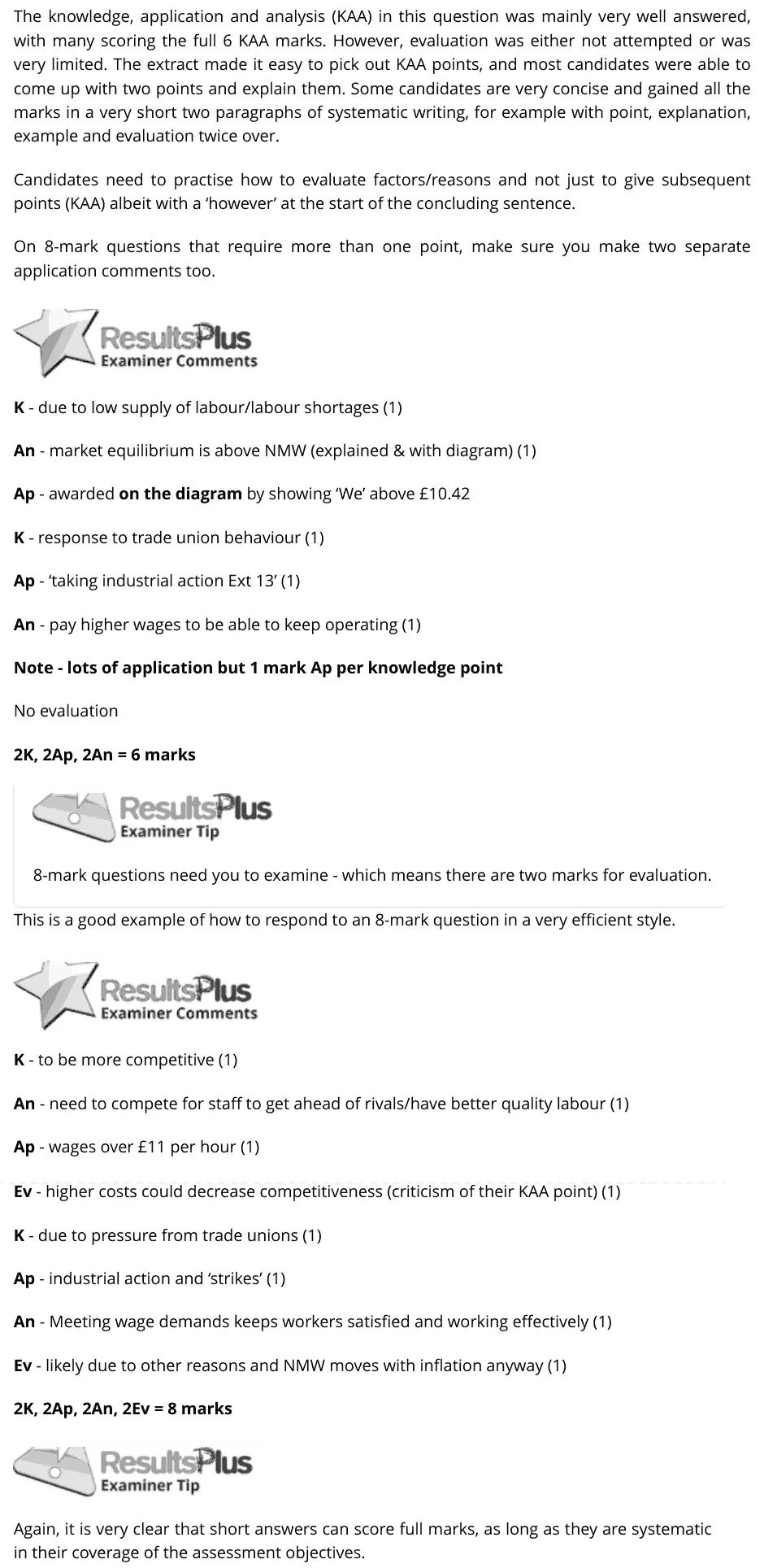
(b) With reference to Extract B, examine two likely reasons why wages in supermarkets are above the National Minimum Wage of £10.42. (8)
June 2025 · Paper 3 · Q1(c) 12 marks AO1=2, AO2=2, AO3=4, AO4=4 12-mark response oligopoly
Data and extracts for question 1Sources for use with SECTION A Read Figures 1 and 2 and the following Extracts A, B, C and D before answering Question 1. The cost of living in the UK Figure 1: The price per litre of unleaded petrol in the UK, in pence, 2016–2023 200 Pence per litre 180 160 140 120 100 0 2016 2017 2018 2019 2020 2021 2022 2023 (Source adapted from: RAC) Figure 2: UK inflation, as measured by CPI, and wage growth (excluding bonuses), 3-month averages, 2012–2022 10 Inflation % (9.4%) 8 6 Wage growth (4.7%) 4 2 0 –2 2012 2014 2016 2018 2020 2022 (Source adapted from: ONS) Extract A Supermarket restrictions on multibuy deals and advertising Government rules limiting the location of unhealthy foods in shops began in 2022. Less healthy products are no longer promoted in key locations, such as checkouts, store entrances, aisle ends and their online equivalents. Rules banning multibuy deals on foods and drinks high in fat, salt or sugar (HFSS) – including buy one get 5 one free (BOGOF), ‘3 for 2’, and restrictions on free refills for soft drinks – were due in October 2023. The restrictions banning HFSS adverts on TV before 9pm and paid-for adverts online were set for January 2024. (Source adapted from: https://www.gov.uk/government/news/government-delays- restrictions-on-multibuy-deals-and-advertising-on-tv-and-online) Extract B Supermarket pay in 2023 Supermarkets have been increasing their hourly pay rates and most now pay significantly more than the National Minimum Wage, which was set at £10.42 in April 2023. Tesco made its biggest ever investment in employee pay in 2023, spending 5 £230 million to finance an increase in its basic hourly rate of pay, to £11.02 per hour, rising to £11.95 in London. The pay increase is the latest boost in employment benefits as supermarkets continue to compete for in-store workers, with Sainsbury’s and Asda both increasing pay to above £11 per hour in July 2023, while Aldi pays £11.40 an hour. 10 Supermarkets have found themselves facing criticism over pay that did not rise in line with inflation. Some workers are taking industrial action, such as strikes, working closely with trade unions. (Source adapted from: https://www.grocerygazette.co.uk/2023/02/22/supermarket-pay-rate-2023/) Extract C Supermarket petrol pricing In 2023 David Potts, the boss of Morrisons, admitted that supermarkets increased profits at the petrol pumps as he was questioned in a parliamentary committee alongside executives from Tesco, Sainsbury’s and Asda who denied they were making more profit from keeping petrol prices high. 5 A Competition and Markets Authority (CMA) report indicates that supermarkets’ profits have doubled to 8% on fuel since 2017. It is expected to recommend that supermarkets must share local fuel prices on a comparison website in order to increase transparency and help bring down prices – a strategy tried successfully in Northern Ireland. All the supermarkets said they would welcome such a move. 10 In 2023, the RAC motoring group said that a price checker would be welcome but blamed high prices on the domination of petrol retailing in the UK by a few large supermarkets. “When the wholesale price of diesel fell this spring, we saw average retailer margin reach 22p a litre which was more than three times the long-term margin of 7p. This cannot be allowed to continue when households are having to 15 contend with a cost of living crisis,” an RAC spokesperson said. At the committee, one politician, Jane Hunt, said: “In 1978 there were many more supermarkets. Now there are very few…are you in fact a cartel?” (Source adapted from: https://www.theguardian.com/business/2023/jun/27/morrisons- boss-admits-supermarket-chains-have-hiked-profits-on-petrol) Extract D EU trade relations with the UK The Trade and Cooperation Agreement 2021 between the EU and the UK means that there are no tariffs or quotas on goods moving between the EU and UK, provided those goods meet the ‘rules of origin’ of a good, based on where the products or materials used in their production come from. They prevent goods 5 manufactured in outside countries being transported through the UK (or the EU) to avoid paying tariffs. To benefit from the zero tariff, businesses must show the origin of their goods. A product qualifies as ‘originating’ if it is ‘wholly obtained’ in the UK and EU or has been substantially transformed in one or both markets. That is why UK businesses 10 that re-export goods from outside countries with little or no further processing, may still face tariffs when trading with EU member states. ‘Rules of origin’ can be time consuming and complex. Some businesses cannot or do not wish to claim zero tariff because of the excessive administrative costs to firms. (Source adapted from: https://commonslibrary.parliament.uk/new-customs-rules-for-trade-with-the-eu/)
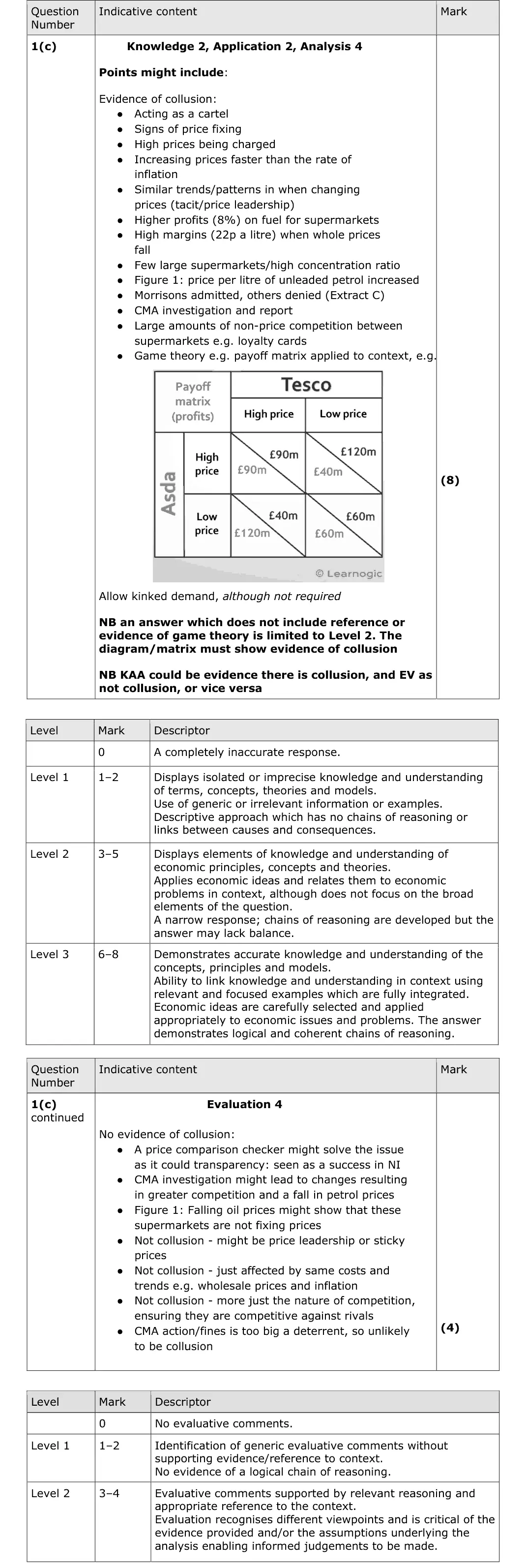
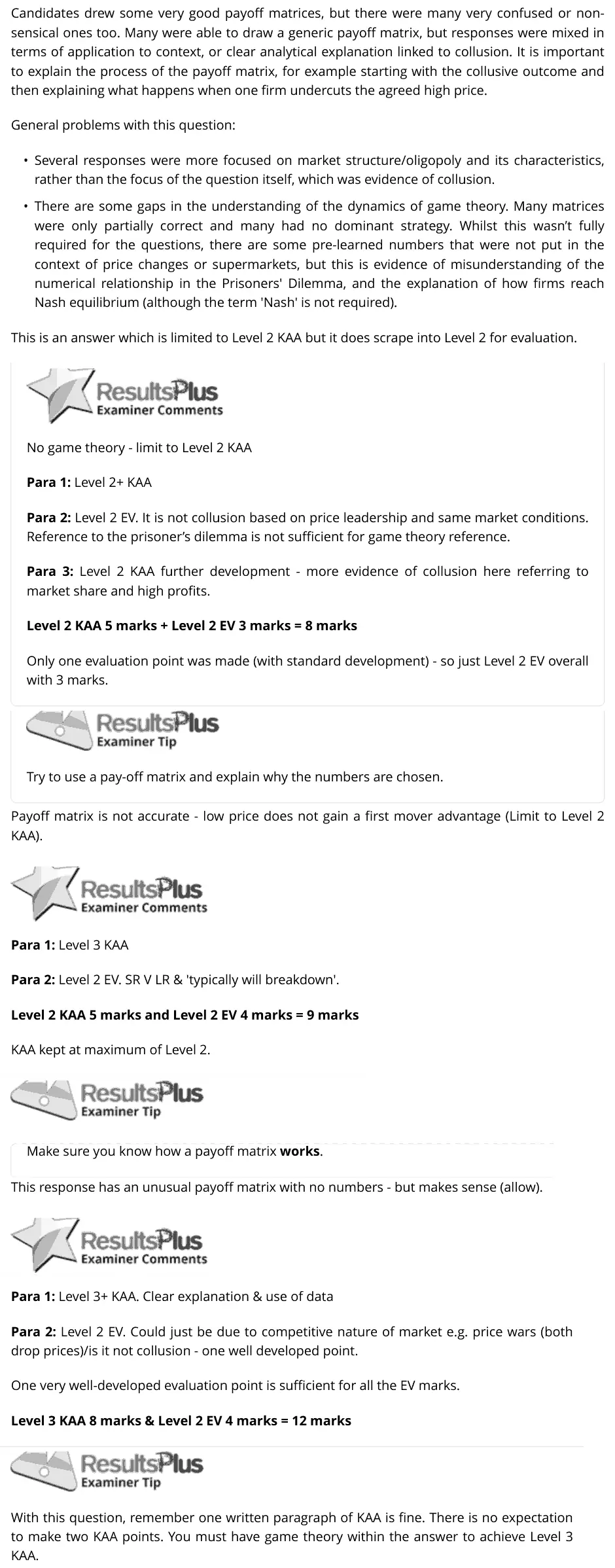
(c) With reference to Figure 1 and Extract C, discuss whether supermarkets charging similar prices for petrol is evidence of collusion. Use game theory to support your answer. (12)
June 2025 · Paper 3 · Q1(d) 25 marks AO1=4, AO2=4, AO3=8, AO4=9 25-mark essay Either/or inflationrevenues costs and profits
Data and extracts for question 1Sources for use with SECTION A Read Figures 1 and 2 and the following Extracts A, B, C and D before answering Question 1. The cost of living in the UK Figure 1: The price per litre of unleaded petrol in the UK, in pence, 2016–2023 200 Pence per litre 180 160 140 120 100 0 2016 2017 2018 2019 2020 2021 2022 2023 (Source adapted from: RAC) Figure 2: UK inflation, as measured by CPI, and wage growth (excluding bonuses), 3-month averages, 2012–2022 10 Inflation % (9.4%) 8 6 Wage growth (4.7%) 4 2 0 –2 2012 2014 2016 2018 2020 2022 (Source adapted from: ONS) Extract A Supermarket restrictions on multibuy deals and advertising Government rules limiting the location of unhealthy foods in shops began in 2022. Less healthy products are no longer promoted in key locations, such as checkouts, store entrances, aisle ends and their online equivalents. Rules banning multibuy deals on foods and drinks high in fat, salt or sugar (HFSS) – including buy one get 5 one free (BOGOF), ‘3 for 2’, and restrictions on free refills for soft drinks – were due in October 2023. The restrictions banning HFSS adverts on TV before 9pm and paid-for adverts online were set for January 2024. (Source adapted from: https://www.gov.uk/government/news/government-delays- restrictions-on-multibuy-deals-and-advertising-on-tv-and-online) Extract B Supermarket pay in 2023 Supermarkets have been increasing their hourly pay rates and most now pay significantly more than the National Minimum Wage, which was set at £10.42 in April 2023. Tesco made its biggest ever investment in employee pay in 2023, spending 5 £230 million to finance an increase in its basic hourly rate of pay, to £11.02 per hour, rising to £11.95 in London. The pay increase is the latest boost in employment benefits as supermarkets continue to compete for in-store workers, with Sainsbury’s and Asda both increasing pay to above £11 per hour in July 2023, while Aldi pays £11.40 an hour. 10 Supermarkets have found themselves facing criticism over pay that did not rise in line with inflation. Some workers are taking industrial action, such as strikes, working closely with trade unions. (Source adapted from: https://www.grocerygazette.co.uk/2023/02/22/supermarket-pay-rate-2023/) Extract C Supermarket petrol pricing In 2023 David Potts, the boss of Morrisons, admitted that supermarkets increased profits at the petrol pumps as he was questioned in a parliamentary committee alongside executives from Tesco, Sainsbury’s and Asda who denied they were making more profit from keeping petrol prices high. 5 A Competition and Markets Authority (CMA) report indicates that supermarkets’ profits have doubled to 8% on fuel since 2017. It is expected to recommend that supermarkets must share local fuel prices on a comparison website in order to increase transparency and help bring down prices – a strategy tried successfully in Northern Ireland. All the supermarkets said they would welcome such a move. 10 In 2023, the RAC motoring group said that a price checker would be welcome but blamed high prices on the domination of petrol retailing in the UK by a few large supermarkets. “When the wholesale price of diesel fell this spring, we saw average retailer margin reach 22p a litre which was more than three times the long-term margin of 7p. This cannot be allowed to continue when households are having to 15 contend with a cost of living crisis,” an RAC spokesperson said. At the committee, one politician, Jane Hunt, said: “In 1978 there were many more supermarkets. Now there are very few…are you in fact a cartel?” (Source adapted from: https://www.theguardian.com/business/2023/jun/27/morrisons- boss-admits-supermarket-chains-have-hiked-profits-on-petrol) Extract D EU trade relations with the UK The Trade and Cooperation Agreement 2021 between the EU and the UK means that there are no tariffs or quotas on goods moving between the EU and UK, provided those goods meet the ‘rules of origin’ of a good, based on where the products or materials used in their production come from. They prevent goods 5 manufactured in outside countries being transported through the UK (or the EU) to avoid paying tariffs. To benefit from the zero tariff, businesses must show the origin of their goods. A product qualifies as ‘originating’ if it is ‘wholly obtained’ in the UK and EU or has been substantially transformed in one or both markets. That is why UK businesses 10 that re-export goods from outside countries with little or no further processing, may still face tariffs when trading with EU member states. ‘Rules of origin’ can be time consuming and complex. Some businesses cannot or do not wish to claim zero tariff because of the excessive administrative costs to firms. (Source adapted from: https://commonslibrary.parliament.uk/new-customs-rules-for-trade-with-the-eu/)
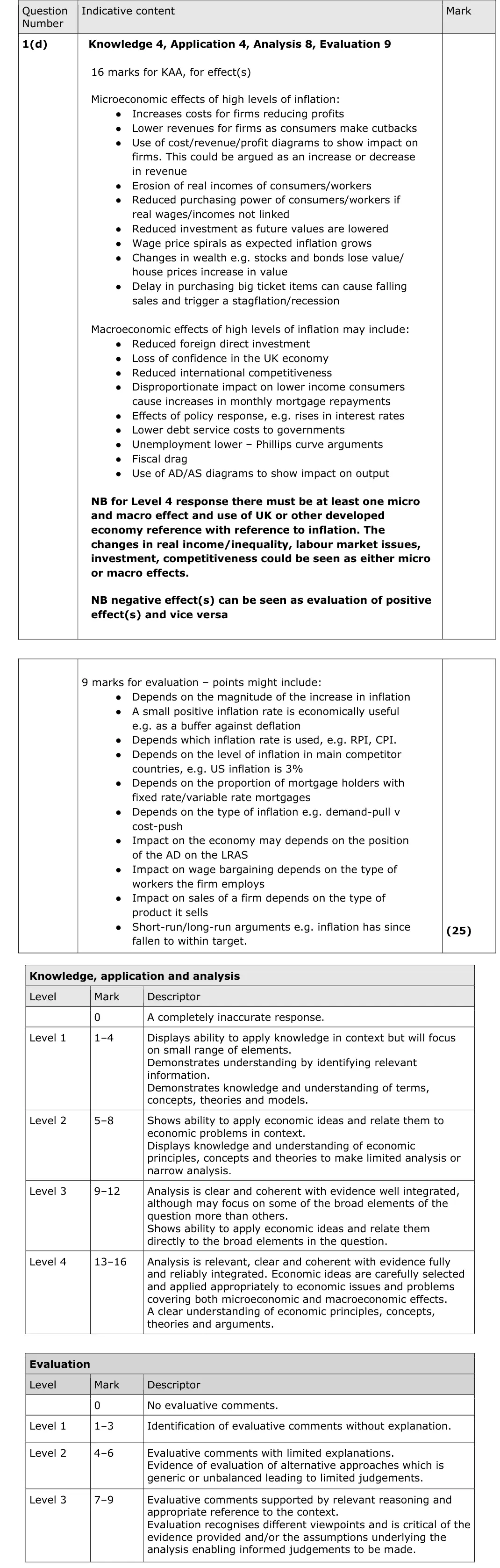
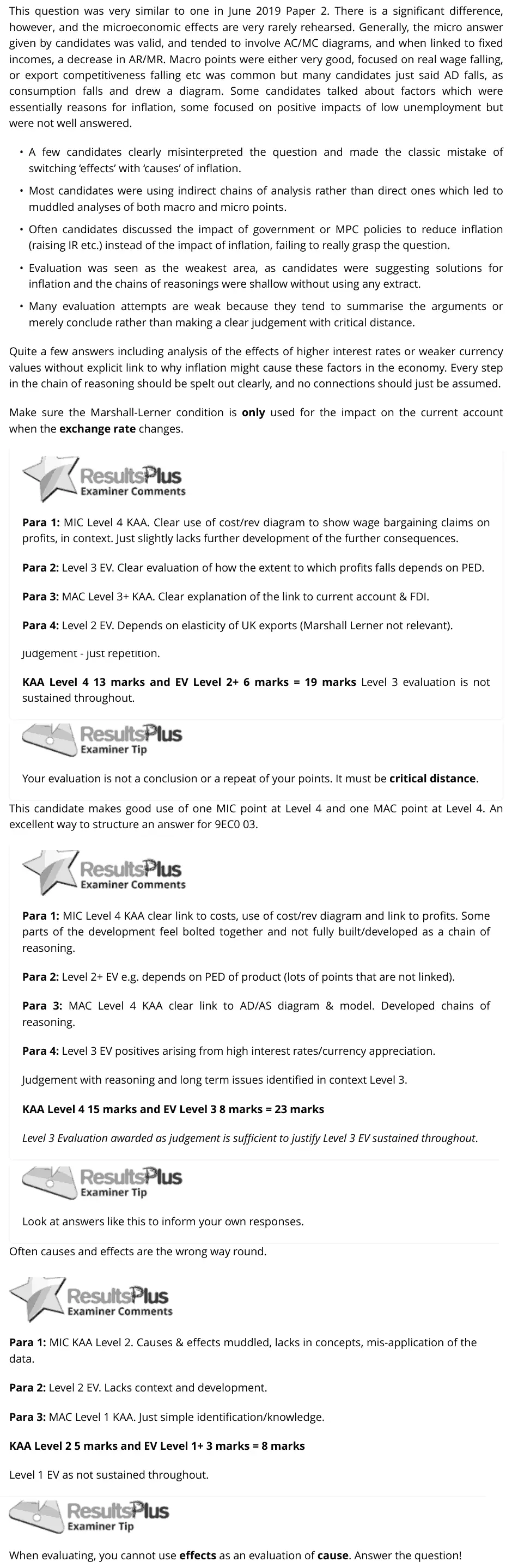
(d) Evaluate the microeconomic and macroeconomic effects of high levels of inflation. Refer to the UK or any other developed economy in your answer. (25)
June 2025 · Paper 3 · Q1(e) 25 marks AO1=4, AO2=4, AO3=8, AO4=9 25-mark essay Either/or trading blocs and protectionismrevenues costs and profits
Data and extracts for question 1Sources for use with SECTION A Read Figures 1 and 2 and the following Extracts A, B, C and D before answering Question 1. The cost of living in the UK Figure 1: The price per litre of unleaded petrol in the UK, in pence, 2016–2023 200 Pence per litre 180 160 140 120 100 0 2016 2017 2018 2019 2020 2021 2022 2023 (Source adapted from: RAC) Figure 2: UK inflation, as measured by CPI, and wage growth (excluding bonuses), 3-month averages, 2012–2022 10 Inflation % (9.4%) 8 6 Wage growth (4.7%) 4 2 0 –2 2012 2014 2016 2018 2020 2022 (Source adapted from: ONS) Extract A Supermarket restrictions on multibuy deals and advertising Government rules limiting the location of unhealthy foods in shops began in 2022. Less healthy products are no longer promoted in key locations, such as checkouts, store entrances, aisle ends and their online equivalents. Rules banning multibuy deals on foods and drinks high in fat, salt or sugar (HFSS) – including buy one get 5 one free (BOGOF), ‘3 for 2’, and restrictions on free refills for soft drinks – were due in October 2023. The restrictions banning HFSS adverts on TV before 9pm and paid-for adverts online were set for January 2024. (Source adapted from: https://www.gov.uk/government/news/government-delays- restrictions-on-multibuy-deals-and-advertising-on-tv-and-online) Extract B Supermarket pay in 2023 Supermarkets have been increasing their hourly pay rates and most now pay significantly more than the National Minimum Wage, which was set at £10.42 in April 2023. Tesco made its biggest ever investment in employee pay in 2023, spending 5 £230 million to finance an increase in its basic hourly rate of pay, to £11.02 per hour, rising to £11.95 in London. The pay increase is the latest boost in employment benefits as supermarkets continue to compete for in-store workers, with Sainsbury’s and Asda both increasing pay to above £11 per hour in July 2023, while Aldi pays £11.40 an hour. 10 Supermarkets have found themselves facing criticism over pay that did not rise in line with inflation. Some workers are taking industrial action, such as strikes, working closely with trade unions. (Source adapted from: https://www.grocerygazette.co.uk/2023/02/22/supermarket-pay-rate-2023/) Extract C Supermarket petrol pricing In 2023 David Potts, the boss of Morrisons, admitted that supermarkets increased profits at the petrol pumps as he was questioned in a parliamentary committee alongside executives from Tesco, Sainsbury’s and Asda who denied they were making more profit from keeping petrol prices high. 5 A Competition and Markets Authority (CMA) report indicates that supermarkets’ profits have doubled to 8% on fuel since 2017. It is expected to recommend that supermarkets must share local fuel prices on a comparison website in order to increase transparency and help bring down prices – a strategy tried successfully in Northern Ireland. All the supermarkets said they would welcome such a move. 10 In 2023, the RAC motoring group said that a price checker would be welcome but blamed high prices on the domination of petrol retailing in the UK by a few large supermarkets. “When the wholesale price of diesel fell this spring, we saw average retailer margin reach 22p a litre which was more than three times the long-term margin of 7p. This cannot be allowed to continue when households are having to 15 contend with a cost of living crisis,” an RAC spokesperson said. At the committee, one politician, Jane Hunt, said: “In 1978 there were many more supermarkets. Now there are very few…are you in fact a cartel?” (Source adapted from: https://www.theguardian.com/business/2023/jun/27/morrisons- boss-admits-supermarket-chains-have-hiked-profits-on-petrol) Extract D EU trade relations with the UK The Trade and Cooperation Agreement 2021 between the EU and the UK means that there are no tariffs or quotas on goods moving between the EU and UK, provided those goods meet the ‘rules of origin’ of a good, based on where the products or materials used in their production come from. They prevent goods 5 manufactured in outside countries being transported through the UK (or the EU) to avoid paying tariffs. To benefit from the zero tariff, businesses must show the origin of their goods. A product qualifies as ‘originating’ if it is ‘wholly obtained’ in the UK and EU or has been substantially transformed in one or both markets. That is why UK businesses 10 that re-export goods from outside countries with little or no further processing, may still face tariffs when trading with EU member states. ‘Rules of origin’ can be time consuming and complex. Some businesses cannot or do not wish to claim zero tariff because of the excessive administrative costs to firms. (Source adapted from: https://commonslibrary.parliament.uk/new-customs-rules-for-trade-with-the-eu/)
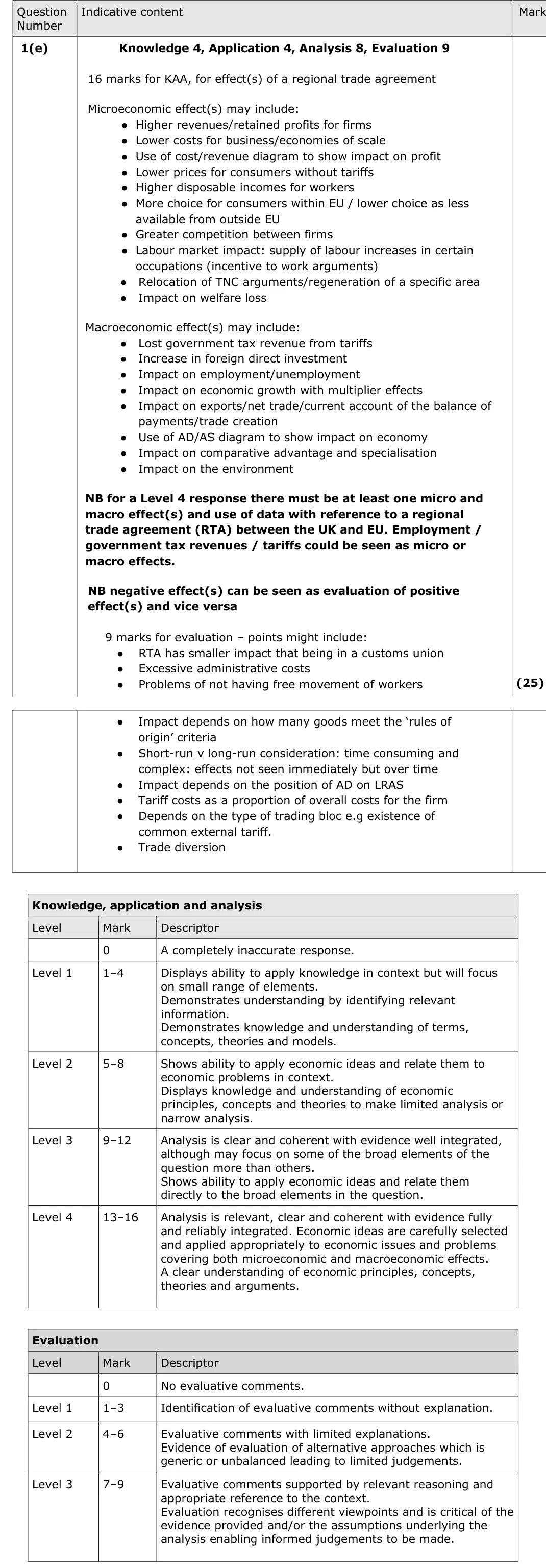
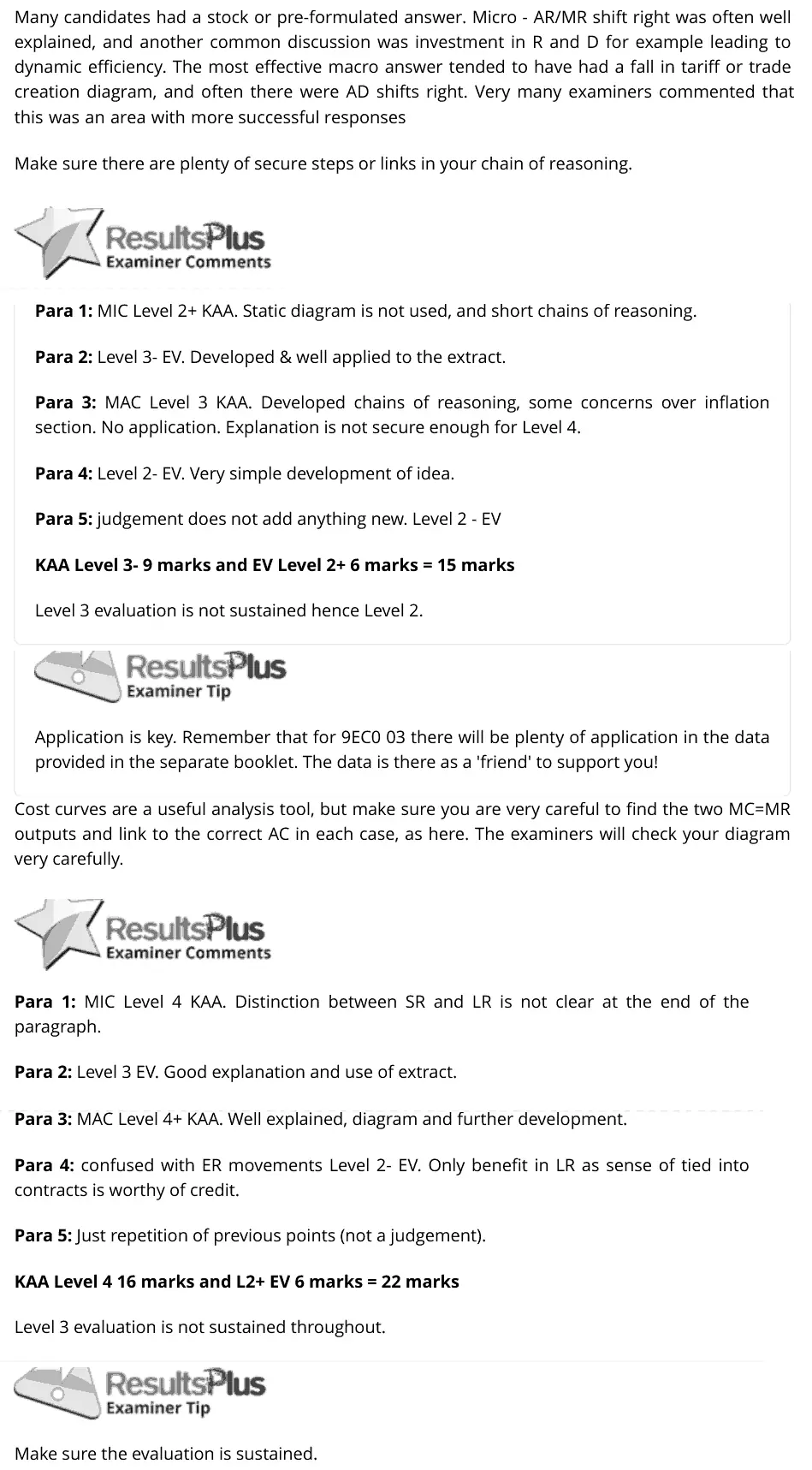
(e) Evaluate the microeconomic and macroeconomic effects of a regional trade agreement between the UK and the EU. (25)
June 2025 · Paper 3 · Q2(a) 5 marks AO1=2, AO2=2, AO3=1 Diagram Hard indirect taxes and subsidies
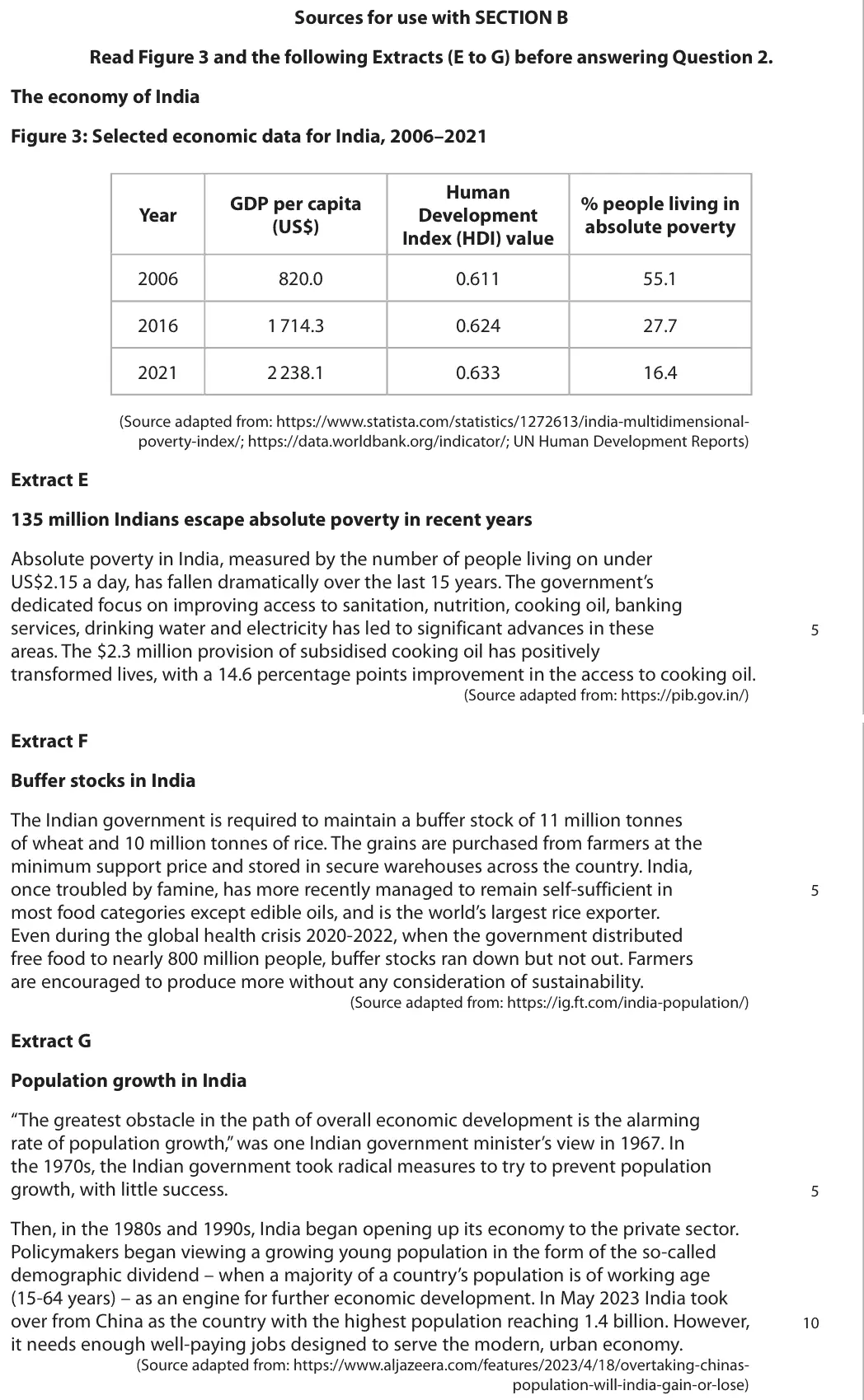
Data and extracts for question 2Sources for use with SECTION B Read Figure 3 and the following Extracts (E to G) before answering Question 2. The economy of India Figure 3: Selected economic data for India, 2006–2021 Human GDP per capita % people living in Year Development (US$) absolute poverty Index (HDI) value 2006 820.0 0.611 55.1 2016 1 714.3 0.624 27.7 2021 2 238.1 0.633 16.4 (Source adapted from: https://www.statista.com/statistics/1272613/india-multidimensional- poverty-index/; https://data.worldbank.org/indicator/; UN Human Development Reports) Extract E 135 million Indians escape absolute poverty in recent years Absolute poverty in India, measured by the number of people living on under US$2.15 a day, has fallen dramatically over the last 15 years. The government’s dedicated focus on improving access to sanitation, nutrition, cooking oil, banking services, drinking water and electricity has led to significant advances in these 5 areas. The $2.3 million provision of subsidised cooking oil has positively transformed lives, with a 14.6 percentage points improvement in the access to cooking oil. (Source adapted from: https://pib.gov.in/) Extract F Buffer stocks in India The Indian government is required to maintain a buffer stock of 11 million tonnes of wheat and 10 million tonnes of rice. The grains are purchased from farmers at the minimum support price and stored in secure warehouses across the country. India, once troubled by famine, has more recently managed to remain self-sufficient in 5 most food categories except edible oils, and is the world’s largest rice exporter. Even during the global health crisis 2020-2022, when the government distributed free food to nearly 800 million people, buffer stocks ran down but not out. Farmers are encouraged to produce more without any consideration of sustainability. (Source adapted from: https://ig.ft.com/india-population/) Extract G Population growth in India “The greatest obstacle in the path of overall economic development is the alarming rate of population growth,” was one Indian government minister’s view in 1967. In the 1970s, the Indian government took radical measures to try to prevent population growth, with little success. 5 Then, in the 1980s and 1990s, India began opening up its economy to the private sector. Policymakers began viewing a growing young population in the form of the so-called demographic dividend – when a majority of a country’s population is of working age (15-64 years) – as an engine for further economic development. In May 2023 India took over from China as the country with the highest population reaching 1.4 billion. However, 10 it needs enough well-paying jobs designed to serve the modern, urban economy. (Source adapted from: https://www.aljazeera.com/features/2023/4/18/overtaking-chinas- population-will-india-gain-or-lose)
(a) Using a demand and supply diagram, explain the cost of a subsidy on the market for cooking oil to the Indian government (Extract E, line 6). (5)
June 2025 · Paper 3 · Q2(b) 8 marks AO1=2, AO2=2, AO3=2, AO4=2 8-mark response emerging and developing economies
Data and extracts for question 2Sources for use with SECTION B Read Figure 3 and the following Extracts (E to G) before answering Question 2. The economy of India Figure 3: Selected economic data for India, 2006–2021 Human GDP per capita % people living in Year Development (US$) absolute poverty Index (HDI) value 2006 820.0 0.611 55.1 2016 1 714.3 0.624 27.7 2021 2 238.1 0.633 16.4 (Source adapted from: https://www.statista.com/statistics/1272613/india-multidimensional- poverty-index/; https://data.worldbank.org/indicator/; UN Human Development Reports) Extract E 135 million Indians escape absolute poverty in recent years Absolute poverty in India, measured by the number of people living on under US$2.15 a day, has fallen dramatically over the last 15 years. The government’s dedicated focus on improving access to sanitation, nutrition, cooking oil, banking services, drinking water and electricity has led to significant advances in these 5 areas. The $2.3 million provision of subsidised cooking oil has positively transformed lives, with a 14.6 percentage points improvement in the access to cooking oil. (Source adapted from: https://pib.gov.in/) Extract F Buffer stocks in India The Indian government is required to maintain a buffer stock of 11 million tonnes of wheat and 10 million tonnes of rice. The grains are purchased from farmers at the minimum support price and stored in secure warehouses across the country. India, once troubled by famine, has more recently managed to remain self-sufficient in 5 most food categories except edible oils, and is the world’s largest rice exporter. Even during the global health crisis 2020-2022, when the government distributed free food to nearly 800 million people, buffer stocks ran down but not out. Farmers are encouraged to produce more without any consideration of sustainability. (Source adapted from: https://ig.ft.com/india-population/) Extract G Population growth in India “The greatest obstacle in the path of overall economic development is the alarming rate of population growth,” was one Indian government minister’s view in 1967. In the 1970s, the Indian government took radical measures to try to prevent population growth, with little success. 5 Then, in the 1980s and 1990s, India began opening up its economy to the private sector. Policymakers began viewing a growing young population in the form of the so-called demographic dividend – when a majority of a country’s population is of working age (15-64 years) – as an engine for further economic development. In May 2023 India took over from China as the country with the highest population reaching 1.4 billion. However, 10 it needs enough well-paying jobs designed to serve the modern, urban economy. (Source adapted from: https://www.aljazeera.com/features/2023/4/18/overtaking-chinas- population-will-india-gain-or-lose)
(b) Examine two advantages of using the Human Development Index (HDI) to measure the level of economic development in India. (8)
June 2025 · Paper 3 · Q2(c) 12 marks AO1=2, AO2=2, AO3=4, AO4=4 12-mark response emerging and developing economies
Data and extracts for question 2Sources for use with SECTION B Read Figure 3 and the following Extracts (E to G) before answering Question 2. The economy of India Figure 3: Selected economic data for India, 2006–2021 Human GDP per capita % people living in Year Development (US$) absolute poverty Index (HDI) value 2006 820.0 0.611 55.1 2016 1 714.3 0.624 27.7 2021 2 238.1 0.633 16.4 (Source adapted from: https://www.statista.com/statistics/1272613/india-multidimensional- poverty-index/; https://data.worldbank.org/indicator/; UN Human Development Reports) Extract E 135 million Indians escape absolute poverty in recent years Absolute poverty in India, measured by the number of people living on under US$2.15 a day, has fallen dramatically over the last 15 years. The government’s dedicated focus on improving access to sanitation, nutrition, cooking oil, banking services, drinking water and electricity has led to significant advances in these 5 areas. The $2.3 million provision of subsidised cooking oil has positively transformed lives, with a 14.6 percentage points improvement in the access to cooking oil. (Source adapted from: https://pib.gov.in/) Extract F Buffer stocks in India The Indian government is required to maintain a buffer stock of 11 million tonnes of wheat and 10 million tonnes of rice. The grains are purchased from farmers at the minimum support price and stored in secure warehouses across the country. India, once troubled by famine, has more recently managed to remain self-sufficient in 5 most food categories except edible oils, and is the world’s largest rice exporter. Even during the global health crisis 2020-2022, when the government distributed free food to nearly 800 million people, buffer stocks ran down but not out. Farmers are encouraged to produce more without any consideration of sustainability. (Source adapted from: https://ig.ft.com/india-population/) Extract G Population growth in India “The greatest obstacle in the path of overall economic development is the alarming rate of population growth,” was one Indian government minister’s view in 1967. In the 1970s, the Indian government took radical measures to try to prevent population growth, with little success. 5 Then, in the 1980s and 1990s, India began opening up its economy to the private sector. Policymakers began viewing a growing young population in the form of the so-called demographic dividend – when a majority of a country’s population is of working age (15-64 years) – as an engine for further economic development. In May 2023 India took over from China as the country with the highest population reaching 1.4 billion. However, 10 it needs enough well-paying jobs designed to serve the modern, urban economy. (Source adapted from: https://www.aljazeera.com/features/2023/4/18/overtaking-chinas- population-will-india-gain-or-lose)
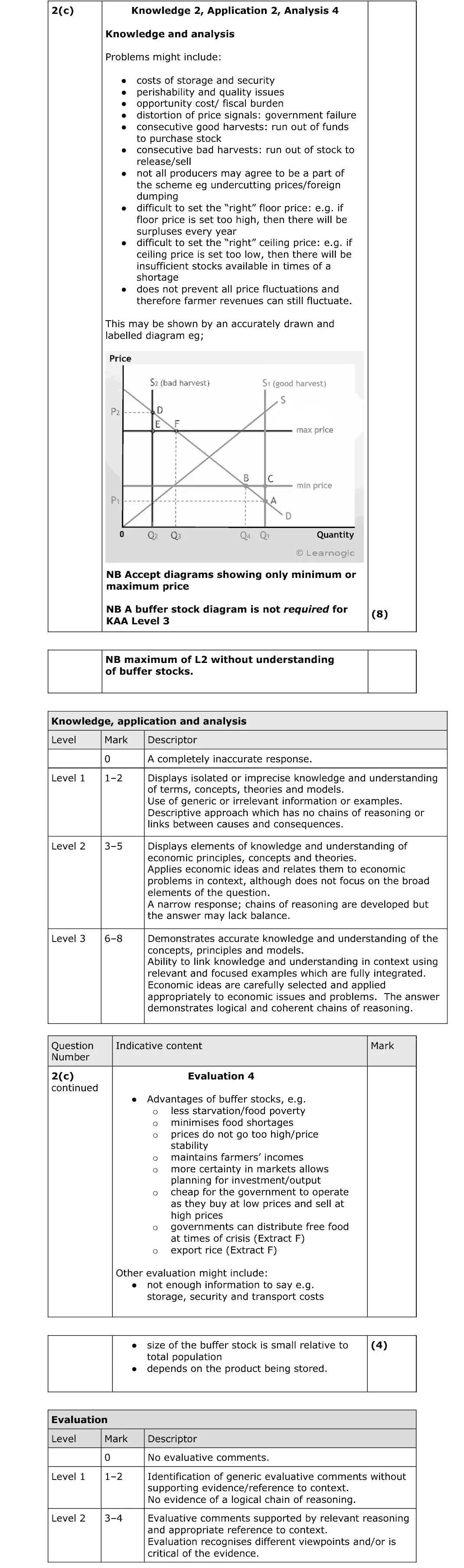
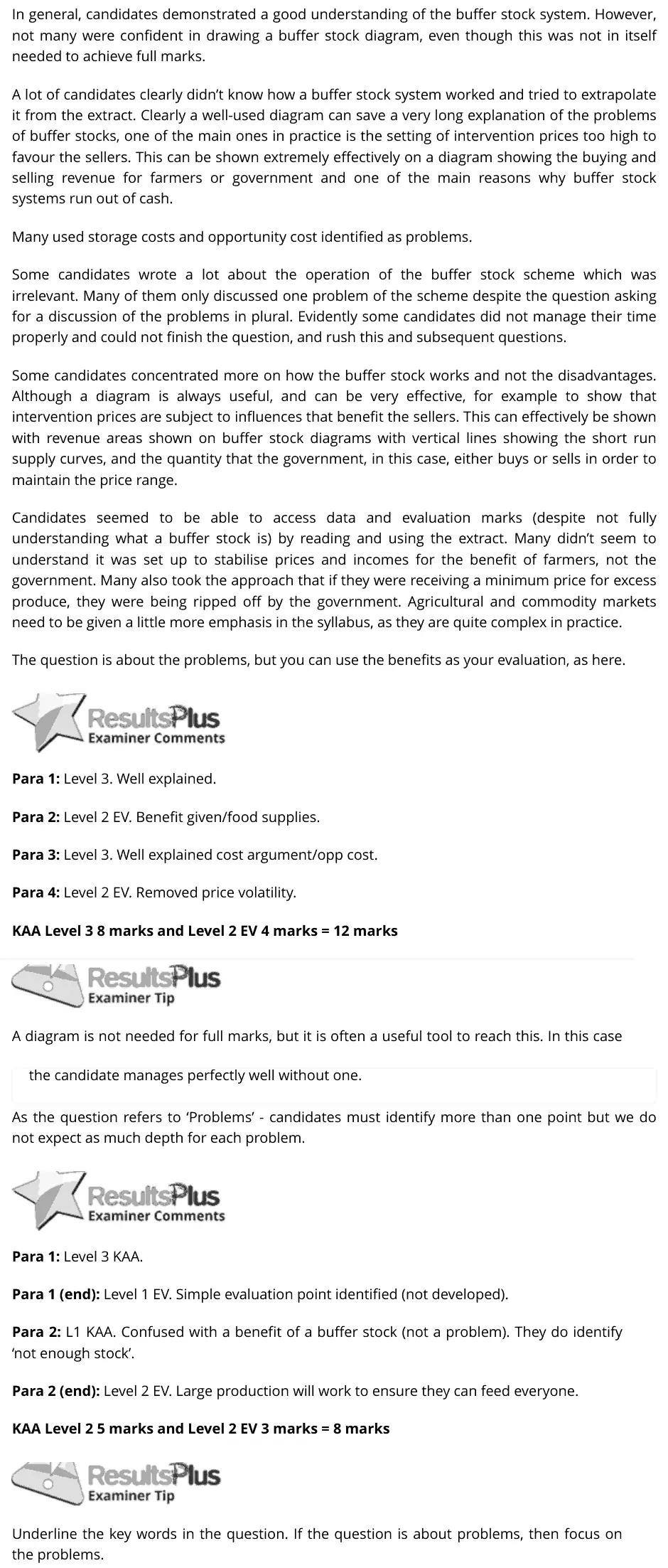
(c) With reference to Extract F, discuss the problems that might be involved with the buffer stock system in India. (12)
June 2025 · Paper 3 · Q2(d) 25 marks AO1=4, AO2=4, AO3=8, AO4=9 25-mark essay Either/or poverty and inequalitylabour market
Data and extracts for question 2Sources for use with SECTION B Read Figure 3 and the following Extracts (E to G) before answering Question 2. The economy of India Figure 3: Selected economic data for India, 2006–2021 Human GDP per capita % people living in Year Development (US$) absolute poverty Index (HDI) value 2006 820.0 0.611 55.1 2016 1 714.3 0.624 27.7 2021 2 238.1 0.633 16.4 (Source adapted from: https://www.statista.com/statistics/1272613/india-multidimensional- poverty-index/; https://data.worldbank.org/indicator/; UN Human Development Reports) Extract E 135 million Indians escape absolute poverty in recent years Absolute poverty in India, measured by the number of people living on under US$2.15 a day, has fallen dramatically over the last 15 years. The government’s dedicated focus on improving access to sanitation, nutrition, cooking oil, banking services, drinking water and electricity has led to significant advances in these 5 areas. The $2.3 million provision of subsidised cooking oil has positively transformed lives, with a 14.6 percentage points improvement in the access to cooking oil. (Source adapted from: https://pib.gov.in/) Extract F Buffer stocks in India The Indian government is required to maintain a buffer stock of 11 million tonnes of wheat and 10 million tonnes of rice. The grains are purchased from farmers at the minimum support price and stored in secure warehouses across the country. India, once troubled by famine, has more recently managed to remain self-sufficient in 5 most food categories except edible oils, and is the world’s largest rice exporter. Even during the global health crisis 2020-2022, when the government distributed free food to nearly 800 million people, buffer stocks ran down but not out. Farmers are encouraged to produce more without any consideration of sustainability. (Source adapted from: https://ig.ft.com/india-population/) Extract G Population growth in India “The greatest obstacle in the path of overall economic development is the alarming rate of population growth,” was one Indian government minister’s view in 1967. In the 1970s, the Indian government took radical measures to try to prevent population growth, with little success. 5 Then, in the 1980s and 1990s, India began opening up its economy to the private sector. Policymakers began viewing a growing young population in the form of the so-called demographic dividend – when a majority of a country’s population is of working age (15-64 years) – as an engine for further economic development. In May 2023 India took over from China as the country with the highest population reaching 1.4 billion. However, 10 it needs enough well-paying jobs designed to serve the modern, urban economy. (Source adapted from: https://www.aljazeera.com/features/2023/4/18/overtaking-chinas- population-will-india-gain-or-lose)
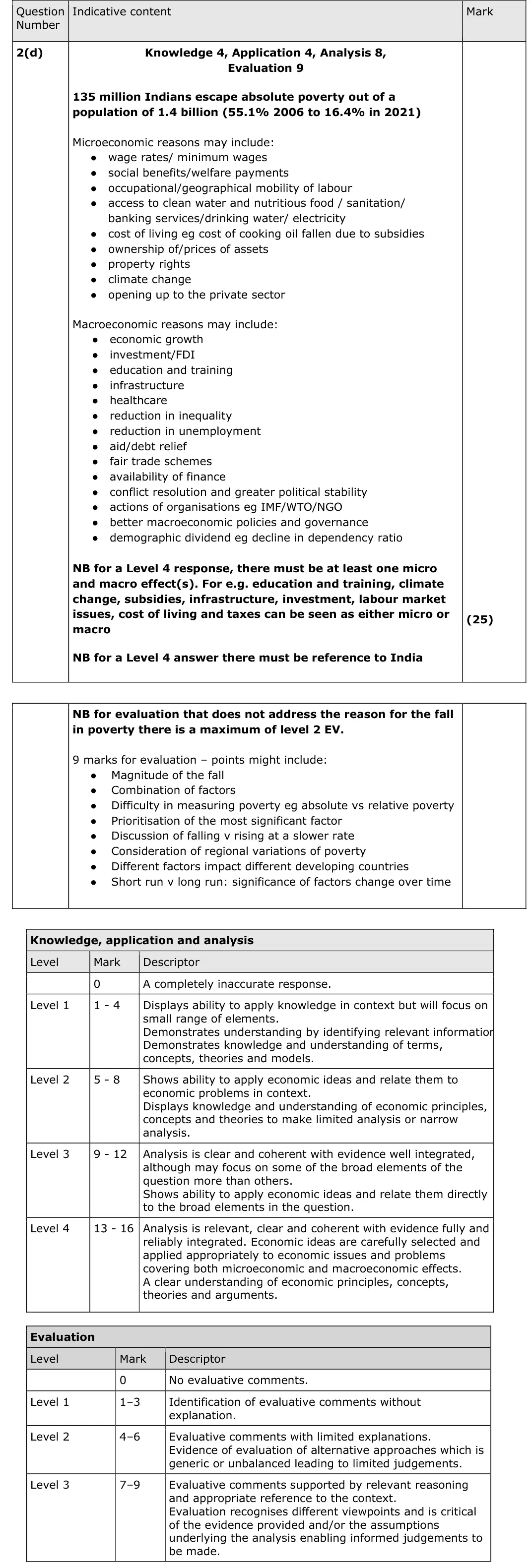
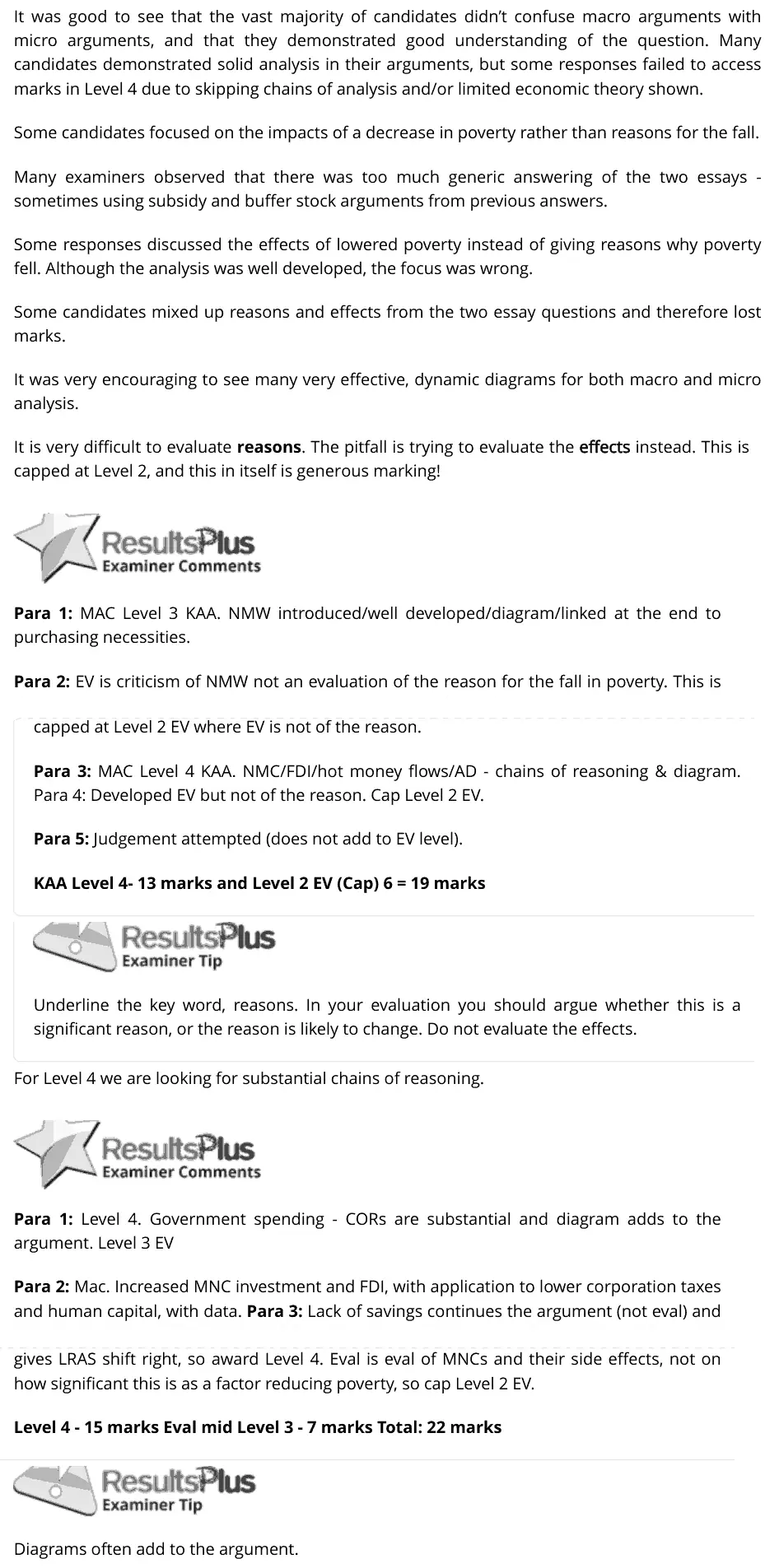
(d) Evaluate the microeconomic and macroeconomic reasons for the fall in poverty in India. (25)
June 2025 · Paper 3 · Q2(e) 25 marks AO1=4, AO2=4, AO3=8, AO4=9 25-mark essay Either/or emerging and developing economieslabour market
Data and extracts for question 2Sources for use with SECTION B Read Figure 3 and the following Extracts (E to G) before answering Question 2. The economy of India Figure 3: Selected economic data for India, 2006–2021 Human GDP per capita % people living in Year Development (US$) absolute poverty Index (HDI) value 2006 820.0 0.611 55.1 2016 1 714.3 0.624 27.7 2021 2 238.1 0.633 16.4 (Source adapted from: https://www.statista.com/statistics/1272613/india-multidimensional- poverty-index/; https://data.worldbank.org/indicator/; UN Human Development Reports) Extract E 135 million Indians escape absolute poverty in recent years Absolute poverty in India, measured by the number of people living on under US$2.15 a day, has fallen dramatically over the last 15 years. The government’s dedicated focus on improving access to sanitation, nutrition, cooking oil, banking services, drinking water and electricity has led to significant advances in these 5 areas. The $2.3 million provision of subsidised cooking oil has positively transformed lives, with a 14.6 percentage points improvement in the access to cooking oil. (Source adapted from: https://pib.gov.in/) Extract F Buffer stocks in India The Indian government is required to maintain a buffer stock of 11 million tonnes of wheat and 10 million tonnes of rice. The grains are purchased from farmers at the minimum support price and stored in secure warehouses across the country. India, once troubled by famine, has more recently managed to remain self-sufficient in 5 most food categories except edible oils, and is the world’s largest rice exporter. Even during the global health crisis 2020-2022, when the government distributed free food to nearly 800 million people, buffer stocks ran down but not out. Farmers are encouraged to produce more without any consideration of sustainability. (Source adapted from: https://ig.ft.com/india-population/) Extract G Population growth in India “The greatest obstacle in the path of overall economic development is the alarming rate of population growth,” was one Indian government minister’s view in 1967. In the 1970s, the Indian government took radical measures to try to prevent population growth, with little success. 5 Then, in the 1980s and 1990s, India began opening up its economy to the private sector. Policymakers began viewing a growing young population in the form of the so-called demographic dividend – when a majority of a country’s population is of working age (15-64 years) – as an engine for further economic development. In May 2023 India took over from China as the country with the highest population reaching 1.4 billion. However, 10 it needs enough well-paying jobs designed to serve the modern, urban economy. (Source adapted from: https://www.aljazeera.com/features/2023/4/18/overtaking-chinas- population-will-india-gain-or-lose)
(e) Evaluate the microeconomic and macroeconomic effects of rapid increases in population in India. (25)

Work with an Edexcel economics tutor

Want a paper marked and gone through with you? Message us.

Prefer email? Send an enquiry

If you are under 18, please include a parent's contact details. Enquiries go to enquiries@economicsaleveltutor.com and are deleted once handled. All tutoring is online.