June 2024: AS Paper 1

80 marks · 19 question parts · Paper, mark scheme and report on Pearson's site

Question by question

QTopicMarksAOType
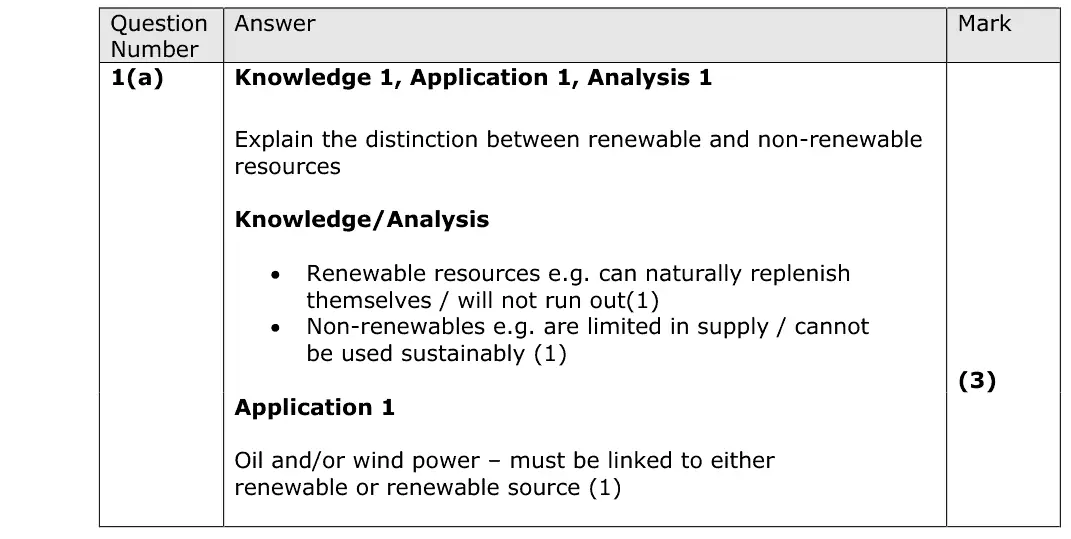
1(a) The nature of economics and the economic problem 3AO1=1,AO2=1,AO3=1Short answer
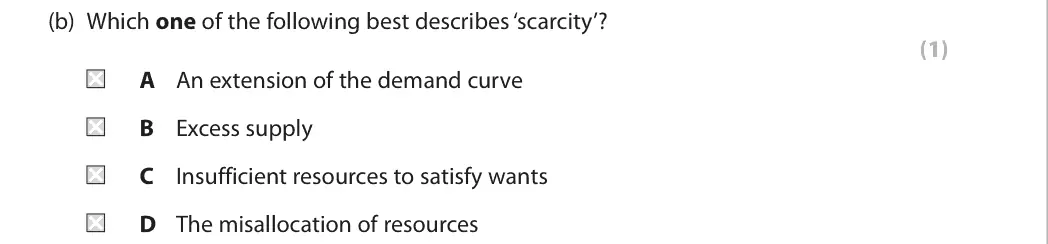
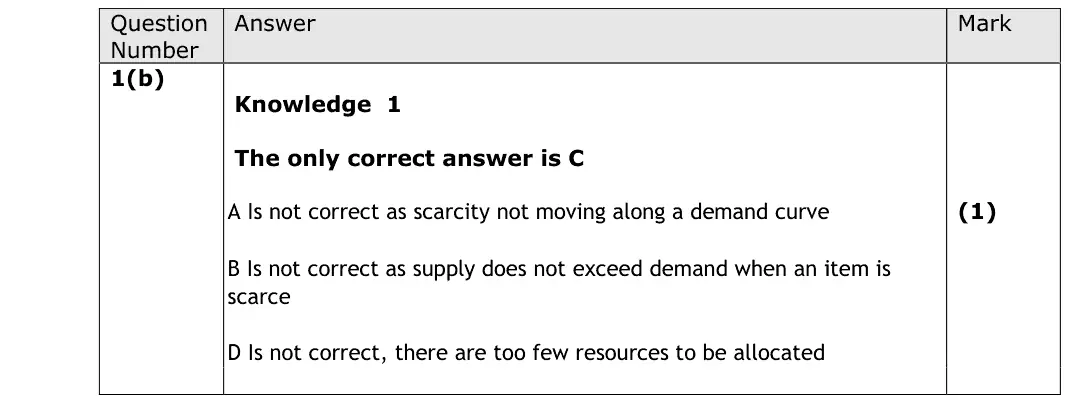
1(b) The nature of economics and the economic problem 1AO1=1Multiple choice
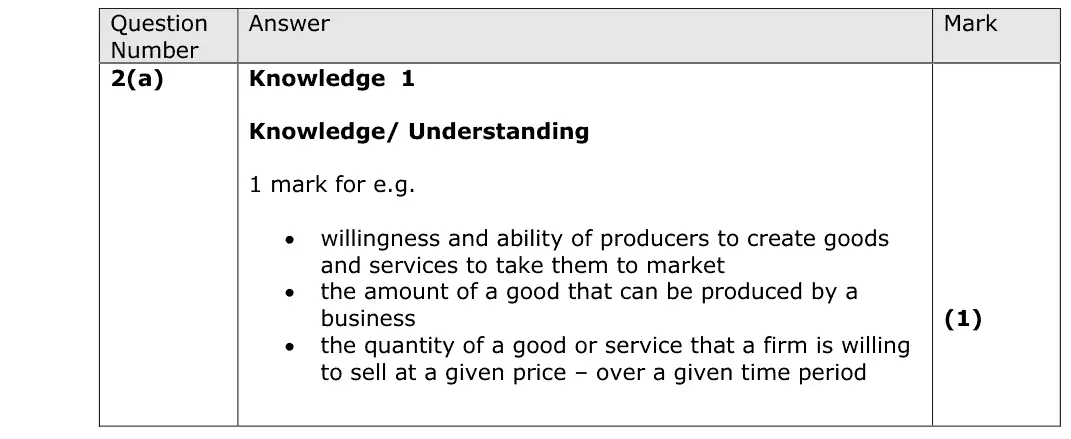
2(a) Supply, demand and price determination 1AO1=1Definition
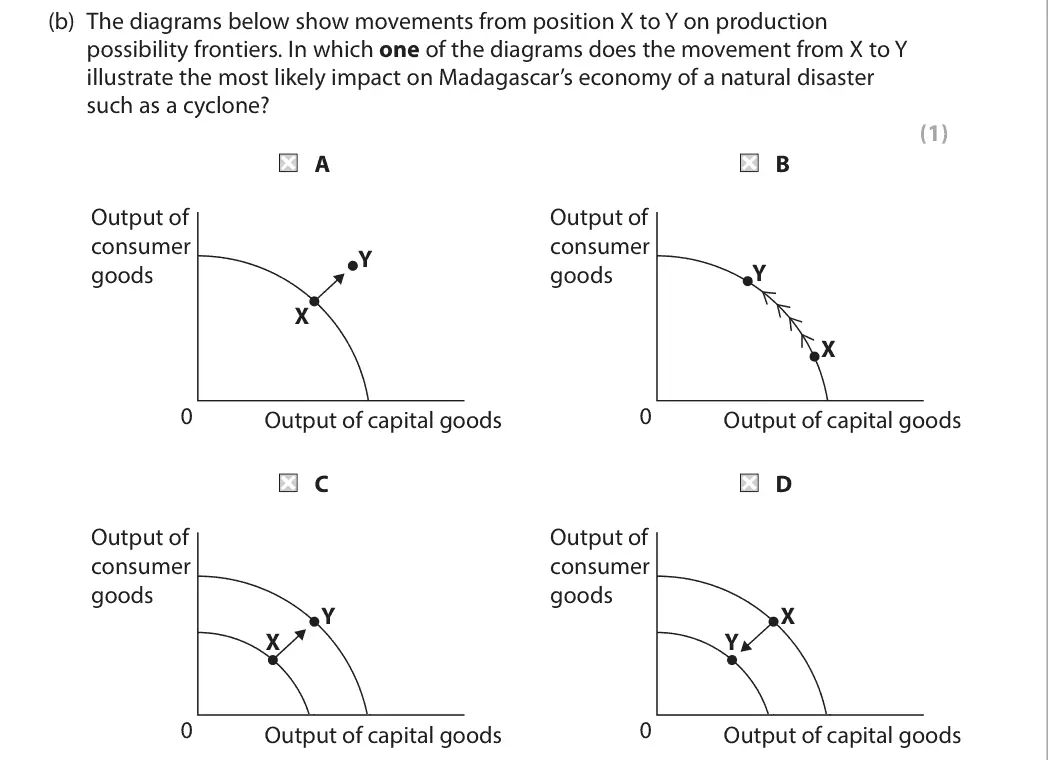
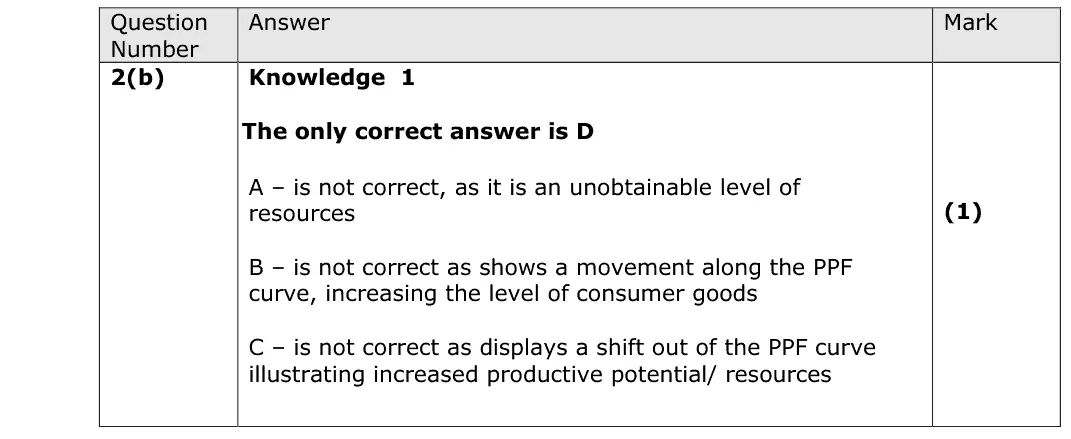
2(b) Production possibility frontiers 1AO1=1Multiple choice
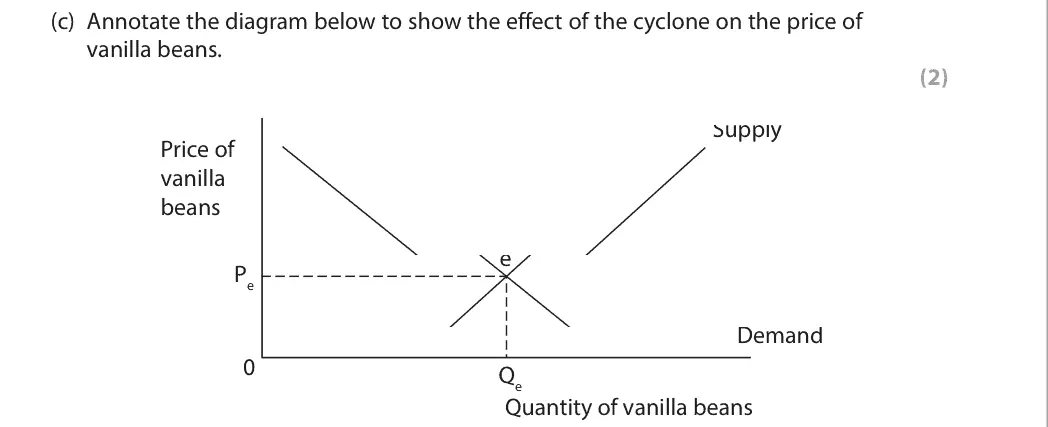
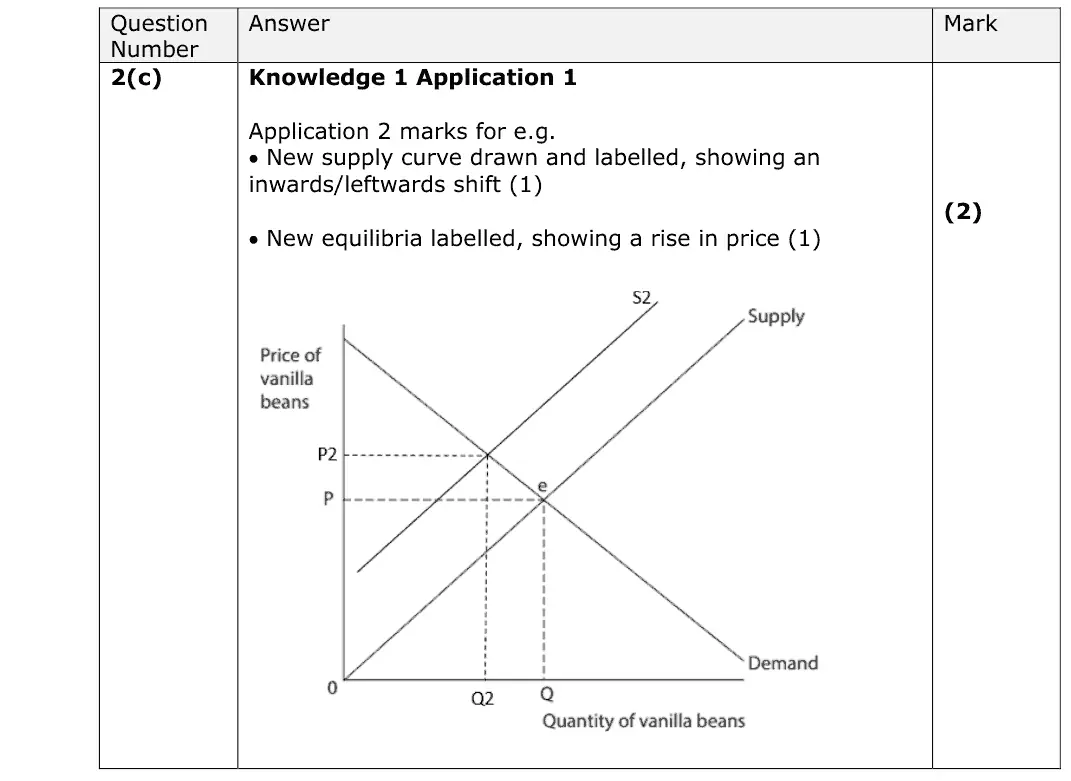
2(c) Supply, demand and price determination 2AO1=1,AO2=1Diagram
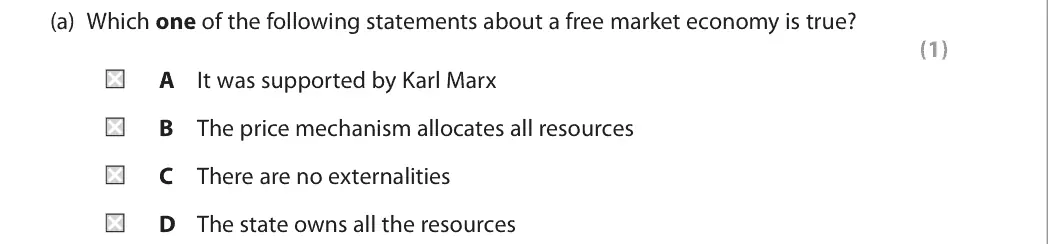
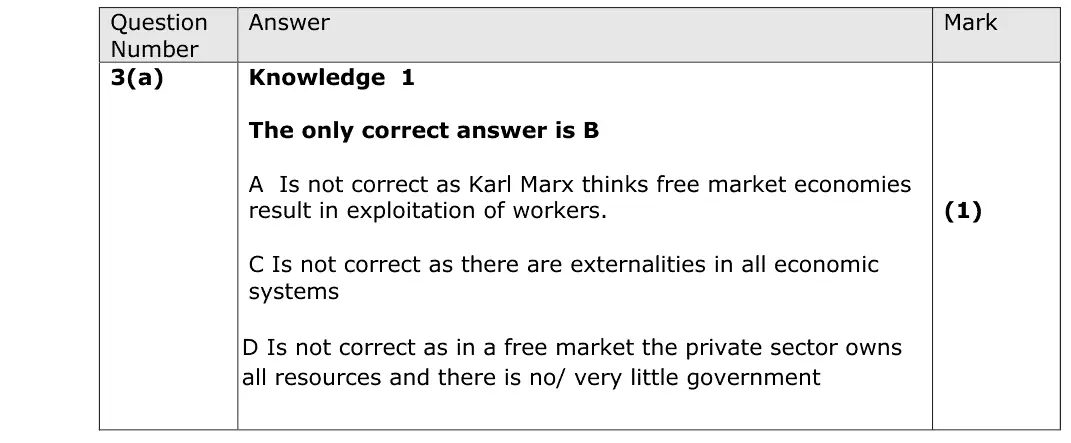
3(a) Free market, mixed and command economies 1AO1=1Multiple choice
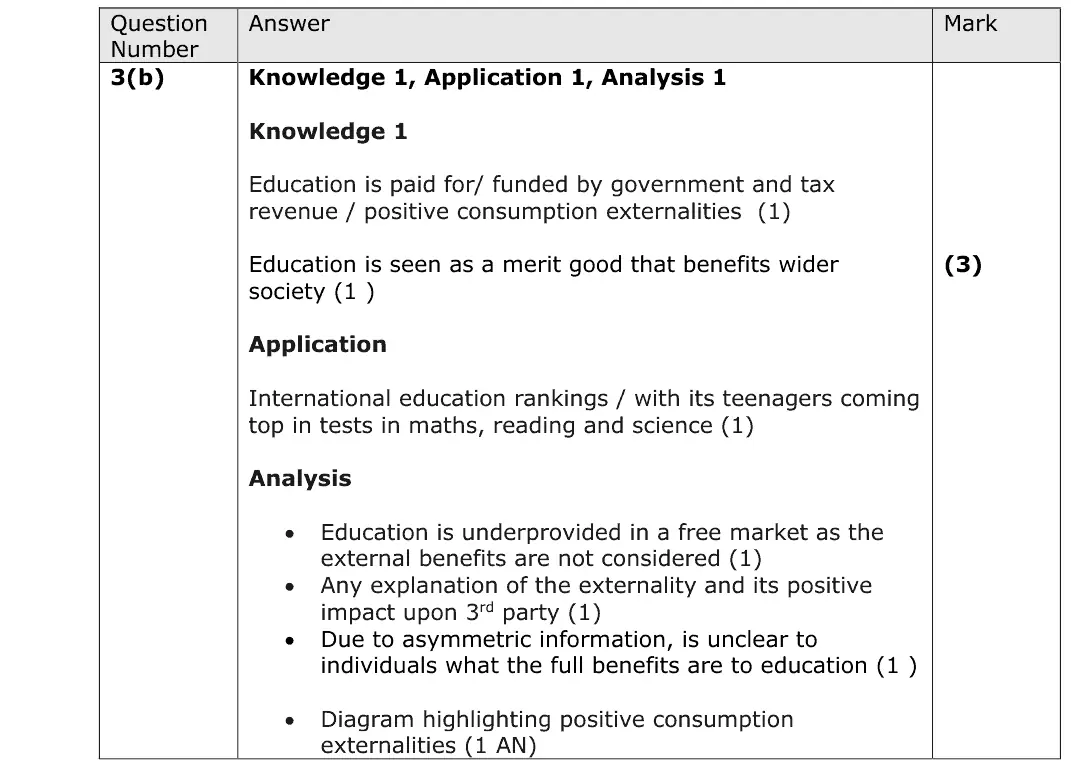
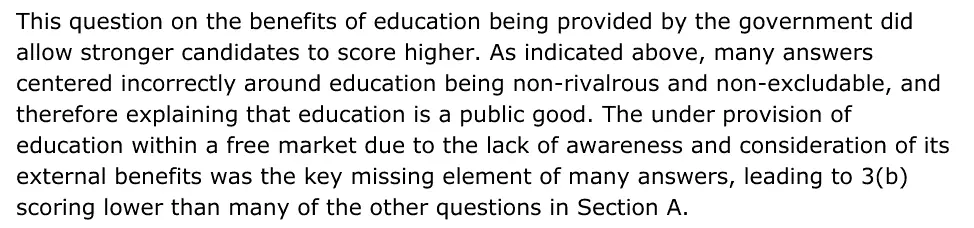
3(b) Market failure and externalities, Government intervention in markets 3AO1=1,AO2=1,AO3=1Short answer
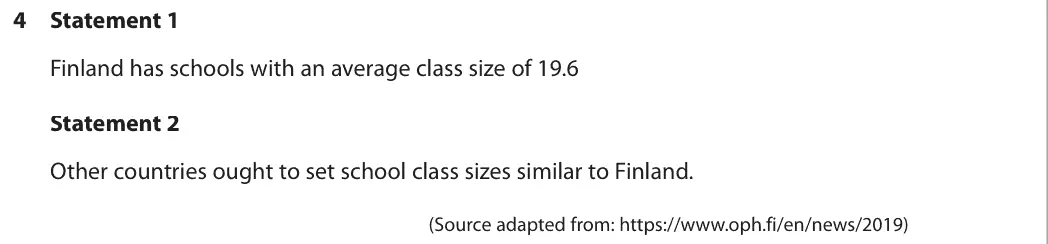
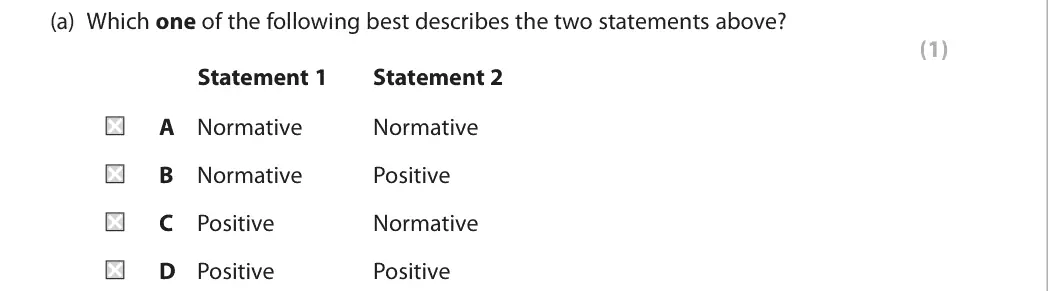
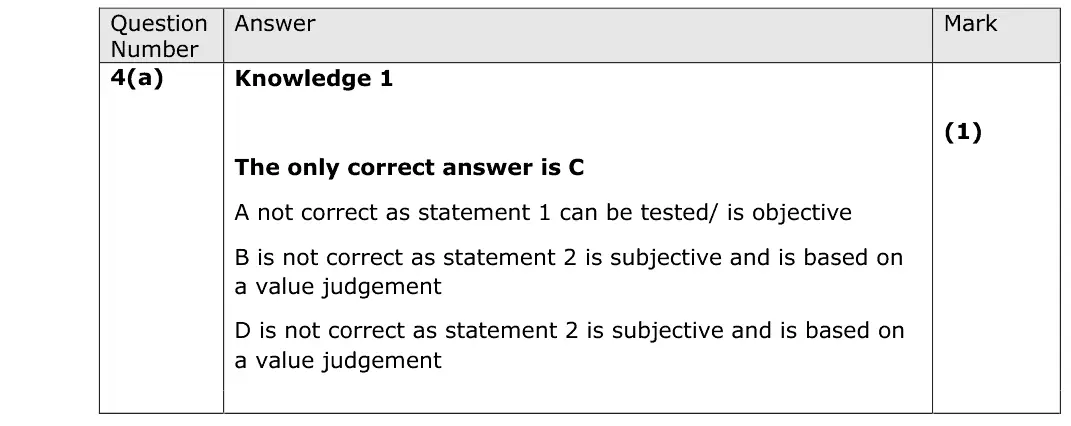
4(a) The nature of economics and the economic problem 1AO1=1Multiple choice
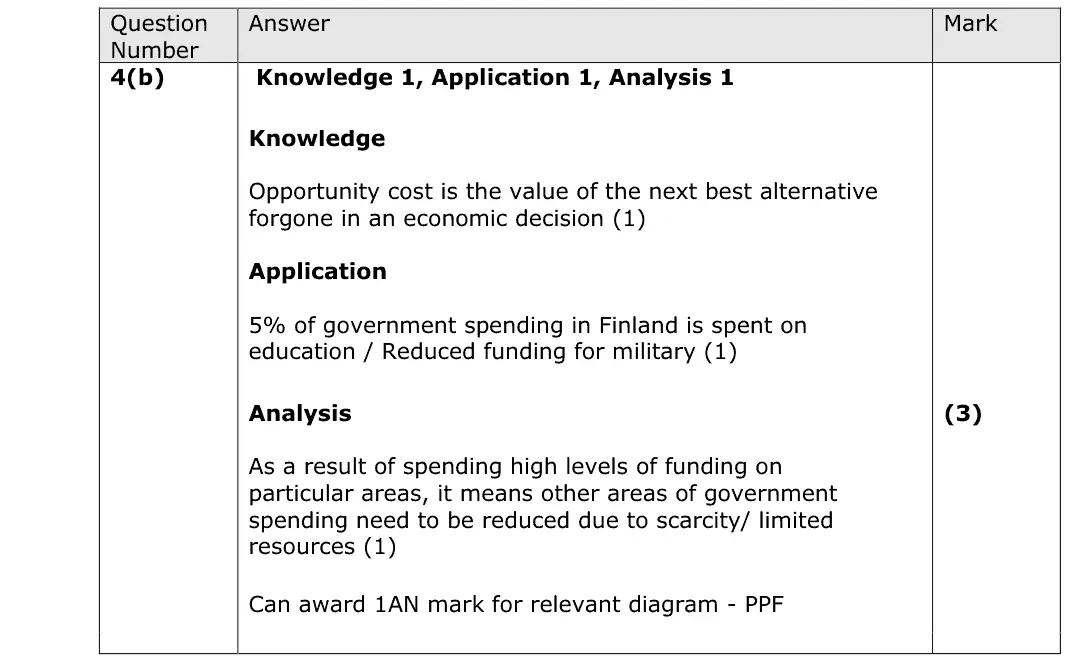
4(b) The nature of economics and the economic problem 3AO1=1,AO2=1,AO3=1Short answer
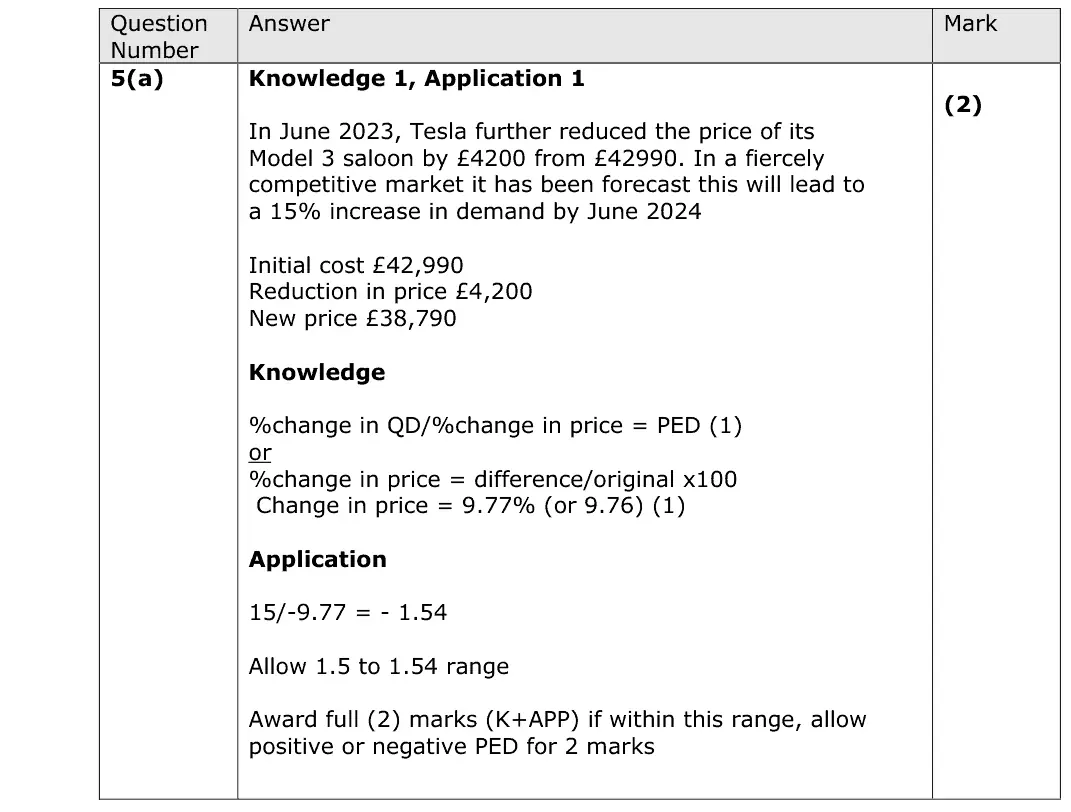
5(a) Price, income and cross elasticities of demand 2AO1=1,AO2=1Calculation
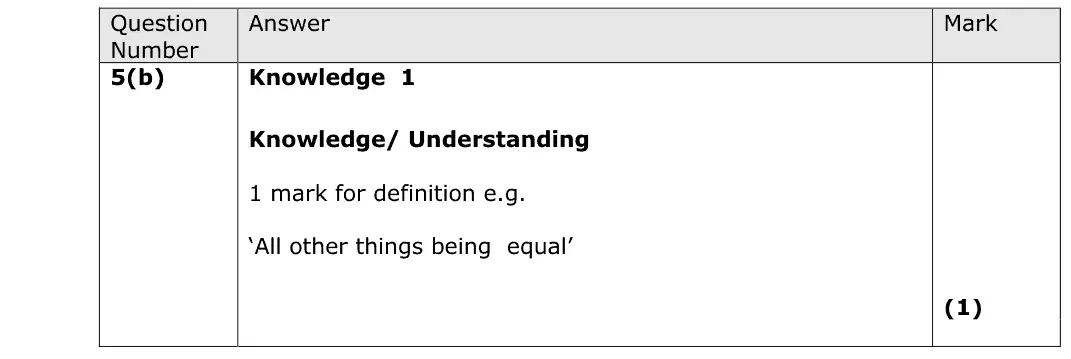
5(b) The nature of economics and the economic problem 1AO1=1Definition
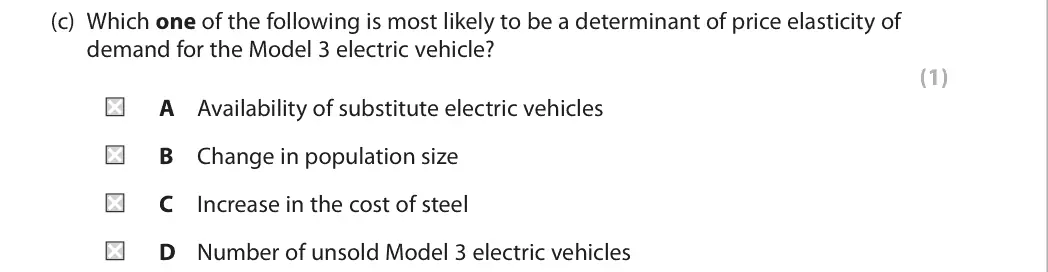
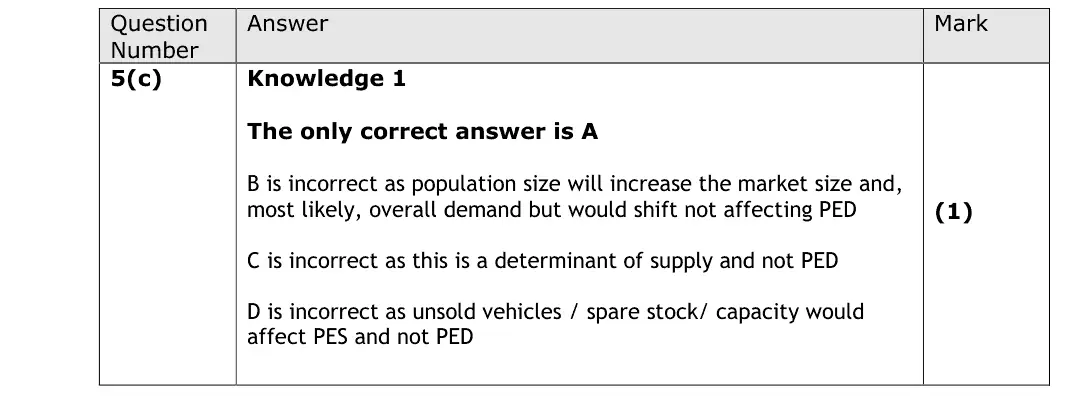
5(c) Price, income and cross elasticities of demand 1AO1=1Multiple choice
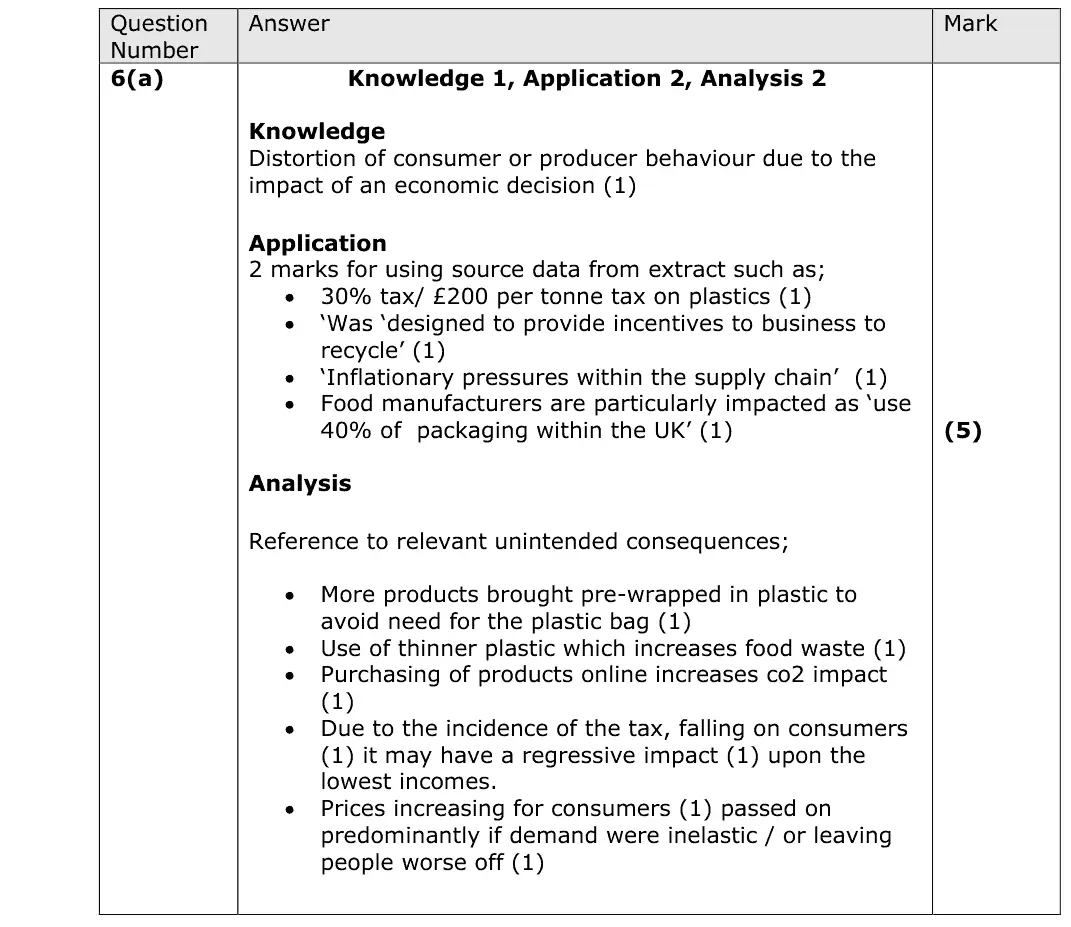
6(a) Government failure 5AO1=1,AO2=2,AO3=2Short answer
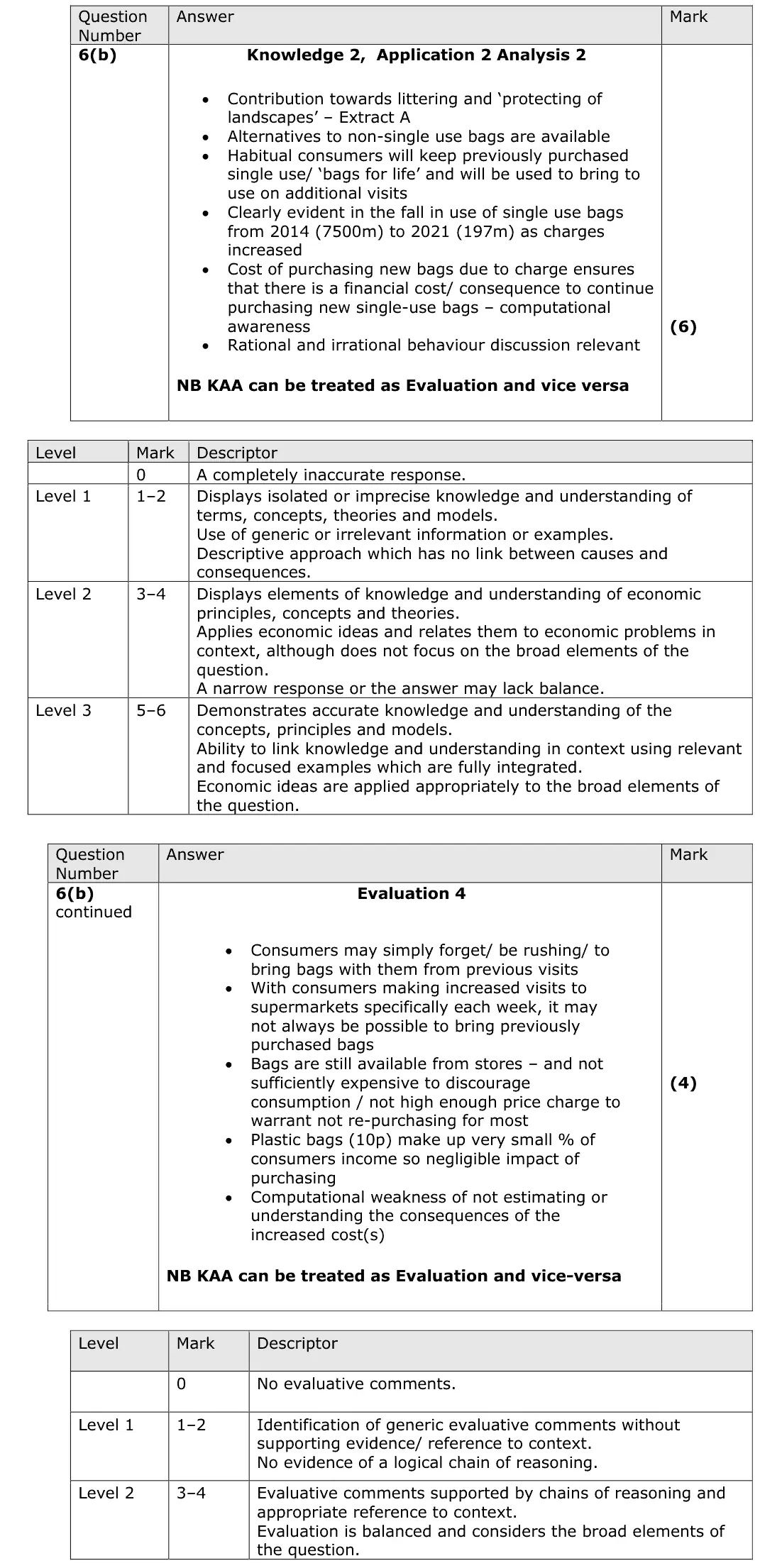
6(b) Rational decision making and behavioural economics 10AO1=2,AO2=2,AO3=2,AO4=4Extended response
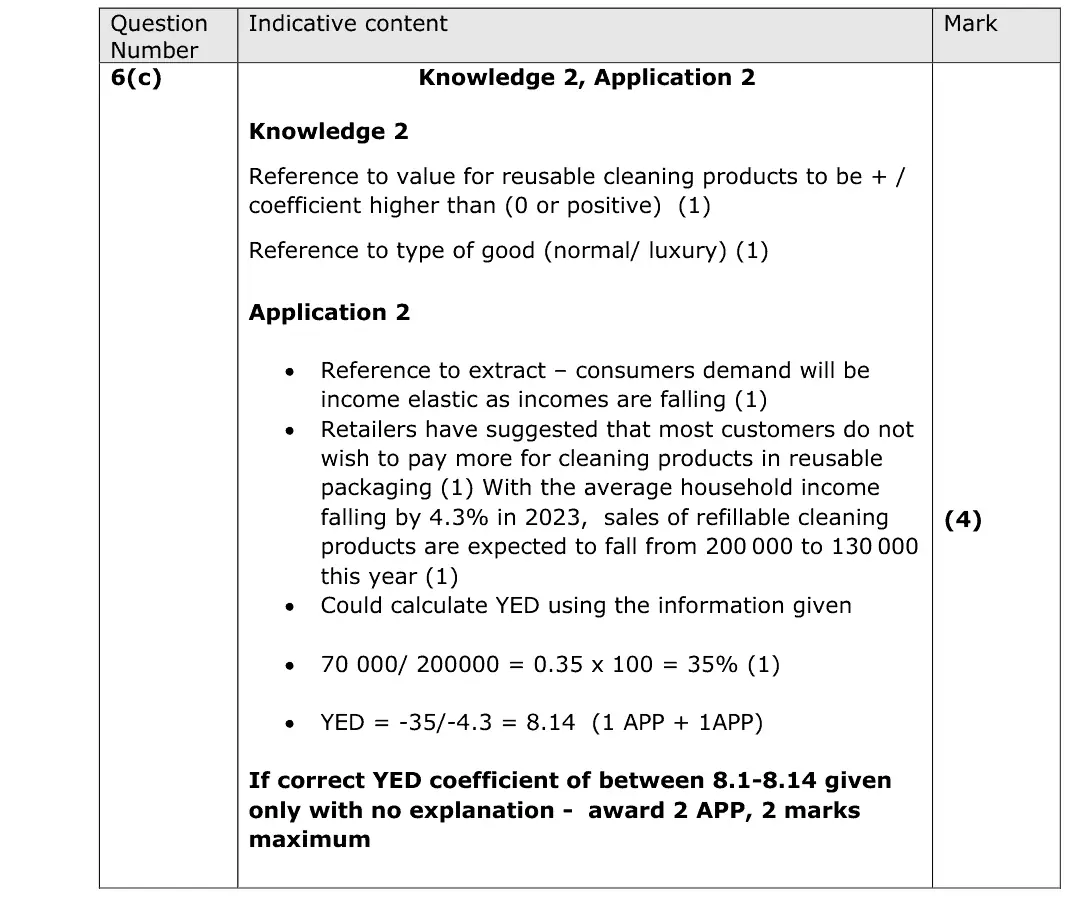
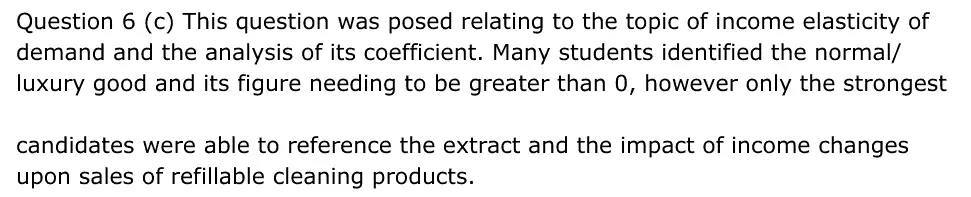
6(c) Price, income and cross elasticities of demand 4AO1=2,AO2=2Short answer
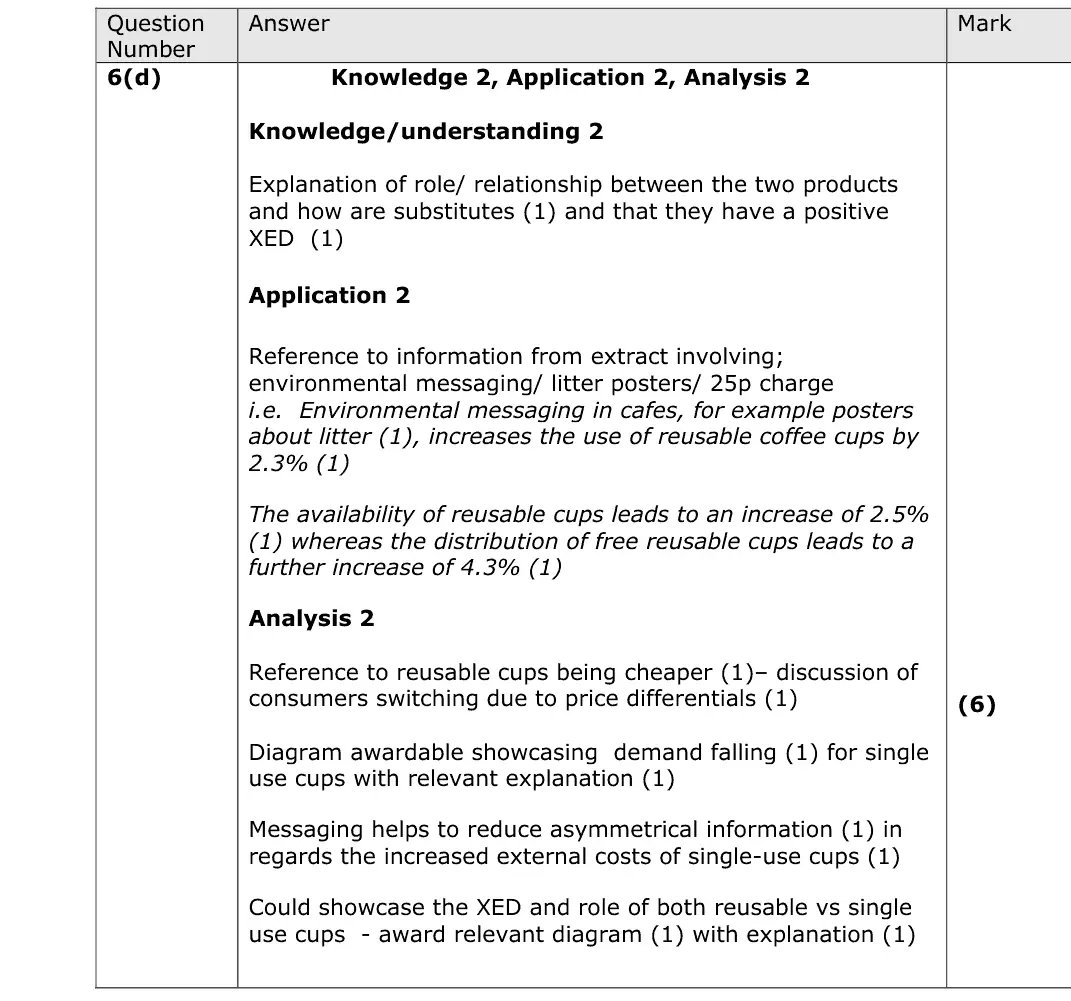
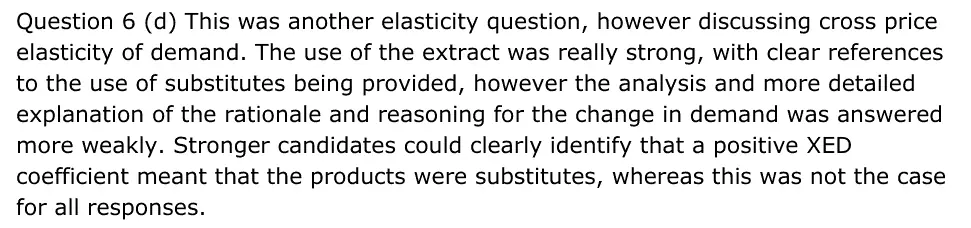
6(d) Price, income and cross elasticities of demand, Supply, demand and price determination 6AO1=2,AO2=2,AO3=2Short answer
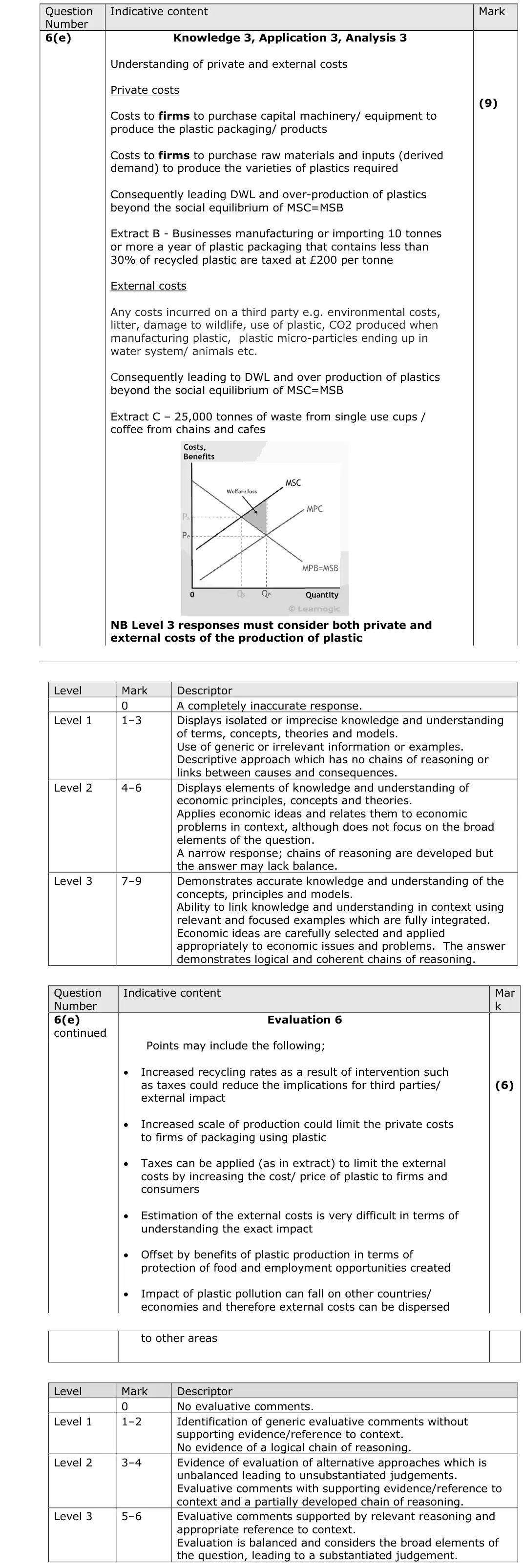
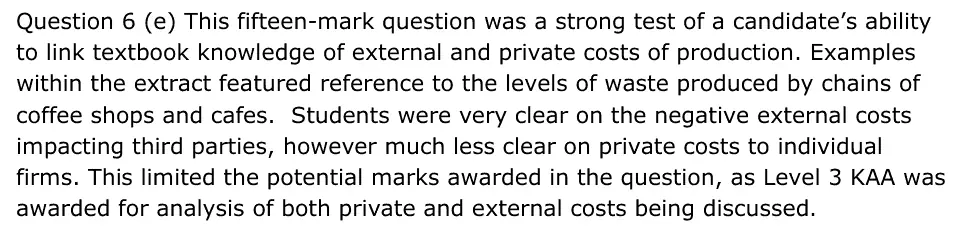
6(e) Market failure and externalities 15AO1=3,AO2=3,AO3=3,AO4=6Extended response
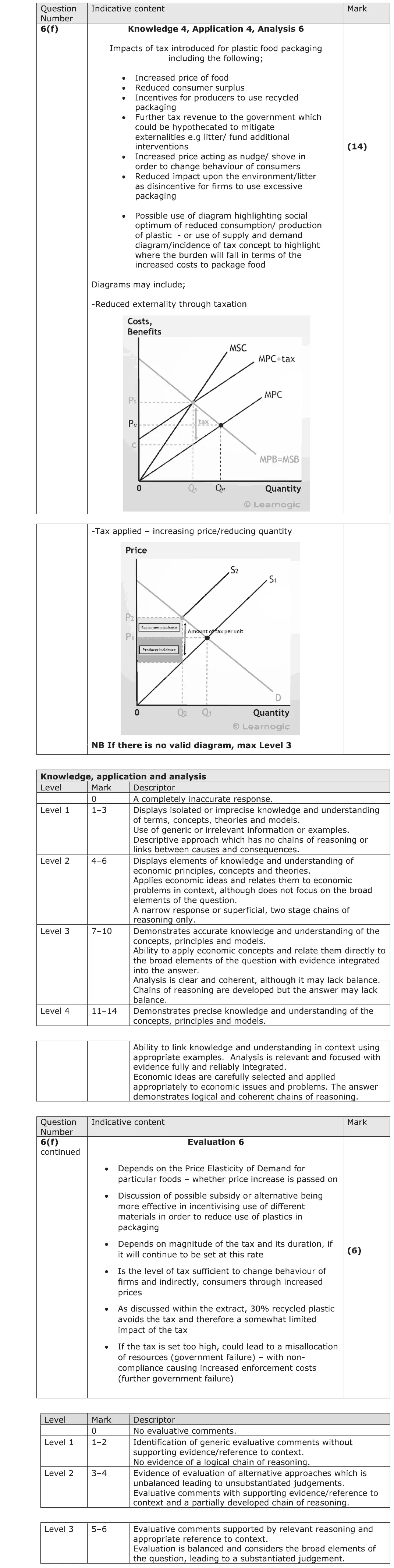
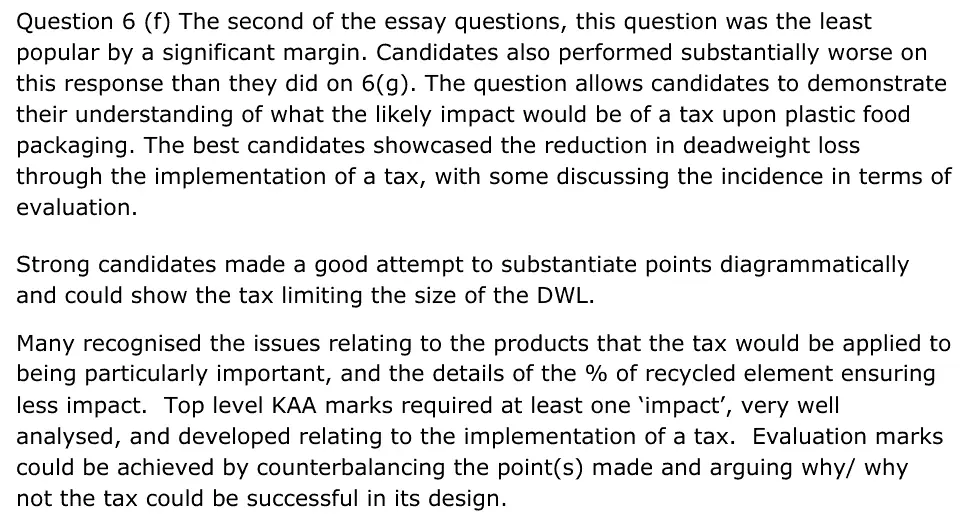
6(f) Government intervention in markets, Indirect taxes and subsidies 20AO1=4,AO2=4,AO3=6,AO4=6Essay
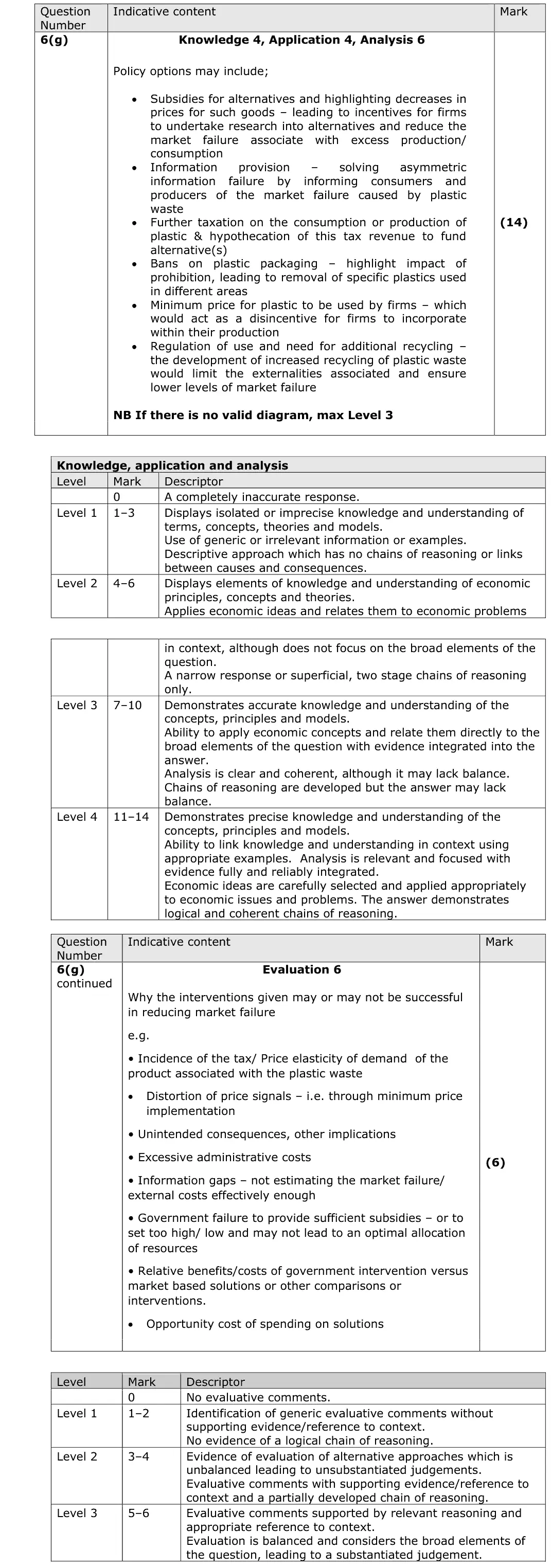
6(g) Government intervention in markets, Government failure 20AO1=4,AO2=4,AO3=6,AO4=6Essay

The questions

1(a)1(b)2(a)2(b)2(c)3(a)3(b)4(a)4(b)5(a)5(b)5(c)6(a)6(b)6(c)6(d)6(e)6(f)6(g)
June 2024 · AS Paper 1 · Q1(a) 3 marks AO1=1, AO2=1, AO3=1 Short answer nature of economics
Data and extracts for question 11 Scarcity of non‑renewable resources, such as oil, is a key reason why alternative resources have been developed by economies. In recent years, within the energy market there has been a large increase in the production of wind power.
(a) With reference to the information provided, explain the distinction between renewable and non‑renewable resources. (3)
June 2024 · AS Paper 1 · Q1(b) 1 mark AO1=1 Multiple choice nature of economics
Data and extracts for question 11 Scarcity of non‑renewable resources, such as oil, is a key reason why alternative resources have been developed by economies. In recent years, within the energy market there has been a large increase in the production of wind power.
(b) Which one of the following best describes ‘scarcity’? (1) A An extension of the demand curve B Excess supply C Insufficient resources to satisfy wants D The misallocation of resources
June 2024 · AS Paper 1 · Q2(a) 1 mark AO1=1 Definition supply and demand
Data and extracts for question 22 Vanilla bean prices increased to a record $600 a kilogramme in 2018 after a cyclone hit the tropical island of Madagascar, damaging crops. Madagascar supplies 75% to 80% of the world vanilla bean market.
(a) Define the term ‘supply.’ (1)
June 2024 · AS Paper 1 · Q2(b) 1 mark AO1=1 Multiple choice production possibility frontiers
Data and extracts for question 22 Vanilla bean prices increased to a record $600 a kilogramme in 2018 after a cyclone hit the tropical island of Madagascar, damaging crops. Madagascar supplies 75% to 80% of the world vanilla bean market.
(b) The diagrams below show movements from position X to Y on production possibility frontiers. In which one of the diagrams does the movement from X to Y illustrate the most likely impact on Madagascar’s economy of a natural disaster such as a cyclone? (1) A B Output of Output of consumer consumer Y Y goods goods X X 0 0 Output of capital goods Output of capital goods C D Output of Output of consumer consumer goods goods Y X X Y 0 0 Output of capital goods Output of capital goods
June 2024 · AS Paper 1 · Q2(c) 2 marks AO1=1, AO2=1 Diagram supply and demand
Data and extracts for question 22 Vanilla bean prices increased to a record $600 a kilogramme in 2018 after a cyclone hit the tropical island of Madagascar, damaging crops. Madagascar supplies 75% to 80% of the world vanilla bean market.
(c) Annotate the diagram below to show the effect of the cyclone on the price of vanilla beans. (2) Supply Price of vanilla beans e Pe Demand 0 Qe Quantity of vanilla beans
June 2024 · AS Paper 1 · Q3(a) 1 mark AO1=1 Multiple choice economic systems
Data and extracts for question 33 Singapore is mainly a free market economy.
(a) Which one of the following statements about a free market economy is true? (1) A It was supported by Karl Marx B The price mechanism allocates all resources C There are no externalities D The state owns all the resources
June 2024 · AS Paper 1 · Q3(b) 3 marks AO1=1, AO2=1, AO3=1 Short answer externalitiesgovernment intervention in markets
Data and extracts for question 33 Singapore is mainly a free market economy.
The education system in Singapore produces some of the highest achieving students in international education rankings, with its teenagers coming top in tests in mathematics, reading and science. (b) Singapore’s education system is provided by the state. With reference to the information above, explain why education is normally provided by the state. (3)
June 2024 · AS Paper 1 · Q4(a) 1 mark AO1=1 Multiple choice nature of economics
Data and extracts for question 44 Statement 1 Finland has schools with an average class size of 19.6 Statement 2 Other countries ought to set school class sizes similar to Finland. (Source adapted from: https://www.oph.fi/en/news/2019)
(a) Which one of the following best describes the two statements above? (1) Statement 1 Statement 2 A Normative Normative B Normative Positive C Positive Normative D Positive Positive
June 2024 · AS Paper 1 · Q4(b) 3 marks AO1=1, AO2=1, AO3=1 Short answer nature of economics
Data and extracts for question 44 Statement 1 Finland has schools with an average class size of 19.6 Statement 2 Other countries ought to set school class sizes similar to Finland. (Source adapted from: https://www.oph.fi/en/news/2019)
5% of total government spending in Finland is on education and therefore other areas of the economy have reduced funding as a result, including the military despite an increase in recent global conflicts. (b) With reference to the information above, explain what is meant by ‘opportunity cost’. (3)
June 2024 · AS Paper 1 · Q5(a) 2 marks AO1=1, AO2=1 Calculation price elasticity of demand
Data and extracts for question 55 Chief Executive Elon Musk said “affordability” was the biggest barrier to Tesla reaching a far larger market. Before recent price cuts for its electric vehicles, he said, “We weren’t sure about what the price elasticity of demand was for Tesla. We found that even small changes in price have a big impact on demand.” (Source adapted from: https://www.ft.com/)
(a) In June 2023, Tesla further reduced the price of its Model 3 vehicle by £4 200 from £42 990. It has been forecast that the price cut will lead to a 15% increase in demand. Ceteris paribus, calculate the price elasticity of demand for the Model 3. You are advised to show your working. (2)
June 2024 · AS Paper 1 · Q5(b) 1 mark AO1=1 Definition nature of economics
Data and extracts for question 55 Chief Executive Elon Musk said “affordability” was the biggest barrier to Tesla reaching a far larger market. Before recent price cuts for its electric vehicles, he said, “We weren’t sure about what the price elasticity of demand was for Tesla. We found that even small changes in price have a big impact on demand.” (Source adapted from: https://www.ft.com/)
(b) Define the term ‘ceteris paribus’. (1)
June 2024 · AS Paper 1 · Q5(c) 1 mark AO1=1 Multiple choice price elasticity of demand
Data and extracts for question 55 Chief Executive Elon Musk said “affordability” was the biggest barrier to Tesla reaching a far larger market. Before recent price cuts for its electric vehicles, he said, “We weren’t sure about what the price elasticity of demand was for Tesla. We found that even small changes in price have a big impact on demand.” (Source adapted from: https://www.ft.com/)
(c) Which one of the following is most likely to be a determinant of price elasticity of demand for the Model 3 electric vehicle? (1) A Availability of substitute electric vehicles B Change in population size C Increase in the cost of steel D Number of unsold Model 3 electric vehicles
June 2024 · AS Paper 1 · Q6(a) 5 marks AO1=1, AO2=2, AO3=2 Short answer government failure
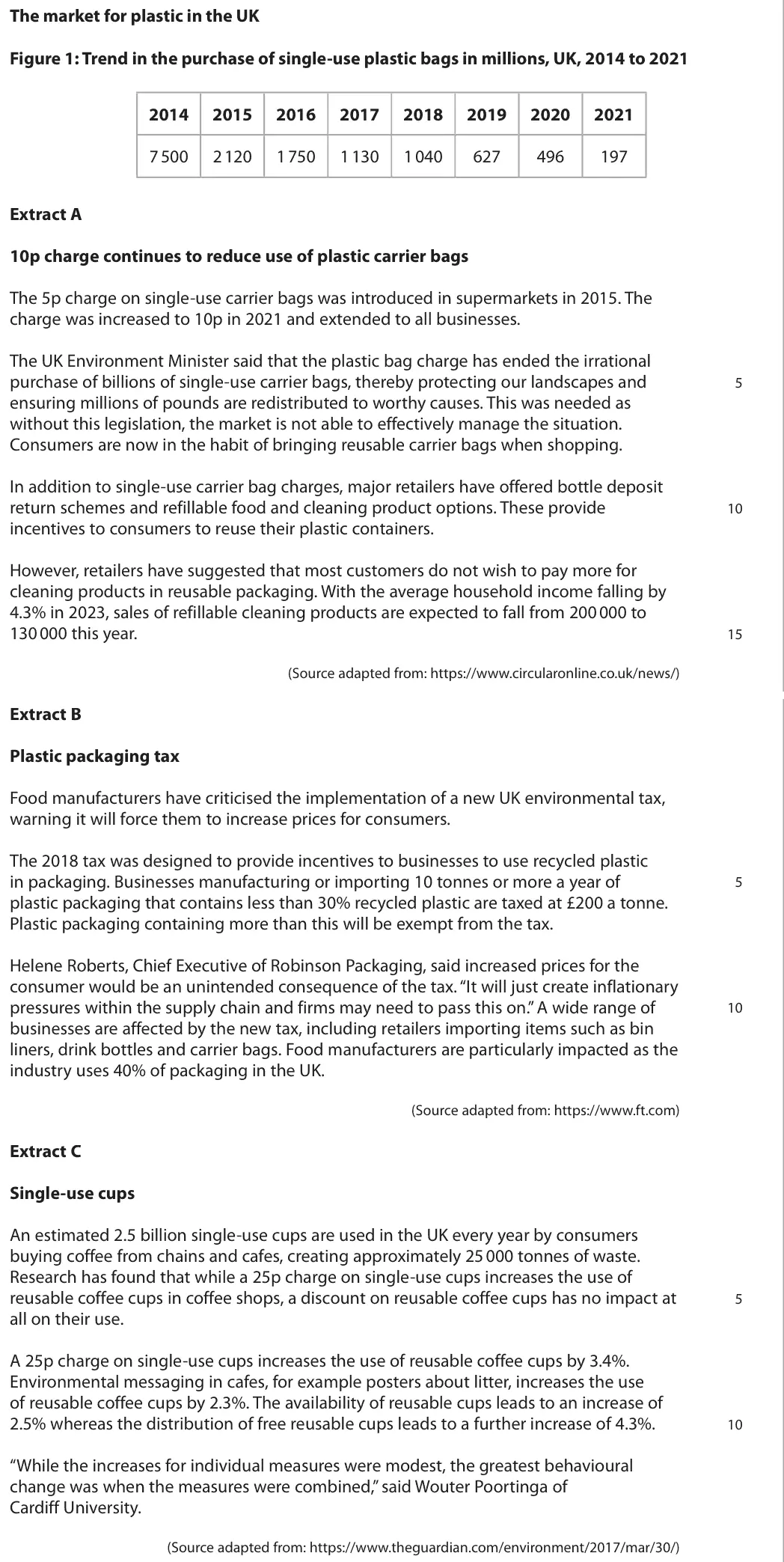
Data and extracts for question 6The market for plastic in the UK Figure 1: Trend in the purchase of single‑use plastic bags in millions, UK, 2014 to 2021 2014 2015 2016 2017 2018 2019 2020 2021 7 500 2 120 1 750 1 130 1 040 627 496 197 Extract A 10p charge continues to reduce use of plastic carrier bags The 5p charge on single‑use carrier bags was introduced in supermarkets in 2015. The charge was increased to 10p in 2021 and extended to all businesses. The UK Environment Minister said that the plastic bag charge has ended the irrational purchase of billions of single‑use carrier bags, thereby protecting our landscapes and 5 ensuring millions of pounds are redistributed to worthy causes. This was needed as without this legislation, the market is not able to effectively manage the situation. Consumers are now in the habit of bringing reusable carrier bags when shopping. In addition to single‑use carrier bag charges, major retailers have offered bottle deposit return schemes and refillable food and cleaning product options. These provide 10 incentives to consumers to reuse their plastic containers. However, retailers have suggested that most customers do not wish to pay more for cleaning products in reusable packaging. With the average household income falling by 4.3% in 2023, sales of refillable cleaning products are expected to fall from 200 000 to 130 000 this year. 15 (Source adapted from: https://www.circularonline.co.uk/news/) Extract B Plastic packaging tax Food manufacturers have criticised the implementation of a new UK environmental tax, warning it will force them to increase prices for consumers. The 2018 tax was designed to provide incentives to businesses to use recycled plastic in packaging. Businesses manufacturing or importing 10 tonnes or more a year of 5 plastic packaging that contains less than 30% recycled plastic are taxed at £200 a tonne. Plastic packaging containing more than this will be exempt from the tax. Helene Roberts, Chief Executive of Robinson Packaging, said increased prices for the consumer would be an unintended consequence of the tax. “It will just create inflationary pressures within the supply chain and firms may need to pass this on.” A wide range of 10 businesses are affected by the new tax, including retailers importing items such as bin liners, drink bottles and carrier bags. Food manufacturers are particularly impacted as the industry uses 40% of packaging in the UK. (Source adapted from: https://www.ft.com) Extract C Single‑use cups An estimated 2.5 billion single‑use cups are used in the UK every year by consumers buying coffee from chains and cafes, creating approximately 25 000 tonnes of waste. Research has found that while a 25p charge on single‑use cups increases the use of reusable coffee cups in coffee shops, a discount on reusable coffee cups has no impact at 5 all on their use. A 25p charge on single‑use cups increases the use of reusable coffee cups by 3.4%. Environmental messaging in cafes, for example posters about litter, increases the use of reusable coffee cups by 2.3%. The availability of reusable cups leads to an increase of 2.5% whereas the distribution of free reusable cups leads to a further increase of 4.3%. 10 “While the increases for individual measures were modest, the greatest behavioural change was when the measures were combined,” said Wouter Poortinga of Cardiff University. (Source adapted from: https://www.theguardian.com/environment/2017/mar/30/)
(a) Explain what is meant by the ‘unintended consequence’ (Extract B, line 9) of the plastic tax. (5)
June 2024 · AS Paper 1 · Q6(b) 10 marks AO1=2, AO2=2, AO3=2, AO4=4 10-mark response rational decision making and behavioural economics
Data and extracts for question 6The market for plastic in the UK Figure 1: Trend in the purchase of single‑use plastic bags in millions, UK, 2014 to 2021 2014 2015 2016 2017 2018 2019 2020 2021 7 500 2 120 1 750 1 130 1 040 627 496 197 Extract A 10p charge continues to reduce use of plastic carrier bags The 5p charge on single‑use carrier bags was introduced in supermarkets in 2015. The charge was increased to 10p in 2021 and extended to all businesses. The UK Environment Minister said that the plastic bag charge has ended the irrational purchase of billions of single‑use carrier bags, thereby protecting our landscapes and 5 ensuring millions of pounds are redistributed to worthy causes. This was needed as without this legislation, the market is not able to effectively manage the situation. Consumers are now in the habit of bringing reusable carrier bags when shopping. In addition to single‑use carrier bag charges, major retailers have offered bottle deposit return schemes and refillable food and cleaning product options. These provide 10 incentives to consumers to reuse their plastic containers. However, retailers have suggested that most customers do not wish to pay more for cleaning products in reusable packaging. With the average household income falling by 4.3% in 2023, sales of refillable cleaning products are expected to fall from 200 000 to 130 000 this year. 15 (Source adapted from: https://www.circularonline.co.uk/news/) Extract B Plastic packaging tax Food manufacturers have criticised the implementation of a new UK environmental tax, warning it will force them to increase prices for consumers. The 2018 tax was designed to provide incentives to businesses to use recycled plastic in packaging. Businesses manufacturing or importing 10 tonnes or more a year of 5 plastic packaging that contains less than 30% recycled plastic are taxed at £200 a tonne. Plastic packaging containing more than this will be exempt from the tax. Helene Roberts, Chief Executive of Robinson Packaging, said increased prices for the consumer would be an unintended consequence of the tax. “It will just create inflationary pressures within the supply chain and firms may need to pass this on.” A wide range of 10 businesses are affected by the new tax, including retailers importing items such as bin liners, drink bottles and carrier bags. Food manufacturers are particularly impacted as the industry uses 40% of packaging in the UK. (Source adapted from: https://www.ft.com) Extract C Single‑use cups An estimated 2.5 billion single‑use cups are used in the UK every year by consumers buying coffee from chains and cafes, creating approximately 25 000 tonnes of waste. Research has found that while a 25p charge on single‑use cups increases the use of reusable coffee cups in coffee shops, a discount on reusable coffee cups has no impact at 5 all on their use. A 25p charge on single‑use cups increases the use of reusable coffee cups by 3.4%. Environmental messaging in cafes, for example posters about litter, increases the use of reusable coffee cups by 2.3%. The availability of reusable cups leads to an increase of 2.5% whereas the distribution of free reusable cups leads to a further increase of 4.3%. 10 “While the increases for individual measures were modest, the greatest behavioural change was when the measures were combined,” said Wouter Poortinga of Cardiff University. (Source adapted from: https://www.theguardian.com/environment/2017/mar/30/)
(b) With reference to Extract A and your own knowledge, assess the view that it is irrational to buy plastic carrier bags when shopping. (10)
June 2024 · AS Paper 1 · Q6(c) 4 marks AO1=2, AO2=2 Short answer price elasticity of demand
Data and extracts for question 6The market for plastic in the UK Figure 1: Trend in the purchase of single‑use plastic bags in millions, UK, 2014 to 2021 2014 2015 2016 2017 2018 2019 2020 2021 7 500 2 120 1 750 1 130 1 040 627 496 197 Extract A 10p charge continues to reduce use of plastic carrier bags The 5p charge on single‑use carrier bags was introduced in supermarkets in 2015. The charge was increased to 10p in 2021 and extended to all businesses. The UK Environment Minister said that the plastic bag charge has ended the irrational purchase of billions of single‑use carrier bags, thereby protecting our landscapes and 5 ensuring millions of pounds are redistributed to worthy causes. This was needed as without this legislation, the market is not able to effectively manage the situation. Consumers are now in the habit of bringing reusable carrier bags when shopping. In addition to single‑use carrier bag charges, major retailers have offered bottle deposit return schemes and refillable food and cleaning product options. These provide 10 incentives to consumers to reuse their plastic containers. However, retailers have suggested that most customers do not wish to pay more for cleaning products in reusable packaging. With the average household income falling by 4.3% in 2023, sales of refillable cleaning products are expected to fall from 200 000 to 130 000 this year. 15 (Source adapted from: https://www.circularonline.co.uk/news/) Extract B Plastic packaging tax Food manufacturers have criticised the implementation of a new UK environmental tax, warning it will force them to increase prices for consumers. The 2018 tax was designed to provide incentives to businesses to use recycled plastic in packaging. Businesses manufacturing or importing 10 tonnes or more a year of 5 plastic packaging that contains less than 30% recycled plastic are taxed at £200 a tonne. Plastic packaging containing more than this will be exempt from the tax. Helene Roberts, Chief Executive of Robinson Packaging, said increased prices for the consumer would be an unintended consequence of the tax. “It will just create inflationary pressures within the supply chain and firms may need to pass this on.” A wide range of 10 businesses are affected by the new tax, including retailers importing items such as bin liners, drink bottles and carrier bags. Food manufacturers are particularly impacted as the industry uses 40% of packaging in the UK. (Source adapted from: https://www.ft.com) Extract C Single‑use cups An estimated 2.5 billion single‑use cups are used in the UK every year by consumers buying coffee from chains and cafes, creating approximately 25 000 tonnes of waste. Research has found that while a 25p charge on single‑use cups increases the use of reusable coffee cups in coffee shops, a discount on reusable coffee cups has no impact at 5 all on their use. A 25p charge on single‑use cups increases the use of reusable coffee cups by 3.4%. Environmental messaging in cafes, for example posters about litter, increases the use of reusable coffee cups by 2.3%. The availability of reusable cups leads to an increase of 2.5% whereas the distribution of free reusable cups leads to a further increase of 4.3%. 10 “While the increases for individual measures were modest, the greatest behavioural change was when the measures were combined,” said Wouter Poortinga of Cardiff University. (Source adapted from: https://www.theguardian.com/environment/2017/mar/30/)
(c) With reference to Extract A, explain the likely numerical value for the income elasticity of demand for reusable cleaning products. (4)
June 2024 · AS Paper 1 · Q6(d) 6 marks AO1=2, AO2=2, AO3=2 Short answer price elasticity of demandsupply and demand
Data and extracts for question 6The market for plastic in the UK Figure 1: Trend in the purchase of single‑use plastic bags in millions, UK, 2014 to 2021 2014 2015 2016 2017 2018 2019 2020 2021 7 500 2 120 1 750 1 130 1 040 627 496 197 Extract A 10p charge continues to reduce use of plastic carrier bags The 5p charge on single‑use carrier bags was introduced in supermarkets in 2015. The charge was increased to 10p in 2021 and extended to all businesses. The UK Environment Minister said that the plastic bag charge has ended the irrational purchase of billions of single‑use carrier bags, thereby protecting our landscapes and 5 ensuring millions of pounds are redistributed to worthy causes. This was needed as without this legislation, the market is not able to effectively manage the situation. Consumers are now in the habit of bringing reusable carrier bags when shopping. In addition to single‑use carrier bag charges, major retailers have offered bottle deposit return schemes and refillable food and cleaning product options. These provide 10 incentives to consumers to reuse their plastic containers. However, retailers have suggested that most customers do not wish to pay more for cleaning products in reusable packaging. With the average household income falling by 4.3% in 2023, sales of refillable cleaning products are expected to fall from 200 000 to 130 000 this year. 15 (Source adapted from: https://www.circularonline.co.uk/news/) Extract B Plastic packaging tax Food manufacturers have criticised the implementation of a new UK environmental tax, warning it will force them to increase prices for consumers. The 2018 tax was designed to provide incentives to businesses to use recycled plastic in packaging. Businesses manufacturing or importing 10 tonnes or more a year of 5 plastic packaging that contains less than 30% recycled plastic are taxed at £200 a tonne. Plastic packaging containing more than this will be exempt from the tax. Helene Roberts, Chief Executive of Robinson Packaging, said increased prices for the consumer would be an unintended consequence of the tax. “It will just create inflationary pressures within the supply chain and firms may need to pass this on.” A wide range of 10 businesses are affected by the new tax, including retailers importing items such as bin liners, drink bottles and carrier bags. Food manufacturers are particularly impacted as the industry uses 40% of packaging in the UK. (Source adapted from: https://www.ft.com) Extract C Single‑use cups An estimated 2.5 billion single‑use cups are used in the UK every year by consumers buying coffee from chains and cafes, creating approximately 25 000 tonnes of waste. Research has found that while a 25p charge on single‑use cups increases the use of reusable coffee cups in coffee shops, a discount on reusable coffee cups has no impact at 5 all on their use. A 25p charge on single‑use cups increases the use of reusable coffee cups by 3.4%. Environmental messaging in cafes, for example posters about litter, increases the use of reusable coffee cups by 2.3%. The availability of reusable cups leads to an increase of 2.5% whereas the distribution of free reusable cups leads to a further increase of 4.3%. 10 “While the increases for individual measures were modest, the greatest behavioural change was when the measures were combined,” said Wouter Poortinga of Cardiff University. (Source adapted from: https://www.theguardian.com/environment/2017/mar/30/)
(d) With reference to Extract C, explain how incentives to use reusable coffee cups may lead to a fall in demand for single‑use cups. (6)
June 2024 · AS Paper 1 · Q6(e) 15 marks AO1=3, AO2=3, AO3=3, AO4=6 15-mark response externalities
Data and extracts for question 6The market for plastic in the UK Figure 1: Trend in the purchase of single‑use plastic bags in millions, UK, 2014 to 2021 2014 2015 2016 2017 2018 2019 2020 2021 7 500 2 120 1 750 1 130 1 040 627 496 197 Extract A 10p charge continues to reduce use of plastic carrier bags The 5p charge on single‑use carrier bags was introduced in supermarkets in 2015. The charge was increased to 10p in 2021 and extended to all businesses. The UK Environment Minister said that the plastic bag charge has ended the irrational purchase of billions of single‑use carrier bags, thereby protecting our landscapes and 5 ensuring millions of pounds are redistributed to worthy causes. This was needed as without this legislation, the market is not able to effectively manage the situation. Consumers are now in the habit of bringing reusable carrier bags when shopping. In addition to single‑use carrier bag charges, major retailers have offered bottle deposit return schemes and refillable food and cleaning product options. These provide 10 incentives to consumers to reuse their plastic containers. However, retailers have suggested that most customers do not wish to pay more for cleaning products in reusable packaging. With the average household income falling by 4.3% in 2023, sales of refillable cleaning products are expected to fall from 200 000 to 130 000 this year. 15 (Source adapted from: https://www.circularonline.co.uk/news/) Extract B Plastic packaging tax Food manufacturers have criticised the implementation of a new UK environmental tax, warning it will force them to increase prices for consumers. The 2018 tax was designed to provide incentives to businesses to use recycled plastic in packaging. Businesses manufacturing or importing 10 tonnes or more a year of 5 plastic packaging that contains less than 30% recycled plastic are taxed at £200 a tonne. Plastic packaging containing more than this will be exempt from the tax. Helene Roberts, Chief Executive of Robinson Packaging, said increased prices for the consumer would be an unintended consequence of the tax. “It will just create inflationary pressures within the supply chain and firms may need to pass this on.” A wide range of 10 businesses are affected by the new tax, including retailers importing items such as bin liners, drink bottles and carrier bags. Food manufacturers are particularly impacted as the industry uses 40% of packaging in the UK. (Source adapted from: https://www.ft.com) Extract C Single‑use cups An estimated 2.5 billion single‑use cups are used in the UK every year by consumers buying coffee from chains and cafes, creating approximately 25 000 tonnes of waste. Research has found that while a 25p charge on single‑use cups increases the use of reusable coffee cups in coffee shops, a discount on reusable coffee cups has no impact at 5 all on their use. A 25p charge on single‑use cups increases the use of reusable coffee cups by 3.4%. Environmental messaging in cafes, for example posters about litter, increases the use of reusable coffee cups by 2.3%. The availability of reusable cups leads to an increase of 2.5% whereas the distribution of free reusable cups leads to a further increase of 4.3%. 10 “While the increases for individual measures were modest, the greatest behavioural change was when the measures were combined,” said Wouter Poortinga of Cardiff University. (Source adapted from: https://www.theguardian.com/environment/2017/mar/30/)
(e) Discuss the likely private costs and external costs of the production of plastic. (15)
June 2024 · AS Paper 1 · Q6(f) 20 marks AO1=4, AO2=4, AO3=6, AO4=6 20-mark essay Either/or Hard government intervention in marketsindirect taxes and subsidies
Data and extracts for question 6The market for plastic in the UK Figure 1: Trend in the purchase of single‑use plastic bags in millions, UK, 2014 to 2021 2014 2015 2016 2017 2018 2019 2020 2021 7 500 2 120 1 750 1 130 1 040 627 496 197 Extract A 10p charge continues to reduce use of plastic carrier bags The 5p charge on single‑use carrier bags was introduced in supermarkets in 2015. The charge was increased to 10p in 2021 and extended to all businesses. The UK Environment Minister said that the plastic bag charge has ended the irrational purchase of billions of single‑use carrier bags, thereby protecting our landscapes and 5 ensuring millions of pounds are redistributed to worthy causes. This was needed as without this legislation, the market is not able to effectively manage the situation. Consumers are now in the habit of bringing reusable carrier bags when shopping. In addition to single‑use carrier bag charges, major retailers have offered bottle deposit return schemes and refillable food and cleaning product options. These provide 10 incentives to consumers to reuse their plastic containers. However, retailers have suggested that most customers do not wish to pay more for cleaning products in reusable packaging. With the average household income falling by 4.3% in 2023, sales of refillable cleaning products are expected to fall from 200 000 to 130 000 this year. 15 (Source adapted from: https://www.circularonline.co.uk/news/) Extract B Plastic packaging tax Food manufacturers have criticised the implementation of a new UK environmental tax, warning it will force them to increase prices for consumers. The 2018 tax was designed to provide incentives to businesses to use recycled plastic in packaging. Businesses manufacturing or importing 10 tonnes or more a year of 5 plastic packaging that contains less than 30% recycled plastic are taxed at £200 a tonne. Plastic packaging containing more than this will be exempt from the tax. Helene Roberts, Chief Executive of Robinson Packaging, said increased prices for the consumer would be an unintended consequence of the tax. “It will just create inflationary pressures within the supply chain and firms may need to pass this on.” A wide range of 10 businesses are affected by the new tax, including retailers importing items such as bin liners, drink bottles and carrier bags. Food manufacturers are particularly impacted as the industry uses 40% of packaging in the UK. (Source adapted from: https://www.ft.com) Extract C Single‑use cups An estimated 2.5 billion single‑use cups are used in the UK every year by consumers buying coffee from chains and cafes, creating approximately 25 000 tonnes of waste. Research has found that while a 25p charge on single‑use cups increases the use of reusable coffee cups in coffee shops, a discount on reusable coffee cups has no impact at 5 all on their use. A 25p charge on single‑use cups increases the use of reusable coffee cups by 3.4%. Environmental messaging in cafes, for example posters about litter, increases the use of reusable coffee cups by 2.3%. The availability of reusable cups leads to an increase of 2.5% whereas the distribution of free reusable cups leads to a further increase of 4.3%. 10 “While the increases for individual measures were modest, the greatest behavioural change was when the measures were combined,” said Wouter Poortinga of Cardiff University. (Source adapted from: https://www.theguardian.com/environment/2017/mar/30/)
(f) Evaluate the likely impact of a tax on plastic food-packaging. Use a diagram to support your answer. (20)
June 2024 · AS Paper 1 · Q6(g) 20 marks AO1=4, AO2=4, AO3=6, AO4=6 20-mark essay Either/or government intervention in marketsgovernment failure
Data and extracts for question 6The market for plastic in the UK Figure 1: Trend in the purchase of single‑use plastic bags in millions, UK, 2014 to 2021 2014 2015 2016 2017 2018 2019 2020 2021 7 500 2 120 1 750 1 130 1 040 627 496 197 Extract A 10p charge continues to reduce use of plastic carrier bags The 5p charge on single‑use carrier bags was introduced in supermarkets in 2015. The charge was increased to 10p in 2021 and extended to all businesses. The UK Environment Minister said that the plastic bag charge has ended the irrational purchase of billions of single‑use carrier bags, thereby protecting our landscapes and 5 ensuring millions of pounds are redistributed to worthy causes. This was needed as without this legislation, the market is not able to effectively manage the situation. Consumers are now in the habit of bringing reusable carrier bags when shopping. In addition to single‑use carrier bag charges, major retailers have offered bottle deposit return schemes and refillable food and cleaning product options. These provide 10 incentives to consumers to reuse their plastic containers. However, retailers have suggested that most customers do not wish to pay more for cleaning products in reusable packaging. With the average household income falling by 4.3% in 2023, sales of refillable cleaning products are expected to fall from 200 000 to 130 000 this year. 15 (Source adapted from: https://www.circularonline.co.uk/news/) Extract B Plastic packaging tax Food manufacturers have criticised the implementation of a new UK environmental tax, warning it will force them to increase prices for consumers. The 2018 tax was designed to provide incentives to businesses to use recycled plastic in packaging. Businesses manufacturing or importing 10 tonnes or more a year of 5 plastic packaging that contains less than 30% recycled plastic are taxed at £200 a tonne. Plastic packaging containing more than this will be exempt from the tax. Helene Roberts, Chief Executive of Robinson Packaging, said increased prices for the consumer would be an unintended consequence of the tax. “It will just create inflationary pressures within the supply chain and firms may need to pass this on.” A wide range of 10 businesses are affected by the new tax, including retailers importing items such as bin liners, drink bottles and carrier bags. Food manufacturers are particularly impacted as the industry uses 40% of packaging in the UK. (Source adapted from: https://www.ft.com) Extract C Single‑use cups An estimated 2.5 billion single‑use cups are used in the UK every year by consumers buying coffee from chains and cafes, creating approximately 25 000 tonnes of waste. Research has found that while a 25p charge on single‑use cups increases the use of reusable coffee cups in coffee shops, a discount on reusable coffee cups has no impact at 5 all on their use. A 25p charge on single‑use cups increases the use of reusable coffee cups by 3.4%. Environmental messaging in cafes, for example posters about litter, increases the use of reusable coffee cups by 2.3%. The availability of reusable cups leads to an increase of 2.5% whereas the distribution of free reusable cups leads to a further increase of 4.3%. 10 “While the increases for individual measures were modest, the greatest behavioural change was when the measures were combined,” said Wouter Poortinga of Cardiff University. (Source adapted from: https://www.theguardian.com/environment/2017/mar/30/)
(g) Evaluate methods of government intervention which could be used to reduce the market failure associated with plastic waste. Use a diagram to support your answer. (20)

Work with an Edexcel economics tutor

Want a paper marked and gone through with you? Message us.

Prefer email? Send an enquiry

If you are under 18, please include a parent's contact details. Enquiries go to enquiries@economicsaleveltutor.com and are deleted once handled. All tutoring is online.