June 2019: Paper 3

100 marks · 10 question parts · Paper, mark scheme and report on Pearson's site

Question by question

QTopicMarksAOType
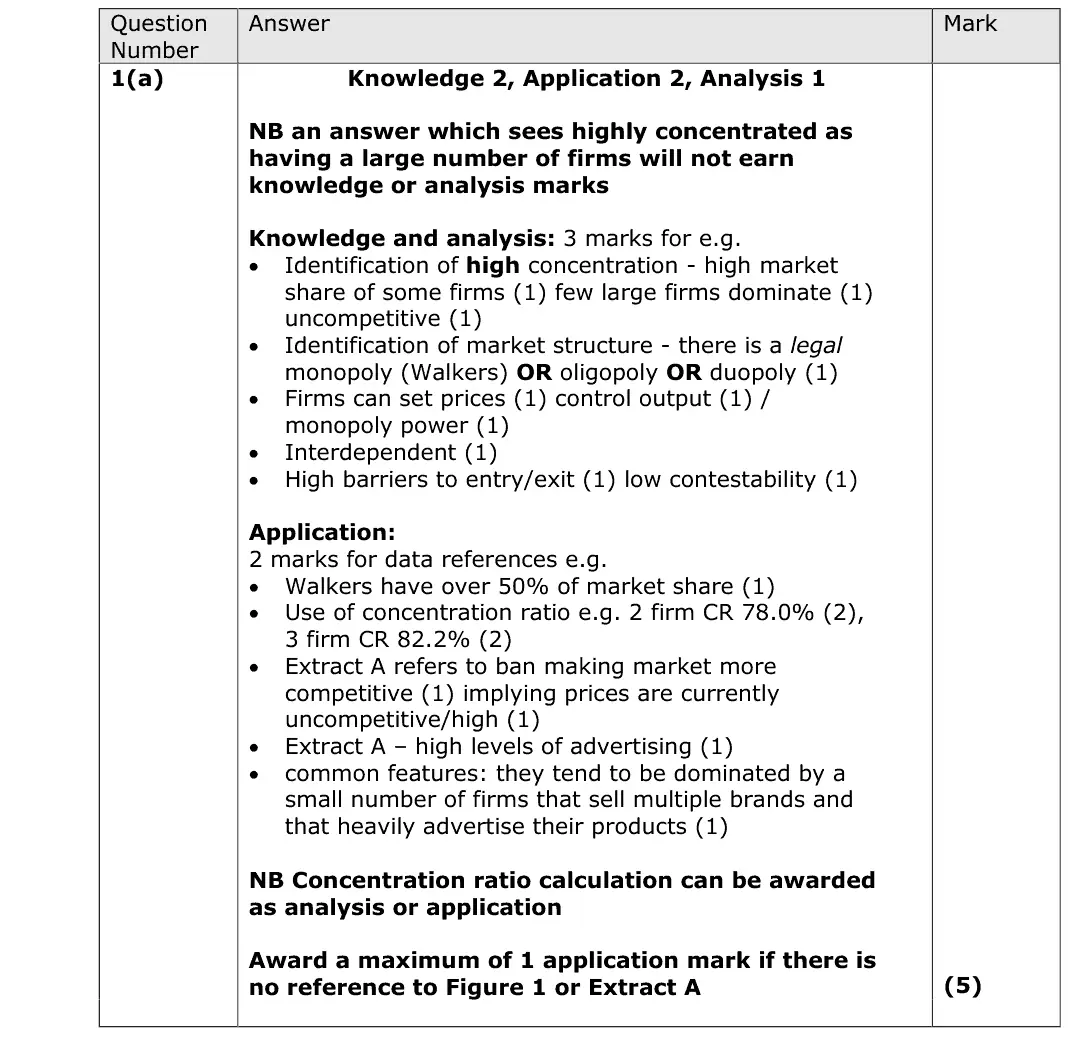
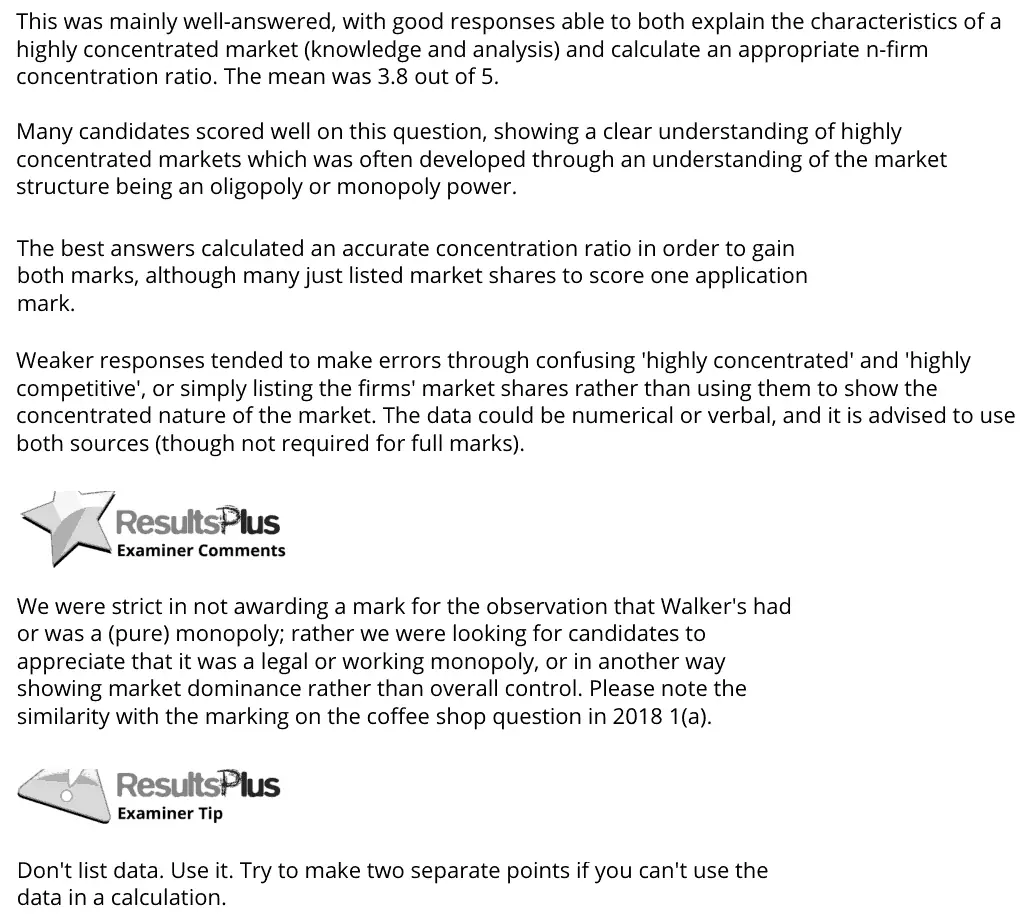
1(a) Oligopoly 5AO1=2,AO2=2,AO3=1Calculation
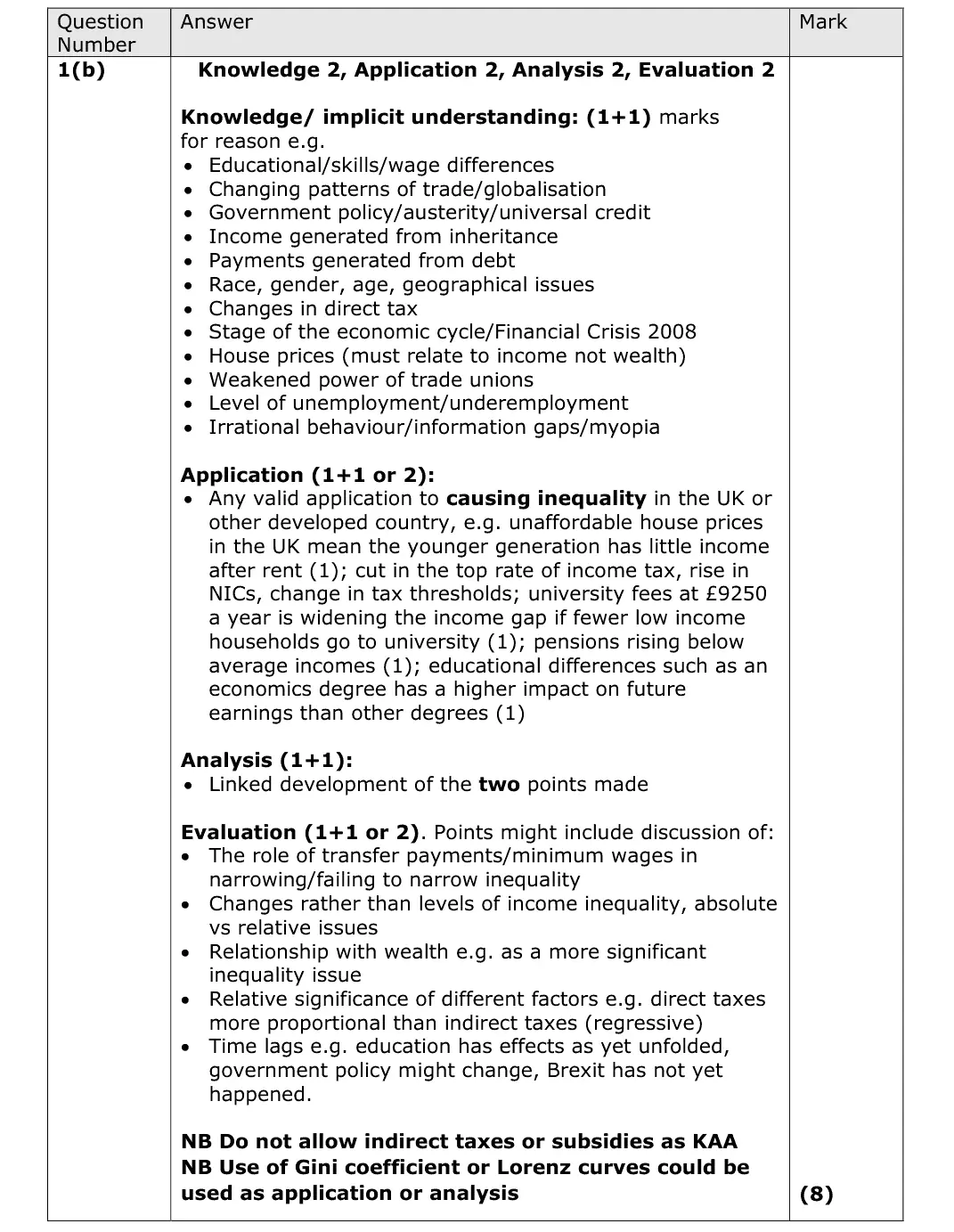
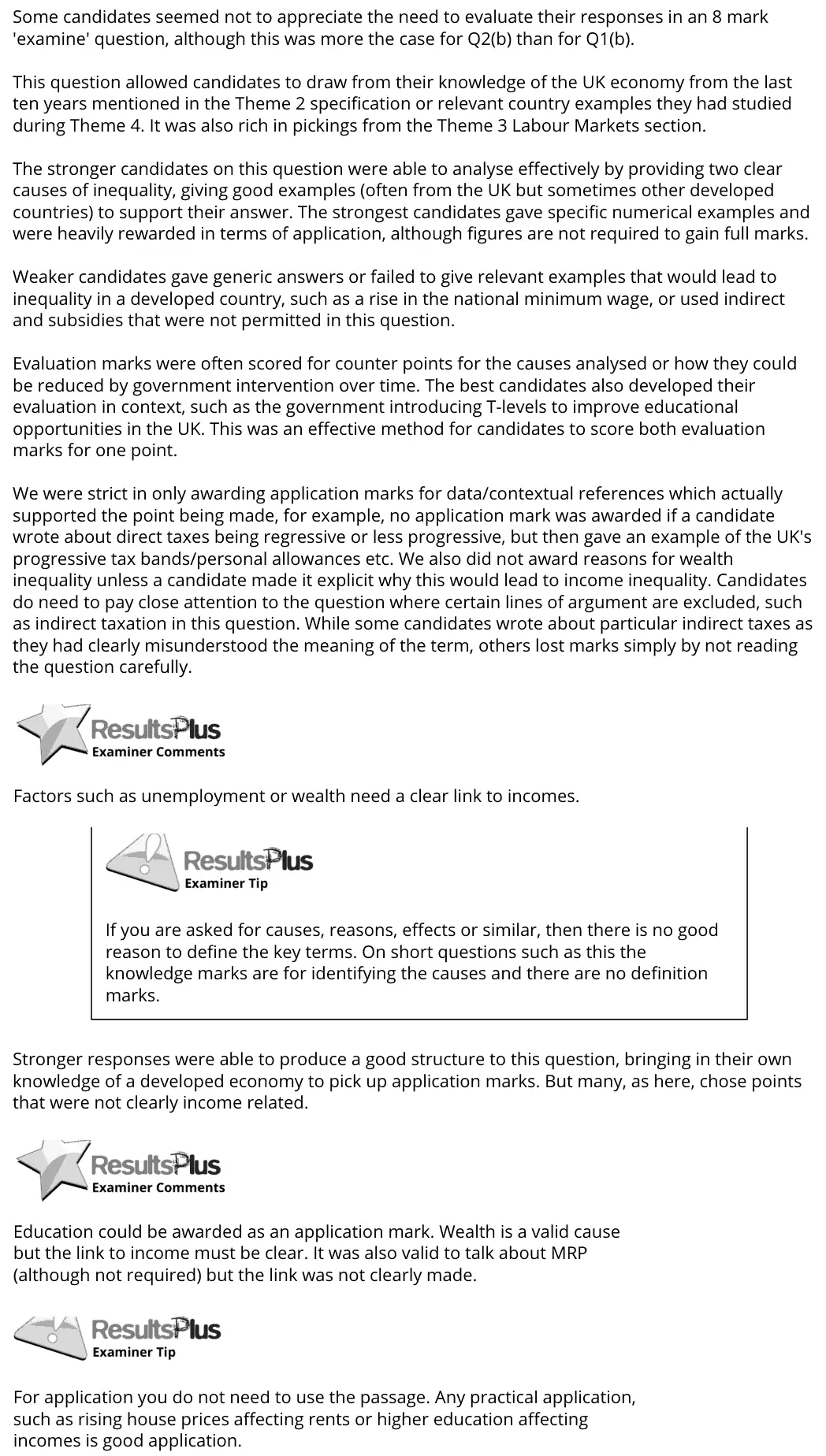
1(b) Poverty and inequality 8AO1=2,AO2=2,AO3=2,AO4=2Extended response
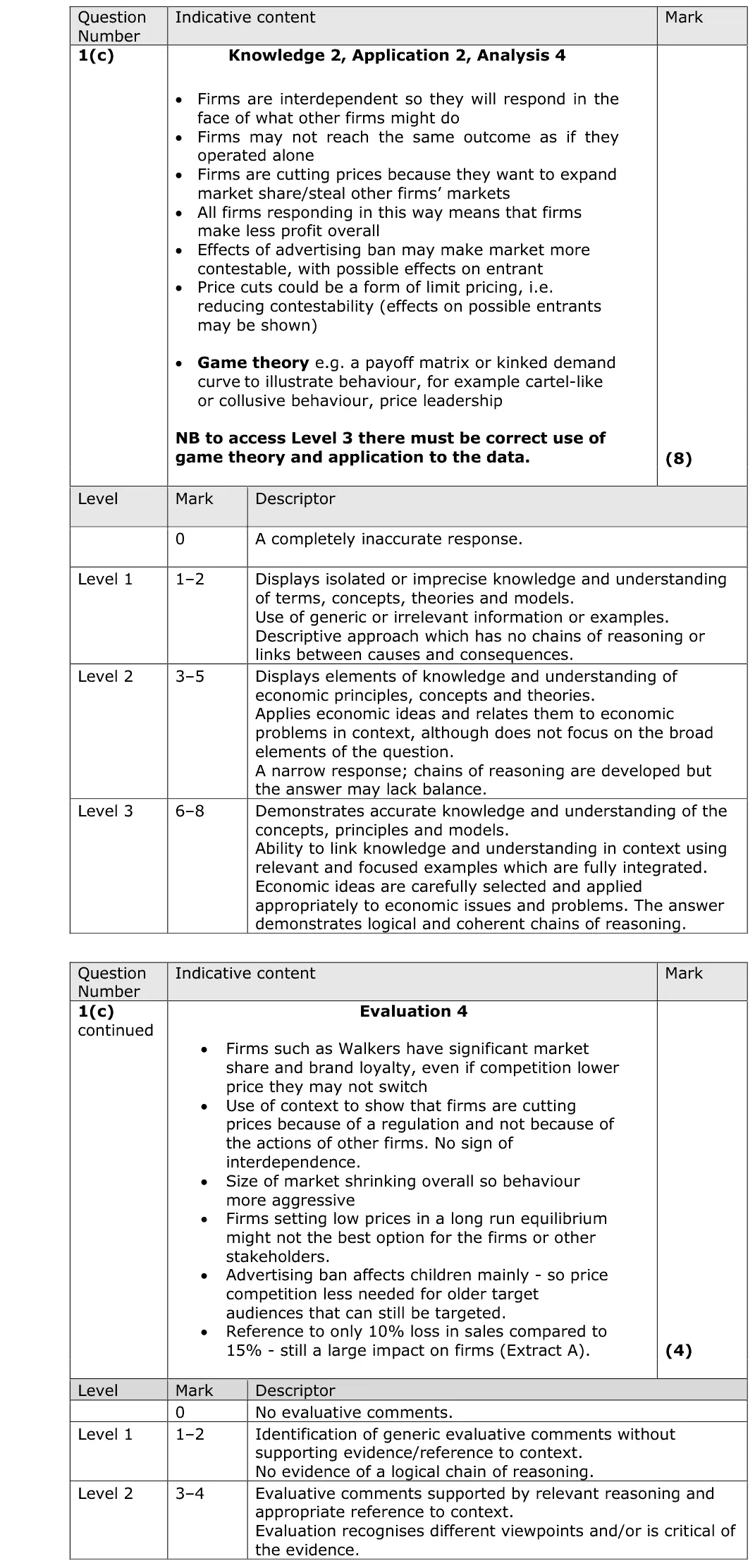
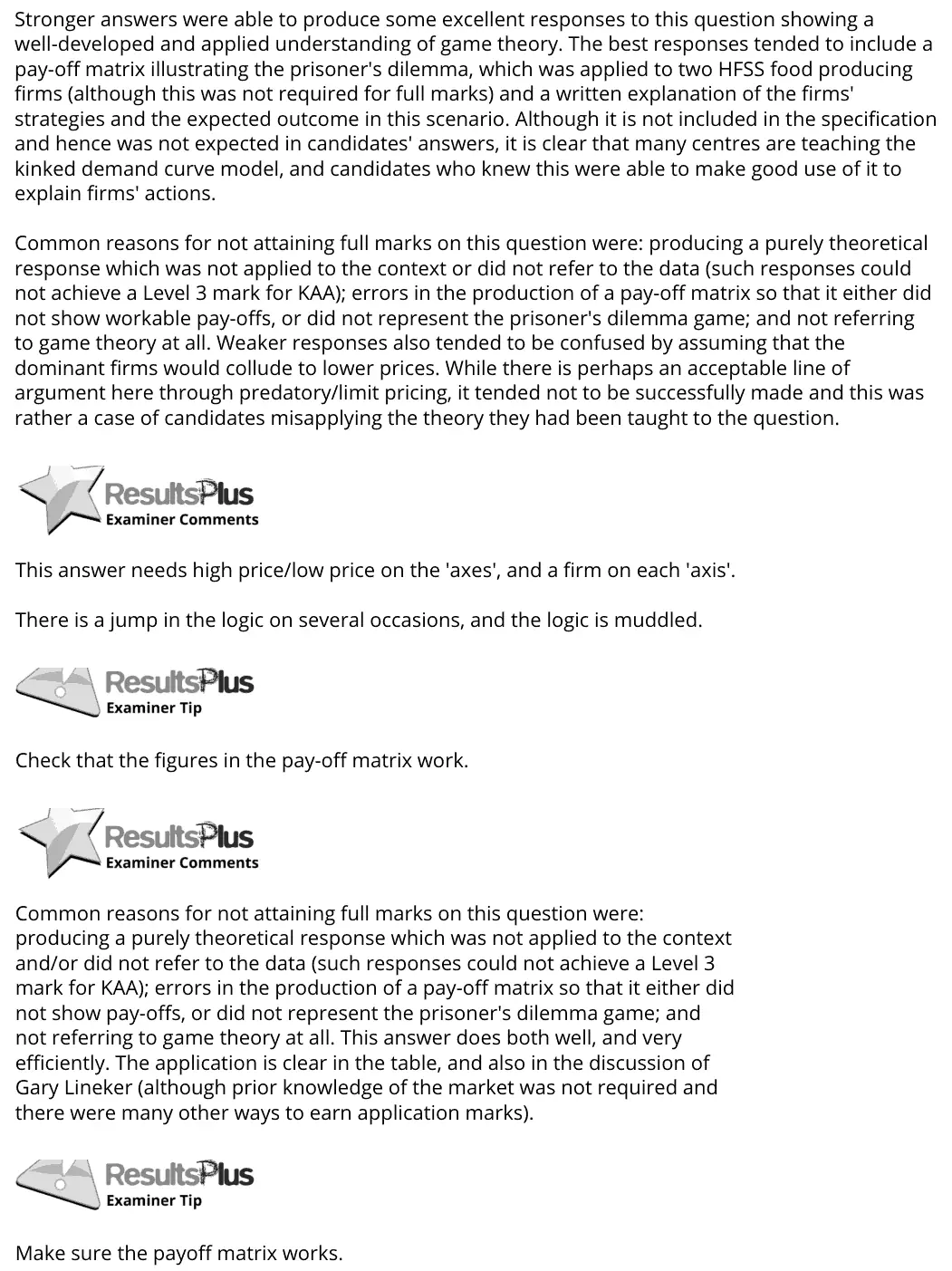
1(c) Oligopoly 12AO1=2,AO2=2,AO3=4,AO4=4Extended response
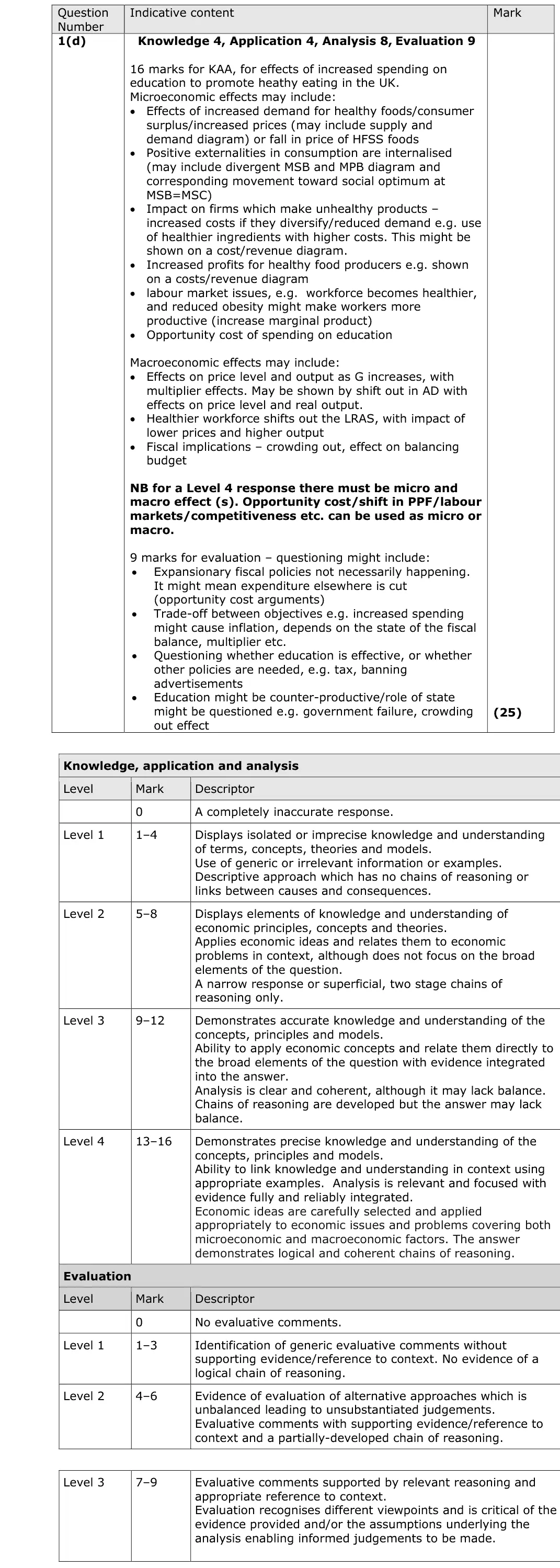
1(d) Government intervention in markets, Demand-side policies: fiscal and monetary policy 25AO1=4,AO2=4,AO3=8,AO4=9Essay
1(e) Indirect taxes and subsidies, Government intervention in markets, Public expenditure, taxation and public sector finances 25AO1=4,AO2=4,AO3=8,AO4=9Essay
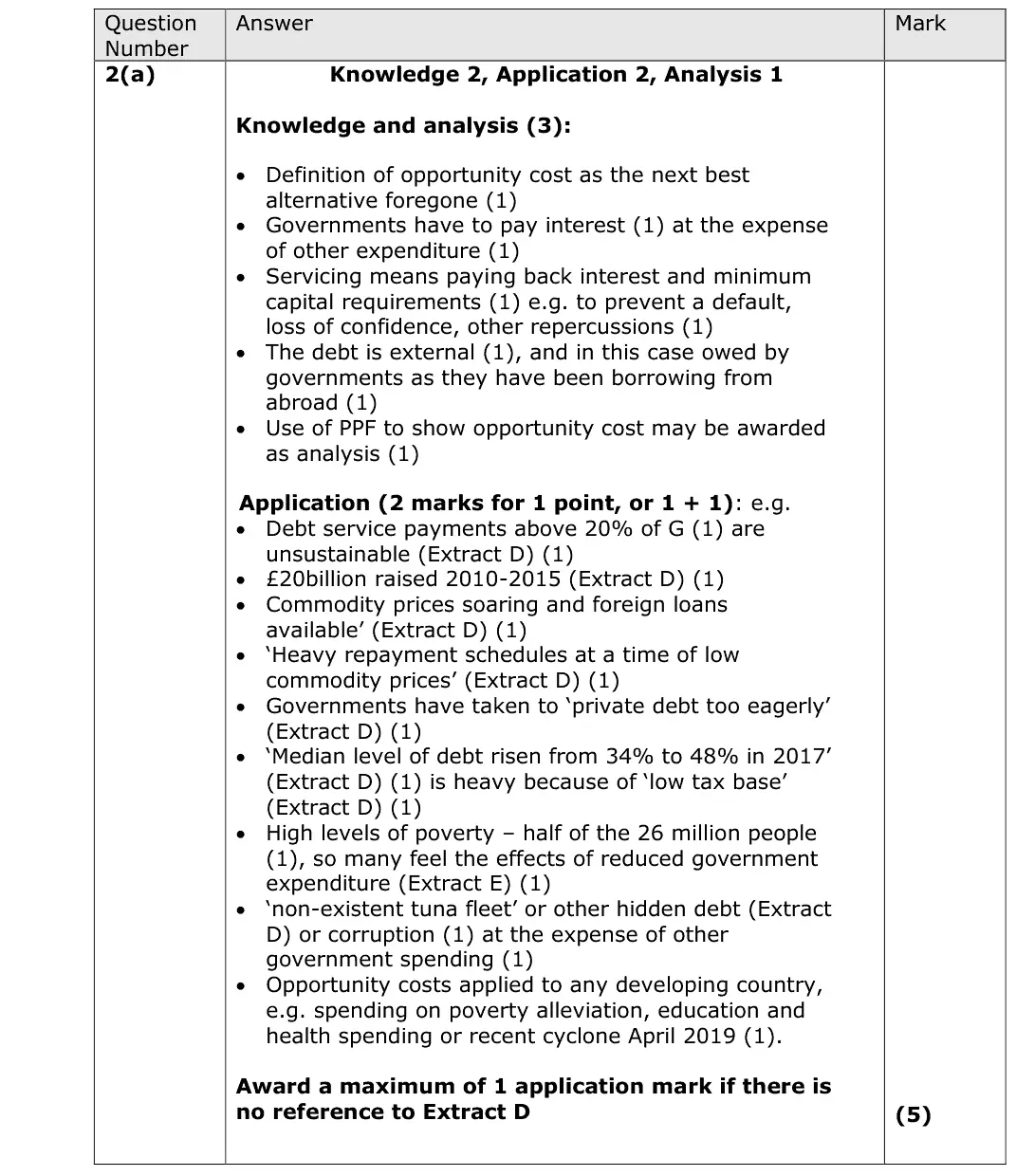
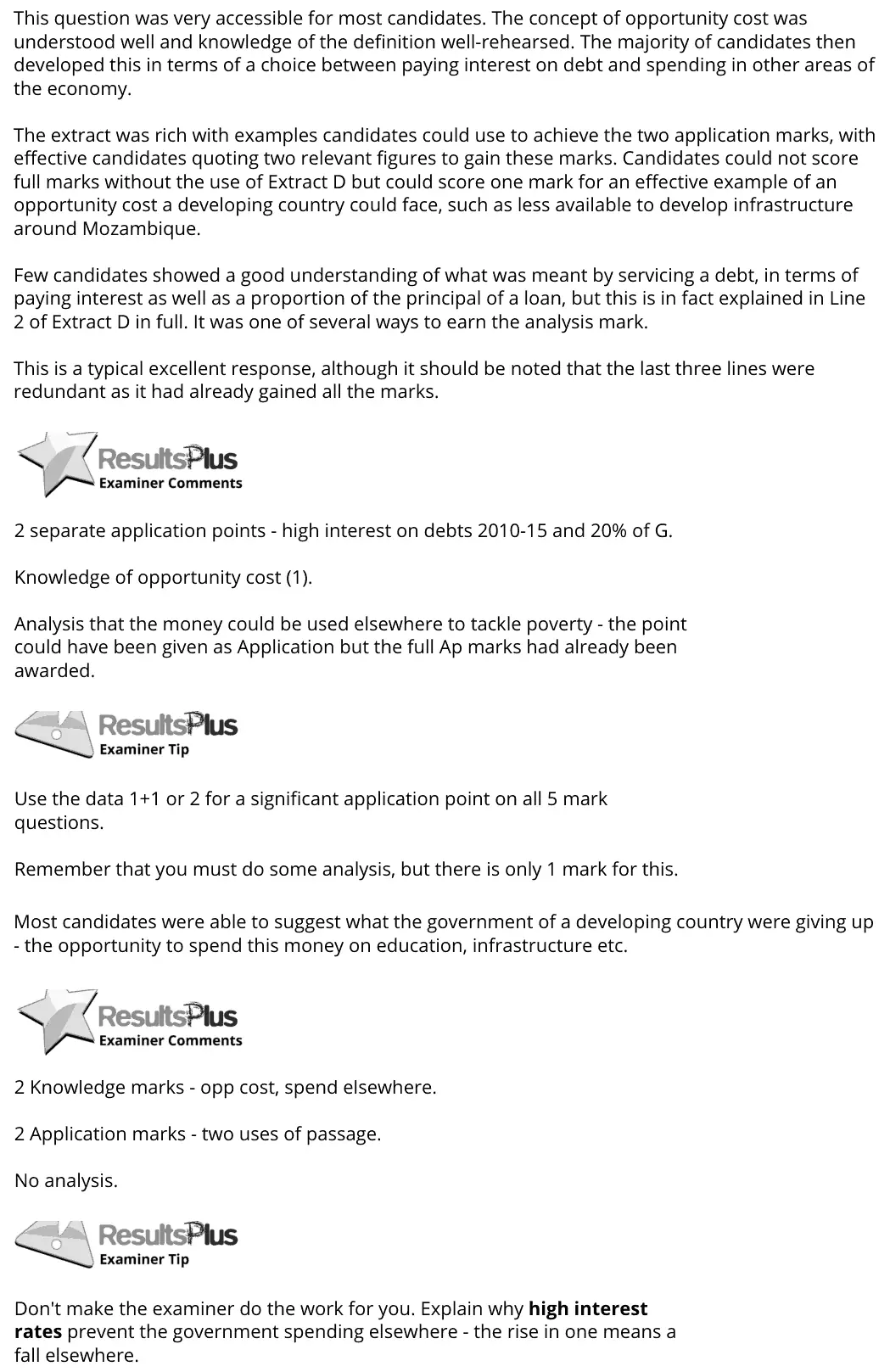
2(a) The nature of economics and the economic problem 5AO1=2,AO2=2,AO3=1Short answer
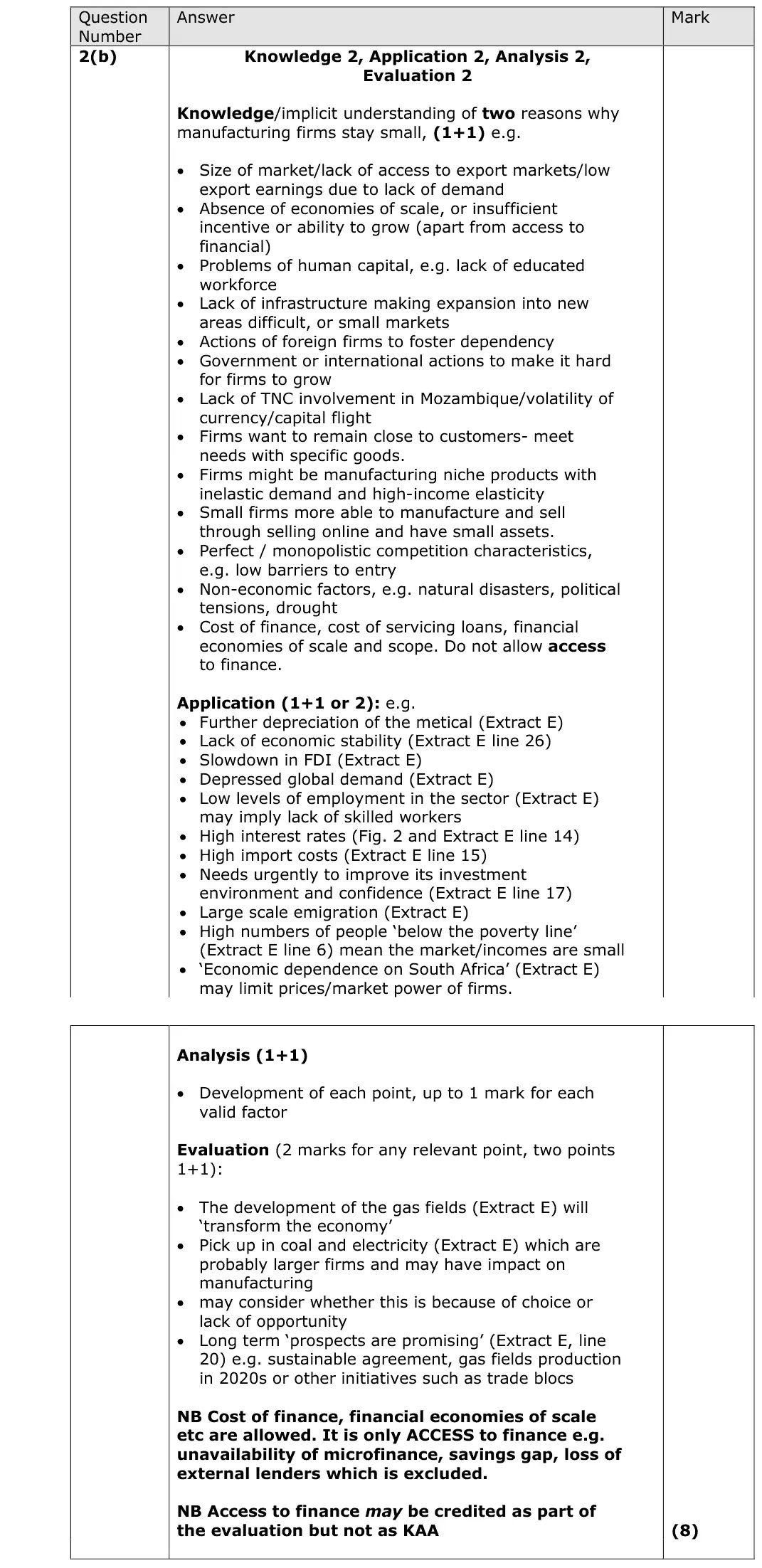
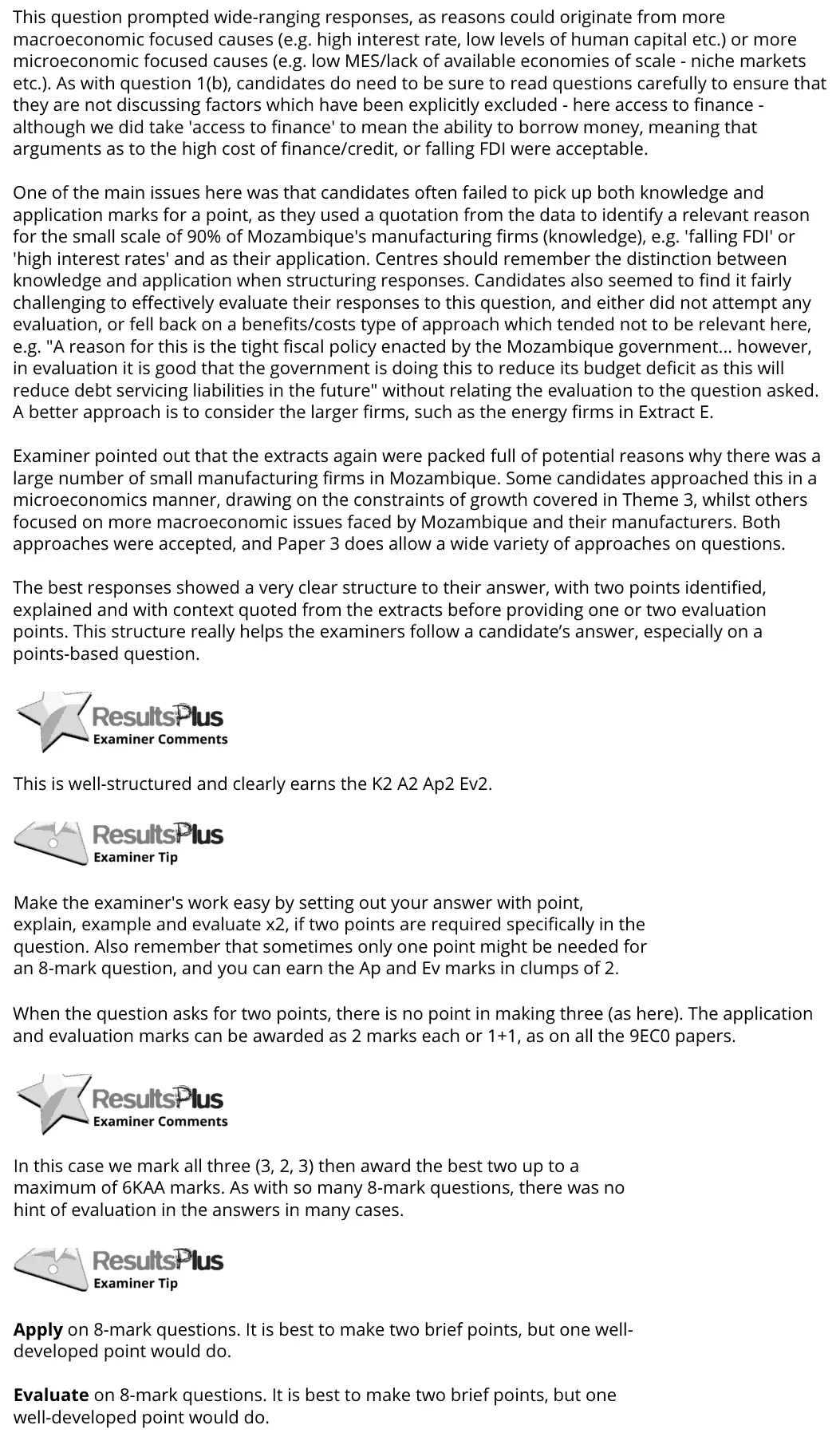
2(b) Business growth and business objectives 8AO1=2,AO2=2,AO3=2,AO4=2Extended response
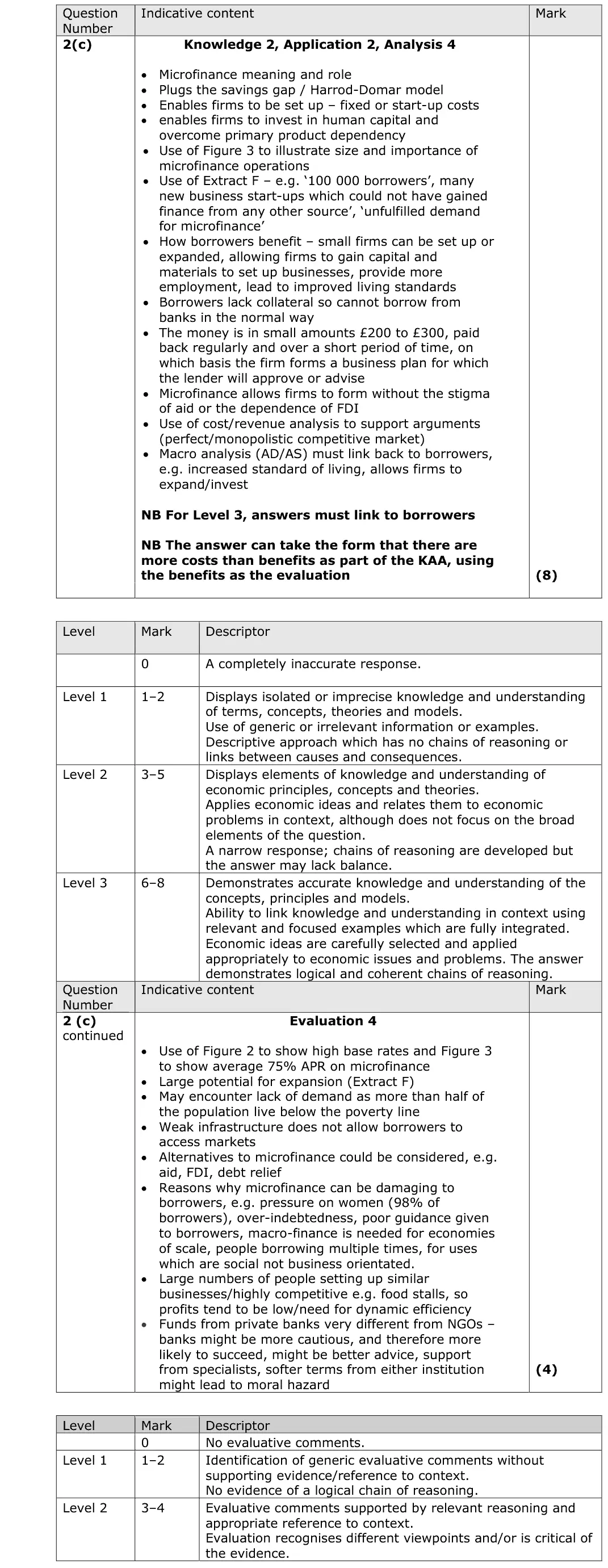
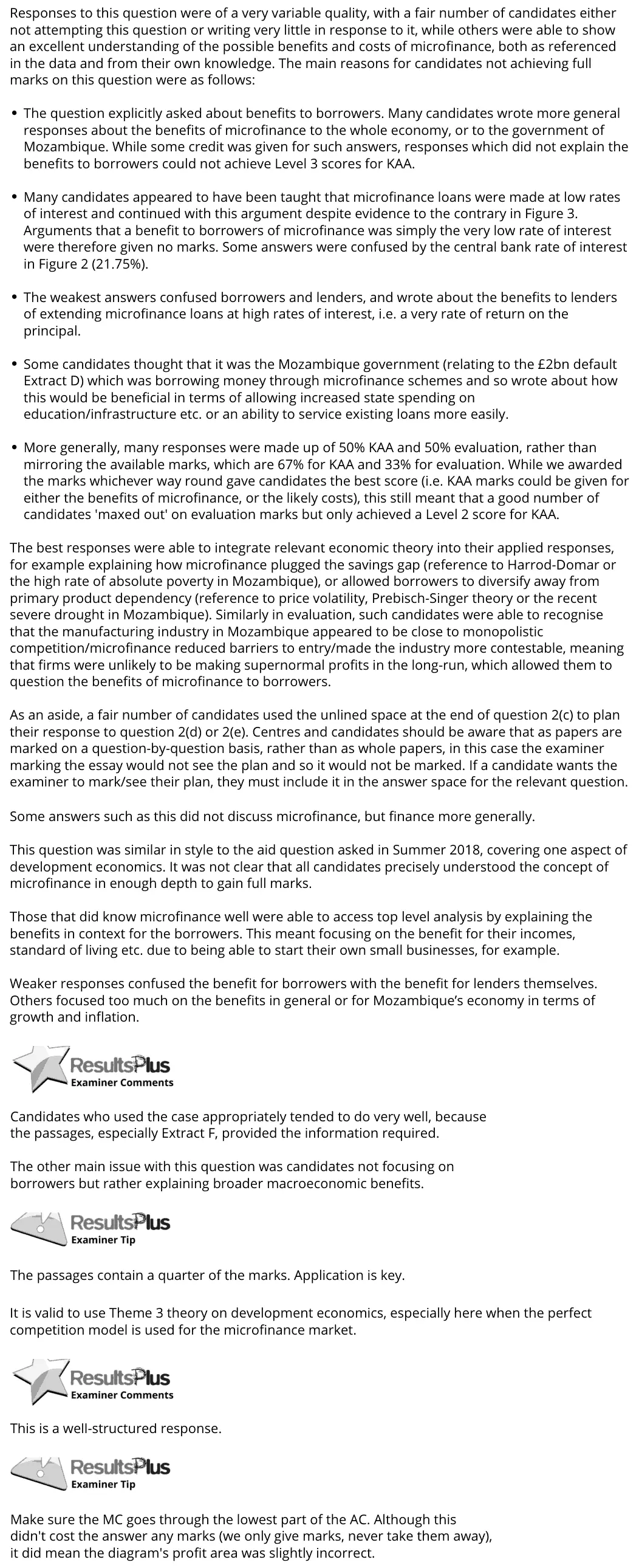
2(c) Emerging and developing economies 12AO1=2,AO2=2,AO3=4,AO4=4Extended response
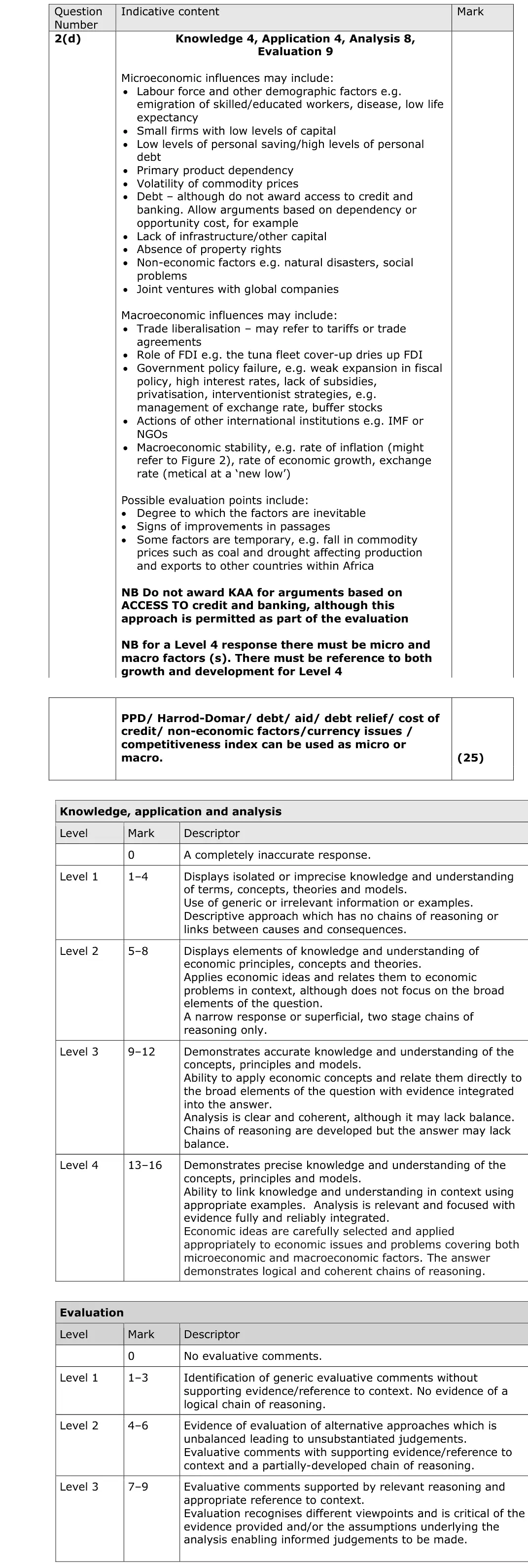
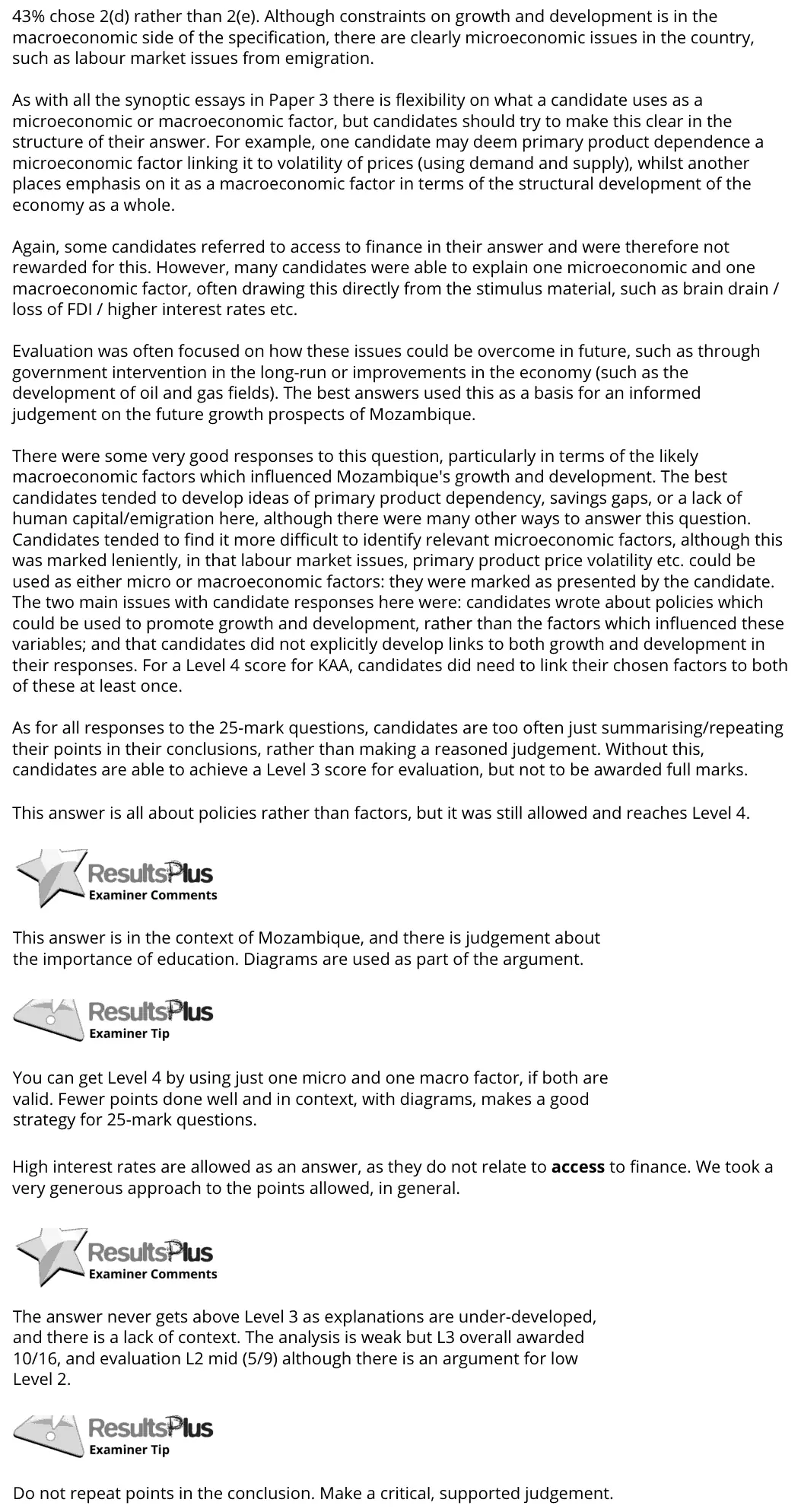
2(d) Emerging and developing economies 25AO1=4,AO2=4,AO3=8,AO4=9Essay
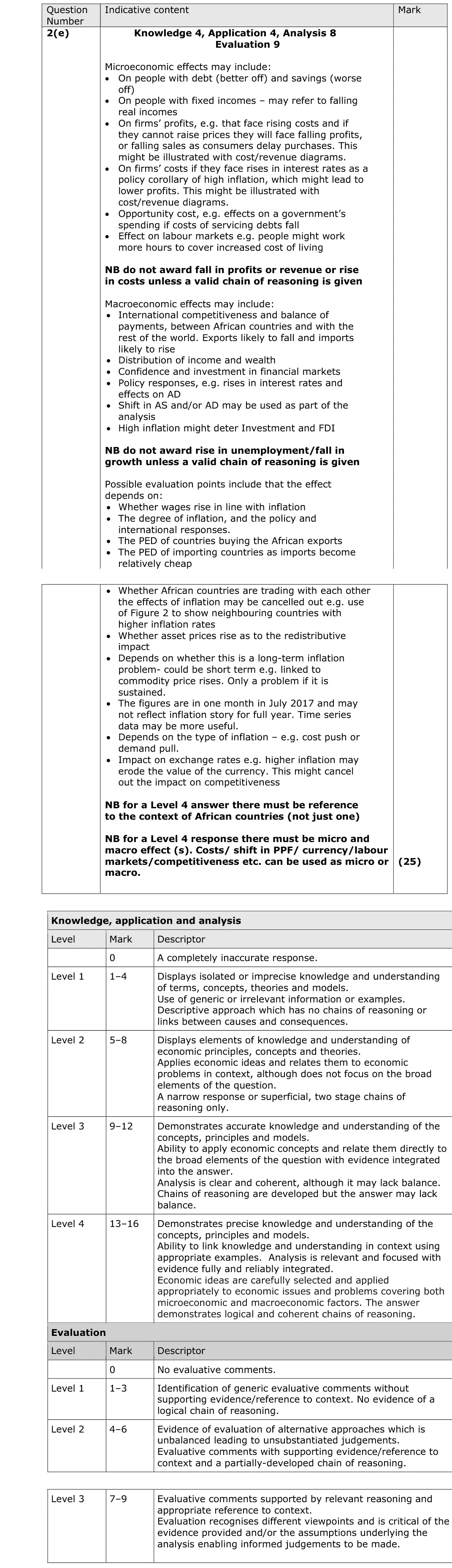
2(e) Inflation 25AO1=4,AO2=4,AO3=8,AO4=9Essay

The questions

1(a)1(b)1(c)1(d)1(e)2(a)2(b)2(c)2(d)2(e)
June 2019 · Paper 3 · Q1(a) 5 marks AO1=2, AO2=2, AO3=1 Calculation oligopoly
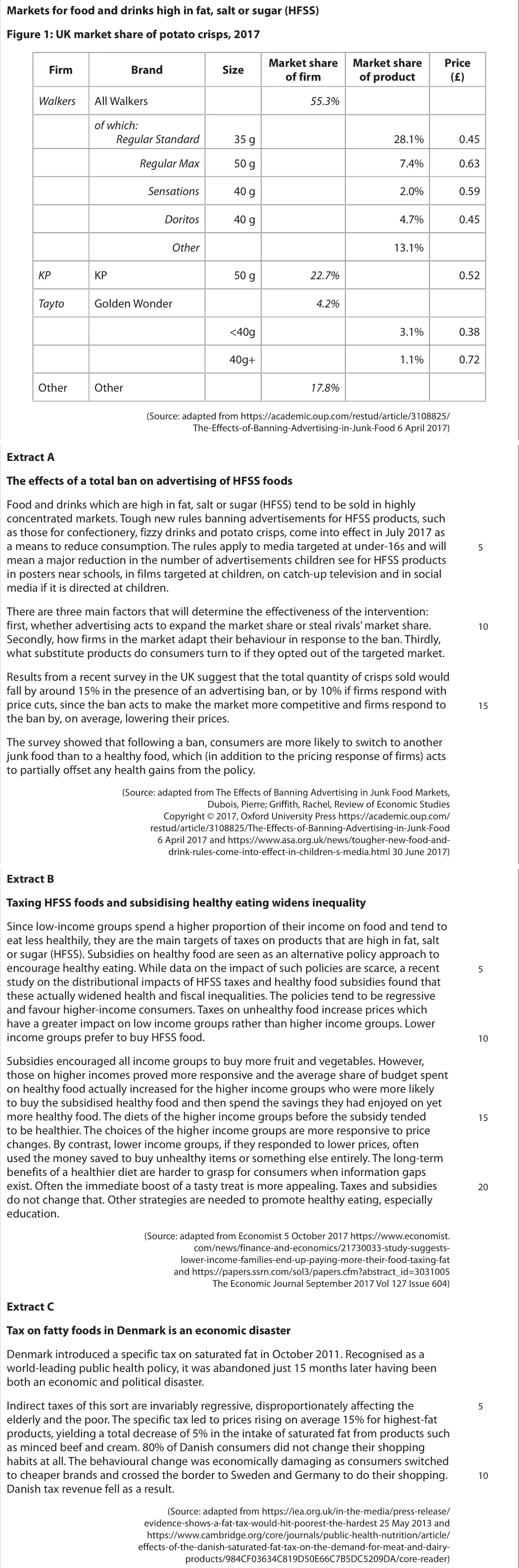
Data and extracts for question 1Markets for food and drinks high in fat, salt or sugar (HFSS) Figure 1: UK market share of potato crisps, 2017 Market share Market share Price Firm Brand Size of firm of product (£) Walkers All Walkers 55.3% of which: 35 g 28.1% 0.45 Regular Standard Regular Max 50 g 7.4% 0.63 Sensations 40 g 2.0% 0.59 Doritos 40 g 4.7% 0.45 Other 13.1% KP KP 50 g 22.7% 0.52 Tayto Golden Wonder 4.2% <40g 3.1% 0.38 40g+ 1.1% 0.72 Other Other 17.8% (Source: adapted from https://academic.oup.com/restud/article/3108825/ The-Effects-of-Banning-Advertising-in-Junk-Food 6 April 2017) Extract A The effects of a total ban on advertising of HFSS foods Food and drinks which are high in fat, salt or sugar (HFSS) tend to be sold in highly concentrated markets. Tough new rules banning advertisements for HFSS products, such as those for confectionery, fizzy drinks and potato crisps, come into effect in July 2017 as a means to reduce consumption. The rules apply to media targeted at under-16s and will 5 mean a major reduction in the number of advertisements children see for HFSS products in posters near schools, in films targeted at children, on catch-up television and in social media if it is directed at children. There are three main factors that will determine the effectiveness of the intervention: first, whether advertising acts to expand the market share or steal rivals’ market share. 10 Secondly, how firms in the market adapt their behaviour in response to the ban. Thirdly, what substitute products do consumers turn to if they opted out of the targeted market. Results from a recent survey in the UK suggest that the total quantity of crisps sold would fall by around 15% in the presence of an advertising ban, or by 10% if firms respond with price cuts, since the ban acts to make the market more competitive and firms respond to 15 the ban by, on average, lowering their prices. The survey showed that following a ban, consumers are more likely to switch to another junk food than to a healthy food, which (in addition to the pricing response of firms) acts to partially offset any health gains from the policy. (Source: adapted from The Effects of Banning Advertising in Junk Food Markets, Dubois, Pierre; Griffith, Rachel, Review of Economic Studies Copyright © 2017, Oxford University Press https://academic.oup.com/ restud/article/3108825/The-Effects-of-Banning-Advertising-in-Junk-Food 6 April 2017 and https://www.asa.org.uk/news/tougher-new-food-and- drink-rules-come-into-effect-in-children-s-media.html 30 June 2017) Extract B Taxing HFSS foods and subsidising healthy eating widens inequality Since low-income groups spend a higher proportion of their income on food and tend to eat less healthily, they are the main targets of taxes on products that are high in fat, salt or sugar (HFSS). Subsidies on healthy food are seen as an alternative policy approach to encourage healthy eating. While data on the impact of such policies are scarce, a recent 5 study on the distributional impacts of HFSS taxes and healthy food subsidies found that these actually widened health and fiscal inequalities. The policies tend to be regressive and favour higher-income consumers. Taxes on unhealthy food increase prices which have a greater impact on low income groups rather than higher income groups. Lower income groups prefer to buy HFSS food. 10 Subsidies encouraged all income groups to buy more fruit and vegetables. However, those on higher incomes proved more responsive and the average share of budget spent on healthy food actually increased for the higher income groups who were more likely to buy the subsidised healthy food and then spend the savings they had enjoyed on yet more healthy food. The diets of the higher income groups before the subsidy tended 15 to be healthier. The choices of the higher income groups are more responsive to price changes. By contrast, lower income groups, if they responded to lower prices, often used the money saved to buy unhealthy items or something else entirely. The long-term benefits of a healthier diet are harder to grasp for consumers when information gaps exist. Often the immediate boost of a tasty treat is more appealing. Taxes and subsidies 20 do not change that. Other strategies are needed to promote healthy eating, especially education. (Source: adapted from Economist 5 October 2017 https://www.economist. com/news/finance-and-economics/21730033-study-suggests- lower-income-families-end-up-paying-more-their-food-taxing-fat and https://papers.ssrn.com/sol3/papers.cfm?abstract_id=3031005 The Economic Journal September 2017 Vol 127 Issue 604) Extract C Tax on fatty foods in Denmark is an economic disaster Denmark introduced a specific tax on saturated fat in October 2011. Recognised as a world-leading public health policy, it was abandoned just 15 months later having been both an economic and political disaster. Indirect taxes of this sort are invariably regressive, disproportionately affecting the 5 elderly and the poor. The specific tax led to prices rising on average 15% for highest-fat products, yielding a total decrease of 5% in the intake of saturated fat from products such as minced beef and cream. 80% of Danish consumers did not change their shopping habits at all. The behavioural change was economically damaging as consumers switched to cheaper brands and crossed the border to Sweden and Germany to do their shopping. 10 Danish tax revenue fell as a result. (Source: adapted from https://iea.org.uk/in-the-media/press-release/ evidence-shows-a-fat-tax-would-hit-poorest-the-hardest 25 May 2013 and https://www.cambridge.org/core/journals/public-health-nutrition/article/ effects-of-the-danish-saturated-fat-tax-on-the-demand-for-meat-and-dairy- products/984CF03634C819D50E66C7B5DC5209DA/core-reader)
(a) With reference to Figure 1 and Extract A, explain what is meant by a ‘highly concentrated’ market for potato crisps (Extract A, lines 2–3). (5)
June 2019 · Paper 3 · Q1(b) 8 marks AO1=2, AO2=2, AO3=2, AO4=2 8-mark response poverty and inequality
Data and extracts for question 1Markets for food and drinks high in fat, salt or sugar (HFSS) Figure 1: UK market share of potato crisps, 2017 Market share Market share Price Firm Brand Size of firm of product (£) Walkers All Walkers 55.3% of which: 35 g 28.1% 0.45 Regular Standard Regular Max 50 g 7.4% 0.63 Sensations 40 g 2.0% 0.59 Doritos 40 g 4.7% 0.45 Other 13.1% KP KP 50 g 22.7% 0.52 Tayto Golden Wonder 4.2% <40g 3.1% 0.38 40g+ 1.1% 0.72 Other Other 17.8% (Source: adapted from https://academic.oup.com/restud/article/3108825/ The-Effects-of-Banning-Advertising-in-Junk-Food 6 April 2017) Extract A The effects of a total ban on advertising of HFSS foods Food and drinks which are high in fat, salt or sugar (HFSS) tend to be sold in highly concentrated markets. Tough new rules banning advertisements for HFSS products, such as those for confectionery, fizzy drinks and potato crisps, come into effect in July 2017 as a means to reduce consumption. The rules apply to media targeted at under-16s and will 5 mean a major reduction in the number of advertisements children see for HFSS products in posters near schools, in films targeted at children, on catch-up television and in social media if it is directed at children. There are three main factors that will determine the effectiveness of the intervention: first, whether advertising acts to expand the market share or steal rivals’ market share. 10 Secondly, how firms in the market adapt their behaviour in response to the ban. Thirdly, what substitute products do consumers turn to if they opted out of the targeted market. Results from a recent survey in the UK suggest that the total quantity of crisps sold would fall by around 15% in the presence of an advertising ban, or by 10% if firms respond with price cuts, since the ban acts to make the market more competitive and firms respond to 15 the ban by, on average, lowering their prices. The survey showed that following a ban, consumers are more likely to switch to another junk food than to a healthy food, which (in addition to the pricing response of firms) acts to partially offset any health gains from the policy. (Source: adapted from The Effects of Banning Advertising in Junk Food Markets, Dubois, Pierre; Griffith, Rachel, Review of Economic Studies Copyright © 2017, Oxford University Press https://academic.oup.com/ restud/article/3108825/The-Effects-of-Banning-Advertising-in-Junk-Food 6 April 2017 and https://www.asa.org.uk/news/tougher-new-food-and- drink-rules-come-into-effect-in-children-s-media.html 30 June 2017) Extract B Taxing HFSS foods and subsidising healthy eating widens inequality Since low-income groups spend a higher proportion of their income on food and tend to eat less healthily, they are the main targets of taxes on products that are high in fat, salt or sugar (HFSS). Subsidies on healthy food are seen as an alternative policy approach to encourage healthy eating. While data on the impact of such policies are scarce, a recent 5 study on the distributional impacts of HFSS taxes and healthy food subsidies found that these actually widened health and fiscal inequalities. The policies tend to be regressive and favour higher-income consumers. Taxes on unhealthy food increase prices which have a greater impact on low income groups rather than higher income groups. Lower income groups prefer to buy HFSS food. 10 Subsidies encouraged all income groups to buy more fruit and vegetables. However, those on higher incomes proved more responsive and the average share of budget spent on healthy food actually increased for the higher income groups who were more likely to buy the subsidised healthy food and then spend the savings they had enjoyed on yet more healthy food. The diets of the higher income groups before the subsidy tended 15 to be healthier. The choices of the higher income groups are more responsive to price changes. By contrast, lower income groups, if they responded to lower prices, often used the money saved to buy unhealthy items or something else entirely. The long-term benefits of a healthier diet are harder to grasp for consumers when information gaps exist. Often the immediate boost of a tasty treat is more appealing. Taxes and subsidies 20 do not change that. Other strategies are needed to promote healthy eating, especially education. (Source: adapted from Economist 5 October 2017 https://www.economist. com/news/finance-and-economics/21730033-study-suggests- lower-income-families-end-up-paying-more-their-food-taxing-fat and https://papers.ssrn.com/sol3/papers.cfm?abstract_id=3031005 The Economic Journal September 2017 Vol 127 Issue 604) Extract C Tax on fatty foods in Denmark is an economic disaster Denmark introduced a specific tax on saturated fat in October 2011. Recognised as a world-leading public health policy, it was abandoned just 15 months later having been both an economic and political disaster. Indirect taxes of this sort are invariably regressive, disproportionately affecting the 5 elderly and the poor. The specific tax led to prices rising on average 15% for highest-fat products, yielding a total decrease of 5% in the intake of saturated fat from products such as minced beef and cream. 80% of Danish consumers did not change their shopping habits at all. The behavioural change was economically damaging as consumers switched to cheaper brands and crossed the border to Sweden and Germany to do their shopping. 10 Danish tax revenue fell as a result. (Source: adapted from https://iea.org.uk/in-the-media/press-release/ evidence-shows-a-fat-tax-would-hit-poorest-the-hardest 25 May 2013 and https://www.cambridge.org/core/journals/public-health-nutrition/article/ effects-of-the-danish-saturated-fat-tax-on-the-demand-for-meat-and-dairy- products/984CF03634C819D50E66C7B5DC5209DA/core-reader)
(b) Apart from changes in indirect taxes and subsidies, examine two causes of income inequality within a developed economy such as the UK. (8)
June 2019 · Paper 3 · Q1(c) 12 marks AO1=2, AO2=2, AO3=4, AO4=4 12-mark response oligopoly
Data and extracts for question 1Markets for food and drinks high in fat, salt or sugar (HFSS) Figure 1: UK market share of potato crisps, 2017 Market share Market share Price Firm Brand Size of firm of product (£) Walkers All Walkers 55.3% of which: 35 g 28.1% 0.45 Regular Standard Regular Max 50 g 7.4% 0.63 Sensations 40 g 2.0% 0.59 Doritos 40 g 4.7% 0.45 Other 13.1% KP KP 50 g 22.7% 0.52 Tayto Golden Wonder 4.2% <40g 3.1% 0.38 40g+ 1.1% 0.72 Other Other 17.8% (Source: adapted from https://academic.oup.com/restud/article/3108825/ The-Effects-of-Banning-Advertising-in-Junk-Food 6 April 2017) Extract A The effects of a total ban on advertising of HFSS foods Food and drinks which are high in fat, salt or sugar (HFSS) tend to be sold in highly concentrated markets. Tough new rules banning advertisements for HFSS products, such as those for confectionery, fizzy drinks and potato crisps, come into effect in July 2017 as a means to reduce consumption. The rules apply to media targeted at under-16s and will 5 mean a major reduction in the number of advertisements children see for HFSS products in posters near schools, in films targeted at children, on catch-up television and in social media if it is directed at children. There are three main factors that will determine the effectiveness of the intervention: first, whether advertising acts to expand the market share or steal rivals’ market share. 10 Secondly, how firms in the market adapt their behaviour in response to the ban. Thirdly, what substitute products do consumers turn to if they opted out of the targeted market. Results from a recent survey in the UK suggest that the total quantity of crisps sold would fall by around 15% in the presence of an advertising ban, or by 10% if firms respond with price cuts, since the ban acts to make the market more competitive and firms respond to 15 the ban by, on average, lowering their prices. The survey showed that following a ban, consumers are more likely to switch to another junk food than to a healthy food, which (in addition to the pricing response of firms) acts to partially offset any health gains from the policy. (Source: adapted from The Effects of Banning Advertising in Junk Food Markets, Dubois, Pierre; Griffith, Rachel, Review of Economic Studies Copyright © 2017, Oxford University Press https://academic.oup.com/ restud/article/3108825/The-Effects-of-Banning-Advertising-in-Junk-Food 6 April 2017 and https://www.asa.org.uk/news/tougher-new-food-and- drink-rules-come-into-effect-in-children-s-media.html 30 June 2017) Extract B Taxing HFSS foods and subsidising healthy eating widens inequality Since low-income groups spend a higher proportion of their income on food and tend to eat less healthily, they are the main targets of taxes on products that are high in fat, salt or sugar (HFSS). Subsidies on healthy food are seen as an alternative policy approach to encourage healthy eating. While data on the impact of such policies are scarce, a recent 5 study on the distributional impacts of HFSS taxes and healthy food subsidies found that these actually widened health and fiscal inequalities. The policies tend to be regressive and favour higher-income consumers. Taxes on unhealthy food increase prices which have a greater impact on low income groups rather than higher income groups. Lower income groups prefer to buy HFSS food. 10 Subsidies encouraged all income groups to buy more fruit and vegetables. However, those on higher incomes proved more responsive and the average share of budget spent on healthy food actually increased for the higher income groups who were more likely to buy the subsidised healthy food and then spend the savings they had enjoyed on yet more healthy food. The diets of the higher income groups before the subsidy tended 15 to be healthier. The choices of the higher income groups are more responsive to price changes. By contrast, lower income groups, if they responded to lower prices, often used the money saved to buy unhealthy items or something else entirely. The long-term benefits of a healthier diet are harder to grasp for consumers when information gaps exist. Often the immediate boost of a tasty treat is more appealing. Taxes and subsidies 20 do not change that. Other strategies are needed to promote healthy eating, especially education. (Source: adapted from Economist 5 October 2017 https://www.economist. com/news/finance-and-economics/21730033-study-suggests- lower-income-families-end-up-paying-more-their-food-taxing-fat and https://papers.ssrn.com/sol3/papers.cfm?abstract_id=3031005 The Economic Journal September 2017 Vol 127 Issue 604) Extract C Tax on fatty foods in Denmark is an economic disaster Denmark introduced a specific tax on saturated fat in October 2011. Recognised as a world-leading public health policy, it was abandoned just 15 months later having been both an economic and political disaster. Indirect taxes of this sort are invariably regressive, disproportionately affecting the 5 elderly and the poor. The specific tax led to prices rising on average 15% for highest-fat products, yielding a total decrease of 5% in the intake of saturated fat from products such as minced beef and cream. 80% of Danish consumers did not change their shopping habits at all. The behavioural change was economically damaging as consumers switched to cheaper brands and crossed the border to Sweden and Germany to do their shopping. 10 Danish tax revenue fell as a result. (Source: adapted from https://iea.org.uk/in-the-media/press-release/ evidence-shows-a-fat-tax-would-hit-poorest-the-hardest 25 May 2013 and https://www.cambridge.org/core/journals/public-health-nutrition/article/ effects-of-the-danish-saturated-fat-tax-on-the-demand-for-meat-and-dairy- products/984CF03634C819D50E66C7B5DC5209DA/core-reader)
(c) In Extract A, lines 15–16, it was suggested that some firms may respond to the advertising ban by cutting the prices of their products. Using game theory and the information provided in Figure 1 and Extract A, discuss the effects on firms of cutting prices in an oligopolistic market. (12)
June 2019 · Paper 3 · Q1(d) 25 marks AO1=4, AO2=4, AO3=8, AO4=9 25-mark essay Either/or government intervention in marketsfiscal and monetary policy
Data and extracts for question 1Markets for food and drinks high in fat, salt or sugar (HFSS) Figure 1: UK market share of potato crisps, 2017 Market share Market share Price Firm Brand Size of firm of product (£) Walkers All Walkers 55.3% of which: 35 g 28.1% 0.45 Regular Standard Regular Max 50 g 7.4% 0.63 Sensations 40 g 2.0% 0.59 Doritos 40 g 4.7% 0.45 Other 13.1% KP KP 50 g 22.7% 0.52 Tayto Golden Wonder 4.2% <40g 3.1% 0.38 40g+ 1.1% 0.72 Other Other 17.8% (Source: adapted from https://academic.oup.com/restud/article/3108825/ The-Effects-of-Banning-Advertising-in-Junk-Food 6 April 2017) Extract A The effects of a total ban on advertising of HFSS foods Food and drinks which are high in fat, salt or sugar (HFSS) tend to be sold in highly concentrated markets. Tough new rules banning advertisements for HFSS products, such as those for confectionery, fizzy drinks and potato crisps, come into effect in July 2017 as a means to reduce consumption. The rules apply to media targeted at under-16s and will 5 mean a major reduction in the number of advertisements children see for HFSS products in posters near schools, in films targeted at children, on catch-up television and in social media if it is directed at children. There are three main factors that will determine the effectiveness of the intervention: first, whether advertising acts to expand the market share or steal rivals’ market share. 10 Secondly, how firms in the market adapt their behaviour in response to the ban. Thirdly, what substitute products do consumers turn to if they opted out of the targeted market. Results from a recent survey in the UK suggest that the total quantity of crisps sold would fall by around 15% in the presence of an advertising ban, or by 10% if firms respond with price cuts, since the ban acts to make the market more competitive and firms respond to 15 the ban by, on average, lowering their prices. The survey showed that following a ban, consumers are more likely to switch to another junk food than to a healthy food, which (in addition to the pricing response of firms) acts to partially offset any health gains from the policy. (Source: adapted from The Effects of Banning Advertising in Junk Food Markets, Dubois, Pierre; Griffith, Rachel, Review of Economic Studies Copyright © 2017, Oxford University Press https://academic.oup.com/ restud/article/3108825/The-Effects-of-Banning-Advertising-in-Junk-Food 6 April 2017 and https://www.asa.org.uk/news/tougher-new-food-and- drink-rules-come-into-effect-in-children-s-media.html 30 June 2017) Extract B Taxing HFSS foods and subsidising healthy eating widens inequality Since low-income groups spend a higher proportion of their income on food and tend to eat less healthily, they are the main targets of taxes on products that are high in fat, salt or sugar (HFSS). Subsidies on healthy food are seen as an alternative policy approach to encourage healthy eating. While data on the impact of such policies are scarce, a recent 5 study on the distributional impacts of HFSS taxes and healthy food subsidies found that these actually widened health and fiscal inequalities. The policies tend to be regressive and favour higher-income consumers. Taxes on unhealthy food increase prices which have a greater impact on low income groups rather than higher income groups. Lower income groups prefer to buy HFSS food. 10 Subsidies encouraged all income groups to buy more fruit and vegetables. However, those on higher incomes proved more responsive and the average share of budget spent on healthy food actually increased for the higher income groups who were more likely to buy the subsidised healthy food and then spend the savings they had enjoyed on yet more healthy food. The diets of the higher income groups before the subsidy tended 15 to be healthier. The choices of the higher income groups are more responsive to price changes. By contrast, lower income groups, if they responded to lower prices, often used the money saved to buy unhealthy items or something else entirely. The long-term benefits of a healthier diet are harder to grasp for consumers when information gaps exist. Often the immediate boost of a tasty treat is more appealing. Taxes and subsidies 20 do not change that. Other strategies are needed to promote healthy eating, especially education. (Source: adapted from Economist 5 October 2017 https://www.economist. com/news/finance-and-economics/21730033-study-suggests- lower-income-families-end-up-paying-more-their-food-taxing-fat and https://papers.ssrn.com/sol3/papers.cfm?abstract_id=3031005 The Economic Journal September 2017 Vol 127 Issue 604) Extract C Tax on fatty foods in Denmark is an economic disaster Denmark introduced a specific tax on saturated fat in October 2011. Recognised as a world-leading public health policy, it was abandoned just 15 months later having been both an economic and political disaster. Indirect taxes of this sort are invariably regressive, disproportionately affecting the 5 elderly and the poor. The specific tax led to prices rising on average 15% for highest-fat products, yielding a total decrease of 5% in the intake of saturated fat from products such as minced beef and cream. 80% of Danish consumers did not change their shopping habits at all. The behavioural change was economically damaging as consumers switched to cheaper brands and crossed the border to Sweden and Germany to do their shopping. 10 Danish tax revenue fell as a result. (Source: adapted from https://iea.org.uk/in-the-media/press-release/ evidence-shows-a-fat-tax-would-hit-poorest-the-hardest 25 May 2013 and https://www.cambridge.org/core/journals/public-health-nutrition/article/ effects-of-the-danish-saturated-fat-tax-on-the-demand-for-meat-and-dairy- products/984CF03634C819D50E66C7B5DC5209DA/core-reader)
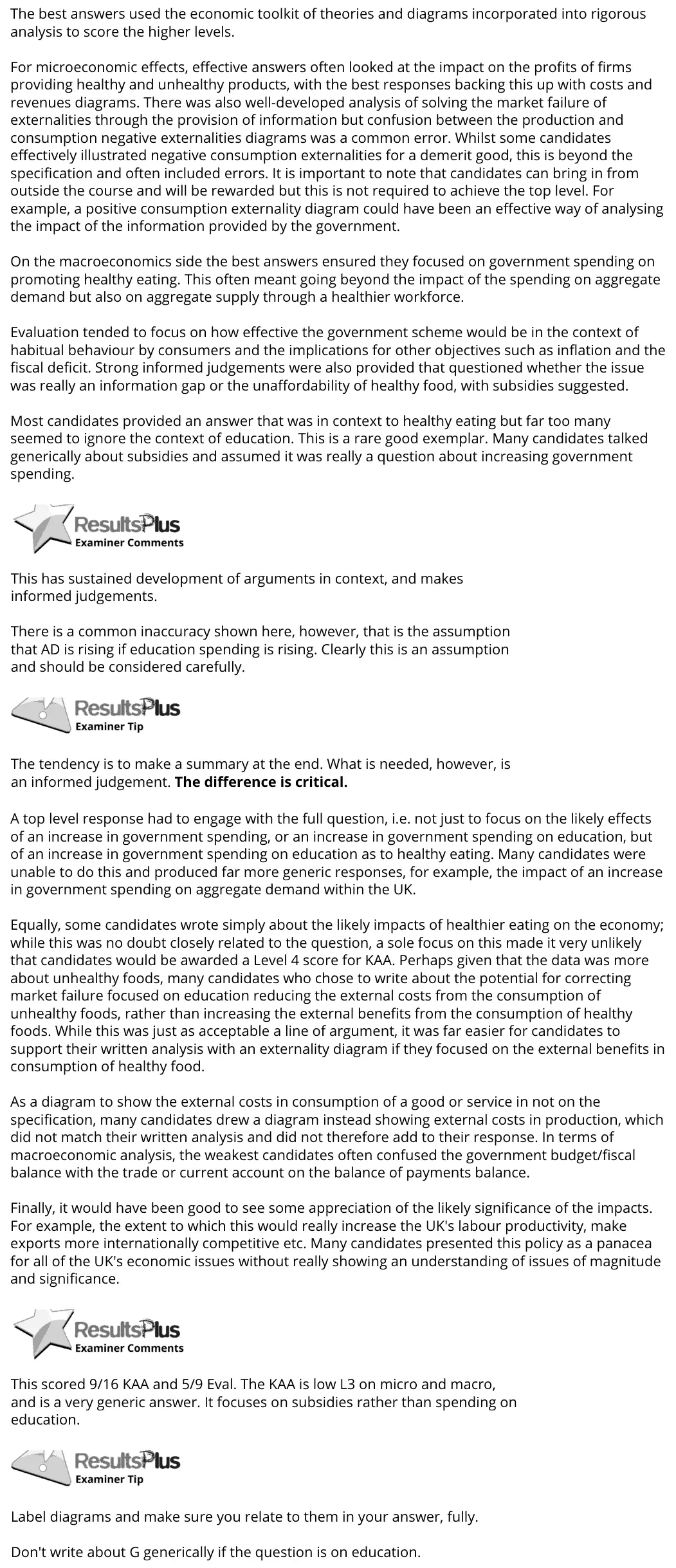
(d) Evaluate the microeconomic and macroeconomic effects of increased government spending on education to promote healthy eating in the UK. (25)
June 2019 · Paper 3 · Q1(e) 25 marks AO1=4, AO2=4, AO3=8, AO4=9 25-mark essay Either/or indirect taxes and subsidiesgovernment intervention in marketspublic finances and taxation
Data and extracts for question 1Markets for food and drinks high in fat, salt or sugar (HFSS) Figure 1: UK market share of potato crisps, 2017 Market share Market share Price Firm Brand Size of firm of product (£) Walkers All Walkers 55.3% of which: 35 g 28.1% 0.45 Regular Standard Regular Max 50 g 7.4% 0.63 Sensations 40 g 2.0% 0.59 Doritos 40 g 4.7% 0.45 Other 13.1% KP KP 50 g 22.7% 0.52 Tayto Golden Wonder 4.2% <40g 3.1% 0.38 40g+ 1.1% 0.72 Other Other 17.8% (Source: adapted from https://academic.oup.com/restud/article/3108825/ The-Effects-of-Banning-Advertising-in-Junk-Food 6 April 2017) Extract A The effects of a total ban on advertising of HFSS foods Food and drinks which are high in fat, salt or sugar (HFSS) tend to be sold in highly concentrated markets. Tough new rules banning advertisements for HFSS products, such as those for confectionery, fizzy drinks and potato crisps, come into effect in July 2017 as a means to reduce consumption. The rules apply to media targeted at under-16s and will 5 mean a major reduction in the number of advertisements children see for HFSS products in posters near schools, in films targeted at children, on catch-up television and in social media if it is directed at children. There are three main factors that will determine the effectiveness of the intervention: first, whether advertising acts to expand the market share or steal rivals’ market share. 10 Secondly, how firms in the market adapt their behaviour in response to the ban. Thirdly, what substitute products do consumers turn to if they opted out of the targeted market. Results from a recent survey in the UK suggest that the total quantity of crisps sold would fall by around 15% in the presence of an advertising ban, or by 10% if firms respond with price cuts, since the ban acts to make the market more competitive and firms respond to 15 the ban by, on average, lowering their prices. The survey showed that following a ban, consumers are more likely to switch to another junk food than to a healthy food, which (in addition to the pricing response of firms) acts to partially offset any health gains from the policy. (Source: adapted from The Effects of Banning Advertising in Junk Food Markets, Dubois, Pierre; Griffith, Rachel, Review of Economic Studies Copyright © 2017, Oxford University Press https://academic.oup.com/ restud/article/3108825/The-Effects-of-Banning-Advertising-in-Junk-Food 6 April 2017 and https://www.asa.org.uk/news/tougher-new-food-and- drink-rules-come-into-effect-in-children-s-media.html 30 June 2017) Extract B Taxing HFSS foods and subsidising healthy eating widens inequality Since low-income groups spend a higher proportion of their income on food and tend to eat less healthily, they are the main targets of taxes on products that are high in fat, salt or sugar (HFSS). Subsidies on healthy food are seen as an alternative policy approach to encourage healthy eating. While data on the impact of such policies are scarce, a recent 5 study on the distributional impacts of HFSS taxes and healthy food subsidies found that these actually widened health and fiscal inequalities. The policies tend to be regressive and favour higher-income consumers. Taxes on unhealthy food increase prices which have a greater impact on low income groups rather than higher income groups. Lower income groups prefer to buy HFSS food. 10 Subsidies encouraged all income groups to buy more fruit and vegetables. However, those on higher incomes proved more responsive and the average share of budget spent on healthy food actually increased for the higher income groups who were more likely to buy the subsidised healthy food and then spend the savings they had enjoyed on yet more healthy food. The diets of the higher income groups before the subsidy tended 15 to be healthier. The choices of the higher income groups are more responsive to price changes. By contrast, lower income groups, if they responded to lower prices, often used the money saved to buy unhealthy items or something else entirely. The long-term benefits of a healthier diet are harder to grasp for consumers when information gaps exist. Often the immediate boost of a tasty treat is more appealing. Taxes and subsidies 20 do not change that. Other strategies are needed to promote healthy eating, especially education. (Source: adapted from Economist 5 October 2017 https://www.economist. com/news/finance-and-economics/21730033-study-suggests- lower-income-families-end-up-paying-more-their-food-taxing-fat and https://papers.ssrn.com/sol3/papers.cfm?abstract_id=3031005 The Economic Journal September 2017 Vol 127 Issue 604) Extract C Tax on fatty foods in Denmark is an economic disaster Denmark introduced a specific tax on saturated fat in October 2011. Recognised as a world-leading public health policy, it was abandoned just 15 months later having been both an economic and political disaster. Indirect taxes of this sort are invariably regressive, disproportionately affecting the 5 elderly and the poor. The specific tax led to prices rising on average 15% for highest-fat products, yielding a total decrease of 5% in the intake of saturated fat from products such as minced beef and cream. 80% of Danish consumers did not change their shopping habits at all. The behavioural change was economically damaging as consumers switched to cheaper brands and crossed the border to Sweden and Germany to do their shopping. 10 Danish tax revenue fell as a result. (Source: adapted from https://iea.org.uk/in-the-media/press-release/ evidence-shows-a-fat-tax-would-hit-poorest-the-hardest 25 May 2013 and https://www.cambridge.org/core/journals/public-health-nutrition/article/ effects-of-the-danish-saturated-fat-tax-on-the-demand-for-meat-and-dairy- products/984CF03634C819D50E66C7B5DC5209DA/core-reader)
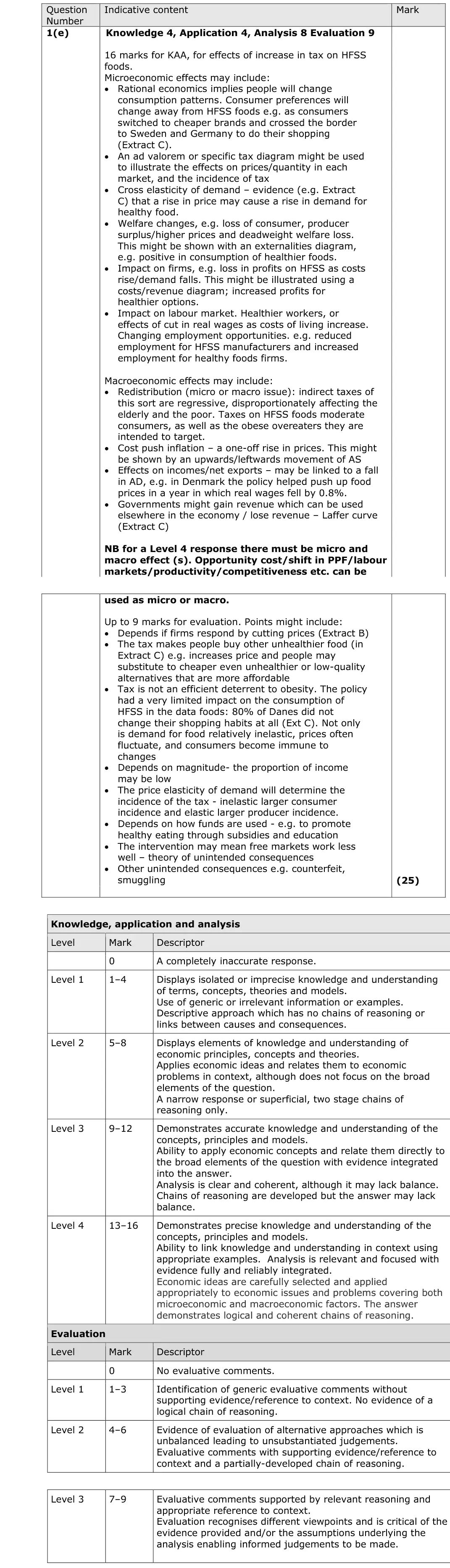
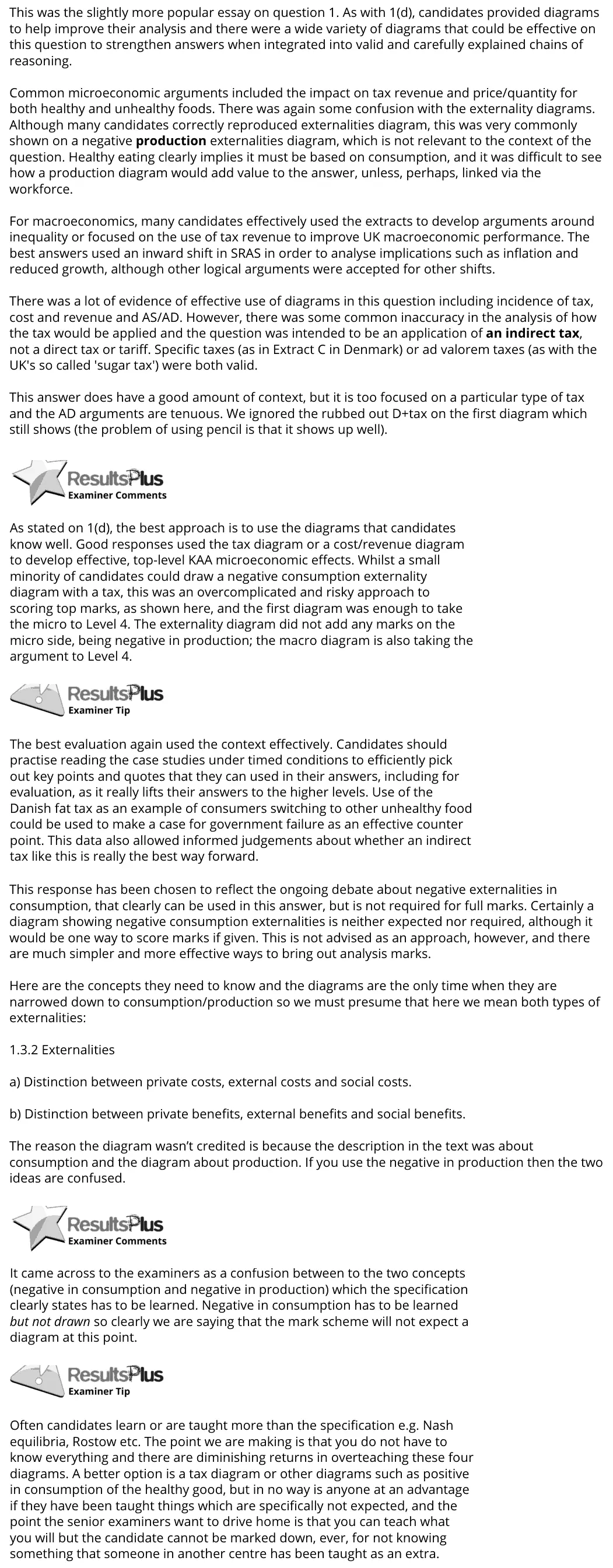
(e) Evaluate the likely microeconomic and macroeconomic effects of imposing a tax on HFSS foods. (25)
June 2019 · Paper 3 · Q2(a) 5 marks AO1=2, AO2=2, AO3=1 Short answer nature of economics
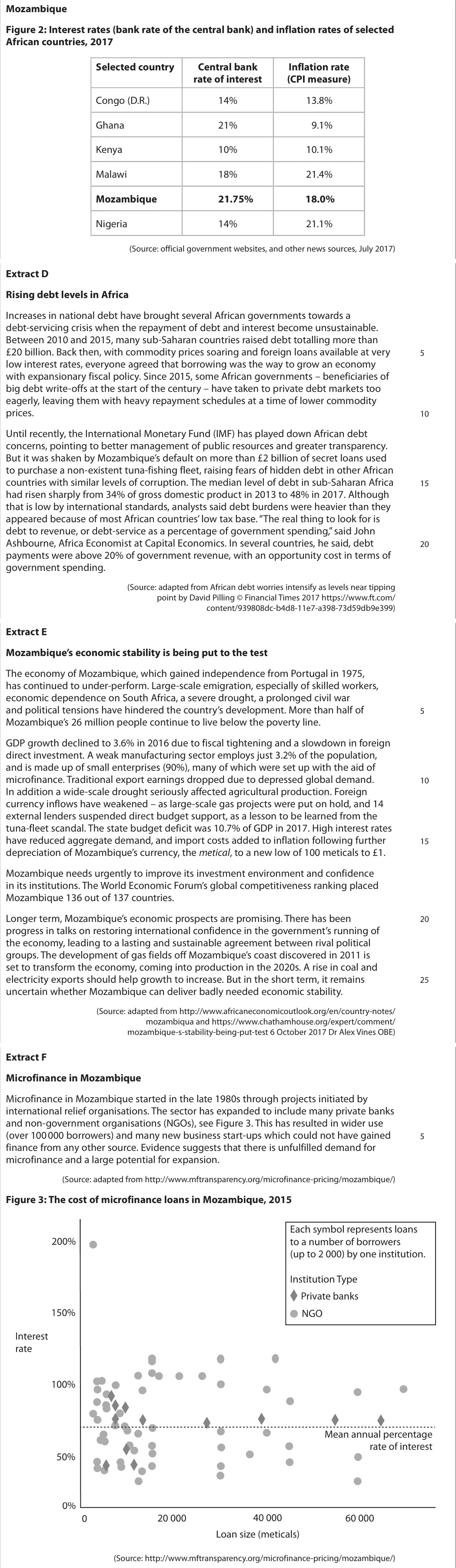
Data and extracts for question 2Mozambique Figure 2: Interest rates (bank rate of the central bank) and inflation rates of selected African countries, 2017 Selected country Central bank Inflation rate rate of interest (CPI measure) Congo (D.R.) 14% 13.8% Ghana 21% 9.1% Kenya 10% 10.1% Malawi 18% 21.4% Mozambique 21.75% 18.0% Nigeria 14% 21.1% (Source: official government websites, and other news sources, July 2017) Extract D Rising debt levels in Africa Increases in national debt have brought several African governments towards a debt-servicing crisis when the repayment of debt and interest become unsustainable. Between 2010 and 2015, many sub-Saharan countries raised debt totalling more than £20 billion. Back then, with commodity prices soaring and foreign loans available at very 5 low interest rates, everyone agreed that borrowing was the way to grow an economy with expansionary fiscal policy. Since 2015, some African governments – beneficiaries of big debt write-offs at the start of the century – have taken to private debt markets too eagerly, leaving them with heavy repayment schedules at a time of lower commodity prices. 10 Until recently, the International Monetary Fund (IMF) has played down African debt concerns, pointing to better management of public resources and greater transparency. But it was shaken by Mozambique’s default on more than £2 billion of secret loans used to purchase a non-existent tuna-fishing fleet, raising fears of hidden debt in other African countries with similar levels of corruption. The median level of debt in sub-Saharan Africa 15 had risen sharply from 34% of gross domestic product in 2013 to 48% in 2017. Although that is low by international standards, analysts said debt burdens were heavier than they appeared because of most African countries’ low tax base. “The real thing to look for is debt to revenue, or debt-service as a percentage of government spending,” said John Ashbourne, Africa Economist at Capital Economics. In several countries, he said, debt 20 payments were above 20% of government revenue, with an opportunity cost in terms of government spending. (Source: adapted from African debt worries intensify as levels near tipping point by David Pilling © Financial Times 2017 https://www.ft.com/ content/939808dc-b4d8-11e7-a398-73d59db9e399) Extract E Mozambique’s economic stability is being put to the test The economy of Mozambique, which gained independence from Portugal in 1975, has continued to under-perform. Large-scale emigration, especially of skilled workers, economic dependence on South Africa, a severe drought, a prolonged civil war and political tensions have hindered the country’s development. More than half of 5 Mozambique’s 26 million people continue to live below the poverty line. GDP growth declined to 3.6% in 2016 due to fiscal tightening and a slowdown in foreign direct investment. A weak manufacturing sector employs just 3.2% of the population, and is made up of small enterprises (90%), many of which were set up with the aid of microfinance. Traditional export earnings dropped due to depressed global demand. 10 In addition a wide-scale drought seriously affected agricultural production. Foreign currency inflows have weakened – as large-scale gas projects were put on hold, and 14 external lenders suspended direct budget support, as a lesson to be learned from the tuna-fleet scandal. The state budget deficit was 10.7% of GDP in 2017. High interest rates have reduced aggregate demand, and import costs added to inflation following further 15 depreciation of Mozambique’s currency, the metical, to a new low of 100 meticals to £1. Mozambique needs urgently to improve its investment environment and confidence in its institutions. The World Economic Forum’s global competitiveness ranking placed Mozambique 136 out of 137 countries. Longer term, Mozambique’s economic prospects are promising. There has been 20 progress in talks on restoring international confidence in the government’s running of the economy, leading to a lasting and sustainable agreement between rival political groups. The development of gas fields off Mozambique’s coast discovered in 2011 is set to transform the economy, coming into production in the 2020s. A rise in coal and electricity exports should help growth to increase. But in the short term, it remains 25 uncertain whether Mozambique can deliver badly needed economic stability. (Source: adapted from http://www.africaneconomicoutlook.org/en/country-notes/ mozambiqua and https://www.chathamhouse.org/expert/comment/ mozambique-s-stability-being-put-test 6 October 2017 Dr Alex Vines OBE) Extract F Microfinance in Mozambique Microfinance in Mozambique started in the late 1980s through projects initiated by international relief organisations. The sector has expanded to include many private banks and non-government organisations (NGOs), see Figure 3. This has resulted in wider use (over 100 000 borrowers) and many new business start-ups which could not have gained 5 finance from any other source. Evidence suggests that there is unfulfilled demand for microfinance and a large potential for expansion. (Source: adapted from http://www.mftransparency.org/microfinance-pricing/mozambique/) Figure 3: The cost of microfinance loans in Mozambique, 2015 Each symbol represents loans 200% to a number of borrowers (up to 2 000) by one institution. Institution Type Private banks 150% NGO 100% Mean annual percentage rate of interest 50% 0% 40 000 0 20 000 60 000 Loan size (meticals) (Source: http://www.mftransparency.org/microfinance-pricing/mozambique/)
(a) With reference to Extract D line 21, explain why ‘opportunity cost’ is a problem for governments of developing countries when servicing debt. (5)
June 2019 · Paper 3 · Q2(b) 8 marks AO1=2, AO2=2, AO3=2, AO4=2 8-mark response business growth and objectives
Data and extracts for question 2Mozambique Figure 2: Interest rates (bank rate of the central bank) and inflation rates of selected African countries, 2017 Selected country Central bank Inflation rate rate of interest (CPI measure) Congo (D.R.) 14% 13.8% Ghana 21% 9.1% Kenya 10% 10.1% Malawi 18% 21.4% Mozambique 21.75% 18.0% Nigeria 14% 21.1% (Source: official government websites, and other news sources, July 2017) Extract D Rising debt levels in Africa Increases in national debt have brought several African governments towards a debt-servicing crisis when the repayment of debt and interest become unsustainable. Between 2010 and 2015, many sub-Saharan countries raised debt totalling more than £20 billion. Back then, with commodity prices soaring and foreign loans available at very 5 low interest rates, everyone agreed that borrowing was the way to grow an economy with expansionary fiscal policy. Since 2015, some African governments – beneficiaries of big debt write-offs at the start of the century – have taken to private debt markets too eagerly, leaving them with heavy repayment schedules at a time of lower commodity prices. 10 Until recently, the International Monetary Fund (IMF) has played down African debt concerns, pointing to better management of public resources and greater transparency. But it was shaken by Mozambique’s default on more than £2 billion of secret loans used to purchase a non-existent tuna-fishing fleet, raising fears of hidden debt in other African countries with similar levels of corruption. The median level of debt in sub-Saharan Africa 15 had risen sharply from 34% of gross domestic product in 2013 to 48% in 2017. Although that is low by international standards, analysts said debt burdens were heavier than they appeared because of most African countries’ low tax base. “The real thing to look for is debt to revenue, or debt-service as a percentage of government spending,” said John Ashbourne, Africa Economist at Capital Economics. In several countries, he said, debt 20 payments were above 20% of government revenue, with an opportunity cost in terms of government spending. (Source: adapted from African debt worries intensify as levels near tipping point by David Pilling © Financial Times 2017 https://www.ft.com/ content/939808dc-b4d8-11e7-a398-73d59db9e399) Extract E Mozambique’s economic stability is being put to the test The economy of Mozambique, which gained independence from Portugal in 1975, has continued to under-perform. Large-scale emigration, especially of skilled workers, economic dependence on South Africa, a severe drought, a prolonged civil war and political tensions have hindered the country’s development. More than half of 5 Mozambique’s 26 million people continue to live below the poverty line. GDP growth declined to 3.6% in 2016 due to fiscal tightening and a slowdown in foreign direct investment. A weak manufacturing sector employs just 3.2% of the population, and is made up of small enterprises (90%), many of which were set up with the aid of microfinance. Traditional export earnings dropped due to depressed global demand. 10 In addition a wide-scale drought seriously affected agricultural production. Foreign currency inflows have weakened – as large-scale gas projects were put on hold, and 14 external lenders suspended direct budget support, as a lesson to be learned from the tuna-fleet scandal. The state budget deficit was 10.7% of GDP in 2017. High interest rates have reduced aggregate demand, and import costs added to inflation following further 15 depreciation of Mozambique’s currency, the metical, to a new low of 100 meticals to £1. Mozambique needs urgently to improve its investment environment and confidence in its institutions. The World Economic Forum’s global competitiveness ranking placed Mozambique 136 out of 137 countries. Longer term, Mozambique’s economic prospects are promising. There has been 20 progress in talks on restoring international confidence in the government’s running of the economy, leading to a lasting and sustainable agreement between rival political groups. The development of gas fields off Mozambique’s coast discovered in 2011 is set to transform the economy, coming into production in the 2020s. A rise in coal and electricity exports should help growth to increase. But in the short term, it remains 25 uncertain whether Mozambique can deliver badly needed economic stability. (Source: adapted from http://www.africaneconomicoutlook.org/en/country-notes/ mozambiqua and https://www.chathamhouse.org/expert/comment/ mozambique-s-stability-being-put-test 6 October 2017 Dr Alex Vines OBE) Extract F Microfinance in Mozambique Microfinance in Mozambique started in the late 1980s through projects initiated by international relief organisations. The sector has expanded to include many private banks and non-government organisations (NGOs), see Figure 3. This has resulted in wider use (over 100 000 borrowers) and many new business start-ups which could not have gained 5 finance from any other source. Evidence suggests that there is unfulfilled demand for microfinance and a large potential for expansion. (Source: adapted from http://www.mftransparency.org/microfinance-pricing/mozambique/) Figure 3: The cost of microfinance loans in Mozambique, 2015 Each symbol represents loans 200% to a number of borrowers (up to 2 000) by one institution. Institution Type Private banks 150% NGO 100% Mean annual percentage rate of interest 50% 0% 40 000 0 20 000 60 000 Loan size (meticals) (Source: http://www.mftransparency.org/microfinance-pricing/mozambique/)
(b) Examine two reasons, apart from access to finance, why 90% of the manufacturing sector in Mozambique ‘is made up of small enterprises’ (Extract E, line 9). (8)
June 2019 · Paper 3 · Q2(c) 12 marks AO1=2, AO2=2, AO3=4, AO4=4 12-mark response emerging and developing economies
Data and extracts for question 2Mozambique Figure 2: Interest rates (bank rate of the central bank) and inflation rates of selected African countries, 2017 Selected country Central bank Inflation rate rate of interest (CPI measure) Congo (D.R.) 14% 13.8% Ghana 21% 9.1% Kenya 10% 10.1% Malawi 18% 21.4% Mozambique 21.75% 18.0% Nigeria 14% 21.1% (Source: official government websites, and other news sources, July 2017) Extract D Rising debt levels in Africa Increases in national debt have brought several African governments towards a debt-servicing crisis when the repayment of debt and interest become unsustainable. Between 2010 and 2015, many sub-Saharan countries raised debt totalling more than £20 billion. Back then, with commodity prices soaring and foreign loans available at very 5 low interest rates, everyone agreed that borrowing was the way to grow an economy with expansionary fiscal policy. Since 2015, some African governments – beneficiaries of big debt write-offs at the start of the century – have taken to private debt markets too eagerly, leaving them with heavy repayment schedules at a time of lower commodity prices. 10 Until recently, the International Monetary Fund (IMF) has played down African debt concerns, pointing to better management of public resources and greater transparency. But it was shaken by Mozambique’s default on more than £2 billion of secret loans used to purchase a non-existent tuna-fishing fleet, raising fears of hidden debt in other African countries with similar levels of corruption. The median level of debt in sub-Saharan Africa 15 had risen sharply from 34% of gross domestic product in 2013 to 48% in 2017. Although that is low by international standards, analysts said debt burdens were heavier than they appeared because of most African countries’ low tax base. “The real thing to look for is debt to revenue, or debt-service as a percentage of government spending,” said John Ashbourne, Africa Economist at Capital Economics. In several countries, he said, debt 20 payments were above 20% of government revenue, with an opportunity cost in terms of government spending. (Source: adapted from African debt worries intensify as levels near tipping point by David Pilling © Financial Times 2017 https://www.ft.com/ content/939808dc-b4d8-11e7-a398-73d59db9e399) Extract E Mozambique’s economic stability is being put to the test The economy of Mozambique, which gained independence from Portugal in 1975, has continued to under-perform. Large-scale emigration, especially of skilled workers, economic dependence on South Africa, a severe drought, a prolonged civil war and political tensions have hindered the country’s development. More than half of 5 Mozambique’s 26 million people continue to live below the poverty line. GDP growth declined to 3.6% in 2016 due to fiscal tightening and a slowdown in foreign direct investment. A weak manufacturing sector employs just 3.2% of the population, and is made up of small enterprises (90%), many of which were set up with the aid of microfinance. Traditional export earnings dropped due to depressed global demand. 10 In addition a wide-scale drought seriously affected agricultural production. Foreign currency inflows have weakened – as large-scale gas projects were put on hold, and 14 external lenders suspended direct budget support, as a lesson to be learned from the tuna-fleet scandal. The state budget deficit was 10.7% of GDP in 2017. High interest rates have reduced aggregate demand, and import costs added to inflation following further 15 depreciation of Mozambique’s currency, the metical, to a new low of 100 meticals to £1. Mozambique needs urgently to improve its investment environment and confidence in its institutions. The World Economic Forum’s global competitiveness ranking placed Mozambique 136 out of 137 countries. Longer term, Mozambique’s economic prospects are promising. There has been 20 progress in talks on restoring international confidence in the government’s running of the economy, leading to a lasting and sustainable agreement between rival political groups. The development of gas fields off Mozambique’s coast discovered in 2011 is set to transform the economy, coming into production in the 2020s. A rise in coal and electricity exports should help growth to increase. But in the short term, it remains 25 uncertain whether Mozambique can deliver badly needed economic stability. (Source: adapted from http://www.africaneconomicoutlook.org/en/country-notes/ mozambiqua and https://www.chathamhouse.org/expert/comment/ mozambique-s-stability-being-put-test 6 October 2017 Dr Alex Vines OBE) Extract F Microfinance in Mozambique Microfinance in Mozambique started in the late 1980s through projects initiated by international relief organisations. The sector has expanded to include many private banks and non-government organisations (NGOs), see Figure 3. This has resulted in wider use (over 100 000 borrowers) and many new business start-ups which could not have gained 5 finance from any other source. Evidence suggests that there is unfulfilled demand for microfinance and a large potential for expansion. (Source: adapted from http://www.mftransparency.org/microfinance-pricing/mozambique/) Figure 3: The cost of microfinance loans in Mozambique, 2015 Each symbol represents loans 200% to a number of borrowers (up to 2 000) by one institution. Institution Type Private banks 150% NGO 100% Mean annual percentage rate of interest 50% 0% 40 000 0 20 000 60 000 Loan size (meticals) (Source: http://www.mftransparency.org/microfinance-pricing/mozambique/)
(c) Discuss whether borrowers benefit from microfinance. Make reference to Mozambique in your answer. (12)
June 2019 · Paper 3 · Q2(d) 25 marks AO1=4, AO2=4, AO3=8, AO4=9 25-mark essay Either/or emerging and developing economies
Data and extracts for question 2Mozambique Figure 2: Interest rates (bank rate of the central bank) and inflation rates of selected African countries, 2017 Selected country Central bank Inflation rate rate of interest (CPI measure) Congo (D.R.) 14% 13.8% Ghana 21% 9.1% Kenya 10% 10.1% Malawi 18% 21.4% Mozambique 21.75% 18.0% Nigeria 14% 21.1% (Source: official government websites, and other news sources, July 2017) Extract D Rising debt levels in Africa Increases in national debt have brought several African governments towards a debt-servicing crisis when the repayment of debt and interest become unsustainable. Between 2010 and 2015, many sub-Saharan countries raised debt totalling more than £20 billion. Back then, with commodity prices soaring and foreign loans available at very 5 low interest rates, everyone agreed that borrowing was the way to grow an economy with expansionary fiscal policy. Since 2015, some African governments – beneficiaries of big debt write-offs at the start of the century – have taken to private debt markets too eagerly, leaving them with heavy repayment schedules at a time of lower commodity prices. 10 Until recently, the International Monetary Fund (IMF) has played down African debt concerns, pointing to better management of public resources and greater transparency. But it was shaken by Mozambique’s default on more than £2 billion of secret loans used to purchase a non-existent tuna-fishing fleet, raising fears of hidden debt in other African countries with similar levels of corruption. The median level of debt in sub-Saharan Africa 15 had risen sharply from 34% of gross domestic product in 2013 to 48% in 2017. Although that is low by international standards, analysts said debt burdens were heavier than they appeared because of most African countries’ low tax base. “The real thing to look for is debt to revenue, or debt-service as a percentage of government spending,” said John Ashbourne, Africa Economist at Capital Economics. In several countries, he said, debt 20 payments were above 20% of government revenue, with an opportunity cost in terms of government spending. (Source: adapted from African debt worries intensify as levels near tipping point by David Pilling © Financial Times 2017 https://www.ft.com/ content/939808dc-b4d8-11e7-a398-73d59db9e399) Extract E Mozambique’s economic stability is being put to the test The economy of Mozambique, which gained independence from Portugal in 1975, has continued to under-perform. Large-scale emigration, especially of skilled workers, economic dependence on South Africa, a severe drought, a prolonged civil war and political tensions have hindered the country’s development. More than half of 5 Mozambique’s 26 million people continue to live below the poverty line. GDP growth declined to 3.6% in 2016 due to fiscal tightening and a slowdown in foreign direct investment. A weak manufacturing sector employs just 3.2% of the population, and is made up of small enterprises (90%), many of which were set up with the aid of microfinance. Traditional export earnings dropped due to depressed global demand. 10 In addition a wide-scale drought seriously affected agricultural production. Foreign currency inflows have weakened – as large-scale gas projects were put on hold, and 14 external lenders suspended direct budget support, as a lesson to be learned from the tuna-fleet scandal. The state budget deficit was 10.7% of GDP in 2017. High interest rates have reduced aggregate demand, and import costs added to inflation following further 15 depreciation of Mozambique’s currency, the metical, to a new low of 100 meticals to £1. Mozambique needs urgently to improve its investment environment and confidence in its institutions. The World Economic Forum’s global competitiveness ranking placed Mozambique 136 out of 137 countries. Longer term, Mozambique’s economic prospects are promising. There has been 20 progress in talks on restoring international confidence in the government’s running of the economy, leading to a lasting and sustainable agreement between rival political groups. The development of gas fields off Mozambique’s coast discovered in 2011 is set to transform the economy, coming into production in the 2020s. A rise in coal and electricity exports should help growth to increase. But in the short term, it remains 25 uncertain whether Mozambique can deliver badly needed economic stability. (Source: adapted from http://www.africaneconomicoutlook.org/en/country-notes/ mozambiqua and https://www.chathamhouse.org/expert/comment/ mozambique-s-stability-being-put-test 6 October 2017 Dr Alex Vines OBE) Extract F Microfinance in Mozambique Microfinance in Mozambique started in the late 1980s through projects initiated by international relief organisations. The sector has expanded to include many private banks and non-government organisations (NGOs), see Figure 3. This has resulted in wider use (over 100 000 borrowers) and many new business start-ups which could not have gained 5 finance from any other source. Evidence suggests that there is unfulfilled demand for microfinance and a large potential for expansion. (Source: adapted from http://www.mftransparency.org/microfinance-pricing/mozambique/) Figure 3: The cost of microfinance loans in Mozambique, 2015 Each symbol represents loans 200% to a number of borrowers (up to 2 000) by one institution. Institution Type Private banks 150% NGO 100% Mean annual percentage rate of interest 50% 0% 40 000 0 20 000 60 000 Loan size (meticals) (Source: http://www.mftransparency.org/microfinance-pricing/mozambique/)
(d) Evaluate the microeconomic and macroeconomic factors, apart from access to credit and banking, influencing growth and development in Mozambique. (25)
June 2019 · Paper 3 · Q2(e) 25 marks AO1=4, AO2=4, AO3=8, AO4=9 25-mark essay Either/or Hard inflation
Data and extracts for question 2Mozambique Figure 2: Interest rates (bank rate of the central bank) and inflation rates of selected African countries, 2017 Selected country Central bank Inflation rate rate of interest (CPI measure) Congo (D.R.) 14% 13.8% Ghana 21% 9.1% Kenya 10% 10.1% Malawi 18% 21.4% Mozambique 21.75% 18.0% Nigeria 14% 21.1% (Source: official government websites, and other news sources, July 2017) Extract D Rising debt levels in Africa Increases in national debt have brought several African governments towards a debt-servicing crisis when the repayment of debt and interest become unsustainable. Between 2010 and 2015, many sub-Saharan countries raised debt totalling more than £20 billion. Back then, with commodity prices soaring and foreign loans available at very 5 low interest rates, everyone agreed that borrowing was the way to grow an economy with expansionary fiscal policy. Since 2015, some African governments – beneficiaries of big debt write-offs at the start of the century – have taken to private debt markets too eagerly, leaving them with heavy repayment schedules at a time of lower commodity prices. 10 Until recently, the International Monetary Fund (IMF) has played down African debt concerns, pointing to better management of public resources and greater transparency. But it was shaken by Mozambique’s default on more than £2 billion of secret loans used to purchase a non-existent tuna-fishing fleet, raising fears of hidden debt in other African countries with similar levels of corruption. The median level of debt in sub-Saharan Africa 15 had risen sharply from 34% of gross domestic product in 2013 to 48% in 2017. Although that is low by international standards, analysts said debt burdens were heavier than they appeared because of most African countries’ low tax base. “The real thing to look for is debt to revenue, or debt-service as a percentage of government spending,” said John Ashbourne, Africa Economist at Capital Economics. In several countries, he said, debt 20 payments were above 20% of government revenue, with an opportunity cost in terms of government spending. (Source: adapted from African debt worries intensify as levels near tipping point by David Pilling © Financial Times 2017 https://www.ft.com/ content/939808dc-b4d8-11e7-a398-73d59db9e399) Extract E Mozambique’s economic stability is being put to the test The economy of Mozambique, which gained independence from Portugal in 1975, has continued to under-perform. Large-scale emigration, especially of skilled workers, economic dependence on South Africa, a severe drought, a prolonged civil war and political tensions have hindered the country’s development. More than half of 5 Mozambique’s 26 million people continue to live below the poverty line. GDP growth declined to 3.6% in 2016 due to fiscal tightening and a slowdown in foreign direct investment. A weak manufacturing sector employs just 3.2% of the population, and is made up of small enterprises (90%), many of which were set up with the aid of microfinance. Traditional export earnings dropped due to depressed global demand. 10 In addition a wide-scale drought seriously affected agricultural production. Foreign currency inflows have weakened – as large-scale gas projects were put on hold, and 14 external lenders suspended direct budget support, as a lesson to be learned from the tuna-fleet scandal. The state budget deficit was 10.7% of GDP in 2017. High interest rates have reduced aggregate demand, and import costs added to inflation following further 15 depreciation of Mozambique’s currency, the metical, to a new low of 100 meticals to £1. Mozambique needs urgently to improve its investment environment and confidence in its institutions. The World Economic Forum’s global competitiveness ranking placed Mozambique 136 out of 137 countries. Longer term, Mozambique’s economic prospects are promising. There has been 20 progress in talks on restoring international confidence in the government’s running of the economy, leading to a lasting and sustainable agreement between rival political groups. The development of gas fields off Mozambique’s coast discovered in 2011 is set to transform the economy, coming into production in the 2020s. A rise in coal and electricity exports should help growth to increase. But in the short term, it remains 25 uncertain whether Mozambique can deliver badly needed economic stability. (Source: adapted from http://www.africaneconomicoutlook.org/en/country-notes/ mozambiqua and https://www.chathamhouse.org/expert/comment/ mozambique-s-stability-being-put-test 6 October 2017 Dr Alex Vines OBE) Extract F Microfinance in Mozambique Microfinance in Mozambique started in the late 1980s through projects initiated by international relief organisations. The sector has expanded to include many private banks and non-government organisations (NGOs), see Figure 3. This has resulted in wider use (over 100 000 borrowers) and many new business start-ups which could not have gained 5 finance from any other source. Evidence suggests that there is unfulfilled demand for microfinance and a large potential for expansion. (Source: adapted from http://www.mftransparency.org/microfinance-pricing/mozambique/) Figure 3: The cost of microfinance loans in Mozambique, 2015 Each symbol represents loans 200% to a number of borrowers (up to 2 000) by one institution. Institution Type Private banks 150% NGO 100% Mean annual percentage rate of interest 50% 0% 40 000 0 20 000 60 000 Loan size (meticals) (Source: http://www.mftransparency.org/microfinance-pricing/mozambique/)
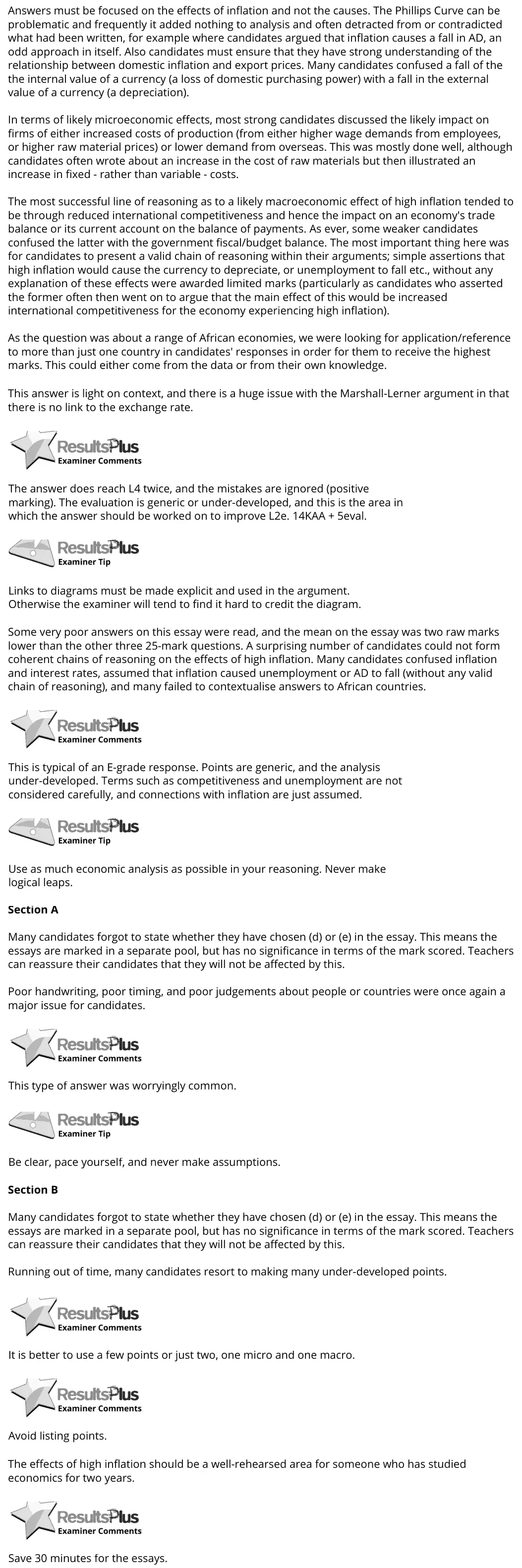
(e) Evaluate the likely microeconomic and macroeconomic effects of relatively high inflation rates in many African countries. (25)

Work with an Edexcel economics tutor

Want a paper marked and gone through with you? Message us.

Prefer email? Send an enquiry

If you are under 18, please include a parent's contact details. Enquiries go to enquiries@economicsaleveltutor.com and are deleted once handled. All tutoring is online.