Notes and key-term cards for this topic are being written by our tutors. The past-paper questions below are ready now.
Specification statements
1.2.5Elasticity of supply: a) Understanding of price elasticity of supply b) Use formula to calculate price elasticity of supply c) Interpret numerical values of price elasticity of supply: perfectly and relatively elastic, and perfectly and relatively inelastic d) Factors that influence price elasticity of supply e) The distinction between short run and long run in economics and its significance for elasticity of supplyAS
Tap a question to zoom it. The data and extracts fold out above each question; the mark scheme and examiner's comment open underneath.
June 2025 · Paper 1 · Q2(a)4 marksAO1=2, AO2=1, AO3=1Short answer
Data and extracts for question 2
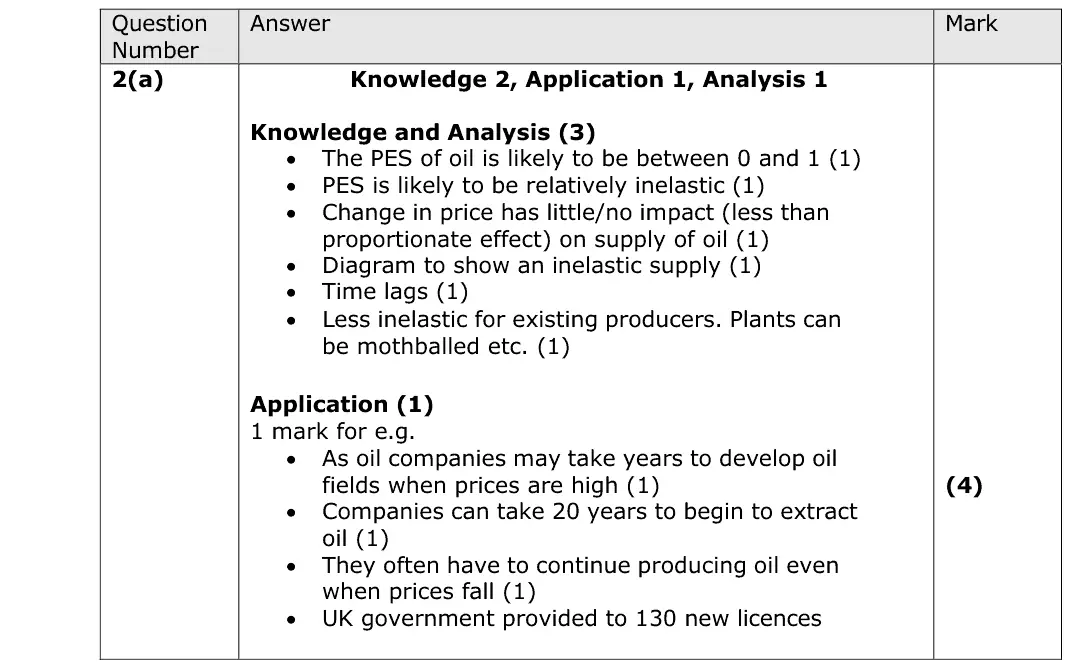
Mark scheme
Examiner's comment
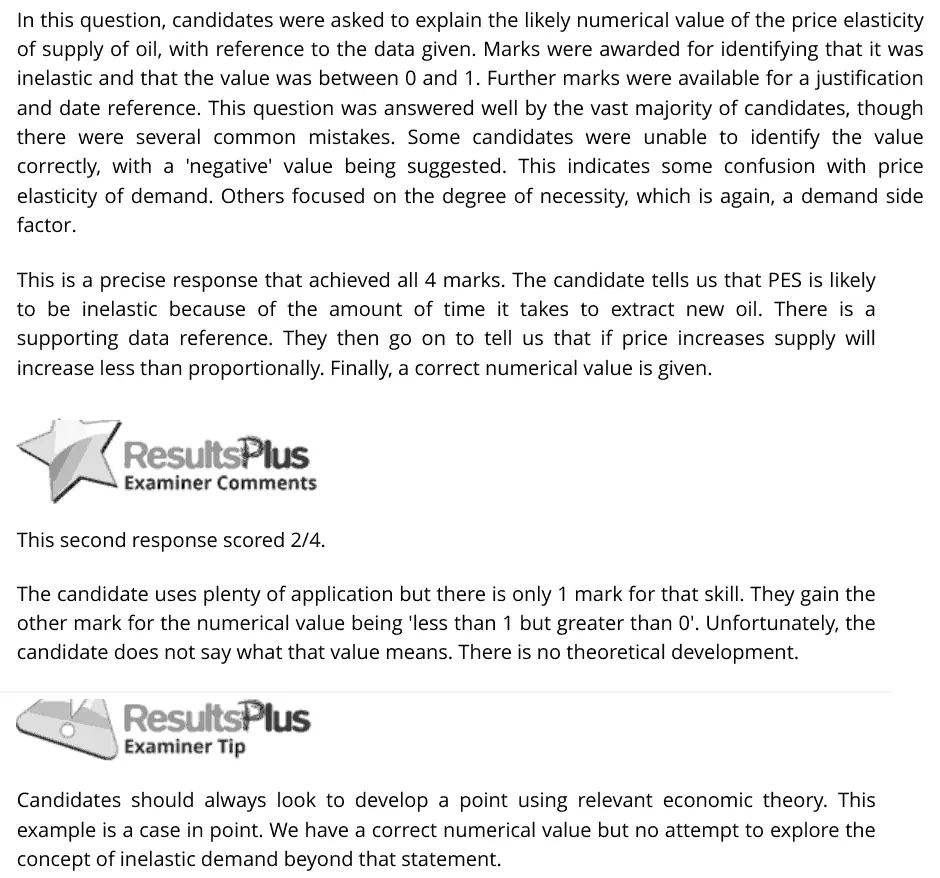
In this question, candidates were asked to explain the likely numerical value of the price elasticity of supply of oil, with reference to the data given. Marks were awarded for identifying that it was inelastic and that the value was between 0 and 1. Further marks were available for a justification and date reference. This question was answered well by the vast majority of candidates, though there were several common mistakes. Some candidates were unable to identify the value correctly, with a 'negative' value being suggested. This indicates some confusion with price elasticity of demand. Others focused on the degree of necessity, which is again, a demand side factor. This is a precise response that achieved all 4 marks. The candidate tells us that PES is likely to be inelastic because of the amount of time it takes to extract new oil. There is a supporting data reference. They then go on to tell us that if price increases supply will increase less than proportionally. Finally, a correct numerical value is given. This second response scored 2/4. The candidate uses plenty of application but there is only 1 mark for that skill. They gain the other mark for the numerical value being 'less than 1 but greater than 0'. Unfortunately, the candidate does not say what that value means. There is no theoretical development. Candidates should always look to develop a point using relevant economic theory. This example is a case in point. We have a correct numerical value but no attempt to explore the concept of inelastic demand beyond that statement.
Notes from the mark scheme and report
PES between 0 and 1 (relatively inelastic): supply responds less than proportionately because new fields take 20 years and equipment has no other use
only 1 application mark
PES is not negative and necessity is a demand-side factor
Quantitative skills: QS 8 (make calculations of elasticity and interpret the result); QS 9 (interpret, apply and analyse information in written, graphical tabular and numerical forms)
June 2025 · AS Paper 1 · Q6(c)6 marksShort answerHard
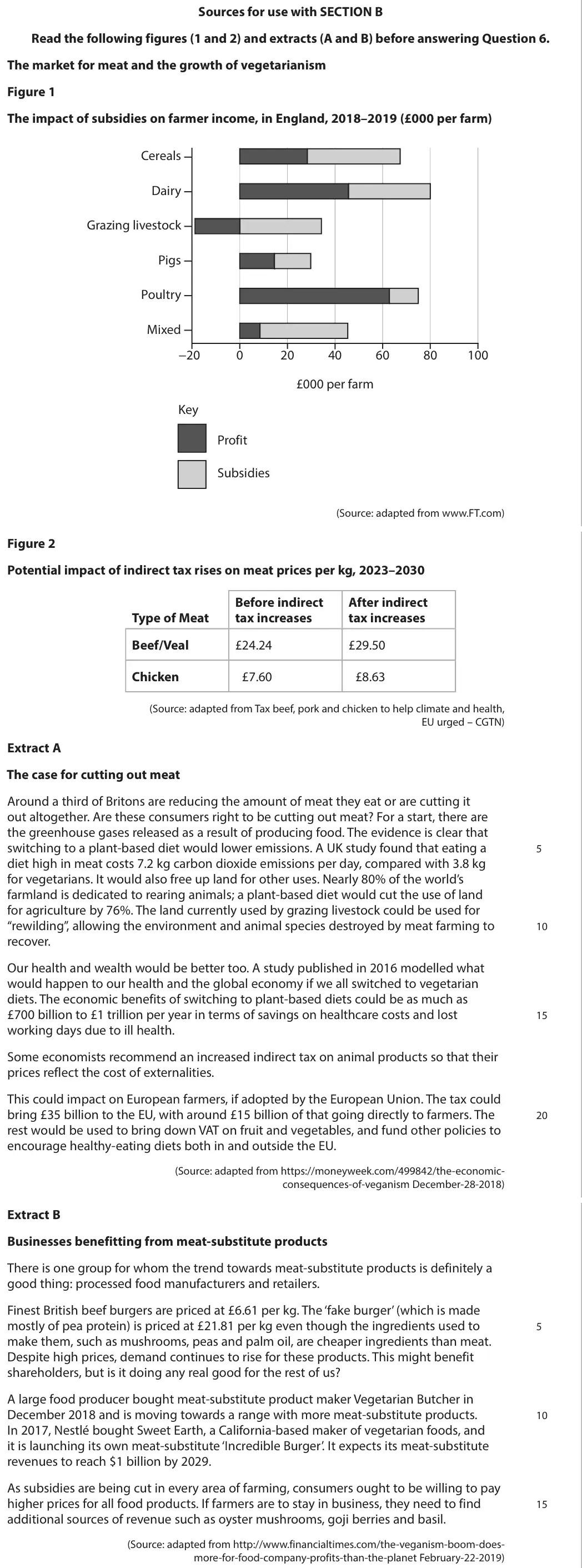
Data and extracts for question 6
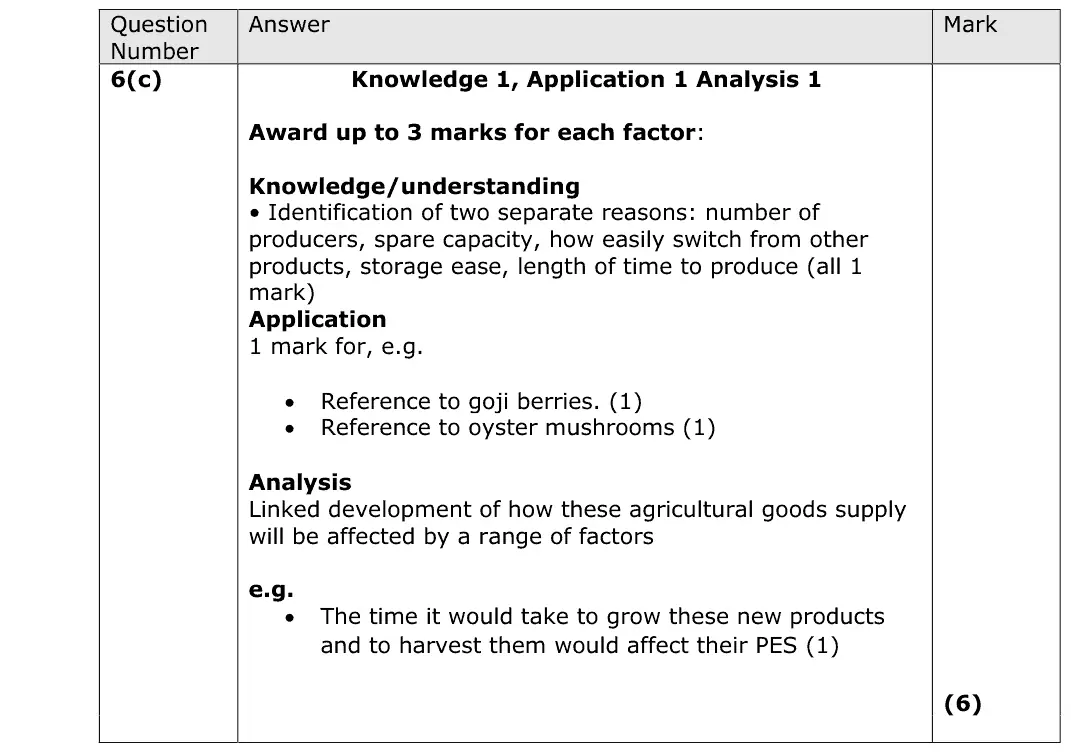
Mark scheme
Examiner's comment
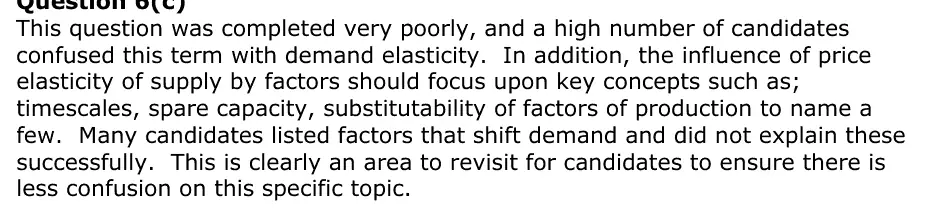
This question was completed very poorly, and a high number of candidates confused this term with demand elasticity. In addition, the influence of price elasticity of supply by factors should focus upon key concepts such as; timescales, spare capacity, substitutability of factors of production to name a few. Many candidates listed factors that shift demand and did not explain these successfully. This is clearly an area to revisit for candidates to ensure there is less confusion on this specific topic.
Notes from the mark scheme and report
two PES factors applied to oyster mushrooms, goji berries and basil: time to grow and harvest, spare capacity, ease of switching factors, storage
report: "completed very poorly", many confused it with PED or listed demand shifters
June 2024 · Paper 1 · Q2(a)4 marksAO1=2, AO2=1, AO3=1Short answer
Data and extracts for question 2
Mark scheme
Examiner's comment
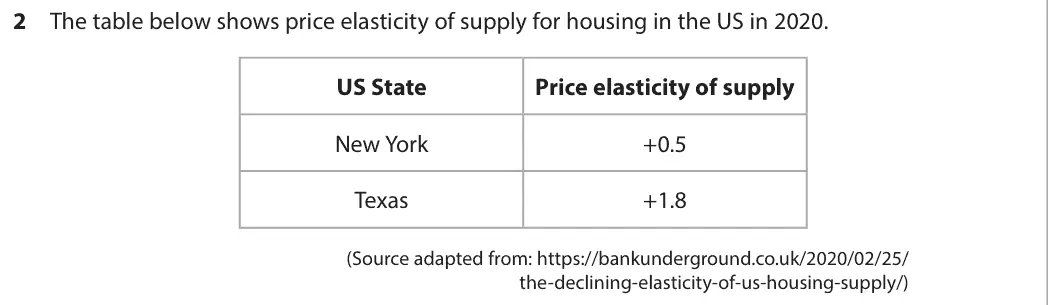
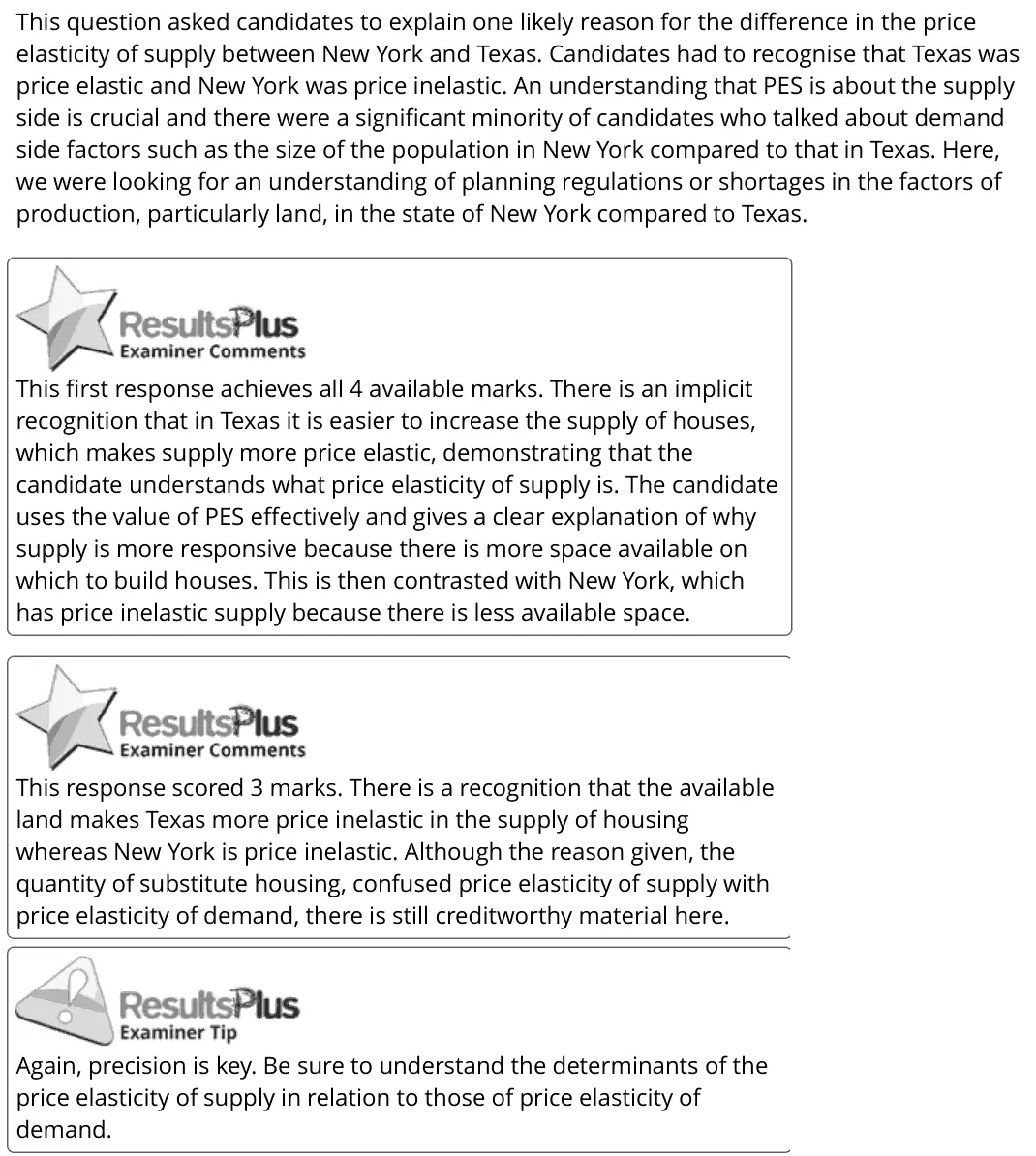
This question asked candidates to explain one likely reason for the difference in the price elasticity of supply between New York and Texas. Candidates had to recognise that Texas was price elastic and New York was price inelastic. An understanding that PES is about the supply side is crucial and there were a significant minority of candidates who talked about demand side factors such as the size of the population in New York compared to that in Texas. Here, we were looking for an understanding of planning regulations or shortages in the factors of production, particularly land, in the state of New York compared to Texas. This first response achieves all 4 available marks. There is an implicit recognition that in Texas it is easier to increase the supply of houses, which makes supply more price elastic, demonstrating that the candidate understands what price elasticity of supply is. The candidate uses the value of PES effectively and gives a clear explanation of why supply is more responsive because there is more space available on which to build houses. This is then contrasted with New York, which has price inelastic supply because there is less available space. This response scored 3 marks. There is a recognition that the available land makes Texas more price inelastic in the supply of housing whereas New York is price inelastic. Although the reason given, the quantity of substitute housing, confused price elasticity of supply with price elasticity of demand, there is still creditworthy material here. Again, precision is key. Be sure to understand the determinants of the price elasticity of supply in relation to those of price elasticity of demand.
Notes from the mark scheme and report
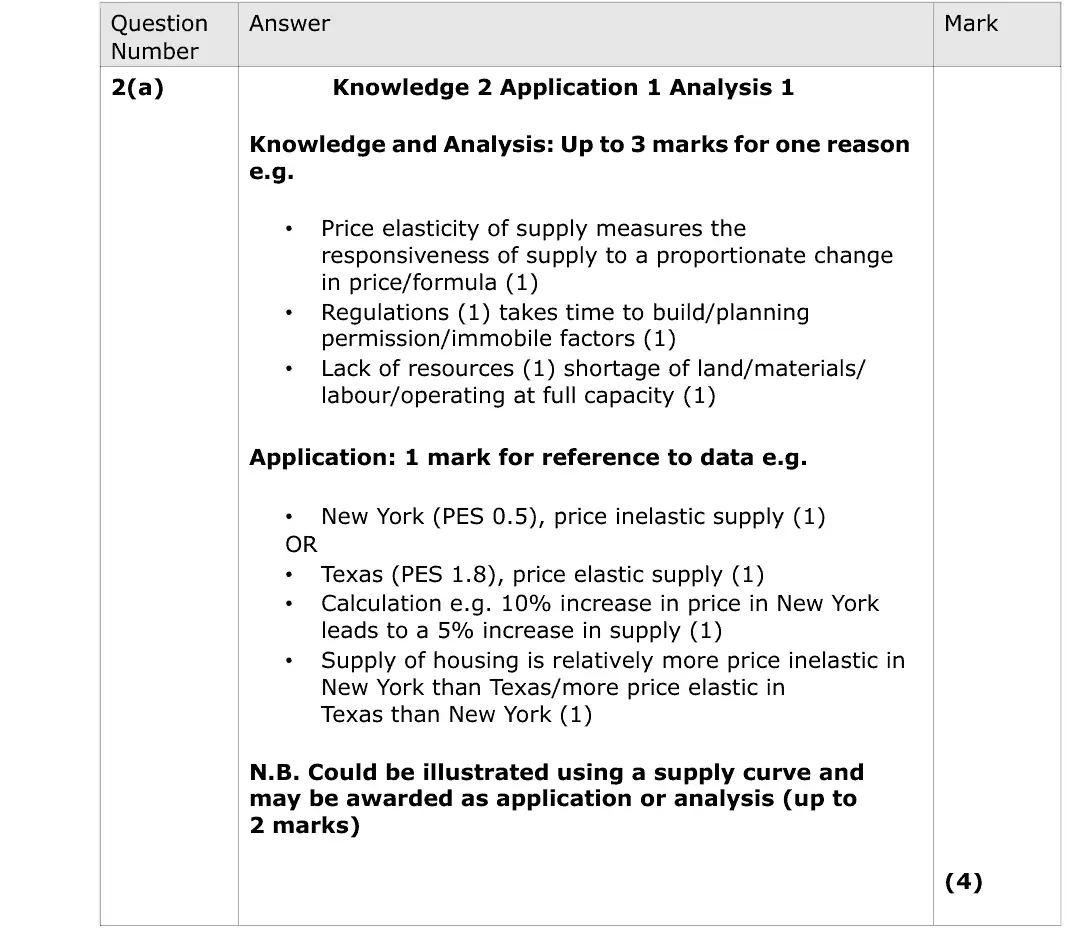
PES is a supply-side idea: demand-side reasons (e.g. population of New York) earn nothing
planning regulations / shortage of land in New York
say which state is elastic and which inelastic
Quantitative skills: QS 8 (make calculations of elasticity and interpret the result); QS 9 (interpret, apply and analyse information in written, graphical tabular and numerical forms)
June 2024 · Paper 1 · Q2(b)1 markMultiple choice
Data and extracts for question 2
Answer
C
Mark scheme
Notes from the mark scheme and report
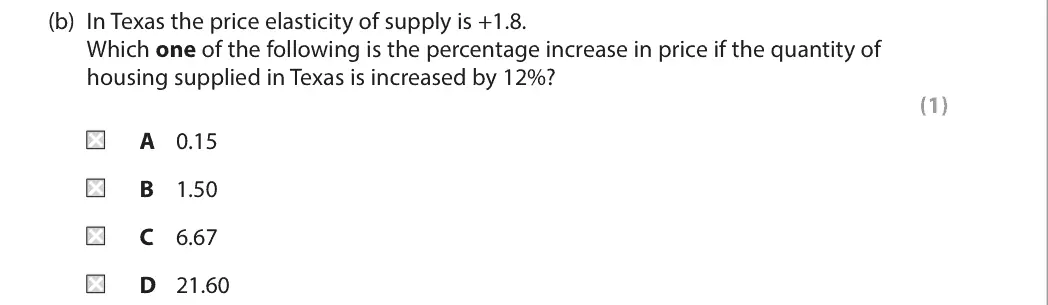
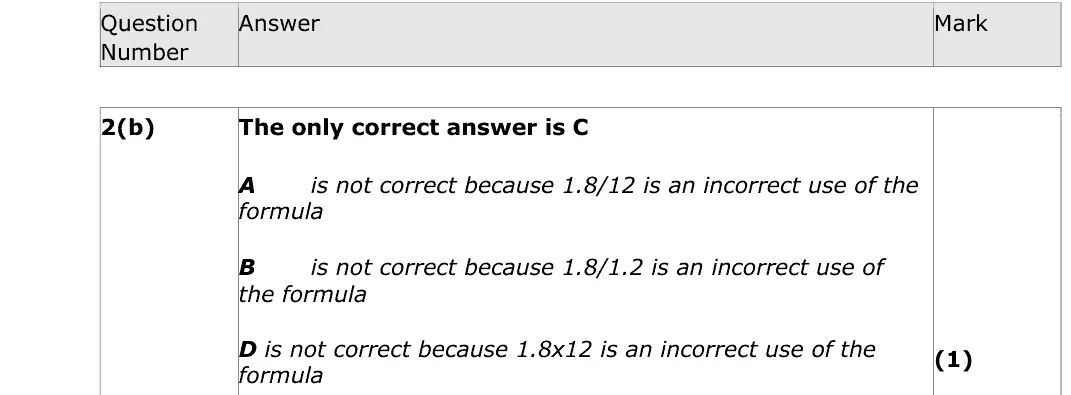
%change in P = %change in Qs / PES = 12 / 1.8 = 6.67 (C)
1.8/12, 1.8/1.2 and 1.8 x 12 are the distractors
Quantitative skills: QS 2 (calculate, use and understand percentages, percentage changes and percentage point changes); QS 8 (make calculations of elasticity and interpret the result)
June 2023 · AS Paper 1 · Q2(a)3 marksAO1=1, AO2=1, AO3=1Short answer
Data and extracts for question 2
Mark scheme
Examiner's comment
A significant number of candidates confused price elasticity of supply in this question with price elasticity of demand and therefore scored no marks. However, those who identified the correct elasticity used the appropriate determinants and developed this three-mark response well.
Notes from the mark scheme and report
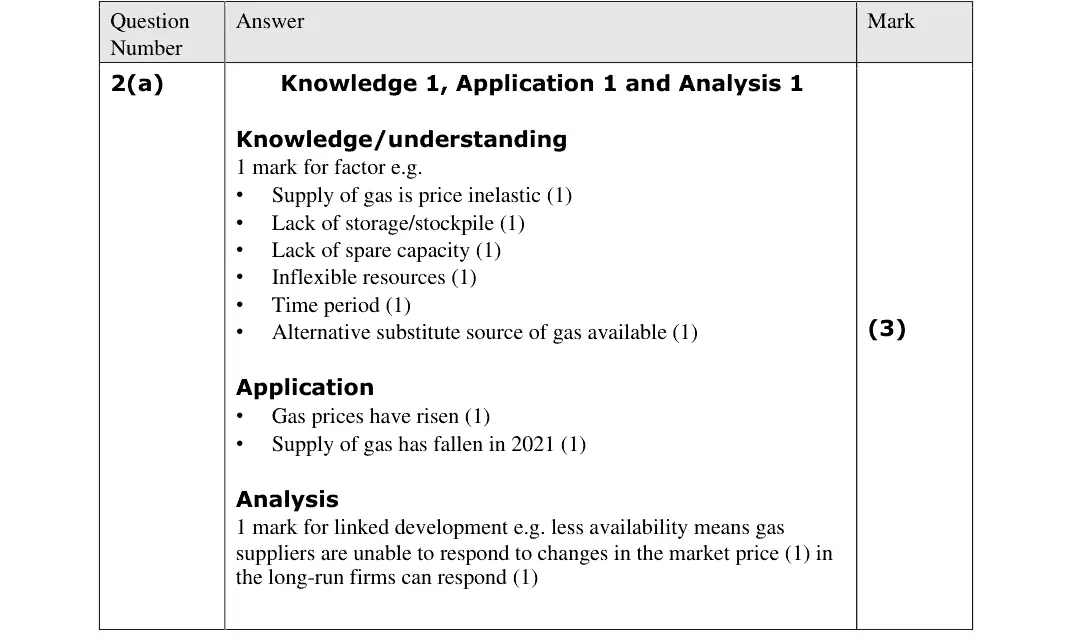
supply of gas is price inelastic: lack of spare capacity, storage or time to respond
apply: price rose but production fell in 2021
many confused PES with PED and scored nothing
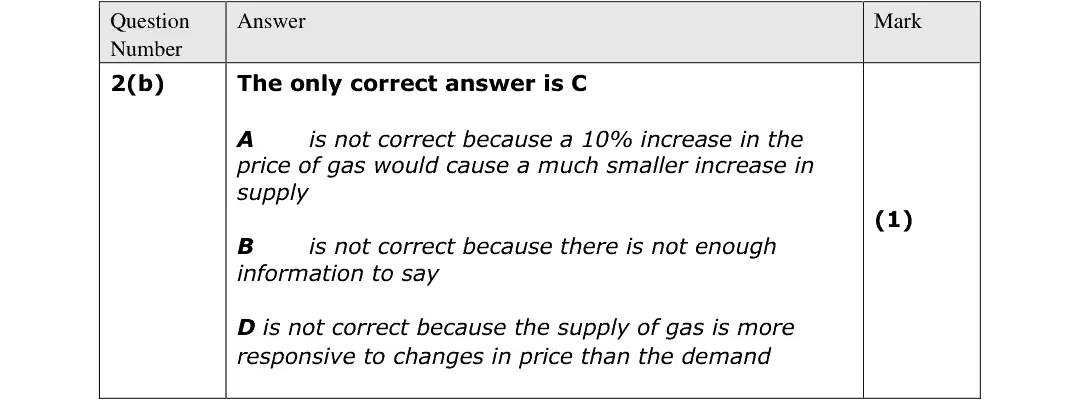
June 2023 · AS Paper 1 · Q2(b)1 markMultiple choice
Data and extracts for question 2
Answer
C
Mark scheme
Notes from the mark scheme and report
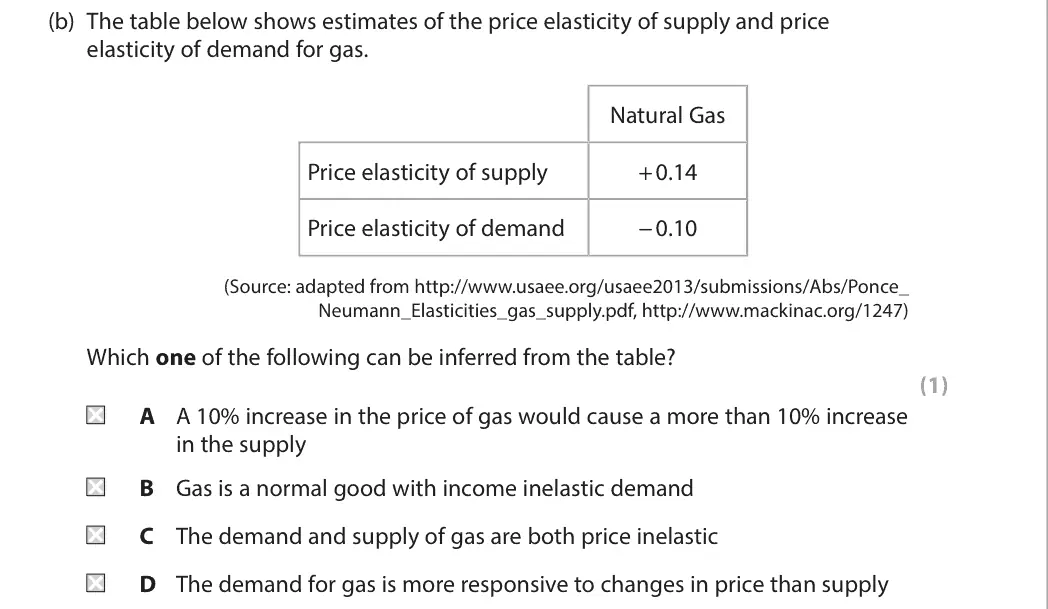
both coefficients are below 1 in absolute value, so demand and supply are price inelastic (C)
a 10% price rise raises supply only 1.4%
no YED is given
supply (0.14) is more responsive than demand (0.10)
Quantitative skills: QS 8 (make calculations of elasticity and interpret the result)
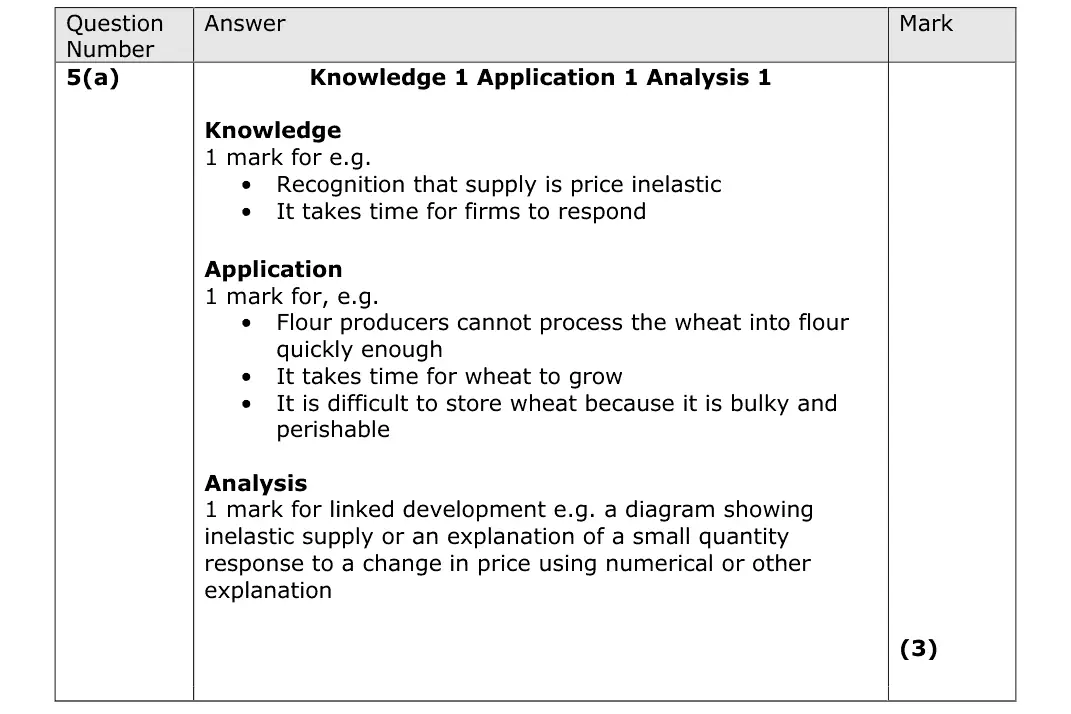
June 2022 · AS Paper 1 · Q5(a)3 marksAO1=1, AO2=1, AO3=1Short answer
Data and extracts for question 5
Mark scheme
Examiner's comment
Many candidates were again able to identify that flour production was price inelastic in supply, but a only minority were able to then move on to effectively explain why flour is difficult to produce quickly in the short run because it is derived from wheat which takes time to grow.
Notes from the mark scheme and report
supply of flour is price inelastic in the short run: wheat takes time to grow and milling capacity is fixed
report: only a minority explained why flour is hard to produce quickly
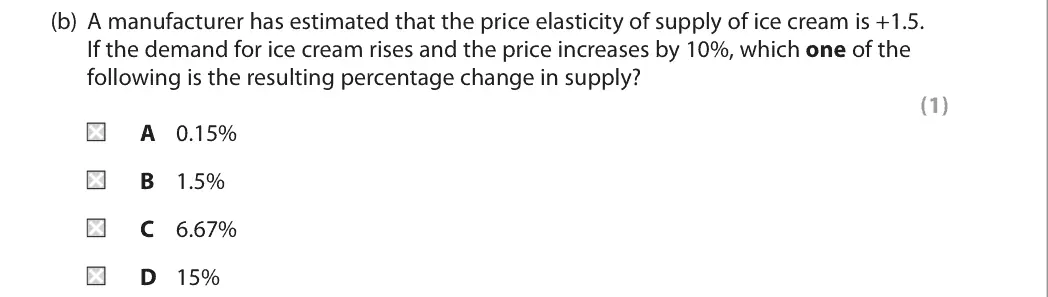
June 2022 · AS Paper 1 · Q5(b)1 markMultiple choice
Data and extracts for question 5
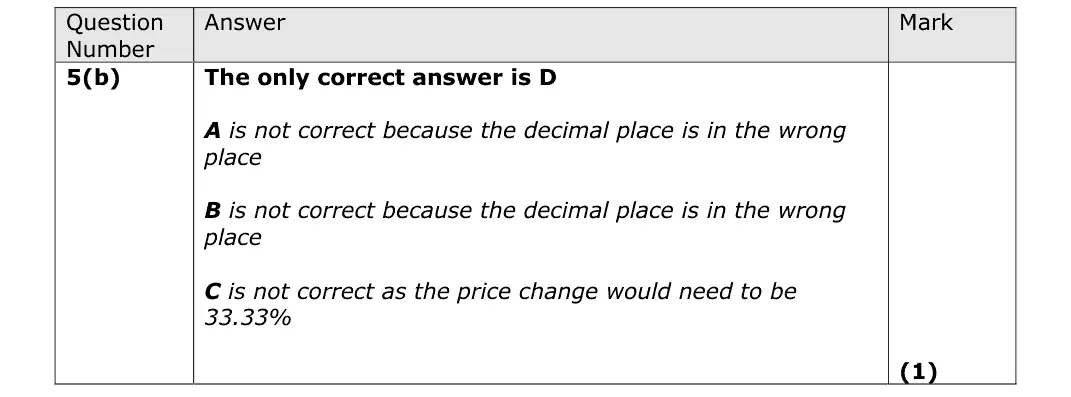
Answer
D
Mark scheme
Notes from the mark scheme and report
%change in Qs = PES x %change in P = 1.5 x 10 = 15% (D)
A and B misplace the decimal
C divides 10 by 1.5
Quantitative skills: QS 2 (calculate, use and understand percentages, percentage changes and percentage point changes); QS 8 (make calculations of elasticity and interpret the result)
June 2022 · Paper 1 · Q6(b)8 marksAO1=2, AO2=2, AO3=2, AO4=28-mark responseHard
Data and extracts for question 6
Mark scheme, including the levels grid and indicative content
Examiner's comment
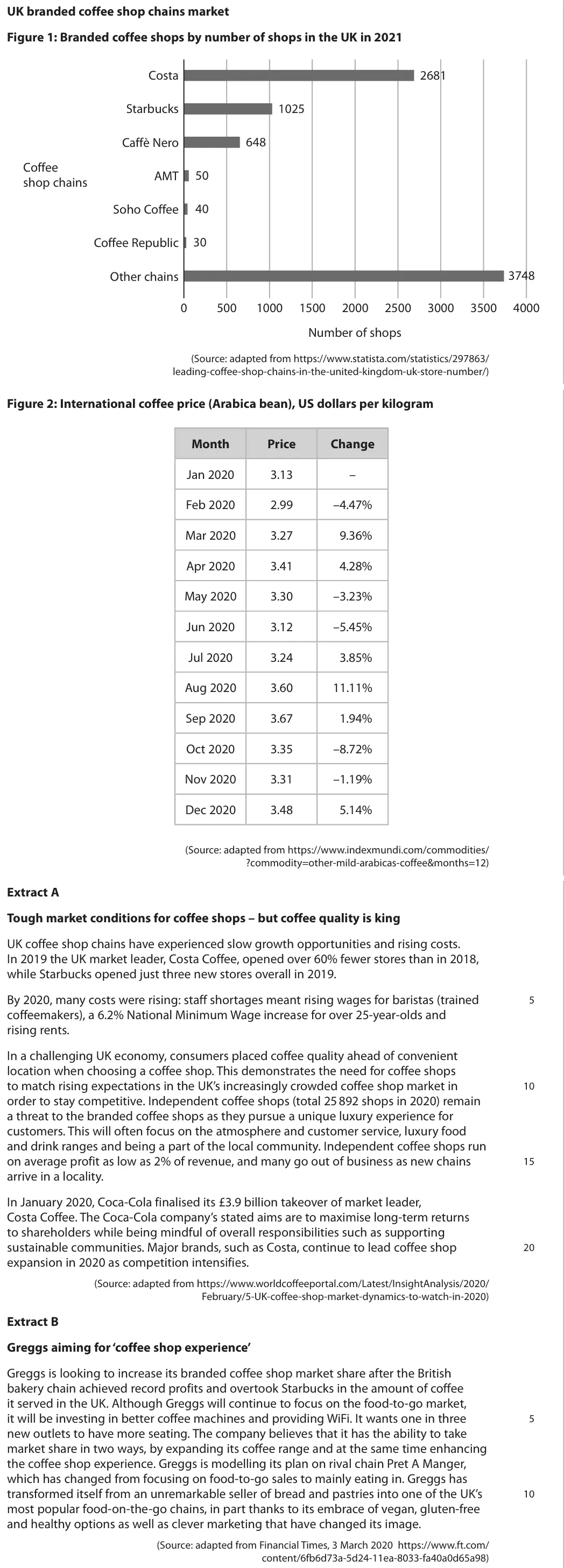
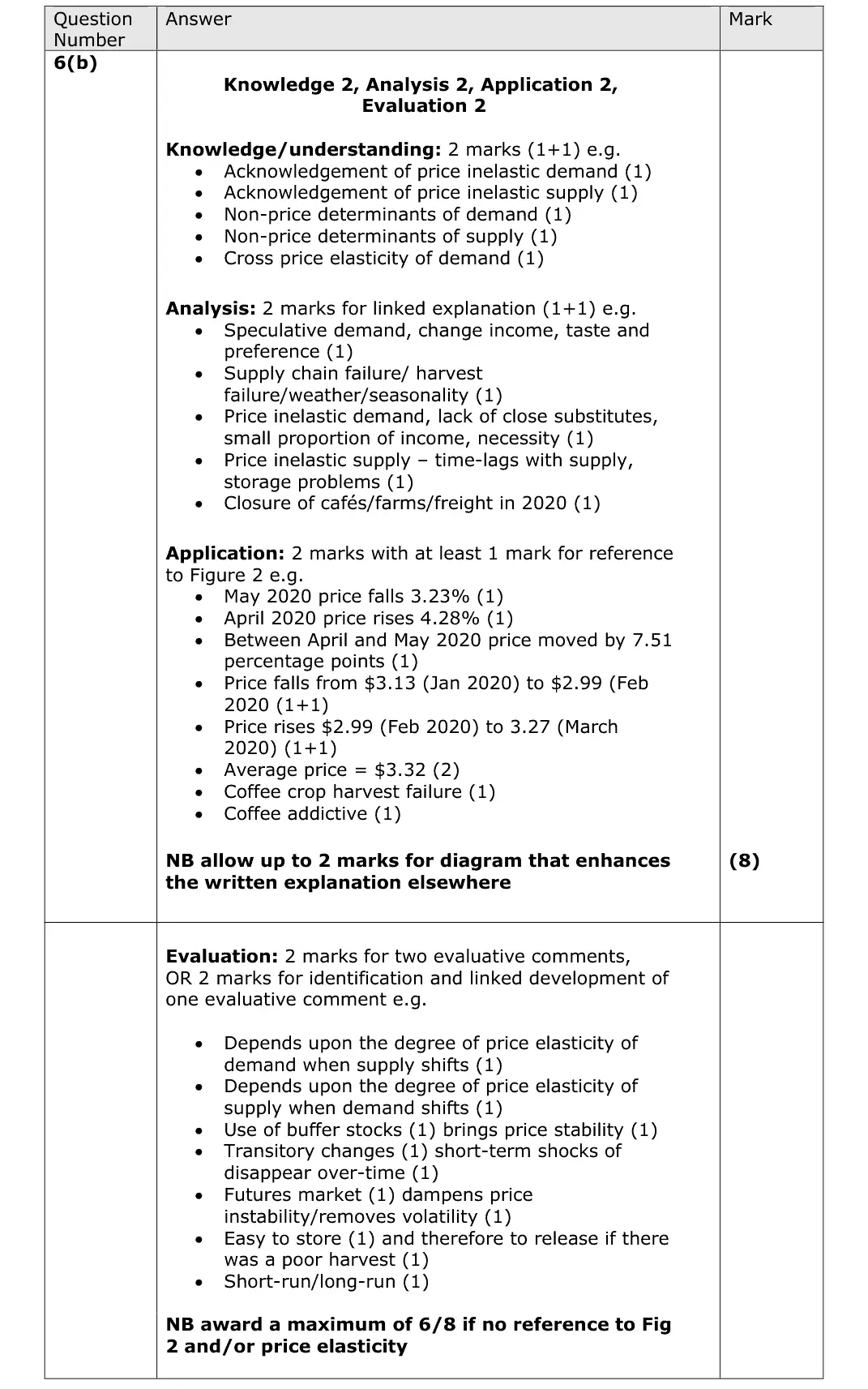
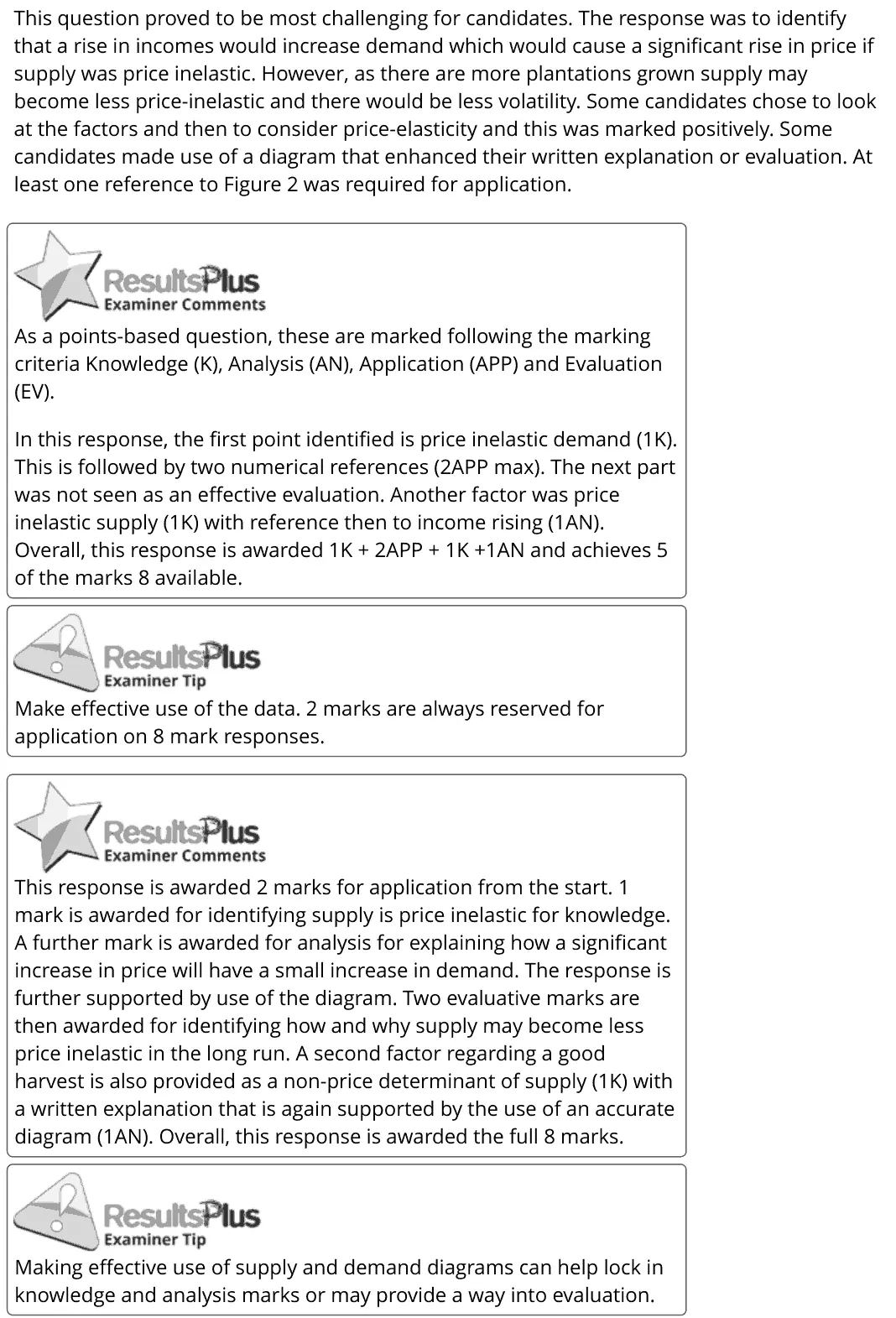
This question proved to be most challenging for candidates. The response was to identify that a rise in incomes would increase demand which would cause a significant rise in price if supply was price inelastic. However, as there are more plantations grown supply may become less price-inelastic and there would be less volatility. Some candidates chose to look at the factors and then to consider price-elasticity and this was marked positively. Some candidates made use of a diagram that enhanced their written explanation or evaluation. At least one reference to Figure 2 was required for application. As a points-based question, these are marked following the marking criteria Knowledge (K), Analysis (AN), Application (APP) and Evaluation (EV). In this response, the first point identified is price inelastic demand (1K). This is followed by two numerical references (2APP max). The next part was not seen as an effective evaluation. Another factor was price inelastic supply (1K) with reference then to income rising (1AN). Overall, this response is awarded 1K + 2APP + 1K +1AN and achieves 5 of the marks 8 available. Make effective use of the data. 2 marks are always reserved for application on 8 mark responses. This response is awarded 2 marks for application from the start. 1 mark is awarded for identifying supply is price inelastic for knowledge. A further mark is awarded for analysis for explaining how a significant increase in price will have a small increase in demand. The response is further supported by use of the diagram. Two evaluative marks are then awarded for identifying how and why supply may become less price inelastic in the long run. A second factor regarding a good harvest is also provided as a non-price determinant of supply (1K) with a written explanation that is again supported by the use of an accurate diagram (1AN). Overall, this response is awarded the full 8 marks. Making effective use of supply and demand diagrams can help lock in knowledge and analysis marks or may provide a way into evaluation.
Notes from the mark scheme and report
price inelastic demand and supply make shifts cause large price swings
report: "This question proved to be most challenging for candidates"
Quantitative skills: QS 2 (calculate, use and understand percentages, percentage changes and percentage point changes); QS 9 (interpret, apply and analyse information in written, graphical tabular and numerical forms)
June 2019 · Paper 1 · Q1(a)2 marksAO2=2Calculation
Data and extracts for question 1
Mark scheme
Examiner's comment
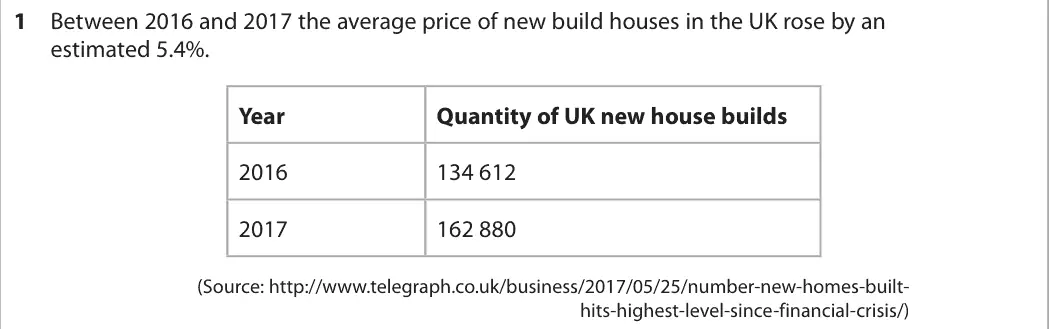
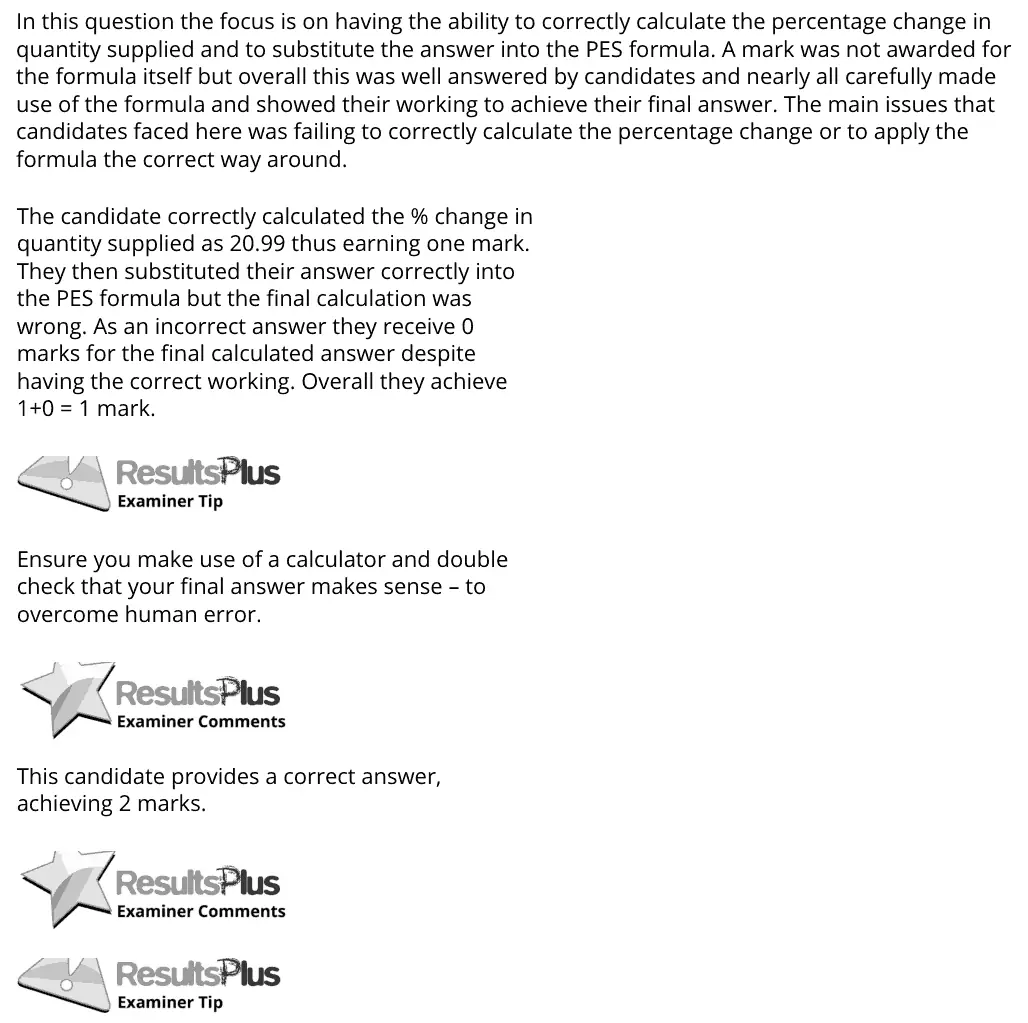
In this question the focus is on having the ability to correctly calculate the percentage change in quantity supplied and to substitute the answer into the PES formula. A mark was not awarded for the formula itself but overall this was well answered by candidates and nearly all carefully made use of the formula and showed their working to achieve their final answer. The main issues that candidates faced here was failing to correctly calculate the percentage change or to apply the formula the correct way around. The candidate correctly calculated the % change in quantity supplied as 20.99 thus earning one mark. They then substituted their answer correctly into the PES formula but the final calculation was wrong. As an incorrect answer they receive 0 marks for the final calculated answer despite having the correct working. Overall they achieve 1+0 = 1 mark. Ensure you make use of a calculator and double check that your final answer makes sense – to overcome human error. This candidate provides a correct answer, achieving 2 marks.
Notes from the mark scheme and report
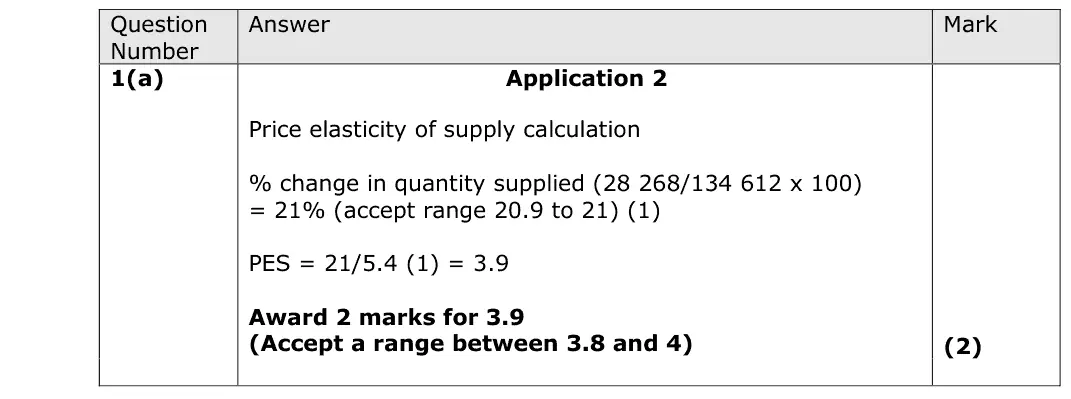
%change in Qs = 28 268 / 134 612 x 100 = 21%
PES = 21 / 5.4 = 3.9
report: errors were a wrong % change or the formula the wrong way round
Quantitative skills: QS 2 (calculate, use and understand percentages, percentage changes and percentage point changes); QS 8 (make calculations of elasticity and interpret the result)
June 2019 · Paper 1 · Q1(b)1 markAO2=1Multiple choice
Data and extracts for question 1
Answer
C
Mark scheme
Notes from the mark scheme and report
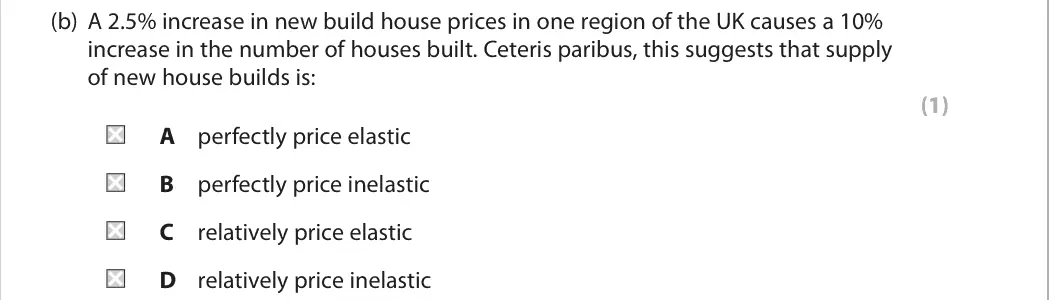
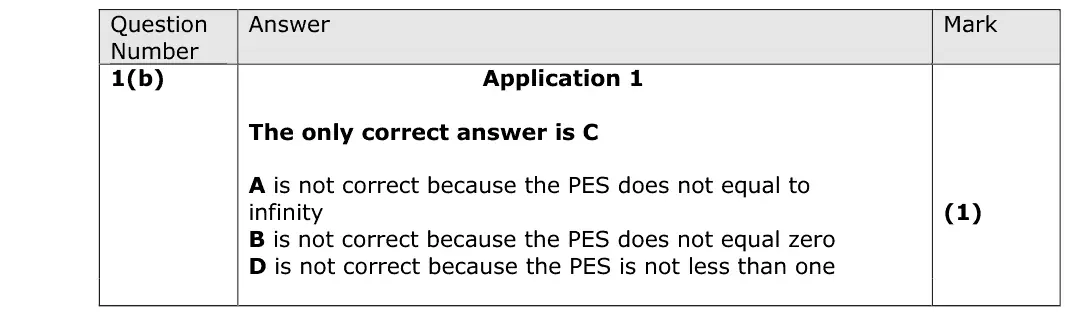
PES = 10 / 2.5 = 4, greater than 1 so relatively price elastic (C)
perfectly elastic is infinity, perfectly inelastic is zero, relatively inelastic is below 1
Quantitative skills: QS 8 (make calculations of elasticity and interpret the result)
June 2019 · Paper 1 · Q1(c)2 marksAO1=1, AO3=1Short answer
Data and extracts for question 1
Mark scheme
Examiner's comment
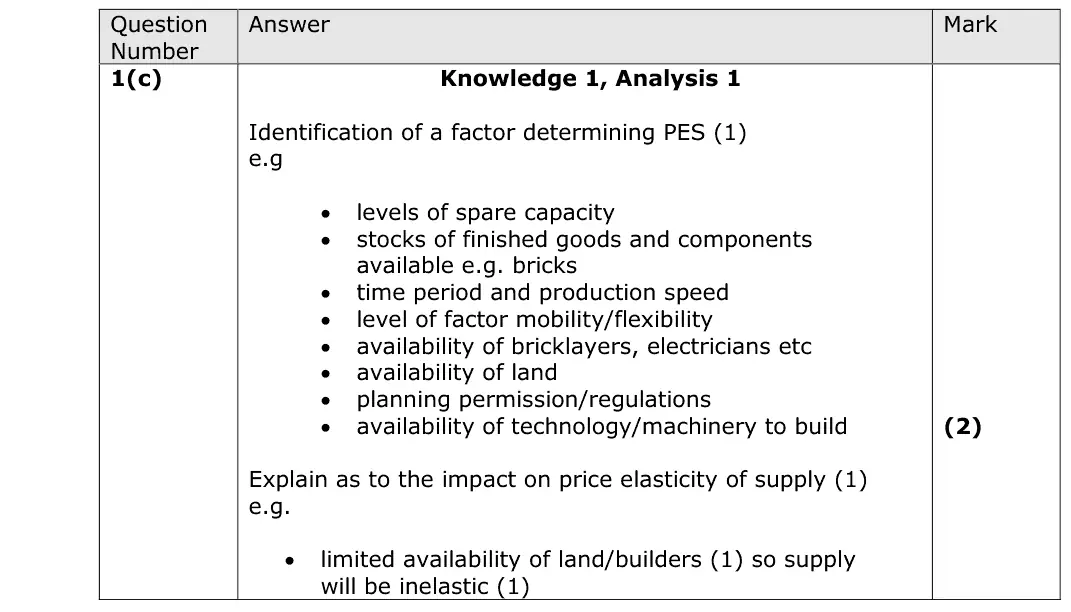
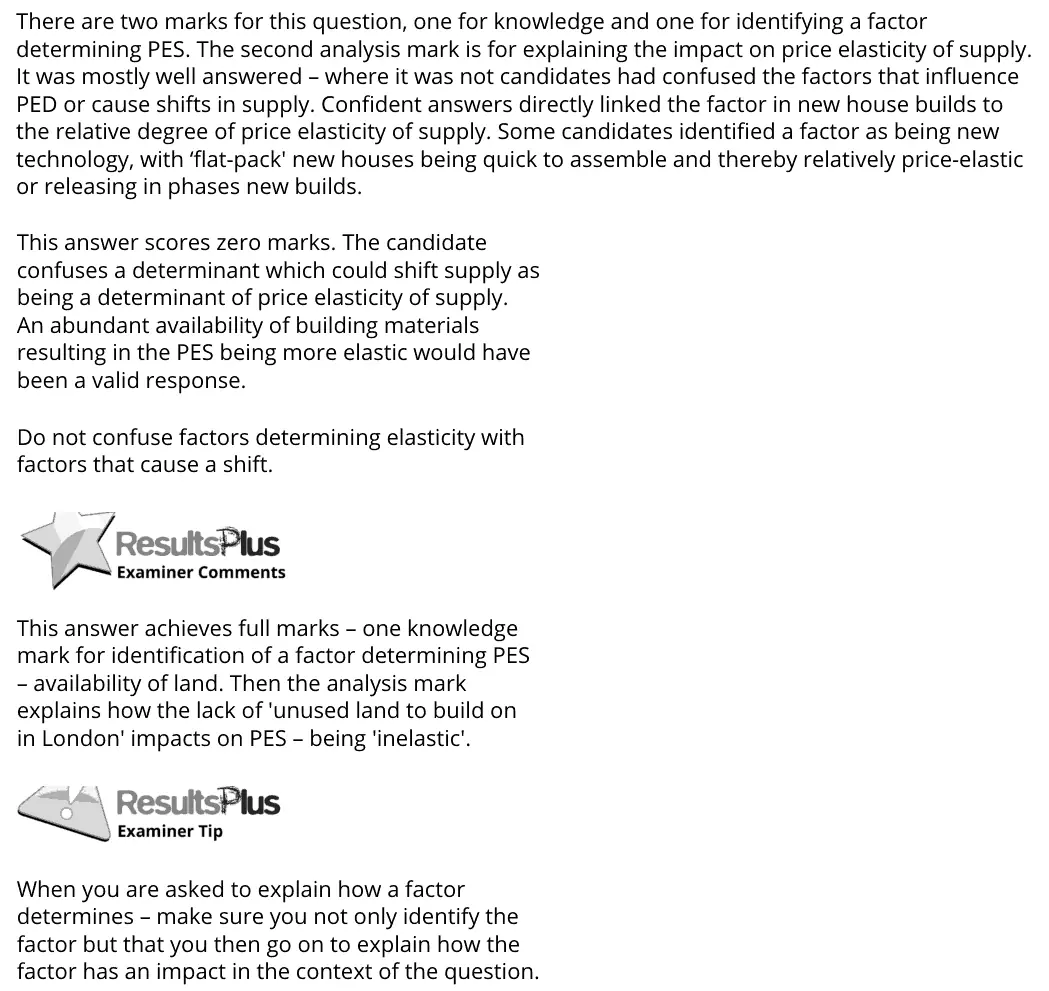
There are two marks for this question, one for knowledge and one for identifying a factor determining PES. The second analysis mark is for explaining the impact on price elasticity of supply. It was mostly well answered – where it was not candidates had confused the factors that influence PED or cause shifts in supply. Confident answers directly linked the factor in new house builds to the relative degree of price elasticity of supply. Some candidates identified a factor as being new technology, with ‘flat-pack' new houses being quick to assemble and thereby relatively price-elastic or releasing in phases new builds. This answer scores zero marks. The candidate confuses a determinant which could shift supply as being a determinant of price elasticity of supply. An abundant availability of building materials resulting in the PES being more elastic would have been a valid response. Do not confuse factors determining elasticity with factors that cause a shift. This answer achieves full marks – one knowledge mark for identification of a factor determining PES – availability of land. Then the analysis mark explains how the lack of 'unused land to build on in London' impacts on PES – being 'inelastic'. When you are asked to explain how a factor determines – make sure you not only identify the factor but that you then go on to explain how the factor has an impact in the context of the question.
Notes from the mark scheme and report
factor (spare capacity, stocks of bricks, availability of land and builders, planning permission, time period) plus its effect on PES
report: some confused factors affecting PED or shifts in supply
June 2018 · AS Paper 1 · Q6(b)10 marksAO1=2, AO2=2, AO3=2, AO4=410-mark responseHard
Data and extracts for question 6
Mark scheme, including the levels grid and indicative content
Examiner's comment
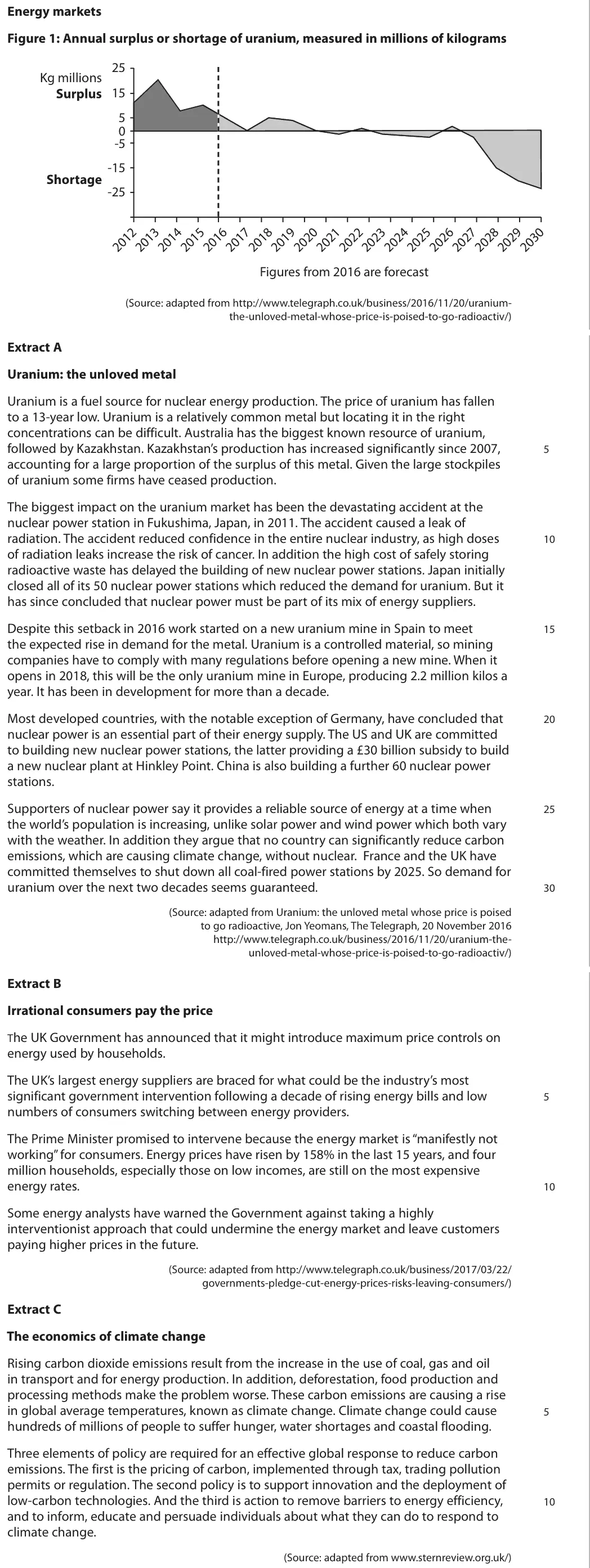
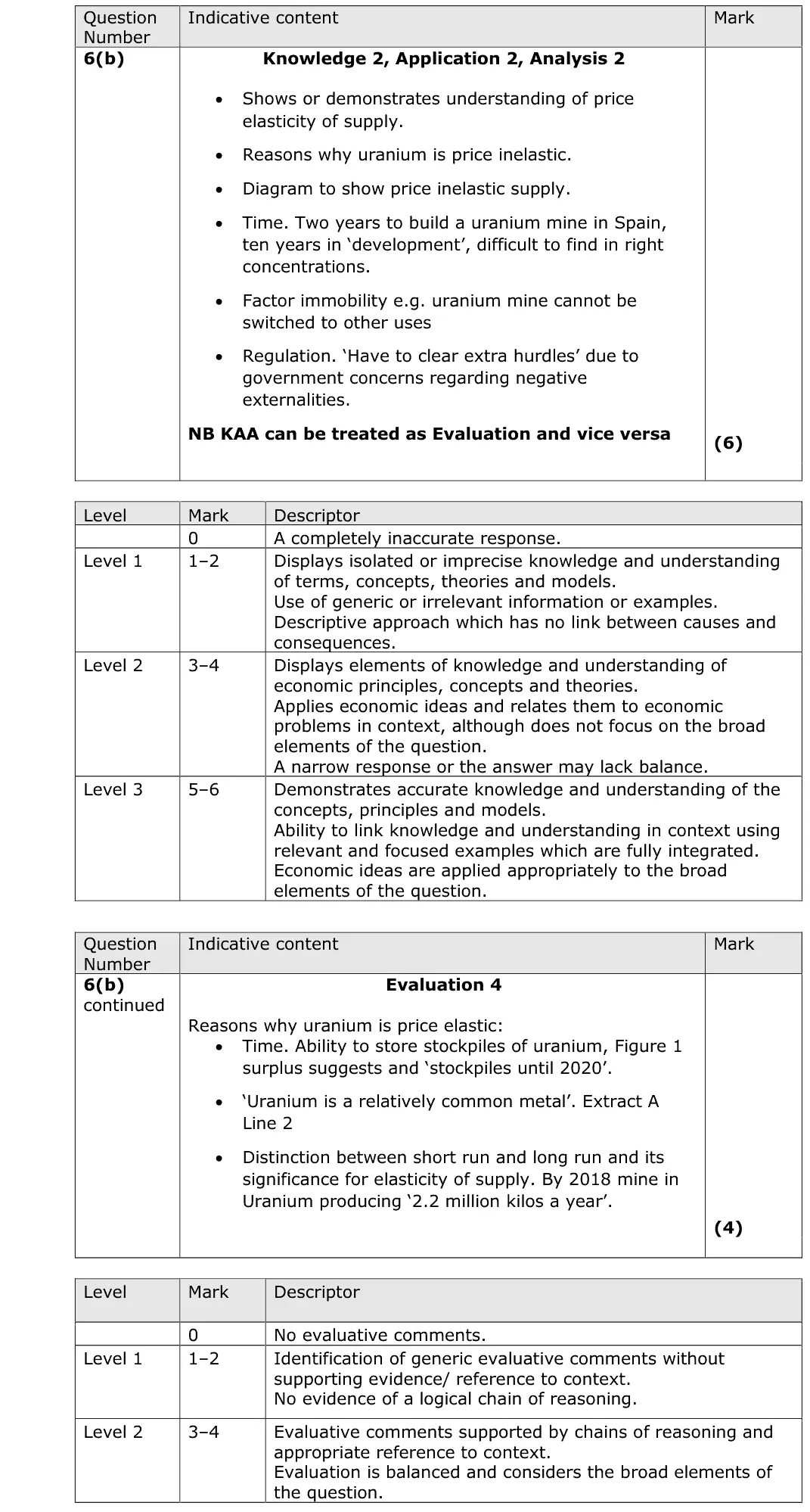
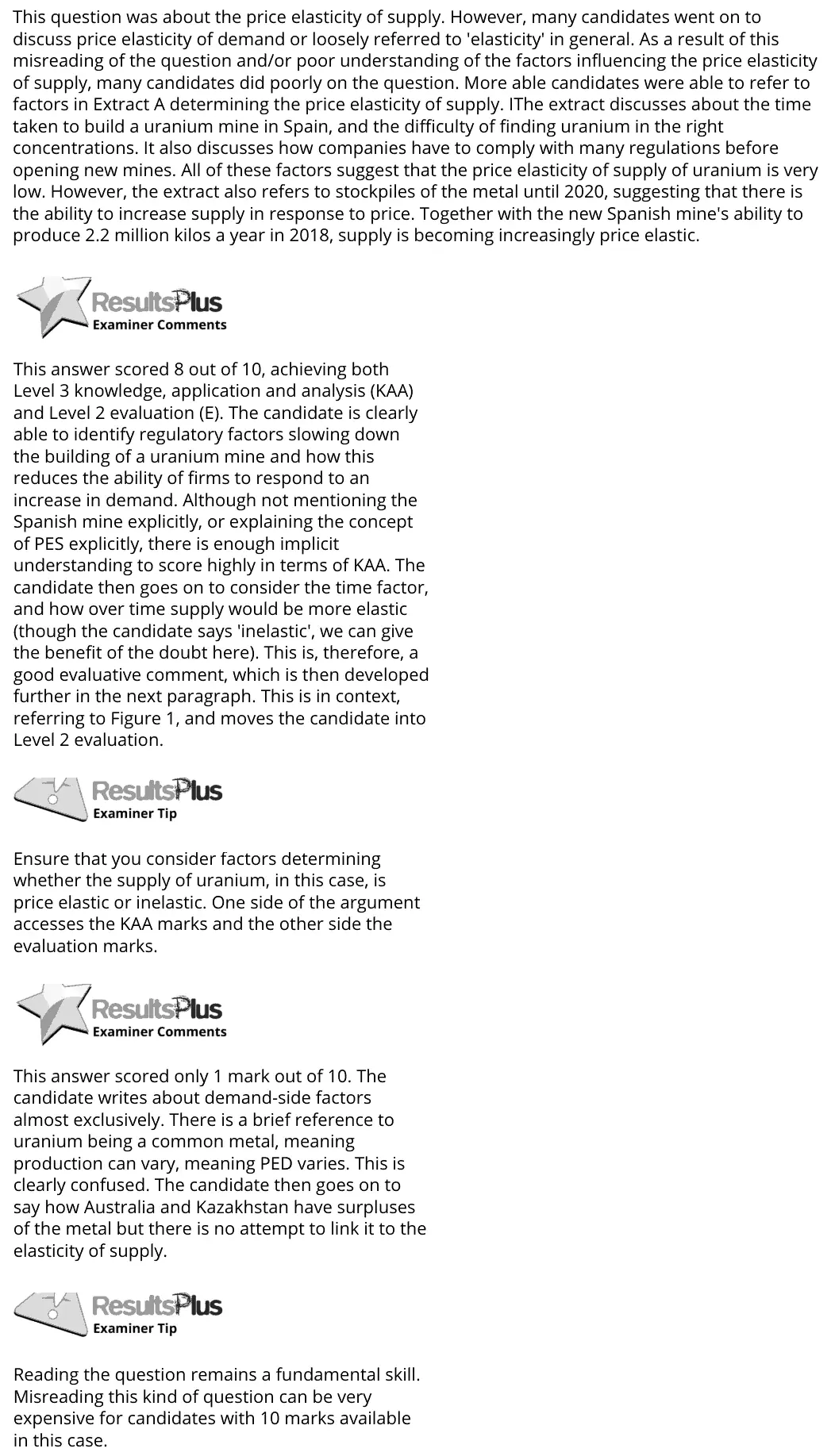
This question was about the price elasticity of supply. However, many candidates went on to discuss price elasticity of demand or loosely referred to 'elasticity' in general. As a result of this misreading of the question and/or poor understanding of the factors influencing the price elasticity of supply, many candidates did poorly on the question. More able candidates were able to refer to factors in Extract A determining the price elasticity of supply. IThe extract discusses about the time taken to build a uranium mine in Spain, and the difficulty of finding uranium in the right concentrations. It also discusses how companies have to comply with many regulations before opening new mines. All of these factors suggest that the price elasticity of supply of uranium is very low. However, the extract also refers to stockpiles of the metal until 2020, suggesting that there is the ability to increase supply in response to price. Together with the new Spanish mine's ability to produce 2.2 million kilos a year in 2018, supply is becoming increasingly price elastic. This answer scored 8 out of 10, achieving both Level 3 knowledge, application and analysis (KAA) and Level 2 evaluation (E). The candidate is clearly able to identify regulatory factors slowing down the building of a uranium mine and how this reduces the ability of firms to respond to an increase in demand. Although not mentioning the Spanish mine explicitly, or explaining the concept of PES explicitly, there is enough implicit understanding to score highly in terms of KAA. The candidate then goes on to consider the time factor, and how over time supply would be more elastic (though the candidate says 'inelastic', we can give the benefit of the doubt here). This is, therefore, a good evaluative comment, which is then developed further in the next paragraph. This is in context, referring to Figure 1, and moves the candidate into Level 2 evaluation. Ensure that you consider factors determining whether the supply of uranium, in this case, is price elastic or inelastic. One side of the argument accesses the KAA marks and the other side the evaluation marks. This answer scored only 1 mark out of 10. The candidate writes about demand-side factors almost exclusively. There is a brief reference to uranium being a common metal, meaning production can vary, meaning PED varies. This is clearly confused. The candidate then goes on to say how Australia and Kazakhstan have surpluses of the metal but there is no attempt to link it to the elasticity of supply. Reading the question remains a fundamental skill. Misreading this kind of question can be very expensive for candidates with 10 marks available in this case.
Notes from the mark scheme and report
supply is price inelastic: new mines take years (Spain over a decade), regulation, hard to find concentrations
evaluate: stockpiles and spare capacity make supply more elastic, long run vs short run
report: many discussed PED or "elasticity" loosely, so "many candidates did poorly on the question"
June 2016 · AS Paper 1 · Q6(a)5 marksAO1=1, AO2=2, AO3=2Short answer
Data and extracts for question 6
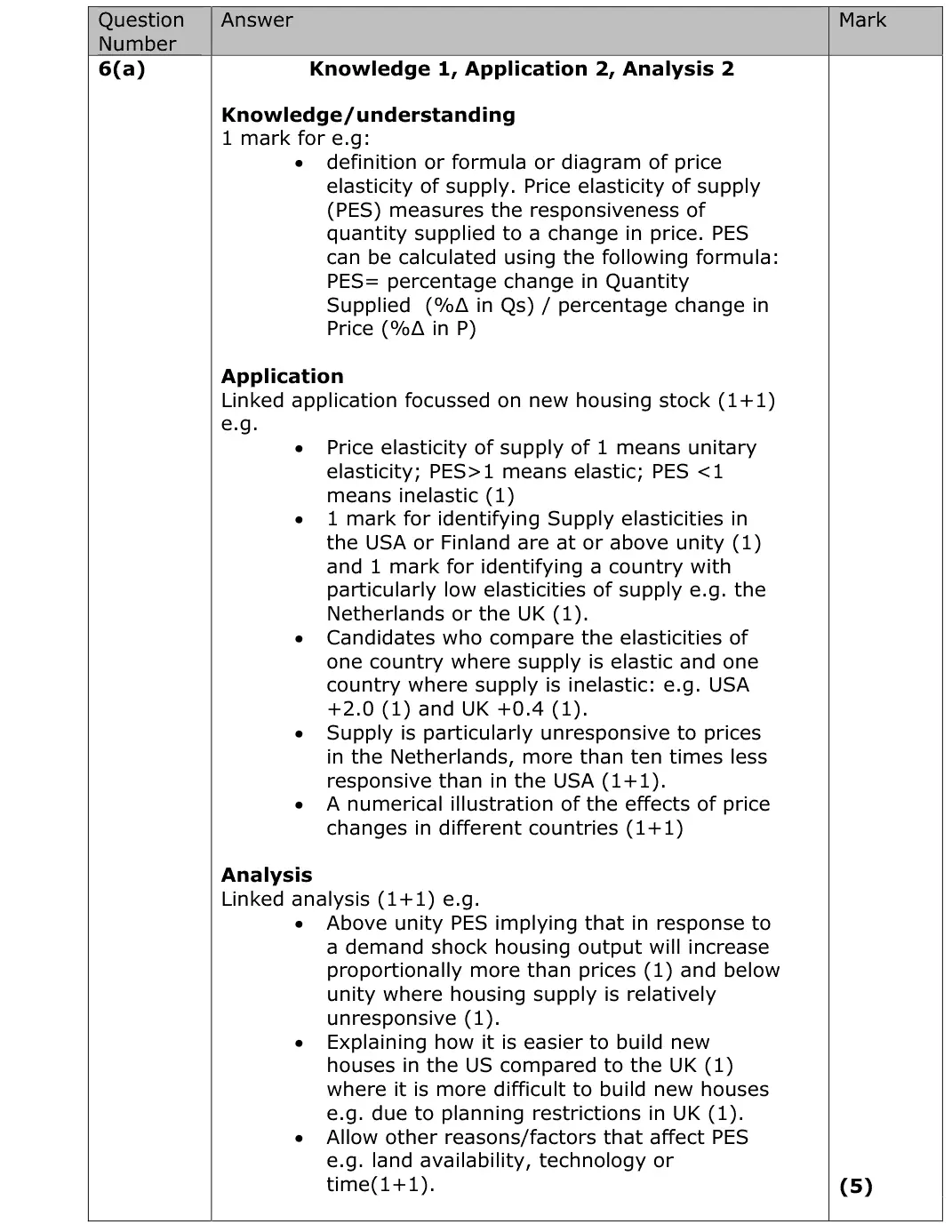
Mark scheme
Examiner's comment
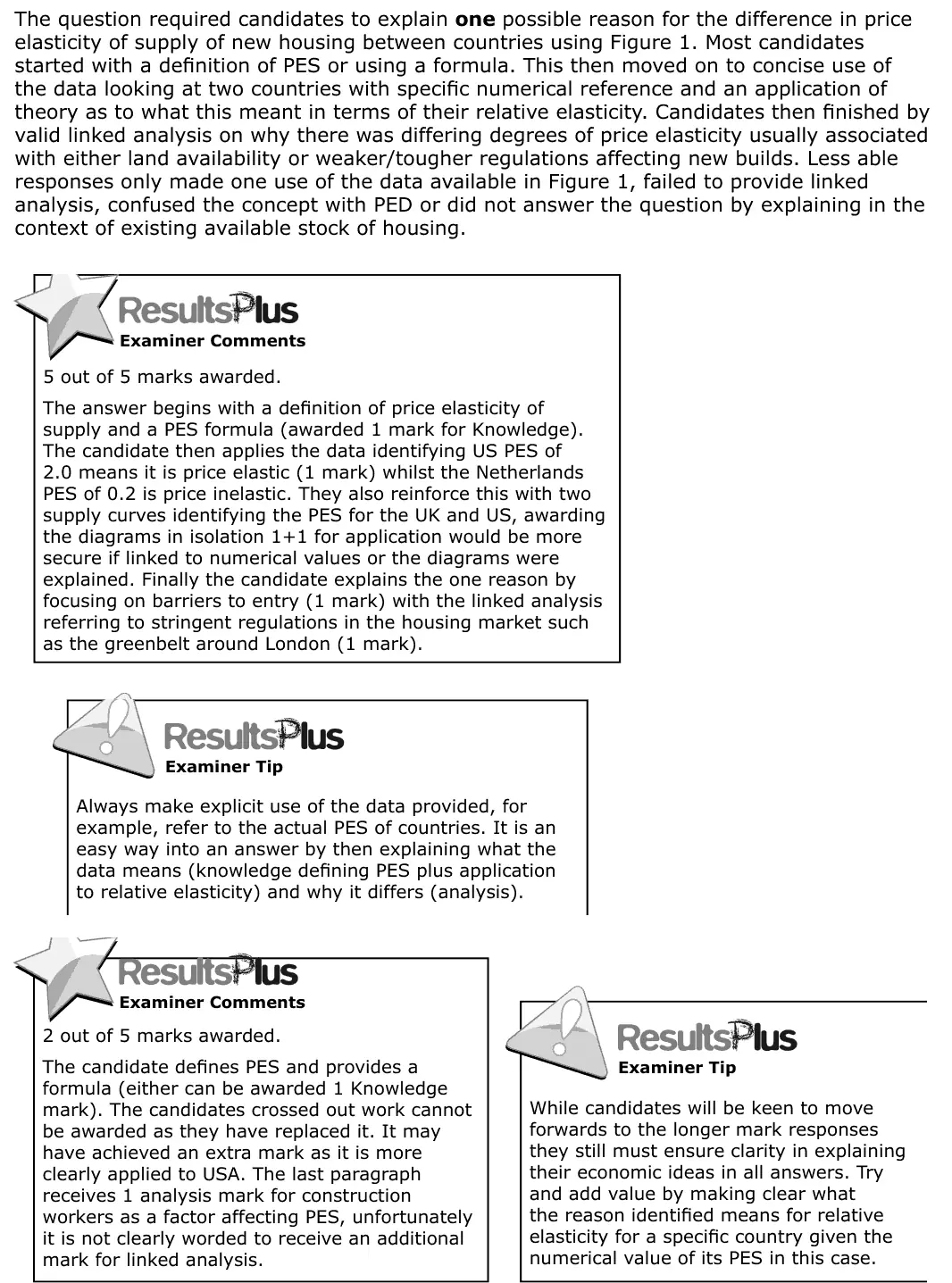
The question required candidates to explain one possible reason for the difference in price elasticity of supply of new housing between countries using Figure 1. Most candidates started with a definition of PES or using a formula. This then moved on to concise use of the data looking at two countries with specific numerical reference and an application of theory as to what this meant in terms of their relative elasticity. Candidates then finished by valid linked analysis on why there was differing degrees of price elasticity usually associated with either land availability or weaker/tougher regulations affecting new builds. Less able responses only made one use of the data available in Figure 1, failed to provide linked analysis, confused the concept with PED or did not answer the question by explaining in the context of existing available stock of housing. 5 out of 5 marks awarded. The answer begins with a definition of price elasticity of supply and a PES formula (awarded 1 mark for Knowledge). The candidate then applies the data identifying US PES of 2.0 means it is price elastic (1 mark) whilst the Netherlands PES of 0.2 is price inelastic. They also reinforce this with two supply curves identifying the PES for the UK and US, awarding the diagrams in isolation 1+1 for application would be more secure if linked to numerical values or the diagrams were explained. Finally the candidate explains the one reason by focusing on barriers to entry (1 mark) with the linked analysis referring to stringent regulations in the housing market such as the greenbelt around London (1 mark). Always make explicit use of the data provided, for example, refer to the actual PES of countries. It is an easy way into an answer by then explaining what the data means (knowledge defining PES plus application to relative elasticity) and why it differs (analysis). 2 out of 5 marks awarded. The candidate defines PES and provides a formula (either can be awarded 1 Knowledge mark). The candidates crossed out work cannot be awarded as they have replaced it. It may have achieved an extra mark as it is more clearly applied to USA. The last paragraph receives 1 analysis mark for construction workers as a factor affecting PES, unfortunately it is not clearly worded to receive an additional mark for linked analysis. While candidates will be keen to move forwards to the longer mark responses they still must ensure clarity in explaining their economic ideas in all answers. Try and add value by making clear what the reason identified means for relative elasticity for a specific country given the numerical value of its PES in this case.
Notes from the mark scheme and report
PES is a supply-side idea: reasons such as land availability, planning regulations, time
compare two countries with figures (USA 2.0 elastic, UK about 0.4 inelastic)
do not confuse with PED
Quantitative skills: QS 8 (make calculations of elasticity and interpret the result); QS 9 (interpret, apply and analyse information in written, graphical tabular and numerical forms)
Work with an Edexcel economics tutor
Essays stuck in Level 2, or losing the easy marks in Section A? Book a trial session with Lianne, a former Edexcel examiner.